Contours This is Kabbalah 99.
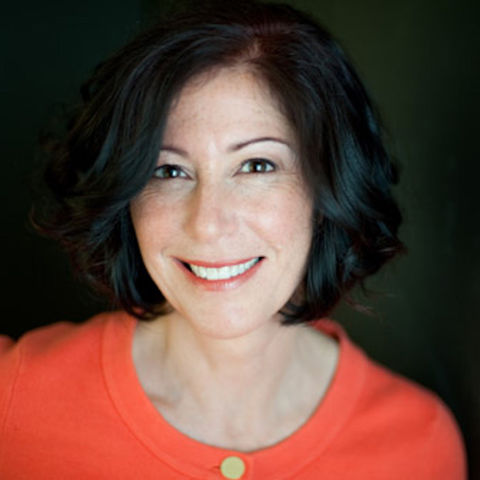
I'm your host,
Deborah Sofia.
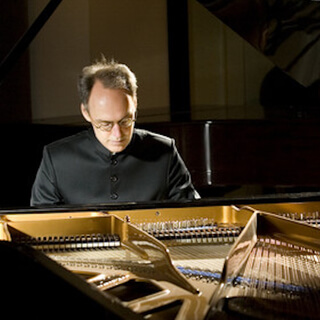
Today we are speaking with Glenn Sackett,
A minister,
Chaplain,
And life coach,
As well as a nature photographer and an explorer.
Glenn,
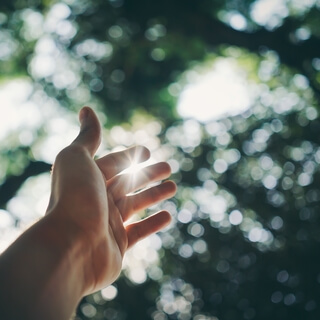
You are the provider of all those beautiful nature shots on the Kabbalah 99 website.
One word catches my ear,
The word explorer.
So can you say more about how that describes you?
My leading characteristic in personality tests and people's experience with me is my curiosity.
I have a sense of curiosity and wonder about everything,
About nature,
About people,
About their lives,
About life journeys,
About how people approach opportunities and difficulties.
So I'm always exploring.
I'm always interested to learn something about someone or something new about how life works,
How stuff works,
How we make our way in the world.
I see true to nature,
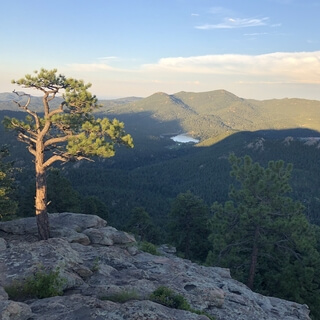
You are outside with the beautiful leaning tree behind you with yellow leaves for this time of year.
And I just wanted to comment on the natural environment that we're speaking with you in.
So you've just.
.
.
Yes,
That's how I keep myself grounded and balanced and vital is experiencing nature as much as possible.
I've probably slept under the stars 20 or 30 nights this year already.
Quite an experience for an explorer.
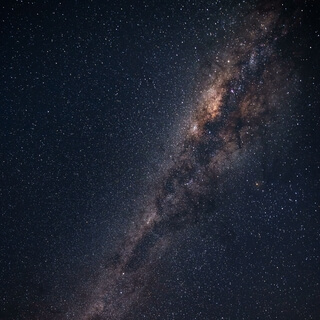
Do you explore the night sky?
Yes,
I will set my campsite up sleeping under the stars so that my camera is within reach of my sleeping bag.
And I set it up to do time lapse or automatic series of photos of the night sky and I go to sleep and wake up and there's all this beauty recorded on in the camera,
Even beyond what I enjoyed before I fell asleep watching for meteorites.
That's an enviable freedom that you have right now.
You've described yourself as a spiritual pilgrim with experience in many traditions.
So tell us,
Who is Glenn Sackett?
Tell us a little bit about your background,
How you got to be who you are today.
I grew up in a family of people who understood that our purpose in life is to live whole heartedly in such a way that we serve the divine and help other people.
My family was full of missionaries and teachers and nurses and doctors and social workers.
And I'm a preacher's kid.
I grew up in the Midwest after being born in California.
My dad was the preacher in my life,
Great storyteller.
My mom was a teacher and it was always clear to me from the time my memory developed that I would be in ministry somehow.
Now the word ministry to most people implies a congregation.
And I did have that for just a few years after graduate school,
But fairly quickly transitioned to chaplaincy in a healthcare setting.
The difference is that listening more as a chaplain than as a minister?
Yes,
As a congregational minister,
One's primary role is preaching,
Teaching,
Telling the story of good news,
Of divine love for humanity.
As a chaplain,
My primary role is to listen to other people's stories,
To be curious about what's happening in their health journey or their life journey,
And to give them space and opportunity to tell their story,
To explore their journey.
So in terms of yin and yang energy,
The pastor of a congregation engages in a lot of yang energy,
Telling stories,
Teaching,
Preaching,
Leading.
Chaplain is much more engaged in yin energy,
Listening,
Inviting,
Accompanying,
Encouraging,
Drawing forth from someone the possibilities that they may not have yet noticed in the experience they're going through.
You are also a master photographer,
And those are two seemingly very different life disciplines that both require a high level of expertise.
So in what way are they connected?
Are they separate or do they play off each other?
They definitely play off each other.
In both instances,
I am an explorer.
When I'm exploring the exterior world of nature and photography,
That's my kind of photography primarily is landscape,
Both the grand landscape and the intimate landscape.
I'm exploring places and light and the time of day and the kind of experience that's available in that space.
And I'm looking for ways to capture the beauty and then release it so that others can enjoy what I've discovered.
When I'm in the interior space with someone,
Exploring their life story,
Exploring their health journey,
Exploring some new diagnosis or condition or obstacle that's come into their lives,
It's accompanied with the same curiosity and the same interest in seeing what's there to be noticed that may not have been noticed yet.
What are the possibilities available in this situation in the person's life that they may not see because they're looking at the obstacles?
And from my listening standpoint,
I may be able to see the opportunities in it more clearly than they can.
So that means I might offer the opportunity for them to take a couple steps back and look at it from a larger perspective.
Same thing would happen in landscape photography.
I see a beautiful scene.
It's not just exactly quite up to the possibility that has and if I take two steps forward,
Suddenly things change in their perspective and it becomes a thing of beauty worth recording.
Helping people shift their viewpoint.
Changing my viewpoint as a photographer,
It's essentially the same thing.
And what do you hear most often is pressing on people right now?
A phrase I like to use is,
What is the cry of humanity right now?
People want to be seen.
So to offer someone the gift I see you is very affirming.
I think it was Mark Pohn that wrote a song called I Must Be Invisible.
No one notices me.
And that's part of the cry of humanity.
People want to be heard.
Part of what I do as a chaplain is to offer people the opportunity to have a voice and to express that voice and to be empowered and to be able to speak up in a situation where they might feel a bit out of their element or overwhelmed by a new situation,
A novel change in life and to offer them the opportunity to be heard,
To make sure their questions are asked and answered,
To make sure their values,
Their cultural values,
Their personal values,
Their spiritual values are respected and the choices that are available.
That's a great gift to someone.
The third thing is people want to be understood.
They don't just want to be seen and heard and argued against.
They want to be understood.
And I think along with that goes being appreciated.
You mentioned in the beginning when you started talking about your childhood that you grew up with a strong sense of purpose.
So is there a theme that runs through all these different situations on the purpose of life?
Yes,
The theme for me is relationship and connectivity or connection.
Let me make that distinction,
Important distinction clear.
Connectivity is available.
We have too much connectivity today with our smartphones and all the media access and all the information of the world available on a 0.
031 second search online.
Everything is right there.
We have connectivity.
What we sometimes lack is actual connection.
We also have a cultural glitch related to this where in Western society,
Especially in contemporary America,
We have this illusion of individuality and the self-made person.
In reality,
Everything is connected.
All of us are connected.
We're connected to everything and everything impacts everything else.
And we're designed for connection.
And so we want,
We need connection.
When the first idea occurred to nurses that there might be a way of categorizing the spiritual needs of patients,
They noticed that people,
All people,
Regardless of religiosity or the lack of religiosity need three things.
Everyone needs love and belonging.
Everyone needs meaning and purpose.
People who have meaning and purpose overcome life's obstacles much more readily than people who do not have a clear sense of purpose and meaning in their life.
And the third thing that they noticed that all people need is freedom from guilt and shame.
When a person encounters a healthcare emergency or the emergence of a chronic disease,
The first questions they ask are,
What did I do to deserve this?
Why is this happening to me?
And that is the unfortunate opportunity for guilt and shame to show up.
And patients who have someone to help them sort through their questions about guilt and shame and to unload those burdens to be reconciled with themselves and with life also heal much more quickly and have less relapses and less complications on the healing journey or the journey to adapt to a chronic condition.
Yes,
You hold a deep perspective.
As a chaplain in a hospital,
You've worked with hospice a lot,
I imagine.
I've worked from birth to death and everything in between.
And what are people saying at the end of life?
What comes forward as what was important in their life and what matters?
What matters most is unique to each individual.
Yet there are patterns that emerge that are really important.
For instance,
A hospice nurse wrote a book about her experience in talking with people shortly before death.
And the dominant pattern that she noticed was almost everyone talks about how important the connections and the relationships are in their life.
And it often shows up in a statement like,
I wish I had spent more time with so and so or doing such and such with so and so.
No one says,
I wish I had worked more 14 hour days,
Or I wish I had accomplished more in my job.
I wish I had made the boss happier.
I wish,
You know,
It's not about work.
And it's particularly not about jobs.
It is about relationships and what's most important in life.
Those are the things people review and talk about at the end of life.
Right.
So that's the things that give them both dissatisfaction and satisfaction.
So it's really true.
That's something you hear frequently.
No one asks,
No one says,
I wish I'd worked longer,
But you have firsthand experience of people in their last hours valuing the connections and relationships that they have.
Yes.
Okay.
So I think from that experience,
As well as many others,
That the purpose of life is to be connected with others in such a way that it nourishes us,
Body,
Mind and spirit.
And that it's mutually beneficial for others as well.
In teaching resilience,
One of the things that has been very clear from research is that the most powerful resilience tool that a person can learn is to do a kindness for someone else.
Doing a kindness for someone else has the result for the kind of person.
It has the result equal to taking a Valium or a mood enhancing drug that lasts for five to eight hours and has no side effects.
So you mentioned resilience.
So you give workshops in resilience.
Can you talk a little bit about how that came to be?
Well,
It came to be initially when I worked in a mental health setting across the age span and we had both a adolescent and a geriatric program in the same hospital setting.
I worked a lot in the youth treatment setting with outdoor activities and adventure based counseling and experiential learning.
I worked in the geriatric program with a social worker who had been studying resilience when the word was first applied to human beings.
Resilience initially was just a term about material science and the properties of materials that could be bent,
Stretched and then would resume their own shape when the force was released.
So right now,
For instance,
I'm sitting in the presence of a cottonwood tree that was bent early in its life to the ground.
But the trunk of this tree curves upward towards the sky after it encountered this diversion force that reshaped it.
It turned towards the light as it continued to grow until the trunk at the top of the tree is again straight up going towards the sky.
This is the characteristics of resilience.
It was noted first in adolescence when the assumption was that bad homes make bad kids.
And so the reason that we had kids in trouble with school,
Kids in trouble with the courts,
Kids in trouble and various with their parents and other ways with their siblings was that they were in a bad home.
And that was the assumption of treatment for some time until someone started realizing,
Hey,
These kids have siblings and not all the siblings have the same problems.
What's going on here?
So they studied it and they applied the word resilience.
They said some of the kids in these same families are more resilient than others.
They bend back towards the light quicker after something has damaged their pathway or their experience.
Another term that describes resilience is people making positive adaptive responses to difficulty.
Difficulties present in life.
Scott Peck started his famous book,
The Road Less Traveled with the words,
Life is difficult.
Some people make positive adaptive responses to the difficulty more easily than others.
The great thing is that no matter how much resilience we are born with or learn from our families of origin,
At any time in life when we find we need more resilience,
Need to learn how to bounce back more quickly,
How to turn towards the light more quickly,
We can learn resilience.
I have stories of children,
Of adolescents,
Of adults in early adulthood,
Middle adulthood,
People in their 80s who have come to the place where they discovered a difficulty that called for some new response in them that they'd never had to learn before.
And even people in their 80s can learn,
90s can learn positive adaptive responses.
There are 400 activities that have been researched in relationship to development of resilience.
Can you give us some ideas on how to be more resilient in life?
Like three tips.
What are your three main tips for resilience?
Three main tips.
Well,
I already gave you one of them,
Which is to do a kindness for someone else.
That is a practice which is predictable and repeatable,
And it actually will change a person's experience in life.
Another predictable repeatable practice is the practice of gratitude.
Brene Brown talks about this in a really interesting way.
She says an attitude of gratitude is not enough.
Lots of people have an attitude of gratitude,
But they don't have a practice.
It's an actual practice that makes the difference.
This is the one that has the strongest research base.
People who have a practice of gratitude that is practiced regularly over a period of months actually change their perception of life so that they naturally notice the good things in life more than the difficulties.
They notice the potentials more than the barriers.
What Brene says about this when she's talking to an audience is,
I have a yoga attitude.
I do not have a practice of yoga.
I have yoga pants.
I have yoga shoes.
I have a yoga mat somewhere in my house.
I have a yoga blanket,
But I don't have a practice of yoga.
So if you expect me to stand up here in front of you and do something with a yoga pose,
It's not going to happen because I don't have a yoga practice.
I have a yoga attitude.
Same thing is true about the practice of gratitude.
It's just an attitude of gratitude.
It doesn't change us.
It doesn't bring out the best in us.
It doesn't help us see the possibilities in life,
But an actual simple practice of noticing three good things a day.
I woke up this morning and I saw a blue sky.
My landlord brought me a piece of blueberry pie this morning,
Just as I was finishing breakfast.
It really topped it off.
And here I am right now sitting under a Colorado blue sky under Colorado gold cottonwood tree leaves.
And I'll just add a fourth one.
I get to talk to you today,
Which is always a delight.
Yes,
We've had many wonderful conversations.
If I do that,
And if I really want to enhance that practice of gratitude,
I will also ask myself two more questions.
What did I feel when that happened or I noticed it?
And if I can be aware of my sensory information about that experience,
That will register it in more parts of my memory than if I just write down what it was that happened.
So you bring your senses into your thinking.
Yes.
Bring the senses in that puts it in more places in the brain.
Those are two wonderful.
What do I,
The other question would be something about what did I appreciate about that?
What did you appreciate?
So the two questions are,
What did I feel and what did I appreciate when something good happened?
In addition to what happened?
Yes.
Right.
And then the first tip that you gave was to do something kind for someone else,
Make a habit of doing kind deeds for others.
Is that?
Yes.
Yeah.
Okay.
And then the third tip?
The third is to pay attention to the body.
In most instances,
There is a practice related to breathing that would help us in a situation.
Some of these things can happen in two seconds.
Take a deep breath,
One deep breath.
It does two things.
First of all,
It causes us to pause.
So if something really annoying or difficult or surprising happens,
If I take a deep breath before I respond,
I've given myself two seconds to see it from a different perspective.
Then if I immediately let out an expletive or reacted in some instantaneous automatic way out of my lizard brain.
If I take a deep breath,
Give myself two seconds,
It allows my cognitive brain,
My adult brain,
My human brain to catch up to the situation and give me another way to respond.
The other thing that a deep breath does is it vitalizes my body so that I am able to respond out of strength rather than out of being off balance.
There you mentioned yin and yang.
That's what makes me think of chi when you talk about it,
That energy.
That's a whole other area of conversation.
We could have another podcast on that in the future.
So let's do that and focus more on breath.
You're also a nature photographer.
So I'd like to spend some time talking with you about your philosophy and what motivates you to take so many beautiful pictures which are appearing on the Kabbalah 99 website.
Thank you so much for that.
I'm delighted to participate in that.
What are you trying to impart to your students who take your photography workshops?
First of all,
The most important tool in photography is the individual's mind's eye,
Not the camera.
Like lots of other things in life,
People over complicate things and they think they have to have the best camera.
The best camera that you have is the one that you have.
What's most important is to develop the eye and the mind's eye to be able to engage you fully with what it is that interests you.
So the first thing that I do with people is to get them thinking about what engages them,
What makes them feel vital,
What brings them to life.
So Howard Thurman,
The theologian who was a close friend of Martin Luther King Jr.
Said,
Don't ask what the world needs.
Ask what makes you come to life because what the world needs is people who have come alive.
So that's where I begin.
The second thing that I like about teaching people how to become better photographers is like being a chaplain instead of a congregational minister,
I teach more from a yin perspective than a yang perspective.
I don't start with a curriculum.
I don't start with this is you need to know about f-stops and you need to know about shutter speeds and you need to know about the one to 500 rule for night photography and all of those other technical things.
Those are useful when you're ready to use them but it's not helpful to teach those as part of a curriculum.
Once a person knows what they want to photograph,
What brings them to life,
Then I want to help them understand only the elements of photography that will help them photograph those animals better or those people better or the sky or the trees in the sky or what are the color combinations in the thing that brings them to life that will help make their photographs better.
How to change their perspective,
Two steps forward,
Two steps back,
To the left,
To the right,
Get closer,
Get down,
Whatever it takes to make that image that they're contemplating look as good in the camera as it does to their eyes.
Your workshop sounds very hands-on.
It is very hands-on.
I will see what activates them,
What attracts them,
What engages them,
What's trying to come into their life through photography and what's trying to come into their life so that they can share it with others and be noted as a great baby photographer or a great animal portraitist or someone who really captures the grand landscape of life.
That gets back to the need to be seen and heard and understood.
So that all links back.
Now I know how this would work one-on-one.
You asked about what are you interested in and then follow that.
How do you make this work in a group?
Well I think I can talk about that easier when we're talking about say a spiritual conversation group in a treatment setting than about photography,
Although I can do it there.
In a treatment setting where you have people of a whole variety of different religious backgrounds and non-religious backgrounds,
Increasingly in America we have people who are not affiliated and not even raised in a particular tradition.
So the challenge of hosting a group conversation about spiritual resources and needs to help one in their recovery process is really fascinating.
So I start with three simple questions and I begin with silence.
I ask the questions and give people three to five minutes of silence until I see them put their pens down to think about these questions.
The silence is important because I don't want just the people who talk easily,
The extroverts,
The quick thinkers.
I don't just want those people to have a voice in the room.
I want the people who usually have the least voice,
Who are the deeper,
Slower thinkers,
The ones who aren't sure of themselves talking in a group.
I want them to have the time to think clearly.
So I'll ask the three questions and give them silence.
The three questions are what is most helpful and delightful in your experience with life right now,
Physical,
Mental,
And spiritual?
Just think of yourself in all those dimensions.
What's really working for you?
So getting the sense of who this person is and what they're capable of and what they're connected with that's helpful.
The second question is the curious question.
I want to invite them into the same space of curiosity that I approach with and that is if you had the opportunity to ask a question,
Curious question,
A big question,
A question that you've never gotten a satisfactory answer to before or not even perhaps a place to ask without feeling stupid.
By the way,
There are no stupid questions there.
They're all good questions.
What would that question be?
The third thing is what's the biggest challenge right now in your life that could use greater resources,
New tools of understanding or practice that would help you move forward?
So then I give them some time to think about that,
Make notes if they want to.
And then we just do circle time like in kindergarten.
It's like who's here?
What did you bring today?
And what do you have to show and tell from these thoughts that we've been thinking about in silence for a few minutes?
It's fascinating to see what comes up.
And the second fascinating thing after what comes up is how much the group starts helping each other right away.
Because once they've entered the space of curiosity and self-revelation,
They don't need me to tell them what the ground rules are for respectful conversation.
They know what they are and they observe them.
Once in a while I have to fill in a gap here or there.
But most of the time people don't need to be told be respectful,
Don't criticize,
Don't judge.
Most of the time people know how to do that.
Sometimes you start out inviting people into the curious space and the space of self-discovery.
It sounds like you're helping people tell their story.
What is the benefit of telling their own story?
There's a sociologist that says humans are the storytelling animal.
We make sense out of life by telling stories.
Have this kind of weird image of a bowl of spaghetti that's not been cut.
It's these long strands of spaghetti and it's just all mishmash in the bowl.
And that's like that's in our brain.
Our brain has all the spaghetti of our life experiences and our griefs and our difficulties and our challenges.
So when you stick a fork in a bowl of long spaghetti and begin to turn that fork,
It begins to bring order out of chaos.
The spaghetti that winds around the fork becomes distinct from the mass of the field of what's behind it.
Telling stories does the same thing.
When a person begins to tell the story of their addiction or the story of their cancer journey or the story of being diagnosed with diabetes or the story of the development of heart disease,
When they begin to unravel this story,
It begins to show them patterns that they had never noticed before.
Sounds like alchemy to me.
That resilience is changing.
It is alchemy.
There's potential and possibility in all of us that we don't know about.
There's potential and possibility in the landscape around us that until we really look at it and engage our mind's eye,
We don't see all the possibilities.
I just love being curious enough to help people look further and more carefully at what's going on so that they can see the opportunities.
That sounds a lot like photography as well,
The landscape and shifting your vision.
When someone takes one of your workshops,
What seems to change in their life?
What do they usually tell you for feedback?
Usually it's a discovery that they knew things that they didn't know they knew.
In resilience,
The two most frequent written comments in the open comment box is,
I really needed this now.
And the second one is,
I wish we had more time for this.
Well,
If our listeners,
They not only see what they can do,
They see that the need is even greater than they had thought when they walked into the room.
Well,
If our listeners are interested in joining in on one of your workshops with either photography or resilience,
How would they get in touch with you?
My website is glensakett.
Com,
That's the entry to the photography world for me.
My photography email is glensakett.
Com.
For my resilience teaching and life coaching,
Spiritual companionship and spiritual formation,
It would be glensakett.
Com.
I'll put that in the bio about you.
And is there any last thought that you'd like to share with our listeners at this point?
I invite everyone to make a shift in their perspective,
A magical alchemical shift.
Whenever judgment appears,
Whether a judgment of someone else or judgment,
Self critical judgment of oneself,
I invite us to shift from judgment to curiosity.
From the space of imagined certainty,
Which is what brings up judgment into the space of inviting mystery and curiosity,
Becoming comfortable with uncertainty.
You've given us so many words of wisdom and very actionable ideas on how to become more resilient and find a greater sense of purpose in life.
And I wanted to thank you so much for your time and for coming on this podcast.
I do look forward to speaking with you again,
Focusing on breath.
It's my delight to have been able to share this time with you today and with your listeners.
For more mind heart awakenings like these,
You can follow us on this podcast and on our blog at Kabbalah 99.
That's where we discuss the weekly Torah portion through the lens of today's challenges and offer practices to stay sane,
Grounded and connected.
If you like this episode,
Please remember to tell one friend about it.
Next week,
We'll hear from another thought leader who will help us to explore our experience of life and our place in this universe of wonder.
Thanks for listening.
I'm Deborah Sophia.
See you next week.