Greetings and blessings.
Thank you once again friends for joining us on this journey,
This exploration,
This study of the wisdom expressed through the Prophet Khalil Gibran.
In this segment we'll talk about self-knowledge.
In the Yoga Sutras by Patanjali,
It's one of the three main elements and the pillars of your yoga practice.
Pillars supporting the eight limbs,
The trunk of the tree if you will.
Tapas being one which is trial by fire,
Loosely translated self discipline.
The second is svayadhyaya and if you pronounce it you'll see it spelled either SV or SW depending on the translation you use.
The transition is to study the true self.
In particular Sutra chapter 244 says study thyself discover the divine.
The second pillar,
The third being focused on the divine.
Sometimes you'll hear me use the word svadharma in the same root sva,
S-V-A,
Sva.
It means self.
Self in the sense not of our physical body,
That energy,
That prana within us,
The soul.
Adhyaya meaning lesson,
Lecture,
Reading,
Study.
Study of the self.
Svadharma then,
One's flow,
One's purpose perhaps.
The energy that when you're in sync with your own energy you can find harmony with the energy of the world around you.
The flow of the universe,
Of nature,
Of Dharma.
In Chinese philosophy this is wu-wei and so in the previous section if you're following sequentially we talked about pain and the practice of sitting with our pain and this element is what makes hot yoga a singular noun and not an adjective or an adverb.
It's the three pillars together.
The austerity of the heat,
The self-study guided by an intentional focus on the divine,
Our pure intention.
When we combine those three pillars we're better prepared to walk the path,
The eight limbs,
Patanjali,
Ashtanga,
Eight limbs of yoga.
And so as we sit with our pain we seek wisdom and wisdom defined as experience without the emotion.
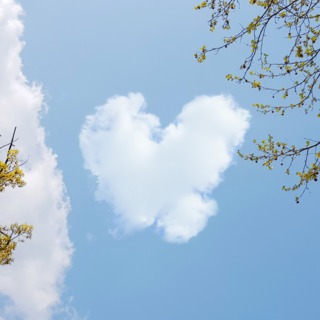
As I shared in the last segment Eckhart totally astutely recognizes that often in our lives the pain is caused by our reaction to an event or circumstance and emotion and so the practice of sitting with our pain is to observe it just as the sky sits as the clouds pass and dissipate.
Knowing from another's perspective the clouds may define the sky in that space,
That limited convergent view of the sky,
The universe knows itself and it knows that the clouds are just passing.
With that understanding we don't need to react.
We allow the space for the tension to subside to stillness and that practice be it meditation seated with your eyes closed or moving meditation through the asanas or postures,
Study thyself and discover the divine.
And a man said speak to us of self-knowledge and he answered saying your hearts know in silence the secrets of the days and the nights but your ears thirst for the sound of your heart's knowledge.
You would know in words that which you have always known in thought.
You would touch with your fingers the naked body of your dreams and it is well you should.
The hidden wellspring of your soul must needs rise and run murmuring to the sea and the treasure of your infinite depths would be revealed to your eyes.
But let there be no scales to weigh your unknown treasures and seek not the depths of your knowledge with staff or sounding line.
For self is a sea boundless and measureless.
Say not I have found the truth but rather I have found a truth.
Say not I have found the path of the soul.
Say rather I have met the soul walking upon my path for the soul walks upon all paths.
The soul walks not upon a line neither does it grow like a reed.
The soul unfolds itself like a lotus of countless petals.
One of the most famous perhaps the most recited Tibetan mantra is om mani padme hum which has been translated as the jewel is in the lotus.
If we pause just for a moment to consider the latin roots of the word inspire in inferring within inside inspire the breath of life and so we practice pranayama the regulation the observance of the breath and recognizing the jewel is in the lotus the divine is within and we are never without.
It's our ego from a place of fear of impermanence starts to control the narrative towards self-preservation and not self-knowledge and so take a few moments just to sit eyes closed and noticing observing learning from your breath perhaps finding just a moment for gratitude for the breath of life from within and may that thought that connection inspire you with all my love with all my gratitude namaste