We want to sleep better at night,
But then we're doom scrolling like before bed.
Like we all know better.
And so it's that balance and that gift of like some discipline that leads to some receptivity of like,
OK,
Wow,
I've done the work and now I can receive the gifts.
Hello,
Beautiful souls,
And welcome to the Soul Collective podcast.
The Soul Collective is a place where we navigate this human experience and raise our planetary frequency collectively.
Together,
We heal,
Grow,
Expand and activate our own inner light by alchemizing programming to look outside of ourselves,
Remembering the deep reservoir of wisdom that resides within.
I'm Emily Gosheras,
Intuitive guide and your host for the soul expansive journey.
Each week,
We'll explore topics centered around spirituality,
Mysticism and healing,
Connecting with renowned thought leaders and providing actionable insights and tools to help transcend self-limiting beliefs,
Raise your personal vibration and to shine bright.
Thanks for spending time with me today.
Now let the collective share begin.
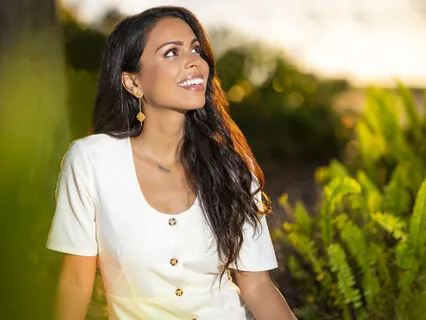
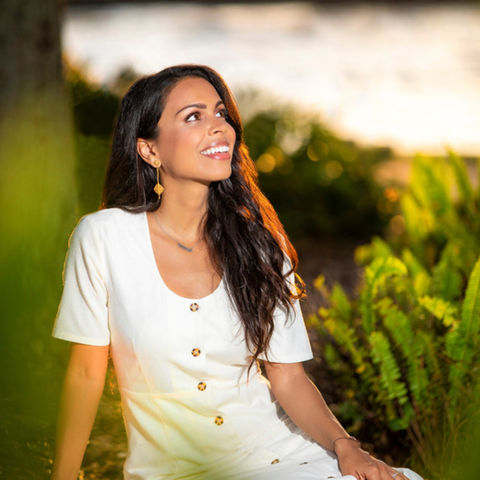
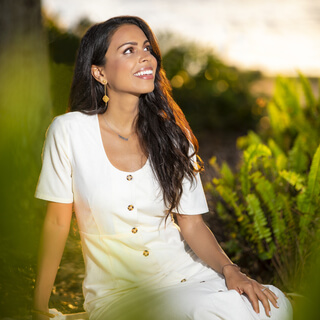
Rebecca Pacheco is an author,
Teacher,
Speaker and creative director.
She is the author of Do Your Own Thing,
Which was named one of the top 10 yoga and meditation books every yogi needs by Yoga Journal,
And it's used in teacher trainings across the United States.
Her most recent book,
Still Life,
Came out this summer,
And it's a book that she's been working on for a long time.
And she's been featured in Forbes,
The Huffington Post,
And she frequently contributes to the Boston Globe.
Rebecca,
Thank you so much for joining us.
Welcome to the Soul Collective podcast.
Hi,
Emily.
Hello,
Soul Collective.
I'm really happy to be here.
Thank you for having me.
Yes.
And we were just chatting before we started recording about some fun stories that we've been sharing with you.
So if you're interested in learning more about soul,
Before we started recording about some fun synergy and both growing up in the Boston area and a lot of overlaps,
I think we were supposed to meet.
Yes,
Absolutely.
So I'm sure it's nice weather up there,
But I just want to ask you,
How do you usually start your day?
Do you have any morning rituals?
Oh,
I love this question because.
In fact,
One of my favorites is relatively new.
It started within the pandemic.
So my,
Well,
My first and foremost beautiful ritual is my four-year-old daughter screaming mama.
That is how the day really begins.
It is of course a very sacred ritual,
But it's not very relaxing.
And it also altered how I do other routines,
How my other routines work.
And the pandemic shifted that greatly as well.
But what I started doing during the pandemic is something that I hope to continue forever and ever.
And that is morning pages.
Are you familiar?
Julie Cameron.
Yes.
So I've been a writer for a long,
Long time.
I studied English literature in college and I always grappled with writing every day.
And this is someone who's had already published a book and here I was working on my second in the pandemic.
I would write frequently.
I would often write every day,
But I didn't have a disciplined practice,
Particularly in the morning that had the same kind of consistency and tenor.
And I started last October.
So now we're kind of coming up on a year of nearly every day,
Including weekends.
I rarely miss,
And I just jot down three longhand pages freehand.
It originated within the book,
The Artist's Way.
For many,
Many years,
I felt like I was maybe getting The Artist's Way through osmosis because so many writers that I admired did it,
Like the Elizabeth Gilberts of the world,
The Anne Lamottes of the world.
And so I kind of thought,
Oh,
I get the idea.
But there has been such a gift in really doing it and diving in.
So that's my absolute morning ritual.
The reason why it works in our real lives,
The reason why it works with a small child is that I can do it while she's eating her breakfast.
I do like dip in and dip out.
We often let her watch her little shows as we get her ready for school.
And so it's a little bit more user-friendly than,
Say,
Sitting down for formal meditation.
I do also meditate daily and I like to get some exercise each day,
But those things don't often happen in the morning.
So the big one is morning pages.
And I am a major tea drinker.
I have a cup of tea right here for those who can only listen and not see the visual.
But I have a cup of tea and I do my pages and that sets me on a steady course.
There's something about writing in the morning.
I feel like it just flows.
I mean,
I'm so curious and I'm sure we'll get into this as like your writing style and approach,
But there's something about the morning where it just kind of flows and it feels like it's your channeling almost.
Do you feel that as well?
And like with your writing in general,
Do you have like a certain time a day that you tend to write?
That's right.
That's right.
It does feel like you're opening up the channel in the morning because you haven't had as much time to acquire the debris of the day.
Yes.
I will say I've had to become a lot less precious and a lot more flexible with when I write.
Like I said,
Between the pandemic and becoming a mother between my two books,
I've had to get kind of gritty and scrappy about writing whenever I can as best I can.
But the morning pages for me are really important because they are quote unquote,
Not good writing.
Like the point is not to be perfectionist about it.
I may or may not be working on something for publication.
You just write what comes.
So to your point about the morning and kind of tapping into something,
It's really about moving things out of the way and just letting what comes come.
And that has been really powerful for me because I was so focused on writing for publication,
For jobs,
For projects.
Like I was very focused on the result and the end goal.
And there's something to be said for that,
Right?
Like I wouldn't be able to make a living and do what I do if I didn't have that discipline.
Totally.
But taking off those kinds of parameters and specifications is so valuable and it's actually made everything else easier and clearer is just because you are kind of like getting the rust out every morning a little bit.
Yeah.
Do you happen to know what your sun,
Moon and rising is?
I don't.
Here's the thing.
I know that I am like a Leo through and through.
Okay.
I've had my heart read.
I am.
I know I can tell you that much.
And when I was digging into your archive,
I was having so much fun with the astrology episodes.
And I thought,
Oh,
I'm such a rookie in this field.
I'm going to have to offer myself up to learn more,
But I am.
Yeah,
You'll have to lick up your chirps.
I have to look up your chart,
But Leo is they come like I was,
I was born Leo is my son,
But I believe it's also my moon.
I was born just after midnight.
Yeah.
Yeah.
So you can teach and we'll have to look up your chart,
But I was just wondering,
Like,
I just,
You mentioned discipline and I just feel like it's such a interesting topic when you talk about meditation and mindfulness and even with writing,
It's like having the discipline,
But also being able to flow and dance with life and create spaciousness is just such a beautiful thing.
And back to what you were saying about the morning pages is like,
I feel like in the morning we're just free from a certain amount of distractions and not something in your book that you write about is like how there has been studies done,
I found this so fascinating about people with test taking and the proximity of their cell phones.
Wasn't that fascinating?
Yeah.
Yeah.
It's amazing.
People didn't think that they were being impacted or influenced by their having their cell phone just even on their desk.
Right?
Yes.
And it's funny because it's shocking.
It's also deeply intuitive.
Like I think we all know we,
We,
We want to believe differently.
We want to believe it's not impacting us in the way that it is,
That it's not a distraction.
I mean,
Look,
I've been teaching yoga for a very long time,
Well before the advent of cell phones,
Long,
Long before the advent of cell phones.
And I've watched how attached we've become and how frequently someone might even have it at the top of their mat and think that it's not distracting them or their neighbor or the teacher.
And it really has an energy of its own.
I mean,
It's,
They are remarkable devices.
I mean,
We,
We can barely function without them now for a lot of reasons,
Not just communication,
But I was driving last night in an unfamiliar area.
Had I not had GPS on my phone,
I would have been literally and figuratively lost.
And it does so much and it is so remarkable,
But we also have to use it intentionally and have some care around the brain power that it takes from us.
And in that study through Harvard,
They,
They tested performance on exams.
They did a control group and they did,
And they did the phone out of the room on the table and then in the room,
But in your bag stowed away.
And it was incrementally performance went down the closer the phone was to your person.
It's wild.
It really is.
Yeah.
So you started teaching yoga at a really young age.
So tell me about how you got started.
Yes.
So I started practicing at the age of 16 and I am not anywhere near 16.
I like to say that I've been doing yoga for so long.
I started before yoga pants.
We didn't even have yoga pants.
We just had pants.
You could wear them.
I got into it because for the same reason that anybody gets into anything as a teenager,
Which is I need someone older and cooler who did it.
And that was what probably drew me,
But I think what kept me there or,
Or that was maybe the superficial reason,
But underneath was that feeling that I think all of us have as young people and as,
As grownups too,
Which is that life is changing and tumultuous and I needed some steady ground.
And I found it in yoga.
I had been a dancer as a young,
As a young girl,
As a young woman.
And I had stopped dancing ballet maybe a year or two prior and maybe yoga fit that void for me.
I went into a class where I was the youngest by generations.
I mean,
Not,
Not by a few years,
But by generations,
I was among kind of a retired community.
I was 16.
And I just really fell in love with it.
I began teaching while still in college while studying abroad.
And we were actually on a ship.
Did you do Semester at Sea?
I did.
I did.
You know it?
My twin brother did Semester at Sea.
Stop it.
I know we have all these fun little synchronicities,
But he absolutely loved,
Loved it.
Yeah.
I mean,
Talk about an incredible experience.
I mean,
For,
For people listening,
You,
You,
You,
You,
You,
You,
You circumnavigate the globe,
You go around the world.
I chose it because I had always wanted to study abroad,
But couldn't decide on one country where I would set down roots.
And I also had such interest and intrigue with countries that were not part of study abroad programs within my university.
For example,
India,
The homeland of yoga,
I was already deeply kind of entrenched in Eastern philosophy.
I was already taking classes on Buddhism and Hinduism.
And so the opportunity to get there,
I mean,
It's so far away that I knew that it was going to be.
Even at that young age in college,
I knew that it was going to take a lot for me to get to those places in my adult life.
Like whatever real life held,
I didn't quite know yet,
But I had a feeling it would be hard to get all the way to India.
And so I went my junior year and it became this magical thing on the ship.
I mean,
The thing about a ship is that once you've set sail,
That's it,
Like you're your own entity.
So there was a recreation meeting and they said,
What kind of activities would you like?
And a friend of mine and I went and we said,
We,
We want yoga.
And they said,
Great,
Do it.
And we said,
We're not yoga teachers.
And this is the year 2000 that like teacher training programs barely exist.
They are in their infancy.
I mean,
There's no such thing as yoga lions at that time.
And so anyway,
We started and then when I came home,
I became properly trained and I worked for a very big studio and then I sort of branched out on my own and I've had a very,
Very windy path.
But yes,
I started very young.
Yeah.
Would you say,
Was there anything like tumultuous in your life?
Like did that lead to a spiritual,
Like,
Would you say that coincide with like a spiritual awakening,
If you will,
Or was it just sort of like an organic process of finding yoga and developing a love for it?
Like how did that unfold?
There have been a lot of spiritual awakenings and breakdowns and,
And discovery.
I think for whatever reason,
I,
I have this early memory of being in my first class and I write about it in my first book.
The teacher was this incredible woman named Carol and she greeted me at my first class.
I did not,
Emily,
I didn't even have a yoga mat.
I had a beach towel.
And in my defense,
Yoga mats didn't really exist.
I mean,
They were kind of evolving in terms of the,
You know,
Nice rubber material.
We often did yoga on like rugs.
I mean,
This is the mid to late nineties.
It's funny.
It's not that long ago,
But it's a long time in terms of evolution and gear and what we now know as the yoga industry.
There was none of that.
Studios were in their infancy.
They did yoga in places like church basements and community halls.
And it was kind of this underground grassroots thing.
So I started young.
I go into this first class and I remember Carol,
The instructor looking at me and she didn't say it explicitly,
But I heard,
Yeah,
This kid needs to be here.
Like she didn't say it,
But she didn't make a fuss about how young I was.
Nobody said,
Oh,
You're so cute.
How did you find this class?
They just accepted that I was in this room with people many decades older than me.
And that,
That that was great.
And I felt very welcomed.
I think even before that,
I was a spiritual seeker of sorts.
I grew up,
I'm ethnically Catholic,
But not actively Catholic.
I questioned my faith from the start just about.
I asked a lot of questions,
Particularly as I became aware of the discrepancy discrepancies in equality or,
Or the very stark lack thereof of equality for the sexes.
I had a lot of questions about that.
I had a lot of questions and a lot of issues with the stance at that time on,
On not even gay marriage,
Gay marriage was not even a conversation,
But just their stance on same sex relationships.
So I was seeking from the start.
Yeah.
I think if that is any indication of where I was headed and,
And then as I.
Between my studies in college and how I looked at my career,
I never actually thought that I would do this as a career.
It did organically unfold.
I've worked in other industries and sometimes yoga was my side hustle.
As we now say,
Sometimes it was my full-time job.
I've worn many,
Many hats and I've just sort of fashioned a career out of what drove me and what kept me really interested.
Um,
And it's sort of coincidental that,
That it was yoga so long ago.
But even this book is not necessarily a yoga book.
It's,
It's not even totally a meditation book.
It's more of a life book and it's about living mindfully.
And no matter what I'm writing about,
The core is yoga and mindfulness and,
And those questions of seeking and spirituality.
It's funny as I'm talking to you,
I'm realizing that this book concludes.
I don't know if you've made it to the end yet,
So I don't want to spoil,
But it concludes with some conversations with spiritual leaders that I was seeking.
Uh,
Kind of solace from and wisdom from.
And I think that that's been a common thread is just that seeking and questioning and wanting to know more and not necessarily subscribing to a specific religion or,
Or faith community,
But,
But creating my own rituals along the way and,
And seeking to learn and to honor the lineages and communities with which I come in contact.
Yeah.
Yeah.
Yeah,
We were talking a little bit before we started recording about how life kind of meets us and especially for working on a project,
I feel like there's,
There's the universe tests us with like,
Oh yeah,
You want to write about meditation?
Well,
It's such a wonderful time for this book to come out because I feel like collectively there's a lot of noise.
That's happening right now.
And there's certainly a lot of,
I would say.
Questions that are coming up differing opinions ways to handle things in the best way possible for the collective of humanity it's a time where it can feel,
You know,
Overwhelming at times and intense and certainly having tools and having a practice to fall back upon and to ground ourselves,
I think is so,
So important.
Did you write it specifically for?
Oh,
No.
Well,
Well,
Look,
It took longer than it,
Than it should have.
That's just a fact of life.
I,
I like to joke that I intended to write a book about meditation for real life and then real life really stepped up to see if I meant it.
So,
So there were a lot of obstacles is what I mean to say.
And,
And there is a lot of turmoil in the world to your point.
I was writing through some of the most tumultuous times socially,
Politically,
Financially,
Environmentally,
We are experiencing grave,
Grave crisis,
Danger,
Extreme weather happening in every region of the country.
I don't have to tell you,
You are you're in Florida.
It's hotter than ever.
We have fires,
We have floods.
And so you it's,
It's possible that we might throw up our hands and go,
It's too much,
It's too much.
I can't handle it.
And we would all have plenty of reasons each day to just crumble into a puddle.
But we can't.
And,
And we,
We do need some tools to remain steady and to face the present moment no matter what it is.
And to face it with an open heart,
With an,
With a clear mind,
With clear eyes.
So I never intended to write a pandemic book.
It's certainly not a pandemic book in the end,
But I did have to go back.
I was editing during the pandemic and I thought,
Well,
I don't want this book to be stuck in this period in time,
But it does need to have an awareness of what we're doing.
And it needs to have an awareness of how our lives have changed.
Yeah.
Because our lives,
All our lives,
And obviously not on an equal level.
We know that certain folks,
BIPOC folks,
For example,
Marginalized communities,
They experienced far greater loss and vulnerability,
Frontline workers,
Essential workers,
Depending on where you live and depending on who's in charge and depending on your family,
Depending on your family,
Depending on your family,
Depending on your family,
Depending on your family.
And so I needed the book to have a consciousness of that,
An awareness of that,
And also an ability or a sensibility that we could process it,
That we need to process it.
So I'm happy the book is coming out now.
It was kind of brutal to write during that time period.
But I have to tell you that even on the hardest days in terms of the logistics of writing,
The logistics of child care,
The logistics of getting to the grocery store and keeping ourselves safe,
Right?
Like all of the things we,
Anyone listening knows,
Lived through it,
Knows the things.
We're still living through it.
But even when things were overwhelming,
The tools that I used to manage it were the same.
Yeah.
And what are those tools for you?
Like what are.
.
.
I mean,
Even when I thought,
Even when the book was overwhelming and the process of writing a book about meditation was too much,
I would still sit down and meditate as the way to cope.
And it would still work for me.
And that's not to say that it's magical fairy dust and it makes everything all better,
But it does help me sleep at night.
It helps me speak to my child.
My little girl who doesn't know what's going on.
She's too small.
So I just,
I need to pay attention to her and be there for her.
That's the essence of parenting.
But it's also the essence of mindfulness is to pay attention.
It's the awareness that arises from paying attention on purpose in the present moment.
So no matter how rough things got,
It was the same things that grounded me.
It was meditation.
I started doing them live online for anyone who wanted to join,
Totally free.
We did it every night for a while in the early days of the pandemic.
I did test some of my material in the book with those groups just to see what people were connecting with.
I do yoga.
I also am a very athletic person.
And so I like to run or to walk.
I find a lot of solace in nature.
Just being in green space.
I actually live in a city.
You're very familiar with my city,
But I live close to the Arnold Arboretum,
Which is owned by Harvard University.
It's basically the equivalent of a tree museum.
It's a big outdoor space with lots of trees.
And I love books.
I love reading and writing.
And I don't write poetry,
But I find a deep spiritual connection and a sense of peace in poetry.
I teach an online class now,
A yoga class weekly.
And I started in the pandemic often bringing a poem or a stanza of poetry to share with people.
And it has been a bomb.
So those are some of the things that keep me going.
And many of them are in still life.
And I hope that it speaks to people and it does give them a way to kind of metabolize what they've been through and to have clear sights for how they want things to be different,
Because inevitably things will be different for us.
So,
Rebecca,
What would you recommend for somebody who maybe doesn't have a regular yoga or meditation practice and maybe is looking to somehow connect with that stillness?
Yeah.
I think the main objective is to start with a reasonable commitment.
If you want to meditate,
Start with a reasonable commitment.
Maybe that's five minutes.
I think what happens too frequently,
Particularly with meditation,
Is that we give it a go.
And it's hard.
It's really hard when you're starting out.
And so immediately people presume I'm doing this wrong.
I can't stop my thoughts.
These are some of the myths that I address.
Yeah.
You're not doing it wrong.
You're not supposed to stop your thoughts,
Actually.
You're just supposed to watch them,
Observe them.
Over time,
You will create a little bit of space,
A pause between you and your thoughts.
They will have less power over you.
You'll start to discern what's important and maybe what's not so important.
But what happens,
I think,
Is people really,
They're not going to be able to really,
They want to try,
They want to begin gung-ho.
And for a long time,
I thought like anything less than 20 minutes a day was a waste of time.
And that caused me a lot of strife and struggle.
And in the book,
I share a one-minute meditation.
You can do a one-minute meditation.
I frequently share that.
Maybe you start at five.
You start small.
You start reasonable.
You take all of the parameters and the guidelines and the perfections off of it.
If you need an app to get going,
That's fine.
That's fine.
Yoga,
Same way.
Start small.
Now we're very blessed.
We have a lot of online options for things.
And then it's just kind of consistency.
We open chatting about discipline.
And that's how you get good at anything is practice.
And the beautiful thing about meditation is that it's not a performance-based activity.
There's this beautiful quote by Alan Watts.
He says,
What is a good meditator then?
One who meditates.
Mm.
Love that.
Yeah.
I think for people who want to start knowing that,
Then just the doing is very powerful and it will serve you.
And bit by bit,
It will give you a little bit of space.
It won't solve all your problems because life is fraught no matter what.
It's still life,
But it does help for the journey and it gives us some steady ground to start with.
Yeah.
I love that you share that it doesn't have to be 20 minutes or you don't have to jump into the deep end because oftentimes if I'm feeling anxious,
I will connect with a single prayer that I say,
I'm not sure.
Oh,
I love that.
Is it one or do you choose different ones?
Recently,
It's been the same one and it's a prayer that like channeled through me and it just really connects me with the frequency of self-love.
And like it just resets me and it centers me and it drops me into my heart and I find it to be so,
So powerful.
And it's like 30 seconds maybe of just connecting with that energy and that frequency.
And so I love how you say like it can be a small minute long meditation or something that just drops you into your heart that can completely shift your energy.
Yeah.
And I think we need to take some of the evaluations and sort of calculus off of it of how it should look or how it should happen or when it should happen and just get into a habit of exploring.
Right.
Like that prayer didn't come to you overnight.
You didn't write it in your planner and say,
I want to come up with a prayer that speaks to my heart and drops me into a frequency of self-love tomorrow.
Right.
It had to emerge.
But you had put yourself each day,
I'm sure,
Into a flow of being present or getting quiet or whatever it was for you that when the time came,
That prayer showed up for you and you were able to recognize this really matters,
This really helps me.
I'm going to keep this in my back pocket.
I'm going to use it.
Like it's getting quiet enough to hear some of the answers and to receive some of the peace.
How often have we seen people that say they're so stressed out,
They need more peace in their life,
But then show up to the yoga class with the phone at the top of the mat still on and we're all guilty.
Yeah.
I have done the same thing.
Like we want to sleep better at night,
But then we're doom scrolling right before bed.
Like we all know better.
And so it's that balance and that gift of like some discipline that leads to some receptivity of like,
OK,
Wow,
I've done the work and now I can receive the gifts.
Yeah,
I totally agree.
And I think that the discipline leads to understanding and feeling the benefits because in the beginning,
Like you said,
We've all been there where like the distractions are,
I don't have time to meditate.
Like and then it takes some time to be in that place of discipline before we start to be able to like see and feel the results of that practice.
Do you have time for a quick story?
Yeah,
Please.
So I had the experience similar to trying to write every day.
I had that many,
Many years prior with meditation.
Like many listeners,
I'm sure like many people that you've come in contact with,
I wanted to have a daily meditation practice.
I kept trying and failing spectacularly.
I kept trying to do it at the same time every day in the morning when I woke up.
I think I was operating under the miscomprehension that it needed to look a certain way.
And so finally I just took all parameters off and I said,
You know what?
I just need to do it.
So that meant it could be 20 minutes on my little rug with a candle in my quiet apartment.
But it could also be three minutes in my parked car after I've arrived in the park.
After I've awoken and realized it's street cleaning and I have to move my car and I run down the street in my pajamas and move my car before it gets towed.
And then I sit in the car,
Turn it off,
Windows up and just meditate for three minutes in the car.
And it was once I gave myself that permission and that discipline to just do something each day,
Then things transformed.
And then you do have the time.
Like everybody has three minutes.
You can start there.
And then for years I was absolutely vigilant every day.
It was about five years.
Then of course I had a baby.
You know what happened?
I didn't meditate every day for a while.
And then that's the beauty of meditation.
The entire skill of it is beginning again.
You have a thought,
Your mind wanders away.
You start over,
You take a breath.
You get a good rhythm going with whatever mindfulness practice serves you.
You do it for weeks or months or years.
You fall off,
You start out,
You begin again.
And this is the nature of anything.
It's the nature of life.
That's beautiful.
Speaking of discipline,
There's a lot of people that are maybe listening that have a book on their hearts that they want to bring forward and birth into the world.
And sometimes it is just overwhelming to know,
Okay,
How do I get it out there?
How do I develop a routine?
What advice would you have to aspiring authors out there?
We could do a whole separate episode on this topic.
It's one that I love so much,
But I would say that first you just need to write.
That is the most unsexy writing advice ever,
But it is the only one that works.
You just need to start getting it down.
I do highly recommend the artist way that we talked about at the start of the episode,
Julia Cameron.
Basically,
You write longhand every morning.
Just it's not good writing.
You type or do you actually like handwrite?
I handwrite.
When I'm writing a book,
When I'm writing for publication,
I do type.
Yeah.
Naturally.
It always,
It's got to get typed at some point.
Right.
But in the morning,
And particularly if I'm stuck.
That's the other thing.
If I'm stuck in my manuscript,
I might go back to handwritten as well.
I think it slows our minds down a little bit.
I think it does help with a quality of mindfulness,
Even in the writing.
And then I would say one practical piece of advice for those who have a book on their hearts that they want to get out is to write,
To start with a one page synopsis of what that book is.
You will need that for publication if that's the path you're going to choose.
But even before that,
It will help give you a cogent approach and argument.
It will start to crystallize what this book is.
So that's just a practical piece of advice.
Start with a one page,
Two page synopsis of the book.
You could expand it into an outline that some people work very well off of outlines.
Some people just play fast and loose and see where a creativity project takes you.
There is no wrong approach,
But you do have to put your butt in the chair and just get it down on paper.
Do you write every single day?
I do now.
Yeah,
I write my morning pages no matter what.
I am just in the early stages of my third book.
And so when things calm down a little bit with still life,
Sometime in the fall,
I will then get a little bit more vigilant and a little bit more routine with working on one project each day.
It's like the equivalent in running of like just keeping yourself fit or training for a race.
Right now,
I'm just kind of staying fit and just getting out there,
Jogging a few miles,
Letting my words fall where they may.
And then this fall,
I'll kind of go back into training mode and get more event specific,
So to speak.
That's a great analogy.
I love that.
Yeah,
But you have to stay fit and fresh,
Right?
Just running or whatever it is that someone might like to do.
You want to stay in the game.
But when you're focused on a particular project,
Event,
Race,
Then it takes on a different quality.
The focus is different.
You might also the other advice that I have for writers is that while writing is a solitary act,
You do have to do it alone.
You need a community as well.
You need I love the name of your show,
The Soul Collective.
You do need your own kind of soul collective of people.
You don't want too many,
But a select group of whether it's readers,
Editors,
A trust a trusted friend,
Just one mentor.
It has to feel right.
But along the way,
You have to have other people to help you.
Someday it might be an agent,
An editor.
The collective will grow and change with each project.
But while we write,
While it's an ice,
It can be very isolating.
You don't really do it wholly alone.
We all we all kind of need our little village.
I love that.
How have you cultivated that?
Well,
It's funny.
It does change with each book and with each kind of chapter of life.
Really,
I am fortunate that I have now a lot of friends who are writers.
I have a couple mentors.
I have kind of a book mentor and more of a essay mentor when I when I write for,
For example,
The Boston Globe.
And sometimes we have to keep things close to the best,
Like when something is really fresh and new,
I won't share it for a while.
And then you want to go to the right person and be clear with them of what you're looking for.
Right.
Like different people have different skill sets.
Yeah.
Sometimes I'll say like,
Hey,
I just I just need a temperature check on this one.
Right.
Because you don't want to give something that's very vulnerable and unformed and someone's niddling on like you need a comma here.
Right.
Like that's not what you're after.
Yeah.
So then you want to say like,
Hey,
I just can you give this a quick read?
I want your initial gut reaction.
Or is it more fine tuning?
Is it more is does this paragraph achieve what I need?
Should this word change?
Right.
Like then you can dial down,
But you want to go to the right person for what you're hoping to accomplish with the piece.
That makes so much sense.
You know,
Rebecca,
You wrote an amazing article that I wanted to ask you about.
And it was about throwing away the scale during the pandemic.
And I just I loved it.
I think that there can be a lot of programs that run in the background around weight and body image.
And I would imagine even especially in the fitness wellness community.
So I just want to ask you what inspired you to write that article and what's what's come from it?
Yeah.
So the moment of inspiration was that I accidentally smashed my scale into a zillion pieces.
It was those I'm on video now,
But you can see I'm lifting a wall of my body.
I'm lifting a water glass,
Kind of a heavy duty glass of water.
And it slid off the sink down onto the scale.
And it exploded into a pile of what looked like rock crystals.
And I exhale like it was exhilarating.
It was quite light.
It was so in the essay I opened by saying it was it was like performance art.
And immediately the essay started writing itself.
It took a few days.
I kind of let it marinate and then I sat down to write it.
And what emerged were things that I have been thinking about forever that are not new to any anyone,
Particularly women who are faced with just so many expectations and critiques and ways that we can shame ourselves and evaluate ourselves and measure.
And so I just wanted to give voice to that.
What I shared was the specific journey to me,
But but a very unspecific journey to so many women.
I shared the specific journey of becoming pregnant and something happened when I discovered I was having a girl in particular where.
I had been working on my relationship with my body,
My body image for many years.
I had come a very long way.
But finally,
When I became pregnant with a girl,
I just lost any tolerance for.
That voice of self.
Loathing of unworthiness,
I started to see it as being almost in the air,
Like I just and you're pregnant,
You're right.
You want to protect your child from any sort of environmental hazards.
I mean,
Lots of women might not dye their hair or you want to be careful about eating certain things.
Right.
We are not drinking alcohol,
Not being around secondhand smoke.
Like that's all just common knowledge.
But to me,
There just was this also deeper layer of emotional landscape and environment that suddenly I was like,
Oh,
Yeah,
No way.
I will not let her hear that,
Feel that when you're pregnant,
People suddenly and it's it's sort of maddening.
Like,
Feel an entitlement to the body of pregnant women.
I mean,
People touch you or they may touch you or comment on your body in ways that is never it's not appropriate in any other chapter of your life.
But somehow people presume it's OK for a pregnant woman.
Right.
Like people would tell me about or men would tell me about their wives and like their breasts,
How their breasts change.
I'm like,
In what world would it be appropriate for you to tell me about your wife's breasts?
But somehow you think it's OK because because I'm pregnant.
So bonkers.
And and I know that I'm not being totally articulate with your question,
But I just wanted to speak to that experience and to bring it back to to.
The fact that our bodies are not to be measured for how they appear to other people,
They are to be lived in during the pandemic,
We were fortunate enough that they protected us,
They kept us alive.
Maybe they sat on the couch and watched Netflix and didn't get out of sweatpants for many weeks.
That's OK.
This body kept me alive.
This body fed my daughter.
This this body went for walks.
This body went to the grocery store like we have all been through something intense.
And I keep hearing again and again how a lot of people carrying a little extra weight or maybe a lot of extra weight and maybe that weight will come off.
Maybe it won't.
That's not a judgment on someone's character.
That's just a fact of diets.
It's just it's just the reality of having a body.
It changes.
And whether it's going it's going to change again.
Right.
And so we we might as well befriend it right now and and love it and appreciate it and give it a little credit for what it's been through on the journey to wherever we're going next.
Right.
And and I love fitness as much as the next person.
I love a vigorous yoga class or I love a run,
But I do those things because they feel good.
Like they're enjoyable for me.
And I don't ever want to be the person in wellness that's telling folks that they need to take up running if it makes them unhappy,
If it makes them miserable.
Like you definitely move your body in ways that brings you joy,
That that helps you sleep at night,
That makes your meal taste better.
There's nothing like a great hearty meal after you've exerted yourself.
Those are all wonderful things.
But I just think it's it's so unfortunate that we get trapped in the measurement devices,
The scales of other people and how we should fit into those molds.
And so that's what I tried to do.
I have goosebumps all over listening to you talk.
Thank you for sharing that.
And I,
Like you,
Have been totally on an evolution journey of body acceptance and self-love.
And I have never been pregnant,
But I imagine having a child,
Just the desire to want them so deeply to feel comfortable in their skin,
Whatever shape,
Form that may be.
And that's how we should all feel.
And it's just amazing like that,
That ability to imagine that in the form of your child.
It's like we can do that for ourselves and our own,
Our own inner child in terms of just giving ourselves that unconditional love and acceptance.
Yes,
Because even even without having a child,
Very intuitively,
How you would speak to a friend and your if a friend came to you and said,
Oh,
I feel so awful about myself or was having a hard time.
You'd be like,
Look,
I love you.
You're beautiful no matter what.
Like it would come very naturally how you would speak to your friend.
And then somehow we get on a scale or we get in a dressing room and we say to ourselves the most horrible things we say things to ourselves we would never dare say to a friend or a child.
And it becomes very,
Very clear.
Right.
So those are the things that I wanted to raise.
And I also think that within the wellness community or within diet culture,
Things have gotten very crafty and kind of camouflage disguised.
Right.
And so that's why I have always been hesitant to share,
For example,
How I eat.
Right.
Like I don't eat much meat,
But I'm not a vegan.
Like I don't subscribe and I don't really want to promote one way because we just need to feed our bodies.
I think sometimes in wellness,
It becomes kind of this ambiguous controlling like you must this way and drink this juice and do these workouts.
And it's all about we don't use the word diet.
Right.
But it's kind of the same messaging,
Or at least it can.
The blood belly.
Yeah.
I'm not nailing it in terms of my phrasing right now,
But you know it when you see it.
It's kind of and so we can dress it up a different way.
We can put it in yoga pants,
But it's still diet culture.
Yoga is not the problem.
The problem is the why the problem is.
Are we trying to whittle ourselves down to something or are we doing something to make ourselves feel strong and capable and happy and competent?
I want to see my daughter or I want my daughter to see me feeling happy in my body and being active and not ashamed of how and how other people look.
Right.
Like all bodies are beautiful and valuable.
And like I said,
I mean,
Anyone who's walking around right now,
We made it through something.
You have your body to thank for that.
Yes.
Yeah.
So,
So beautiful.
Thank you.
Thank you for reading that.
I appreciate that so much.
Yeah.
Thank you for writing it.
It is,
You know,
Such a great dialogue and to look at the underlying thoughts are,
I think,
So,
So important.
There are a lot of people doing a lot of great work.
I am inspired by a lot of other people in this field,
Too.
But who are some people that inspire you?
Yeah,
I haven't made it through her whole book yet,
But the title is The Body is Not an Apology.
The Body is Not an Apology.
I've just heard of that.
Yes.
Who wrote that,
Tina?
The Body is Not an Apology is written by,
I believe it's Sonya Taylor.
She has a middle name,
Maybe.
I could,
I'm getting it wrong,
But she's doing great work.
Brene Brown interviewed her on her podcast.
I've listened to her a couple times,
But that is just the title alone captures something that we can all relate to.
And obviously some bodies have to relate to that feeling more than others.
We all know that some bodies are more accepted in our society.
Certain bodies are made to feel more comfortable in certain spaces.
And others are not.
And I don't want my daughter to perpetuate those old outdated models of what beauty is,
About what value is.
So there are a lot of great people contributing to the conversation.
Yeah.
There's a pair of authors,
Too,
That do great research in this field.
And I can't remember their names either,
But I could also share them with you and you could add them to the show notes.
Yeah,
I love how at the end of your book,
You have conversations with people who have inspired you.
Who are some people that you've really enjoyed having those conversations with?
Yeah,
Well,
The two people,
The book at the end are two local spiritual leaders.
One,
A Tibetan Buddhist monk,
A venerable monk named Geshe Tenli,
Based north of Boston.
And then a minister,
A woman named Nancy Taylor,
Who is the senior minister at Old South Church,
Which is one of the oldest churches in the country.
It just celebrated its 350th anniversary.
And now I'm not a member of either of these faith communities,
Per se.
I am aligned with the Buddhist Meditation Center.
I visit there on occasion.
But these are just two people that have inspired me over the years.
And I became obsessed while I was writing with how to be okay when the world is not okay with this question.
And to be totally candid,
I did not have the answer.
Like,
Tell us,
Please.
And I don't want to give away the ending.
So I needed reinforcements.
And I went to these two leaders in the community.
I spoke to them both.
I asked them this question.
I sat diligently with my notebook and my pen ready for the answers,
These big,
Leading existential questions.
And what it came down to was that we are not helpless.
We are not without agency.
And human nature is good.
The very fact that we exist as a species is a testament to collaboration,
To the fact that we at one point decided instead of being out in the woods,
Hunting and gathering and living in a cave by ourselves,
That we would protect each other and take care of each other.
Right?
And so just coming back to that nature of goodness,
That source of inner stillness,
Of compassion,
Of love,
However you think of it,
Some people call it God.
So both of these leaders sort of steered me back and steered the end of the book back to this place of remembering.
And one teaching that I really appreciate from another mindfulness teacher who does make an appearance in the book,
Tara Brach,
Says that the spiritual path is one of remembering.
And so it's not,
You know,
How to make everything okay when the world is not okay,
But it's how to be okay with yourself,
Even when the world is dramatically not okay.
It's how to find steadiness.
We are not blocking out reality.
We're not glistening out and ignoring the moment.
We are showing up courageously for whatever happens.
We're showing up with love.
You are speaking to people and bringing beautiful conversations and resources and ways of healing and ways of investigating and mapping your astrology,
Maybe,
But learning about yourself and being inquisitive about the people around you.
I'm trying to do it with meditation,
With yoga,
With writing.
People do it just by the children they raise or the garden they plant.
It's just all of these ways of bringing some goodness into the world and seeing that within other people.
So those spiritual leaders brought me back to that moment,
And I ended on the book as the myths and magic of mindful living.
And to me,
People are the magic.
I love that so much.
And what a beautiful reminder.
Thank you so much for sharing that.
Rebecca,
You are on Instagram at OmGal.
Hi,
There.
And can you share where else people can connect with you and find your books?
First,
I just want to say thank you for this conversation.
Oh,
My gosh.
Thank you.
Yeah.
If people want to find me,
I'm OmGal on social media.
And then Still Life Book is probably the best way to find me,
Stilllifebook.
Com.
And that will take you to my website and people can figure out all the things that I'm doing and offering.
And also you can buy the book there.
You can buy the book wherever books are sold.
Awesome.
Awesome.
Thank you.
Thank you.
Thank you.
So many blessings to you,
Rebecca,
And many blessings to everyone listening.
Thank you so much,
Everybody.
Thank you so much for joining me on the Soul Collective.
It is my deepest pleasure and most divine honor to co-create with all of you.
I know I learned so much in this episode and I hope you did as well.
One of the things that I love most in the world is connecting with all of you and hearing your feedback.
So please leave me a comment and share what your biggest takeaway was from this collective share.
Also,
If you haven't subscribed or reviewed the podcast,
Please do so.
Your feedback helps the show so,
So much and we're able to bring on even more of your feedback and we're able to bring on even more amazing guests.
Just a reminder that our journeys are not meant to be linear and therefore it's easy to forget how far we've come,
What we've healed from,
And the massive shifts and expansion which has taken place.
It is the small steps done consistently which creates big change over time.
So keep shining your light,
Trusting,
Showing up,
And being you.
I'm sending you so,
So much love and gratitude and I look forward to connecting with you next time.