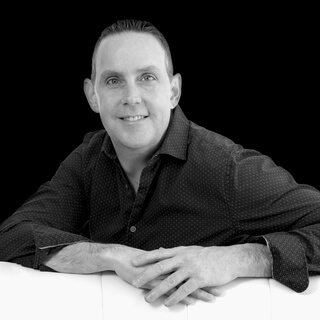
Welcome to Life,
Lessons,
And Laughter with your host Glenn Ambrose.
Hey everybody,
Welcome to the show.
So today we are doing a wonderful episode inspired by some of my work with my clients.
And it's come up a few times,
Actually quite a few times,
And it's come up with my son and it's come up with myself.
So I kind of wrote it out recently and I said,
You know,
This would be a good episode.
So it's really all about implementing new behaviors and kind of getting a strategic way to kind of go through the steps and do that.
So before we get any further,
We have to say hello to Ben.
Hey guys.
Alright,
Yeah,
So I'm excited for this episode.
It's a great episode for,
You know,
When you're listening to this,
It'll be the start of a new year.
If you're listening to it when it comes out,
Which is always great.
That wasn't planned,
But it just happens to line up with when this came to you,
Glenn.
So we're talking about three steps to implement change.
Yes.
So the first one that you have is all about,
You know.
It's basically setting the intention and setting your plan in place.
So the biggest piece with this is to do it ahead of time.
Like make this its own exercise.
So do it because what happens is like when we're trying to implement something new,
Basically our ego is trying to find ways of not doing it.
So it's trying to talk us out of it.
That's why we can't make any decisions in the moment of.
So what you want to do is just set your ego at ease by letting your ego know that you're not doing this now.
You're not doing it today.
You're just kind of setting a plan.
You're just talking about it.
And then your ego will relax because it doesn't,
Your ego can't really handle long term thinking very well.
So what it does is it just relaxes and it's like,
Oh,
OK,
So we're not doing it now.
Not now.
Right.
Definitely not now.
You know,
No,
Definitely not now.
We're just talking about stuff.
It's just we're just talking about it.
You don't have to do anything now.
And then your ego goes,
Oh,
OK.
And it relaxes.
Then you can kind of set a plan in place without all that resistance coming at you from your ego.
And you know,
You set it up and be specific with your plan.
So I guess the first point I wanted to make was really to set the plan when you're not when you're about to go do it.
Like say,
You know,
Set your plan in place on a weekend or something.
And then you're going to start the following week,
You know,
Or you're going to start whenever.
But set your plan in place ahead of time where your thinking is clear,
Your ego is not coming in going,
Well,
That might not work.
Well,
That might not work.
And throwing in all these confusing bits of information trying to block you because that's what it does.
So you just set the ego at rest,
Letting your ego know you're not doing it now.
And then you create the plan and understand when you're doing that,
You're really thinking clearly because and that's going to come in later because later on when it comes time to implement this stuff,
Your ego is going to start telling you you're crazy and this is a bad idea and you shouldn't be doing it.
And you didn't think of this and you didn't think of that.
In that moment,
That's when your ego is in control.
That's when your thinking isn't clear.
So that's when you don't want to pay attention to your thinking.
You do want to pay attention to your thinking when there's no pressure on you,
When you're looking at things clearly,
When you're setting in place a plan for something you want to accomplish in the future.
So make sure you're clear on that difference.
The clarity of mind is now when you're building the plan.
It is not when your ego is trying to talk you out of it.
So that's trust your thinking when you should be trusting your thinking.
Don't trust your thinking when you should not be trusting your thinking.
So that's step one.
So what do you think about step one Ben?
I like step one.
Step one is great because setting up the plan ahead of time I think is really crucial.
A lot of people,
A lot of businesses,
A lot of everything,
When things are rushed,
When you make the decisions ahead of time,
When you make a quick decision and I want to do this and I'm going to try to pivot on a dime,
That's usually not a good thing.
It's not usually the best.
And when you take more time and you can,
Well I don't want to get ahead of ourselves,
But when you take the time to plan and really work on getting the stuff together that you're going to implement,
Then you have a strategy that you can follow.
You have sort of a map and a game plan that you can follow.
And I think that that's great,
That's important.
It's easier to follow.
Even if you're the one making your directions,
It's easier to follow directions than to figure it out as you go.
Right and it's really,
If you pay close attention to your body language,
It's probably,
I mean some fear can bubble up,
It's possible.
It's not going to be overwhelming though because your ego isn't trying to talk you out of it because you don't have to take any action yet.
So it's completely manageable.
But if you pay close attention,
You're probably going to feel some excitement because obviously you're setting a plan for something that you've wanted to accomplish and you've probably wanted to accomplish it for a while.
Or at least it's a stepping stone to something you've wanted to accomplish for a while.
So there's a level of excitement that starts bubbling up.
So here's a personal example of when I did step one well.
Towards the end of 2015,
There was a lot of stuff that I wanted to accomplish in 2016 and a lot of personal goals,
A lot of business goals,
Several,
I was doing way too much stuff at the time,
Honestly.
And but I took the time starting in like October to go,
All right,
I'm going to have a plan so that when January comes,
I'm going to attack this.
And I had this plan set out.
And in January,
I started implementing the plan.
And by the end of January,
The year looked way bigger than I had ever imagined.
And so many things happened.
We moved to a bigger,
Better place.
The business really exploded that year.
The children's theater business that I was doing at the time exploded that year.
So many different awesome things happened because I took the time to plan it out before implementing it.
And I should probably take my own advice and do that again.
Yeah.
And I mean,
Of course,
Where this can be grand scale or it can be small things too.
So it's I mean,
With the grand scale,
Usually you have to keep in mind you need room to breathe.
We want to implement structure.
And so you can be like,
Setting up a plan like,
OK,
I'm going to do this at this time of the morning and I'm going to work on this in this afternoon.
Not necessarily that I'm going to do this and it's going to work out perfectly.
And then starting on this day,
I'm going to do that.
Because life happens and there needs to be a little room for breathing,
Especially with the big stuff.
But it's just setting the structured stuff in place so we can stick to it and break through.
We're very habitual beings.
I say it all the time.
So it's breaking through that habit in creating a new one,
That structured pattern.
You know,
To give you to give you the opposite example and on a smaller scale.
I don't know if you remember this,
Like July 30th of this past year,
I decided that for the entire month of August,
I was going to go vegetarian.
Do you remember that?
Yeah.
And I didn't plan it at all.
I just was like,
All right,
Tomorrow,
Like,
I'm just going to do this.
I've been thinking about it,
But I hadn't planned at all and failed miserably.
It was great for a week,
But then I looked at all of the nutrition stuff that I had been going and I tried to do it as I went instead of planning.
And it was the opposite of the previous story.
Yeah,
So it does.
The planning helps a lot.
Which actually,
It's naturally kind of spilling right into the second part of it,
Which is what types of things are we going to plan?
What does planning it look like?
And that's really the action steps.
And it's really getting specific with things that you're going to do.
And if you're creating,
Again,
This can vary small scale to large scale,
But right now,
A lot of people,
We do too much.
A lot of times we work too much.
And sometimes it's work,
Sometimes it's distraction.
But now with technology,
A lot of times working too much and distracting ourselves too much look very similar because it's on devices,
The TV or the computer or the cell phone.
And so things like that,
When you're distracting yourself or working too much,
It's very unconscious.
So you have to make things difficult.
You have to make yourself think if you're going to go do something.
So if you say,
I'm not going to get on my phone for the rest of the night,
And you put your phone right next to you,
There's a gigantic chance you're going to be on it.
Because unconsciously,
You're just going to pick it up or your brain,
Your ego is going to say something like,
Well,
Just,
I mean,
It'd be foolish to not check your messages.
Just look to see if anybody messaged you because the volume is off.
Oh,
Okay.
So you look and that was just to get it into your hand.
Now all of a sudden you wake up an hour later and you've been playing Candy Crush,
And you don't even know how you started.
So power the phone off or put it underneath the couch or put it in the other room.
So you actually have to physically go do something out of the ordinary that takes more than two seconds for you to actually take the action.
Because that's when you have a better chance of snapping out of the unconsciousness.
If it's right there,
You're just going to hop on it.
But if it's in the other room,
I mean,
I tell my clients a story.
Many years ago,
I started noticing that I started developing these OCD behaviors and checking if I locked the door five times and checking the.
.
.
I think one was checking the stove,
If I remember right,
To see if the stove was off or something.
And I mean,
I was like,
What the heck am I doing?
This is ridiculous.
But it was compulsive and I felt I needed to do it.
So what I used to do,
And I also used to do this just getting up and going on the computer and researching stuff because I used to do that habitually.
So like,
I would literally sit on the couch.
I would put a movie on that would last two hours or whatever.
And I would literally sit on the couch on my hands.
I would sit on my hands because for me to get up,
I needed to wiggle and pull my hands out from underneath my butt to be able to stand up.
I just couldn't stand up because what I was doing is I would notice myself.
.
.
I'd be standing in the kitchen and not even know that I stood up.
And I'm checking and I'm like,
Damn it,
I said I wasn't going to do that.
So I would literally sit on my hands.
So I had to wiggle and pull them out to do something that would break me out of that unconsciousness before I would just get up and go do something.
So that's where I understood it's like if you need to do something and give yourself an opportunity to break out of that unconscious behavior before you actually go do it,
That's a big piece of it.
So set yourself up for success by powering down the computer so you don't just hop on it or powering down your phone or if you need to leave your phone ringer on in case of emergencies,
Then put it under the couch with a rock on top of it or anything.
Put it in the other room so you can still hear it ringing,
But you actually have to get up and go get it.
Just something to break that habitual pattern.
So what you're saying is when you're taking action,
The action itself isn't always enough because you're used to doing these things habitually anyway.
So you used to tell us like put your gym clothes out the night before.
Put them out in front of your door the night before so you don't have a choice.
You see them.
You set yourself up for success and look for where you fail and don't do that.
So like a lot of times in the gym,
I still tell people if you're trying to work out,
Do not go home after work.
Do not.
That's about the worst thing you can do because you worked all day,
You get home and you just want to stay there.
You're done.
So bring your workout clothes with you in the car and hit the gym before you go home because once your butt hits that couch,
The chances of it getting back up and going to the gym are slim to none.
So yeah,
Just look to set yourself up for success.
Yeah,
I think that some people call those choke points,
Like the spots where you're going to.
.
.
Oh,
I just opened a YouTube video accidentally looking for the definition for that.
Yeah,
Like those things that you know are going to be pitfalls,
Which is why step one is so important because you can plan what is going to help you take this action and continue taking this action.
Right.
Right.
And I think reminders on our phone are.
.
.
I use that all the time and that's something we can do.
If you're going to allow yourself to play on your phone or on your computer for a little while at night,
Fine.
Playing on your computer is not bad.
It's when it overtakes your life that it is.
So set a time limit.
What's reasonable?
Well,
I'll play on my phone for an hour.
Okay.
So that's fine.
So you set an alarm 10 minutes before you're supposed to get off and then when you're supposed to get off,
Then you have to commit to that and actually get off.
So set reminders.
Set reminders in the morning to remind you to take your gym clothes so you're not going,
Oh,
I forgot my gym clothes.
Well,
Get in habit.
Do it the night before.
Set the alarm in the morning to remind yourself.
You're creating a new habit and it's not a habit yet.
So you have to put consciousness into that.
Something that I try to do with that because there's something that happens for me at least where I set an alarm for something on my phone and then it happens every day and then one day I don't want to do that thing when the alarm goes off and I just know what it is so I just hit ignore or whatever or stop and then a couple days go by and whatever.
So I've started switching the sounds so that I'm not like,
Oh,
That,
You know,
Like it's a little signal that something different is happening every week or so and then I look at it and go,
What the heck is that?
Oh,
Oh,
Okay.
You know,
Like instead of just going like,
Oh,
Right,
That stupid alarm is going off.
I'm busy right now doing something else.
Yeah,
Set it a different alarm and like I use color coding on my calendar because my calendar is like,
Like you've seen my calendar.
It's insane.
And it's all different colors and you know,
And if there's something that I try to use red,
If there's something that I really need,
I need this to jump out at me because you know,
My entire schedule is filled every day usually and I move things over day to day so it's like if I need something that's absolutely mandatory,
I'll try to put it in red and I'll try to put a reminder on that one and not a reminder on all the others because I've done that before.
My reminder is going off all day and you know,
Because I've every half hour I have something different and there's an automatic alarm set on each one.
So it's just,
You know,
Eventually you have to ignore it.
So now I only set most things I don't have alarms for,
Just the mandatory things I do have alarms for.
You know,
That way you're just not tuning out the sound and changing the sound like you said is a good idea too.
It's you know,
This stuff isn't rocket science.
It's just understanding your brain,
You know,
Like do something different and hold yourself accountable.
You know,
That's the type of mentality we want to get into and what's funny,
You know,
Is this is just leading right into step three because the step three is it's the energy in which you do this,
Which I think is really the most important and it's really allowed me to do the first two.
Once I started shifting the way I was viewing things,
You know,
So that and that's what step three is,
Is really understanding that you're doing this as an act of self love and make it that,
You know,
Most when I,
When I sold personal training,
I don't even know how many years ago I think I'm embarrassed to say,
You know,
Maybe 25,
30 years ago,
I used to have to sell my own personal training.
So when I sat down with people,
I used to tell them then you're more likely to keep an appointment with me than you are to keep one with yourself.
And that's true.
And it's unfortunate.
And I don't think it should be that way now.
And I think that we should change that.
And the,
You know,
If we really look at stuff like this,
It's,
It's true.
Like,
Basically we walk through life lying to ourselves and disrespecting ourselves on a regular basis.
And then we wonder why we have low self-esteem.
It's because we treat ourselves like crap.
We beat the crap out of ourselves whenever we do anything wrong,
We lie to ourselves.
And it,
You know,
So we need to start treating ourselves better.
We need to look at this realistically.
If you're,
It's amazing how much you can accomplish when you start treating yourself with respect.
And if you,
So when you're,
You know,
Remember why you're doing this stuff,
You're doing it because this is your life and you want to accomplish something in your life.
Well,
You have the right to do that.
Take it seriously.
You know,
Don't just say it.
And then when it,
Oh,
I didn't do that.
Like would you do that to a friend?
Would you do that to a coworker,
To your boss,
To your husband or wife,
To your children?
Would you do that to a stranger on the street?
Probably not.
If you make a commitment to somebody,
You generally were like,
Oh my God,
You know,
Oh,
I'm running late for that phone call.
Oh my God.
You know,
People are panicking because they're stuck in line at the grocery store and their friends supposed to call them about absolutely nothing in five minutes.
You know,
They're like,
Oh my God,
I got to get out of this line because my friend's supposed to call.
You know,
We take it so seriously when it's about somebody else,
But when it's a promise to ourselves or commitment to ourselves,
We just blow it off like it's nothing.
And that's what needs to be shifted.
You know,
We have to understand that this is an act.
It's disrespectful to make a promise to yourself and then to not follow through with it.
And if we expect to have a happy life and to love ourselves and to have self-esteem and to have self-respect,
Then it begins with us,
You know,
Be the change you wish to see in the world.
If you want to have respect,
Then start with respecting yourself.
And you can see this in other areas of your lives too.
Like,
I mean,
With my son,
There was,
I mean,
Well,
This has happened more than once,
But it's a really good example.
With my son,
When he first moved in with me full time,
It was,
I mean,
There was a lot going on and there was a lot of adjustments to make and I was just starting my business and it was a hectic time and I was slacking on the self-love.
I was slacking on the self-respect.
I was not treating myself with the respect that I deserve.
I wasn't getting enough sleep.
I was overworking.
I wasn't eating well.
I stopped working out.
I was not giving myself a lot of respect.
And my son mirrored that to me.
He started disrespecting me and that's uncharacteristic of him.
You know,
And at first I was like,
Oh,
This is an adjustment period,
But he kept doing it and I'm like,
This is weird.
And when I looked at it,
It was because I was disrespecting myself and he was mirroring that.
So I sat him down and I said,
Listen,
You know,
You've been disrespectful lately and I think it's because I've been being disrespectful to myself and I recognized it.
It's not happening anymore.
So I'm going to start by respecting myself and I'm going to demand that same respect from you as well.
So over the next couple of weeks,
With him,
I'd always give him a couple of weeks because it takes a little time to change habits sometimes.
I'd say over the next couple of weeks,
I'm going to be correcting you every time you disrespect me and I'm going to start by respecting myself and we're going to get this train back on track.
And it didn't even take two weeks.
I mean,
He got right back on track,
But it started with me.
We don't respect ourselves and then we wonder why everybody else doesn't respect us.
We have to respect ourselves first.
People read our energy a heck of a lot more than we realize that they do.
And in our body language and the way we talk and stuff like that,
People treat you the way you'll treat yourself.
So if you treat yourself with respect,
People are going to treat you with respect a lot more.
And if they don't,
You're going to be in the right energy to stand up and go,
Hey,
Whoa,
Wait a minute.
Because all of a sudden,
Your self-respect does rise because you treat yourself better and you expect it from others.
There's one other aspect to this that you told me about a long time ago and I've told a lot of people and I was looking for the exact quote and I couldn't find it.
But something about the way that you look at your goals.
When you're trying to implement a change,
Usually it's something that you're.
.
.
There's a reason why you were doing the thing that you were doing before because you liked it in some way.
You enjoyed what you were doing a little bit.
They gave you something.
Yeah,
It worked for you on some level.
It worked.
People do what works on some level.
Exactly.
And I think it was a Dalai Lama quote,
But you could correct me on that,
About cake.
Yeah.
Yeah.
And what it does is.
.
.
I can't remember the book,
Happiness is in the title,
But it's this guy that went and wrote a book.
He spent a lot of time with the Dalai Lama and they tried implementing the Dalai Lama's philosophies into Western culture.
So in the Dalai Lama said the reason why a lot of people have difficulty changing habits and things like that is because they look at what they're doing as self-deprecating.
It's punishing.
So they used diet,
For example.
And he said,
If you go on a diet and you say,
Okay,
Well,
I can't have that piece of cake,
Then what you're doing is you're denying yourself something that you want.
You say,
I want that cake,
But I cannot let myself have it.
So that's a negative tone and you're denying yourself something.
And if you deny yourself something,
Eventually you're going to rebel against it because it's just not natural.
It's not natural to be mean towards yourself.
And that's the energy of what you're doing is you want it,
But you can't have it.
So eventually you're going to rebel against that philosophy.
So he said the better philosophy is looking at your goal and saying,
Okay,
I would like to be healthier.
My goal is to be healthier.
So I can have that cake if I want,
Or I can decide that I want to be the person that I'm trying to become and I can choose to not have the cake because that's one step closer to the person that I want to become.
And then all of a sudden you're not denying yourself the cake because you want it,
But you can't have it.
Instead,
You're saying,
No,
I'm walking towards what I want.
I want this over here and I'm taking a step towards that.
Yay,
Me.
And when you do it that way,
There's nothing to rebel against.
There's no negativity.
So our mindset about how we look at things is very important.
You have to understand that you're not doing this stuff because you're trying to be mean to yourself and you're trying to implement this structure that strips your freedom.
If you go into it thinking like that,
You're not going to follow through.
You're going to rebel against yourself.
But if you go into it looking at this like it's an act of self-love and you're doing this because you deserve to live the life that you want to live,
You deserve to accomplish what you want to accomplish,
And you're going to do whatever it takes to get there out of love and respect for yourself,
Then all of a sudden it's a completely different energy.
Yeah.
So that's it.
I couldn't help but smile every time we transitioned.
You spent exactly 10 minutes on each of the three steps.
So the three steps to implementing a change,
Set a plan ahead of time,
Take action,
But make sure that you're setting yourself up for success.
And three,
It's all about the agreement based in self-love and the way that you choose to do it.
Awesome podcast today,
Glenn.
Yeah,
Thanks.
Thanks.
Yeah,
Thank you.
It is.
It's three parts and really just really do it out of self-love,
Do it out of self-respect and make an act of self-love.
And you can reinforce that too.
Every time you do something,
If you're sitting there going in your head like,
Wow,
Look at me,
Man.
I just did that.
I thought this was going to be difficult and I just did that.
Such a yay me,
Pat yourself on the back.
We're so not used to doing that.
We're so used to punishing ourselves when we do something bad and when we do something right just,
Oh,
Well,
I was supposed to do that anyway.
Pat yourself on the back,
Feed it with some positivity and that'll keep you rolling.
That's going to do it.
That's going to do it for this one.
Anything else,
Ben?
No,
Just if people want to contact you,
Glennambrose.
Com.
Check us out on Patreon.
You can find videos of this that come out when the show does.
You can get early episodes,
Early blogs,
Behind the scenes videos.
You can see Faith in the background right now,
Glenn's dog.
So that's it and hope this helps and check it out.
Absolutely.
Thanks for listening,
Everybody,
And we will talk to you soon.
Glenn is available for life coaching sessions.
To book an appointment or for more information,
Go to glennambrose.
Com,
Follow him on Facebook and Twitter,
Or click the link in the description of this episode.