Hello,
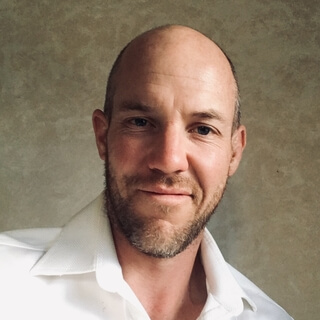
I'm Nathaniel Hunter and welcome to part two of the story of your body.
In part one we uncovered the unmanageable child and started imagining what life would be like if we became more unmanaged.
So I hope you've started thinking about what that might look like for you.
In this part two we're going to examine what I call the greatest detective story of all time.
It's the story of the creation of your management scheme.
Like all good detective stories this one has puzzles and clues and an amazing detective which is you and your quarry which is the story of how you came about.
Now this is the greatest story of all time because it's your story.
There's no story in the world that's more important for you to know and once you know this story you will find much more clarity about the world.
You'll find reasons and explanations perhaps not ones you can easily put into words but your body will know.
You may also find as I did that those reasons and explanations they're no longer important because once we know them we discard them and get on with the main event of life which is living.
Once all this baggage is dealt with we're no longer bound so tightly to the past and can instead start to exist in the present which obviously is way more fun.
So we're going to do this detecting via your body.
Your entire history is bound up in your body and not only that but the answers to everything you've ever wanted to know about yourself and the world around you are to be found in your body.
To uncover this story however we need to be really smart detectives.
We need to exhibit a deep curiosity to the things our body tells us.
We need to be constantly on the lookout.
We need to be always listening and watching.
We need to be unearthing clues and putting them together to finally tell the story of who we are and how we came to be.
But why would we take this case on?
Well I touched on it a little earlier in part one.
Reason number one is freedom.
So we want the freedom to make choices that are appropriate rather than habitual.
You know those times when you're having that old argument with your partner or a parent or a sibling that crappy old habitual pattern.
It's one of those arguments that you can't stop once you've started and you walk away at the end feeling worn out and asking yourself why?
Why did I do that again?
So that argument is a habit.
It's born of your history.
This practice offers you the chance to break those habits gradually and give you new choices.
For example the choice to stop that argument at the beginning.
The choice to apologize.
The choice to take the discussion in a random new direction.
You have an infinite number of choices here and you no longer have to be beholden to your habits.
Reason number two is the chance to feel.
So have you ever thought that there must be more to life?
That you are missing something vital?
That life feels like you're looking through a window rather than dancing in the rain feeling the drops on your skin smelling that delicious scent on the air?
Being disconnected from our bodies keeps anger and sadness at bay to be sure but it also removes us from wonder and joy.
Reconnection on the other hand lets us step out of that door and out of that door and into life with all its color and uncertainty.
And you may even find,
Weirdly,
A certain joy in feeling things like sadness or rage as your body opens up and starts once again to feel.
Being able to feel your body leads to intuition and as you walk this path you'll find more and more that your body gives clear signals about many things if you're willing to listen.
So I'll just stop here for a moment to explore something that some of you might be thinking.
Perhaps you've had some experience that you don't want to revisit.
Some experience from your past and you don't want to explore or uncover this painful thing.
I completely understand and now is the time for me to say that if this is the case I strongly recommend therapy of some kind to start processing these things.
Having said that in my experience the practice I'm advocating here is very gentle and seems to only give what you can handle.
In my practice I've never been confronted by something that I couldn't handle and that's not to say that I haven't experienced painful things but I always have the choice that if it feels too much in that moment I can just stop.
I can stop and do something else.
I've never experienced the classic overwhelmingly clear memory trope where I relive the past.
If however you suspect you have PTSD or experience have experienced other uncontrollable flashbacks I again recommend professional help before trying these techniques.
In my experience clear memories do not occur in this detective process.
Instead we simply feel the body's reactions to awareness which may or may not make sense and may link to you know fuzzy memories but it's not up to the mind to make rational sense of how our organism is feeling.
No matter what these reactions are they're the right reactions.
They're what the body needs to process in this moment.
So let's take a moment to see what this might look like in real time.
While you're sitting there or lying there listening to me you can take some of your attention and direct it towards your body and just feel what the body feels like in this moment.
Maybe you've hooked on to something I said earlier or something earlier from earlier in your day and now might be a good time to delve within your body and poke at that feeling and play with it.
Become aware of it and sit with it and pay particular attention to any feeling that the body wants to do something.
For me in this moment my body wants to move my shoulders and and I really want to sway my hips and if I'm in a place where I can feel comfortable to do so I can do those things.
These movements might lead to other movements and if you're in a place where you can do so now might be a good time to pause this lecture and explore where your body can take you for as long as you'd like.
So this is a very basic way of starting an embodiment practice.
Find a quiet solitary place,
Become aware of the body and then allow the body to do what it wants to do.
While doing this work I use a fundamental premise,
An assumption and that is that the body is always right.
Now I mean this in a very specific way in that whatever the body is feeling in a particular moment that's how it needs to feel.
We don't need to change it unless it's all getting too much for you and you need a break and we don't need to make it feel better.
If you have a meditation practice you may recognize this as the practice of not doing.
However this not doing is only appropriate to the mind.
The mind doesn't need to intervene but the body in this practice we can totally let it do its thing.
If it needs to move let it move.
If it needs to breathe deeply or shallowly let it.
If it needs to yell or sing or shout do it and you can put a pillow over your mouth if your neighbors will freak out.
Again we can still behave appropriately because we're adults with minds that can control our behavior.
So this is the end of part two.
I hope that you can put on your detective caps and start exploring what it means to be you and I'll meet you in part three where I'll discuss how you are the expert of your body.
Bye for now.