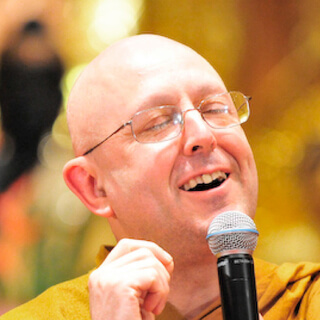
So welcome to the spiritual center of Nansenwe,
Nodamara.
And we're now going to talk a little bit about meditation.
There's still people coming in these draglars.
Anyway,
For those of you who are coming for the first time or first few times here,
The introduction to meditation class where you learn the beginnings of meditation,
That is being held in the room to my right with the great Dennis Shepherd.
He's doing the introduction to meditation class.
Because if you've never done meditation before,
This is like jumping in the deep end.
Not just the deep end,
But the fathomless pit.
So please,
If you're coming for the first time,
It's in the room to my right.
And the reason is because when you're meditating,
Sort of here we usually sit for 45 minutes.
And very fortunate that we follow the Theravada tradition rather than the Zen tradition.
Because if you moved in the Zen tradition,
45 minutes you had to be perfectly still.
You get whacked on the back of the back with the Zen stick.
But we can't do that anymore because we can't afford the insurance.
And many of the people are much bigger than me anyway,
So they'll probably hit me back.
So we don't do that in this room over here.
So to learn basic meditation,
Just to have a gentle introduction,
That is in the room to my right.
This is one for the ongoing meditators,
Just to come here and just to be able to have a guided meditation,
Just to keep you focused.
Just like when people learn how to drive a car,
You have the driving instructor next to you.
And the driving instructor is always giving you the little gentle reminders like,
Slam on the brake quickly,
Slow down,
There's a police car in front.
All those very important instructions.
So just to have someone sitting next to you,
Just giving you some good advice,
That really helps you as you start the path into meditation.
So you get a good understanding of how it works.
It's just like anything else,
It's a training.
Yeah,
We think we can do it by ourselves,
But most things in life we do need a trainer,
A coach,
Someone who can just remind us of how things are done until it becomes like automatic.
Maybe now when you drive a car,
It's just again pretty automatic.
You just know what to do at the right time.
And it's the same with meditation.
After a while you just know what to do.
However,
People do have the problems and difficulties in their meditation.
And one of the ways,
Especially I'm going to mention today some of the difficulties you get in the deeper parts of meditation.
Because sometimes when you get very,
Very deep in meditation,
It's so subtle and it's so sensitive because you're very calm and very quiet.
If you try and sort of struggle or do something or try and figure out what's going on,
What should I do?
Just that thought by itself will just disturb the meditation.
But if you don't do anything,
Again you just disturb it anyway because you're going on a wrong direction or whatever.
So there is always this problem that I'm getting very peaceful and then I think,
Well the mind is going blank,
What should I do next?
And it all falls apart.
Well it actually starts to get some beautiful lights in the mind,
What should I do?
And it all falls apart.
So there's something which I developed which we call Programming Your Mindfulness.
And this can actually help in other parts of your life outside of meditation as well.
So what Programming Mindfulness means,
It works on something which is that when you,
At the beginning of the meditation,
When you're reasonably relaxed and when you have enough awareness,
You give yourself a simple instruction.
It's like programming in,
Sort of the instruction into your mind.
So for example,
This is just maybe one example which comes up that they say the breath starts to disappear and you know,
You always think what should I do next?
And obviously the answer is just stay there,
Let it be,
Don't do anything.
And so the point is that when you get to that stage,
You keep giving that advice to yourself and it all breaks apart because it's too sensitive to give advice at that point.
So you put the advice into your memory at the very beginning of meditation.
So what you do is,
When you get comfortable you say to yourself,
When I get to that stage,
I will just do nothing.
I won't interfere.
When I get to that stage,
I won't interfere.
When I get to that stage,
I won't interfere.
You should say it to yourself three times,
In your own language,
As clear as you possibly can,
To give the correct instructions,
The most precise instructions.
And then listen carefully as mindful as possible and then just forget it.
And then what happens when you get to that place where usually meditation starts to become difficult?
You've actually put the instructions in beforehand.
And so when you get to that stage,
You just go straight past the obstacle because you've already instructed yourself what to do.
I'd say another example.
I say that you sit for.
.
.
Amazing how many people tell me this.
They usually sit,
Say,
For half an hour or something when they're at home.
And they just can't go past the half an hour mark because it's almost become a habit.
After half an hour,
You just come out of meditation.
So at the beginning of meditation,
You know,
You sit down,
Comfortable.
When you have enough mindfulness to really pay attention,
You say to yourself,
After half an hour,
I won't come out.
I'll carry on after half an hour.
I won't come out.
I'll carry on.
After half an hour,
I won't come out.
I'll carry on.
Just make that clear instruction.
And then you're meditating and the usual habitual time when you come out of your meditation,
You know that you're about to come out and just the mind says,
If you don't do it,
It just,
The instructions just comes up.
I will carry on.
So many things which you can use this programming mindfulness for.
And if you don't trust this,
It's a very easy thing to do.
When you go to bed tonight,
I don't know what time you get up in the morning.
If you get up at four o'clock in the morning,
Then you're a monk.
Or you have to work on early shift or something.
I don't know what time you get up in the Sunday morning.
Seven o'clock,
Eight o'clock,
Nine o'clock,
Ten o'clock.
Say seven o'clock.
Ten?
So say you get up at say ten o'clock in the morning.
That's a bit rather,
I can just be reasonable.
Seven o'clock.
So if you get up at seven o'clock in the morning,
Just turn your alarm clock to five past seven.
Set your alarm clock five past seven.
And then you say to yourself,
I will wake up at seven a.
M.
I will wake up at seven a.
M.
I will wake up at seven a.
M.
Really say it slowly,
Full attention,
Clear instructions,
Not complex,
And then go to sleep.
I was really surprised just how,
When I first experimented with that,
How effective it is.
It was just,
You got to,
You woke up in the morning,
You weren't really afraid of oversleeping,
You just had a good night's sleep when you woke up.
You looked to the clock and it was one minute either side of seven o'clock,
Consistently,
You didn't need the alarm clock.
And even these days sometimes I'm really,
Really busy,
I have to say to myself,
Oh,
Remember on Friday evening it was our new moon night,
So we had to do a ceremony.
So I was very busy last night,
Said to myself,
Just after the Friday night talk,
After I get back,
I have to do the ceremony,
I have to do the ceremony,
I have to do the ceremony.
And it worked last night,
Because after all the working and busyness and answering questions,
Tired,
Go back to the room,
Oh yeah,
You got to do the ceremony.
It's a way of programming your memory,
So the memory comes up at the right time.
Even those people who have problems with,
Say,
Their relationships,
I don't know why this happens,
But two people,
They love each other,
They care for each other,
But they get into this really bad speech sometimes,
Always nitpicking and pointing out faults and saying this.
And one person starts and the other person,
Like a tennis match,
Has to smash the ball back.
Yeah,
What about you?
Yeah,
But what about you?
And sometimes I've witnessed that bad speech in a marriage and it's really nasty,
And neither party wants it,
But they just don't know how to stop it.
So it's quite easy,
All you need to do is,
Again,
When you're alone,
Comfortable,
Relaxed,
You say to yourself that when my partner says something,
Something nasty,
I will say something nice.
When my partner says something nasty,
I will say something nice.
When my partner says something nasty,
I will say something nice.
Again,
In your own words,
Really pay attention to it.
You obviously know sometimes just once and it doesn't work,
You know,
Every sort of morning for a week or something,
And then what happens is you surprise yourself.
You get the same habitual pattern happening,
They say something to you and they're,
You know,
Who are you to say this to me?
But then just remember,
No,
I'm not going to say something nasty,
You say something good instead.
You actually change habits that way by programming mindfulness.
It's called conditioning,
It's called brainwashing,
And that's exactly what you can do for any problems in meditation.
It's really as important when you get to things like,
You know,
Again,
The limiters,
The lights,
The deep parts of meditation,
And I'm not going to say that,
Oh,
This is really deep meditation,
Many people can't get to that stage.
You do get to that stage,
Many people do get those lights in their meditation.
What do they do with it?
It's such a subtle state of meditation that if you try to tweak it,
Mess around with it at that stage,
It usually all goes wrong because it's too sensitive,
You know,
To be controlled by your verbal thoughts.
You actually disturb it.
So instead,
We're just programming our mindfulness.
So we say,
If those lights come up,
I will just let them be.
I will let the lights come up,
I'll let it be.
Lights come up,
I'll let it be.
Whatever.
Some really nice little instructions.
And so when those lights come up,
We usually try and control it,
Try and capture it,
Get excited or get afraid.
You know,
The instructions,
It's already been pre-programmed and it comes up just at the right time.
And I was really,
Really surprised,
All those little things my teacher Ajahn Chah said,
Things which,
You know,
I didn't really sort of understand,
I thought they weren't really useful,
And then I didn't realize just how,
I just kept them away,
Stored them away.
And when the mind needed it,
It's like it just came up.
It was afterwards I said,
Where did that come from?
And I realized it was from my teacher.
The program,
He put the program in.
And then when I needed it,
It was there.
It was really quite,
Quite strange,
But that's how these things work.
So the program of mindfulness is actually,
You can do it for yourself.
You know,
You know all the instructions,
Just tell those instructions at the beginning of the meditation,
Then be quiet,
Don't repeat the instructions later because they will destroy the silence and the peace.
But they will take you deeper into the meditation.
It's like an anti-virus on a computer.
It's sitting in the background there,
But when it's needed,
Then it will come up and solve the problem and take you deeper into the meditation.
Even a little thing like,
You know,
When you are meditating and you know,
You've got a sore knee or a sore back or something and you think to yourself,
Oh,
Should I change my posture?
Or should I not change the posture?
Maybe I should just endure it.
Or maybe I should just change it.
Or maybe I'll change it a little bit.
And when you've talked so much already,
You've already destroyed the meditation with all this thinking.
So instead you can program the mindfulness very simply at the beginning of the meditation.
If I have a little ache,
Say in my knee,
I'll just adjust it.
It takes a second.
That's all.
And that means you do not disturb or destroy the meditation.
So little things like programming your mindfulness at the beginning really,
Really helps.
So you find out what your problem is and you make the right program.
You know,
Sometimes I used to describe this in a different way.
I used,
I call the simile of the snake.
This is just a simile which I developed from the time I used to live in the jungles in north of,
East of Thailand,
When I was a young monk.
I love that little saying.
But I was a young monk and it wasn't quite tough in those days.
We didn't have sandals sometimes.
They fell apart.
And you were living in a jungle.
There were snakes,
I mean real snakes.
You know,
Dangerous snakes all over the place.
This is,
I was told there were a hundred species of snake in Thailand when I was first there,
In that area where we lived.
Ninety-nine of those hundred species.
If they bite you,
They're incredibly venomous.
And the other one strangles you to death.
So they're all dangerous.
So,
What,
You're always looking out for the snakes.
So when I walked back,
No flashlights because we didn't have enough batteries.
It was a very poor monastery.
So sometimes you're walking back at night just by the starlight.
And there were snakes around.
So what did you do?
You had to walk back.
So I was very mindful.
I was on the lookout for snakes.
Simply because you knew that if one bit you,
You'd be in trouble.
So it's always very mindful,
Very aware of the snakes as you walk through the jungle.
And if you saw like a dark shadow across the path,
It could be a stick,
It could just be a shadow,
But you didn't take any chances.
You either jumped over it or went another direction.
That's why you didn't get bitten because you're always on the lookout for the snake.
So what is the danger?
What always gets you in your meditation practice?
Is it like sleepiness or thinking too much?
What is your snake?
If you remember that snake at the beginning of the meditation,
Really say this is one thing I have to be really aware of.
I watch out for it,
I watch out for it,
I watch out for it.
And then you have this,
You don't have to be tense up.
But if you give your mind that instruction,
Then you meditate and you'll be amazed.
The same thing,
It could be like sleepiness,
It could be too much thinking,
Worrying.
As soon as it starts to come up,
It never catches you.
It never bites you,
Never grabs you,
Simply because you're on the lookout for it and you can go another direction before it catches you.
That's the little simile of the snake.
What about programming your mindfulness at the very beginning?
So there we go.
I should now be quiet and if you'd like to get yourself into a nice meditation position.
And just once again,
This is the ongoing meditation class.
We're going to be meditating for 45 minutes.
The introduction class,
I have shorter meditation just to teach the basics that is in the room to my right.
And it doesn't really matter,
There's no like hierarchies,
That one class is better than the other.
So,
But it's much wiser to get into the right place,
The right time,
Otherwise you'll be in trouble.
So here we go.
Zilling down,
Closing your eyes.
With your eyes closed,
It's one less sense to be concerned about.
The sense of sight,
You can let that one go.
Which means your brain has much more capacity to feel the body,
Listen to my voice.
We start with the sensations of our body,
Physical touch.
Now we just notice how we are sitting,
What our posture is.
This is just the course examination of our posture.
We'll go more deeply into it in a moment.
But just right now,
How do you feel?
Just a rough adjustment first.
And then we become more refined,
More specific.
Starting off with your legs.
How are your legs positioned right now?
Do you need to move them,
Adjust them?
Just like when you're taking a photograph,
Go through one of those cameras where you have to adjust the lenses.
You twist it clockwise,
Twist it anti-clockwise,
Until you get the best possible focus.
This is what you do with the feelings in your legs.
Move it this way,
Move it that way,
Adjust it.
Until you find the optimum position for your legs.
And don't assume that the position is the same every day,
Every week,
Even every hour.
Sometimes you need one position,
Sometimes another position.
Just feel it.
It's called change.
And you know which is the best position,
Because mindfulness gives you the capacity for feedback.
And the feedback just shows you if the feeling in the legs is better or worse.
It is the kindness,
The compassion,
Always inclines to what is the best for your legs.
The most comfortable.
The most at ease.
The most relaxed.
So my awareness is just with my legs.
Feeling their tingling,
Their warmth.
Slight bit of tightness.
I'm just relaxing it all.
With awareness,
You can see when it's relaxed,
When it's getting tense.
Just focusing,
Tuning.
Just getting to the right,
The best,
The optimum position.
And after a minute or two,
I realize that's about as best I can get.
So I move up from my legs to my butt,
Because the butt takes a lot of weight,
A lot of pressure,
And if you don't get it right,
You get sore after a while.
It's one of the reasons on long meditations people have to fidget,
Because they never got their butt in the right position to begin with.
And once you've fidgeted to find the optimum position,
Then you move to your back.
Always repeat every time that I like to stretch my back when I begin meditation.
You can try it or do something different.
And then you're stretching it,
Just like animals stretch.
It just releases all these beautiful endorphins,
Pleasure,
Delight,
Immune enhancers.
It feels really good.
And then I let go.
I'm just aware of where my back settles to.
And then I just check,
Does it need a bit more adjustment?
Lean to the left,
Lean to the right,
Leaning back,
Leaning forward.
It's up to you,
Or rather more like up to your back to decide,
What is the most comfortable position for it today.
And once my back has been attended to,
Then I start to be aware of my hands.
Are my hands situated?
I put my hands in a position where they can be the most comfortable.
I feel them,
Focus on them.
It's almost as if I ask my hands if they're a separate little entity.
Hands,
How are you down there?
Do you need any adjustment?
Because when you make a question like that,
You get an answer.
It's a very skillful means of being mindful.
Ask your hands,
How are you?
Then your mindfulness,
Awareness goes down there,
And then you get a reply.
And then adjust if they need adjusting.
And I go to my shoulders,
How are you?
Just to relax the shoulders.
Check out my neck.
Especially the throat,
If you have any allergies,
To relax and to relax.
Every now and again I get a little itchy throat.
I just focus totally on it,
Zooming in on it.
When I'm aware of it,
It gives me the opportunity to manipulate.
I know what makes that itch worse.
What makes it sort of amplified to the point I need to cough.
What I need to do is just to relax it.
So the itch gets less demanding.
So it just fades away.
Then I move my attention up to my head,
Muscles around the eyes and the mouth.
Because they tell me how tense I am.
Physically,
Your emotions can be red on your face.
I deliberately experience the muscles around my eyes and my mouth and I relax them.
You learn how to do that just by awareness and trial and error.
So the whole of the body relaxed and at peace.
Once the body is relaxed,
Then we can go to our emotional world,
The mind.
How peaceful are you?
Or how agitated?
Give it a number from 1 to 10.
This is getting you in contact with the concept of a peace-obitor.
Not just your body being relaxed or tense,
But your mind.
How peaceful are you?
How agitated?
Don't judge it,
Just know it.
It's not the one is good,
One is bad.
Just get to be aware.
And then what makes that peace-obitor,
Imagine the need of the peace-obitor,
What makes that needle go down closer to 1?
And what moves it up?
I guess you're more agitated,
More upset.
This is your mindfulness on how peaceful you are.
And now you're learning the causes.
What makes the mind more upset?
What calms it down?
One thing I hope you'll discover is that worrying about a past which is done and fixed cannot be changed.
This causes your peace-obitor just to go up through the roof.
You have no peace.
And also you ask any psychologist,
Even what we think happened probably never did,
Not the way we thought.
That's why people argue about what happened in the past.
And number 2,
You can't learn much from the past,
As much as you can learn from the present moment.
So just let the past go,
Another time.
You find if you stay in the present moment,
The needle or the peace-obitor goes down.
Same with your future,
Worrying,
Concerned about it.
As the great first snoopy said,
Worrying about the future doesn't stop things happening,
It just stops you enjoying the present moment.
Here is where your future is made.
This is the only time you can relax.
So you stay in this present moment,
You find your peace-obitor starts to really show a very low reading,
Really peaceful.
You're learning this yourself,
Experiencing it,
Not believing it,
Finding it out.
And in this present moment,
To open the door of your heart,
Your mind to this moment,
May not be the best,
It may not be what you expect,
But it's here.
Learn how to respect this moment.
We learn,
We grow,
We enjoy from here and now.
Just being here.
And after a little while,
You probably,
Quite naturally,
Without choosing,
You become aware of your breathing.
Just breathing in and breathing out,
Naturally,
Unforced,
Simply because it's the only thing left moving.
If you wish,
To help focus on your breath,
To make it interesting.
As you breathe in,
You can imagine breathing in peace.
As you breathe out,
Breathe out,
Let go.
Breathing in peace,
Breathe out,
Let go.
Don't just say words,
Imagine what peace means to you.
Even a time when it was so peaceful for you,
Almost like nothing was moving,
Nothing was needed.
Beautiful time of peace,
Breathe that peace in.
Whatever you need to let go of,
Pain from the past,
Injuries,
Diseases,
Whatever.
Imagine that riding out with every out breath,
Breathing in peace,
Breathing out,
Let go.
.
.
.
.
.
.
.
.
.
.
.
.
.
.
.
.
.
.
.
.
.
.
.
.
.
.
.
.
.
.
.
.
.
.
.
.
.
.
.
.
.
.
.
.
.
.
.
.
.
.
.
.
.
.
.
.
.
.
.
.
.
.
.
.
.
.
.
.
.
.
.
.
.
.
.
.
.
.
.
.
.
.
.
.
.
.
.
.
.
.
.
.
.
.
.
.
.
.
.
.
.
.
.
.
.
.
.
.
.
.
.
.
.
.
.
.
.
.
.
.
.
.
.
.
.
.
.
.
.
.
.
.
.
.
.
.
.
.
.
.
.
.
.
.
.
.
.
.
.
.
.
.
.
.
.
.
How do you feel?
How peaceful are you?
How relaxed is your body?
Sometimes I can feel it,
Just at ease.
How peaceful is your mind?
As we learn how to relax our body and bring peace to our mind.
It gets really peaceful,
This beautiful happiness,
The delight of a still mind.
Now bring the gong three times.
When the gong finishes sounding for the third time,
There's a signal to come out from your meditation.
Very good.
So now is the opportunity to ask some questions,
Some comments about the meditation.
We haven't got the stuff from the overseas yet.
Has anyone got any questions from here about the meditation today?
Ajahn,
Last week did you say pins and needles are bad?
Pins and needles are not bad,
But sometimes that is where that some of your blood circulation has been,
One of your blood circulation,
Sort of the nervous system has got cut off a bit too much pressure,
Usually a bit of a bad posture.
So what happens is just can be disturbing.
When I first started meditating,
I used to get pins and needles very often.
And sometimes I thought,
Just when you start to proliferate,
Not really knowing too much about the way the body works,
I thought,
My goodness,
If I get pins and needles,
I'm cutting off the blood supply to my lead.
And if I cut off the blood supply to my leg too long,
Then things will start to go wrong.
I probably start to have gangrene by the end of the meditation,
And I have to cut my legs off.
I was so afraid,
Totally overreacting,
I'd always move and that would disturb me.
And one day I decided,
Oh what the heck,
I've got two legs,
It doesn't really matter if I miss one.
So I just sat there and just,
Amazing that just he had his pins and needles,
And then the leg sort of going to sleep as it were,
The different words we use,
And then just I didn't move at all,
And the leg just all came back again.
So the body is just really weird,
But very smart.
It was just adjusting itself.
I didn't move at all,
And the pins and needles just vanished.
So these days I just let the body look after the body.
And this is one thing which is very interesting with our body,
Because now you've got me into that and there's no,
Nothing from overseas at the moment,
And the computer.
You know that sometimes that's when people are very peaceful,
You start to see them leaning to one side,
Or leaning back,
Or starting walking.
And at first I didn't know what's really going on,
But after a while you just let people do it,
Because they find out that this is the way that their body does its healing.
The body does these things by itself.
Also that when I had some of this sloth and torpor,
Because you know,
Not sleeping enough in the forests of Thailand,
The temperature wasn't what I expected,
Malnourished,
And so you were always just,
You tried to keep your back straight but it was just slump.
I just let it slump after a while,
Just fed up with trying to fight it.
And then I just,
Amazing,
Just one day I was reasonably aware,
And I,
Aware enough to know I never made this suggestion to my body.
Just the body just straightened up all by itself.
And I was very aware enough,
Well this is really weird,
The body actually is autonomous,
So I don't need to worry about it,
It will self-adjust when it needs to.
And I thought just what a wonderful thing this body actually is,
If you stop worrying about it,
Trying to control it,
Leave it alone,
It usually adjusts itself.
So that's one of the reasons why,
That if you have got the pins and needles,
You can usually leave it alone.
And it just,
The body just sorts itself out.
If you have got,
As long as you relax,
Don't overreact,
So you're not getting tense up about this,
For the next time just make sure you sit in a more comfortable position if at all possible.
So is it okay if I let my legs go to sleep?
Yeah,
They'll sort of come back again afterwards,
Just a little experiment,
Just so we're not afraid to let the body just do what the body needs to do.
Any other questions or comments about the meditation?
Oh we've got some.
Do we have any questions there?
Oh yes,
I didn't see over there.
The machine.
Whoops,
Aha,
They all crashed.
Oh they haven't,
No,
Okay,
What a shame.
They're back again.
When I meditate,
Lots of thoughts appear.
It's not peaceful,
I don't like it.
I know I'm supposed to accept without disliking it,
But I can't seem to do that.
How and what should I do?
Thank you.
It's because you don't like it,
That's why the thoughts appear.
So it's actually the negativity that makes those thoughts,
Gives them power.
Oh,
I just can't go past that similarly anger eating monster.
How many of you have had it up to here with the anger eating monster,
Because they've heard it so many times?
Aha,
I'm going to say it again,
Because you're giving it anger.
The anger eating monster was,
I'll just do it very briefly,
Monster came into the emperor's palace,
And because it was in the emperor's palace,
People said,
Get out of here,
You don't belong,
And it got bigger and smaller and more of a problem until the emperor came back and said,
Welcome,
Thank you for visiting us.
And it started to get smaller with every act of kindness.
And today it goes so kind to the monster that soon it was so small it vanished completely away.
That's in the Yakasamuta Nikaya taught by the Buddha,
Embellished by Ajahn Brahm.
So,
But the main story is anger eating demon,
Lots of thoughts appear.
Why do they keep on staying around?
Because we feed them with negativity.
If you just be kind to them,
Thank you thoughts for coming to visit,
You'll find that a lot of times they will weaken their power,
Softening things.
This is one of the ways to let go of the past and the future.
People always say,
Oh,
Let go of the past,
Let go of the future.
How can you do that?
Sometimes you try and get rid of it and it just gets worse.
So what we do do,
We soften the past,
We soften the future with kindness,
First of all.
So if somebody did something to you,
Or you did something bad with kindness,
Oh,
Just,
You know,
You're not perfect,
People make mistakes,
Other people make mistakes.
They're probably thinking they were doing the right thing at the time.
They had their reasons for doing what they did.
Maybe they made wrong choices,
But I've made wrong decisions sometimes.
So after a while,
We just look at this and we have this wonderful kindness to the past.
Do give it kindness,
It gets very soft and it's easy to let it go.
So the same with the future.
Oh,
Something terrible is going to happen,
Oh,
What's going to happen next?
If we're kind to the future,
Oh,
It doesn't matter what happens.
Somehow or other we've managed to get through this.
We're kind to it.
There's lots of kind people around.
And because there's lots of kind people around,
Sometimes you think,
Well,
It's not really worthwhile worrying about the future if we soften it with kindness,
First of all.
So that's when we soften the past and soften the future with kindness.
And then that's a way of taking the power away from thoughts.
Anger eating the inner,
We don't feel it.
And then the past and future,
They disappear.
And you're left with this present moment,
You're kind to it.
It may not be the best.
There may be that crow is making noises.
Because that lives outside my room.
It's always making noises.
But you can't fight the crow,
So you make friends with the crow,
Which means you're kind to it,
So it doesn't give you a problem anymore.
So this is actually how we accept these things.
And then they just vanish.
They disappear.
It's not like you don't like them or you like them,
They're just not there anymore.
They fall off the radar.
So when thoughts appear,
Be kind to them.
Poor little thoughts,
No one likes thoughts.
Especially if you're meditating,
You're not supposed to have thoughts.
Poor little thoughts,
No one likes them.
So you are,
Poor little thoughts.
There you are,
So I like you.
I'm a monk,
You can come to me.
And then the thoughts vanish.
Anyway,
How can I meditate and calm my mind when dealing with my mom's dying and on hospice,
She has so much pain?
It is the pain can usually be dealt with with the palliative care.
In other words,
First thing to do is to check with the doctors,
You know,
If you've got enough painkillers.
Don't be afraid of being on morphine,
The dying process,
Because at the end of the dying process,
Before death occurs,
You have what's called terminal lucidity.
I finally learned the right medical word for it.
Terminal lucidity is when people are in a coma or they are drugged up with morphine in the last few moments of their life,
They become clear.
And you see that when you're by the bedside.
One of the doctors here,
Saying this for such a long time,
They always come and say,
Ajahn Brahmajabhan,
It was right.
He was treating a patient in,
Was it Royal Perth?
I think it was.
And the patient in Royal Perth started a dying process before he expected it.
So he got paged by the nurse,
He ran to the bedside and the dying process was happening much quicker than he'd expected.
So he opened up the bedside drawer and there was the emergency list of close relations and so he started calling them one after the other,
Come quickly,
Your father is going right now,
Come as soon as you can.
And then he got to the door to Julie,
If I get this right,
And he was calling Julie,
Julie,
Your father is dying,
Come as soon as you can.
And that's where the father opened his eyes and said,
Tell Julie I love her and then he passed away.
And he was,
Yeah.
Now that was beautiful because he was in,
Like drugged up to the eyeballs with morphine for such a long time,
He had this last moments of clarity,
Which happens very often,
Terminal lucidity.
And so because of that,
If your mum is dying in hospice and has so much pain,
Just tell the doctors and nurses to adjust,
You know,
The painkillers.
It doesn't matter because Buddhists are so concerned about your final moments,
You have to be clear,
You have to be sort of,
And our last thought is an important one for you,
Yes.
But you can still take the morphine because the last few moments will be clear.
Last thing from USA,
Is there a method to help keep the knee joints from getting too tight in a cross-legged position,
Not notice,
Just cross-legged?
Thank you.
Yes,
Sit in a chair.
In other words,
For some people it's very difficult to sit on the floor.
I can sit on the floor because that's,
You know,
I was conditioned,
I was in Thailand,
I was meditating before,
But 23,
About 32,
I never saw a chair.
You know,
They didn't have chairs,
You sat on the floor for everything.
And it was,
When I was,
I must have been about 30,
31,
When I first went to go and visit my family in UK,
I had to sit on an aircraft.
It was economy class,
I remember Philippine Airlines,
The cheapest ticket I could get,
And it was just so much luxury.
I'd never seen so much luxury before,
Padded seats,
There was like air condition,
There was no mosquitoes in the aircraft.
That was just heaven for me,
Everyone else was complaining,
You know,
Packed in a small aircraft for such a long time.
But you know,
It's just relative,
Living in the forest,
In the jungle,
It was just really sort of quite so ascetic.
For me it's wow.
And I also remember just being served ice cream.
And every time I had ice cream,
It's usually in the bowl in Thailand,
Very rare,
And it usually gets some melting in the curry.
So but here,
So we had separate things in the aircraft,
It was amazing.
But after about an hour or two,
My legs were killing me,
Because I couldn't cross my legs.
And they had to be dangling over a chair.
And so I,
That was really painful in the chair.
So that was one of the reasons why it's just as how you get used to things.
To me now,
I much much prefer to sit cross-legged on the floor like this,
And sit in a chair,
For me a chair is painful.
It's just how you get conditioned,
That's all.
But you don't have to sit on the floor,
Many people get great meditation sitting on a chair.
So especially if you get,
Start getting old,
And you're too tight,
You may have some accidents,
Some wounds to your knees.
So in that particular case,
Sit on a chair,
Or you have these,
Could you hold your stool up,
So in front of the cameras over there.
These little Zen stools,
They're very,
I hope they can see them,
Can they see them over there?
From the,
Okay,
Come over here.
These are very good,
They're so simple,
Look at this.
Two,
No three pieces of wood,
So any sort of carpenter can make this.
So,
Any,
Just anyone can.
This is very comfortable to sit on,
The old Zen stools.
And that's actually how you can meditate.
You don't have to meditate cross-legged on the floor.
So if it's hurting,
Just find another posture,
Or even just,
You can lean back against something and put your legs out.
That's comfortable,
If you're very sick,
Then meditate on your bed.
Lay down,
So you can relax your body.
So no,
That's how you can meditate without sort of having too much pain.
Don't think you're going to beat down the pain.
You say,
I am stronger than the pain,
The pain's not going to beat me,
I'm going to beat the pain.
That's where you usually end up going to hospital.
It's happened too many times,
There's one monk,
I remember him,
He stood a monk,
Amazing,
He decided,
He decided to sit through the pain all night.
So sitting there cross-legged,
He wasn't going to move no matter what.
He did it,
He actually sat all night without moving.
One morning,
We had to take him to the hospital,
Double knee reconstruction.
It's stupid.
People think,
Oh they're tough,
They're going to be like,
You know,
Just become enlightened in one night.
We don't use will power,
We use wisdom power.
Okay,
Any more questions,
Comments for you?
Yes,
At the back over there.
Back in the middle,
Just right underneath the camera.
So,
Thanks for this afternoon's meditation first.
Anytime.
The concept of terminal lucidity,
Very interesting.
Could you compare it to enlightenment?
Not really,
No,
Because people can be terminal,
Terminally.
Look,
One example of that,
There was this one gentleman,
He was from East Lancashire,
Just very close to the Yorkshire border.
And his daughter,
You know,
He should be a librarian here many years ago.
And so when he started to really,
I was in hospice,
He was in the dying process,
So I went to visit him and just,
You know,
He was dying any moment.
So he just stayed by the bedside and stayed by the bedside,
You know,
Just,
You know,
He could die anytime.
So that he was,
He got close to our meal time,
Like monks have to finish their meal before solar noon.
So,
He was,
You know,
She knew about monks,
So she said,
I better go get something to eat.
So the only choice you had was,
I think it was chicken treat or something,
She got some chicken and some chips or something.
But anyway,
It was an English custom,
I remember this.
And when,
If you have some chips,
You say,
You know,
Have a chip,
You share them.
And so,
You know,
Without thinking what she was doing,
The daughter said to her dad,
He'd been unconscious for a day or two,
Dad,
Would you like a chip?
And then he opened his eyes and said,
Yes,
I'll have a chip.
And that was his last words before he passed away.
So you wouldn't actually call that terminal lucidity enlightenment.
That was really funny.
So if that's your grandma or somebody,
You know,
She may not be a Buddhist or whatever,
And just,
You know,
You would like a sort of a nip of whiskey,
She might have been like,
Oh,
Yeah,
Please.
And then she would pass away.
So there's something which is interesting,
That sound,
Which actually gets through at the very end.
And it's also just something which grabs her attention.
For him,
It was like his favorite food.
And for the person who was next to the doctor,
You know,
His daughter,
He could hear her voice.
And that just took him out just a little bit to say,
Yeah,
Tell Judy I love her.
So that's actually just usually what happens with the terminal lucidity.
Something just drags them out for a little bit before they pass away.
It's really nice little,
I don't know what medical data is there,
But it's a very well-known phenomena.
But for the Buddhists,
You know,
Who are very concerned about the last moments before they pass away,
Where the last thought is really important,
That actually solves a lot of problems.
You don't need to actually to say no to the painkillers so that you can be really,
Really aware.
You know,
You will be aware anyway.
So they're the painkillers,
You can get drugged up for I don't know how long,
But then you come clear at the end.
Okay,
So I think we've gone past the time now,
So let's pay respects to the double sun go.
And then we can just go and have do whatever we need to do.