Holness,
Welcome.
This is Josh Tippold of Integrating Presence,
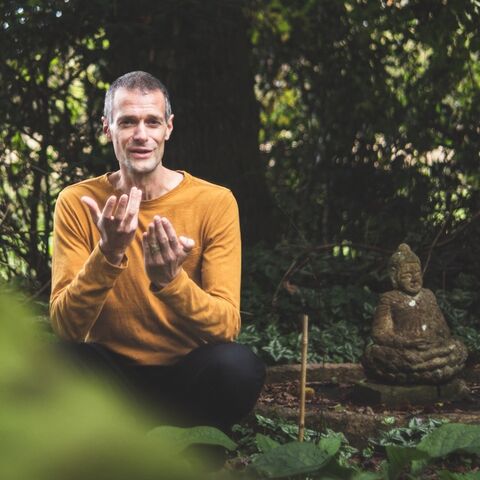
And today I have Frank Jude Boccio with me.
Frank,
What's going on today?
It's a pretty warm day here.
I'm in Tucson,
And it's between rains.
In the summer,
We get this heat that builds up with humidity,
And then there's a big storm,
And then for a few days it's really cool and nice,
And then it builds up again.
And one of my friends was saying,
This time it feels like it's taking too long.
Well,
As she put it,
The foreplay is going on too long.
She just wants the rain,
You know?
And that's how I think we're all feeling.
Well,
Maybe there's more tension building then.
But yeah,
It's been hot here in Prague too.
I think we're supposed to,
Speaking of that,
We're supposed to get rain.
They're calling for a chance tomorrow and things will cool down a little bit,
But I don't think anything like the Tucson heat,
I can't imagine.
Coming from Denmark too,
Where it's really nice and cool.
So honestly,
In Missouri weather,
I'm not missing it at all,
Honestly.
But Missouri was pretty humid,
Right?
Oh yeah,
It's really humid during the summers for the most part.
Really cold too in the winter,
But yeah.
Everybody talks about like,
Well,
Where you are,
It's hot,
But it's dry heat.
I was like,
Dry heat at 110 degrees is still hot.
It's like you're in an oven,
You know?
Yeah,
It's like opening the oven up,
Yeah.
But what they don't understand is that in the summer,
When it's the hottest,
Is also when it's the most humid.
So yeah,
And a little bit of technology here.
We have swamp coolers.
I mean,
Obviously wealthier people have ACs.
And so swamp coolers work really well when it is hot and dry,
Because what they do is they suck the hot,
Dry air in,
They pass it through this like organic material,
And then it blows into the house,
Cool,
Moisture air,
Right?
So you have to actually keep your windows open,
Which I like,
Because AC,
It's so claustrophobic.
But when it's humid,
They're not as effective.
So the time when you want it the most,
They don't really work as well.
It's called a swamp cooler.
Yeah,
Yeah.
I have to check this out.
It's an evaporative cooler,
But yeah.
Okay,
Evaporative cooler.
I have to check these out,
Because in Missouri,
It's,
Yeah,
We want less swamp.
And people say it's because of all the artificial corn,
Or some,
I've just heard that recently.
So much corn gives off so much transpiration,
And that's where a lot of weird humidity in Missouri.
I don't know if there's anything to that,
But either way,
Yeah,
Hot.
So here we are in wherever the weather is,
Where you're at listening to this.
I hope it's okay enough.
And I'll ask you the standard question that I often do,
And who is Frank,
And what kind of work does he do?
Well,
Frank is,
It's taken me a longer time,
Because I grew up at a time where we wanted to be assimilated.
But I'm second generation Italian American,
And born in New York,
Raised in New York.
Went through the whole punk scene.
I was a DJ,
But what got me into Buddhist practice was that I did have a half-sister,
Who was about 15 years older than me,
Who died of cancer when I was 16.
And it's a very familiar story.
I mean,
Like,
I can't believe more and more,
Whenever I read about things,
It's like,
What leads people to practice often is some kind of loss.
You know,
Dogen was,
Because he was an orphan,
And the Buddha himself,
When he recognized that we're all going to die,
You know.
So that engagement with like,
All right,
Well,
How do I want to live?
What is life for,
Really became very clear for me at 16.
And it's been a guiding force.
And that probably kept me alive,
Even during the punk scene,
Because things got pretty wild back in the 70s and 80s.
But there was always this foundation of zazen meditation,
You know,
And then I had already practiced yoga,
But meeting Thich Nhat Hanh,
And his presentation on the Satipatthana,
Which is a sutta,
Or a discourse,
Where the Buddha really gave his most deep mindfulness instructions.
And it has this whole point about working with the body.
And I was like,
Well,
Up until that point,
I always thought of my asana practice as a compliment to meditation,
Something to prepare for meditation.
But it was very clear that the Buddha was saying,
This can be meditation.
And,
You know,
This is like in 19,
When was it,
I guess,
1991 or two.
And that's when I started to really integrate.
And it was great,
Because like up until that point,
I felt like there were these two different things,
And now it's completely integrated.
And I've been doing that since then.
I became a teacher in 1995.
I was ordained as a zen teacher in 2007.
And yeah,
That's what I've been doing.
Well,
Cool.
I had no idea that Thich Nhat Hanh,
I'm just not very familiar with his stuff at all,
But I had no idea he taught Satipatthana,
Which is usually a Theravada mainstay.
So I would- That's the thing.
Vietnam used to be,
You know,
Before it was a unified country,
Two separate kingdoms.
And what was interesting is the Northern Kingdom was in the Chinese cultural orbit,
But the Southern Kingdom was in the Indian cultural orbit.
So unique to all the countries in Asia,
Vietnam got both transmissions,
The Mahayana from China and the Theravada from ultimately Sri Lanka.
And so although Thich Nhat Hanh was in the Lin Chi lineage of Chan and Zen,
They also have this understanding,
Like he's done retreats on the Anapanasati,
The Satipatthana.
So I had been practicing for a long time.
And like you said,
Yeah,
Of course,
This was all new to me,
Because I had been in,
Up at that time,
More Japanese Zen tradition.
And they don't look at anything,
You know,
Theravada or from the Pali Canon.
And so it was an eye-opening and it was great.
Well,
Cool.
And I'll have to give a shout out to the Shifu,
Shifu Jiru at the Mid-America Buddhist Association where I've practiced back in Missouri,
Which I'm sure not a lot of Westerners know about him.
He's got a Kung Fu background.
He,
Well,
Not talking too much about his background,
But just needless to say,
He's a Chan lineage holder in the Lin Chi lineage holder too.
And a lot of his teaching is for foundations of mindfulness.
I think a lot of it has to do with him first ordaining as a Thai monk,
And then switching to Chan.
So it's a really unique blend he's got,
Yeah.
Yeah,
It's wonderful.
I often describe,
You know,
The way Thai taught Thich Nhat Hanh,
And therefore the way I teach is,
When I'm teaching any of these Pali Buddhist practices,
I'm teaching with a Mahayana heart.
Bodhicitta,
Yes.
So,
Well,
A few other things you said there,
The mindfulness of the body,
You know,
That's,
There's like six different layers in the Satipatthana Sutta.
And we,
Well,
We don't hear much about the elements practice as much.
And we don't,
Mindfulness of death,
I guess we hear it,
I would say this charnel ground contemplations to be more accurate,
Which can be very graphic for some people.
I was listening to a monastic talking on a podcast recently,
And just saying,
Going to visit a corpse,
And he would get squeamish and start to pass out,
You know?
So I guess it can be really intense for a lot of people.
But like you mentioned,
You know,
Coming through the Dukkador,
A lot of people are confronted with their own mortality in a very visceral,
Vivid way really early on.
So I don't know,
Before we start getting into Anapana,
I think with your yoga background too,
I'd like to hear a little bit more about how the,
Like the six levels or layers in the Satipatthana kind of map to yoga,
What kind of yoga you do.
And I was in the same position too,
Where I was using it to support my sitting practice.
I had like a weekly practice for years,
And I quit during the lockdowns and switched to more Qigong,
But it really is a huge support.
And of course we know the historical Buddha,
And I'll show up here in just a second.
He was really into yoga after,
You know,
When he met his first teachers that taught him jhana,
To master the jhanas,
And it predates the Buddha too.
So he was in complete mastery of,
We were assuming,
We don't have many details from the canon,
But we can only assume with his mastery of jhana or dhyana,
That he was very well versed with yoga.
Yeah,
Yeah.
I,
You know,
The Buddha was a yogi,
You know,
And my approach is that there's the,
Following Georg Feuerstein actually,
That,
You know,
This ocean of knowledge that we refer to as yoga,
Maybe with a capital Y kind of,
Right?
Then developed into three yogic cultures,
Right?
So Buddhism,
Hinduism,
And Jainism are yogic based,
Right?
They're all yogic paths,
And each one has developed their own culture,
You know,
Even architecture,
Music,
Everything.
And so I have,
You know,
The Buddha as a yogi,
As an archetype for yoga,
Even in a lot of Indian,
You know,
Like in Hindu temples,
You see the statue of the Buddha meditating because that is the archetype.
So I have no problem with saying that the Noble Eightfold Path is a yogic path,
You know?
And when we talk about Satipatthana,
You know,
Well,
First of all,
You asked this,
My approach I refer to as mindfulness yoga.
And I'm really adamant about that,
Not mindful yoga.
All yoga should be done mindfully,
Right?
But like mindful yoga,
The word mindful there is an adjective.
Mindfulness is a noun.
And so the difference here is that hopefully everybody is practicing Trikonasana,
Triangle pose,
Mindfully.
But I am practicing mindfulness now in Trikonasana,
Right?
So it's the prior,
You know,
Practice.
It's the root of the practice is mindfulness.
As it says in the Satipatthana,
The Buddha should practice while standing,
Sitting,
Lying down,
Walking.
And then he goes on to say,
While bending over,
While turning to the side,
While reaching up,
While putting your clothes on,
While defecating,
So everything,
Right?
And so that's really my approach.
And I actually,
You know,
Work with all four,
What are traditionally known as the four foundations or establishments of mindfulness.
I often refer to them as the domains of mindfulness.
The reason for that being like,
The term foundation or establishment sounds like,
Okay,
The body's the first establishment.
And now we're gonna build mindfulness on it.
But it's more accurate to say,
We're bringing mindfulness to the domain or area of experience called the body.
And then as you pointed out,
The six things,
Right?
So you begin with the breath,
You know,
Then you go to recognizing different postures of the body,
Different activities.
So in a mindfulness yoga class,
You can then right with just that begin to notice,
Oh,
When I'm in a spinal twist,
I feel the movement of breathing in this part of my body.
But when I'm facing forward,
I feel it this way.
When I'm in a backbend,
I feel that my breath does this to my body.
When I'm in my forward bend,
It does this other thing.
You're beginning to see impermanence,
Not self nature,
Right?
Because there's no inherent nature to the breath.
In fact,
You begin to realize there's no such thing as a breath.
It's just breathing.
So the core teaching of the Buddha is right there,
Right from the beginning,
Right?
And then as you pointed out,
There's the anatomical parts.
And here's where I think Thich Nhat Hanh has really offered us a very great gift.
And I use both approaches.
I actually have guided meditations on the parts of the body.
As taught by the Buddha,
It was to really get kind of equanimity and a more realistic view of the body,
Right?
Just go through the body,
Observing it,
Trying to contain or yoke any reactivity,
Right?
Because it's like,
As you know,
It's like,
You know,
Yeah,
Observe the eyes,
But then also the mucus,
You know,
And stuff like that.
But Thich Nhat Hanh,
Noticing that there was such a lot of issues around body image,
Body dysmorphia in the West,
He took the concept of the inner smile from the Qigong tradition and had smiling to the parts of the body.
And sometimes I'll do that as a guided meditation in Shavasana.
And one time in a public,
I'll never forget this,
Because it was feedback from me at how transforming this practice could be.
I was offering a lecture in Raleigh,
North Carolina,
And it was a public discourse.
And I included a smiling to the body parts.
And at the end,
The first person to speak up was this woman all the way in the back,
Tears in her eyes.
She said like several months before that,
She had been diagnosed with cancer.
And doing that meditation was the first time she felt safe in her body,
You know,
So it's like powerful.
Then there's the elements.
And again,
In the Buddhist tradition,
It was the elements as understood by the yogic philosophical tradition,
You know,
Earth,
Water,
Fire,
Air,
And space.
And I do that.
But I think if the Buddha were alive now,
He would also work with the 32 major elements that make up the body,
According to our system,
Right?
We're carbon-based organisms,
You know,
We're got all this water,
Which is made up of hydrogen and all that.
Where did these elements come from?
The Big Bang and supernovas.
So like,
Again,
We're seeing the not-self nature,
Right?
As you pointed out,
Eventually we get to the decomposition of the body.
And I will say I do not do this in a drop-in yoga class.
But with my senior students and on retreats,
If it feels right,
I might do the nine contemplations.
I might not get very graphic if they're,
You know,
But like,
If we've been together for 10 days and we've been practicing,
I feel I can do that.
With my senior students,
Two of which are now very close to ordination to become Dharma teachers themselves,
When we get going after a few years,
When we went through the Satipatthana for the second or third time,
When it came to that part,
I had them watch videos of the corpse farms that the forensic scientists use.
And they're really graphic.
But,
You know,
As you said,
The monks back then would go to the charnel grounds and look at these bodies.
You know,
So yeah,
I do that.
But I also then work with the other domains as well,
Right?
Sensation,
Mind and perceptions in Dharmas.
Yeah,
It's,
Yeah,
I've even heard that they used to sit on the decomposing corpse bodies.
I've even met a monk who's,
Who made one of these austerity robes for,
You know,
One of the Jatangas,
Where they take cloth from a dead body and then they make a robe.
Yeah,
They would make the robes out of the wraps from the corpses.
We get people that are really clinging to,
You know,
How they present themselves and how they have to have certain things.
And so that would be a really interesting austerity.
I know for,
In my own personal practice,
Whenever I do contemplate death,
I just come right into my body.
I mean,
It has this immediacy about it that,
Okay,
Yeah,
All these things that we,
That I think is so important.
They did,
A lot of times they just fall off,
You know,
If we know we,
I mean,
What kind of guarantee is there at the end,
Ultimately that we won't,
That we will make it through the next half breath.
We can't,
I mean,
Unless someone has psychic powers that can determine kind of with more certainty,
And I don't know how that works,
When they're going to die.
Most of us,
We don't have that guarantee of when we're going to die and how and where.
Yeah,
There's a Korean Zen master,
Kolbong,
I think it was Kolbong Sunim,
I could be wrong with the name though.
And,
You know,
He said something like,
A lifetime of a hundred years depends on this one in-breath,
Right?
Because,
And as I point out,
It's like,
You know,
We're all born,
Our first breath is an in-breath,
We're all going to die with an exhalation.
So in response to people who think watching your breath is boring,
I go like,
When you really consider that there's no guarantee you're going to have another in-breath after the next exhale,
You're going to pay more attention,
You know?
And I want to say,
I mean,
Like,
We're talking about all this stuff,
If there are people who are not familiar,
Listening in on this,
It's not morbidity or morbid kind of fascination with death that we have.
If you look,
I mean,
Like,
Look at the Dalai Lama,
Look at most Buddhist teachers,
There's a lot of joy.
And it comes from,
As it says in the Heart Sutra,
The ultimate gift of the Dharma is the gift of non-fear.
And so focusing and putting attention on the fact that we are mortal beings,
We are going to die.
When you come to reconcile with that,
All the energy that goes into trying to deny that,
Consciously or unconsciously,
Is now liberated.
And it's very nourishing.
It brings us to joy.
It's a really important distinction to make because I look at it a lot of times as not taking any moment for granted.
How much of the time am I on autopilot,
Just going through the day,
Not realizing that every single moment is precious and not to be taken for granted.
When this is contemplated,
That's another huge benefit it gives,
To not take anything for granted,
That every moment is precious.
And it really has an immediacy to our thing.
And then,
Like you said,
That truth,
When we're in alignment with that truth,
That inevitability,
Being in alignment with truth can bring great joy to the heart too.
Just like the changing nature,
What is subject to arise is subject to cease.
When we're in alignment with that truth,
It brings happiness almost on its own sometimes.
I love that you used the word alignment because I know there's scholars who question this etymology,
But like the word dukkha,
Right?
I hate that it was translated as suffering by the first translators because when you hear the Buddha say,
Life is suffering,
It feels so overwhelming and not true.
My life isn't suffering,
But dukkha,
Wrong space,
Bad space,
Right?
The image of an axle not directly in the center of a wheel leads you to understand that what he's basically saying is,
Life is stressful.
If you think about Iron Age India,
It's probably a wooden wheel on a cart drawn on dirt roads by an ox.
If you're not aligned with reality,
If you're not aligned in the center,
It's gonna be a bumpy ride.
So we wanna align ourselves with reality.
And the reality is,
As the five remembrances remind us,
We're aging,
We can't avoid all illness,
We're gonna die.
Everything we love and think we own,
We're gonna be separated from.
But that fifth one,
That it's our actions that we are,
And that there's no way to avoid the consequences of our actions really puts the emphasis on that.
And many times I say that the five remembrances are probably the most single practice that has really made a big influence on me.
Because when I was diagnosed with cancer in 2019,
Other men,
It was prostate cancer,
Other men that was going through treat with me saw something different,
Asked me about it.
And I ended up teaching the meditation,
Doing all this stuff.
Because quite frankly,
I wasn't afraid.
My doctor gave me these brochures for the newly diagnosed,
And all of them begins with the assumption that you're fearful or angry or depressed.
And it's like,
I'm of the nature to die,
There's no way to avoid it.
I'm of the nature to have illness,
There's no way to avoid illness.
So with that accepted,
Just do the next thing.
You know?
These have been a huge help in my practice too.
One of the things is it prepares us for that.
So it's not like it comes out of the blue and hits us as a shock.
I can remember being so devastated by some losses in my life,
But contemplating that it's inevitable that all relationships too end in estrangement or death.
So when that time comes,
It's not like getting hit broadside.
It's like,
Okay,
The heart and mind have been prepared for this.
We're comfortable with this.
Well,
Getting more comfortable with this inevitability.
So it's just like training with anything else.
The heart and mind gets trained in that self-responsibility of realizing,
At least having faith in intentionality and action has consequences,
Be it skillful or unskillful.
You know,
This self-responsibility can be so empowering as well.
It doesn't have to be this huge burden that I can just get out of my actions,
But no,
Taking self-responsibility is a really empowering movement.
And so with that,
Going back to the,
Again,
This mortality,
I think one of the ways we can get into the breath here for Anupana and how you teach it and anything you want to say about it is there is this mindfulness of death practice that's really accessible with the breath.
If I'm remembering right,
Bhikkhu Analyo.
And if I don't oversimplify,
I think he points out the fact that the Four Foundations of Mindfulness is attending,
You know,
So you're attending to these things too.
And I forget exactly that,
Yeah,
The Establishment Foundation,
I always thought that was some,
There's a problematic aspect of,
You know,
Layer by layer,
Level by level.
But remind me again what the word you used and then,
But with the breath,
Each breath in,
We don't know if we're going to make it,
You know,
To the next one or even the finishing of that,
And nor the out-breath as well.
And even if we do,
We're one breath closer to our mortality,
Right?
So that's one way to just use the breath with that.
But so,
Yeah.
Yeah,
I think it's funny when,
Even as a child way before I knew,
Like I had heard of the Buddha,
I was like,
Why does everybody get so excited at the,
You know,
New Year's celebration or birthday celebrations?
It just means they're close to dying.
But yeah,
The breath thing is really makes me think about this very silly story,
But it's in the Zen tradition of a student telling his teacher.
But I think this is relevant because what I see in contemporary yoga and some of the Buddhist contemporary cult,
You know,
Communities,
Is this desire to be special,
Right?
And have special experiences and everything else.
So this is an old story where the student goes to the Zen master and goes,
Come on,
You know,
You having us watch our breath,
But there's something really esoteric,
Right?
There's something else,
You know?
And the teacher goes,
No,
Really,
This is it.
He goes,
But it's so boring.
So they happen for the purpose of the story to be by a fountain or something.
So the master takes the kid and puts his head under the water and holds him there for a while and then pulls him out.
And the guy goes like,
And he goes,
Did you find that boring?
That's a great one.
Yeah,
I love that.
And that's actually one of the huge challenges I have with it is,
You know,
That it is not that interesting.
Yes,
You can get into some subtleties when the breath gets more subtle.
And I'm practicing more in the Pahak tradition and the Samatha thing now where I'm working towards a nimitta and I still haven't gotten nimitta after all these years.
I mean,
I haven't been practicing this version too much.
And there's a whole thing of,
You know,
Vasudhimagajana and Suttajana.
And I'm open to exploring all these and different various aspects of it.
But yeah,
It's by its very nature,
The breath is a neutral thing.
And it's great if I'm all amped up on emotions that aren't helpful or,
You know,
Have a lot of restlessness,
Then it helps,
You know,
Can calm.
And of course we can bring the energy up with an in-breath,
Lower the energy down with more emphasis on the out-breath,
Right?
But,
You know,
That's right.
And I don't know how much I want to go seek out a Zen master,
But of course we hear in other spiritual traditions,
This is a expedient way is to really become more and more intimate with death or very dangerous situations.
And I'm not really promoting this,
Obviously,
Or things like crazy wisdom tradition,
Which I was just talking to someone here the other day,
How I feel that has to be done really carefully and to the right people at the right time.
It's just not a one-size-fits-all teaching.
Yeah,
I'm seeing so much the damage that that has been,
You know,
Justified by that kind of tradition.
That and even some of the way that the guru relationship,
I'm not so sure it's a good fit for Westerners in general,
But like,
Yeah,
I've always been a little skeptical of that.
It's interesting,
You know,
There's really three different student-teacher relationships found within the Buddhist cultures,
Right?
And,
You know,
The Theravada,
And it's the Kalyanamita,
The spiritual friend,
It's like the Sherpa guiding you,
Right?
You don't ask him who to marry or anything like that,
Right?
And then in the Zen tradition,
It's almost more like in the feudal system,
Where there'd be like an apprentice to the master,
And you just spend a lot of time and you absorb stuff.
But only in Tibetan Buddhism is the lama,
Which means guru,
A guru relationship,
You know?
And,
You know,
Maybe it's because I was a punk rocker and all that,
But that is something I'm almost allergic to.
And my relationship with my students is a kind of mixture of this Kalyanamita and the,
You know,
Zen kind of approach,
Because following my Korean teacher,
Samu Sinim,
Who figured,
All right,
You know,
He came from Korea to the West,
And he's like,
Westerners need more data or information than we might get in an Asian Zen tradition.
But he also was not going to,
Like,
As he said,
Completely spoon-feed.
You had to kind of just pay attention and observe.
No one taught me how to,
You know,
Invite the gong at the temple.
I was just told to do it.
And the only feedback I got is that if someone else was told to do it after that,
I probably didn't do it right.
So pay attention,
You know,
And eventually learned by internalizing it.
So I try to blend those two approaches.
Yeah.
Very cool.
I got to do Colche in South Korea at Musangsa,
And that was one of the most profound experiences I've ever had.
And I really enjoyed the Kongon practice there with a couple different masters,
Actually,
And really something quite profound and special.
I don't want to use that word special,
But compared to what we're used to in the West,
Immersing in that deep practice,
And me,
Who is often verbose and wanting to speak a lot and give in part information through the voice,
Having to answer non-verbally was just an eye opener,
I guess.
So yeah,
There's not much I can really say so much about it,
Other than you have to just go do it.
Okay.
So do you teach students the Anapana with either from the Anapanasati Sutta,
These 16 layers,
Or how do you teach it?
I include it in my teaching in general,
But when I have people who are in a deeper Dharma study,
For one calendar year,
We work through the 16,
Like the 16 broken into the four tetrads.
And we just go through it and practice,
And then they keep practice journal.
We look at different approaches too,
Like we look at Thich Nhat Hanh's commentary,
And we look at,
I think it was Bhikkhu Bodhi's,
And read suttas from the Pali Canon where the Buddha is talking about it and commenting on it and all.
We do a year on the Satipatthana,
And we go as deep as possible over the course of a year in these teachings.
I want to point out something that you mentioned before,
Because in my Dharma training program,
I don't call it five years,
I call it five segments.
If you really devoted yourself,
You could get it through in five years,
But I've never had a student do it in five years,
Because the later ones take more time.
The first two can easily be done in,
Actually,
The first three,
But it's the last two that take longer sometimes.
The first year,
We actually just emphasize Samatha practice.
I'm not sure if you're familiar with the book by Richard,
When you talked about the Vasudhi Maga and all that,
I think it's one of the reasons why I spend time for that year looking at Samatha practice,
And we use Richard's book,
Is that much of the contemporary confusion arises because a lot of people don't understand that there is a distinction between the Sutta tradition and the commentarial tradition.
The way I feel is like,
If you resonate with one more than the other,
Great,
But know it.
Make it a conscious thing,
And if you're going to integrate,
Do it consciously.
What happens is,
Because there's not a conscious understanding these two,
A lot of what appears to be contradictory things might be,
And that's where people get confused.
It really is an important point.
There is kind of a jhana controversy too,
Whether what constitutes jhana,
What doesn't.
Even nimitta can be kind of a trigger word for some people,
Depending this context.
I mean,
Nimitta does just mean sign,
But in this context,
With kind of the commentarial,
Or Vasudhimagga,
And I see kind of pros and cons to each of these sides.
One thing I would love to see,
And I don't think it's going to be too long now,
Is the commentaries and sub-commentaries in the Pali Canon.
We don't have full English translations of these yet.
One thing I will say in my own practice is why I switched to this kind of Pahak tradition for now is most everything that I've been taught,
Especially in the Thai forest tradition,
Vajrancha,
Which I'm forever grateful for.
It's helped me so much.
It aligns more kind of with my personality,
I guess,
And practice style,
Just the way in the world and kind of more earthiness,
Practicality stuff.
But it's all concept.
In this Pahak tradition,
It's based kind of on Abhidhamma,
Which is another huge kind of controversy,
Or not controversy,
But people have a lot of ideas about it.
And then the Suddhimagga,
This huge,
Massive meditation manual,
Really in-depth,
Is that that approach is going into ultimate discern.
Once you go through the Samatha phase,
Which they usually want you to have as much as possible of the 40 objects in achieving jhana,
And that version of jhana in all of them,
Pretty much,
I'm sorry,
I didn't take that back.
There are certain ones that you can,
Some only result in access concentration,
But some of them will go into certain levels of jhana,
And some of them will go all eight or whatever.
And unless you're a dry insight practitioner,
Then they start you off with the four elements.
But anyway,
So after you've,
And then not only that,
But the mastery,
So there's five different ways to master each,
Is it each jhana?
Yeah,
I think each jhana has to do,
They have five levels of mastery,
Not just achieving it.
But so anyway,
And then once you're done with all that,
Then you get into discerning ultimate materiality,
Which,
I mean,
If you just talk to somebody on the street,
They might think you're mad because you're getting into discerning directly with the mind,
These kalapas,
These indivisible units of materiality that are supposedly said that are there regardless of whether or not there's an observer.
So it's just mind blowing.
And not only that,
But each one discerning all these different characteristics of our features of each one,
Right?
Okay,
So that's just the materiality.
Then you get into discerning ultimate mentality.
And basically it's slicing and dicing all the,
I guess,
Flavors of consciousness in their constituents.
This is seen directly moment by moment with the mind,
Mind moment by mind moment.
It's just so profound.
And so all the other dhamma that I know compared to that is a concept.
They're helpful concepts,
But until I can see and know this directly for myself,
I can't really blow it off.
That's how I feel.
That's why I've taken it on just as a backer.
I know people are probably getting sick of me saying that now because I've said it so much.
Yeah,
I think the analysis of experience,
Even how many stages in one perception they talk about,
It's just pretty profound.
And I always joke,
It's like,
And they did this without MRIs,
Seeing how I know.
And I say people that are into neuroscience,
They should probably be familiar with some of this.
But this is not,
Again,
I took a class with Abhidhamma,
But that's all scholarly theoretical stuff.
I'm practicing with people who are seeing this and knowing this in their own direct practice.
So it gets really profound.
But anyway,
Setting that aside.
So the Satipatthana,
I'm sorry,
Not the Sati,
The Anapanasati,
I'm going to go into any other aspects of this.
I guess maybe what challenges do you find with students who just,
I mean,
We're talking about basic breath meditation here too,
Right?
Just starting off,
What are some of the challenges you see and how you deal with this in general?
And then one of the other things I like to know,
Because I'm taught that the more continuity we can have the breath,
Even throughout the day,
The more mindfulness of breathing,
Keeping it going,
If you have any tips for that as well throughout the day.
Let me start with that because I probably would forget to add this on.
And I get this again,
Comes from Thich Nhat Hanh.
And I share this with all my students.
Along with your formal practice,
Which is the meditation,
You want to try in what's called informal practice strategies.
Thich Nhat Hanh offered one in particular,
That bells of mindfulness.
So I'm doing something around the house and I hear my phone.
I stop what I'm doing and I take three conscious breaths before answering the phone.
I usually tell students,
We all have phones,
So start with that.
And once you've internalized that,
Look in your own environment for other things that can be used as bells of mindfulness.
I live close to a railroad crossing,
So the train whistle's another one of my bells of mindfulness.
So things like that just bring you to presence and using the breath.
Because again,
There's nothing more intimate and present than that.
You can't have the last breath again.
This is it.
And then the other one is,
I forget if Tai calls them this,
But I've gotten to calling them micro practices.
So one micro practice that I usually recommend to my students start with,
Because they're already doing it,
Is we're supposed to be brushing our teeth for two minutes when we do it,
Right?
For two minutes,
Let go of everything other than brushing your teeth,
Right?
And it brings this intimate practice.
Just last week,
In fact,
One of my students,
A new student,
Got back to me the next day.
She was so excited.
She said,
Last night,
I brushed my teeth as a micro practice,
And I realized I never felt the bristles of my toothbrush before,
Right?
Because as she put it,
I was always somewhere else in my mind,
Right?
And I shared with her,
I says,
Well,
Don't be surprised if your dental hygienist even notices an improvement,
Because if you're paying attention to something,
You're probably doing a better job.
I like the fact that you used the word attending.
I think Amalayo uses that.
Attending is paying attention.
So sometimes when people hear pay attention,
It sounds strict or like a discipline.
So it's just like,
Attend to this.
Are you there?
Sorry,
This,
Yes,
I am.
It's just my laptop here,
And this has happened before,
Has,
I spilled coffee on it at one point.
And so now I have to use my cell phone as a camera.
So apparently something wasn't being attended to,
Too well there.
No,
But this,
Right?
This micro practice is really great,
Because I find myself looking at,
Trying to look out a window a lot of times when I'm brushing my teeth,
Or trying to,
Wow,
In the society we have,
How much we try to multitask,
Which we know is not really possible at all.
Yeah,
Neurologically really possible.
Yeah,
Well,
I'm having technical difficulties with the camera here.
It should come back on here in a second.
Well,
I think actually,
Instead of me trying to troubleshoot the tech right now,
Why don't we start wrapping up?
So the audio will still be okay here.
Okay.
Yeah,
Let me answer the question though,
Because I think the first obstacle you ask,
Like when people come to Anapanasati,
Is,
And I hear this a lot,
I mean,
It's like,
As soon as people start attending to the breath,
They find themselves trying to manipulate it.
And that can become an obstacle.
When Bhikkhu Bodhi teaches long breath,
Short breath,
In a way he almost teaches it as a kind of Buddhist pranayama.
He says,
Play with it first.
See what does a long breath feel like?
What does a short breath?
So I think,
When I first read his commentary,
I was like,
Whoa,
I was always taught not to manipulate the breath,
But I think it's a really smart move because it's like,
You're going to,
Most beginners find that they lean in that direction anyway.
So let them really add it,
Explore and experiment,
And then it's a little bit easier to let go because you've explored it.
But I think that is definitely the number one issue that comes up when people are asked to attend to their breath.
I changed my mind here.
So yeah,
There's some few things here to get into.
And that is the huge one too.
When we first start,
And Thanasar Bhikkhu,
Ajahn Jeff,
He uses this a lot in his short talks online.
And you use the natural breath,
But there's no need to,
If it doesn't feel comfortable,
So he recommends changing it.
If longer breaths feel more comfortable,
Do longer breaths.
If shorter breaths feel comfortable,
Do shorter breaths.
So yeah,
Like you're saying,
Play with it.
The whole thing is supposed to be pleasurable.
I mean,
Eventually,
Right?
I mean,
There's things where we can't,
There's all kinds of things that can come up,
But I do that.
But the thing is though,
This is a real issue a lot of times about what controlling the breath.
Okay,
I find myself controlling the breath.
How do I not do that?
Sometimes it's just say,
Oh,
Skip it.
I'm just going to control the breath for now.
It's all right.
This is the one thing though,
I like about this Anapana spot.
There's some advantages to it.
And one of them is that you can't really control it here,
Right?
It doesn't feel like I'm in charge of it right here that I'm going to now move,
Or I say,
Take it back.
There's less options for control.
Also,
There's a subtlety,
You know,
It's amazing as feeling the breath throughout the entire body is and how helpful it is for me at certain points.
When the mind and body gets really calm,
That can be actually fairly gross.
I mean,
A lot of times the breath just is hardly accessible at all.
Other times when really tuned in,
Settled,
Then I mean,
Okay,
Now I'm paying attention to it in my nostrils.
I'm paying attention to my throat.
Then,
Oh,
Something in my gut and then my chest and then the expansion.
So there's so many different potential perceptions and how much change happens.
But if I'm doing a Samatha practice,
I don't want to be doing a lot of investigation in the body and a lot of changes,
Right?
So that's one of the advantages I feel of that.
I think towards the back of the body too,
If I'm paying attention in the back of the body,
There's less room for me to feel like I'm in control.
And manipulating the breath and things like this too.
Yeah,
When I'm emphasizing Samatha,
It's like,
I definitely do that.
But being in the Zen tradition,
Most of the time it's the belly.
Yes.
Dantien is what some call it.
And remind me the reason for that again.
I mean,
That's a huge energy source,
Right?
And a huge portion of stability too.
In the Zen tradition,
It's called the Hara.
And if any people who've learned any martial arts or even actually things like Shiatsu,
They're encouraged to really move from the Hara.
And it is a really powerful thing.
I remember one time being massaged by this woman who was like,
She looked like she might have been 90 pounds dripping wet or something.
But when she leaned into me,
It felt like a bulldozer,
You know,
Really got deep work and all that.
And if she was trying to use her arms and muscles,
It would be very fatiguing.
But she moves from the Hara.
And so,
Yeah,
That's.
.
.
I remember Daido Lori once saying that he would actually,
If,
You know,
Like,
Had heard that,
Like,
If people really were Hara-centered,
If they did something that created embarrassment,
Their belly got warm instead of their face flushing.
They're so centered there,
You know.
But I think,
You know,
I joke about how,
Like,
There's the school that's the eyes closed,
Eyes open,
Right?
At the nostrils,
At the belly.
And,
You know,
I kind of joke about it because my experience is,
The reason why the school that says eyes closed is because you don't want to be distracted.
And the Zen tradition,
Eyes open because they don't want to fall asleep.
And my experience is,
Eyes open or closed,
I can get distracted,
Eyes,
You know,
And I can also fall asleep.
It doesn't matter ultimately.
But for certain,
You know,
Since it depends on where you read,
But like up to 90% or so of our sensory information is through our eyes,
When I'm doing shamatha,
I close my eyes and I focus on my nose.
I'm bringing that narrow thing.
But when I'm doing shikantaza,
You know,
Just sitting,
It's in the belly because it's more spacious and expansive,
You know,
And my eyes are partially open,
Right?
And the reason for that is,
Zen is much more of this worldly orientation.
It's not the world renouncing of the Theravadan,
Right?
And so what we're really doing is trying to change our relationship,
Right?
So eyes open,
All the sense doors are open,
But they're guarded as opposed to closed.
And that's it,
Yeah.
Yeah,
The eyes open thing.
I don't do it as much.
Yes,
I feel I can go deeper and more subtle with eyes closed,
Like you're saying in samatha,
But the eyes open,
That's how we face most of our life,
You know?
So if we're,
There's a huge,
There can be a certain type of practice,
I find in my experience,
A huge contrast there,
But between going really deep within with eyes closed and then meeting the world and seeing all the shenanigans in the world and such vivid,
I don't know,
Detail,
You know,
Sometimes I'm grateful that I'm nearsighted and I'm too stubborn to wear my glasses because I know how stressful the world is and then just to see all that really sharp and clear,
It's just even more stressful sometimes.
When I sit,
Obviously I don't have my glasses on and it's pretty blurry,
Which is actually,
You know,
It's like we're encouraged in Zen to keep a soft,
Unfocused gaze because you don't want to be trapped.
Let's say there's a particular pattern on the floor.
So the instruction is,
You know,
Your eyes are gazing down,
Which actually calms the body apparently,
45 degree angle,
But also imagine you're looking to the horizon,
So it's like a soft,
Unfocused gaze,
But all the senses are open.
And speaking of the senses,
I'm wondering,
Have you done much with sound meditation at all?
You know,
I've done sound baths and things like that,
But are you talking about,
There's a thing called the nada sound or this really,
I mean,
I always wonder how,
If this is different from tinnitus,
Because if you're really quiet a lot of times,
There's this really kind of silver hum in the background.
That's what people have called the nada sound.
Now,
Do you mean internally or do you mean externally like with singing bowls?
Well,
I mean,
I know sound baths and singing bowls have become very popular and they're lovely.
I'm talking about like when the Buddha,
The Buddha's most succinct instruction,
And it was an advanced instruction in the hearing,
Let there just be the hearing,
Right?
So I'd be sitting here playing right now,
Cultivating the capacity to hear bird song and jackhammers,
The same level of equanimity,
Not grasping after one,
Not pushing away the other.
Also,
Can I just hear,
And when it's gone,
No more earworm kind of like hearing it over and over again.
It's a really powerful practice.
And it's said that it could be one of the most powerful because it's related to the element space.
Like each of our sensory organs is related to one of the five elements.
So you're talking about space,
Sound.
So that's what I mean.
Like I go up to the Mount Lemmon,
And there's a brook up there and just listening,
Water sounds constantly changing.
And then occasionally you're cracking in the woods,
Maybe some deer or something.
And just immersing myself in the sound.
Oh yeah,
There's a lot to say about this too.
I know during a part of my early practice,
This was a really challenging thing because I wanted my quiet,
My meditation space and how,
Oh my gosh,
I can't believe they're making so much noise.
I just want some peace and quiet,
Right?
And today when they do register,
The emotional charge I think has been leveled so much compared to years and years ago,
I would find.
But yes,
This notion of equanimity,
Of hearing these contrasting things.
We can hear like a bird song and think,
Oh,
That's so lovely,
Right?
And be attached to it and want to hear really pleasant sounds.
Think about someone that we really love hearing their voice or some beautiful piece of music and how we can be attached to that.
Not that that's necessarily a wrong thing,
But then a really harsh grating sound.
And maybe it's a sound that's linked to a memory that's really not pleasant and actually can be almost re-traumatizing sometimes for some people.
So we have this huge emotional spectrum with sounds too.
But we also have the capacity,
Like you said,
To say,
Okay,
Like in the Bahia Sutta,
I think that's the one you're referencing.
In the herd is just the herd,
In the scene is just the scene.
It is really profound.
We noticed that we have an organ,
Ear organ,
Obviously,
And then there's a sound.
And when these meet,
There's a sound consciousness.
So there's also a difference between hearing and listening,
Right?
So listening is an active thing and hearing can be an inactive thing.
It's a little bit easier with looking and seeing to notice this,
But yes,
Because usually we're focused on the object of awareness,
The object of attention,
Little,
At least in my experience,
There's,
It takes more prompting to say,
Oh,
There's awareness of the object.
There's this capacity to have knowing what the,
That,
Okay,
We have this hearing capability.
We're just usually focused on what we're hearing.
And of course,
This common thing amongst meditators,
Okay,
Getting the perception,
How faulty it can be and thinking we're hearing one thing when it's actually something completely different.
I'm sure we have all these kinds of stories of that during meditation.
Well,
The beauty though is also that,
You know,
Like if you're doing concentration practice,
Sound is definitely an obstacle,
But here,
Mindfulness,
It doesn't become an obstacle.
It's training.
Very much so,
Yes.
Especially if we do open awareness things because it's just moment by moment,
Whatever we're noticing then becomes the object of meditation.
Really helpful when driving too because we can potentially deal with so many different stimuli on a rapidly changing basis.
I love that you just mentioned that because the image that I use when I'm lecturing on a whiteboard,
Concentration,
I draw what looks like the letter V,
But I say,
Imagine this as a funnel that's been sealed off,
Right?
At the top is the drunken monkey stung by the scorpion as the mind is described in the Upanishads.
And you focus on one thing,
Right?
Mindfulness catches the mind wandering and keep coming back.
If you're lucky,
If you've got the conditions appropriate,
You get to the bottom of the funnel,
That's one pointedness.
If it lasts,
It's samadhi.
And you're not aware of other things,
Right?
But with mindfulness,
I draw like what looks like an hourglass.
The top part,
You still have to concentrate,
But to that,
What the commentary tradition calls stabilization.
And then the bottom is opening.
Like you said,
Right?
And it's like at the beginning of the bottom part,
It's maybe the first domain of mindfulness.
And then you go through the second and third.
By the bottom,
It is the choiceless awareness,
Open,
You know,
I call it the big sky mind.
And then it's just one thing after the other,
You know?
But to,
You know,
The thing with the sound that's really difficult is,
And I do this every time when I'm introducing it,
I'll go like,
Dun-da-da-dun-dun.
And every time somebody has to go dun-dun,
But even the people that don't hear that in their head,
And I go,
But I didn't say that part,
Right?
That's why it's like,
It's way more advanced than people expect.
It's like,
What could be easier than listening?
Well,
It's huge too.
And I'm gonna use that hourglass metaphor if I may.
That's great.
I love that.
Earworms,
You know?
Oh,
Wow.
Did I not realize until I started meditating how you can have a song play over and over and over again,
You know?
And then once I cut off a lot of music in my life,
Especially ones that are lyric based,
You go into a store in America and you hear this pop song I haven't heard in 10 years.
And the next thing I know,
It's in my head for a week,
You know?
So this is how powerful and how emotionally loaded these songs are too.
How much emotionally invested I was in a lot of these songs too.
So,
Yeah.
And they're designed with that earworm in effect.
They want people to keep- They call it a hook,
Right?
Yeah,
A hook.
That's exactly what it is,
You know?
I was the assistant to a Zen priest once on a retreat in Italy,
In Assisi,
Right?
And in one particular sit,
My mind was all over the place.
But just like,
Just thinking about,
You know,
Did I do that right?
Blah,
Blah,
Blah.
And then the priest that I was assisting and I went for a walk and we're walking in the forest,
You know,
And he wanted to like process how the retreat's been going.
But the first thing he said was that he had the bridge of some Led Zeppelin song in his head the whole time.
So I was like,
And it made me feel a lot better.
I think,
All right,
It was just,
It was hysterical.
I do love a lot of these Zen teachers,
How they just can put people almost instantly at ease.
I remember the first time I did a formal tea ceremony there.
And then I later was saying,
You know,
I really enjoyed that,
Thank you.
I just,
I just didn't know how to act,
You know?
And he goes,
Not me either.
Yeah,
I was like,
Oh,
That's kind of relief.
Those are the best teachings when they come.
Exactly.
Well,
This has been quite a joy and an honor and a pleasure too,
Talking shop a lot here as well.
And I'm glad we got into some of these particulars of Anupana.
And yeah,
I'm glad I'm having a chance to do this series.
And I appreciate you coming on to talking about these things.
I've enjoyed it a lot too.
And I want you to be aware,
Given what we're talking about.
My t-shirt says,
All tattoos are temporary tattoos.
Very Anicha.
Even my,
Like often I've got a collection of t-shirts and many of them are domic,
Like subtle,
Some more than others.
You know,
One says,
Death is only the end if you think the story is about you.
But yeah,
Anicha,
I like this one a lot.
Very cool.
Well,
Frank,
Thanks again so much.
And may everyone listening to this,
May your yoga practice and mindfulness practice and Anupana Sani practice be for your liberation,
Welfare and benefit and for that of all beings.
May all beings everywhere realize awakening.
Be free.