Holdness.
Welcome.
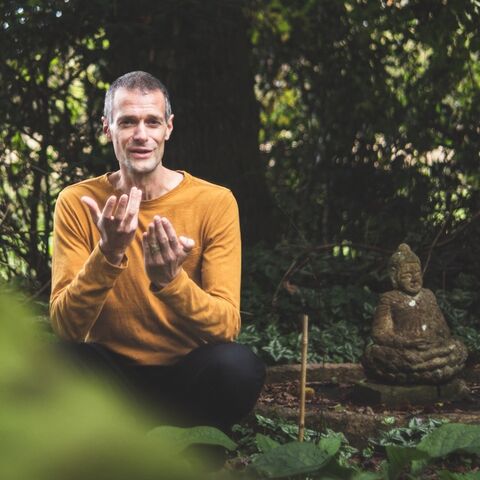
This is Josh Tippold.
And today,
I have Dean Graves back with me.
Dean,
How's it going?
It's going great.
Yeah.
I'll have Dean give you a brief introduction about himself for those who didn't catch the last podcast.
And one of the things Dean talked about last time that really caught my ear was this notion,
This illusion of stillness.
Really briefly,
I can cognitively kind of understand and see it,
But in my daily experience,
I obviously haven't realized this,
Especially to any kind of depth.
So I was going to have Dean just give a teaching on this.
But Dean,
Before you do that,
Jump in here,
Tell people who you are,
What you do real briefly,
And then remind folks again of this list that this notion of the illusion of stillness came from the last time.
Okay.
All right.
Well,
Just briefly me,
I'm a meditator.
I've taught meditation and mindfulness skills for over 20 years.
I'm a mental health counselor.
I write books,
Written four books and working on the fifth one before we began our conversation.
I was in the midst of writing today,
All on consciousness and with the intent and purpose of providing people with information that is hopefully helpful to them to advance their enlightenment.
I also do two podcasts.
One is called Simple Enlightenment and the other is Chatting with the Arcturians.
And I have a channel or an instrument that I work with is my significant other.
And she's very connected to the Arcturians.
And we just,
We chat,
We just chat about different topics that they want to provide us with,
With the same purpose as what I just defined as my purpose to help the population become more aware and escalate their advancement along the enlightenment path.
The list that you're referring to is the nature,
Defines the nature of our experience and how we participate in creation.
There are multiple and infinite number of universes,
None of which are duplications of the other.
And science and mathematicians like to structure it,
Well there's a,
There's a finite number of experiences and so one universe is just a duplication of another universe and so forth.
And that's not the case,
That doesn't fulfill the purpose of creation.
There are,
In the course of developing structure for creation and there is a defined structure that you can think of as lateral ranges of consciousness.
And these ranges of consciousness are distinguished by their degree of perception of separation from the creator.
So the top of the heap is the foundational,
Essentially co-creator.
I refer to that top range as the creator,
As the subject.
The creator is the object,
Is outside of creation,
Projected a couple of concepts or didn't project two concepts.
One concept,
The creator is infinite and so that to us that is conceptual,
But within that the creator projected the concept of intelligence.
And for our purposes,
I like to define things so we understand what we're talking about.
Intelligence is awareness with information.
And that concept was projected and within intelligence,
Within infinity,
Created the environment for creation and there are multiple creations that could be developed for the purpose of fulfilling the creator's purpose for creation,
Which is so that the creator might know itself by experiencing itself.
And that is the same purpose that we all have to explore ourselves as incarnate projections of ourself.
Everything within creation is consciousness,
So everything that we experience is consciousness.
What distinguishes consciousness as participation is its degree of perception of separation and that is free will.
Free will,
Unlike what the philosophers like to debate about whether we have the choice of turning right or turning left or whatever,
We only have that.
That is a byproduct of free will.
Free will is a perception of separation.
Without that perception of separation,
You and I would not distinguish ourselves as autonomous beings.
We would not have a choice of turning right or turning left because there would be no right or left,
There would just be wholeness.
And so free will actually functions as an intoxicant.
It reduces our awareness and as creation is developed,
The degree of free will intoxication is increased.
So what we perceive to be inorganic matter is consciousness that is extremely intoxicated with free will.
It does have intelligence.
It does evolve,
Not with a great deal of awareness.
It's more fluid.
It is non-descript in that the experiences that the lowest levels,
Lowest two levels of consciousness have,
The experiences that they have,
Are not retained in an autonomous body as we perceive ourselves to be autonomous bodies.
We are the beginning level,
We are currently experiencing the beginning level,
Which is called third density,
Where we are provided the opportunity to maintain the accumulation of experiences that we have through multiple incarnations and actually establish a path of returning to the creator.
So the first two layers are called first density and second density,
And they are non-descript,
And consciousness is still on the enlightenment path,
But they flow back and forth because their experiences and what they've learned is not retained within their beingness.
It just kind of goes into the knowingness of all of creation.
But all of consciousness vibrates,
And you can think of consciousness as a particle.
We have difficulty in the level of consciousness and awareness that we have to think of things other than in some sort of particle form,
But all of consciousness vibrates.
So there is motion,
And that is the generation of energy that all of creation is as well.
In the course of developing this structure for creation,
Soon after the structure was implemented and filled with consciousness,
It became apparent that there were five inherent characteristics of the creator that were able to be made separate,
So you could distinguish these five inherent characteristics.
And these five inherent characteristics are stillness,
Unity,
Wisdom,
Love,
And awareness.
The task that we have as participants in creation is to become aware,
And through our progression through this range of consciousness,
To actually become awareness.
And if you think of it,
This is third grade,
And we have to learn the lessons of third grade before we get promoted to fourth grade,
Because we won't be able to do the work of fourth grade until you learn the lessons of third grade.
It's progressive,
And it is hierarchical,
Simply from the standpoint of you need to build the floor to the house before you can build the walls,
You need to build the wall before you can build the roof,
And so forth.
So our task is to become awareness,
Which is the curriculum that we have to learn in order to move forward along our enlightenment path.
The five inherent characteristics are,
We all have,
It's included in part of our design,
And as part of our design,
Distortions of these five inherent characteristics are also included to a degree.
There are potentially 32 archetypes of the creator,
Five inherent characteristics,
Free will is also an archetype,
And the other 26,
If my math is correct,
The other 26 are distortions of these five inherent characteristics.
One of the distortions that we experience is movement,
Which is the opposite of stillness,
Obviously,
And this is an enhancement of the movement that is inherent by consciousness moving.
So we'd set that consciousness moving aside,
That's not really the movement that we're talking about.
We also have a more intense perception of separation.
So we have the five inherent characteristics that we,
That are part of our design for experience,
Along with the perception of separation,
And also movement.
We also have the,
A distortion of a distortion,
Which is unconsciousness.
These nine archetypes are used to create a universe.
In other words,
Our whole universe is designed around and experiences these same five inherent characteristics and four distortions.
Other universes experience a different mix of inherent characteristics and distortions.
I don't know what the distortions that we don't experience are,
Because not experiencing,
You can't,
You can't know what they are,
You can't understand what they are,
And I offer as an example,
Imagine that we,
In our experience of creation,
That we didn't have movement,
And there are universes that don't experience this distortion of movement.
And I'm not able to conceive of having experiences without movement,
But there are universes that don't have movement as part of their distortion.
As we evolve,
As we progress through these ranges of consciousness,
We are learning awareness at this level of consciousness.
When we learn the curriculum of this range of consciousness,
We will literally graduate.
This is the only range that we have to graduate from.
We will move to the next range of consciousness,
Which is identified as fourth density,
And that density,
We will,
From the lens,
Through the lens of awareness that we have learned in this range of consciousness,
We will explore the inherent characteristic of love.
And that is a progression,
And from my perspective,
It's really,
We already are love.
We can't not be love,
But we're not aware of it,
And we don't have the capacity to be aware of it to the extent that we can explore love at the next range of consciousness.
Graduation from the next range of consciousness occurs without a formal graduation ceremony,
But when we reach that level that we have become love,
Then we'll be prepared to move on to the next range of consciousness,
Which explores wisdom.
Same progression through the next range of consciousness.
When we become wisdom,
Then we'll move to the next range of consciousness,
Which is unity,
And that's a very broad range.
That's the broadest range of consciousness out of all of the ranges of consciousness,
And we will become unity,
Eventually moving into the consciousness range of stillness,
And the creator is stillness.
So all of these ranges,
We are relearning of ourselves as the creator at the range of consciousness that we have the capacity to experience.
So the stillness that we experience is not stillness,
Really,
At all.
You know,
We perceive in meditation,
You know,
The misnomer about education,
Or meditation,
Is that,
Well,
You stop your thoughts.
You meditate,
And you're real still,
You don't move,
And you stop your thoughts.
Well,
If we were able to stop our thoughts,
We would move out of time.
Time is nothing but our perception of our contiguous processing of thoughts.
Now,
We may process different types of thoughts when we're in meditation that are much more calm and much more self-exploratory,
But they're still thoughts running.
They're still coming at us one right after the other.
When we finish one,
We'll go to the next one,
And we don't have the option of not going to the next stop.
So we don't have the capacity at this range of consciousness to be absolutely still.
Physically,
We can be still,
But our body is still running.
We're just not aware of it.
Thoughts are still coming.
They may be less stressful thoughts.
They may be very,
You know,
When I teach my meditation classes,
I explain to people,
What you're doing in meditation is you're experiencing that part of you that you traditionally have not been aware of.
We simultaneously exist in both the metaphysical world and the physical world.
The physical world is called the village,
And the metaphysical world is the guru's cave.
When you're in the village,
You're dealing with problems.
All problems exist in the village.
When you allow yourself that opportunity to visit the guru's cave,
And it has to be a visitation because we're still alive,
Then you're changing the nature of the thought and the distractions that we have as part of the village with our physical senses and all that,
So on and so forth.
And so you're changing the lens through which you view the problems that you're contending with in the village.
And so just like going on vacation,
You go on vacation,
It takes you two or three days to get out of that work mode that,
You know,
Do,
Do,
Do type of stuff.
And then you enjoy your vacation.
Then you come back from vacation.
The same problems exist after you get back from vacation as they did before,
But your perspective,
Your lens is different.
And so you find other solutions to the problems that you didn't deal with before you went on vacation.
The same is true when you come back from the guru's cave,
You have a whole new perspective and problems are more easily resolved because you have a different lens to which to view those perspectives.
So movement is something that we cannot stop.
When we begin this range of consciousness,
And it is a progression as we learn the curriculum of the density,
We are designed to be in constant motion by virtue of this distortion in how we process thoughts and our perception of separation and our unconsciousness.
And so it is a very stressful,
Very difficult time.
But as we progress,
The plan is the design is that we will overcome the unconsciousness and we will become more aware of the sources of movement and our perception of separation and begin to surrender those beliefs that we've incorporated into our mind that keep us attached so strenuously to the perceptions of the village and allow ourselves to function more productively and consistently as the perception of the guru's cave.
And that is what mindfulness is,
Is to be able to more frequently or more fervently maintain that perspective that we gained in the guru's cave when we have to go back into the village.
And that's mindfulness,
You're aware,
You're,
You know,
The problems are not so,
So huge.
And you have a perception of self,
You have that feeling of calm,
You have that perspective that you can't have if you live only in the village.
Well,
Really good points,
Dean.
The thing would be talking about distortions and why a creator would create distortions.
And then the other thing would be jhana.
So now I don't know this,
I can't say from experience,
But I can relate a few things at how,
If I'm getting this right,
Certain practitioners who can achieve levels of jhana can detect the illusion of stillness,
If I'm getting that right.
There's this metaphor maybe of still flowing water.
Before I get into some of these talking points and questions around this one topic,
I'm just wondering up front that,
Yes,
And of course the body doesn't,
You know,
There's all the blood is pumping,
Right?
Hopefully.
The breath is going.
Yeah,
Right?
Unless someone in fourth jhana is said for the breath to stop actually,
According to some.
I don't know that from experience,
But within this,
We can only give conjecture on what a reality might be like with absolute stillness,
Because that is not our experience,
Right?
I mean,
We were walking,
Look,
I'm moving my hands here.
The closest kind of conceptual thing I can have to this is Ajahn Chah's still moving water image.
So,
If I think of a river and I kind of zoom in on it,
You know,
The water,
If I chunk it in sections and follow it at the same speed,
It doesn't really appear to be moving itself.
I know I'm moving along with it,
But then when I zoom out,
I can kind of detect a flowing movement.
But if I'm moving at the same speed of something else's moving,
It doesn't seem like we're moving at all because we're moving in unison together.
Do you know what I mean?
So,
In this notion of still flowing water,
It's a perceptual,
I guess,
Attunement.
It's a shift in perspective.
Now,
I know when I'm in deep meditation,
My body can become quite still.
Sometimes when people look at me listening,
Sometimes it doesn't seem like I'm moving at all.
But of course,
There's gradations of movement and stillness,
Right?
The speed of light is known to be really fast.
And then if you're talking about,
You know,
We have to go through realization of awareness,
Becoming awareness,
As you say,
And then into love,
And then into wisdom,
And then into when the next one was unity and then stillness.
So,
It seems like it would just be conjecture,
But that's okay.
And maybe we can point at some of these things.
But let's go back then,
And I've heard this from a lot of kind of,
I don't know if I would call it New Earth or a certain New Age,
Although I don't really like that term either,
Because there are so many distortions in the New Age,
But there's also a lot of wisdom and truth in that,
I feel.
But why would a creator want to experience itself,
Right?
In that everything is an expression of divinity,
These type of notions.
And then,
Of course,
The Gnostics have this notion of the demiurge,
And that there's a God above God,
This type of things.
And your system puts it a little bit differently than that with the object.
Why the distortions?
Let's,
I guess,
Just start there.
Well,
If you're all that is,
You can't experiencing anything outside of yourself,
And so you can't really explore yourself other than by experiencing yourself.
Well,
If you're all that is,
You're not going to experience anything new because you're all that there is.
And so the purpose of creating essentially a mirror image of the creator,
That only difference being that it perceives itself as different,
And then initially interacts with the creator as the object,
You create uniqueness by virtue of the autonomous perspective of the creator as the subject.
And,
You know,
There are multiple creations.
Each creation is headed,
For the lack of a better description,
By an identity being that is a creator as the subject that has the same capacities as the creator as the object,
Only it perceives itself as autonomous.
And so as those experiences accumulate,
You know,
The differences become more unique.
As the creator as the subject creates its creation,
Which we are participating in one of,
Then the uniqueness flows from the bottom to the top.
So the uniqueness of our interpretation of experiences flows to consolidate into the creator,
The eighth entity,
Creator as the subject,
Which allows the creator as the object to experience itself as uniquely created by the distortions.
So the creation is made possible because of that distortion of free will.
And I don't want to get too much into metaphysics because I think it's never ending almost,
And it's fascinating though.
I love it as a hobby.
Yeah.
But if there's omniscience,
I guess that's the last thing I want to ask about this is,
If there's knowing everything,
Then it would already know this in advance,
Right?
But it's exploring itself,
So it's new.
Because it's what?
It's new.
It's new,
But what I'm getting at,
If there's omniscience,
Then it would be like,
I guess,
What's the point?
You already know how it all plays out.
You would know every single detail of how it happens.
But your perspective is from the perspective of being in time.
Time doesn't move.
Right,
But this would all be known.
We perceive things,
Movement is to be time.
We perceive time,
We perceive movement because of our limited capacity to stop thought.
Even in your illustration of the flowing stream.
Still flowing water,
Yeah.
You're still processing thoughts.
That's a thought that allows you to be aware of that.
And so you may slow the perception of the experience,
But the thoughts,
Time is a metronome.
I mean,
Speed of light is a metronome,
And it varies.
It's not a constant.
And we know,
As a scientific community,
That there are minute variations in time over time.
I forgot the institution's name that's headquartered in London that actually tracks the speed of light over 100 years or so.
And they have variations in the speed of light,
Particularly at times of cultural stress,
Like World War II.
And the speed of light slowed down during that period of time,
Because of the lessening of consciousness and the lower capacity of the population to function.
They measure it in a vacuum too,
Right?
And the speed of light doesn't exist like that in the real world.
Well,
And there is no vacuum.
There's no vacancy within creation of consciousness.
Even what we perceive to be space in between minute particles,
Molecules and atoms and so forth,
That's still consciousness.
That's what they're defining as dark energy.
It's still consciousness,
But dark energy or slash matter,
It's the same thing.
We just can't distinguish the nature of it.
It's still consciousness.
And my attempts to explain that is it's unformatted consciousness.
In other words,
What we experience is white matter.
That's dark matter.
And that's like the tub of water that you scoop into to take out and create something with.
So,
It's still participating in consciousness.
It's just not participating in white matter consciousness.
Yeah,
That's a whole nother huge area.
I wouldn't try to stick on topic here.
Okay.
Just bring it back.
Right.
Exactly.
I mean,
Because that's,
Wow.
Yeah,
That's a huge one.
Now,
I guess the point,
Well,
Before I get to the points I raised there,
Awareness.
So,
One way I've heard is to look at experience is there's only two things that are ever happening.
There's knowing and what's being known.
I guess I use a different definition of consciousness.
Consciousness is just the pure knowing.
It can't be corrupted.
It can't be purified.
It can't be defiled.
It just knows.
And then it's what is being known.
Experience can be simplified down into that.
The knowing and what's being known.
And so,
It's a different definition.
And then I don't know how awareness would fit into that.
But what I'm getting at with this is to graduate this,
How can awareness directly know itself?
It's almost like a tooth biting itself or we can't directly see ourselves either,
Right?
We have to use either a mirror or a reflecting pool.
Now,
I'm not saying it's impossible to directly be aware of awareness or know the knowing itself because it's a fascinating exercise.
It's just how would we know that that would be the case?
Okay.
Just to comment,
Your illustration,
There's the knowing and the known.
That is a perception of separation,
Which is only possible because we perceive ourselves or we perceive the world around us as having autonomy.
The reality is all is one.
There's no distinction other than our perception of it.
And it is only our perception that affords us that definition of the knowing and the known.
And someone might say,
Well,
That's just a perception too.
It is a perception.
All that we experience,
That is the purpose of creation.
We create an autonomous being.
We perceive ourselves to be autonomous and we create a lens based on our experiences and our capacities that uniquely explores other consciousness,
Which is all the creator.
So by virtue of that action,
We are fulfilling the purpose of creation.
In Buddhist systems,
It's the five clinging aggregates.
There's form,
There's a feeling tone or hedonic tone,
Pleasant,
Unpleasant,
Neither of those.
Then there's perception,
Formations,
Mental formations,
And then there's consciousness.
And these are things that we cling to as a permanent self.
And if I'm understanding some people's opinions right or the way to go about it is that that's what causes a lot of stress in the world.
Dukkha is clinging to these as this is me,
This is mine,
This is who I am of these five aggregates.
And okay,
So now I want to go back to this thing of jhana.
And I tell people that I shouldn't talk about this,
But in this particular instance,
Because for one thing,
It's a really controversial thing in meditating circles.
A lot of people have a lot of different ideas about what it is,
What it isn't.
I will just say the consensus in using some technical terminology here,
Most people that are into this kind of thing,
They agree on the five jhanic factors,
But that's not particularly jhana.
There's four form jhanas and then there's four formless jhanas.
The Abhidhamma system,
The higher levels of the Buddhist psychology from what I understand,
You're trying to discern through one's own experience or own experience through observation.
A quick side note here,
Instead of a self,
A lot of it's looked at as a not-self,
That there's just kind of processes unfolding.
There's not a permanent I,
Me and mine,
That there's just kind of experience and what's observing that if I'm getting that right.
We are a mind-body-spirit.
Even our metaphysical self has a body.
It's a consciousness pattern.
It's not a physical body like we perceive ourselves to have now.
But the distinction that I want to point out here is it's important to distinguish the mind from the spirit.
We perceive as a general rule that we have a unique spirit.
This is my spirit.
We don't have my spirit.
What we have is the capacity to perceive the spirit of the creator.
There's one spirit.
Our capacity to perceive that is limited by our limited degree of consciousness,
Awareness.
All that you're describing by distinction are beliefs within the mind.
We have multiple minds that we function within.
One of the most detrimental to our advancement but is a design necessary step for us to overcome is our ego mind.
It is the design.
We function within an archetypical mind which is a blueprint for how we process thoughts.
That blueprint by design compels us or motivates us to create a hierophant,
A false perception of self.
As we evolve,
As we move into the higher dimensions of this density,
Then that diminishes but it doesn't go away.
That is one of the primary distinctions of someone who has advanced to the upper dimensions of this density is their significant surrendering of the perception of autonomy.
As we graduate into fourth density,
One of the signals,
One of the curriculum fulfillments that is essential for us to graduate from fourth density to fifth density is the majority of the surrender of that hierophant,
That perception of self.
We will form what's called a social memory complex as we near the end of the fourth density range of consciousness,
Which simply means that our autonomy begins to significantly dissolve and we integrate with other perceived beings to function.
Our perception of self being an organism blends into this social memory complex which itself becomes our functioning organism.
As we progress farther up the line through sixth density,
Then we continue to surrender our perception of self and that's what unity is,
Is the surrendering of that so we feel and function as a much more comprehensive organism and our perception of self almost completely disappears in sixth density and it completely disappears in seventh density.
So,
You know,
These perceptions of self,
Our definition of self,
Our capacity for awareness,
Our incremental steps,
All designed to take us step by step back into complete reunion,
Unity,
Awareness of the creator.
In other words,
Any perception of our autonomy disappears,
It just goes away.
And that's what I was getting at in this Abhidhamma system from what I understand and I don't understand much because it is so very complex,
Like there's 52 types of consciousness,
Like 140 some objects of consciousness and there's so many different mind moments and things arising and universal characteristics on and on and on.
It's a system that was designed later too then,
But it's still in the Theravada canon,
But it's discerning what's called being able to discern for oneself what's considered ultimate materiality and ultimate mentality.
So,
If we look at the matter world,
I guess this is where this applies,
You know,
Where there's this perception of matter,
That there's this thing that's supposed to be able to be discerned for oneself,
This kalapa,
And this is supposed to be the smallest individual particle that they're constantly arising and passing away so fast that there has to be a level of mind training to be able to discern these.
And then within each kalapa that's arising and passing away so very rapidly,
There's I think certain universal characteristics like the four elements and like color and a few other ones and plus a slew of other characteristics that can or cannot be there and how they are all based on conditionality and causes and conditions.
And there's just a mind-blowing amount of things that can go in to discern.
And if I'm getting this right,
This exists independent of whether it's being observed or not.
If I'm getting that right,
I don't know for sure,
But then the whole mentality is way more,
That branch is way more complicated.
And then you get into the vipassana track in some systems that go even beyond that about dependent origination,
How in one thing kind of conditions another thing.
Yeah.
Well,
Physicality is a product of first density,
The lowest density.
It is the most intoxicated with free will.
And it is what we reference as the four elements.
Fire is the lowest,
Then comes water,
Then comes atmosphere,
And then comes matter.
And if you look at those,
Fire is pretty simple.
And there's no really distinction in fire.
Fire is fire.
Water is a little bit more complex.
Atmosphere is much more complex.
And then all that we consider to be matter,
Inorganic matter is very complex.
We have lots of elements and they constantly are transforming one into the other,
Molecules transforming and forming and unforming and so forth.
And this is a representation of the ranges of consciousness.
The fire is consciousness.
There is a very definitive scale that consists of 64 platform levels.
First density is defined as two through eight.
So fire is plus or minus of two.
Water is plus or minus of four.
Atmosphere plus or minus of six.
And inorganic matter plus or minus of eight.
And so the consciousness flows back and forth as they interact.
Fire essentially becomes a significant catalyst for the experiences and interchanges of the ranges of consciousness.
It is a foundational consciousness and it,
By its nature,
When we see,
Say,
When we find gold,
That is representative of a dimension of consciousness within first density.
All consciousness at that range will have the propensity to appear as gold.
And so by virtue of its interaction with fire being the primary catalyst for the exchange,
What we're watching when these elements interact and interchange is the experience of consciousness within that range of consciousness.
Second density is organic matter,
Plants and animals.
And we see all the time the interaction of those ranges of consciousness,
Each species of plant or animal,
As the manifestation of consciousness at that range.
Consciousness at that range from a metaphysical standpoint functions as a pool of consciousness.
And so as it incarnates,
It projects an analog projection of itself to create or fulfill,
Manifest the lifetime of,
Say,
A tiger.
The tiger has its experiences,
It dies,
It sends all that it has learned from its experiences back to the pool of consciousness.
Consciousness coagulates and much like butter rising through cream,
When consciousness rises,
That consciousness is just scooped off and moved up to the next pool,
To the next range.
It also goes backwards because there's nothing descript about it.
There's nothing that is retained by an individual autonomous being.
As we perceive,
Because of our limited capacity,
The authenticity of the physical,
As we progress through fourth density,
We will surrender the authenticity of the physical.
We just see it,
It's just conceptual.
And we no longer will need an incarnate body.
We will just no longer incarnate.
The one body we have will continue until we reach that point of progression where we surrender it,
We don't need it.
We will still have our mind,
We'll still have a metaphysical body with our consciousness pattern.
And of course,
We will still be part of the spirit.
So the physical,
We perceive the authenticity,
And when we're talking about particles and so forth,
Those are all perceptions of within that perception of autonomy,
Of the authenticity of the first density environment.
It's simply an environment that is created for us to enjoy,
To experience.
That's right.
And this is,
We're not talking about the formless realms,
Like you're talking about there at the end,
From what I understand.
This is only when there isn't a realm that has this perception of materiality.
And then even subtle materiality,
I guess.
But what it is,
Is it strips everything away.
It's stripping as much as you can.
It cannot be,
If I'm getting this right,
Subdivided anymore.
And then looking at the- That's part of your consciousness.
The characteristics of these kalapas.
And then the mentality that's kind of like the whole other thing other than the materiality.
In this system,
I'm still exploring it for myself.
Right,
I understand.
Myself,
So to speak,
Yes.
And very much a student and more interested in truth and seeing things for how they actually are,
Other than subscribing to any particular system.
It has to be seen and known in one's experience.
Some of these practitioners that I've heard,
When they can actually discern these arising and passing of the kalapas,
That they can't be subdivided anymore,
They can see through the illusion of movement.
And then they can see through this,
I guess,
Perceptual overlay,
This illusion of this label,
Word,
This perception,
This recognition of things we give.
But it is a mind construct.
We're not actually seeing reality for what it is,
Right?
We're seeing it through a filter or a lens of our perception or recognition.
And the human faculties,
They're limited within the electromagnetic range.
We can.
In addressing your question about awareness,
In meditation,
And I can't do it other than in meditation,
In deep meditation.
In every meditation,
I have not a deep meditation,
As much as I would like for it to be.
But when I'm able to get into deep meditation,
And I've shut off all the senses,
And I'm not hearing,
I'm not feeling,
I'm not none of that,
And I perceive awareness itself,
But my perception of awareness itself,
I'm aware that it is from a directional point of view.
In other words,
And I use in trying to explain this,
It's kind of like our vision.
If somebody tells you,
Focus on this object,
And then when you focus on that,
You lose your periphery vision.
It's still there,
But you're not,
You can't include that in your awareness because you're so focused.
As we evolve,
As we move up the enlightenment path,
Then that awareness of,
That we are able to focus at this range of consciousness becomes much more expanded.
So we have the same degree of awareness to all of what we perceive to be our periphery vision.
And that requires capacity in order to do that.
And as the higher you go,
Then there's no direction.
There's no up,
There's no down,
There's no periphery vision.
You're just,
You are awareness.
And that awareness is what explores our perception of self as part of the creator.
And so we become aware of awareness itself and begin to distinguish and define the characteristics of awareness itself,
Which is done by feeling.
It's not a matter of,
Gee,
I've scientifically checked this and that or another.
We feel it.
We feel that,
They feel the breadth and depth of awareness itself,
Which gives us that deeper feeling.
We have the tendency to perceive of our evolutionary progress as two-dimensional.
We become more aware.
We have greater intelligence.
All of that's two-dimensional,
But there is a three-dimensional to it,
Which is characterized as the octaves,
That our two-dimensional progression is defined by these nine archetypes within our universe.
The depth of perception through the octaves is not limited to our universe.
As we become more aware,
More aware of awareness and explore awareness,
We are exploring the full depth and breadth of awareness throughout all universes.
It's not distinguished or limited by the characteristics of our universe.
And it's seven layers within seven layers within seven layers within seven layers.
And as far as we know,
It's endless.
Dean,
A lot of the things you're talking about,
I think they fit into some esoteric systems,
Right?
But the thing I want to touch here on being aware of awareness,
To me,
That's,
And yes,
I would totally agree that perception does start expanding when we start doing this work.
And the study in these practices,
That our perceptual field does get more expanded,
More able to tune into more detail and also see bigger and bigger pictures and things.
To me,
Though,
It also seems like being aware of awareness is a perception.
It's actually a perception of awareness.
And we all know that at least our regular perception,
Regular waking life perception of most people anyway,
Is fairly unreliable.
It can be like,
We will misidentify like a stick for a snake.
I've done that before in the woods,
Right?
I thought maybe a stick was a snake,
But it turns out,
Closer examination,
It's actually stick.
And then also maybe you might see like a plastic bag blowing on the street.
And I think it might be a cat for a second or something like this.
And then upon closer examination,
No,
It's not what I thought it was.
And so I wonder how this notion of perception being kind of unreliable,
How that translates when it does get more expanded,
When it does evolve and grow.
It still,
I would imagine,
Has a degree of unreliability to it too,
As it is a distortion as well,
Right?
Well,
Why do you misperceive something?
We misperceive something because we misinterpret it.
I mean,
The stick is a stick,
But these are the foibles of perceiving the authenticity of the physical.
And when I'm suggesting becoming aware of awareness,
Physicality is not part of that.
And our measure of awareness of awareness is purely a feeling.
Our measure of exploration of love is purely feeling.
We're feeling the authentic self.
I think even one of the sutras of the Buddha,
The truth has to be known in the body.
I would definitely agree.
Our feeling,
The body is less of a liar than perception is for sure.
If I can say that,
But yeah.
All right.
May you all be well out there and thanks for listening.
And Dean,
Thanks again so much for joining me in exploring this topic amongst many others.
All right.
Bye now.