Hi there,
Welcome to today's relaxation.
Relaxation number 70,
The last one in this series,
And recorded over the last few months as part of a response to being at home during the pandemic.
Like many people,
My life has been pretty close to where I live over these last few months,
Doing a bit of stuff locally,
A bit of volunteering.
My usual,
I work in a school usually a few days a week doing some support working and singing with children.
And then there's other things that I do,
Travelling usually,
Maybe to play,
Offer gigs and workshops or doing other kinds of trips.
But the last few months have been close to home and it's been such an interesting time I've found in terms of looking into the news each day and finding out what's going on around the world.
And if you've not heard the relaxations before,
This is the first one,
They go through the body so they start looking at the feet,
The bones and some of the muscles and they work up through the legs and through the main part of the body,
The main organs and then into the arms and the head.
And today the last one we're looking at the brain today a bit,
Some basic anatomy and some names as a way of focusing in on those parts of the body.
In my experience when I come home,
I like that idea of coming home to the body,
I can see what it needs,
Maybe that's sleep,
You need a rest or you need to rest a certain part of the body or you need some exercise or it's all part of a balance I think.
As a way of being in the world,
Which at times can be noisy,
You might be able to hear some sounds around here today,
The sound of work happening outside on the road,
The sound of cars,
Planes,
But within all this,
My experience has always been that it's possible to find peace within,
Even in those difficult times,
Those noisy times.
Or at least I know that to be true even if it's not always possible to access it,
Maybe just knowing what's possible in the quiet times of when we intentionally do something like a practice of relaxation,
We know it's possible.
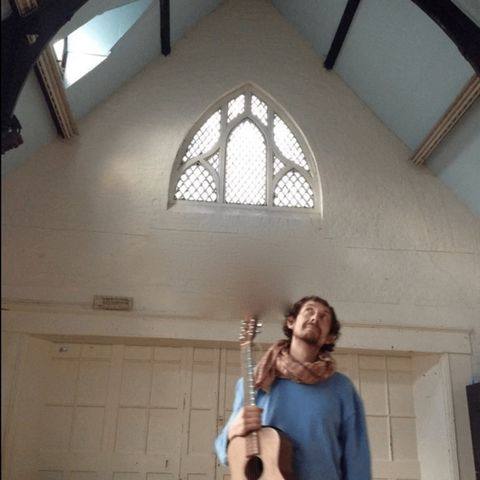
So the song today is a song about friends called We Go Sailing and it's one of my own songs and it's on an album that I released in January,
The first solo album of mine.
I've been playing and writing songs for many years and I've been in some beautiful bands and yeah,
But made this step towards doing my own stuff a few years ago and this is where it led to,
So the song is called We Go Sailing and I chose it because it's about how we're all in life together.
Yeah,
Okay,
So this could be a long one today,
Probably about half an hour I expect.
So let's take some deep breaths in and out together,
Shri,
As we have done each time to start the relaxation.
So breathing in,
And breathing out.
Breathing in,
Into the belly,
Holding the breath and breathing out.
Breathing in,
And breathing out.
Okay,
And then feeling the feet.
Now we're at the toes,
And we have the bones in the foot,
Metatarsals,
And the talus,
That's the bit at the bottom of the ankle casting out behind the heel,
The Achilles tendon there.
Muscles,
Joints,
And then coming up to the bones of the lower leg,
Tibia and fibula bones,
Calf muscle,
Gastroslymias muscle with solaris supporting muscle,
Allowing the leg to move.
The knee,
Aware of the knee,
Moving positions of the leg if it's more comfortable.
And then we've got the thigh.
Quadriceps at the front,
And the hamstrings behind,
Working together to move the femur bone as it moves in the synovial,
The joint,
It's called the synovial fluid,
Where the top of the femur connects to the hips,
Aware of that area.
Now aware of the noise around the studio around today,
I thought I would just continue recording anyway,
As some kind of way of practicing with background noise and sound,
Aware that the sounds of life are continuing around us.
Up into the hips,
Connection with the top of the femur.
And aware of that area where the organs of the pelvis,
Pelvic arch,
Up to the bladder.
The end of the digestive tract,
The intestines,
The large intestine,
Back to the lower intestine and the stomach.
Pancreas,
Gallbladder,
Feeding the digestive tract,
Or rather supplying the digestive tract with digestive enzymes.
And then we've got the,
From the stomach,
Sphincter on either side,
And then the oesophagus,
Which runs down from the mouth to the stomach.
The trachea is there in parallel,
Which is the windpipe which goes to the lungs,
Bringing oxygenated air in,
Into the lungs,
Which exchanges at the end of the bronchioles.
The air comes outside and exchanges over,
And the blood then goes to the heart,
So aware of the heart.
Batter blood to the heart and then from there to the rest of the organs.
And then it's sorted on its rounds by the liver,
Top right and the kidneys,
Middle centre.
And then,
Above the heart we've got the collar bone,
Shoulders,
Down the left arm over the shoulder,
Bicep and humerus bone,
Down to the elbow,
Into the forearm,
Illness and radius bones,
Into the wrists,
To the palm and fingers,
Allowing the fingers to rest as we come over into the right hand,
Fingertips,
Down into the palm and the thumb and the wrist,
And up to the elbow,
Via again the radius and illness bone,
To the right arm,
Up to the bicep,
Humerus bone and then up to the shoulder,
Arriving full circle there at the neck.
Back of the neck,
Front of the neck,
And then up to the mouth,
Tongue,
The thousands of taste buds,
The enamel of the teeth,
Each with a blood supply,
The roof of the mouth,
The nose above,
Connected to the trachea,
The back of the air coming down and the nose,
And the mouth humidifying and warming the air as it enters the lungs to make it breathable for the lungs,
And we have ears and the different sounds they can hear,
The outer ear,
The inner ear,
The three smallest bones in the body,
The stapes,
The smallest one,
Down to the cochlea,
Cochlear canal,
Bring a sound into the brain,
Or of the eyes,
Under the eyelids,
The cones in the eye that vibrate,
Depending on certain,
The way light bounces off certain surfaces,
Red by the cones as colours and the rods as black and whites,
Two images taken from each eye,
Come through,
Turned upside down and remade in the brain,
And behind the eyes the brain itself,
So we're going to rest there for a bit today.
So we have the skull containing the brain,
The brain is mostly full of fat,
And it's divided into different hemispheres,
And using tests to show which areas of the brain have activity,
We know that the left hemisphere is responsible for language in most right-handed people,
And 50% of left-handed people,
Reasoning,
Calculations,
Motor processes,
And signals for the right-hand side of the body,
And then the right hemisphere lights up with spatial processing,
Emotions,
Artistic expression,
Visual reasoning,
And the motor functions for the left side of the body,
Between the hemispheres is something called the corpus callosum,
And then the frontal lobe helps with formal reasoning,
Emotions and movement,
The paratial lobe in the middle of the brain helps with objects,
People,
Interprets touch and pain,
The occipital lobe,
Back of the brain,
Helps with visual information,
The nodes of the brain,
Temporal lobes,
Lights up with language,
Facial recognition,
The cerebellum,
Which is the back of the brain controls the fine movements,
Balance and posture,
And then we've got the brain stem which connects the spinal cord to the brain,
Basic body functions,
When we looked at the spine,
There's a nerve centre there that can give off,
Protects the brain by giving off immediate reactions to dangerous input,
Such as heat,
And then there's the midsection of the brain stem known as pons,
Which looks after sleep,
And then the thalamus which is found under the cerebrum,
Down again towards the bottom of the head,
Signals coming from the spinal cord,
And under that there's the hypothalamus,
Temperature first,
Water balance,
Hormone production and appetite,
The amygdala in the area to process aggressive behaviour and fear,
And then a couple more you might have heard of,
Hippocampus,
Remembering new information,
Base of the brain,
The pituitary gland,
Secret hormones,
And the basal ganglia within the deep part of the base,
Coordinates steady movements.
So,
You can read more,
I'm using a cycled helftline,
But they're the areas of our brain,
And all the body of course is covered in skin,
And now feeling the whole body,
Feeling all the skin from the brain,
Skull down to the neck,
Face,
Chest,
Back,
And then up the thighs,
Pelvis area,
The legs and the ankles and the feet,
The skin receives stimulus,
It contains us and allows us to move,
It's waterproof,
Contains millions of hairs which regulate our temperature.
There's three layers of the skin,
The top layer,
The epidermis,
That we can see,
And that is constantly renewing as cells pass and new cells replace them.
The dermis is the next layer down,
It's thicker,
Contains all the sweat and oil glands,
Hair and skin,
Connective tissues and nerve endings,
And then below that the subcutaneous fat layer that provides insulation and heat,
Protects us,
Covers us.
So there we have the body,
And I'll sing you this song as we travel on together.
I'll be doing plenty more relaxations and projects around my life as a songwriter and an artist,
And I'll keep this playlist up for future.
Thank you for being on the journey together.
We go sailing on the sea,
We go sailing on the sea,
Me,
My sisters and my brothers and me,
We go sailing on the sea.
We are guided by the stars,
We are guided by the stars,
Me my sisters and my brothers are,
We are guided by the stars.
Through the water we draw the line,
Through the water we draw the line,
Me my sisters and these brothers of mine,
Through the water we draw the line.
We've been sailing and we're sailing still,
We've been sailing and we're sailing still,
Me my sisters and my brothers world,
We've been sailing and we're sailing still.
We go sailing on the sea,
We go sailing on the sea,
Me my sisters and my brothers and me,
We go sailing on the sea.
Okay,
Take a nice deep breath into the body and best for the rest of your day however long is left.
And if you'd like to know generally more about what I'm up to with my son writing and playing and stuff,
There's,
You can send me a message in contacts and I do a mail out every couple of months,
Every two months or so and it's also in my journal,
It's called my journals and my journal pages.
Thanks for listening and take care.