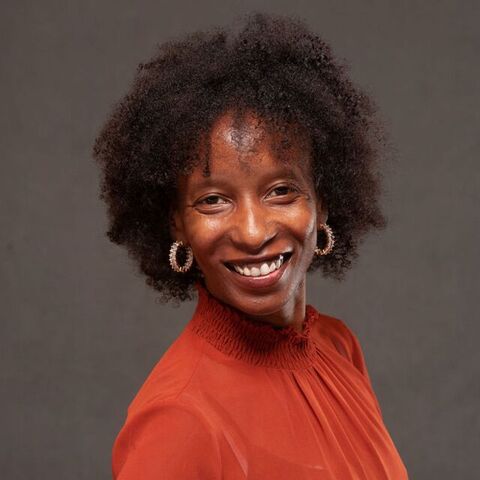
Welcome everyone.
I am Erica Gifford-Mills and you are listening to Get Rooted Radio.
Living it up,
Loving it up,
Letting it go right here on Transformation Talk Radio.
Today's episode is titled Rooted in Alignment,
How Authentic Living Transformed Burnout.
Today,
My guest,
Joy Lewis and I will explore Joy's transformative journey from the classroom to holistic educator and energy worker.
And listeners,
During this episode,
You will uncover the secrets to living authentically and finding balance and learn how conditioning and energetic misalignment contribute to burnout and discover practical tools for reconnecting with your true self.
But first,
Just a little bit about my guest.
Joy Lewis is a former classroom teacher turned holistic educator and wellness coach.
She is dedicated to guiding individuals from all walks of life and releasing burnout and reconnecting with their authentic selves.
After overcoming her emotional and work-related burnout journey,
Joy discovered the power of practical tools like human design and other holistic practices to reclaim balance,
Vitality,
And purpose.
She believes we all possess innate gifts meant to contribute to the world,
Yet societal expectations often sever us from these gifts,
Leaving us drained and misaligned.
Joy helps busy adults,
Professionals,
And parents reconnect with their energy,
Prioritize self-care,
Which is so important,
And rediscover their unique blueprints to live authentically and wholeheartedly.
Thank you so much,
Joy,
For being on the show today.
Thank you so much,
Erica,
For having me.
Well,
I'm excited because during this first segment,
We're gonna begin with your journey to alignment.
So what was the turning point that made you realize the traditional educational system wasn't aligned with your values?
Oh,
So many,
But what comes to mind immediately is just that the system overall is cookie cutter,
One size fits all,
There's one way to do this and one way to do that,
And it was cutting us off from being able to look at children and see what is that child's gift?
What is that child's interest?
And how can we cultivate those gifts?
How can we cultivate those interests?
Because whatever those things are,
They come from within.
So there was just a lot of focusing on test scores,
Focusing on academic rigor,
And it just didn't feel like I was being supported with helping families really learn how to support their children outside of school,
Helping parents learn how to manage behavior.
It just didn't seem that I was really doing the job that I thought that I was doing.
Yeah,
And I can understand that because I've often felt,
And I'm not trying to generalize education by any means,
But I also often felt you were teaching to pass something,
Pass it as opposed to truly learning and giving children the tools they need to accentuate themselves and their gifts,
Quite similar to what you said.
So you did,
Of course,
Though,
Have great experiences while you were teaching.
How did those experiences shape the way you approached holistic education?
I absolutely loved my experience in the classroom,
And I love children,
I love all the families,
And that's really why I made the choice to exit,
Because I felt like I could do more to create holistic offerings for children and families outside of the system.
But I just saw so many disconnects.
The way that children are living at home is different from the expectation in living at school.
The language is different,
The values are different.
And so I saw ways that I could support parents in a more authentic way,
Having real conversations with them,
Conversations that maybe the school district doesn't want you to say.
And so things like that,
And being able to also have very unique conversations with children that had nothing to do with academics.
We're talking about our feelings,
We're talking about nutrition,
And those experiences started to help me see,
Wait a minute,
You really can help build something more sustainable for children outside of this.
And like you said,
Everything's interconnected,
Because if they don't know how to control their feelings or express themselves,
That can interrupt learning.
If they don't have proper nutrition,
That can impede comprehension for the classroom.
So all those things so need to be addressed.
And I love that you had that opportunity to do that.
But I'm sure that was a scary jump,
Right?
To go from the classroom to having that.
What fears or doubts during this transition did you face when you wanted to be authentic to yourself and follow the path?
The biggest one was security,
Money.
How am I going to pay these bills if I decide to take a leap like that?
And who are you to take a leap like that?
Who are you to think that you can take on such a big job?
Who are you to think that it's okay for you to leave?
So there was a lot of dealing with self-worth,
Right?
A lot of dealing with self-trust.
My spiritual journey definitely deepened during this time,
Because it was about realizing that if this desire was given to you,
If this vision was given to you,
Then you're going to be fully supported in being able to deliver it.
But you got to take that step.
You have to believe in yourself.
And we say these things,
We tell the children this,
But it's a different completely when you have to embody them and actually practice them on your own.
Hey,
I will raise my hand and say,
I don't know how many times I've said,
Yeah,
I know what I have to do,
But do as I say,
Not as I do.
Because it is,
When you get to that point,
It's trusting yourself and blocking out the naysayers,
Blocking out those people who want to dim your light or think that you're crazy,
Or you have job security,
You have financial security.
Don't you want to have that as opposed to,
Yeah,
But I'm not living me.
I'm not living for me and I'm not living the life I want to live,
Which can cause you additional pain and suffering and illness because you aren't being true to yourself.
And those are the times where we have to put our big girl panties on and step up and be courageous and know that you have an innate talent to move forward.
And I think teaching that to children and professionals and adults,
Because we weren't always taught that at a young age,
But being able to start that conversation now with children will be invaluable for them in the future.
Planting seeds,
That's right.
Yes,
Absolutely.
And we have to start someplace and we have to not look at the other side,
Water our own seeds once we plant them,
Right?
And keep moving forward.
And I think that is amazing.
So just looking back is what are your values?
Are you then living your values?
Are you in alignment with what you're wanting to do?
I find people who say,
I thought this was a great job.
I loved what I did,
But I didn't like the company I worked for because their mission wasn't aligned.
And I said,
That's just as important as liking the job.
You might like what you're doing,
But maybe not who you're doing it for because maybe their mission isn't what you value.
And I think those are all things that people need to do is start looking at your values,
Your beliefs,
And then start working on that self-love,
Self-trust,
Self-worth,
So that builds up your self-esteem so that you can then be authentic.
Absolutely.
Yeah.
So how does conditioning,
The first element that we're talking about here,
How does conditioning contribute to burnout even when we don't know it?
Right,
Right.
So conditioning,
What is conditioning,
Right?
Conditioning is that dynamic where we are made to believe or think or accept things as truth,
Even if it's not our innate truth.
And a lot of times that happens in childhood when we are defenseless in a sense to the things that we're being taught from our families of origin,
From school.
We don't really have a way to say,
I don't know if I agree with that because this is just the way things are.
This is how the family does things.
This is how our culture,
The people in our neighborhood,
Right?
This is how things are done.
So we tend to accept these beliefs as truth and then mask the reality,
The true,
The authentic core of who we are.
And that right there is the foundation of our burnout.
It's like taking the source of energy and just completely misusing it,
Making it plug into something else as opposed to allowing it to express the way that it naturally has been designed to express.
And I think that's important because there are things that we learn that we don't know we learn,
Right?
It just,
Well,
That's what is around us.
That's what's in either our families or our different communities,
Whether that's our religious communities,
Our actual neighborhoods,
Our schools,
Our social events that we do,
Whether that is a sporting event or clubs.
And we become learned behavior.
And that's where I think people need to understand that everybody has it.
Even if you grew up in the same neighborhood,
You don't always have the same values,
Beliefs,
Et cetera,
Because you are parts of different communities,
Whatever those communities,
Groups,
Et cetera might be.
And I think that's a great point.
So I think the next portion of what we were talking about,
So that was conditioning,
We said alignment.
So,
Or I should say misalignment.
So what role does human design play in helping us identify and address that misalignment?
I love human design.
And I am so grateful that I found it because it's really helped me to wrap my mind around this energetic misalignment thing.
And we talk about it,
Burnout,
Or we may call it masking or those are different terms for it,
Right?
But so human design is a personality and energy assessment tool that allows us to learn how our energy is uniquely set up,
Uniquely configured.
Similar to how,
If you are familiar with astrology and you have a natal chart and you use that information to say where all of your zodiac placements are,
Human design can tell you how your energy is set up and how you are optimized to work,
To rest,
To be in relationship,
To communicate.
And so one example I can share from human design about how you might feel drained when you go against your natural energy flow is from the human design perspective,
There are two kinds of people in this world.
There are generator types and then non-generator types.
The types who are generators,
It means that they have a certain energetic configuration that makes them here to do work,
Physical work.
They're like really good at getting the job done,
Going there,
Build it up,
Make it happen.
And so naturally they feel good or with ease with the traditional nine to five or whatever the shift is work model.
But then you have the non-generator types who don't have that same energetic configuration.
So when it comes to doing physical labor,
They need to borrow energy from all the other generator types in the world.
When they don't have that energy to borrow from,
It can cause them to feel drained and tired,
But that's their natural way.
Imagine day after day,
Year after year,
Going to school for eight hours a day,
Five days a week,
Then going to a job,
Same procedure.
By the time you're middle age,
You are completely burnt out because you've been misusing that energy.
And I think that's,
So for listeners,
If you didn't catch it,
So essentially human design,
It reveals information about your personalities,
Your tendencies,
And then that energetic aura,
Like how do you,
Quote unquote,
Work the best?
How do you perform the best?
Communicate your emotional energy,
All of it.
Yes,
Yes.
And I think that's where some folks don't understand.
It's that blueprint.
I've heard it called the blueprint of you and how you best,
I just recently learned about it.
And it's so interesting because it's,
I looked at things that I did for a long time and then I was like,
Wow,
That's why I got so burnt out or wow,
That's why I need this.
It's almost sometimes I found it interesting when I like to say when I people too much because people think,
Oh,
You're an extrovert.
I'm like,
I'm an extroverted introvert because I need to recapture that energy at some point in time.
So sometimes after a long week,
Friday night,
I get my PJs on and it's me and the dog and a glass of wine and nobody else.
My phone gets turned off.
I turn off all my lights.
I light candles because I reach charge.
I can just relax.
And when you have that capability to take a look and look into human design,
You will find out,
Oh,
Wow,
This is why.
And I would really encourage listeners to do that because you start having these aha moments on,
Oh,
That's why I misaligned.
That's what role it plays in it.
So,
Again,
Go out there and take a look at that because I think that is really important.
So we've gotten through the conditioning,
The misalignment,
But how about burnout itself?
What's one small step somebody can take today to really reconnect with our authentic energy?
One small thing that everyone can do today is just take five minutes,
Five minutes for yourself today.
No matter where it is,
It can be in the car before you go into the house with the family.
It can be in your bathroom.
It can be wherever,
But just taking five minutes to not zone out,
But zone in.
And just whatever happens,
Whatever you observe,
Whatever thoughts come up,
Just allow them to come up.
But it's just a practice in reconnecting to your authentic energy that we sometimes get disconnected from because we're in the day-to-day,
In the rigmarole,
In the doing.
And I think that's important because we don't always spend enough time on ourselves or individuals might think they have to spend a lot of time.
And I think if you just,
It's almost like I was in meditation,
Right?
Some people think you have to do an hour meditation or two hour meditation,
And you can do a two minute meditation and ground yourself again.
And you can build up.
I mean,
Don't get me wrong.
I would love to be able to do an hour doing a meditation or something,
But even if you spend just that two minutes,
That five minutes,
That 10 minutes,
And you slowly build up,
And it's more than just going to get a massage.
It's more than just doing a facial.
Don't get me wrong,
I love those things.
And I just got a massage on Friday and it was great,
But it's taking care of yourself.
It's making sure that you are living authentically.
That is one way,
A major way for self-care,
But looking and taking time to,
What are you putting into your body?
Not just nutritionally,
Right?
Not just what you eat and drink,
What you listen to,
Who you surround yourself with,
Because those all can suck the life right out of you.
And that can lead to burnout.
I mean,
Cause it's more than just professional burnout.
It's emotional,
It's social,
It's physical,
It's your job,
It's the people you hang around.
And I think we need to really take a moment to see all of that.
Absolutely,
I love that you said that.
It's beyond just being tired.
Yes.
It's beyond fatigue,
It's beyond exhaustion or feeling like you just need a break or that you are stressed.
Burnout is when you turn the light switch on and that light does not light up,
That's burnout.
Yep,
And it's that light too within you.
I had somebody recently say to me,
Was going through a lot of different things over the past two years,
But somebody said to me,
Wow,
Your light is burnt out in your eyes.
And it was,
I was like,
Oh,
Like that hurt.
That was,
And they were honest,
They weren't being malice.
It was somebody who really knew me,
Right?
And that I appreciated that because I felt it,
But I was ignoring it.
Yes.
And so I appreciated that because it made me step back and go,
Ooh,
I don't like that,
Ouch,
You know?
So we have to start and make those small changes and keep going.
What inspired the concept of City John Living and how does that reflect your personal philosophy?
It is so personal,
Erica.
So first let's break down what City John is.
John is a word,
It's a slang term that's native to Philadelphia,
My hometown.
And it is,
When I grew up,
It really was a word that described a really awesome lady,
Right?
But now it's more so,
It's a noun that could just mean just about anything.
I love the city of Philadelphia and my nickname has been City for a long time.
So I put City John together because it reminded me of me,
Right?
And when you think of it,
It could also help you think of you and your authenticity.
Everyone has unique gifts.
We all came here with something.
And when we are free enough to tap into those gifts,
Draw them out and then offer them to the world,
Not only are we giving to ourselves,
But we're also giving to others.
But we're giving to ourselves because it just feels natural.
This is what we came here to do.
We're born to do it.
And when you're working in that way,
It doesn't really feel like work.
It's just all natural,
All aligned.
That's City John living.
That's just,
I wake up,
I woke up like this.
I did this.
Everyone had a great time.
I didn't feel burnt out.
I got to rest and recharge.
And everyone gets to do that in the way that is most aligned for them.
And I love that because when we do that,
I feel like when you feel better,
You want to exert better energy out.
And if you exert better energy out,
Other people feel it.
And it's just that ripple effect.
When,
As opposed to being crabby and ornery and maybe anxious and resentful because you're doing something that you don't want to be doing.
And yet that's the energy you put out there.
So go ahead.
And that's so key about doing something that you might not want to be doing because a lot of the jobs that we end up accepting,
We only accept them because we can pay our bills or make a living financially,
But we're not doing them because we actually want to be doing them.
But we all came here with something that we innately desire to do.
There are some people who love to clean,
Some people who love to cook,
Some people who love to sew and make clothing.
And they may not be in a job allowing them to do that.
So City of John Living is that reminder and that encouragement to,
You can tap into what you came here to do and deliver it and fuel yourself and feel more fulfilled.
Yeah,
And it can do just that.
And it's done that for you,
Right?
I mean,
So how has aligning those gifts affected your relationships and just your life in general?
Oh my goodness.
It's just been a level up,
An evolution of and a different way of breathing in this space,
Feeling just empowered to be me,
To know how my energy is set up,
Know that it's okay to be quiet.
You don't have to talk all the time,
Right?
I know that society tends to prefer people who like to get in and be the life of the party,
But it's okay if you like to be reserved.
I'm able to attract more of the experiences that are aligned for me when I'm not focused on hustle and chasing so many things.
It really is,
These are the sustainable practices and everyone gets to,
That's the beauty of it.
Everyone gets to create what practices,
Habits and routines in their lives are gonna be sustainable for them.
It doesn't have to look like what I'm doing,
But that's the whole point of connecting to your authenticity so that you can reconnect to what those things are for you.
So how can we,
How do we do that?
How do we start and then how do we keep going and taking those steps?
So that's a great question.
And honestly,
One thing that we have to do is commit to that journey.
That's really the first step is committing to that journey because committing to that journey is the realization that I'm gonna start doing things differently.
In order for me to connect to my being,
I have to do things differently.
I gotta do something different with my life.
So that might look like spending more time alone.
That's really how I started,
Spending more time alone because I was suffering all from the case of the FOMO.
I had a fear of missing out,
Right?
While I'm all of the different places that my friends were going and the things that they were doing and group text conversations.
And if I wasn't present,
I would kind of feel like,
Oh man,
Like they didn't invite me.
What's wrong with me?
I do something wrong.
All of the,
All those negative things start to come up.
And 10 times out of 10,
Always,
It's not even about you,
Right?
So spending that time alone,
That I was intentional to spend time with myself so that I could tap into my own energetic sensations,
AKA emotions and feelings.
So that's the second part.
When you spend that time alone,
You can really dial into when you feel those energetic shifts inside,
Those are clues to what's aligned for you and what might not be aligned for you.
We all feel resistance,
You know,
When we don't wanna do something.
But for some reason,
We sometimes push ourselves to do them anyway.
Maybe it's because of obligation or expectation or duty or the role that you play in a certain dynamic.
So when we give ourselves the privilege of just being alone for a while,
We can be honest with ourselves and say,
You know what?
I really don't like doing that.
I just do it because so-and-so expects me to.
That right there,
That awareness is enough for you to start making different decisions and doing things differently.
Yeah,
Taking that time for that self-reflection and learning no is okay to say.
You can say no.
Yeah.
And I think,
You know,
Pay attention to what activities bring you the joy,
Where you feel most energized,
Where your natural talents lie.
I think all those things,
Definitely.
How about,
You know,
Seeking out trusted friends and families and colleagues that maybe can provide you some insight into your strengths and unique abilities?
Absolutely.
I think that that does come into play at some point.
I really focus on that time alone in the beginning of this journey because sometimes things come up that we would rather run from.
And then when we link up with our family and friends,
We can get into those distracting behaviors and escaping,
Right?
Because everyone wants us to see happy.
Oh,
I want to cheer you up.
I don't want you to be sad,
But it's not about being sad.
It's about allowing ourselves to feel our feelings.
When you have done that enough and in doing that,
You will start to see things shift around you.
There will be some of your loved ones and friends who will support you more and surround you more.
And some may not always understand what you're going through.
When,
You know,
So once you start to identify that,
Absolutely seek out the support,
Guidance of people who may have done it before,
Been where you have been,
And have you see where they are and want to get to somewhere similar,
Or just to have someone to support.
Because although we are doing this work on ourselves individually,
We are meant to be held in community,
You know,
Permanently with our people.
Absolutely.
And I think it's important because sometimes when you do sit in that self-reflection and you become more self-aware,
You might not always like what you see.
And that's okay,
Because that's what we're trying to do.
We're trying to then get us to the point where,
Yeah,
Maybe I have to correct some behavior,
Not only doing what you love more,
But also correcting maybe some behavior that is stopping you from doing that.
And being able to then take those small actionable steps to integrate your gifts into your daily lives.
We talked about it in our last segment before is that five minutes,
Right?
Take that five minutes,
Take that 10 minutes,
And then slowly starting to increase it.
Because I think as you do,
When you follow those different steps and actions,
You can begin to live more authentically and align with your gifts.
And when we align with that,
It can lead to that greater fulfillment and joy.
Absolutely,
It comes from within.
Yes,
Absolutely.
So we wanna make sure that we are sitting with ourselves,
Have that self-reflection and awareness.
Take to maybe do some journaling,
The different mindfulness exercises,
Those sorts of things.
But or drawing,
Writing a song.
Yeah,
Yes.
The techniques that the healers and the spiritual communities always tend to suggest,
Sometimes people,
They run from them.
I don't wanna write anything.
But you can find your way to do it.
You can send yourself a voice note.
Maybe you like to write songs.
You like to write poetry.
You like to doodle.
I like to dance.
I put it all out there on the stage,
Right?
There are so many ways that you can express yourself.
And you know what else?
Reconnecting to what it was for you when you were a child.
What was it?
What lit you up?
What did you,
You could not stop learning about or you just could not stop speaking about or doing?
What were those things?
Because a lot of times,
Those things were the ones that we got told,
Okay,
Enough of that.
Go read a book,
Go study,
Right?
So go back to that thing that you were told to put down for a minute and go study because that could be your spark.
Yes,
I love that idea.
So let's first start off the difference between self-love and self-care and how conditioning shaped the way we viewed both.
Okay,
Yeah.
So self-care has become commercialized,
Right?
It's about what we do externally to feel good because it's become external.
You just said that we have to start within but the conditioning,
Right?
Our conditioned mindset has us prioritizing what's going on on the outside.
How we look,
How we perceive others think that we look,
The esteem and the prestige we feel when someone gives us a compliment.
And so we go to get the manicures and the pedicures,
We get the fancy hairstyles and we go get a new pair of shoes,
Right?
Go on a shopping spree and we call those things self-care but nothing wrong with those things.
And those things can absolutely be a level of self-care but not before we do the internal work of going within and putting ourselves back together on an emotional level that can look like rest,
Just resting or sleeping that could look like journaling,
That could look like,
I wanna be very clear about that.
It is being alone with yourself but really being with yourself,
Right?
Not being with the TV with yourself because then you're just escaping into the TV,
You're not really being with yourself.
So I think that conditioning has played a role in having us think that,
Oh,
If I go binge my favorite show all weekend then that was self-care.
But was it really self-care or was it allowing you to neglect the self and escape into some other behavior?
And that's an important thing because I love to binge watch a show with the best of them but it is,
Are you doing it as an escape?
Which I mean,
I'll admit I am.
I mean,
I do like,
Okay,
I need to turn off my mind.
I don't wanna think,
I don't wanna,
And I'm just going to get involved in somebody else's life through the TV.
And it's important.
I mean,
And that's fine to do but are you doing it all the time to avoid the work you need to do?
Yes,
Yes.
And knowing the differences where we can start doing our internal work.
Yeah,
So that conditioning that shapes the way we view self-love and self-care,
How do we look at that and what role does that self-love play in aligning with our authentic energy?
I saw a post that said,
Authenticity vibrates on a higher frequency than love.
And I said,
Say what?
And then it made me think,
I thought deep and more deeply about it and said,
Hmm,
You know,
Authenticity is to me the same as unconditional radical self-love because if I love myself enough to be authentic,
Right?
Without worrying about who's gonna judge me,
Who's gonna laugh at me,
Who's gonna not understand,
Who's gonna have some pushback.
That's when I'm fully expressed,
Right?
That's when I am walking the earth and I'm fully in my wholeness and I am happy.
I have joy radiating from within,
Not because I am pleasing everyone but I'm living in a way that is pleasing to me and I feel at ease,
I feel comfortable and I can do so in a way that without pretense,
It's just very pure,
That's authentic.
And I like that because it is true.
When you love yourself enough and you show others how to love you,
But also you love yourself enough to be authentic,
To live that life,
To be yourself.
And that's important because that's how we show up in the world,
Not only for ourselves,
But for others.
And absolutely and that conditioning piece comes in again when we hear that,
Oh,
Just be yourself,
Go on a job interview,
Be yourself but then you forget being yourself and you're like,
Who does this company want me to be?
So be yourself,
When we say that,
We truly mean that from an authentic space.
Yeah,
Don't lose yourself in something else,
In a role,
In a relationship,
In your work.
Talk about it,
Yes.
Yes,
So what are some simple practices listeners can use to start cultivating self-love?
Okay,
So remember that we are prioritizing our time with ourselves because you gotta get to know yourself to love yourself,
Baby,
Okay?
Yes.
You have to reconnect to ourselves to get to know ourselves again.
And that's when those expressive modalities come in,
Like the journaling.
We are all creators,
We all have ways to be creative.
So finding ways to reconnect to ourselves is one way.
Mirror work,
Getting in the mirror,
Just looking at yourself and just being with yourself is so important.
Meditation,
Meditation is a way to align with your thoughts,
Observe them.
I don't wanna say align with them,
But to observe them in a way that you don't have to attach yourself to them.
It's like I said earlier,
It's not zoning out,
But it's zoning in.
Boundaries is another one.
You know,
It's okay to say no,
That you don't feel like it and you don't have to always give an explanation,
Right?
We are breaking away from these conditioned mindsets that we have to explain ourselves all the time,
That we have to be a certain way in certain spaces,
That we have to talk a certain way in certain spaces,
That there are different masks and hats that we need to put on in order to play all these different roles.
Releasing the role-playing,
That's another one,
Okay?
Learning,
You know,
Who am I,
Right?
Am I a healer?
Am I a teacher,
Right?
Those are all roles,
But who am I?
So releasing the idea of doing things because you're supposed to,
Because of a certain role that you play.
And a book that helped me out a lot with that is All About Love by Bell Hooks.
I read that years ago,
All About Love,
And it really supported me with seeing the levels of love and how that showed up in my life.
So reading is another one that can support you.
I love those.
Those are magnificent tips.
And I wanna thank you so much for being on the show today,
Joy.
Oh my goodness,
Erica,
Thank you for having me.
This was so much fun.
Such a great time talking with you.