Welcome.
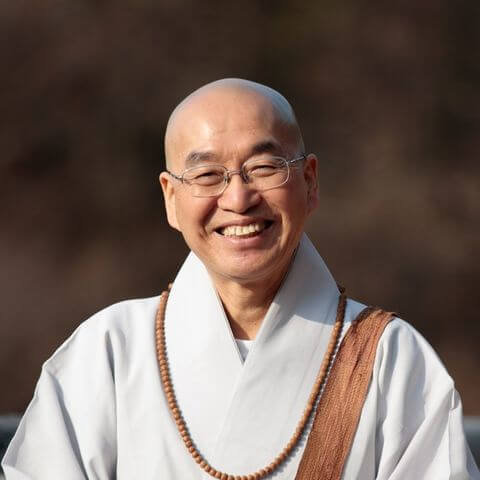
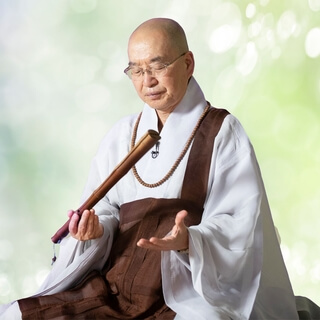
We will begin the online meditation with Venerable Pham Nunsinim shortly.
Before we proceed,
We will meditate for a brief moment to calm our minds.
We will begin the meditation with Venerable Pham Nunsinim.
We will begin the meditation with Venerable Pham Nunsinim.
Hello.
Hello.
How was your last week?
We were expecting a lot of damages from a typhoon that went across the peninsula a couple of days ago,
But fortunately we did not suffer as much damage as we had expected.
However,
They are predicting that another typhoon will come across next week.
So we wait with bated breath on how much damage this might cause.
However,
We can do our best to mitigate the risk and damages by being prepared.
In a similar fashion,
If we know what the nature of our karma,
Our habits are,
Then we can be prepared to mitigate the damages or suffering that our karma might cause.
If you close your eyes and really be able to focus on the tip of your nose in that silence,
You will notice a lot of self-conscious functions that come to the surface.
If you are not able to focus on the tip of your nose,
You will notice a lot of self-conscious functions that come to the surface.
So when your senses are fully engaged in everyday life and you are bombarded by all these different external stimulus,
You think that the cause of your suffering is because due to external factors,
But in the midst of that quiet,
You will notice that in the absence of external factors,
You still feel that anxiety.
So it is very often times that the primary cause of our suffering is not the external factors,
But internal trauma,
Internal memories,
Internal makeup.
If you investigate how an external stimulus collides with your inner sense of habits,
Cognitive habits,
And if you realize this,
Then you can prepare and mitigate any suffering or consequences that may result in future collisions of such type.
If you are not able to focus on the tip of your nose in the sense of external factors,
You will notice a lot of self-conscious functions that come to the surface.
It is exactly the same as knowing that a storm is coming and being prepared and buckling down so that you minimize any damages and consequences from the storm.
That is better than being surprised by a storm and being open and vulnerable when the winds and the rains hit.
If you are not able to focus on the tip of your nose in the sense of external factors,
Then you can prepare and mitigate any suffering or consequences from the storm.
All the common things going on in this world,
We can't change them to our liking.
That is why we are not able to turn on the neurodying.
We can't change the environment,
We can't change the environment,
We can't change the environment,
We can't change the environment.
So we have to sometimes try to change our environment,
Try to adapt to it,
Try to live with it.
So use different strategies to actually just live within the external factors that are given to us.
If you are not able to do so,
Then you can't change the environment.
So whatever situation you encounter,
You have to become the master of your own life and live in a proactive way.
Yes,
That is why we have to change the environment.
And that's the goal of meditation.
Yes,
That is why we have to change the environment.
With that,
Let's look at a few questions.
How can I live my life to value serenity but not give up caring?
How can I live my life to value serenity but not give up caring?
I think that the most important thing is to have a strong sense of self-confidence.
That is why I am not able to live with my self-confidence.
I think that the most important thing is to have a strong sense of self-confidence.
How can I live my life to value serenity but not give up caring?
I think that the most important thing is to have a strong sense of self-confidence.
And that causes suffering.
Yes,
That is why I am not able to live with my self-confidence.
So if you want to get out of this cycle,
I think that the world is not going to listen to you and change and cater to you.
Because you want to be good at what you want.
I think that the world is not going to listen to you and change.
Additionally,
Just because something you want came true today,
Doesn't actually mean that in the long run it turns out to be good for you.
So what I am saying is that just because something came true,
Or you got something you desired,
Instead of being awfully excited by that outcome,
Deal with it with a certain amount of serenity.
You can be pleased,
But also be serene in the acceptance of the positive outcomes.
I think that the world is not going to listen to you and change.
So if you want to be good at what you want,
Then you have to be happy with what you want.
And also,
Keep in mind that just because something did not happen the way you want it now,
Doesn't mean ultimately it actually turns out to be bad for you.
So not knowing that,
You don't have to awfully despair at the immediate outcome.
So what I can say is that this teaching is not about you becoming indifferent,
Or giving a different statue to whatever the outcome is.
It's about you being able to smile lightly,
Whatever the outcome is.
Next question.
I think that the world is not going to listen to you and change.
I think that this teaching is not about you becoming indifferent,
Or giving a different statue to whatever the outcome is.
If you are forcing yourself to farm because you have to feed yourself and your family,
But you don't really want to do it,
Then farming causes suffering.
This practice is called our teaching.
You must choose to demand approval and choice leafletting.
If you have Covid-19,
Then educational and summerHHHHHHHHHHHHHH and how they are doing.
So,
If you are a mom,
You can do this.
If you are a mother,
You can do this.
If you are a mother,
You can do this.
That's it.
First,
If you,
However,
Try to enjoy,
For example,
By thinking that this,
Your farming is a sense,
It's an exercise.
Since in nature,
Only human beings actually delineate the exercise and actually move about to survive.
So,
If you consider farming as an extension of your exercise that you have to do anyway to be helpful,
Then your body may be tired,
But your mind does not have that contradiction of doing something you don't want it to.
And,
If you are a mother,
You can do this.
And,
Another way is to kind of meditate as you farm.
Because meditation is about focusing and investigating intently your breath.
When you are doing it,
Sitting down.
But when you are moving about,
You are investigating your movements.
So,
In moving meditation,
You have to become fully aware when you are standing.
Or when you are walking,
Or when you are moving your arms.
So,
Likewise,
When you are farming,
Make every action.
Be mindful of every action and be fully invested and aware of those actions.
For example,
If you are harvesting peppers,
Every time you cut a pepper off the branch,
Be fully aware how your fingers are moving,
How you are looking at it,
How the sensation feels.
So,
If you incorporate everyday activities of farming into meditation,
Then you don't need to delineate between the two activities.
We have to engage in productive work in order to survive.
Until now,
We engaged in meditation that is actually based on the production of others.
So,
Our meditation was a consumptive meditation.
We have to be conscious of the stress of the meditation.
We have to be conscious of the stress of the meditation.
We have to be conscious of the stress of the meditation.
We have to be conscious of the stress of the meditation.
We have to be conscious of the stress of the meditation.
We have to be conscious of the stress of the meditation.
So,
We were trying to relieve our physical fatigue by rest,
But also our mental fatigue through meditation,
From the stress that we got during our everyday productive activities.
We have to be conscious of the stress of the meditation.
We have to be conscious of the stress of the meditation.
Our mental fatigue is also very important.
We have to be conscious of the stress of the meditation.
So if you consider everyday farming activities as an extension of your exercise or your health,
Then you don't consider it as a separate labor.
Likewise,
If you incorporate constant mindfulness and meditation into your everyday farming activity,
Then meditation does not become something to relieve yourself afterwards,
But it becomes part of your everyday farming actions,
And so you can synthesize the both.
The reason that the Buddha prohibited his followers to engage in kind of productive labor was not because labor itself is bad,
But because engaging in production naturally leads to certain desire to achieve,
And he thought that was bad for spiritual practice.
But if you are able to let go of your self-centered desire to achieve,
But be able to engage in labor in a mindful way,
Then that's one of the traditional practices that Korean Buddhism has traditionally engaged in.
So there is a tradition of Sannong Ilchi,
Which literally translates into the synthesis of Zen plus farming.
In order to achieve,
You have to smoke a nip from arms up to the same length,
The opposite is possible,
But the Hut Stein gave that nip from head the back of the hands.
In these cases,
The nipRemoved use is sales of energy accounting.
I think that the community is very much involved.
Likewise,
For myself as well as this community,
I went out in the morning and engaged in farming and trying to engage in weeding and other farming activities because we want to be as autonomous and as self-productive as possible within this community.
Also,
As religious people,
We are often looked to for guidance and we are often praised.
And that may lead to a sense of self-importance and pride.
And engaging in everyday normal activities to take care of ourselves,
Be autonomous through our own everyday productive activities,
Lead to a bulwark against such pride.
Because no matter how you are judged by the world at large,
Whether you are considered a great person or a shameful person,
A rich person,
A poor person,
Regardless of all those judgments,
Everybody is equal.
But equal,
I don't mean everybody is absolutely the same,
But what I am trying to say is that we each have our roles.
And when we respect each other's roles as fully important and fully invested in our everyday lives,
Can we lead a life based on modesty and mutual respect?
And we also can be proud of the work we do.
The Buddha said,
Told his followers that be proud of who you are and what you do and do not be obsequious to those others who are more powerful than you are.
And also at the same time,
Be modest and humble.
And with community of people,
There is a common and the pro– is because they lose the underlying truth that existence is equal across the way.
So I apologize going off a tangent a little,
But coming back to the question is that if you can integrate mindfulness along with your everyday farming,
Then you don't have to delineate the two.
You're fully able to meditate and be mindful as you farm.
In the last week's session,
I think I made a slight joke,
But that might have led to a misunderstanding.
There was a question having to do with dealing with distractions while you're meditating,
So wanting to focus on something else as a way to get rid of those distractions.
And I kind of half-jokingly said that the best way to stop thinking during meditation is just to open your eyes.
I didn't actually mean to literally open your eyes.
I'm saying that because your eyes are closed during meditation,
That stimulates distractions.
Because you have closed your eyes,
You're now triggering a lot of subconscious stimulus and thoughts to float up the surface.
Basically,
The central question in that situation is,
Faced with such external situation,
Can you maintain your focus on the tip of your nose and on your breath?
Distraction itself is not actually a barrier to your spiritual practice.
It's actually something that you have to overcome to develop your capacity to maintain your focus in spite of those distractions.
So what I'm saying is that the goal of meditation is not to rid yourself of these distractions.
Because if you just open your eyes and come back to the everyday world,
Those distractions go away because you're stimulated by something else,
Right?
So what I'm trying to say is the objective of meditation is not to eliminate those distractions.
If you hear a cicadas crying outside your window,
And if you have strong ache kind of attacking your body,
If you feel drowsing,
Whatever distraction thoughts you have inside your head,
These things happen without your intent for them to happen,
Do not make an issue of those.
Just let them be.
The key objective of the practice is,
Can I maintain my focus in the breath in spite of all this?
That's the right approach to meditation.
And naturally the next question is the so what question.
Well,
The so what is that if you develop this capacity,
Then whatever happens in your everyday life that may displease you previously,
Whatever is a bad smell or insult or something that you saw that was unsightly,
That despite all that you have developed the capacity to maintain your equanimity in spite of this external stimulus.
And you also have developed the capacity to be resilient against bad emotions or whether it's anger,
Whether it's frustration,
Because you know immediately when you feel these and you can bring yourself back to equanimity.
So it'd be nice if there was no noise outside.
That doesn't mean you can't meditate.
It would be nice if you don't have aches.
It would be nice if you don't have,
If you're not drowsy.
It would be nice if you don't have all these distractions.
But just because these exist doesn't mean you cannot meditate.
It's like encountering different barriers or obstacles on your path.
It'll be nice.
And if you don't have those barriers,
But just because these obstacles exist doesn't mean they're necessarily bad because now you develop the skills and capacity to overcome these obstacles.
So instead of despairing and being disappointed and giving up in front of barriers or obstacles,
Make sure you're proactive and investigate how you can overcome these.
I was a little lengthy today.
Now let's relax,
Body and mind.
Close your eyes.
Focus your mind on the tip of your nose.
And be mindful and aware of your breath in and breath out.
Whatever sound you hear from the outside.
Don't let your mind wander.
Don't let your mind wander and focus on whatever pain you face.
Do not let your mind wander into a sense of drowsiness.
Do not let your focus pursue whatever this flotsam of different thoughts may be.
Just let them flow,
Let them be.
My attention is focused on the tip of my nose,
Knowing the breath in and knowing the breath out.
Do not try to exert an effort or tense.
Do not give up because it's not easy.
Do not get overly excited just because you did it.
In a relaxed state,
Just be mindful.
And if you lose that focus,
Know that you lost it and just recover that focus.
And the thought itself that you did something,
Didn't do something,
Or there is a distraction,
Or there isn't.
The lack of even these thoughts.
And if you are able to achieve this mindfulness,
Just maintain and sustain it.
If you can't,
Try to regain it.
You're just doing it.
Thank you.
Thank you.
Thank you.
Thank you.
Thank you.
Thank you.
Thank you.
Thank you.
Thank you.
Thank you.
Thank you.
Thank you.
Thank you.
Thank you.
Thank you.
Thank you.
Thank you.
Thank you.
Thank you.
Thank you.
Thank you.
Thank you.
Thank you.
Thank you.
Thank you.
Thank you.
Thank you.
Thank you.
Thank you.
Thank you.
Thank you.
Thank you.
Thank you.
Thank you.
Thank you.
Thank you.
Thank you.
Thank you.
Thank you.
Thank you.
Thank you.
Thank you.
Thank you.
Thank you.
Thank you.
Thank you.
Thank you.
Thank you.
Thank you.
Thank you.
Thank you.
Thank you.
Thank you.
Thank you.
Thank you.
Thank you.
Thank you.
Thank you.
Thank you.
Thank you.
Thank you.
I apologize for not telling you beforehand.
We'll meditate for 30 minutes.
I talked before the meditation session went a little long,
So we started to.
.
.
We wanted to start as quickly as possible.
Yes.
I would like to start by saying that I am very happy to be able to speak with you.
I am very happy to be able to speak with you.
I am very happy to be able to speak with you.
I am very happy to be able to speak with you.
I am very happy to be able to speak with you.
I am very happy to be able to speak with you.
I am very happy to be able to speak with you.
I am very happy to be able to speak with you.
I am very happy to be able to speak with you.
I am very happy to be able to speak with you.
We are investigating alternative or supplemental ways that we can do offline in order to mitigate some of this downside of going virtual.
We are investigating alternative or supplemental ways that we can do online in order to mitigate some of this downside of going virtual.
We are investigating alternative or supplemental ways that we can do online in order to mitigate some of this downside of going virtual.
We are investigating alternative or supplemental ways that we can do online in order to mitigate some of this downside of going virtual.
We are also investigating alternative or supplemental ways that we can do online in order to mitigate some of this downside of going virtual.
We are investigating alternative or supplemental ways that we can do online in order to mitigate some of this downside of going virtual.
Yes,
You make the decision of succeed in it,
But rather usually not pooling your fear the most viewer will just ‑ So,
The term try to or make an effort to is not something that's appropriate to fully to spiritual practice.
� Yeah,
Well we're trying to formalize in both form the most vocal and verbal experience Because,
Although he might not have meant it that way but if you try for something it means that you make an effort,
You exert an effort.
So if you exert something,
That actually has intent and direction,
A target.
So meditation is letting all that framework,
All that paradigm go.
You're just being aware that you lost your breath and regained that focus,
Lost the awareness and regained that awareness.
You're just doing it.
You're not making an intensive effort to do it.
Because our life revolves around us intending something,
Setting goals,
Achieving,
Measuring performance,
Making an effort,
Because we're caught up in this cycle,
That's why we're always so fatigued and tired.
So if you can kind of shift that so that you engage in efforts but without exerting yourself with a sense of a little fun,
With a sense of equanimity,
A little pleasure,
That will allow you to achieve a better state.
So I'm making an example.
It's like cows grazing the grass.
Because cows graze the grass at their own pace in a very consistent,
Constant way,
They don't make an effort to graze as fast as possible or they don't graze in spite of not wanting to graze.
That's why the act of grazing does not fatigue or tire the cows.
And when they start grazing,
That's because they're all full.
Somebody said,
I was really sleepy.
Your body must have been tired.
I thought of something that happened yesterday,
But my mind and body were relaxed.
Any questions from non-Korean speakers?
I'm not sure.
I'm not sure.
I'm not sure.
I'm not sure.
I'm not sure.
I'm not sure.
I'm not sure.
I'm not sure.
I'm not sure.
I'm not sure.
Thank you for listening.