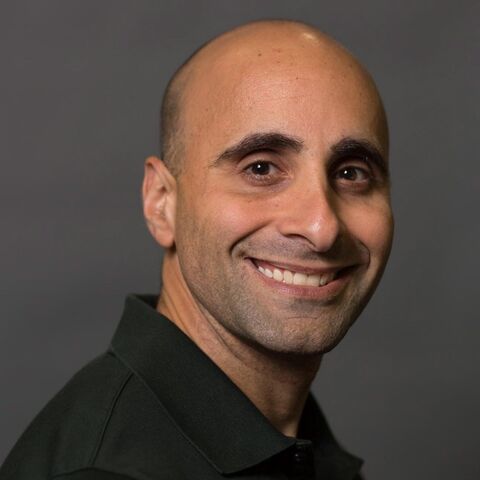
Hi,
I'm Dr.
Keith Kaufman from the MSPE Institute,
And today I'm going to lead a practice that I designed specifically for athletes.
In so many ways,
Sports create the perfect psychological storm.
There's passion,
Desire,
Uncertainty,
Chaos,
Exhaustion,
And at its core,
A need for precision that requires a duration and intensity of focus that is beyond what the mind is accustomed to.
It really is no wonder that sports create stress.
Before,
During,
And after performances.
One might say the conditions are ripe for it.
It's embedded within the act of performing.
There's no avoiding it or killing it.
Stress is our companion on this wild journey,
So perhaps we can turn the tables on it and embrace it.
While the need to train the body,
Both in terms of fitness and technique,
Is beyond debate,
Somehow training the mind with equal rigor remains a rarity.
Sure,
Everyone knows the mind is important,
But what do we do to train it?
Really train it.
To prepare it for these conditions that evoke such strong reactions,
That can become so captivating and overwhelming,
And yet require calm,
Focus,
Accuracy,
And consistency.
Words are empty.
Just relax.
Just have fun.
Take it one play at a time.
Sure,
Great.
How do we practice these things?
How do we prepare for the chaos in such a way that the mind is ready on game day?
Well,
That's where a practice like this one comes in.
I want to invite you to stop whatever you're doing,
And for the next few minutes,
Really be.
There's nothing else you have to do.
Nowhere else you have to be.
No need that is more important than this one.
Just to be present.
Here.
Now.
With me.
With your body.
With your mind.
If you're able and comfortable,
I'd invite you to close your eyes.
If not,
That's fine.
Perhaps try to soften your gaze and focus on a spot a few feet in front of you.
And let's just take a moment to find the rhythm of the breath.
The inhale.
The exhale.
Just notice it.
It's not right or wrong.
Good or bad.
It just is.
See if you can observe the breath with a kind of bare awareness.
Seeing it without judging it.
Noting any thoughts or reactions that come up with curiosity.
And then gently returning your attention back to the ebb and flow of your breath.
The breath is always available to you as an anchor.
A safe harbor you can use to recover your mind and body within the chaos that is sport.
There's nothing to change.
Nothing to do.
Just breathe.
And maybe now,
Briefly move your attention around your body.
See what you notice.
Perhaps you can focus in on an area you've been working.
Or that is crucial to your sport.
Maybe that's a knee.
A hip.
An ankle.
The back.
The arms.
The head.
Maybe multiple areas come to mind.
There's no right or wrong.
Just notice what stands out to you.
Notice any judgments that come up about this area or these areas.
Maybe feelings related to any pain,
Discomfort,
Or even pleasure or relaxation that you might find there.
See if you can just be with those thoughts.
Not fighting them or attaching to them.
Just seeing them for what they are.
Thoughts.
Perhaps you find yourself planning for some future movement or action.
Some future activity or game.
That's okay.
The mind loves to plan.
Loves to control.
Maybe especially if you're a successful conscientious athlete.
But for now,
Just see if you can notice.
Be with things simply as they are.
Not needing them to be any different.
Notice any resistance that's there.
Wanting things to be different.
To feel different.
To look different.
These are tricky messages.
Many athletes think they need them to keep their edge.
To reach their goals or their potential.
But in reality,
They just make us feel bad.
They make us feel exhausted.
Inadequate.
Not good enough.
Can we be aware of our reactions as they arise?
See them for what they are.
Feelings.
While it may not be possible to stop them from triggering,
We always have a choice about how we respond to them.
What we give our precious and ever so limited mental energy to.
Now in the midst of any of these thoughts,
Any of these feelings,
Any of these judgments,
Any of these reactions you might be having,
See if you can find any openness.
Just the tiniest of spaces between these reactions to what is and our responses to make a different choice.
Not a better choice,
Just a different choice.
The choice to see things as they are.
Whether we like them or not.
To allow for our reactions,
Whether they feel good or not.
And respond through actions in a way that helps you.
That helps you feel good.
That helps you support others.
Maybe even that helps you win.
It's this ability.
This ability to find space between reactions and responses that may be our most vital mental skill.
And something that takes a lot of practice before we can do it within the chaos of sport.
But this is what practices like this one are about.
About slowing down.
Connecting.
Detecting those small spaces between our reactions and responses.
So we can choose what comes next.
This is what we control.
Often all we can control.
Which is both humbling and liberating.
Just like how we work out on the practice field and want that to translate on game day,
We sit here like this and it gets just a bit easier to let go of our judgments,
Our reactions.
In those most meaningful pressure filled of moments on the field.
I would invite you to take this mindset with you as you go about the rest of your day.
Both on and off the field,
The pool,
The gym,
The rink,
Or wherever you train or compete.
Not so that you can meditate while you are trying to perform,
But so that you can carry this particular style of mindful attention into the chaos that is sport.
And maybe,
Just maybe,
Find a path through that inevitable perfect storm that we can love and hate so much.
Let's take just a few more moments to be here with our bodies,
With our minds,
With our breath.
Perhaps savoring these last few moments of practice and feeling a sense of gratitude for taking this time.
This time for you.
This time to recover and train in a way that your competitors likely aren't.
This time when we can embody what it actually means to be mentally tough.