Welcome to this Taoist-inspired meditation on softening our edges.
I'll first give you the context behind this meditation,
And then you'll hear a bell which will start the meditation,
Followed by the guided meditation,
And a bell at the end of practice.
We'll now read an excerpt from chapter four of the Tao Te Ching,
And this is the concept of softening the sharp parts of ourselves.
And I'll be reading two translations for you,
One by Derek Lin and one by Red Pine.
So first,
The Derek Lin translation.
The Tao is empty.
When utilized,
It is not filled up.
So deep,
It seems to be the source of all things.
It blunts the sharpness,
Unravels the knots,
Dims the glare,
Mixes the dust.
And I'll stop there on this excerpt.
And now for the Red Pine translation.
The Tao is so empty,
Those who use it never become full again,
And so deep,
As if it were the ancestor of us all.
It dulls our edges,
Unties our tangles,
Softens our light,
And merges our dust.
Now from this passage,
A Chinese scholar from the 1800s named Wei Yuan comments,
By taking advantage of our edges,
We create conflicts with others.
By shining bright lights,
We illuminate their dust.
Grinding down edges makes conflicts disappear.
So here,
What he's referring to is that it's quite obvious that having sharpness in our being can manifest through different ways,
Such as criticism or aggression or hostility.
And these things can cause conflict with others.
And not only that,
This takes away from our tranquility and harmony.
And this sharpness can also be seen internally.
And this is where this relates to our meditation practice.
Anytime we feel frustration,
Or agitation,
Or a restless mind,
This is our sharpness being evident.
And the suggestion by Wei Yuan here is to grind these edges down.
And this can be done by softening our body and mind.
So rather than maintaining certain sharpness,
We soften those edges.
And this is what we'll explore in this meditation.
So to get started,
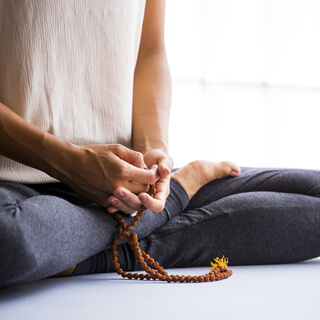
Find a comfortable posture.
Your eyes may either be closed or softly open,
With your gaze about 45 degrees downwards.
Take a moment to bring your attention inwards.
Take into account the overall state of your body and mind in this present moment.
And slowly start to relax your body from head to toe,
Systematically scanning your body from the crown of your head to down to your toes,
Softening any muscular tension or gripping of the muscles.
Scan your body slowly as you relax.
As you relax,
Now briefly notice whether there's been any gripping in your mind.
This may manifest as a feeling of boredom,
Or agitation,
Or wanting to do something else,
Which is part of the doer mind.
See too,
If you can relax and soften into these emotions or feelings,
Wherever they arise.
Now start to bring your attention to your abdomen,
And soften and relax into any tension here.
And just allow your breath to be soft and relaxed,
Feeling into your abdomen as you inhale and exhale softly.
And continue to notice the breath in this manner.
And if your mind begins to wander or display any sharpness,
Then briefly relax into these sensations and bring your attention back to the breath.
If you've been sitting still for a while,
You may also observe certain body discomforts,
Which may manifest as an urge to move or a tightness in the muscles.
If you just feel discomfort,
Rather than pain,
Rather than moving your body,
See if you can observe these sensations,
Whether it be tightness or a feeling of wanting to move,
And see if you can too soften into these sensations.
And notice how it may change,
From a feeling of tightness to a feeling of openness,
Thus blunting any sharpness.
Now bring your attention back to your breath,
Let your abdomen rise and fall softly and gently.
And as we now approach the end of this meditation,
Begin to observe how you feel in this present moment,
Compared to the beginning of this meditation.
Now bring your hands to heart center and thank yourself for taking the time to practice today.
Thank you.