So today's meditation is inspired by a book I read earlier this year,
Actually,
It's about Japanese culture,
And one particular element of Japanese culture,
Which I'm sure this isn't how you say this,
But I say wabi sabi,
But I'm sure it's more like wabi sabi or something like that.
But it's basically the Japanese wisdom for a perfectly imperfect life.
Well,
I don't know about you.
Sometimes it's good to remember that there's no such thing as a perfect life,
Just like there's no such thing as a perfect meditation.
So go and get yourself somewhere comfortable,
And we will begin.
So I've often heard the phrase perfectly imperfect.
I think it was Mary Poppins wasn't it that it came from originally.
But I also read about it in this book,
Which is by Beth Kempton.
And it's called wabi sabi,
The Japanese wisdom for perfectly imperfect life.
And I'll just read you.
It says the wabi sabi secret.
So this is basically what it comes down to.
And it's very big in Japanese culture.
Wabi sabi is an intuitive response to beauty that reflects the true nature of life.
It's an acceptance and appreciation of the impermanent,
Imperfect and incomplete nature of everything.
And it's a recognition of the gifts of simple,
Slow,
And natural living.
Well,
For me,
The middle part of appreciation and acceptance of the imperfection of everything,
Talks volumes to me.
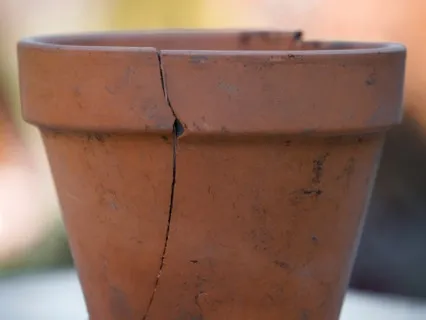
And there was one particular part of this book where they talk about if you break a pot or something precious,
A plate,
Or a cup,
You don't superglue and try and hide the cracks,
You actually often get a resin,
Which is a gold or silver or copper color,
And you go over the cracks to actually highlight them,
And to celebrate the imperfection.
And I think that's lovely.
And I think it's as part of our new way of looking at things,
Celebrating imperfection is definitely on the list.
So if you're somewhere comfortable,
We will begin.
So just a reminder to take your active posture,
Nice draw up through the spine,
Giving the shoulders a bit of a roll around,
Taking a moment to just stretch the neck if that feels good.
And then slowly bringing the head down just below that horizon line.
And whenever you're ready,
Just close your eyes or soften your gaze and start to be aware of your breath.
Just starting to take some nice long and deep breaths.
And let's take two deep breaths together.
So breathe in through your nose when you're ready.
And breathe out through your mouth,
Letting go.
And again,
Breathing in through your nose and out through your mouth.
And then whenever you're ready,
Close your eyes,
Close your mouth and begin to breathe in and out through your nose.
The first thing I want you to do immediately is to notice how each breath that you take is different.
There's no such thing as a perfect breath.
But this breath is pranayama as we call it is our life force.
And it's beautifully,
Perfectly imperfect.
So take a moment just to get to know your breath and have a new way of looking at this rise and fall of our breath within the body.
Incomplete never ending that cycle of breath.
Now I'd like you to think about something and don't think too hard.
Think about something about yourself.
Maybe in the past or in the present.
You have criticized yourself for or not liked.
And just take a moment to realize and to notice how perfectly imperfect we all are.
Can you find some positives about that thing that maybe is going to hang up for you in the past?
What would your best friend say to you if you told them?
And just say that to yourself now.
I think it was my son who once said to me there's no straight lines in nature.
We all know how beautiful nature is.
Just take a moment to think about your favorite natural view.
So where you like to go in nature.
And remember how all of nature is perfectly imperfect.
But we wouldn't want it any other way.
Just absorb yourself in your favorite view for a few moments.
And now taking inspiration from our Japanese culture.
I'd like you to think of a pot.
Just bring to mind a pot that you know or one from your imagination.
And just look at how beautiful this pot is.
Look at its colors,
The texture,
The shape,
The size,
Design.
But as you begin to get closer and look closer at your pot,
You realize it's cracked.
There are cracks all over it.
It doesn't stop you thinking how beautiful it is.
And just for one moment now,
Think of something that you thought was perfect.
And maybe it wasn't what you wanted after all.
And just remembering often the imperfect things in life are the most beautiful.
Just take a few moments now just to be in peace and stillness with your breath.
Bring to mind any thoughts or observations or feelings that have arisen during today's meditation.
So I'll just leave you in peace for one minute now just to let everything soak in and be absorbed.
Just taking these last few moments now just to really lengthen the breath and just reminding yourself and to celebrate imperfections.
Just allowing the breath whenever you're ready to return to a comfortable rhythm and flow for you.
Beginning to find any tiny movements,
Stretches,
Wiggling fingers and toes.
And eventually bringing the hands together and giving them a little bit of a rub to create some warmth.
And then just hovering the hands over your eyes and blinking your eyes open when you're ready.
Bringing the hands down away from the face.
And I'm here.
And I hope that was a nice little new way of thinking about things too often we seek imperfection or seek perfection,
I should say.
And we should celebrate I think one of those beautiful imperfections in life just like that link.
All right,
I'll speak to you again very soon and take care.