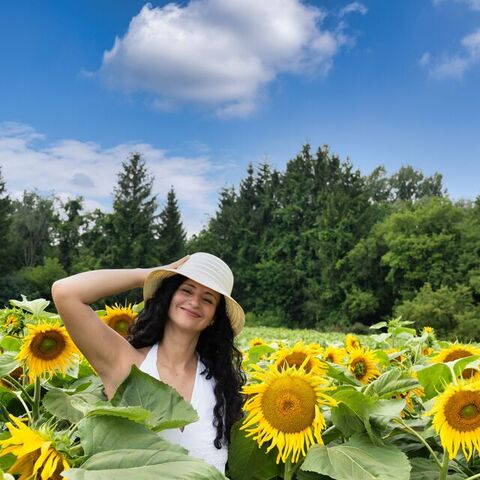
My guest today is Jaisa Sullit,
An occupational therapist who sustained a spinal cord injury while riding a motorcycle that put her on the path to becoming a qualified mindful-based stress reduction teacher,
A certified medical Qigong practitioner,
And a teacher-in-training of the mindful self-compassion program.
Today we're here to talk about her book Purpose in Paralysis from Chronic Pain to Universal Gain,
Which is currently an Amazon bestseller.
Thank you Jaisa so much for being here.
Thank you for having me.
I want to begin by saying that I just loved your book.
Your book is not just for people experiencing chronic pain.
I feel it's for everyone who's trying to connect or reconnect with themselves and remember who they truly are.
It's for those wanting to have a greater love and compassion for themselves.
And one of the things I love most about the book is that I feel you have kind of Renee Brown level of honesty.
You were so raw talking about the emotions that a lot of us feel like envy and jealousy,
Anger,
Frustration and nuttiness,
Which I resonated with.
I was just wondering if you can begin by telling me a little bit about what happened that inspired this book.
Yes,
Well definitely the biggest thing that happened in my life was the motorcycle accident that resulted in a spinal cord injury for me.
And that was in August of 2010.
And I found what helped me to heal was writing.
And so I would write reflections or I would write poetry.
And at that time,
Facebook wasn't big yet.
There was no Instagram.
So I would email my reflections and my poetry to friends and family.
And maybe after a couple months of sending this out to friends and family over email,
I got a lot of feedback.
People said,
You need to start a blog.
So I started a blog and it was called Memoirs of Ajaisa.
And that's where I continued to share just expressions.
And I had a couple therapists at that time who really encouraged just keep expressing yourself.
And I never knew that I was a writer before the accident.
It was after that I discovered that I had this gift of writing.
And I was really surprised that my blog was so well received.
Like so many people visiting my blog in just the first month.
And then from there,
People were saying you should write a book.
And that was just maybe two or three years after my accident.
So that planted the seed.
Mind you,
I've always wanted to write a book since I was in high school.
So I actually began writing my first book in high school called Revelations for a Revolution.
It was sharing like my lessons.
And I started writing that up until like through university.
And then I went through a big barrier of self-doubt that actually stopped me.
So there is already this desire to share reflections with the world.
But what really pushed me to do this was because of the mindfulness-based stress reduction program that I took after my accident,
It opened me up to seeing myself more and learning that I have been wearing masks for most of my adult life.
And that there is so much of who I really am,
What I really believe about spirituality.
Just in general,
Like my beliefs that I don't publicly say out of fear of people getting upset or disappointed.
And it just got to this point where for the sake of my soul,
This book is going to be a homecoming.
Where for the first time in my life,
I am going to tell everyone,
Friends,
Family,
The world,
What I really think.
And so that's really what pushed it to the end.
I was like,
I need to do this for myself before I even have a baby.
So I delayed starting a family to put out this baby for myself,
My soul first.
I guess you could say that was your first baby.
Yes.
Yes.
And it's such a beautiful book.
I mean,
You use a mix of poetry.
You take,
I guess,
Experts from your own journal.
I felt like I was going on this journey with you.
There are so many moments where I was able to see myself in it,
To see my own journey and the masks that I wear every day.
And so I thought that was really,
Really beautiful.
Oh,
Thank you for sharing.
And so I wanted to start with one of the most fascinating things I read in the book was really kind of the question you had asked about whether you feel that your soul chose this accident.
Yeah.
It just looking back at how everything happened,
It just seemed scripted like it was all meant to be and that maybe my soul did choose this,
Even though I do believe in free will.
So,
You know,
Here's this person,
A neuro rehab OT.
OK,
So I'm already trained in neuro rehab and I'm getting to a point where I'm starting for the first time in my life seeking counseling from the employee wellness program because at 30,
I'm already considering my third career change.
I had already left OT to be a primary junior teacher,
Went back to OT,
Now I'm thinking of becoming a lawyer.
And then I had broken up with every boyfriend I've ever had.
Like there was just this dissatisfaction and now it's like I'm going to change my career again.
And that counselor told me to get the book Mind Over Mood and it started having me reflecting my thoughts.
And that's when I realized,
Wow,
I am full of judgment.
I judge others,
I judge myself.
And I wrote a letter to God and I asked God,
Change me,
Help me to be less judgmental of myself.
And at that time,
I didn't realize that I was living in my head.
I only realized I was living in my head after the accident.
And that accident,
Believe it or not,
Happened three days after that letter.
So it was three days.
Three days!
I was like,
Whoa,
I got what I wanted.
And that's why I felt like I asked it because I really,
I put it out there to the universe.
Change me,
Help me be less judgmental.
Who knew that three years later I'd become a teacher on non-judgment,
Mindfulness.
And it wasn't until I was doing physio in the hospital as an inpatient when the physio would always be like,
How do you feel now?
After this session,
How do you feel?
Like they would always do some modality and ask me how I felt.
And I'd be like,
Oh,
I don't know.
I don't know.
I never knew because I was never feeling.
I was always just thinking,
Watching other people.
I was never in my body.
So then it became clear.
I was like,
Wow,
This was a perfect story.
A person who was never in her body ignored her body and then had paralysis as a neuro rehab OT to learn how to be in her body again,
Feel her body and learn to stop judging herself.
So that's why I kind of felt like it was almost like my soul chose this or my soul asked for this because it put me back in this track of learning to love myself and be in my body.
Which is beautiful.
You ever feel like you should have put some provisals on the request to God?
Kind of like,
Oh,
I know now I tell people,
Be careful what you pray for.
Yes.
One of the things you said in the book was that you talked about how you felt like you were a perfectionist.
You had a chronic self judgment.
There was a whole concept of nutty enoughness.
And I feel like that was just kind of describing me kind of in a nutshell.
And so I was just wondering if you could talk a little bit about how this perfectionism had impacted your life and kind of helped you embark on this journey for healing.
Looking back,
I think it's just,
I've always just been conditioned to have value in being quote unquote the best or quote unquote better than other people.
Because in elementary school,
I graduated with the highest achievement award.
I got this big trophy.
So,
You know,
There's this validation of my work with this big trophy.
And then when I graduated high school,
I was valedictorian.
So that wasn't just about grades that was being liked because I was like,
Because I was picked by teachers and voted by students.
So now there's this sense of my value is in being liked by people.
And then an undergrad,
I graduated again,
I got the highest 10,
The top 10 marks in class.
So there's this,
So I,
And then I've always been told like,
Oh,
You're beautiful,
You're pretty,
You know,
There's always guys who like me.
So throughout my teens and 20s,
My self worth was always on being better,
Smarter,
Prettier,
Liked.
And that just facilitated the sense of keep pleasing people,
Right?
So don't go get into confrontation.
Don't argue,
Just as long as people like me,
I'll continue to feel good.
I'll continue to be,
You know,
Valuable as long as people like me.
So that was when I,
Looking back like,
Well,
No wonder I've probably been wearing masks since I was young because,
You know,
Just basically say anything that will please other people.
Even if someone asks,
How are you doing?
I'll say what makes them feel comfortable.
I'm not going to say I'm upset or sad.
I'll say I'm good.
And even up until my accident,
It took two years,
Two or three years before I finally expressed grief.
And that was because of all that therapy I did.
And I realized that even when in the hospital,
I was putting on masks,
Being grateful and happy,
Because it made other people feel good.
Yeah.
And it's interesting when we get our self worth from external things,
We constantly need to have those external things.
Otherwise,
We don't have any self worth.
That's why it's so important that self love and self compassion has to come from within.
Thank you for mentioning therapy.
I've definitely gone and I don't think people do it enough.
I think that there's this kind of shame culture behind therapy.
And that's very beneficial that you mentioned kind of assistance.
Thank you.
I agree.
I wouldn't have done therapy unless it was actually somebody told me,
Jason,
Your friends and family are there to be your friends and family.
When it comes to professional help,
You don't go to friends and family.
And so even though it's been nine and a half years since my accident,
I'm still speaking to a social worker every month.
I used to go to therapy quite a bit into it.
They kept graduating me and I'm like,
No,
I feel like I can keep going.
I was just wondering if you could share your thoughts about how like this kind of perfectionism in today's society can impact our ability to be loving for ourselves.
It definitely has impacted it not only impacts our ability to be loving,
But it also impacts our ability to be loving for ourselves,
But to the extent that it is at least for me,
A contributing factor to the development and continuance of anxiety and depression.
And I realized that when I moved to Vancouver to take a year off to focus on my healing.
So I had more time to reflect.
And I remember it was November,
2015 and it was,
You know,
Gray rainy days,
November.
So I was already kind of feeling down and I was feeling depressed and I started journaling all the reasons why I was feeling how I was feeling.
And then I had this aha moment and it was this aha,
This insight that,
Oh my gosh,
Because my worthiness is in this perfectionism,
This high achiever in,
You know,
I was doing a lot of keynote talks.
My perfectionism was so up there that if I didn't have a lineup of at least 10 people coming up to talk to me to say how I was amazing,
I would get depressed.
If I only had maybe like three or four people and no one said amazing,
But they said,
You're right.
I would start getting depressed.
So my standards were,
I need people saying I'm amazing and I need a long lineup of people.
And that for me reflected a perfectionism.
So,
So everything I did in terms of work,
Whether it's a workshop,
A talk,
A podcast interview,
I would get so anxious.
So I would have anxiety weeks before to prepare so that it will be perfect.
So the anxiety would always be before the thing I'm doing so I can be perfect.
And then the depression would start after that event or workshop or project or whatever it is.
And if it wasn't that high level of feedback of people saying you were amazing from 90% of the people in the room,
Then I would go into depression with,
You know,
Just ruminating on just focusing on the one negative thing or the one thing that wasn't said and totally disregarding all the positive things that were said.
So that was my pattern with my career.
There is this anxiety that got worse and worse that drove me to not listen to my body and just keep working,
Working,
Working so that I can have perfection.
And then if I didn't get the perfect,
The perfect feedback and the perfect outcome,
Then it would be,
I'd be depressed after.
And that was a big wake up call for me.
It was like,
Wow,
I have no self-love.
My love is based on when I'm perfect,
Which is never,
And that's why I didn't have any love.
And then so that aha moment was so like,
Like the light bulb went off that I wrote a contract and I looked out the window and I looked at the mountains.
There were three mountains from my room in Vancouver and I proclaimed to them and I said,
From this moment on,
My worth,
My worthiness and worthiness and my own love and respect is going to be unconditional,
No longer conditional upon,
You know,
Doing and being perfect and achieving and getting perfect feedback from people.
Cause I was angry at myself because I can't believe that I've been doing this to myself all these years,
But it was a good anger.
It was an anger to see that.
As you mentioned in your book that what you realize is that anger came from love.
Yeah.
That that was really a reflection of love,
Which I thought was so,
So powerful.
And the other powerful insight is we do this to ourselves,
Even in doing these podcasts,
When you don't ask the right questions and you think back and you're like,
Oh,
I should have been more to do it.
And especially as a podcaster,
It's,
I commend you for the bravery to be real and honest.
And when I remember when I was a child,
I remember when I started recording my first meditation CDs,
I was inspired by Jon Kabat-Zinn,
Who in his CDs purposely did not redo his mistakes.
Wow.
So he fumbles in some of his audio.
I know like Jon Kabat-Zinn has fumbled in his audio meditation,
But he kept it to make the point that we can accept our humanness.
Yeah.
One of the things I loved about your book is you started asking yourself,
How am I shaping my experiences moment with judgment?
I want to know how asking this question of yourself shaped your relationship to judgment.
There's this saying I learned from the MBSR program,
Don't judge your judgments.
I love it.
Lovely.
I know.
So that's the relationship.
Yeah.
So now when I teach it,
Cause you know,
In the beginning,
It always be like,
Oh,
I'm such a bad person,
Man.
I'm crazy that I'm thinking these thoughts and,
You know,
It's natural.
And then the more aware we become,
Right.
Then we're looking in the mirror,
The more we become aware of thoughts that are just like,
Wow,
That is just so judgmental.
I'm glad no one can read my mind.
For sure.
Yeah.
So now I actually learned to laugh at my mind,
Laugh at the judgments.
And really just comes back to that as don't judge your judgments.
So my relationship with it is a mindful one where I accept judgments and it's also an accepting one in that I know that it is part of being human.
Every human being judges.
And so that just makes it easier to know that,
You know,
It's like,
Okay,
I'm not that unique.
I'm not that special,
But I've got more judgments than other people.
Like,
As you said,
Like judgments really are the foundation of perfectionism,
Right?
And then that perfectionism can feed,
I think,
Depression,
Anxiety.
That being said,
My relationship,
Even though it's a mindful,
Accepting one,
Is still a vigilant one and vigilant in the sense of you really got to be aware and watch it because it could ruin your life.
So,
You know,
So there's that lightness of be curious with it,
Accept it.
I can joke around with myself when I catch it,
But it's still vigilant where it's like,
I am watching you like a guard dog so that you don't come into my house and ruin my life.
Yeah,
For sure.
You know,
I say it can kind of mushroom.
One of the things I'm kind of currently navigating through is this thought of,
I don't have to believe everything I think.
Oh,
I love that.
I don't remember.
I don't know who said it.
I'm sure there's some wonderful,
Like,
Really wise person.
I don't know who wrote that person.
I don't know.
You know what?
I'll have to look it up and see.
You tell me because I've seen it on postcards.
I've seen it.
Don't know who it is,
But yeah,
I'll take a look and see and then I'll email you who said it.
I don't believe everything you think.
And then another thing that,
Again,
I don't know who said this,
But maybe this is one of those universal things that comes to everyone's consciousness,
But not all thoughts are always facts.
Yes.
Yeah.
That's right.
What?
No,
Everything I think is a fact.
Come on.
That's how I go about the world.
Especially that my thought is somehow I have the,
I know the facts,
Right?
Like I have the,
I cornered the market on facts and therefore my facts is better than your facts.
I know.
You know,
It really bothers me that one of the things that annoys me whenever,
So my fiance,
I love him.
He's great.
But he always calls me out when I say something and he'll say,
Is that fact?
And in my mind I was like,
Oh my God,
I just hate it.
But it's true.
Right.
It's nice to just be like,
Is that fact?
I think you should just go around saying it's just a fact.
This is just a fact.
Well,
In today's world where we have kind of,
You know,
People have their own truth.
It's just a fake news.
Okay.
I was reading in the Globe and Mail that about 85,
000 people right now are living with a spinal cord injury in Canada.
In your book,
You talk about,
As you kind of embark on this journey towards rehabilitation,
You stated that you began accepting your body as it was,
As a newly renovated home.
And I was so struck by that.
I was wondering what helped you kind of reach that level of self-acceptance.
Well,
So it's two things I'll mention.
The first one,
And they're both related to the eight week mindfulness based stress reduction program.
The first thing is actually what I learned when I took the course as a patient,
But also then what we could teach our,
Like my future patients.
And in session one,
The theme of that session is as long as you're alive,
There's always more right than wrong.
Wow.
So,
Yeah,
So I've taught this course,
You know,
Almost 30 times now,
And just to always come back to that reminder,
Because people are coming to this course with chronic pain,
Anxiety,
Depression,
They're coming because they have a quote unquote problem.
There's something wrong.
There's something wrong.
And so I think it's fabulous that Jon Kabat-Zinn specifically designed this curriculum.
So on the first day,
That's the first message you get.
So that seed was planted in me when I took the course a year after my accident.
And then the second thing that we also learned in the course is that acceptance actually helps you get to where you want to go.
Jon Kabat-Zinn says to accept doesn't mean you have to like or love.
It simply means you're acknowledging the reality of what is.
So I like that definition because if I'm not accepting the reality of what is,
Then I'm in denial and I don't want to be in denial.
You know,
It doesn't have a good ring to it.
So I want to be in reality.
So I will acknowledge reality,
Even if I don't like the fact that I can't run or walk or snowboard.
I don't want to be in denial or snowboard.
I don't like it.
But me accepting my physical disability simply means I'm acknowledging the reality of what is today.
And the biggest thing that helps with acceptance is I'm not accepting this forever.
I don't want to accept this for the rest of my life.
I'm never going to walk again barefoot.
I accept it today,
Maybe even for this week,
Maybe even the next month.
But I know that for me to walk barefoot again one day,
Maybe go snowboarding again one day,
Just walk inside my house barefoot to get to where I want to go.
If I accept where I am now,
That keeps my nervous system in a state of relaxation as opposed to when I judge and resist and I go into fight or flight and healing doesn't happen in fight or flight.
So because I want to change,
I'm going to accept today.
Definitely.
Paul Gilbert talks about kind of the three drives.
He talks about how we tend to live in the drive of achievement,
The constantly doing or the drive of survival.
And we never really get to that drive of soothing,
Kind of like resting,
Relaxing.
And that's where the healing happens,
Right?
Not when we're living in the hormone distress.
So yeah,
Thank you.
That's great.
It also relates to kind of how you realize you create your own suffering.
And I was a little bit struck because I'm also familiar with kind of the compassion training.
And in that training,
They talk about how everyone suffers and you kind of become comfortable with suffering.
I was wondering how you think that that fits?
Yeah,
Yeah.
Okay.
Yeah,
That's a great question.
And I'm thankful for this opportunity to share my opinion on that.
When I am able to respond,
What I find so fascinating is before I make an outward physical response,
Like an action where I'm moving my body,
Just the mindful observation,
The mindful,
Curious,
Accepting,
Noting that,
Oh,
I feel this,
I'm thinking this,
Just that noting,
Research shows already elicits a physiological change in the body.
That's where the,
That simple mindful awareness already creates change.
That's,
That is actually a response,
Which I just learned last year,
Because I thought response was an actual action.
So that's the first level of response.
But then when it comes to then taking an action,
Doing a behavior,
That's where I advocate for compassion to come in.
What can I do?
Maybe it's affectionate breathing,
Maybe it's soothing touch,
Maybe it's go take a warm bath,
Maybe it's go inside for fresh air.
So that for me is how the mindfulness and compassion fits when it comes to responding.
But my favorite image for the relationship between mindfulness and compassion is that there are two wings of the bird.
So a lot of people now are talking about mindfulness and how important it is.
But there's just one wing of the bird.
If you don't have a compassionate practice for yourself,
Then you really can't fly through life with grace and ease.
That's beautifully put because compassion does require action.
It's not just the witnessing of the suffering,
It's the desire to alleviate the suffering through action.
You talked in your book about courage,
The courage needed in helping you become more loving and compassionate to yourself,
And using that courage to face your own suffering and to see the scarier corners of your being.
Some of us are just caught in that fear.
It's like,
We just feel like we don't have the courage to do that.
So I was just wondering what helped you muster the courage to face what scared you.
Very interestingly,
Before the accident happened,
Somebody gave me a card.
And on the card,
This was just like a week before,
She gave me a kind of,
She wrote a passage from the Bible,
Romans 535.
It says,
Suffering produces perseverance,
Character,
And character hope.
That really stuck with me.
And I've kept that in my wallet for the last 10 years.
And that kind of led this wise awareness or belief that the path of suffering in the end will be dark,
But the end,
It's bright,
It's hope.
So there's this journey.
Okay,
So that led the way.
But then also,
I was raised Catholic.
And even though my spirituality has changed over the years with learning from Buddha,
And then being introduced to shamanism,
I am thankful for my Catholic upbringing,
Just because it had me believing in a God that loves me.
So I knew for a long time that,
Like in those dark moments of suffering,
I would always come back to this belief that God didn't create me so I could suffer.
Like,
That's just not the God I believe in,
Or like the universe or creator.
What did it put me here so I could suffer?
Like,
I at least had a belief that I was here because I'm loved.
And so all of this pain and suffering,
This darkness is so I can be better,
So I can be stronger.
So,
You know,
There's all this purpose.
So I really like the image of,
The metaphor I tell people about my journey,
Especially the journey of self-discovery and healing and transformation.
You're going through a dark cave.
And this,
In this cave is just,
You know,
There's mirrors all around and you're seeing yourself,
Dark parts of yourself,
And it's cold and you're lonely,
You're alone.
But it,
There is,
It's a cave with light at the end of the tunnel.
And so just this belief,
This faith that it's a journey that has dark moments,
But at the end,
There is light and that light will represent,
You know,
This place where I'm stronger,
Wiser,
More compassionate.
Yeah,
It's just this journey of growth.
And so that's kind of my belief that I think has really given me the courage to be like,
All right,
Whenever I go into therapy or I go do bodywork and,
You know,
Usually it's kind of scary because you're going to go dig deep and something painful is going to come up.
I'm always like,
Let's do this.
Let's,
Let's feel the pain.
Let's go and cry and let's discover more stuff.
Even if it's not mine,
It's my ancestors.
Like I'm down to go for it because I know on the other side of that pain,
There's going to be lightness,
Wisdom,
Transformation.
And it's,
Yeah,
So it's definitely seeing the other side of the dark pain.
Yeah.
And the other thing that I found too,
In my own journey is really that sometimes the monsters that we imagine are way bigger than they really are.
So we are so afraid of facing kind of those scary corners of our being.
But when we do,
The moments that I've kind of stepped forward and really faced things,
The moment I've become aware of my own power and realize that what I was really afraid of was fear.
Yeah,
Yeah,
I can,
That resonates with me too.
So one of my favorite parts of your book is the moment that you stated,
I am unconditionally worthy of my own compassion.
To me,
I sat with it a little while,
Like after I read that line,
I just kind of had to put it down.
I think it caused me to realize just how the feelings of words that I struggle with.
And I mean,
Geez,
If I don't feel I'm worthy of my own compassion,
Why would anyone else?
And there's so many people that I know that struggle with worth.
I was wondering how like worth impacted your ability to be compassionate to yourself.
It's interesting because I only started to know my worth that day.
And that was actually the November cold day when I proclaimed the mountains that my worth is unconditional.
And again,
That's an example of this aha moment,
This insight,
This light that I'm unconditionally worthy.
It only came after I had the courage to be like,
Let's explore this depression.
Why am I feeling this way?
Like I had to go into the dark and cry and,
You know,
Feel the physical pain.
So that insight came after.
And it's interesting because even though I did realize that my worth is unconditional,
And I think that stems just from,
You know,
Hearing a lot of parents talk to their children who love their children no matter what,
Even if they make mistakes,
You know,
That seed was planted.
I didn't really understand my unconditional worth though,
Until I did more of these prolonged retreats,
Which was required as an MBSR teacher,
You have to do prolonged retreats,
Even to do mindful self compassion,
We had to do some retreats.
And often during these retreats,
I would,
You know,
We were meditating for six,
Seven,
Ten days.
And I would have these very spiritual out of body experiences where I felt connected to God,
Creator,
Divine,
Oneness,
Source.
And the more I felt that,
The more I realized that I am more that,
Like,
Even though I'm a physical human being,
There's so much of me that is this continuous loving presence from the moment I was conceived.
And that is when I started to realize my worth,
Because then I knew who I was.
And on the very first training of mindfulness based stress reduction,
The very first day,
First,
Like half hour,
They have you journaling,
Asking yourself,
Who am I?
Who am I really?
Who am I really,
Really?
Who am I?
And I knew what they're getting to,
Right?
You're getting past mom,
Therapist,
This,
This,
This,
That.
It's like,
Who are you really?
We've done this also,
I think,
In the mindfulness self compassion is why are you here?
Who are you?
And so that who am I has always been this question for me.
My worth became so clear when I realized that I am a human being with this love that flows through me that flows through everyone with this conscious evolving love.
And once I knew without a doubt that that was in me,
And I was like,
Man,
That does not deserve judgment.
Right?
If you believe in God,
Allah,
The source,
Whatever,
It's like,
How can you judge that thing within you?
How can you disrespect that thing within you?
Right?
So,
I think it's just been a beautiful journey of discovering my worth.
And why I feel like,
Like,
I was meant to like share my stories,
Because my last name,
Sulit in Tagalog,
The main dialect in Philippines means worth it.
So you go to the Philippines,
And you buy a pack of bread,
And there's like the double pack.
It's gonna say the Sulit pack,
Because you're getting your money as well.
Wow.
I only discovered that three years ago.
And I was like,
I was like,
Funny,
Really funny.
But the one thing I didn't know my whole life was my last name,
Because I didn't know that I was worth it.
Yeah,
For sure.
You are.
Yeah.
It's so interesting to me.
You know,
You talk about having to go in through these journeys within right as part of your teacher training.
And I think one of the biggest concerns that I think we have with today's society is the destructibility,
Right?
Like we're talking multitask,
And we have our phones.
And so we're so busy looking out there and being distracted and looking outward.
And then life goes,
BAM!
You have to look inward now,
Right?
And so,
And that BAM could be illness or like my injury.
Yeah,
It could be anything.
And I think that then it causes us to pause in our lives.
And that's why I like the whole mindfulness based and even the compassion based trainings is that it brings us back to ourselves and checking in with ourselves and saying,
Hey,
How are you doing?
What do you need right now?
And the one thing that you know,
I know that people struggle with in the self compassion programs is that they think it can be sort of narcissistic.
What I'm finding more and more is that really having compassion for ourselves helps us have compassion for others,
You know,
Our oxygen mask is on.
We can't be compassionate to others if we don't give to ourselves,
Because that's how you get burned out.
Right.
And so it's synergistically doing both and understanding that everyone just wants the same things that we do.
So not narcissistic at all.
You can be more compassionate with others.
And we really struggle with extending that to ourselves.
Yeah,
I agree.
Which is why I think,
You know,
In the book,
You talked about how children should be taught to love and trust themselves.
And we are seeing more and more schools that are implementing implementing kind of mindfulness based interventions.
But what I'm not seeing or haven't seen is really the shift to include compassion for self and others and self love and love for others.
Yeah,
I really I agree,
Especially when I took the first,
When I took the mindful self compassion course for myself,
Because I was going through anxiety,
I was in a room with maybe 40 to 50 other people,
Majority women,
And it went from maybe age 35 to 70.
But majority were in their 50s and 60s.
And for most of us,
We're like,
Wow,
I never learned this in my life.
Like,
We never knew how to tangibly give ourselves self compassion,
Like what there's tools,
There's self compassion practices.
And we're majority of us were like,
Why don't we learn this in elementary school?
You know,
I think about my parents generation and their parents generation,
Which is like,
You know,
What are you crying?
I'll give you something to cry about.
And it wasn't I mean,
They were doing the best they could,
It wasn't anything that they were taught,
They thought that they were doing them a service by toughening them up,
You know,
They perceive for us to be kind of the victims of circumstance.
I think that's kind of historically how people have been raised.
I do think you're seeing that shift.
Yeah,
Yeah,
I agree.
I do see it now too,
Which is awesome.
So we're headed in the right direction.
Absolutely.
More podcasts like these.
Yes,
Thank you.
In the book,
You mentioned feeling guilty for judging the reiki master.
Do you want to share a little bit about the story or is that possible?
Yes,
I was a student of medical Qigong and Chinese shamanic medicine.
And we had a client on the table who was having pain.
And so she is of Chinese descent.
And what came up in the session,
In a past life,
She was a Japanese warrior who had raped women.
And this Japanese warrior,
Its spirit had been reincarnated several times and now was in her body.
So that was one of her past lives.
But because of guilt,
It didn't feel like it deserved to breathe.
And so that was manifesting physically in this Chinese woman.
She felt like she couldn't breathe fully.
And there was a lack of self-worth and guilt.
But what was very interesting is this client,
Her grandmother was actually raped.
And so here we have in the realm of past life,
She was a Japanese warrior who raped,
But yet in her lineage,
Her grandmother was raped.
And she embodies both.
Victim and villain.
And what was interesting for me in that is,
You know,
All this whole past life thing is just so mysterious because,
You know,
Am I reincarnating as a Filipino every lifetime?
But based on that one woman,
She reincarnated as a different ethnic culture.
And so it was very humbling.
So the lesson there was not only is true compassion humble,
Because we've all been victims and villains,
But it actually helped me to come to peace with a very big judgment that was affecting my life.
Because during that year,
This was just in 2015 or 16,
Was the first time that I learned about Canada's history with residential schools and what the British had done,
The government had done to the First Nations.
And it resonated with me because Philippines for 400 years was colonized by Spain.
So I had all this anger towards colonialists.
And it got to a point where I'm walking around and I when I heard of when I saw someone and they were British,
Immediately,
I hated them.
And that went on for like a year where I hear a British person and all of a sudden I'm like,
Oh,
I was angry at their colonialism and what they've done.
But when that medical Qigong and shamanic medicine experience happened,
It humbled me to know that man,
I must have been a Spanish colonizer in a past life.
Who knows?
Right?
Maybe I was a British colonizer in a past life.
Who knows?
And so that really brought a humility,
Like a bigger picture.
But what's more interesting is I actually watched a play by Gabor Mate while I was living in Vancouver.
Gabor Mate was actually acting in the play and it's called The Damage is Done.
And it was just because of the suffering that his parents went through with immigration had caused a lot of harm to him and his siblings so much that his brother committed suicide.
There's one scene where Gabor Mate is in therapy and the therapist says to him,
There are no victims or villains,
Only people in pain.
And I think we really struggle with that,
Right?
We tend to see our own pain,
But don't understand that hurt people hurt people and that nobody that's whole and complete needs to hurt someone else.
Yes.
Yes.
On page one of two,
You talk about anger and I wanted to talk about anger because we struggle with some emotions.
Some emotions are,
I would say unwelcome.
Talk about how that was the case for you and anger.
Then you started seeing as a catalyst of change instead of something to suppress.
And I was wondering if you could talk a little bit about that.
Yes.
So of all the various emotions that you could repress in your body,
For me,
Anger was the one I had repressed the most.
And that's for all kinds of reasons.
The main one being cultural and religion,
You know,
Just be an obedient daughter.
Yeah.
Just nod your head,
Say yes.
And if you're angry,
You keep it in.
You just have to obey.
And so I didn't realize I had any repressed emotions until after the accident because I was meeting all these different body workers who I'd went,
Who I'd go to for physical healing,
Not realizing that a lot of my physical symptoms related to repressed emotions.
And there was one body worker in particular who had worked with a lot of my anger and releasing it.
She's the one who said,
JSA,
Anger is a catalyst.
You have to remember all these major revolutions and changes that have happened in the world just because people rose up in anger.
It's like,
It's true.
All of these big revolutions start with people being angry.
And then as I started to do it by training in medical Qigong,
I then learned that the liver,
This one organ processes both anger,
So anger at others or anger at myself,
Irritation,
Frustration,
But it also processes compassion and kindness,
Meaning that,
And the way they organize it in Chinese medicine is the kindness and compassion is innate and congenital.
So we're born with it.
So the,
You know,
The soul comes into the physical body with the ability to feel kind,
Compassion,
But the anger,
Irritation,
Frustration,
Guilt,
They call that acquired emotion,
Meaning that the soul acquires it when you become human,
Right?
It comes with a package of the human body,
The feeling the same,
But if we don't express and release all of these angers,
Then that same liver cannot process compassion kindness because it can only process one thing at a time,
Right?
If it's just,
You have all this stuck anger in it,
No energy flowing,
Then that same energy is not there for the compassion kindness.
And so I thought that that for me really solidified the sense of,
Okay,
On the other side of anger is compassion.
Sometimes what I'm angry about is a reflection of my compassion.
So if you hurt me,
I'm angry and I need to honor that anger because that anger is a reflection of the fact that I care about myself so much that I need to make sure that you don't do that to me again because I love myself and I need to protect myself.
So I'm going to tell you what I,
I'm going to tell you how I feel.
And so that's been really only something I've started to learn to do in the last couple of years is how to express my anger as a way of honoring how much I love myself.
I think that's beautifully put because you talked about before not judging judgment.
And I think this is one of those things about not judging anger.
As Neil Donald Walsh says,
Tell your truth,
But with the goal of peace,
You can stand in your truth and not make anybody wrong.
I love that.
That makes me feel more motivated to,
Yeah,
To express my anger,
But it also changes the tone then and how we express our anger when you know at the end of the day,
I want to be at peace with you.
Yeah.
When you talk about people like Martin Luther King who advocated for non-violence,
It's not that anger isn't okay.
It's the way that you communicate your anger and frustration because it's a symptom of something that's not quite right in the act that we take.
Communicating that still can lead to peace.
Yeah.
Oh,
I love that.
Thanks for sharing that.
Now I'll be expressing more of my anger.
She always told me,
Having masks on for so long and not sharing my voice,
It's like learning to speak a new language,
Right?
And she said,
Jason,
You can say absolutely anything,
Anytime to anyone,
As long as it's coming from your heart.
So that's kind of similar to the heart.
There's a sense of coming to peace with others.
Absolutely.
And the other thing that I really appreciate about your insights on anger is that you talked about integrating and meeting those aspects of yourself for healing,
Right?
Like feeling is healing.
When we make certain emotions in ourselves wrong,
We're not really accepting all aspects of ourselves.
You talk about all these unwelcome emotions that now you are befriending and,
You know,
Taking out of the closet and saying,
You know,
Come on down.
There's a lot of environments such as workplaces that make feelings really unwelcome.
And so I was thinking about your thoughts on spaces and places where feelings can be expressed and welcome.
I've been hearing about this term safe space more and more in the last several years.
I never heard about the term safe space.
I think maybe that started with more people being conscious about creating safe spaces for the LGBTQ community.
And I think that's a really good term for the LGBTQ community.
I think that's probably where I started hearing that term.
And then now we're hearing it more and more as people are growing in consciousness and are trying to heal and require that safe space.
But my main opinion on safe space is it's all about the person,
Right?
It's not about the physical space,
Like,
Oh,
A beautiful clinical therapy room or a yoga studio that feels safe.
It's about the people in it.
And number one,
That space is created by the attention a person is giving to themselves and the people around them.
And so this sense or this notion of safe space begins with each individual person creating safe space for themself first.
So let's say if I'm creating safe space for myself,
You know,
There's this intention to meet myself with mindfulness,
Curiosity,
Acceptance,
Non-judgment and compassion,
Compassion for my own suffering,
The desire for me to feel better and for my suffering to be relieved,
This acknowledging of my whole self,
All of my human emotions with humility,
As we said,
And only then when I create this safe space to meet myself as I am with mindful self-compassion,
Then I can extend that to the people around me.
So safe spaces aren't about the physical spaces so much as the person in that room who is facilitating what is happening in that room.
And so,
Yeah,
My main thing is if you want to go on creating safe space for others,
Start with yourself first.
And then the more you work on your attention and being able to extend your attention beyond your body to every corner in a 300 square foot room to every corner of a thousand square foot room,
Because wherever your attention goes,
Energy flows and that probability of your mindful self-compassion can be felt,
You can extend that safe space,
But it can't be extended if it's not created first with your physical self.
That's very well put.
In your book,
You talk about a compassionate presence that you felt from the men who transported you.
It's so amazing.
Some of the people that I know have such a loving presence and it's not anything they say or do.
It's about just kind of how they interact with you and the attention they give you.
Can you talk a little bit about that compassionate presence?
Yeah,
So it was basically I was admitted straight to ER and then from ER,
I had to be transported to the operating room.
And so there's,
I guess they call them,
I don't know what they call the people who trans,
The transporter,
I guess I'll call him.
I don't remember his name.
He was the transporter.
And just that journey from ER to OR and me expressing that I was in a lot of pain.
Just the way he acknowledged,
I knew he knew I was in pain.
He acknowledged my pain and his kindness and his presence,
The way he looked at me,
He looked at me so that he shifted his body so that I could look straight at him in the eyes.
There's really something about the way a really compassionate kind of person,
How they look at you,
Even the aura they give off.
And it's funny because like you said,
We were not in one physical space.
We were going from point A to point B.
That safe space I felt was in his space.
And it was just so amazing because I remember after my accident,
I was asking around,
I was like,
Who is that guy?
What was the name of the person who transported?
I didn't ask,
What was the nurse?
Who was the doctor?
Who was the transporter?
Did you find out?
I think I did.
I never found out his name,
But I managed to ask a nurse to tell him.
And then I think the thank you did get to him.
Yeah.
Which is great.
I mean,
It's so amazing that sometimes it's these small,
Tiny things that make a difference.
In this case,
I mean,
That brief moment has such a huge impact.
I mean,
Admit it to your book.
And back then I had no idea what this whole mindful self-compassion practice was about,
But I will guarantee that he knows how to be with himself.
If not himself,
At least people like he was not uncomfortable with suffering.
Like clearly you get a job transporting people from ER to the operating room.
You have some level of comfort with suffering.
Yeah.
It's palpable.
I think that's what I can just say is when you can be with yourself,
It's not like he was disregarding or ignoring myself.
And like,
I felt like,
Wow,
You know what I'm going through.
Which is important when you provide healthcare.
Yeah.
It's very important when you're providing healthcare.
And it goes to kind of my next question about,
You talk about the interdependence of all things and how the importance of community and how your community helped in your healing.
So can you comment about that?
Yeah.
So,
You know,
Of course,
You know,
My friends and family were there and I had community through joining spinal cord injury,
Ontario.
So that sense of community was great,
But I'm specifically going to point out being in a community where people are healing.
And so two specific communities I joined was a therapeutic writing group where we would meet every week for 12 weeks and we would journal and then we'd share what we journaled as well as a mindfulness for chronic pain group.
So that's special because people with chronic pain like me practicing mindfulness and having a hard time practicing mindfulness with chronic pain.
But what stood out for me in those two communities was the healing that happens when we can express our human emotions without judgment and have it be witnessed.
So for me to share what I'm really feeling without judgment and to have that witnessed and vice versa,
To have other people sharing their emotions.
So not only am I seeing myself and other people,
They're seeing themselves in me.
And so there's this sense of real connected interdependency,
That sense of common humanity,
Which is part of mindful self-compassion.
And I know with a lot of people who are going through tough times physically,
Emotionally,
Isolation is the worst when you feel alone.
For me,
What community brings is this ability to see ourselves in each other,
Which is pretty much namaste,
Right?
I see myself in you,
You see yourself in me.
And that's what's beautiful about not just any community,
But a community where we can all express and witness our human experiences without judgment.
Yeah.
And can I share what you wrote in the book?
There's an eye and illness,
But there's a real illness.
I wish I could quote who said that too.
It was beautiful.
I'm quoting you,
You said it.
Oh yeah,
But I definitely didn't make that up.
I learned that from somewhere.
I wanted to know what's next for you.
How do people find out more about you?
Yeah,
So people can go on my website,
Jsaisulit.
Com,
But I'm more active actually daily on Instagram and my handle is jsaisulit,
So J-A-I-S-A dot S-U-L-I-T.
I'm actually moving away from doing MBSR and hopefully will teach my first mindful self-compassion course this 2020.
My biggest passion this year,
Second to the baby that's coming in April,
So that's the biggest thing is baby to come in April 2020,
Is I'm going to be launching a 12-week online program called the SULIT strategy and it's called the SULIT strategy because it reflects a sense of worth and it's 12 weeks and in those 12 weeks in the first month they'll learn about mindfulness,
In the second month they'll learn about mindful self-compassion,
And then I'm taking all the best strategies I learned from MBSR and mindful self-compassion.
Beautiful.
And then the third month they'll learn about energetic and shamanic medicine and it's basically at the end of the 12 weeks women who suffer from chronic self-judgment,
Women like me during that time when I had to write that letter to God and say oh change me,
Help me with my chronic self-judgment,
Will be able to learn a daily self-practice,
A daily self-care practice based on all of these tools and mindfulness,
Self-compassion,
Energy work,
Shamanism,
To be able to connect deeper with their true self because the true self is that innate,
Compassionate,
Wise,
Understanding,
Kind,
Love that flows through everyone but sometimes we just need a daily practice to help us reconnect with that place.
So that's my the SULIT strategy that I'm excited to launch sometime this 2020.
That's beautiful,
People should go check it out for sure.
I am hoping that you can read one of your poems,
One of my favorites which is called that thing from 24.
If I read it I will probably cry so I'm hoping you can read it before we can wrap up if you don't mind.
It would be an honor.
So this is called that thing.
Ah the journey within of all paths taken nothing has been more painful yet beautiful and worthwhile than the path to self-love.
Why oh why has it been easier for me to show more love to others than to myself but that thing as I venture closer closer to the space within I feel that thing call it God call it light call it love call it life it's the force it's the universe it's that thing it's that thing that makes me feel that I am one one with him one with her one with you one with life it's connecting to that thing that makes loving myself come so naturally it's connecting to that thing that makes accepting myself unconditionally just the thing to do how good it feels to finally be real real two sides to the coin this journey this journey that has brought me to the depths of darkness pain reality bringing me closer closer to that thing where when the seasons change and the tides seem too strong it's that thing inside me deep within that is like a stable rock it's where I find peace it's where I find love it's when I connect to that thing that instead of falling apart life is falling into place instead of closing in life is unfolding and instead of resisting life is just flowing how complex this journey is and yet so simple it's as simple as breathing it's with every breath every inhale and every exhale in out I connect I connect to that thing I connect to that thing within me and within you in out we connect we connect to that thing that thing wow it's just so powerful thank you jaysa so much for sharing your story with us and please go out and get jaysa's book purpose and paralysis available on amazon and check out her 12-week so it's strategy we hope that you can join us again for another podcast in the future and come share more of your stories thank you so much jaysa thank you so much thank you so much for everything you're doing thank you for having me