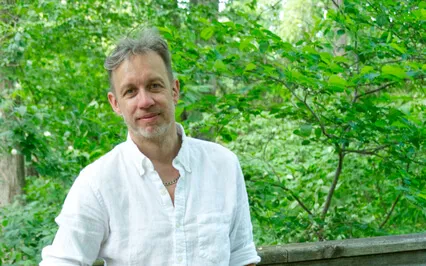
Welcome.
My name is Sean White and I am a certified health coach specializing in lifestyle medicine.
Today I would like to speak with you about procrastination.
Why do we procrastinate?
What are the health effects?
How do we know when we're doing it?
And how can we avoid it?
To begin,
Let's define what procrastination is.
And that would be the action of delaying or postponing something.
So why do we do this?
Why do we procrastinate?
Well,
It could be for quite a few different reasons,
But if we stop and think about the task and how it makes us feel,
We can gain some insight onto why we might be procrastinating.
So a few reasons might be as follows.
You might not be interested in the task.
If you have no interest in doing it,
You're just going to put it off as long as you can.
Or you might be overwhelmed.
You might feel like this task is so monumental that you don't know where to begin.
You don't know where to start.
So you just don't start at all.
In other instances,
We might just have developed bad habits throughout our lives.
We just might not be very good at doing things and taking care of things.
And we might be disorganized.
And maybe we want to do this particular task,
But we got sidetracked with all these other things that needed to get done.
And now it's the 11th hour and now we have to get to it because we've been putting it,
Not putting it off,
Just not being able to get to it.
We might have issues of self-esteem.
We might have low self-esteem.
We might have negative beliefs.
We might think if we do this particular thing,
We might do it wrong or we might not do it well.
Never try,
Never fail.
That becomes a big thing.
The fear of failure is huge.
And so that could stop us from even starting in a lot of cases.
Or you just might be tired.
Right?
You're like,
I want to do this thing,
But I'm exhausted.
I don't want to do this now.
I'll do it tomorrow.
That's when I'll do it.
It'll feel better tomorrow.
So what are the health effects of procrastinating though?
So procrastinating can reduce our overall wellbeing.
And we can go over a couple of different areas on this as well.
So we can think about it from the perspective of when we were younger,
When we were in school,
You might still be in school.
If you put off doing your assignments or studying for a class,
This can affect your academic life and you can end up having issues with that.
If we move into our work life,
It could affect our employment.
If we're not getting our job done because we keep putting things off,
We could lose our jobs.
We can end up having financial issues because of this as well.
It may prevent us from getting promotions even.
Maybe we don't lose our jobs,
But we're not working to our highest level and therefore kind of become in a stagnant position.
It could also affect our interpersonal relationships.
If you're with somebody and you're constantly putting off things that they're expecting you to do,
Fights can ensue.
You can just end up having all sorts of problems in your various relationships.
On a mental and physical health side,
Procrastination can actually create stress.
It can create anxiety.
It can create depression.
When you look at it,
These are more mental health issues.
But if you look at it from the physical perspective,
Stress-related issues can be headaches.
You can have digestive issues.
You can have colds and flus,
Insomnia,
All these things if you're thinking about stuff all the time.
These are problems that can happen because of procrastination.
The other problem too is if you keep procrastinating,
You can delay in getting help.
You might need help on something,
But you just keep putting it off and putting it off and putting it off.
Then it gets to the point where it might be too late.
You needed the help much earlier.
The big thing is it will also increase future procrastination.
This is a bit of on the mental side of things.
If you start putting yourself in this pattern of constantly procrastinating,
It's just going to propagate.
It's going to keep going.
As you move forward in life,
You're just going to procrastinate more and more.
That brings up a very interesting question though.
Which came first?
When we feel stressed,
We tend to put things off and we procrastinate.
Then we feel stressed thinking about what we haven't accomplished yet.
This is called the procrastination accumulation effect.
That rolls off the tongue.
We put things off and then we go,
Oh my God,
I should have gotten that done.
Then you feel bad about yourself.
Then you put things off because now you just don't feel like doing things.
It just steamrolls.
It just keeps going.
It becomes a very,
Very vicious circle.
Taking care of things can really break that cycle and reduce our stress levels.
That's a major thing that we want to do.
I feel like I keep talking about this a lot in a lot of our lectures is reducing stress.
That is one of the spokes of lifestyle medicine is stress reduction.
This is a big thing that we can do.
How do we know when we're procrastinating?
What are some of the signs that we see?
If you're the type of person that creates a to-do list and you leave an item on your list for a really long time,
Even though it's something that's important,
That's definitely a red flag.
I always hated that when I had a to-do list and I kept seeing one thing that was there all the time.
That's when you have to stop and you go back.
Like I said earlier,
Stop and think about that task and how does it make me feel and why am I putting this off?
It's a telltale sign of procrastinating.
Things like if you read emails,
You get an email and you read it several times over and then you just don't make a decision on what to do with them.
You respond to them,
You delete them,
You whatever.
A big thing though is starting and stopping.
If you start a task and then you stop the task and then you come back to it and then you stop and then you just keep doing it that way.
Definite signs of procrastination.
If you take on low priority tasks instead of high priority ones,
You might just be putting those off.
I always like to say if I had a large amount of tasks that all need to get done,
Taking care of the low hanging fruit was always a good plan of action just to get going.
If you never get to that fruit that's at the top of the tree,
There might be a reason for that.
You need to look at why that's getting put off.
There's a lot of times where we just don't do things because we're not in the right mood for it or it's not the right time.
This goes back to what I was saying earlier.
If you're tired or fatigued,
You might go,
I don't really want to do that now.
I don't really have the energy to do that now or I'm not in the right mood.
There's always an excuse.
That could be a death sentence.
Definite sign of procrastination whenever you're trying to figure out what's the best time to do something.
You might set unrealistic or uncertain goals as well.
Now,
This becomes more of ingrained deep rooted causes of procrastination.
Sometimes we just don't want to do a task and that's fine.
You can still hunker down and get it done.
But if you start setting unrealistic goals for yourself,
Well,
Now that's self-sabotage.
You're setting yourself up for failure because you're like,
Well,
I got to do this thing,
But it can be overwhelming.
You can just not be in the mood to do it.
You're just afraid of the outcomes.
You got to be mindful of if that's something that you're doing.
If you're setting yourself up for failure,
That's a problem.
The last thing I have on how to know when you're procrastinating is if you get easily bored with the task.
I can do this one very much so.
You start doing it and then you get bored.
Then that's when you stop.
That's when you find something else to do.
Then you have to get back to it eventually.
You need to look at the task and why they make you feel a certain way.
How can we avoid procrastination?
If we find ourselves in this cycle of persistently procrastinating,
How do we break this cycle and get a little bit better at doing this?
Well,
The first thing I always recommend to people is find tasks that you can just start and schedule for five minutes.
Say,
I'm just going to do this for five minutes.
Now,
Some tasks,
Obviously this doesn't work out for,
But there can be certain things like cleaning your bedroom.
You might get overwhelmed by the prospect of cleaning the entire bedroom and going through all your clothes and your shoes and all this stuff and organizing everything.
Just schedule five minutes and say,
For five minutes,
I'm going to do this.
Then at the end of that five minutes,
If you want to continue,
Then you can continue.
But just start with five minutes.
Make smaller tasks.
Sometimes the tasks are too big and you just need to whittle them down a little bit.
It's always a big thing in project management is taking a look at all the tasks.
Sometimes the tasks are just too big.
You break that up and you make it some smaller,
More digestible pieces,
So to speak.
Another thing that I like to do is taking the worst task on my list and doing it first,
Because then I just get it out of the way.
Every task after that is going to be slightly better.
I don't have to worry about them as so much.
A lot of times we tend to put off the thing we want to do the least to last,
But then that just looms over us our entire time.
Get rid of the worst one first.
Get that out of the way.
This is a very important point that I want to make on this one too.
This is take your hardest tasks and assign them at your peak times.
What do I mean by this?
If you are not a morning person,
Don't put your hardest tasks in the morning because you're just not going to be up to it.
You're not going to be up to that challenge.
If you don't start hitting your stride until like two o'clock in the afternoon,
That's when you should schedule your hardest things that you need to do,
Because that's when you're going to be at your peak performance.
Take your hardest task and schedule them for your peak times,
And that's going to help you out a lot.
Another thing,
We do this with children.
We do this with our pets.
We rarely do this for ourselves.
Promise yourself a reward.
If I do this thing,
I get this.
It seems childish,
But it works.
I mean,
Reward-based training has always been a big thing.
That's what we're going to do for ourselves is we're just going to promise ourself a reward,
And then we go,
Okay,
If I do this,
Then I can go and I can have a glass of wine,
Or I can go sit on the porch or I can do whatever.
The big thing though is you need to make sure that you minimize distractions.
I am so prone to this.
As a child,
That's what I used to do.
If I had to clean my room,
I would start cleaning my room,
But then I would find a toy that had been underneath a pile of clothes or something,
Then I'd start playing with the toy,
And then room never got cleaned.
Try to minimize your distractions.
Try to maybe turn your phone off,
Get away from the computer,
Turn off the TV,
Make sure nobody's around.
Do whatever you need to do,
But try to minimize your distractions.
Another thing that you can do is have an accountability buddy.
I'm always big as a health coach.
I am very big on an accountability buddy because that just kind of helps you along.
When you know somebody's got your back or somebody's going to call you out,
If you don't get something done,
That's a bit of a motivator.
An accountability buddy can really help you stop with your procrastination.
The biggest one is give up on perfection.
We talked about this with the fear of failure or being overwhelmed.
A lot of times we view perfection as this thing that we need to achieve.
I will tell you right now,
Get rid of that in every aspect of your life.
Perfection very rarely ever is achieved,
And a lot of times it becomes a diminishing return.
You can spend so much time trying to get something perfect where 95% was more than adequate,
And you've wasted all this time trying to get that last 5%.
Let it go.
Let it go.
You'll be so much happier when you do.
Another thing that you can do is if you are the type of person that just has that lack of organization,
If you're disorganized,
Get yourself organized.
Figure out things to do that make things a little bit more organized.
There's a thing called the Eisenhower Matrix.
It takes all your tasks and it puts them down into one of four quadrants.
There's a task that has a high priority that needs to get done immediately.
High priority doesn't need to get done right away.
Low priority needs to get done right away.
Low priority doesn't need to get done right away.
You have these four things.
Something that is a low priority that doesn't need to get done right away,
Put that on your bottom of the list.
The thing that's a high importance,
High impact,
Needs to get done right away,
Put that up at the top.
This is how we organize our tasks.
This way we know that we're doing things in the most efficient manner.
You can also set deadlines for yourself and then stick to them.
When we're at work,
A lot of times we have deadlines that are given to us by our bosses or just the nature of the job that we do.
A lot of times in our personal lives though,
We might have things that need to get done,
But there is no specific deadline.
It's kind of open-ended and we just kind of flounder around until it finally gets done.
Set deadlines and stick to them.
If you're not good at setting deadlines or scheduling things,
There's plenty of apps out there.
There's productivity apps for your phones and computers that work wonders.
I like ClickUp.
I think that that one's very good,
But you can set tasks.
You can schedule them.
You can track the amount of time that you're spending on them.
This can help you out a lot.
It can be very hard if you're an unorganized person.
You get organized.
Use technology to help you along with it.
That's what it's there for.
These are different steps that you can take to help avoid procrastination.
I hope you found this lecture useful.
If you would like to learn more about what I do or hear more lectures along these lines,
You can follow me on various social media or an insight timer,
Or you can go to meditate.
Com,
M-E-A-T-I-T-A-T-E.
Com.
Sign up for our newsletter.
If you think that maybe working with a health coach might be right for you,
Go to our website and sign up for a free 90-minute consultation.
This way,
We can have a talk and we'll see if working together is the right thing.
Until we speak again,
Be well,
Be safe,
And please be kind to everybody.