If we investigate the mind in a way that's nuanced and sensitive to these dimensions of embodiment and embeddedness,
Then I think it enables us to envision possibilities for transformation that we really need.
As we enter into the Anthropocene,
Which is the geological epoch of human activity that actually transforms the planet in profound environmental ways,
And we need to find our way through that in some way that's going to make human life viable,
I don't think that that's going to be possible without a deeper understanding of the mind.
Welcome to Mind and Life.
I'm Wendy Hasenkamp.
This week,
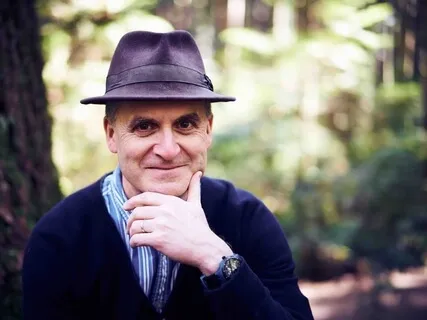
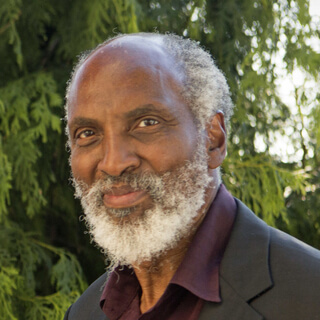
I'm speaking with philosopher and author Evan Thompson.
As you'll hear,
Evan has traveled a very unique path.
As a child and teenager in the 1970s,
He was homeschooled at an educational and contemplative intentional community that could arguably be the place where the earliest seeds of contemplative science were sown.
This upbringing set him on a journey exploring the nature of mind,
Self,
And human experience,
Which he continues to this day.
Evan is also one of the earliest contributors to advancing the dialogue between Buddhism and Western science,
Emerging from his work with Mind and Life co-founder Francisco Varela.
I spoke with Evan over Zoom last winter about many topics in contemplative science,
And we cover a lot of ground.
You can think of this conversation in two parts.
The first 30 minutes or so is more historical,
And we discuss Evan's own path and the beginnings of the conversation between Buddhism and science,
Why philosophy matters in these dialogues,
And the project of neurophenomenology in the integration of first- and third-person methods in studying the mind.
In the remaining hour,
We talk about Evan's current perspectives on the mind and contemplative science,
Including the problematic idea that the mind exists somehow inside the brain,
The view of the mind that's now called 4E cognition,
Meaning the mind is embodied,
Embedded,
Extended,
And enacted.
We talk about the self as construction versus illusion,
Whether or not meditation offers a special avenue to reveal the nature of mind,
The need for more diverse thought systems and religions to be at the table in contemplative science,
And why it's more important than ever in today's troubled world to understand the human mind in nuanced ways.
Evan was one of the first people I thought of for this podcast when we started the project,
As he's been part of the conversation since the earliest days.
He brings what I feel is a really important perspective on all of this work,
A critical lens that's both informed by rich history and motivated by our shared future.
If you're interested in more of Evan's work,
We've added links in the show notes to some of his writings that come up in our discussion.
I hope you enjoy the conversation.
I think you'll find it really informative.
I'm so pleased to be able to share with you Evan Thompson.
Well welcome Evan Thompson.
Thanks so much for joining us.
Thanks for inviting me to talk to you today.
I'd love to start by hearing a little bit about your upbringing and background and interest in philosophy and the mind.
I know you had a pretty unusual childhood and training.
Yeah.
So I grew up in an alternative institute slash community in the 1970s that was called the Lindisfarne Association and that my parents,
William Irwin Thompson and Gail Thompson founded.
And the background to that was that my dad was a university professor,
So this would have been late 60s,
Early 70s,
And he felt that the kind of learning and teaching that was happening in the university wasn't really addressing the needs of where society was and where human transformation had to occur and that the sort of university ways of organizing things in terms of departments and silos of research weren't really addressing the kinds of more systemic and cross-disciplinary thinking that needed to happen.
So he quit the university and he quit as a full professor with tenure and sort of launched on this adventure of creating an alternative institution that in true 1970s fashion was also run as an intentional community or commune.
And the basic idea of the Lindisfarne Association was to bring together scientists and philosophers and artists and ecologists or environmental thinkers and political activists,
Spiritual teachers,
Religious teachers,
Especially contemplative teachers,
All to address the need for human transformation in the industrial,
Post-industrial age.
And so I was homeschooled in this setting from about the age of 11,
10,
11 through 16,
And it was located in Long Island in Southampton and then also in New York City.
And as a result of this place in which I grew up,
I was exposed to a lot of different thinkers and a lot of different scientists and spiritual teachers.
And most importantly,
The neuroscientist Francisco Varela,
Who was also a student of Tibetan Buddhism and a practitioner of Tibetan Buddhism and a sort of pioneer in the whole discussion between Buddhist philosophy and Buddhist practice and Western cognitive science.
And science and contemplative practice more generally.
He was someone who I met at a very young age at the Lindisfarne Association.
He came to a conference that my father and the anthropologist and systems thinker Gregory Bateson organized in,
I think it was 1977.
And then he lived with us as scholar in residence in Manhattan,
In New York City.
This was in your home?
Yeah.
And he was in my home.
And as a result,
I just kind of grew up in conversation with him and with other people.
And all of the discussions were about scientific issues and philosophical issues around the nature of the mind and the nature of human transformation.
And I suppose just kind of,
I don't know,
Naturally of a philosophical bent or temperament.
So these things really interested me even when I was quite young.
And so that's where it all started for me.
I also met Robert Thurman at Lindisfarne.
Robert Thurman is a Buddhist author and Buddhist translator who's I'm sure very well known to many people.
He came as a translator for two Tibetan Rinpoche's at a conference in 1976.
Oh,
Wow.
And as a result of meeting him,
I eventually went off to go to college.
I went to Amherst College where he was a professor at that time in 1979.
And I went there because I was interested in Asian philosophy and Asian studies and went to study with him and also to study Chinese language and history,
Which is what I was really especially interested in at that point.
So my undergraduate education was in Asian studies and with a heavy emphasis on Buddhist philosophy.
And then that eventually led me into going into graduate school in philosophy.
So that was kind of the trajectory at that point.
Yeah.
Wow.
So if you recall,
What did you find so fascinating about studying the mind or thinking about these philosophical perspectives?
I've always been interested in it ever since I was a little kid.
And for me,
The interest came out of different kinds of experiences that I had.
So I've always been,
From the earliest time I can remember,
Fascinated by dreams and just the kind of experiences that happen in sleep and falling asleep and trying to watch your mind falling asleep.
As a little kid,
I remember just trying to sort of catch the moment when I would fall asleep.
And of course,
That never worked.
You were very early on proto-lucid dreaming.
Yeah.
I didn't know anything about that at that time.
I didn't know anything about the idea that you could actually be aware of the dream while it was happening.
But I was very aware of dreams in terms of just the impact they had on me.
And I would always tell them to my parents.
And they were just kind of very memorable events for me already when I was really a little kid.
And then my dad taught me to meditate when I was very young.
So I would have been like six or seven when he first taught me to meditate.
And his background was,
He had been raised Catholic.
And he left the Catholic Church when he was a teenager and then kind of explored and tried to find other things.
And eventually wound up studying yoga and meditation in the tradition of Yogananda.
So this was in LA where he grew up.
And so when I was very little,
He taught me a very kind of basic breath mantra concentration practice.
And there was something about it that just immediately appealed to me.
So that,
I think,
Combined then with this atmosphere in which everybody was talking about things like meditation and the mind and the nature of life,
Biological life,
It all just kind of was this sort of swirling constellation of things that just were fascinating to me.
And partly it was the times as well.
It was an experimental,
Eclectic time with a lot of,
A different pace of life from what we have now.
So obviously,
No internet,
No cell phones.
So there wasn't all of those things.
And just much more of an open sense of time and a kind of playful exploration of ideas.
And there was just something about that that always really appealed to me,
Just watching different ideas and interaction.
And that's something that's just carried me forward ever since.
And so you then,
You knew Varela,
You were saying,
Even from when you were growing up and he lived with you for some time.
And then eventually you came to work with him.
Can you describe a little bit about that work?
Yeah.
So the way that that happened is,
So as I said,
I had gotten my undergraduate degree in Asian studies and then decided to go into philosophy for grad school.
It was really philosophical issues that were the main thing that I realized were interesting me.
And then when I was in grad school,
I got very interested in cognitive science.
And this was at the time when cognitive science was kind of exploding as an interdisciplinary field of research.
And there was a lot of philosophical discussion of it.
So philosophy of mind was really playing a very strong role in the field.
So I was very drawn to that kind of interdisciplinary discussion and I already was interested in things having to do with the mind.
So I started,
I basically decided,
Okay,
I want to write my dissertation in this area and work in philosophy of mind cognitive science.
And it was at that point that Varela was beginning a book about Buddhism and cognitive science.
So he had been for a number of years a practicing Tibetan Buddhist and had been studying Buddhist philosophy while in his professional life he was an experimental neurobiologist.
And he was mainly working on,
Well,
He worked on a bunch of things,
But he was mainly working on issues having to do with vision and visual perception and then more kind of general theoretical issues about the nature of life,
Biological life.
And he had given a series of lectures.
They were on Buddhism and cognitive science.
And he had transcripts of these lectures and he wanted to,
On the basis of the transcripts,
Turn them into a book.
And so he knew that I had studied with Thurman and that I was interested in Buddhist philosophy.
And then he knew that I was now working in cognitive science for my PhD and we had known each other really well from having lived together.
He was like,
I always say he was like a combination of an older brother and an uncle.
He was like a very close kind of family friend in that way.
So he had a connection to a foundation in Germany that funded philosophical research and he said,
Look,
Write to them and apply for money to come and work with me for a summer with the transcripts of these talks to help me turn them into a book.
And that was the summer of 1986.
So I went to Paris.
He had just moved to Paris from Chile to set up his lab there.
And so I went to Paris for the summer to work with him in 1986.
And basically,
To make a long story short,
As a result of that,
We wound up writing what eventually became the book The Embodied Mind together.
And that book was published in 1991.
And that was the first academic book that really explored the relationship between cognitive science and Buddhist philosophy and Buddhist meditation.
Yeah,
I was going to ask.
It seems like that was the first kind of formal proposal of the merging of these two fields or philosophies.
And it's certainly that book has become pretty much the foundational text almost of this whole field.
It's been extremely influential and still is.
I mean,
It was recently reissued.
Yeah,
It was reissued in,
I think,
2017.
And I wrote a new introduction,
And Eleanor Rosch,
Our third author,
So she joined the writing around 1989.
Eleanor Rosch had also been working.
She's a very influential figure in cognitive psychology and the study of concepts and categorization.
And she also was a good friend of Varela's,
And she had also been working on the relationship of cognitive psychology to Buddhism.
And so she joined the writing of that book in 1989.
And she wrote a new introduction to the new edition that was published a couple of years ago.
And I wrote a new introduction.
Francisco,
Obviously,
Sadly wasn't able to do that.
He died in 2001.
And so the book has another sort of new life,
Which is really nice to see.
Yeah,
It's been great.
I enjoyed reading the updated perspectives,
But it's still such a relevant book,
Even from almost 30 years ago.
Yeah,
Don't say that.
I know.
Was Varela really the first to,
You said he was giving lectures,
You know,
Well in advance of thinking about writing this book.
Was he really the first to bring together the ideas of having Buddhism in conversation with cognitive science,
Especially since cognitive science was such a new field at that time?
I think so.
So I think what happened is that there had been an earlier discussion about Buddhism and Asian philosophies more vaguely and generally in relationship to science that had really been spurred by the Tao of Physics book by Fritjof Capra.
But that was about physics.
And it wasn't specifically about Buddhism.
It was about a number of different ideas in Asian philosophy.
And it was a very kind of popular presentation.
I think Francisco,
Though,
You know,
So his reaction to that was to say,
Well,
You know,
Physics isn't really the most important dialogue partner.
It's actually the sciences of the mind.
And for him specifically,
That meant neuroscience.
And he,
Together with a number of other people at Naropa,
Through his efforts,
Brought together other scientists like Eleanor Rosch.
And let's see,
The very first actual Mind and Life Dialogue book,
The one that's called Gentle Bridges.
So that's a book publication of dialogues that took place around 86 or 87,
I think.
And so it was Francisco and Eleanor Rosch and I forget all the other participants.
Nukem Greenleaf,
I think he was a computer scientist.
So there were others.
They were very much around Trungpa Rinpoche who were scientists,
Many of whom were also practicing Buddhists.
And that was really where the Buddhism cognitive science conversation got started,
As well as actually earlier at Lindisfarne.
Because Francisco,
So he lived with us as scholar in residence at Lindisfarne in New York City in 1978.
And he gave a course of lectures in the fall of 1978 on Buddhism and cognitive science,
Or he would have probably called it Buddhism and the Sciences of the Mind.
I don't think he used the term cognitive science.
And I actually have the transcript of the first lecture he gave that he gave there at Lindisfarne.
Is that published anywhere?
It's not published.
It's actually in his archive that Amy Cohen-Varella has in their house in Provence.
And she sent me,
It's actually his typescript,
His notes for that talk.
So I think it's fair to say actually that actually predates the Mind and Life meeting that became the book Gentle Bridges.
So I think it's fair to say that both Lindisfarne and Europa with Francisco were where that really started.
And so then Varela was obviously also instrumental in founding what is now the Mind and Life Institute.
So were you involved or around for some of those early meetings?
And can you describe kind of the goals at that time?
So I wasn't involved in the early meetings.
I first participated in Mind and Life meetings after Francisco died in 2001.
There was the first big public meeting,
Which was the investigating the Mind meeting at MIT in 2003.
That was the first Mind and Life event that I participated in.
But I talked a lot with Francisco about his work in setting up the Mind and Life dialogues.
And so that would have been in the late 80s,
I guess,
Mid to late 80s.
He through work together with Joan Halifax Roshi and then also with Adam Engel,
They put together the early Mind and Life dialogues.
So the first one was the one that I mentioned that was the book Gentle Bridges.
And then I think the second one was the Sleeping,
Dreaming,
Dying book.
And in Francisco's mind,
The way that he always talked about it was to have a conversation and it was very much sparked by the Dalai Lama's interest in science.
And actually there is one other episode,
Maybe I should mention as backstory before I say something about that,
Which is there was a meeting,
It was called Symposium on Consciousness,
And it took place in Alpbach,
Austria.
And it was in September 1983.
And that's where Francisco first met the Dalai Lama.
And I was there for that meeting because my dad was invited to be a speaker as well.
And Francisco first met the Dalai Lama at that meeting.
And as a result of their discussions,
They decided they wanted to continue to have dialogues about Buddhism and science.
And that's kind of where the Mind and Life dialogues started from.
And so in his mind,
In Francisco's mind,
The dialogues were really about two different systems of thought and systems of practice that were concerned with the nature of the mind and its relationship to the world,
Reality,
And how that was manifested in our experience.
And for him,
It was always a kind of complicated dance or circulation between different systems of knowledge with different values that would overlap in some areas,
But would be very different in other areas that were both very developed philosophically in terms of their theories of knowledge,
Of logic,
And epistemology.
And there was no agenda that he had in coming to that discussion.
It was for the sake of the discussion as a meeting point of these two traditions and their concern with human existence and the human mind and human transformation.
And so he was always very,
I mean,
He was a scientist,
But he was a very philosophical scientist.
And he was always interested in the kind of underlying epistemology of science,
The kind of underlying assumptions that scientists make about what scientific knowledge is and how you get scientific knowledge and how you think about science as a practice in relationship to the world.
He was very sensitive to those things that don't show up as things that you explicitly discuss in your methods or your discussions section or your introduction,
Except for maybe exceptional papers.
So he was very sensitive to those things and he wanted to engage in a discussion with another,
You could say,
System of thought and practice that also was very sophisticated in the way that it reflected on itself and reflected on what knowledge is and what experiences and what change and transformation are.
And that was kind of what was at stake for him in the discussion.
I think you could also say that for Francisco,
What we could call the ethics of knowledge was very important.
So the idea that knowledge isn't neutral and just kind of arbitrary and objective,
It always is motivated in various ways by values,
By concerns,
By ways that we attend to some things and exclude other things,
The whole kind of underlying ethics of knowledge in the case of science and then in the case of Buddhism.
That was really what was fundamentally important to him as the sort of larger question,
I suppose,
Or motivation as well for the dialogues.
Sounds like almost a very anthropological viewpoint of the way that science works.
Yeah.
Yeah.
Francisco's way of thinking about science was,
If we wanted to use kind of philosophical jargon,
It was constructivist in the sense that he thought that science is a human activity that constructs tools and artifacts that manipulate and disclose the world in a certain way that's a function of the tools and artifacts and how they're used.
So he didn't think of science as this kind of just disclosure of how reality is in itself.
He saw it as this interactive,
Constructive enterprise.
And he also saw it as fundamentally always caught up in issues about how we interpret things.
So it was a very kind of sophisticated way of thinking about science that isn't the sort of default way that most scientists are taught to think about science.
Right.
Yeah.
It's a really valuable perspective that I feel like you also bring in all of your work.
Maybe this is a good opportunity for us to explore or maybe give your perspective on philosophy for listeners who may not be as familiar with the work of philosophy.
How is it different from the approach that science takes and what's the value that it brings to the conversation?
Yeah.
So this,
I think,
Was Francisco's idea with the Minded Life dialogues,
Is that there should always be a philosopher present.
And the thought there was that what philosophers do is they keep track of these larger questions about the ethics of knowledge,
The nature of knowledge,
What's at stake in different traditions and interpretative systems engaging with each other at a kind of conceptual philosophical level.
And so for Francisco,
It was very important that there always be someone who would focus explicitly on that rather than say the job of a scientist,
If the scientist is a neurobiologist,
Is to focus on questions about the nature of the brain and the nervous system and evolution and development.
Those kind of,
If you will,
First order questions about how things look when we investigate them through a biological method or lens.
That's the job of the biologist or the job of the neurobiologist.
The job of the philosopher is to step back and bring to light background assumptions and questions and issues you could say about meaning.
What does it all mean?
What are the kinds of assumptions we're making about how knowledge works if we think that experimental manipulation has some kind of primacy in providing more reliable knowledge than some other approach?
So those are the kinds of things that philosophers are especially concerned with.
And for Francisco,
Those questions were really the deep questions in the dialogue and they had to be represented by a voice that was going to speak directly and explicitly to them.
And in my own work,
I mean,
That's kind of how I've always seen a large amount of what I do is trying to work in that way.
Yeah.
That's making me think another major perspective brought by both Varela and your work is this idea of bringing together the subjective and objective or the first person and third person,
As is sometimes called,
Perspectives into scientific inquiry.
Yeah.
So there again,
Francisco was an unusual scientist because I mentioned that he had this kind of,
For lack of a better word,
Sort of constructivist way of thinking about science,
But he also had a very phenomenological way of thinking about science.
So what I mean by that is phenomenology is,
In the philosophical sense of the term,
Is the movement in philosophy starting in say the 19th century and then really developing through the 20th century of being concerned with understanding the nature of experience or lived experience.
And Francisco saw science as itself based in lived experience,
Say in the form of observation,
For example,
And as an elaboration of it and as needing never to forget that that is its underlying source.
And he thought that that was especially important when we turn to investigate the mind scientifically because there's ways that you can bracket certain kinds of considerations about experience if you're examining the metabolism of a cell or you're doing physics.
You may be able to,
Of course,
You're going to acknowledge that science requires observation,
But you can bracket certain other kinds of questions about the nature of experience.
But when you turn around to investigate the mind and then more especially when you try to investigate consciousness or experience itself,
Then there's no way you can bracket experience because it's not only what you're trying to study,
But it's both your method and your object of study.
And so then the question becomes,
Well,
How then should one proceed to do that in a way that's going to be precise?
And so Francisco was very much inspired by the idea that as cognitive neuroscience develops increasingly sophisticated tools for examining brain activity in relationship to what people say about their experience,
The reports that they make,
Then we need increasingly refined and precise ways of understanding what's going on when someone makes a report about their experience.
And that's going to depend on what happens when people make reports generally,
But it's also going to depend on the kinds of questions that they're asked that are going to direct their attention in certain ways,
The way that they're able to direct their attention,
The quality of attentiveness they have,
The stability of attentiveness.
And that's where then the connection in his mind,
The connection to meditation was to be found.
So he was actually not interested so much in studying meditation as an object.
He wasn't interested in say a question like what are the bio behavioral effects of mindfulness practice on the brain or on behavior?
I mean,
It's not that he would say that that's not a interesting or legitimate question,
But it wasn't really the driving question for him.
The driving question for him was how can the practices that we see used in meditative context or certain meditative traditions that have to do with training attention,
How can they be used to make phenomenology more precise in a way that can then feed directly into a collaboration with cognitive neuroscience or cognitive science more generally in the study of consciousness?
And so for him,
It was really about a different kind of science of the mind that could be created by weaving together the contemplative training of the mind and the cognitive scientific study of the mind and the brain and experience cognition.
That was for him what was really the key idea.
And he used the term neuro phenomenology as a name for that.
And he saw that as different from questions about what's the effect of an eight week course of MBSR on measures of attention or how does that compare with long term practitioners of meditation in terms of various measures of attention?
That wasn't really the question for him.
Right.
And so,
Yeah,
It seems like the field has,
You know,
As it has naturally evolved and grown and taken on different directions,
It's taken up many more of these questions where it's become about studying meditation itself and the effects of meditation and maybe less so about using meditation as a tool to understand the fundamental substrates of consciousness.
Yeah,
I think that's right.
Yeah.
Yeah.
I don't know whether that's good or bad.
It's just been interesting to watch the evolution of how it's gone.
Yeah.
I mean,
My perspective on that is,
I mean,
It's a complicated topic,
But I would say that Varela's idea of neurophenomenology was very radical and very promising.
And there are very,
Very few studies that have been done that really try to pursue things in a neurophenomenological way.
There's a few,
But most of the studies aren't concerned to do that.
And I think that's a shame.
I think it would be good if there were more studies that tried to do that.
Let's just say that.
Yeah.
I think it's an inherently challenging thing to try to do as a scientist.
It's very challenging.
To really try to bring in a subjective perspective in some ways,
Certainly how science is often trained.
It's almost antithetical to the way you're trained to do science in a quote unquote objective way where you're not allowing these things that could be viewed as less rigorous to enter into the picture.
But I think it's also important to understand that even what we think of as objective is shot through with,
As you said,
Kind of experience and phenomenology and this subjective perspective.
So you can't get outside of it.
Yeah.
I mean,
If you look at some of the studies that I would consider to be more neurophenomenological,
They're just very demanding in terms of what you have to do.
You have to work with individual subjects without the same kind of averaging over trials and over subjects because you're interested precisely in the variability of each response in a given subject and then compared to other subjects.
And that's just time consuming.
And then if you're also trying to work with more detailed verbal reports,
I mean,
That adds a whole other dimension of.
.
.
From a qualitative data.
Qualitative perspective.
Right.
Exactly.
So that adds a whole other demand.
So it's just extremely demanding and time consuming.
From my perspective,
It's not any less rigorous and very rigorous work can be done.
But given the demands and pressures of institutional science,
It's just very hard to do.
Right.
Well,
Hopefully,
I feel like there's the beginning of a shift,
At least in neuroscience and hopefully in cognitive science more broadly,
To move away from this averaging kind of methodology and to really embrace the unique individuality of each mind,
Each brain.
Yeah,
Really doesn't make a lot of sense to average across brains.
And there's some great work being done by Helen Wang to try to unpack new methodologies.
Right.
Yeah.
I mean,
The averaging is fine,
Depending on what your question is.
It's a perfectly valid thing to do given a particular question that you have.
But for the neurophenomenological nitty gritty,
It doesn't work.
Yeah.
Yeah.
So,
You have a new book out called Why I am Not a Buddhist,
Which I really enjoyed.
I think it brings a lot of very important perspectives and critiques on the dialogue between Buddhism and science and how this field has evolved.
So I'd love to talk to you about a couple of the ideas that you bring forward in that book.
One of the things that you've talked about for a few years now is this idea of neurocentrism or the emphasis that the field has had on the brain,
Of the mind being located in the brain,
Which I think many people would assume that that's accurate.
And there's been so much of our culture kind of portrays it that way.
So can you share your perspective on why that's problematic and what's a better way?
Yeah.
So this,
It is actually connected to our earlier discussion in that in the book,
The Embodied Mind,
One of the central ideas of that book was the idea that cognition is embodied.
And what that means is that the body is not a kind of outside accompaniment to cognition,
But is actually a necessary part of what makes a process a cognitive process.
That for example,
Perception isn't something that happens inside the head in the sense of the conversion of a 2D inverted retinal image into some internal neuronal representation of an independent outside world.
That perception,
Visual perception has to do with how the eyes move and the head move and the body moves in a dynamically changing environment where the changes in the environment are being shaped in part by the movement of the whole organism in the environment.
So this idea is now kind of widely known under the banner of embodied cognition and was one of the central ideas of The Embodied Mind.
And so from that embodied perspective,
It's a confusion,
A kind of conceptual confusion or category mistake to say that the mind is the brain or the mind is inside the brain.
And an analogy that I like to use is that it's a bit like saying that flight is in the wings of the bird.
So the bird needs wings to fly,
But the flight isn't in the wings.
The flight is an activity of the whole animal in relation,
In dynamic relationship to the environment.
And so what the wings do is they generate lift,
Which makes flight possible and flight is this whole animal activity.
So similarly,
The mind or cognition is not something in the brain.
It's something that the brain makes possible for the whole organism or animal or person in dynamic interaction or engagement with the world.
So when we go inside the brain,
Especially if we're seduced by sort of the kind of neuroimaging pictures that we see into thinking,
Oh,
This pattern of activation is the mental process,
I think that it just collapses the levels in a confused way instead of realizing,
Well,
This pattern of activation is a necessary part of the whole activity that is the cognitive activity of the person or the animal.
Do you think it's been made worse by,
Since the advent of neuroimaging,
We've had these pictures.
Yeah.
And so it seems like it's that much easier to just reify the idea of the mind into this static image of a brain.
I think so.
I think it has actually been,
Let's say,
Facilitated by that in that most of us are very visual beings and we love pictures.
The pictures are attention grabbing.
And I mean,
There's that aspect of it.
There's other aspects that have to do with a lot of the early fMRI methodology and still a lot of the fMRI methodology today is based on subtractive thinking.
So the subtractive method is a way of thinking where you have cognitive activities that are made up of parts and you can sort of add and subtract the parts in relationship to each other.
One part might be attentional focus and another part might have to do with some affect or emotion regulation.
And then the idea that you can set up tasks where you manipulate these independently and then look at them in terms of their corresponding brain activations and subtract one from the other.
This is like a method that's been used throughout the field.
And of course,
If you ask most scientists,
They will say,
Well,
It's not really like that.
We know that these things aren't like linear things that add together,
That the whole system is probably nonlinear and complex.
And this is just like a heuristic.
But it reinforces this idea that you have areas in the brain that correspond to particular cognitive functions and that therefore the fundamental view of the mind is in terms of differential activation of neural components as viewed through this neuroimaging lens.
It's very seductive and it's easy to forget.
It's just a method to get a handle on one aspect of something that's way more complicated.
Yeah.
I think it's another great example of what you were saying about the need to be really explicit about the assumptions.
And I think this is something that gets lost.
The scientists understand that this is a real oversimplification using this methodology.
They understand the complexity and the nuance more of what they're looking at,
But that doesn't get translated when it's in the news.
Yeah.
It's translated in the news and some scientists are more sensitive to it than others.
So it depends again.
I mean,
This is a sort of Varela-like theme is that scientists are individuals too,
And there's a lot of variability.
Like some are really sensitive to these issues and others maybe not so much.
That's true.
And so if it's incorrect then to view the mind as something located in the brain,
Well first,
Would you say though that the brain is a necessary element of the mind?
Yeah,
Absolutely.
I mean,
The brain is a necessary element of the human mind just as the wings are a necessary element of the bird for flying.
So it's rather that we shift our thinking about the role that the brain plays.
It's not a container of the mind.
It's a facilitator of the mind and the mind resides at the level of the whole animal engaged in its environment.
Yeah,
That's helpful.
So in addition to you discuss the idea of embodied cognition and how the mind is embodied and kind of fully integrated and dependent on the body of the organism,
You've recently talked about a couple of further extensions of this idea,
Which is referred to as 4E cognition.
So embodied is one of the E's.
Right.
So embodied is one of the E's.
Embedded,
Which really goes along with embodied.
So embedded means that the person or the animal is enmeshed with the environment and the environment supports and scaffolds a lot of the complexity of cognitive processes like attention or perception.
And so this is another E term.
This is a kind of ecological perspective,
You could say,
That it emphasizes the importance of the environment,
Especially in a way that helps to remind us that a lot of what we see going on in,
You might say,
Standard canonical cognitive psychology tasks is very disembedded because the person is stationary in a dark room with a computer screen and they're still embedded.
That is an environment,
But they're not embedded in a richer way.
And so the idea of embedded cognition is to look at the more,
You could say,
Ecologically valid context of natural cognition,
Where natural means not sort of artificially constrained in the lab.
Yeah,
So that's embedded.
So then another E,
There are lots of E's.
Another E is emergent.
So this is the idea that what we're interested in are systems that are complex networks where patterns arise dynamically through the dense interconnections of the elements that make up the network.
So those could be brain networks,
They could be sensory motor networks.
But the basic idea is when you're dealing with complex systems,
What you see are patterns of activity that emerge globally that in turn shape and constrain the local activities.
And these kinds of systems are not very well analyzed in terms of the classical idea of mechanism.
The classical idea of mechanism is you take a system apart into separately identifiable parts and you can specify a specific mechanism for each part and then you put them together.
And what the system does as a whole is a kind of additive function of those independent components with their independent functions.
Like a car or something.
Or a watch.
A lot of computers are still designed this way.
And biological systems are,
For the most part,
Not like that.
They're dense,
Interconnected networks of heterogeneous elements that generate emergent patterns that can't really be analyzed fully through a kind of analytic view where the whole is nothing but the sum of the parts.
So that's the idea of emergence.
So the four Es are then embodied embedded emergent.
And then the fourth is the idea of inaction.
And this is another term that we introduced in The Embodied Mind.
We talked about the inactive view of cognition.
And the fundamental idea there is that cognition is a kind of sense making.
That is that it enacts or brings forth what is significant or meaningful rather than representing information that's already kind of specified in advance of what the system is doing.
Can you give an example?
So one example would again be you could take visual perception where if we think of visual perception as visually guided activity in the environment,
The activity itself determines or helps to determine what is relevant or meaningful to it in terms of what's salient for attention isn't something that's just given in advance.
I mean,
There may be some things that you can talk about,
You know,
Different sort of featural saliances like brightness and color.
But those things are singled out and are relevant because of the way the system is put together and how it can act in its environment.
So the action side of the story is very important for talking about the environment not as a kind of neutral place,
But as a place that's significant for that kind of being with that kind of architecture.
And so an action really subsumes the other three E's.
The inactive perspective has the idea of embodiment and emergence and embeddedness sort of built into it.
So that's in a way summarizing and synthesizing all those three other E's.
So that's now generally known as the 4E cognition perspective in cognitive science.
And there are a number of different people who work on different aspects of this.
It's sort of a movement or some field you could say.
So I think this view makes a lot of sense.
As a scientist,
I think about how you could design a study that actually,
You know,
Embraces that holism.
You know,
I think it just gets exponentially more complicated when you try to measure or control or have any kind of input from these larger systems,
Right,
In these dynamic systems and looking at context.
And I take the nature of the embedded to be kind of social context,
Physical context,
All of these factors,
Which is certainly they all influence the way the mind works.
But I struggle when I start to think about how to really ground that out in a research,
You know,
In a methodology,
In a research study.
Do you think that there's hope for being able to really do that?
Or is it kind of beyond what science can do?
I think it can be done.
And I think people are doing it.
I think it's not as if every single experiment has to embody all of these things.
It's more in a way a matter of putting together research teams.
So the idea would be if you're investigating something like,
Let's say,
Take attention,
Which is already a huge thing in and of itself,
There are ways of investigating attention that are sort of more classical and restricted to things like eye movements and orienting behaviors in a limited lab setting.
And that's all fine.
But if we're interested in,
Say,
Attention in a fuller way,
Then we also want to bring in these other perspectives where we might analyze it from not just a neuronal perspective,
But a fuller sensory motor perspective,
And where we also see attention functioning in natural settings.
So we have a kind of social ecological aspect that we bring into the study.
So it's not just how attention is functioning in the lab,
But how it's functioning in interactive real world settings.
So it's a question of bringing together different perspectives and not kind of just limiting our view to one of them.
In the scientific study of meditation,
I think this is especially important because the tendency has been to investigate,
Let's say,
Focused attention,
Which is a kind of term that scientists who study meditation have operationalized to mean a certain thing.
They mean a style of practice where you're trying to stabilize your attention on a particular content or object.
And then the way that that's usually investigated is through looking at different measures of selective attention,
Either behaviorally or neurally,
When people are,
Let's say,
Maybe focusing on their breath.
And then they're going to be distracted and their mind is going to wander,
And then they're going to bring it back to the breath.
And so kind of looking at that through behavioral measures and neuroimaging measures.
So the problem there is that attention is,
In a meditative context,
It's as much a social practice as it is an internal,
Individual mental regulation practice.
That is to say that people learn to meditate from an instructor in communities,
In different kinds of contexts where they are monitoring themselves in relationship to others.
And that whole social context could actually be quite important in supporting and structuring what attention is capable of in a way that's just completely missed if you look at it as an individual,
Internal kind of mental regulation process.
And this has to do,
I think the sort of excessive focus on the individual measures has to do with a way of thinking about meditation that's very modern and Western,
Which is it's this individual thing that you do as an individual in your home or in your office.
And you do it alone and no one else is really involved.
And you do it alone and no one's there.
And that's how a lot of people do meditation today,
But that's a social fact,
Right?
That's not a human universal.
And so just taking that as if it was the standard and then examining that and thinking that you're revealing what attention is really about in meditation,
I think is really limited.
I like this view of bringing in the social aspects of meditation.
I think,
Yeah,
For many people that will be a little bit of a new idea.
Do you think it also,
I'm thinking almost on the other end of it,
Is there a flip side where the impacts or,
I think we have this view that we're working on ourselves to change our own minds as individuals,
Like you said.
And I think a lot of the outcomes that have been examined so far have also been very individual based changes within one person's brain or body or psychology.
Do you think that there's also a flip side of social consequences or for transforming minds?
Is it equally important to maybe start evaluating the effects in a social way as opposed to just the effects on the individual?
Yeah.
I mean,
I think it depends on what our question is and what we're really trying to do.
I mean,
For me,
So this is something that's kind of evolved for me over the course of being involved with the Mind & Life Institute going back to 2003.
And it is something that I think actually marks a difference between,
Certainly between how I think of it now and how Varela would have thought about it in his setting.
And that is that I think meditation is as much ritual as anything else.
So what I mean by that is that rituals are social practices where you create kind of special performative interactions,
And they create their own alternative realities or as-if realities.
Things are enacted within a ritual for the sake of the ritual.
And I think that meditation is as much a social ritual practice as it is a kind of internal examine your mind or become aware of your mind practice.
So what's at issue there for me is this idea that,
And so here is,
I sometimes wish Francisco,
We're still around.
I mean,
I always wish he were still around.
If he were still around,
I would want to have this conversation with him.
Because he very much,
And this shaped neurophenomenology,
His idea was very much that when you practice meditation,
Especially certain kinds of meditation,
Which for him were really represented in Buddhism,
What you're doing is you're engaging in a kind of sophisticated inner examination or introspective examination and observation of how the mind is.
And I've actually become,
I think,
Quite skeptical about that way of thinking about it.
I think that what happens in meditation is that there is a social collective ritualistic practice that definitely changes and transforms people's minds.
But the idea that it's a kind of inner telescope or inner microscope,
I think it actually,
I think,
Distorts what's happening.
It's this idea that you sort of go within and you see how things are.
But what you're doing when you go within in that way is you internalize a whole ritual performative social context and you internalize a whole conceptual system that you might learn,
Say at a seven-day Vipassana retreat,
You might get a sort of minimal or baby Theravada system that you internalize and you use to monitor what you're doing.
Or you might get a Zen one or you might get a Dzogchen one or you go on a yoga retreat and you get a yoga one.
And you internalize these systems in a context where you're practicing with other people and in a ritualistic way where the ritual involves how you enter the room,
What kind of religious iconography might or might not be present,
The kinds of bells that are used,
All of these things where we create these alternative spaces and you internalize all of that and that actually shapes the inner domain as much as it reveals the inner domain.
So in a way,
I like to think of it as an inactive view of meditation,
So a performative kind of ritual in action.
And if we look at it that way,
Then this whole way of talking about in meditation what you're doing is you're learning to see how the mind really is in the way that a scientist,
When he looks through a telescope or microscope,
Sees how things really are.
That just isn't the right way to think about it anymore.
It's a kind of objectification that isn't appropriate.
So that whole way of thinking kind of evolved for me over the years of being involved in Mind and Life.
And I have to say,
What I'm saying is not news to people in religious studies.
Like this is,
I mean,
They think about it this way.
And one of the great things about the Mind and Life Summer Institute is that it brought together people from religious studies who would look at it this way.
And it was through my conversations with them that I also started to think about it this way.
And so the question then for me becomes,
If we're interested in a kind of reflexive examination of that,
Sort of,
I don't want to necessarily say scientific because it isn't just scientific.
Let's say reflexive,
Where we want to engage in some kind of self-examination of that,
Then we need perspectives that are the perspective of the historian,
The perspective of the anthropologist,
The perspective of the sort of ethnographer of science if we're looking at scientific studies of meditation and how they feed in and out of retreats,
For example.
And of course,
We need the cognitive science perspective,
Which helps us see how the basic mental capacities that we have because of the kinds of creatures we are with the kinds of brains we have,
How those both make possible these kind of collective rituals and then how they're transformed by the collective rituals as well.
So that's for me kind of where the edge of research is.
And there are some people,
Some researchers who have this in view as,
So like immediately someone like Andreas Ruppstorf,
Who leaps to mind as a researcher who combines anthropology and neuroscience who sees it in this way.
And so that's kind of how I see it now.
It's very continuous in a way with Varela's ideas,
But the emphasis is somewhat different because he still,
I think,
Saw meditation as like the special method.
And I don't see it that way anymore.
I wonder if his views would have evolved too,
Along the same lines.
Oh,
They would have.
Yeah,
Certainly.
Yeah,
Sure.
It just seems like a natural extension of inaction and everything you've been describing.
I wonder,
I'm just going to try to draw a couple of links and see if this can make any sense but some of the researchers and thinkers I've been talking to,
We've spoken a lot about predictive models of mind that are very popular now.
And so this idea that the mind is a prediction machine and it constructs this model of the world based on experience and then kind of deploys that model as a shaping of information that's coming in,
Which sounds a lot like what you were saying about the inactive approach and kind of meaning making.
Have you thought about that intersection?
Yeah.
So there I would say it depends a lot on the nitty gritty details because the so-called predictive coding view of the mind or of the brain is very much in vogue now.
So it's a bit faddish.
And the core idea is actually a very old idea.
And depending on how the idea is articulated,
It can either be articulated in,
Let's say,
A representationalist way,
Which wouldn't be the inactive way.
So in the representationalist way,
The idea is that you have representations in the brain and you basically have representations that are functioning to generate hypotheses about how the world is and then the incoming sensory information is actually an error signal to minimize the mismatch between the internal representation and the outside world.
So it's a very kind of classical representational story told in this kind of predictive coding way.
That's actually very different from the inactive idea because it's still the idea that cognition is a kind of inferential representational process in the head.
And it's the idea that what cognition is is about an internal model in the brain of how the outside world is.
The idea that cognition is motivated and driven by expectations and then a constant kind of calibration of behavior and action in relationship to the world that modulates the motivations and expectations,
That more kind of dynamic interactive way of telling the story,
That's more of an inactive perspective on it.
So it's just to say that the kind of predictive mind viewpoint right now and its relationship to an action kind of depends on how it's articulated.
Okay.
So I guess what got me thinking about that is you were talking about ritual and I was thinking about all of those cultural and behavioral and social elements to a practice seem like they just serve to further enhance kind of the conditions and maybe the quote unquote model or whatever it is that you're trying to develop through practice.
I don't know if that makes sense,
But it seems just like other ways to further facilitate the shifting of the model.
So coming into a room and making certain postures and sitting in certain ways and the bells and all of the ritual elements kind of brings up already,
It facilitates these concepts,
These larger associations in the mind that are part of the model that then are hopefully associated with the kinds of internal or mental activities that you might want to be engaging in and the kinds of transformation you might want to engender.
So does that make any sense?
Yeah,
I see what you're saying,
But I would say that that is still to think about it as if the point of the ritual is to get you to be in a certain inner state,
Which might be part of the story,
But it's to prioritize the inner again.
And it could be that actually equally important,
Maybe more important is the social reality that's being created and what's happening on the inside is in service of that.
I mean,
This connects to people who are in religious studies are very familiar with these kinds of discussion,
But it connects to this idea that we've assimilated in the West basically from Protestantism,
Which is the idea that what really matters is what you inwardly think and evolve and feel.
And that's the test of the reality of something.
Whereas from another perspective,
That might really not be so relevant.
What is more relevant is actually the social performance and the social dynamic that's being created.
And I mean,
Of course you can't pull apart the two,
But we always default to what is happening on the inside.
And then we think,
Okay,
So if we can show that these rituals really improve emotion regulation or really improve attention,
Then that establishes their validity.
And I just think that's a kind of very one-sided way of looking at it.
That's really helpful.
So another section of your book that I really enjoyed is the chapter on the self and you give a really great and nuanced exploration of this idea of no self that we often hear about in Buddhism and potential relationship to what we're learning in cognitive science.
And I think one thing that I really appreciated you drawing out that I haven't heard anyone make this distinction before is the idea that the self as an illusion versus the self as a construction.
So could you kind of unpack that for us?
Yeah.
So there's a very kind of,
Let's say,
Popular idea.
And by popular,
I mean we hear it in journalism,
But we also see it in scientific discourse in the world of meditation and science or Buddhism and science,
That science in particular,
Say,
Neuroscience has shown that the Buddhists are right,
That there is no fundamental self.
And so the chapter on my book on self is basically arguing that that's a kind of misguided and inaccurate way of looking at things for a number of different reasons,
Some having to do with Buddhism and some having to do with science.
So the idea is that when people say that there is no self and they're speaking,
Say,
Out of a point of view of neuroscience,
What they usually mean is something like there is no self that can be found inside the brain.
The self is an illusion created by the workings of the brain.
And what they mean by self is an independent,
Essential core of our identity.
And then they say,
Oh,
Look,
Buddhism has,
From the very beginning,
Said that if you look for an independent,
Essential self,
You won't find anything.
You will only find things that are no self or non-self,
That make up the body and the mind.
The point I make is that in both the neuroscientist and Buddhist context,
The word self is being used in a very limited and particular way.
In the Buddhism context,
There's good reasons for that because what the Buddhists are trying to get us to focus on is a kind of feeling that we have of an inner eye that we grasp onto reflexively,
Both cognitively and emotionally,
And that grasping onto a kind of independent inner self is actually a kind of deep source of our suffering and dissatisfaction.
And so no self there means there isn't such an essence,
You could say.
Everything is transitory and flux,
And so one should not identify with transitory and influx things as if they were an essential and fixed self because that's just inevitably going to create distress and anxiety and suffering.
In the neuroscience context,
Though,
It's coming out of a history of discussion in Western philosophy and science where the idea is that if there were some kind of real self,
It would either have to be a non-physical soul or it would have to be something in the brain that we could find.
And the point to be made in that context is,
Well,
How we use the word self has evolved way beyond that particular conception so that in a scientific context,
When we talk about self,
Most of the time we're interested in a person's sense of being a self,
Of being an individual,
How that is shaped and emerges developmentally and socially and so on as a result of biological,
Social,
Cultural processes.
And so in that perspective,
It's not that there's no self,
It's that there's a self,
It's a developmental social construction.
It actually plays important roles.
It's what enables us to have autobiographical memory and planning for the future.
And it's not an illusion.
It's not an independently existing thing,
But it's not an illusion.
It's a construction that has a kind of functional role to play.
In the Buddhist context,
The idea that there is no self is that there's no kind of essence or core,
But Buddhists also acknowledge that there is a sense of personhood,
You could say,
That has to do with society and history and so on that that's important.
And so one of the points I make in the chapter is that this kind of collapsing of the Buddhism and the science into this simplistic statement that there is no self,
The self is an illusion that works with a kind of faulty limited concept of self as an independent substantial thing that isn't how we should limit our thinking to the notion of self.
You have a great quote,
If I could read it,
That might,
I just thought this explained it really well.
The self is an ongoing process that enacts an I and in which the I is no different from the process itself.
Rather like the way dancing is a process that enacts a dance and in which the dance is no different from the dancing.
It goes on,
Just as it's misguided to think that a dance is inside the muscles of a dancer instead of being an expression of the whole body in dynamic interrelation with the world and other dancers.
So it's misguided to think that we could find a self inside the brain.
Yeah,
So that's very much the idea that as in the case of a dance,
The dance is in the dancing and so in the case of the self,
The self is in the selfing.
And there are good and bad ways to do that in ways that are better and worse individually and socially.
And for me,
The question should be about what kinds of selves do we want to construct?
And I don't think that's well addressed by saying,
Especially in a kind of what I would call neural Buddhist discourse,
That there is no self.
And neuroscience has shown that Buddhism is right that there is no self.
And my alternative is to say that certainly from the scientific perspective,
The idea that you could show there is no self by going in and trying to find a self in the brain is just like the wrong place to look.
That's like,
Again,
Like trying to find the dance inside the muscles of the dancer.
That's not where the dance is.
And the self is something relational that has to do with the interaction with the environment.
Now in the Buddhist context,
The story is more complicated because the Buddhist view,
I mean the Buddhist view gets articulated in different ways over centuries and millennia in dialogue with other traditions where they argue back and forth about this.
That the Buddhist stance is very much one about disidentifying with changing elements of the body and mind as self,
Where self means this kind of essence.
And that might or might not be an appropriate thing to do depending on what one's aims and aspirations are,
What one's value system is.
But that can't be immediately sort of just grafted onto the scientific context because it confuses really what our sort of ethical or in a Buddhist context,
We would say soteriological issues,
Issues concerned with liberation with salvation have to do with norms and ethics.
You can't just kind of graph those onto a scientific discourse,
Which is not shaped or driven by those kinds of norms and soteriological concerns.
And a simpler way to put this,
And this is a theme throughout the book,
Is to say that,
And this connects to issues about Buddhist modernism and what I call Buddhist exceptionalism,
Is that there is this idea that,
Oh,
Buddhism isn't really a religion.
It's a science of the mind or it's a therapy or it's a philosophy or it's a way of life.
And then to say,
Look,
Science validates this philosophy or therapy or way of life or mind science because it shows that there is no self.
And that's what Buddhism says.
And one of the themes throughout the book that I argue,
Again,
This is not news to many people,
Is that no,
Buddhism is fundamentally a religion.
It's fundamentally about human liberation,
Human transformation,
According to the ultimate norm of awakening or nirvana or liberation.
That's not a scientific idea that can't be scientifically validated or for that matter scientifically invalidated because it's just in a different universe of discourse.
An analogy would be the norm of the sublime or the beautiful in art.
That's not something science can validate or invalidate.
It's a norm that depends on the practice of the artistic community,
What it values,
What it sees as sublime or beautiful.
And that's always up for negotiation.
That's always being challenged within the tradition.
It's always undergoing transformation.
And nirvana is analogous to that.
It's not the same,
But it's analogous to that.
So the idea that you could render Buddhism into a scientific discourse and then use Western science to establish it is,
I think,
Just fundamentally misbegotten.
And again,
This is not a point that's original to me.
Many scholars of Buddhist modernism and of Buddhism make this point.
But what I try to do is to use their work,
Especially by bringing it to bear on the discussion between science and Buddhism that's emerged in the context of Buddhism and the mind sciences,
Western mind sciences.
Yeah.
Throughout the book,
You raise,
In a way that I think is really important,
Ideas that are often engaged in this dialogue between Buddhism and science that you say are really not the domain of science.
They're just not scientific concepts,
As you were just discussing with ethical or aesthetics or even the self in the ways that you were describing it.
So I guess that leads me to ask,
What do you think the domain of science is in this conversation?
So when you say science in this conversation,
How are you thinking about this conversation?
Because there's different ways of rendering that.
Yeah,
I guess I kind of mean writ large the conversation between Buddhism and science.
And as contemplative research,
As a field,
If you want to call it,
That has emerged or evolved.
Right.
So there,
I really think it depends on what it is that we are trying to do.
So if what we're interested in,
As many people are today,
Is looking at the effects of Buddhist meditation practices on the brain and behavior,
Then there's good ways and bad ways of asking that question.
Good ways bring in perspectives of history and anthropology and not just neuroscience.
And that question should not be seen as,
In principle,
Any different from the question,
What are the effects of Christian prayer on brain and behavior?
What are the effects of Muslim prayer on brain and behavior?
That is,
We're looking at social ritualistic practices that are transformative for the people who participate in them.
But there's nothing,
To my mind,
That should be made special about Buddhism in that setting.
Even though I think many people would argue that the practices of meditation are somewhat different than prayer,
Although maybe you would disagree in terms of,
As it's often referred to as like mind training or these attentional capacities or intentionally training things like compassion or things like that.
Do you see any difference there?
Or is it really a similar process?
I mean,
I think there are definitely differences conceptually and procedurally between,
Say,
Mindfulness of breathing and centering prayer,
Which is already influenced,
I suppose,
By Asian contemplative practices or maybe more classical kind of exercises in the Catholic tradition.
There are of course differences,
But what I would now be very suspicious of is the idea that those differences have to do in the one case with one of them training the mind and the other not training the mind.
They both train the mind,
But the trainings may be different.
They may overlap in some ways and they may be different.
So they both train the mind,
And they both train the mind according to conceptual systems.
And those conceptual systems are ethical and normative and are not directly validatable or invalidatable,
That's a verb,
By science.
So that's how I would look at it now.
So what that means is that,
And this is where I would love to have the conversation with Varela,
Is I no longer see the Buddhist meditation practice as having a privileged status for revealing the way the mind fundamentally is in itself.
So the rhetoric around the convergence of science and Buddhism is a rhetoric of understanding the fundamental nature of the mind.
And for scientists,
That usually means being able to understand human cognition in a way that relates it to the brain.
And for Buddhists,
That means something like,
Well,
Depending on the Buddhist tradition,
It can mean something like disclosing the fundamental nature of consciousness or the fundamental nature of awareness,
Or having a accurate conceptual map and meditative discernment of the mental elements that make up the changing flux of patterns of mental activity,
The dharmas as they're called in Abhidharma.
So the rhetoric is about revealing the nature of the mind.
So that rhetoric is one that I now am really quite skeptical of.
I think that.
.
.
Yeah,
What do you think it's doing instead?
I mean,
What I would say is that it's,
As I said before,
Is that the meditative practices are creating as much as they're disclosing,
And they're doing it according to social rituals and practices and conceptual theoretical systems.
And I don't see that as fundamentally different from what happens in a Christian community or a Muslim community.
So that's like one question if we're asking about this conversation where that means sort of looking at the study of meditation.
If,
However,
The question is something like,
What is the nature of mind?
Then I would say that the relevant dialogue partner is not Buddhist meditation as a sort of object of study.
The relevant dialogue partner is Buddhist philosophy and the rich tradition of Indian and Tibetan and Chinese philosophical theorizing and writing about the mind,
Which is very deep and in philosophical terms very analytically precise and profound with all sorts of interesting discussions and analyses and kind of conceptual maps.
But there I would say it's distinct and special for being distinct,
But there are other traditions that are equally distinct and special that come out of Islamic philosophy or Christian philosophy and Western philosophy that's shaped by a Jewish Christian Islamic heritage.
And that's all in the domain of philosophy,
Which can collaborate very productively with science.
But Buddhism isn't special in that regard.
And there I actually think,
And this is a theme in the book that pops up now and then,
Is that we actually need to see Buddhist philosophy as embedded in its historical cultural context of dialogue with Brahminical and Jain traditions.
And the fundamental for me,
Lasting value comes out of the debates across those traditions.
It's not things that are found in any one tradition sort of decoupled from the other because the insights emerge because all these traditions are conversing with each other.
And much of that conversation is very relevant to cognitive science and philosophy of mind.
That's a great call for the expansion of the work and contemplative research to include these other philosophies.
I think there's been an intention to do that,
But I think to date it's really focused primarily on Buddhist philosophy when it has engaged with philosophy.
Yeah.
I mean,
I think the reason for that,
I mean,
This is something I've thought a lot about over many years of being involved in the Mind and Life Summer Institute,
Going back to the early years when I helped first design the institute and then many years when I was faculty and a participant.
I very much was of the view that the reason Buddhism is so important in this dialogue is because Buddhism actually is different.
It's pursuing meditation as a kind of inner science of the mind,
And that's why it works for the dialogue with scientists.
And I now fundamentally think that's wrong.
It's like this has been a shift in my thinking and it's something that has evolved through conversations with many,
Many people,
Particularly people in Buddhist studies and religious studies.
And the way that I think about it now is that,
No,
The reason why we think that the dialogue works there and is special there is because we're caught up in this rhetoric that Buddhist meditation is a science,
And we actually don't see that it's a theoretical normative and religious system that has crafted itself in modern times to be appealing to scientists.
But scratch a little deeper,
And it isn't the case that one is studying a kind of inner science of the mind that one wouldn't be doing if one was looking at Christian prayer.
Scratch a little deeper,
What you've got is you've got a conceptual system and you've got social ritual forms of performance and practice that structure the mind and create energies and individuals to be a certain way.
And that's what we see in other cases as well.
So if we reshaped how we thought about what we're studying,
Then it would be immediately obvious that Christian traditions,
Islamic traditions should equally be part of the discussion.
It's because it's not that Buddhism is special,
It's that we're thinking about things in the wrong way and we make it out as if Buddhism is special.
And then we keep going down that road blind to actually how we need to reconfigure things so that we could actually have a much richer sense of what it is we're studying that would include other traditions.
And I should say by other traditions,
I've mentioned Christianity and Islam,
And I don't mean just those.
I mentioned those because they're often seen as the problematic ones in this dialogue,
But there are many different indigenous traditions,
Native American traditions,
That all of these all have their own kinds of socially collective ritualistic transformative practices that would be important to include in the discussion if there are individuals from those traditions who want to participate in that kind of discussion.
I mean,
Maybe some don't and that's fine.
So that's kind of how I see it now.
Yeah.
I have to say I really appreciate,
I've always appreciated your,
You bring a critical perspective always,
Which I think is essential,
But you equally critique yourself and your own previous views,
Which is really refreshing.
Yeah,
Thompson 3.
0,
I hope.
In your book,
You argue for a position of what you call cosmopolitanism.
Is that kind of what you were describing with all of these different views at the table?
Yeah.
So cosmopolitanism is a term that philosophers use to refer to the idea that human beings are all part of one community,
But there are different traditions with different value systems,
Different philosophies,
Different ethics,
And it's important to acknowledge and respect those differences,
To care about the welfare of the individuals who make up those different communities,
And to engage in conversation across communities,
Not with the aim necessarily of consensus,
But of simply getting to know each other and allowing oneself to be changed through getting to know somebody else.
And so that's how I think about Buddhism,
Certainly historically in South Asia,
That it was part of a rich cosmopolitan context where Sanskrit was the language of learning and Buddhist philosophers and Buddhist religious teachers were engaged with Brahminical and Jain philosophers and religious teachers,
And they mutually shaped each other's thought and practice.
And out of that,
Especially in context with science and philosophy today,
We have the possibility for a kind of cross-cultural investigation where if we're thinking specifically about investigating the mind,
The idea is that the language and concepts of any one tradition shouldn't be assumed to be the default for understanding how the human mind is and that we need a cosmopolitan discussion and context.
And that is very much in keeping with the original,
I think,
Vision of the Mind and Life dialogues where the two particular partners in the conversation were,
You know,
Tibetan Buddhism as represented by the Dalai Lama and Western mind and brain scientists.
So I see that as a kind of microcosm of a larger cosmopolitan discussion that could be had.
Yeah,
That's great.
We've talked a little bit about Varela and your wish to have these conversations with him now.
What do you imagine he would think of how this field has exploded in many ways and being taken up in popular culture and mindfulness hype and all of that?
Well there,
I think he would actually not be too happy.
Yeah.
But also,
Yeah,
I guess in both ways.
That as well as the way the field has evolved.
Yeah.
I mean,
In terms of how the field has evolved,
I mean,
He would be very encouraged by some things.
I think the idea that we can talk about meditation and philosophy informed by meditation and different conceptual systems from different traditions,
You know,
That we can do that today in a way that was impossible or very difficult when he was working,
I think he would be very,
You know,
He'd be thrilled by that.
I think,
You know,
For him,
As I said before,
The driving question wasn't about validating meditation,
Proving that meditation is beneficial.
It was really about a more fundamental investigation into the nature of cognition and the nature of awareness and consciousness.
I think he would be disappointed that that hasn't been taken up more.
I think at the same time,
He would,
I'm trying to think of the right way to put this exactly.
I mean,
He was very,
He wasn't North American.
He wasn't from the United States.
He was from Latin America.
He was from Chile.
And he had a very different,
You know,
He felt himself in many ways as an outsider to the West and was very critical of the Western kind of individualistic capitalistic discourse.
I think he'd be very discouraged by the way that a lot of the work,
Certainly around mindfulness,
Has been completely swallowed up in that.
So he would,
Yeah,
He would be very critical of that.
The whole way that a lot of the discourse has gotten framed around well-being and happiness,
I don't think he would agree with that.
I think for him,
Concepts like happiness and well-being are ones that are very strongly shaped by social and cultural and political agendas and structures.
And so the idea that you could sort of extract those and investigate them in terms of measures of emotion regulation at an individual level in an embedded structure that's profoundly exploitative and unjust,
That he would be extremely critical of.
So it would be nice if he were still around so this discussion could happen.
Right.
Yeah.
Yeah,
I imagine he would also be really instrumental in continuing to try to shape the field.
Yeah.
I mean,
The other thing I would say about him,
You know,
He was a complicated person and had many facets,
As we all do.
And so how he would have evolved through all of this is,
You know,
Would be really interesting.
Like how he would have evolved and how his evolution would have changed it and made it different from what it is.
I mean,
These are things I think about a lot.
He was very much,
And part of it is just the times in which he was working,
He was very much caught up in this kind of Buddhist exceptionalism that I criticize in the book.
So how that would have evolved for him,
Whether it would have evolved,
That is something that I would be really to know.
I'm not sure what the answer to that is,
Actually.
I mean,
I had already had arguments with him about some aspects of this,
You know,
Back in the days when we were writing.
So I don't know.
Interesting.
I think the last thing I would love to just get your perspective on is really big picture stepping back,
Thinking about our society today and a lot of the difficulties and struggles that we're facing on many individual,
Societal,
Cultural,
Planetary scales.
What is the value of this engagement and trying to understand the mind from your perspective?
What can that bring to the picture?
Yeah.
I mean,
I think if we investigate the mind in a way that's really,
Let's say,
Nuanced and sensitive to these dimensions of embodiment and embeddedness,
Then I think it enables us to envision possibilities for transformation that we really need in order to,
You know,
As we enter into what increasingly people like to call the Anthropocene,
Which is the geological epoch of human activity that actually transforms the planet in profound,
You know,
Environmental ways.
And we need to find our way through that in some way that's going to make human life viable on the planet.
I don't think that that's going to be possible without a deeper understanding of the mind and especially the way that the mind is embodied and embedded and inactive and in all the ways that we were talking about previously,
That,
I mean,
Just to take simple examples,
That what sort of is salient for us,
Intentionally,
Has to do with how we're structured so that we are biased to selectively attend to some things and ignore and exclude other things,
And how those biases are created at all different kinds of levels,
Developmentally,
Historically,
Socially,
Culturally,
Biologically,
You know,
Without a better understanding of that,
You know,
Our chances for getting out of the kind of dysfunctional capitalism that we're in seem to me to be pretty small.
So that for me is kind of the big motivation,
Really,
Is,
You know,
How are we going to find our way forward?
And this was actually,
You know,
Very much the motivation of Francisco and the motivation that lay behind the creating of the Linus-Farn association,
To go back to,
You know,
Where all this started was,
Unless we have a deeper understanding,
Systemic understanding of the human mind and its relationship to the environment,
Then we're not going to be able to find our way out of this kind of capitalist structure that we've created for ourselves that now is,
You know,
Is on the verge of collapse and is not functional.
So that,
I think,
Is fundamentally what's at stake.
Well thank you so much.
You've been really generous with your time and I really appreciate you chatting.
Yeah,
Thanks for inviting me.
And I also just want to personally thank you,
Your work and you as a person have been a great teacher to me over the years.
Thanks.
Well,
I've learned a lot from you too,
And we've been working together for maybe not so much in the past few years,
But over a number of years.
So yeah.
Yeah,
It's been a joy.
So thanks so much for joining us today and I look forward to future conversations.
Yeah,
Me too.
Thank you.
Thanks.