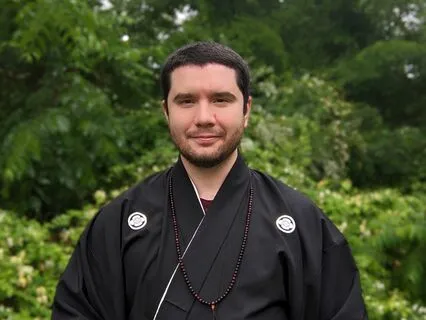
Hello and welcome to this quick Buddhist lecture on the three poisons,
Which covers overcoming the root causes of suffering in Buddhism.
My name is Silas Day.
The three poisons in Buddhism,
Also known as the three unwholesome roots,
Are the fundamental causes of suffering that bind beings to the cycle of birth,
Death,
And rebirth.
These poisons,
Which are ignorance,
Attachment or greed,
And aversion or hate,
Are the driving forces behind unwholesome actions and unskillful mental states.
The three poisons are considered the root causes of suffering within the Buddhist tradition.
By understanding and addressing these fundamental afflictions,
We can purify our minds,
Cultivating wholesome mental states,
And progress on the path towards liberation from suffering.
The first is ignorance.
Ignorance refers to the lack of understanding or the misperception of the true nature of reality.
It is the root of the other two poisons and perpetuates the cycle of suffering.
By cultivating wisdom and insight,
We as practitioners can dispel ignorance and transform our understanding of the world and of ourselves.
The second poison is attachment or greed.
Attachment is the desire for pleasure,
Possessions,
Or experiences that lead to clinging and craving.
This attachment can cause suffering when these objects or experiences are inevitably lost or changed.
By developing contentment,
Generosity,
And non-attachment,
We as practitioners can overcome greed and foster a deeper inner peace.
And the last of the three poisons,
Which is aversion or hate.
Aversion is the repulsion or anger towards unpleasant experiences,
People,
Or circumstances.
This aversion can give rise to negative emotions and harmful actions,
Be they words,
Thoughts,
Or actions themselves.
By cultivating loving-kindness,
Compassion,
And patience,
Practitioners can transform aversion into wholesome mental states.
Recognizing and addressing the three poisons can of course be immensely beneficial to any Buddhist practitioners or simply meditators out there.
They help us to cultivate mindfulness by becoming aware of the presence of these three poisons.
By doing so in your mind,
You can develop mindfulness and learn to recognize these unwholesome thoughts and emotions as they arise faster and faster.
They help us to develop wholesome qualities.
By transforming the three poisons,
Practitioners can cultivate wholesome qualities such as wisdom,
Compassion,
Loving-kindness,
Patience,
Generosity,
Which all of course support our spiritual growth and inner peace.
They as well help us to reduce suffering and support us on our path to awakening.
By addressing the root causes of suffering,
We can mitigate the negative effects of the three poisons and experience greater happiness and well-being in our daily lives.
A deep understanding and transformation of the three poisons into their positive qualities are essential towards our path of awakening and provide a great foundation for the development of mindfulness,
Ethical conduct,
And wisdom.
Like the Buddha said,
We are shaped by our thoughts.
We become what we think.
When the mind is pure,
Joy follows like a shadow that never leaves.
The three poisons serve as a crucial reminder of the root causes of suffering and the importance of addressing these afflictions in our spiritual practice.
By recognizing and transforming these unwholesome roots,
We can develop a greater sense of self-awareness,
Cultivating wholesome qualities,
And reducing the overall suffering in our lives.
In conclusion,
The teachings on the three poisons offer a profound understanding of the underlying causes of suffering and provide a roadmap for personal transformation and spiritual growth.
If we diligently address these afflictions,
We can attain greater happiness,
Inner peace,
And ultimately,
Of course,
Liberation from the cycle of birth,
Death,
And rebirth.
I'm Silas Day,
And this has been a quick Buddhist lecture on the three poisons.
Thank you so much.