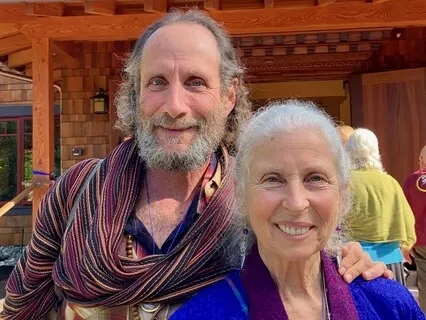
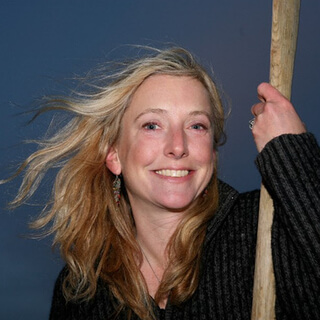
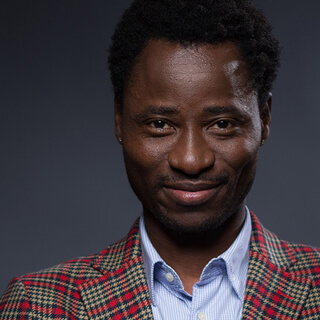
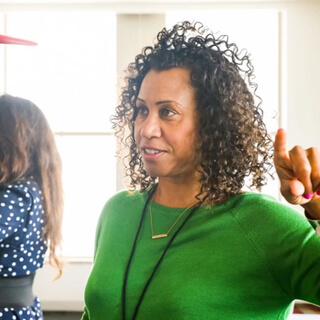
Joel and Michelle,
Welcome to the show.
It's so amazing to have you here today.
Thank you,
Palma.
It's a joy to be here.
Yeah,
Really heartwarming to be able to share this experience and opportunity with you and your listeners.
Thank you.
Now,
One of the questions you sometimes ask on your retreats is,
What are the questions that are currently most alive for you?
And I'm curious,
Given the times that we live in,
What are the questions that are most alive for you guys right now?
A juicy question.
Very appropriate.
For myself,
I'd say two come to mind when you ask that question.
And one is really looking at healing collective trauma,
Which of course is inseparable from individual trauma,
But a question for me is how to be most effective in helping people really at a deep level to understand and to release and to be able to move forward in the most helpful,
Healingful way.
So a lot of our work is healing the healers and helping the helpers.
So it's really looking at that angle for ourselves personally,
But also how to help others,
To help others,
To help others as we step into rough waters on so many dimensions.
So one around healing collective trauma.
And I think at the root of that is even a deeper question of around liberating ourselves,
Not only from trauma,
But from the confusions of misperception that has led to separation consciousness and misperceiving the world as it actually is,
Misperceiving ourselves as we actually truly are and how to understand those roots and reverse confusion into wisdom and love,
Compassion in the way we live our lives.
It's a very radical question at the root of our lives.
Thank you for asking.
And how about you,
Joel?
Yeah.
Yeah.
As you asked that question,
I think of the really historic quote and challenge that Vaclav Havel put forth to the US Congress when he spoke to them when he was president of the Czech Republic and essentially said,
Without a revolution in the sphere of human consciousness,
Nothing in our world will change for the better.
And we will essentially be doomed with the unraveling of every human system that we've created unless we're able on a large vast scale to evolve our consciousness.
So I think one of the biggest,
Deepest questions for me is how can I develop myself personally,
Develop the wisdom and the courage and the strength and the insight to be ever more skillful in being an agent of that revolution in consciousness?
We can't just wave a magic wand or wait for some beam of energy to come from the center of the galaxy to awaken everybody.
It's got to happen from the inside out.
And it's hard to do when we're afraid.
It's hard to do when we're flipping into neurological patterns that keep having us other each other and separate ourselves.
So at a time where there's just so much turbulence within the field of our collective experience on this planet,
How can we really rapidly and effectively help people tap into the levels of capacity and intelligence and wisdom that each human being has access to in a skillful way and to override 50 million years of evolutionary programming to be reactive and to separate and to constrict.
We really need higher levels of consciousness to be able to survive,
I think,
On this planet together.
A hundred percent.
And I'll ask you later about some practical tips in how we can all really do this.
But before we do that,
I'd really love to hear a little bit more about your background for the benefit of our listeners,
Because between the two of you,
You have more than 90 years of experience in contemplative practices.
I think probably almost close to 100 years by now.
And I'm just curious how the practice has changed you over time and what your current practice looks like.
It's a deep question to answer even in an hour.
I think for myself,
The elements of the algorithm are that I grew up in a family where there was a lot of suffering.
And there was also a lot of faith and a lot of discipline.
And I think that sensitized me to really,
As I grew up and I matured,
To not be afraid of suffering,
But to really be able to respond to situations that cause suffering in ways that would be helpful.
And that wish to be of service led me to initially consider going to medical school and many other endeavors.
I ended up really diving into psychophysiology and doing intensive research in extraordinary human performance and studies in consciousness,
Which I'm so grateful for.
But then those studies led to doing clinical work running stress management and pain centers and large medical centers that led to then doing staff training and then teaching in universities with programs that some of the first university programs in the world that were kind of mind fitness and mindfulness based academic programs.
Then that led to starting a training and consulting firm that was probably the hottest little boutique consulting firm on the planet focused on peak performance and extraordinary human capability.
And then that led to countless doors opening into the halls of power with leaders and organizations around the globe and working with the military,
Which gave us a tremendous amount of credibility then to go into very conservative settings.
And we along the way have been blessed with hundreds of remarkable teachers who from many different traditions,
First nations,
Contemplative science,
Neuroscience.
And as you said,
We've had personal practices,
Daily practices going for at least 50 years,
Including a year in a silent contemplative retreat,
Which was an extraordinary opportunity.
So it's been a journey.
And how did that change me?
I think the qualities of wonder meant humility,
Just a deep bow to the vastness of the nature of being and how many dimensions are woven into the fabric of reality that I can barely comprehend and just tremendously deep commitment to continuing to learn and grow and develop my capacity in order to be a force for good in the world and to help others awaken to their true nature and highest potentials.
That just keeps going deeper and deeper.
How about you?
I was just curious to hear what you were going to say.
Yeah,
It's been quite a journey.
And I would say really I came into this life,
Although I didn't have the words for it,
But with that kind of a yearning as a child,
Just always looking to understand and connect with some invisible realms that seemed very real to me.
And I was really interested,
Even though I didn't have physical teachers there,
I felt connected to a larger field of guidance and really became activated to start meditation practices and mind fitness practices in the sixties,
Formally during the Vietnam war.
My awakening,
Both to social activism,
As well as interactivism came together as I became very much involved in the peace movement and the anti-war movement and just looking at how can I help bring about greater peace in the world?
How can I be a force for peace and then realizing that that needed to come my own inner peace as well.
And if I was just another angry,
Confused person out there,
That wouldn't ultimately produce peace.
You know,
That kind of hit me one day.
And I remember being at an anti-war rally in the East Village.
I grew up in New York City and I was sitting next to a person,
A man who had been a veteran from the war coming back from Vietnam,
Who happened to be sitting there together.
And he shared with me,
So I had to talk about how did you become involved with the peace movement?
And he shared that when he was in Vietnam,
He happened to meet some Buddhist monks there and was really so deeply moved and touched by the energy of peace that they were embodying.
And really in the sense that they were there for suffering beings,
Whoever they were,
Like the compassion and that they just touched something in him.
It was like an awakening of a different way of creating a better world,
You know,
Or whatever he,
However he thought he was in service of.
And he saw that it had to also come from a spiritual dimension as well as the outer dimension that we needed to work on all levels,
You know,
To create a better world.
And so just as he was talking,
It was the first time I think I even like heard the word like meditation in a formal kind of way as someone who was practicing that.
And all these light bulbs went off inside me,
You know,
Because we were there like in this rally and then suddenly I was like,
Tell me more about this.
Tell me everything.
Where can I learn this?
Where can I study?
And he was actually from Texas.
He wasn't even from New York,
But he said,
Well,
I think there's a place here and mentioned some places.
And I was just like on fire to learn more and to study.
That kind of began my journey reading.
And actually I went to find this particular,
It was a Chinese Buddhist center,
I guess you'd call it,
Within a practice.
And he didn't even know the exact address,
Just general didn't know the name.
And somehow miraculously I found my way there and I came in and they were in the middle of a weekend retreat.
Nobody even spoke English except one elderly man who took me under his wing and just such loving energy,
Like you're welcome,
Just follow along.
Everything was in Chinese.
But I got the vibe of presence and mindfulness and openheartedness.
Again,
It came in more of a nonverbal way right away with more of that living example of something's going on here that I want to learn more about.
I don't have the conceptual model for it,
But I can feel the energy here is really healing and there's a depth of care and wisdom here.
So it was kind of coming in from both sides,
The outer activist and the inner activist were born,
Really born together.
And that got me on that journey.
As Joel said,
Through many years of practice,
Really coming in initially through my first retreat was aside from that one was a 10 day silent Vipassana style,
Maitreana style retreat in Northern British Columbia.
And I just felt a taste of heaven of really coming home in that retreat.
And that was a retreat of wisdom cultivation to understand our own minds and bodies in a very deep way.
So it was really embodied.
It was community,
But we were in silence,
But I had never experienced connection at such a deep level,
Even in the silence.
There was such just breathing together and walking together and being present together in that presence really touched an immensity of love and sensitivity.
So that really,
That was 1975.
Vietnam was in the sixties and that started me,
But that first,
You know,
Real deep dive was 1975.
And I was like,
Okay,
I'm home.
Let me study this more.
I had studied anthropology and education in school languages,
And I'd done a lot of traveling.
I was on my way to India to study yoga and all kinds of other wars were breaking out in the world and India and Pakistan in particular at that time.
And I just kept getting the message.
Yes,
That the outer work's really important and you need to be cultivating and transforming on the inside.
So you can really be truly effective and the most helpful you could be.
So I started to focus more on that and the whole,
It's been a dance,
Weaving these two together and opening to greater love and compassion,
Kind of coming in the wisdom portal and then realizing we need both wings to fly in the spiritual sky as it's sometimes quoted.
Different traditions have different ways of saying it,
But you need the wing of wisdom,
Of insight and the wing of that open,
Caring heart of love and compassion and neither one by themselves are going to be sustainable to do the important work.
So I mean,
It's really been that practice and as far as how I've changed,
You'll have to comment on that.
But I say that because Joel and I have been life partners as well as work partners since 1982 and really met in 1980.
So it's been close to 40 years of this journey together.
I do think I'm getting more and more present and that the awareness of noticing when I go off more resilient in coming back to center,
That's been increasing and I would say more patient and accepting,
More compassionate definitely than I was when I first was just out to change the world.
And there wasn't a lot of listening or understanding for how people could think differently than I do.
And I think I'm more of a sense of union,
A united nature with all life and all beings.
Thank you for sharing your journeys.
What a remarkable ride,
Particularly the two things that both of you mentioned that there was this idea between the inner work,
But also immediately the outer work as well,
This inner activism and outer activism,
Because I'm experienced very often right now that there are people that either do a lot of inner work or people who are often activists,
But often come also from a place of anger and get burned out very quickly.
And it's so important that those two come together really.
And you have been practicing this for yourselves and also imparting that on thousands,
If not 10,
000s of people over those years.
I think we're really living in a time,
Palma,
Where to conceive of social activism and social justice without deep inner spiritual work makes absolutely no sense.
And to do deep spiritual transformational work without engaging in social change makes absolutely no sense,
That we really need to put them together.
The revolution is not going to be successful if we haven't transformed ourselves radically on the inside.
And a lot of angry,
Frustrated,
Well-meaning and visionary people are just going to.
.
.
Understandably.
Yeah.
I mean,
There's a great place for anger,
But unless we're able to find a really deeper peace and compassion and strength and realistic view of the nature of ourselves and our relationships and our reality,
Whatever new systems that we revolutionize into just are doomed to crumble,
I think.
So we absolutely have to find ways to do deep inner revolution to support the outer revolution in whatever form that takes.
And those are the kinds of leaders that are reaching out to us,
Generally speaking,
The corporates and the military leaders that really understand that at a fundamental level,
They can't really have outer success without developing inner capacity.
Yeah.
I was just curious because you mentioned anger and transforming anger,
Which is not a small thing to do.
I wonder what are some more practical tips,
How people can learn how to transform the anger that is often there kind of,
Yeah,
For really justifiable reasons.
And people don't want to be told that they shouldn't be angry,
But how can they really use that anger in impactful ways and to be a force for good in the world?
Yeah.
A few thoughts that come to mind.
If we look at anger,
Before we get to anger,
There's usually frustration.
Frustration,
There's some kind of desire or hope.
Under that desire,
Hope is something that we really love and care about,
Something that's important to us.
So in a sense,
Anger,
We rage against anything that compromises what we love,
What we care about.
And I think if we can become more mindful of that continuum and more committed to what we really care about,
That's a step in the right direction.
It takes incredible courage just to embrace our anger,
Our frustration,
Our rage,
Our disappointment,
To show up for our lives and just sit in the fire of the intensity of all of that and find the peace within the turbulence and the clarity within the confusion.
I think of one fellow that we met at one of the organizations we were working with who had an anger management problem.
And he used to go into the storeroom.
And in those days,
He'd walk out with boxes full of pencils,
And he'd stick them in his desk.
And when he would get enraged,
He would pull out a bundle of pencils.
And under the desk,
He would just break them into a garbage can so that he didn't go hurt somebody.
And we taught him this profound transformational practice.
It's a meditation called Tonglen of taking and sending where you breathe in the fire and you breathe out light.
You breathe in turbulence,
And you let it dissolve into your quantum core and the some dimension of the deepest,
Truest,
Purest,
Most unassailable dimension of your true heart,
Your true mind.
You breathe in that turbulence,
You dissolve it down to its essence,
And you breathe out peace.
You breathe in inflammation and heat,
You dissolve it down to its essence and let it break your heart open to coolness.
You breathe in the anger and the rage,
You melt it down to its essence,
And you breathe out peace or love or strength or whatever it may be.
So I remember him talking about how he was able to work with the fire of his anger and rage and turn it into light.
That just gave him more radiance,
More power,
More clarity to show up.
So when we worked with the military,
Those kinds of practices were incredibly helpful.
Now,
May I stop you there for a moment?
Because it is,
I mean,
You were doing these interventions,
Let's call it,
And not just now where mindfulness is relatively mainstream.
You were doing these projects 20 years ago or so,
And I imagine going into a corporate and telling in someone to breathe in fire and to breathe out light or going into the military that some people might not maybe initially be extremely open to doing those things.
I'm really curious to hear a little bit more about the beginnings and also your really remarkable project with the military that involved a three-month silent retreat.
It involved compassion practices.
So please tell our listeners more about that.
I just want to add or build on what Joel said and move into your question as far as anger.
And even with this example that you just gave,
In that case,
The person that we worked with recognized that there was a problem with that and recognized that it wasn't helpful or serving him and wasting a lot of pencils.
It really wasn't getting to a transformational level and was really asking for coaching around how to work with it.
So it wasn't that we came in and laid that meditation on him and told him.
In fact,
We didn't even tell him to breathe out light.
We just described this practice for working with energy,
Which means really owning it and getting in touch with it.
To do that practice correctly,
You really have to feel it.
It's not a matter of repressing or suppressing or denying it,
But get in touch with that anger.
And the problem with anger as a problem,
I mean,
There is a place for moral outrage and it does give us a certain energy and motivation.
The problem is when it becomes blind rage,
When it distorts our scene or we drown in it or we're like,
Actually,
It can be very harmful to our health physically,
As well as psychologically,
When it can actually burn us up on the inside and deplete our energy.
So I think in these cases,
Both within a context of not only compassionate living,
But even in the context of performing at our peak,
At our best,
Being the most effective we can be,
If there's a way to just come in within that context and say,
Well,
What are we really looking for here?
Sometimes there's anger when we feel helpless.
So anger can give us a false sense of powerfulness.
Is it really the kind of power that we want in that moment?
What other sources of power might there be?
For this gentleman in particular,
When we describe the kind of practice,
We let him just explore directly,
Connect with his,
What does that energy feel like?
Is there another aspect of that energy that might be more,
Actually,
Ultimately more sustainable and more powerful and more effective for you?
And for him,
As I remember,
The light came up and we didn't say,
Breathe that light,
He felt it like a cauldron initially like this bubbling fire pot that was cooking up inside of him.
And then he just went into,
He was able to connect with that,
The direct energy of that fire or that anger.
And then he found his way.
He said,
It was like to the sun,
Like he turned the cauldron that was boiling over inside him into like being a radiant sun that was sending out light and warmth.
And it was the same quality of power that he was looking for.
But instead of it being a destructive power that was burning him as well as breaking things,
He was able to find the sun in his heart and to turn that into an illuminating energy.
If you go into anger directly without letting go of the whole story and the me and who hurt me and all of that,
But just really feel the pure energy,
The spontaneousness of the energy,
You can find that there can be a lot of clarity that that anger can burn away confusion.
It's only because problematically we identify with it when we get into the who's right,
Who's wrong,
The blame.
And it has a two edged sword,
So to speak,
But there is a flame of clarity that can be discovered within that.
So I think for him,
That light was part of that clarity,
That luminosity.
So we didn't tell him at all.
We just gave him some guidance and the power came from him directly feeling into it and the gift from his own inner wisdom,
His own inner teacher.
So we try to do that if we're presenting some contemplative science practice that maybe new or foreign for some people to give them,
Understand the context for it and really coach to the need or the demand that's recognized already.
Even if we come into an organization that may not be anger,
But it's something else that they're looking for to have them really define what's really underneath,
What's at the core of what they want,
And then be able to show how this could support them,
Allow them to explore.
It sounds like how you described your own practice in the beginning,
A bit like a dance.
This also sounds like a dance really working with what's in the room,
What is the language that those people speak,
How do they express their needs and how can you,
I guess,
Reframe almost some of the traditional practices to make it appear more contemporary and more appealing to their own frame of mind where they're currently at.
Yeah,
It requires a deeper listening and openness to really understand that and the art of translation.
Like when we worked with the military,
We never mentioned the word meditation.
It wasn't necessary.
In fact,
One of our mentors from the Burmese tradition,
We had some couple of years to get ready for the program,
So we went to speak with all of our teachers in all different disciplines and we were speaking with this one woman teacher who had been a nun in the Burmese tradition since she was five.
She was acclimated to the West and she still had her roots in her tradition,
But she had trained on some work in the East training in the army there.
She said,
Don't call it meditation,
Call it mental toughness training.
It's like the principle of what will speak to the audience,
What will make sense for them.
It doesn't matter what you call it,
It's what you're actually doing and what people actually experience and if it's beneficial and helpful.
That was always really funny for us because she was like the opposite of mental toughness training.
And that was a great teaching.
It was great.
Yeah,
Very wise.
And we found that that was so helpful to just learn to listen.
How do we translate this,
Whether it's working with software engineers or it's working with the military or police or whoever,
You know,
What's the language that will open the door rather than create resistance.
If I can jump in there,
What was the brief from the army to develop mental toughness or what did they want to achieve with this project?
Good question.
That was part of what made us interested actually to go in and take this on the assignment of working with these was all men at that time.
They pulled no other duty other than this inner work with us for six months full time on base,
Including a one month silent mindfulness retreat off base.
So it was really,
We can talk more about the details of that.
But what the army,
What had happened around that time was a report had come out just around that time that showed that more than twice as many men and women committed suicide coming back from the war in Southeast Asia as actually died in combat.
So I don't know if you've ever seen pictures of the Vietnam Memorial Wall that seems to go on and on and on forever with the names of people.
Like if you had three of those walls,
That would be the actual casualties,
You know,
The loss of life that came through.
And so they didn't know what to do.
They only they really didn't know how to prevent that in the future.
It was really coming from a place of compassion and a place of like,
What can we do?
What's missing in our training?
Because these veterans,
Warriors,
Men and women didn't know how to stop the war,
How to turn that war off without turning their lives off.
And they felt really a lot of grief and guilt of what,
How did we fail them?
You know,
What didn't we provide?
And they had no idea what to do and how to change the training.
And one of actually former graduate students of Joel's who became a martial artist happened to have been invited to this meeting at the Delta Force and then Pentagon.
And Bud said,
Oh,
I know some people who might be able to help us.
Bud came back and said,
Explained the situation.
And we sat down together,
The three of us and kind of mapped out what would be the most ideal program.
Because all these,
Even on the physical level,
It was pretty gladiator level training,
A lot of strength building,
But not even stretching or warming up,
You know,
Even that level for their bodies.
It was very old school and no talks or teaching or dialogue even around the reality of death and dying or around the incredible stress.
There was no stress management training whatsoever back then.
So they were totally unprepared.
They weren't expected to come back alive.
If they did,
They had no training for how to integrate back.
So it was really,
It was virgin territory in a sense.
And we just thought,
Well,
Let's put out to them what we think would be the most in-depth and transformative program that we could do and involved working with the families and brainwave training as well as medicals.
And the training just stopped,
Just a lot,
A very full spectrum.
And they loved it.
And they took it,
The whole thing that we put out to them.
So one question just about that training,
If I remember correctly also,
There was this two years preparation period that you mentioned.
And during that time,
You also spoke to numerous neuroscientists,
Found out many things about the brain.
And I think neuroscience was also a component of that training.
Could you talk a little bit more about that?
We had about two years from the time they said,
This is the most extraordinary orchestration of human technology we've ever seen in terms of the proposal and then contracting for two years.
So we had the chance to meet with hundreds of our mentors and colleagues in neuroscience and contemplative science and peak performance and say,
If you had an opportunity to work with 25 men who may start or stop the next world war,
What would you teach them?
We're going to have them for six months full time,
Help us just envision what this curriculum might be like.
So it was an incredible opportunity for us to have just very deep and gut wrenching and inspiring conversations with countless people,
Both in neuroscience and behavioral science and contemplative science.
Back in the seventies and the eighties,
The intro for this work was much more around peak performance,
Mastering stress,
Mind fitness,
More of a kind of peak performance kind of paradigm,
More athletic analogies and all that.
And back in the days when we started doing this work,
Palma,
Honestly,
We knew nobody else who was working in this zone.
There wasn't anybody else bringing mindfulness into medicine or corporations or sports teams or even in the universities.
We were like,
Just get made sense to us.
We had the training and we found that people were just totally welcoming.
We have very,
Very seldom encountered anything that would look like resistance because we just say,
You know,
If we were to design a program,
What are your needs?
If what we did,
The work we did together was successful,
What would be different?
And then we just designed to meet those needs.
And it's not like today where you come in with a very thin veneer,
You know,
Like a spray or a dusting of mindfulness in an organization.
You do a series of classes that just,
You know,
Lay down the vibe and give some basic training and it's optional and it's just a very light dusting.
The work we've done over the years is basically rebuilding operating systems for organizations where,
You know,
It's not like there's a little bit of mindfulness on top as a cherry or whatever.
It's just like these practices go top to bottom,
Inside to outside,
Strategic planning,
Conflict resolution,
Personal energy management,
How we have meetings together.
The inner work is built in integrally to every aspect of how people work together.
So when we brought that into the military,
You know,
They were just,
I think,
Humbled by the disastrous outcomes of their not providing this kind of work.
And there was a tremendous openness to just say,
Give us the best you've got.
And we're going to devote six months full time to helping these people learn these skills so that then they could diffuse them throughout the rest of the military system.
And how did these people transform over these six months?
Well,
You know,
I think we did this month long silent mindfulness retreat at one point.
And can we just pause here a month long?
Because when I mentioned to someone I do a 10 day silent retreat,
People usually wonder,
Oh my God,
How can you do 10 days?
And there we have these military guys that didn't have a long standing contemplative practice.
And they had to do one month of silence.
Yeah,
But this was also after three or four months of intensive neurofeedback and biofeedback training,
Martial arts training,
A lot of contemplative work.
So you know,
In a lot of ways,
They had three or four months of just getting ready to then go into an intensive training period.
And they were macho enough to want to take on intensity.
And they knew that that would save their lives actually,
Potentially,
For many of these,
Maybe the whole or both teams actually,
Part of their mission would have been dropped in behind enemy lines,
Maybe dug out somewhere invisible for a while,
Maybe by themselves,
Maybe with one other person,
To be able to observe,
Send back information.
So they needed to learn how to be with their minds without going crazy,
And not being distracted.
It was a matter of survival,
Life and death for them,
For their buddies,
Their teammates.
So they recognize the value of it,
I think,
Coming back to what I said before,
That responding to the need.
And these fellows,
You know,
Were very courageous,
As far as outer tasks,
But they hadn't had any training with finding that inner courage,
Which was essential,
The inner courage to be with their emotions,
Their thoughts,
Their fears,
You know,
To even acknowledge that they had it.
You know,
They had all this bravado and macho kind of outer presentation,
Like when it really came down to that they'd not been encouraged or given the training to deal with the realities of what they were feeling on the inside.
So it really expanded their capacity,
I would say,
Of courage,
And their capacity to be more effective.
And they recognize that.
I mean,
At first it was a little bit of like,
What,
We're gonna do this?
I'll go crazy sitting in my mind.
And it's like,
Yeah,
Exactly.
Is that going to be important to you,
Solider?
To know how to be alone by yourself in a trench somewhere and not go crazy?
Yeah,
That's gonna be important.
So they're coming in from recognizing the value.
And then they were,
At first,
There was some scourviness,
But they pretty soon got to recognize how important this was and how much they needed to learn how to develop more of those inner capacities.
And how did they transform one or two examples?
Yeah,
You know,
I think some of the,
You know,
We spent $30,
000 collecting data and processing it.
And I think the most significant data was like letters from the men's partners and wives and their children,
Talking about just how they had a dad again,
Or,
You know,
That the violence quotient at home had really gone away.
And just so many letters of thanks and recognition for the men themselves.
I think just finding their hearts and honestly finding their bodies,
You know,
They had so cut themselves off from really deeply feeling and being embodied,
Even though they were physically very tough,
They just learned how to turn off a lot of awareness of their body rather than listen deeply to be able to self-regulate and to optimize.
Because these guys had just inconceivable physical challenges in the work that they were doing to find their capacity to really listen deeply.
We did so much lab work with them,
Teaching them to control their responses,
Their reactions,
Their muscle tension levels,
And all that.
So I remember we had a guy from the National Academy of Science come in to look at the program at one point.
And he came in,
We show him around the lab,
We talked to him about the training,
And he looked at us at one point and said,
How do you justify this much time and this incredible amount of investment in doing this kind of training?
And I said,
Well,
You know,
The main thing we're here to teach these men is confidence and courage.
If you were to be dropped into hostile territory with a mission where you weren't expected to come back alive,
Your worst enemy would be your own mind and your potential of just being overwhelmed by what you generate from the inside out.
We're teaching these men deep capacity for self-awareness,
For the courage to show up for that and to gain the skills and the confidence to be able to befriend their enemies and to stop the war inside so that they have some possibility of success in achieving their missions on the outside.
They really learned a lot of self-regulation skills,
Both physiologically,
As Joel was saying,
Like how to work with their blood pressure,
To lower their blood pressure,
To warm their hands if they were going out in winter operations,
Just to manage their internal,
Like to learn mastery of internal states that they really need.
And at the end of that one month meditation,
Silent retreat,
Mindfulness retreat,
The army wanted to test them out with the same question.
So what then,
Was this any help or what difference did this make?
And they dropped our guys into this,
What they called the gut check,
Like an endurance test,
This really tough test,
Dropped them into very difficult terrain.
They had a parachute in and opened their chutes really low to the ground and everybody all together or they wouldn't get food.
They would drop food in.
So they had to learn how to work together and not have accidents and how to take care of themselves and each other and no other teams,
If they were asked,
Had successfully completed this endurance gut check without accidents or fighting among themselves or something missing the moments when the food would be dropped.
If they weren't there,
They didn't get the food.
Our two teams were the first ever to come through it and whole and in harmony,
Even though it was hard and they were exhausted.
And in fact,
We asked one of the older guys,
Maybe he was 40,
That was probably the oldest.
So what kept you going during all of these,
You think you're reaching the top and you just get to the top of that hill and it's just the beginning of another one and just,
How did you keep it together?
And he said,
Well,
It was that heart thing you taught us.
And we said,
Which heart thing?
And we had taught during that month long,
We've done loving kindness practice,
Developing compassion for themselves,
For each other,
And just cultivating a heart that cares about others.
And so he said,
It was that heart thing.
I'd be sweating and just cursing,
Having a hard time.
And then I realized,
Oh,
My buddies behind me are also having a hard time.
And I would send support.
I'd send my heart along to them basically.
And that gave me the energy to keep going.
So I think in many ways for us,
That was our test.
And it was very affirming to know that the program,
The work that they were doing on themselves was also contributing to their outer,
Coming back with that inner outer theme that we've been exploring here today,
That their outer success really was supported by that inner work of compassion,
As well as consciousness.
Powerful.
And it reminds me,
I guess,
To talk about the current times.
You have been speaking about something called the great unraveling for many,
Many years.
But right now,
Probably most of us really feel that we're absolutely in the midst of the great unraveling.
And I wonder what you feel as the key qualities for leaders,
But also everyone basically to have and to develop during these times.
Could it be compassion?
Could it be collaboration?
What do you see as the key qualities to have and how do we develop them in the midst of this great unraveling where probably many people struggle with the enemy in their own minds?
Yeah.
Well,
That's such a profound and timely question,
Palma.
I think this notion of the great unraveling is based on the,
I think,
A profound recognition that is so apparent as we look at what's going on in the world,
That so many of the systems and structures that we've created are based on ignorant conceptions of the nature of reality and that they're completely unsustainable systems and structures.
So we're seeing supply chains breaking down.
We're seeing the climate be compromised.
We're seeing the economy and even democracy eroding before our very eyes because it's just not based on a deep wisdom that's congruent with the nature of reality.
So we're witnessing this time of the great unraveling.
In the midst of this unraveling,
There's also what could be regarded as the great turning of people starting to look back towards where do we find the deeper wisdom to inform and inspire us?
How can we really align and attune ourselves individually and collectively to ways of living and working together and on this planet that are more sustainable,
That are more just,
That cause less damage?
And it's a time that just requires tremendous courage.
So I think,
You know,
Among the practices that are most essential right now,
The two main categories is developing our inner resources,
You know,
Finding the treasury of profound capabilities that every human being has available to them and developing those.
And I'll loop back to that in a minute.
The second category is learning how to really build healthy,
Thriving networks and relationships and organizations and communities.
Because I think the COVID crisis in many ways is the first of a long succession of huge crises that we're going to be facing in the decades and the generations to come.
There's COVID,
There's the economic meltdowns,
There's the social justice and unraveling of so many of the systems and structures of oppression that have been put in place.
And then there's the climate meltdown.
And you know,
If you've been had the courage to read the science in the last even six months,
Let alone the last year,
It appears that we've crossed so many critical thresholds that we are in for some very,
Very difficult times to come.
So developing our capacity for resilience,
Our capacity for presence to really show up and to listen deeply to ourselves and to each other and into the field of circumstances that we find ourselves in,
To be clear on our intentions,
And to really conceive of the infinite ripples of the intentions that lead to our actions as they go out into space and time and into the world.
Maybe to leave our listeners with something practical,
Because these are all amazingly important topics,
But sometimes hard to grasp,
Like how can I become more present?
Or how do I check my intention?
Could you just give some practical tips on that,
How someone who doesn't have these practices maybe at the moment could get started with them?
Yes,
That's really important.
Thanks,
Palma.
First of all,
The most important thing to remember as you're getting started is to pause frequently throughout the day,
Just to start to build in like kind of a reflex.
Start in the morning,
Actually,
Right away when you wake up before you even tumble out of bed or go check your devices.
The moment you wake up to just pause and to connect with yourself,
Your body,
Maybe bring both hands to your heart,
Just feel the gift of another day,
The breath,
The movement of life within you,
The breath,
The heartbeat,
And to basically recognize the gift and to reflect on how do I want to live this precious day?
Everything's still working pretty well,
Body's working,
The mind's awake,
I'm aware,
I hear the bird songs or I see the sun's shining,
Whatever's present.
To start the day rather than automatically tumbling,
To just start to reclaim your life moment by moment,
Even for short periods and just set an intention for the day.
What is it I'd like to remember and keep coming back to today?
What's important,
The quality of being whatever that might be,
More present,
More compassionate,
Forgiving,
To listen better,
To remember when I've,
To be easy on myself,
To have self-compassion when I forget.
Just doesn't have to be a whole list,
Just one or two qualities is plenty to just set an intention to work on developing or cultivating more deeply,
More presence.
And then perhaps if you want to take a few more moments to really listen into your heart and for something that you're grateful for,
Because the practice of gratitude gives a lot of energy also,
And it helps us stay balanced to realize that,
Yes,
There's all these challenging things going on.
And what are all the other things that are working in my life now?
What am I grateful for?
What do I appreciate?
And just begin to realize there is a lot of good happening as well.
And that helps create an inner balance that's really essential for going into the difficulties and not drowning for dealing with the challenges.
And just for a moment,
Like I think I remember that gratitude practice was one of the most powerful meditations at Google.
Is that right?
The favorite.
It works with Google.
And number one favorite stress buster to just pause and come back to something you're grateful for someone,
Some inner quality,
Some relationship,
Something in nature,
Whatever it might be,
How that immediately resets the biochemistry and clears the stress circuits.
So yes,
You remember correctly.
And it's true for everyone.
It's easy to access at any time.
It's great to start the day with or in the middle of the day or at the end of the day.
These are wonderful tips for anyone easy to begin with.
And on the gratitude,
Not just to bring the mind to be mindful of what we're grateful for,
But then to let the heart or the mind reach out with a wave of thanksgiving,
Of blessing.
Encouragement.
Yeah.
So like if you turn on the water and the water flows,
Send back a wave of gratitude to everyone who developed the infrastructure or the clouds for raining or whatever it may be.
If you eat something to really conceive of where did this come to you from and let your gratitude reach back through the whole supply chain.
And our first nations teachers say that by responding,
Not just feeling gratitude,
But responding with that kind of thanksgiving completes the circle and allows those blessings and that goodness to continue to flow and be more available in our lives.
So that's one way to be more mindful.
And it's also a tremendous amount of research on the biochemistry and the prosociality and the benefits of gratitude as well.
Another really simple practice is to take five to 20% of the interactions that you have with people during the day,
Be it online or be it in person.
And as you approach that situation to set the intention to really show up and be fully present during that interaction,
During that conversation to really deeply listen,
Not just to the other person,
But to also listen deeply to yourself and that every situation walking from the tube to your office,
Having a conversation,
Drinking a cup of tea.
If you see that coming and you say,
I'm going to set the intention to pay attention,
Be fully present during this activity,
Those become like little mindfulness sprints throughout the day to gain a deeper insight,
A deeper kind of grounding,
A deeper kind of appreciation.
So that's a couple of places to start.
And the research actually shows that it's more beneficial,
More effective to have many small moments of mindfulness practice like that woven in and integrated into your day.
Then just tumbling through the day and then coming home and,
Okay,
I'm going to sit for half an hour and watch my breath or an hour on the weekend or learning to just have mini pauses and resetting,
Resetting,
Coming back to baseline frequently as you get more mileage from that.
Small moments,
Many times the mindfulness sprints.
Yeah.
Those small glimpses many times indeed.
This is a book that's got over a hundred different practices in it.
It's a great library.
It's available on Audible and also the Our Living in Balance book.
And we will include those links in the show notes of the podcast as well.
This has been really great.
The time has passed so fast.
Given the times that we live in and I guess the picture you painted was rather bleak.
I wondered if you could leave us with some kind of inspiration or something that inspires hope and strengths and capacity to move forward with inspiration rather than a feeling like,
Wow,
This is all too big and I can't do anything about it.
I think it's all too big and every breath we breathe and every moment of our life can be a response that generates helpfulness in whatever kind of way.
I think since we're approaching the end of this dialogue together,
One practice that's really good to do at the end of the day or at the end of a meeting is we call it the practice of dedication and there's kind of a front end and a back end to it.
The front end is like as we begin this conversation or we begin a meeting to just pause,
Get fully present and to bring all of our human resources into the moment and into the space.
And then to consider how many people may be touched by listening to this podcast or watching this.
How many people may be touched by the decisions we make together in this meeting today?
Let's call all of them to mind as though they're here present with us.
If you were to leave your experience in listening to this podcast and go off into the world with even one bright idea or technique that's helpful for you,
How might that change your life and ripple through you bringing benefit to the lives of countless people who play that forward through passing on the inspiration of that?
So if we begin with that kind of consciousness of interdependence and interconnectedness and infinite potential for ripples forward,
And then at the end,
Like this moment now to just pause and go,
Wow,
Here we are at the end of this dialogue,
The end of this day,
The end of this meeting,
Let's just breathe and maybe touch our hearts or reflect and gather all of the inspiration that's available to us.
All of the goodness,
All of the strength that's available to us.
Draw that into the core of our being and through the connective tissue of infinite interconnectivity,
Extend that goodness like waves of light and inspiration into the hearts and minds of all beings.
Trusting that each person,
Each being will receive this however they most need at this time,
If they need strength,
Let this wave of offering give strength.
If they need courage,
Let it give courage.
If they need love or healing or peace,
Let it offer that to really pause at the end of encounters,
Meetings,
Days,
Gather the goodness,
Take it to heart and let that flow from our hearts into the hearts of all beings with the same kind of confidence that you might have,
Type in a WhatsApp message to an infinite distribution list and hit send,
Trusting that that message will be conveyed because the infrastructure is in place to convey it.
In the same way to engage in these practices where we're working maybe a subtler infrastructure that is uncompromiseably connected and super connected,
To engage in and participate in that I think is the kind of practice that ennobles our lives.
It can give meaning and strength and that is actually a force and a source of interactivism.
I remember the president of Silicon Valley Bank once came to one of our programs and picked up these two small but profound moves of how to begin a meeting and how to end it.
We saw her maybe a year later in another conference and she said that has made such a profound difference in how we view the work we do together and the meaning that we find in that and our sense of individual and collective purpose.
Very powerful.
May we trust that the ripples we send out with this podcast may be received by whoever needs to receive them.
Thank you so much for your time.
It was wonderful to have you.
Thank you,
Palma.
Joy to be here with you.
May the ripples reach far and wide in the most beneficial way.
And may we never doubt that deep interconnectedness and how each of us makes it does make a difference and that imbalance to the great unraveling.
There's also a great awakening and evolution of consciousness that we're all part of and that we can and we can and this time together can contribute to this positive evolution as well.
Thank you.
Talk about the