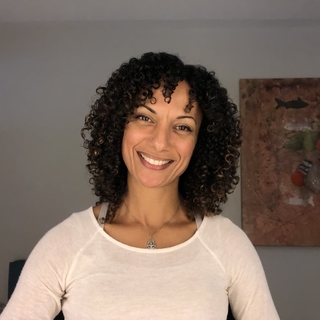
Hi,
And welcome to the Prana Mama podcast created to remind you that you are here to thrive.
And I am here to help.
This week,
We are going to be talking to Kevin Karas.
Kevin is a fellow insight timer,
Publisher and community member as well.
He reached out to me over a month ago after listening to one of my meditations that turned into a conversation.
And while it was in the middle of the pandemic,
I meant to edit and have this up and running before now because it's been sitting for a few weeks.
But in light of the murder of George Floyd,
And the social uprising that's happening because of that,
I feel like there's a reason for everything and this conversation needed to be heard.
Now,
We are being called forth to create a kinder,
More compassionate society.
And this conversation in an odd way touched on that before all of this happened and is happening.
So I think there's food for thought in here.
I think there's some gems and I hope you can pick them out because we are all in this together.
Right now I have with me Kevin Karas,
And he has a mission of building communities who engage in a variety of mind body spirit practices to increase self awareness,
Mastery and unity.
He currently fulfills this mission by teaching cross disciplinary continuing education courses,
Leading a 200 hour holistic yoga school and living in an intentional living community,
Which I'm excited to find out more about.
He is also executive director of Elevate Akron,
Which is a nonprofit organization in Akron,
Ohio.
And if that isn't busy enough,
Kevin is finishing up his final year as a graduate student in communications at the University of Akron.
I'm sure it comes as little surprise as to why I thought Kevin would be interesting to chat with here on the Prana Mama podcast.
The truth is,
Is that Kevin and I were complete strangers up until less than a month ago.
So if you don't mind,
Kevin,
I would love for you to explain how our paths connected and how we got to this point.
Absolutely.
Well,
It's lovely to get to share that story.
You know,
The last several years I've really been seeking to,
You know,
Discipline myself and to develop a regular meditation practice.
And one tool that's really been helpful to doing that has been Insight Timer.
The Insight Timer app is so wonderful because it has both these free access as well as this paid access to content.
One of the programs that they have on there is called the Daily Insight and your contribution on there,
You know,
It really spoke to me.
And,
You know,
Every day they feature kind of a different,
You know,
Leader in meditation around the world.
And occasionally I'll listen to them.
And there's just something about that teacher's presence and the way that they guide the practice that just really causes me to feel like there's something alive.
And when you find that you don't want to let that go.
So I was really grateful that we were able to connect through that.
And that was kind of the place.
That just makes my heart sing.
The fact that that's what caused this conversation to happen is just,
I don't know,
I even know what to say about that because as a publisher on the app,
You just never know who's listening or the impact that it's having.
It really is an offering.
This is great.
And I'm very grateful.
And again,
Insight Timer,
Thank you for this moment.
So that's really cool.
Maybe we can get into Elevate Akron a bit so our listeners can understand what it is that that nonprofit organization does and maybe some events that you have coming up.
Yeah,
I'd be happy to speak more about Elevate Akron.
This nonprofit,
It just started as a small local free outdoor yoga class.
And what the idea birthed out of was this concept of nature's a place where we all feel connected to ourselves.
Yoga is a place where we feel connected to ourselves.
And how can we bring together the different yoga studios and community for one day where we're not in competition,
Where we're not trying to do our own things,
But we're really achieving that common goal of yoga,
Which is unity.
And you know,
You think when you host an outdoor class,
Like,
Okay,
Let's hope maybe we'll get 50 people,
100 people,
1000 signed up.
So we didn't even know how well that was going to do.
And it warranted having to form a nonprofit.
And you know,
Now 3000 people go to the event annually.
That's amazing.
And I mean,
The size of Akron is what,
Roughly?
It's actually,
We have just under 200,
000 people.
It's a metropolitan city.
That's incredible.
And I can imagine what the energy would be like too.
Yeah,
One choice we've made is that we have one key practice during the whole time.
And so what this does is it channels all of the energy into this one collective practice.
And it just,
It's amazing.
How many years has it been running?
We started in 2015 and we've had,
We're going on to our seventh event.
What's the future of Elevate Akron?
Now the way that we're trying to grow and expand is in how to live out our mission more fully.
We have the momentum,
The event's going really great.
How do we now take that and find a way to support making yoga accessible to others?
How do we build connections in the community?
And as yogis,
How do we inspire this core essence of service?
You know,
How do we kind of demystify the concept of karma yoga?
And part of your service as a yogi,
Even if you're just beginning is to share this with others.
And even just one person inviting you to a class,
That's how you really get started.
And I mean,
Everybody remembers their first yoga teacher and their first yoga experience,
Right?
My actual start in the journey was probably more with meditation,
Which was just finding meditations online actually.
But I do remember my first teacher of the physical Hatha yoga practice.
It was at the University of Akron.
It was,
I believe it was eight years ago,
Eight or nine years ago is my first actual physical class.
And yeah,
You just,
They really,
They do leave a mark,
You know,
And then of course there's so many other teachers that come up,
Senior teachers,
You meet those teachers that have just been doing it for their whole lifetime and they just have such a richness and sincerity to their practice and their presence and their being.
Going back to that first moment of taking the physical practice when you're at university,
Which is such a great opportunity.
I know when I was in university that that wasn't available.
So you're very fortunate to have that for sure.
Who was the Kevin before that entered that class?
And who is that Kevin eight or nine years later?
Yeah,
That's a,
That's a really good question.
You know,
Going into it,
I always had a sense of spirituality about me,
But really before going deeper into the practice,
There was a lot of built up frustration and you know,
I don't know if this is just teenage boys sort of.
What would you have been at that point?
At that point I would have been 19.
Yeah.
You know,
There was a lot of certain emotional energies that weren't in regulation.
There was a lot of insecurity and self esteem issues that manifested with a big ego.
There was a lot of needing to be the star and all these sorts of things and and need to prove myself.
And I think as the time went on and the practice got richer and richer,
I found a lot of that of,
Of really working with that ego and instead of it needing to be all self directed to see how it can be towards,
You know,
Collective directed and directed towards this greater energy that's moving us all.
And to find the way to actually live that out and to be selfless is something you have to be in check in with all the time.
Absolutely.
And so that version of you eight,
Nine years ago when you were 19,
Did it see yourself being here right now on this path?
You know,
Interestingly enough,
Even before that,
I would,
I would say my first real big spiritual breakthrough was 16.
Okay.
And really there was something always in me that felt drawn towards some sort of something along the lines of spirituality and being a teacher in that realm of spirituality,
Personal development,
And something in the realm of community development.
And I didn't know how that would manifest.
I found that yoga actually really gave a nice structure and a nice discipline and pathway and kind of a roadmap.
Like these are the ways you achieve this sort of thing.
And so good because it's like it has this sort of mind,
Body,
Spirit approach.
And I think that any path that you take from whatever tradition you come from can really be rich if you go deep into it.
But yoga to me really laid that outline of the various aspects of myself and accounted for all of it.
That's a really good way of describing it,
You know,
Because you have all the different paths of self awareness,
Self knowledge,
And incorporating all of it,
You know,
The devotion,
The bhakti,
The jnana,
The intellectual karma,
The service,
And the scientific approach,
Which is what Raja yoga is,
Is going inward and testing things within yourself.
And I think before that,
You know,
I had also been on a spiritual path from a young age,
But I did a lot of reading.
And so it was very one dimensional,
If you will,
Because it was it was trying to come at it from an intellectual perspective.
And yeah,
I would say yoga totally brings to the forefront that there's other pieces to that spiritual journey that have to do with really embodying all of it.
I'm really curious about this intentional living community.
So I have to go back because when when Kevin reached out,
I said,
Sure,
We'll connect and we have this phone discussion,
We and I'd never talked to this person before.
And I did see that,
You know,
That he was into intentional living.
And I thought,
Like,
Communal,
Communal living and,
And then just with the state of affairs of where we are now,
You know,
With the pandemic and trying to figure out what's after this,
And how do we exist and how do we move forward as a society because we have to take accountability of what we've done up until now.
And regardless if you know,
We can sit and argue to the cows come home as to if our actions created this pandemic or not.
Regardless of that,
We are all experiencing a giant pause.
And we have to take stock of how we've been showing up as a society.
Do we consciously then,
If we take stock,
As we do in self awareness,
Do we consciously move forward doing the same thing?
And can we do that with a clear conscience?
Or do we say,
You know,
We're doing things a little bit differently.
And an intentional community requires cooperation,
It requires collaboration,
It requires accountability for impact on others.
Can you explain to the audience about a what intentional living is?
And then I want to hear about how you arrived to that.
How did you decide this is what this is how I'd like to live?
This is the lifestyle I want to participate in?
Yeah,
I'd be happy to answer that.
It's interesting to think about what what does intentional living really mean?
And then to talk about,
You know,
How we got there?
Because it almost feels like we figure we figure it out through the experience of doing it.
I would say with intentional living,
It's it's the capacity to be able to understand both your own individual needs as well as the needs of others.
And this requires a tremendous amount of communication,
Of listening,
Of direct,
Open communication,
Especially around things that are difficult,
And a structure for really caring for each other.
And being able to realize that,
Hey,
When we're caring,
It makes this whole process easier,
We find that there's a lot less conflict or little issues arising.
And then it shows up and we're able to have this really beautiful oasis of a place we can create,
You know,
If we can lay that foundation,
That structure of what are the core things we need to live harmonious together,
It then frees us up to do these more creative things.
Like right now it's spring and we have an acre.
So we're beautifying the yard making paths and gardens.
And it's a continual process of communication.
It's not like you have the conversation once and everything's perfect.
It's like it's a process,
You know,
Not a destination.
Well,
And it's,
Again,
That's a reflection of,
You know,
A self awareness journey or mindfulness journey is that it's always a process that you there are certain practices that you have to engage in every day consciously in order to keep that practice alive and to keep things healthy and thriving.
I love how you touched on the importance of when there's disagreements or conflict,
Those are always difficult.
But what's more difficult is stretching yourself to always hold the space for other people during that conflict.
So there's a conscious caring aspect and that deep connection as humans and want them to thrive and having that in the back of your mind during a conflict is what moves the conflict forward in a positive direction that also is what gains trust between people is they know that at the at the core of of your being that you that you really do care for their well being and that in of itself is a selfless act and to show up in a conflict where you're not just thinking about yourself.
And that is basically how we've run as a society.
It's always about my needs over anybody else's needs.
And that doesn't mean that you give up your needs or your vision completely.
But there's just this deep understanding of connection that there's impact regardless if we want there to be or not.
We have impact on everyone that that if we are come into contact with and certainly the ones that we live live with.
So I just think to me that such an evolved approach to living and I truly believe that if we can figure out ways to live harmoniously under a roof,
Regardless if it's you know,
Intentional living community where it's essentially friends or strangers coming together with this common idea of how people should live or if it's in a family unit,
Because I truly believe if if you can live day to day with people in a harmonious way doesn't mean there's not going to be conflict.
But if you can live in a way that upholds the caring of other human beings as front and center,
Then peace in the world is possible.
I think it truly built peace begins under the roofs of our houses.
It's it's it's so beautiful the way you articulate it because even when I when I started talking about it,
I was starting to think really it is it's it's we've made a family unit and we recognize and we see each other even though we're not joined by blood,
We're joined by this common vision.
That gives me goosebumps because it's one thing as you know,
You can't choose your family members.
Right.
And but to have choices of okay,
I'm choosing to consciously live with these individuals,
Then that yeah,
That's a family grouping.
And that's different than being in a dorm room or,
You know,
Living with roommates,
And you just all sharing in the rent and trying to get through school.
This is actually okay,
We are all we all have a common vision and we all have a common,
I guess code of ethics that we're going to function by and caring for each other is is front and center.
And this is how we're going to operate.
It's that caring piece that creates the family.
When you think about it,
How we existed thousands of years ago,
We all cared for each other and we had to it was needed for survival,
Right?
And we traveled,
We did everything together.
And we made sure that everybody was thriving from the baby to the elder,
We took care of everybody in our plans.
And I feel to move forward out of this pandemic,
There needs to be an evolution of that maybe it's not even evolution,
It's a return to that that deep caring that we want to see all humans thrive.
It seems you know,
Like the,
You know,
The way you kind of framed this and talking about how,
You know,
We are in an interesting cultural time.
And really,
We always are.
It almost always feels like when are we going to make that movement towards deeper caring?
And,
You know,
And caring really is a big part of the the yoga and the sort of yogic lifestyle.
You know,
You do look at,
You know,
You talked about Raja yoga,
And the yoga sutras of Patanjali.
And,
You know,
We learn about this value of nonviolence,
And quite frankly,
In truthfulness as well.
Really,
When we get to the core of it,
When we're doing the opposite of violence and the opposite of lying,
I really do think that that care and love is certainly this opposite,
You know,
Because when do we lie?
We lie when we're afraid.
You're right.
Yep.
When do we do violence?
We do we do violent acts because we're afraid.
And even if they're not physically violent,
If they're,
You know,
I don't know,
We're emotionally upset or something or lashing out.
And at the core of it is fear.
We don't have enough.
There's some barrier there.
So to see that we have enough and that we're already whole and to realize that the core of that is to live from a place of love is it's actually very practical.
And I guess I bring it back to this idea of it being a yogic value,
Because so often people think about yoga or meditation,
And we see this a lot in the mindfulness movement.
People would argue,
It's like,
Well,
Am I just supposed to be passive to everything in life?
Right.
Right.
Yep.
And I think that,
You know,
It's a misrepresentation to really live out this meditative yogic lifestyle requires these ethical principles.
And,
And I really the reason I bring this up,
Because you knew you asked like,
How do we kind of arrive at this intentional community?
And I was kind of pondering that question a little bit.
And it actually all started from the University of Akron that we went to,
There was yoga classes at the gym,
But there was no yoga or meditation group that met outside of the physical practice.
Me and a friend had just started,
You know,
Staying together on campus,
It led to a few other friends joining in.
Eventually,
You know,
I caught wind that we could form a student group and get funding to do training and stuff.
So we were amazing.
We organized and it's just amazing.
Like after,
Like four years,
It grew and we had these events.
And that's what led to Elevate Akron in a way.
And so when we all you know,
Graduated after building up this,
This sort of movement,
We were all like ready to go off on our own way.
But we'd always said like,
What if we were to do the communal living?
What if we were start,
We had this vision,
Like what if we started an intentional community?
But it's like,
Oh,
None of us have enough money to buy this land or to do this sort of thing.
So we said,
So we kind of let it fade away.
And then when I was getting ready to start my graduate program,
Which has been a long journey.
But when I was getting ready,
I was looking to just find like a one or two bedroom apartment because before that I had also been working at the university.
The University of Akron has something called living learning communities.
So I actually had been working in an intentional community setting for a while,
But you know,
I was looking for a place to live.
Long story short,
I found this 5,
000 square foot house for rent.
And that's a big property.
It's a property and it's just amazing.
And it had the,
The yoga space we needed in the green room space and the yard to do the,
To grow our own food.
And I called each of them and I'm like,
Yes,
I want to try this.
So that's,
That's kind of how it,
And it began though,
But the core of it is it actually began out of a group that had a meditation practice.
The,
The having that shared practice is what was the glue that brought us together to be able to do this.
Wow.
So how many are there in the,
In the house?
So there's seven bedrooms.
We try and keep it one person bedrooms and seven,
Seven housemates.
Amazing.
Amazing.
And how long have you been living together then at this point?
So now it's,
It's been four years we've been there and actually the entire group that started,
They've all gone off to get PhDs.
One of them's riding a bike around the world.
Like they've all launched to do very eclectic,
Creative things.
So now it's like the essence and the values that we instilled are still there,
But a completely different group.
And now the group is very diverse.
I mean,
The age range runs from low twenties to sixties and all different backgrounds.
So it's actually much better to have that multi-generational different walks of life together.
So it's this ever changing,
Growing,
Beautiful experience of like-minded individuals that come and go as they need to.
And,
And then it just evolves from there.
I would imagine every person brings something new to enrich the environment and you all learn from each other.
They,
They really do.
And something that we may have omitted or a way that things could function,
We develop a new way of functioning.
Some things we were doing are just,
You know,
We realize the concerns around that and adjusted.
And so it's like,
We're all growing into it too.
And the exciting thing too,
Is the support is growing as well,
You know?
So it's like,
We don't know really how far it can grow and it's just more and more resources and opportunity continue to come our way.
And it's,
It's just really a treat to see what's happened.
So how do you integrate into your local community?
Are you in a neighborhood?
Are you,
Is it pretty spread out or how does that work?
So the house is really interesting because it's one of the historical Akron,
Ohio homes,
You know,
And,
And then,
And so it was built in 1928 and then we live on a street that in a small neighborhood that maybe has like 50 or something other houses that were all built between 30 to 70 years later.
So that the house is a complete different design of everything else there.
So it stands out like a sore thumb.
It's on the corner.
And really we've,
We found a great harmony with our community and at least in a local neighborhood.
And you know,
You get,
You get worried when you do something like this,
Like,
Will you get shut down?
Are you violating zoning issues?
And you hear it's time and time again of,
You know,
Communities getting,
You know,
Displaced for this purpose.
And we've actually formed a neighborhood group at an association.
We're in good relationship with the local law enforcement,
So they,
They know what we're doing.
And you know,
We've even started to talk about when things start to open back up,
Posting the neighborhood annual block party.
So we've tried to really just like make ourselves available,
Talk to neighbors walking by.
And,
And,
And I think this is key,
You know,
Because also we've actually,
The greater Akron community does have a really rich holistic in music community.
Like for instance,
There's a musical gathering that's been going on for about 35 years at different people's homes called the third Saturday party.
And hundreds of musicians will gather in different homes or throughout the area to celebrate and to share music and every room with a house and to bring food and potluck,
To have a space that's able to host that now.
That group was starting to get a little older and,
And it was seeming like who's going to take this over.
And it feels like there's now that continuity of culture through our home.
So you truly are into community building.
That's,
That's amazing.
And it just seems like those opportunities naturally come into your,
Your sphere and you're able to,
To work with them and,
And help them grow.
Yeah,
Certainly I feel there's,
I don't think there's enough positive stories about communal living in general.
I feel anything in the media is always on the negative and it's always these,
These terrible situations where there's someone who is,
You know,
Being opportunistic and taking advantage of people.
All these stories that come out shed a really dark and almost evil side of communal living.
And I know having spent time in Ashrams where you're living with people that you don't know from around the world,
It's always been such a beautiful experience and no,
There's no group sex happening.
No,
There's no abuse happening.
Like it's just people coming together.
Again,
That like mindedness of how they function in the world.
There's already a high level of self-awareness and accountability for one's actions.
So when you go into these situations,
There's just an unspoken rule of how you treat each other.
And there's an unspoken rule,
As I said before,
That you,
You still care and you'd like to see everybody meet their fullest potential.
It sounds like Akron's a pretty open minded community to begin with,
But did you find any,
Any sort of resistance at all anywhere in this approach to living?
So there has been points of resistance and really the biggest difficulty that you faced around communal living is individuals traumas or different mental,
Emotional states of being.
You know,
Some call these disorders things of this sort,
But those things can really be a challenging thing and they're a very sensitive topic and they really require that if you are challenged by one of these things that you're not resolving it through the group and that you're,
You're actively seeking support for this.
And it just,
It's to me really a testimony towards the need for everyone for more mental health support in our,
In our world because you know,
These,
You could say even just looking at,
You know,
The greater culture,
Just how mental health issues might be causing many of the difficulties in our society.
Absolutely.
Yeah.
Yeah.
So this was a big point of resistance we faced at the time and there was a,
You know,
A bit of a exodus at a point and you know,
We rebirth and yeah,
Certainly there was,
There was points of having to go through the challenge and the resistance.
But underneath it,
Seeing what the,
What this could mean was,
Was huge.
And also throughout,
You know,
It's caused me to look at my own agendas and my own dysfunction,
My own issues that I bring to it.
You know,
It really requires everyone to have to keep growing.
And it's so funny because one thing that I hear a lot of times from people,
I hear two things.
People are either like really into the idea of communal living or they're like,
I couldn't imagine living with that many people.
Those are kind of the two ends I get.
And I think the reason that people can't imagine it is because it does require so much self work and so much communication of challenges.
And yeah,
We already brought that up briefly.
Absolutely.
So being clear that communal living is not a utopia.
That's,
That doesn't mean you live somewhere and all the problems are gone.
It actually causes you to lean in deeper towards those problems and those situations happening within you that need healing or that you need to work through and just have that awareness that you're not just dumping on people because it does happen.
But then being able to notice,
Oh,
I need to reel that back in.
But you're also living with people who can say,
Hey,
Whoa,
This is your stuff.
You need to take that back and go do some work with that.
But I liked how you said it causes you to be more committed to growth,
Living in communal living.
That's,
I think that's an important piece.
So you talked about your graduate studies and that was the other part of our conversation that we had.
And maybe share about what your,
What your focus is on for your studies right now.
I appreciate you looping that back in because this is,
This is a huge part of my journey.
So with graduate studies,
Actually,
When I,
When I first began graduate school,
I started in a,
In a masters of business administration because I really thought that this would give me the practical skills to,
To do whatever I needed to do in the world.
And I always have looked for programs that had a little flexibility and in this MBA program that I was in,
It allowed for you to take classes outside of the business college.
So I was very interested in communications.
I had done a lot of design work,
Photography growing up.
And I'd also just love teaching and training and public speaking and all these things as a yoga teacher and meditation teacher.
I had taken a class over there in the school of communications and loved it and applied,
Got in and got the opportunity to be a graduate assistant.
So I was also teaching public speaking and really just an amazing experience because I remember there was a class we took on pedagogy and pedagogy is,
You know,
Basically the academic word for,
You know,
Your method of teaching and the process of teaching.
And I started to reflect on this,
What's known as holistic education.
You know,
Holistic education is kind of a new framework that brings in not just models like PGA and not to sorry,
But how can we learn from the earth?
How can we utilize the whole mind,
Body and spirit and an experiential learning process that is very deeply student centered where they're connected to themselves,
Each other's teacher,
The greater community,
The earth,
The world or almost.
Yes.
And so,
So much we see how learning will be just a cognitive process where yourself and the content you're learning is almost a separate thing.
And so when I started to,
You know,
In each of your graduate classes,
You have to write some sort of 20 or 30 page paper and do research.
And as soon as I started reading this stuff,
I couldn't stop.
And it was like one of these things where it was like the paper was due,
But I wasn't done.
And I didn't care about the grade or anything anymore.
I didn't really even care.
Here I am in graduate school and up to this point,
Like very good high near 4.
0.
And I just didn't care.
I just needed to study this.
That's a gift right there.
It really is.
And it was almost like all these years of being in the structure of school.
I just,
It was like I was rising out of the oppression of all of that almost.
And then,
You know,
Here I am,
It's like,
I don't know,
Four years later than when you're three or four years after you're supposed to graduate.
And I'm still deeply in it finishing up my final project.
And where I have now my project in and out is this topic known as presence.
And it's a concept that has become very prevalent.
I think it's very,
It's really become a very relevant topic,
Especially with the mindfulness movement growing and being in the present moment.
And the way that I look at presence,
It's like,
Whenever I've had a powerful teacher that's really impacted me,
There was something about being near them.
And the yoga word we often use for it is darshan.
You know,
You're sort of receiving this blessing.
And I wanted to know,
How does that work?
And I had a sense that it was something communicative.
Like there's something about the way that they're just,
They're really there with you and listening and their body language is there and you feel heard and cared for.
And I just felt that there was a way to sort of look at how do teachers cultivate that?
What are the practices they do?
And how can we use that as a skill for showing up more meaningfully,
Just not only as teachers,
But in each other's lives?
Yes.
What a beautiful and definitely unusual thesis.
I love that.
And there's so much to be,
I think,
To be learned about that.
I know personally that one of the challenges being online and doing any online teaching,
For me,
I find I know when I'm in that zone because I can feel the people that I'm with.
If I can't see people,
So some,
Depending on what app you're using,
You don't actually see faces and you don't know if anyone's even watching or whatever.
I find,
I feel like there's no,
There's nothing to plug into.
So I find it very challenging.
And then the way that I show up and the way that I teach is a little bit different and I can tell them I'm off on my usual game,
I guess is so to speak,
If that makes sense.
Yeah.
There's something about when we're seeing each other,
Like this sort of felt sense and there's this deeper unity and oneness that is experienced there.
And as we're all going from being spiritual beings,
Having a human experience to being spiritual beings,
Having a human experience,
Having a digital experience,
It's like,
We don't know how to show up and be fully in the way that we have,
You know,
And the amount of time we've developed to practice and connect in this way.
And I do imagine that maybe there's a deeper quality that with time we may cultivate,
But it's so new and it's so novel.
And yeah,
I think it's something we're all having to think about right now as we become temporarily digital beings.
Right.
And I think it's causing us to rely less on our senses,
Like of the physical senses and more on,
I guess you would call it the sixth sense,
That deep intuitive sensing that has nothing to do with what you see,
Smell,
Hear,
Or taste.
Have you had the chance to meditate online with lots of people?
In a way,
The Insight Timer,
It does always provide this sort of knowledge of like the whatever million amount of people that are meditating.
And for a long time,
I used to say in my meditation classes,
I'd be like,
Look at how many people I have the app up,
But look at how many people are on here.
Yeah.
In this consciousness,
But to do all sort of the same meditation,
I haven't done something like that quite yet.
Yeah.
So I would recommend checking out Jon Kabat-Zinn.
So every day,
I think it's at two o'clock.
He does his online meditation.
If you can get in there,
Visit through zoom and also YouTube at the same time,
That is an incredible experience.
And I find even if you're just watching one that's prerecorded,
You can still get that sense.
Because again,
You know,
There's in that realm,
There's no time or space,
Right?
So you can still get that sense.
There's a lot of people here,
There's a there's this joint community that you can just really sense that presence.
That's where I feel when you said how we're just going to be cultivating a different way of showing up in the digital space,
It's going to cause us to evolve,
I think is what you're trying to say.
I feel that It makes me think often about this,
This study that was conducted.
And certainly people have all sorts of arguments about studies validity and thing of this sort.
They talk about,
You know,
When community comes together,
And they all meditate,
How they see a drop in crime rates.
Yes,
I've heard that study too.
Yep.
You have to wonder when we all have had this time to slow down,
And hopefully we're all starting to step more into our own practices,
While there is also a lot of fear.
And in ways I feel like fear and challenge also drives me into the practice.
I see those as things it's like,
Oh,
This is like if there was ever a time to practice now.
I agree.
I agree.
It's like full on.
This is no fooling around now.
Time to get really serious about our practice.
Yeah.
And and I still I think if if we can see that,
And we can see the pause and the fear and drive that into our practice,
I mean,
There could be a,
You know,
A global movement towards greater peace.
I believe so.
And I also feel as you do,
That people who already in this mindfulness realm and space,
Whatever the practices they have,
It's been noticed that while everyone else is moving away and retracting with fear,
Those of us with this practice,
We're leaning forward and we're coming into it.
And then we're also we're serving,
How can we help?
We just want to help people because we know a lot of people are in fear and uncertainty and we just want to hold the space for them.
And it's because we've already gone through all that stuff.
Right.
Like that's that's our practice is working through that and coming through the other side of it,
But certainly leaning into it more.
And yeah,
I feel excited in that respect.
I feel excited of what will happen with that community as it as it grows and develops,
Which I think now it's doing at a pretty quick speed.
Yeah,
It certainly is.
And it's allowing space to like with that service,
What I've noticed is the amount of connections I've started to form with just amazing holistic leaders like yourself,
Not just locally,
But throughout different regions of the world.
It seems like we're all starting to think like,
What is this new reality that we're stepping into?
And how can we be of service?
And what sort of tools do we need to provide?
And in many ways,
I think we all kind of know those tools.
But how are we really,
What are we seeing in the community?
And what is it that you're doing in your community?
And what is it that I'm doing?
And how can we be more effective,
You know,
Globally,
If we're all on the same page?
And I think that's the kind of going back to,
You know,
Jon Kabat-Zinn and what he's doing.
I'm sure that that's starting to build this sort of collective language and knowledge of where we're at,
That hopefully we can all use to just sort of pioneer this new reality we're all stepping into and consciously creating.
You have to remember we're conscious creators.
Yeah,
Even when we're not conscious creators,
We're conscious creators when even we don't even realize that we're creating.
So and I think too,
It's not a one leader thing.
It's not Jon Kabat-Zinn never comes off as you must follow me and this is what we're going to do.
He is more of the gatherer.
He's just bringing all the energy together in one very potent place.
And then the rest is up to us.
So it goes back to that,
That is cliche,
But we were the ones we were looking for.
It's up to us.
It's about us coming together and then going back into our communities and then serving from however best suits us and what we're capable of and using our skills and our resources in the best way possible.
But it's also coming together and refueling each other and noticing that we are in this together and you're over there doing your work and I'm over here doing my work and here we are.
We know we still have this cohesive vision.
It's not a clear one in the sense that it's so detailed that it would cause any sort of dissension,
But it's clear enough that we can say this is where we want humanity to be.
This is the type of society we would wish to live in.
And it's the one that like in your living quarters and what I try to do in my own family,
It's one where,
You know,
It's a one of compassion,
Of kindness,
Of deep connection and also embracing our own humanity and that we all have our own stuff that we're trying to work through,
But it's toward growth.
What is the most impactful book,
Movie or podcast that you find yourself recommending to others?
Oh,
Wow.
That's a really good one.
I'm trying to think about the,
That this cause it's such a,
It's like such a good question.
I want to jump into what I'm,
You know,
Experiencing right now,
But then I really want to step back and say like,
What is it that actually has been so impactful to me?
I'm torn between two works and so I'll say them both cause why not?
Why not?
The,
The two works that have spoken most to me,
They share this common unity of both being known as what sort of,
Um,
I would say almost a channeled text.
And I guess one of them technically isn't a channeled text,
But with channeled texts,
The,
The idea is that like the way the knowledge was received or written wasn't from the actual author themself,
But it was from some higher knowledge and whether,
Whether,
You know,
People believe that or not,
I find that these works,
They usually speak to me in a very personal way.
And so the first work I'll say is a book called Oneness by Rasha.
It's an amazing book.
It's,
It's dense.
It's a blue book.
It's this work where,
Um,
You could open it and read a paragraph and you'd be like,
Wow,
That's exactly what I needed to hear right now sort of thing.
And I don't think it's a work where you need to like,
Oh,
I need to get all the way through this chapter.
And you certainly could systematically work through it,
But just something about the way that when I would read it,
There'd be something that was happening within me in my life that this would speak to that I wouldn't even expect to go in there to learn about.
And through understanding that how it just then shaped the way I went throughout my life and transformed me.
And then,
You know,
I even spent some time with one of our local senior teachers reviewing that book and just,
Um,
How long did we take to finish that?
We took like seven years to finish that.
And I would say the other work that's really been with me and actually,
Um,
The way that I experienced it was through an audio book and,
Um,
It happened to be on an iPod I had before iPhones and everything became hip,
You know,
Like just my little like mini scrolling iPod.
It was on there and you know,
I did a summer where I did some outdoor work and whenever I flow and I've listened to it,
But um,
A power of now and a new earth by Eckhart Tolle have been very deeply impactful for me.
Beautiful,
Beautiful.
Um,
Next question I have for you,
Is there one person who's made a tremendous impact in your life that you would like to say thank you to?
I really have to say thank you to my,
My core partners I've had in my life.
The love that I've experienced with my partners have always,
Has always been so,
Um,
Formative and impactful and showed me a new way of being and opened my eyes.
So I guess I'm saying thank you to,
To Allie and Gwendolyn and Julie.
These are,
Courtney,
These are my,
The people I would thank the greatest.
And lastly,
What advice would you give to someone who is new to this mindful living path?
First of all,
It's,
It's normal to feel like you don't know what you're doing.
It's in,
And you're not alone.
Most of us who've done it for a long time still don't know what we're doing and are figuring it out.
And to enjoy that process of being uncertain,
To enjoy the process of discovering and to embrace the feeling of failure if you can't develop the regular practice and to keep going.
And you have to have a supportive group of people that you can talk to about this on an ongoing basis,
Kind of as equals.
And you have to find that teacher that when you go,
It just,
It clicks and something about being about them impacts you in a positive way.
And it might not be the first teacher or the second,
But find that teacher and that group of people that you just feel supported,
That you feel a sense of growth from.
And,
Um,
And my last tip would be as you know,
If you're having concerns about how this relates to your faith or your background or your walk of life,
None of these practices are saying you have to,
You know,
Let those things go.
And if you feel uncomfortable about that,
You don't need to,
You can,
You can be this and that you can be come from this culture,
This religion or this background and also have an open mind to this new path.
And maybe even exploring a new path might shine a light on an old path that challenged you and to heal some traumas around that.
The last,
You know,
One more thing.
The other thing I'll say is that,
Um,
With this finding a supportive group and a teacher,
If you really earnestly go down it,
Don't be surprised if there may be people,
Friends that you may step away from and a time where there might be a phase of stepping away from the old friends and there might be a gap before finding the new support and to not be afraid,
But to know every time you let go of something,
Really something more sincere,
More aligned will come if you believe and you have the faith and the vision for it.
So really make sure that you have those right associations with people and,
Um,
To feel okay if it's hard in the process of letting go of old support.
I'm glad you added that last piece in.
I think people need to hear that so many times from different people that that's just part of the process.
If our listeners want to connect with you offline or even online,
Where can they find you?
Yeah,
So a few places they can look is if you wanted to look on Insight Timer,
You can search my name,
Kevin James Karas,
Or if you want to connect with me,
Feel free to send me an email.
It's at kevinjameskaras.
Gmail.
Com or you can look up Elevate Akron.
All these are great ways to connect and I certainly encourage people reaching out.
And speaking of Elevate Akron,
There is an online event coming up.
You want to talk a little bit about that before we go?
Yeah,
Certainly.
So in lieu of having our 3000 person festival this year,
We're taking all these amazing teachers and community partnerships and creating,
You know,
Some free online content and a series known as HEAL.
This stands for Helping Elevate Akron Live.
And this content can be accessed on Zoom or through our Facebook.
Really,
We'll be featuring just so many great teachers who will be sharing lessons around health,
Connection and service,
Including yourself.
So we're really grateful to have you participating as well.
Thank you for inviting me,
I'm looking forward to it.
Well,
That's all the time we have for today,
Kevin.
Thank you so much for joining me.
And I'm looking forward to our paths continue to cross in the future.
I feel like a new friend has been made.
So I really commend you for taking that leap and reaching out and look what happened in a very short time.
It's been such a great pleasure hearing some of your story.
And thank you for sharing all your experiences with our listeners.
And I wish you all the best in your studies and that everything goes smoothly.
And I guess I will see you at the HEAL event.
Thank you for your lovely questions and listening.
It's just a true joy to be in your presence.
Have a good day.
Take care.
Now it's time for the post interview reflection.
There were points when I edited this conversation that I just was filled with goosebumps,
Because Kevin nor I had any idea that the conversation we had would fit into the context of where we are right now.
There were so many things that we touched on,
And that Kevin said that I feel are just really important right now.
And we need to take note of and so I'm just going to repeat some of his words that I found to be the most impactful.
When we talked about intentional living,
I found that's where a lot of the deep conversation came in that really spoke to where we are today as as a society.
One of the questions he asked were,
What are the core things that we need to live harmoniously together?
I think that's a question we all should be reflecting on and answering.
I think we need to come to a place where we genuinely want to live in harmony.
And we want to see everybody living in harmony.
And he talked about how it's a continual process of communication.
It's not like you have the conversation once and everything is perfect.
I think that sets the expectation for where we are right now as we try to repair and reconcile the damage that has been done to our human family.
And intentional living is not just about living under a roof.
It's about also expanding that view to include living on this earth home.
We all come from different backgrounds,
Different perspectives,
Different experiences that affect us profoundly and influence how we interact with each other.
Then you throw the narratives in there,
The lies that have created so much pain and hurt and despair in the human family is divided us in so many ways.
And as we dismantle that narrative that was based on such superficial parts of our humanity,
We need to remember that it won't be perfect.
Nothing's going to happen overnight.
This conversation right now about social injustices and any inequalities inflicted upon others because of skin color will not be the last conversation.
We still have many other voices to hear from.
And yes,
I hesitate at using the word racism because race in and of itself is a lie that was created for power and control.
It was used to divide us to make one more superior than the other.
It's a lie.
And as they say,
The truth hurts.
And so we can expect that this conversation will continue for a long time and we cannot turn our backs and we cannot shut our ears and close our eyes.
I believe at the heart of every human being we are searching for a better world,
A kinder world,
A compassionate world.
And to do so we're going to have to be uncomfortable.
We're going to have to sit with our pain and learn how to heal.
We're going to have to listen to some hard truths.
We're going to have to speak some hard truths.
But as Kevin pointed out as long as there was that foundation of deep caring for each other and we can hold that space for each other because we want to truly see every human being thrive.
Not just me,
Not just you,
But every human being that is an inherent birthright.
I believe that this next part of our journey as human beings is going to require a high level of self awareness.
You have to know how to manage emotions,
How to manage pain,
How to feel pain,
How to lean into it,
How to navigate fear.
Kevin talked about if we can see the pause that originally started with the pandemic and the fear around that,
But if we could see this and drive that fear and the pause into our practice,
I mean there could be a global movement toward greater peace.
I think Kevin's right on that.
We had no idea how that would,
How that process toward global peace would look,
But here we are and if you can't see it,
Please open your eyes.
This undoing that we're seeing is the breaking in order to rebuild something new,
Something better.
It's the beginning of that movement toward peace.
There's a saying that all things have to get worse before they get better.
If we can just sit through this discomfort,
Not react from it and keep our eyes and on our vision,
Our collective vision,
Then we'll find our way through.
And as Kevin says,
The core of that is to live from a place of love and it's actually very practical.
You know,
This idea of love and living in peace used to be such an airy,
Fairy hippie thing that nobody ever really believed in.
Anytime you brought that up,
Someone would say,
Yeah,
Smoke some more,
You know,
But I believe that we are at our evolutionary maturity,
Our spiritual maturity to be able to understand the value and the necessity and as Kevin says,
The practicality of living from a place of love.
And if you look at all great leaders who have ever helped humanity progress in a positive way,
They were well anchored in love.
Love isn't passive people.
Love is firm.
Love knows how to protect and enforce boundaries,
But it does it with the least amount of harm possible and with the greatest sense of community.
Going back to that again,
That deep care for others,
That we hold space for others.
Even during times of conflict,
We acknowledge that there's other people there with their own experiences and their own pain and suffering that they're trying to work through.
And sometimes when we can't navigate our own pain and suffering,
It spills out into the world and into the lives of others.
We're entering an era of accountability where we need to be responsible for cleaning up our own messes,
Our own internal messes.
And that's going to take a lot of self-awareness.
The revolution has started.
It's a human revolution.
One that has us looking inward as much as we're looking outward.
One that has us questioning everything we thought we knew,
Everything we believe and the things we didn't even know we were participating in.
Every single human being is being asked to clear off the lenses they're looking through because the vision that's needed right now is 2020.
Thank you for listening to this episode of the Prana Mama podcast.
If you like this episode,
Please share and comment.
And also don't forget to follow me on all my other social media platforms,
Facebook,
YouTube,
Instagram at Prana Mama,
P-R-A-N-A-M-A-M-A-A.
Thank you for listening.
I gave you lots of food for thought.
May we all move forward in peace.
Until next time,
Namaste.