Welcome.
We will begin in one minute.
Welcome.
We will begin shortly.
Please bring yourself to the present moment.
Allow yourself to settle.
Welcome.
Allow yourself to settle.
We will begin shortly.
And I believe that we are ready to begin.
Welcome everyone.
If you're joining us on Zoom,
Please mute yourself.
We are also live streaming on Facebook,
YouTube,
And LinkedIn.
And we're delighted to have you.
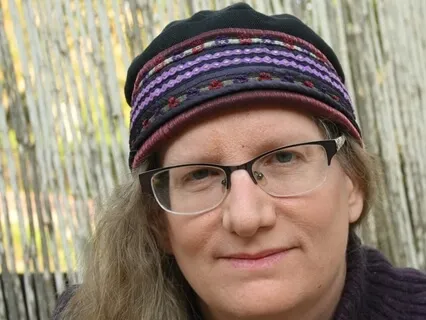
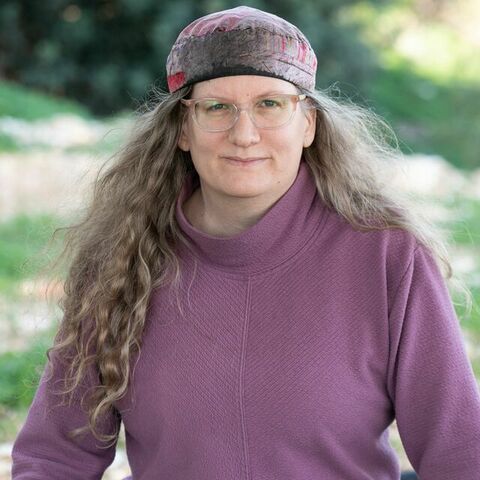
I am Rabbi Hasi Oriel Steinbauer,
The founding director of the Mustar,
The Institute for Holiness,
Makhon de Kedusha,
Kehilat Musar,
The Musar community.
We are based in the Galil in Israel and of course offer this freewill offering.
All of Elul in the 10 days between Rosh Hashanah and Yom Kippur is a freewill offering to the community so that we can all practice and learn and grow together.
Your donations are of course welcome to support either daily or at the end of the 40 days and today I'm happy to say that we are being sponsored by an anonymous donor that is caring and praying for Refluesh Lema,
The full health and healing of Simcha Ben Lea,
Who is based in California.
So we keep Simcha in mind and we'll dedicate our practice to his full health and healing.
We are delighted to have you.
We are in day 23 of Elul,
Which means we're getting closer and closer to Rosh Hashanah.
I don't know about you,
But I start to feel it.
I'm like,
Oh my gosh,
I only have seven more days.
Am I ready?
So that'll be part of my practice,
Of course.
So we're delighted to have you.
We're in this what's called 40 days Elul practice of Musar mindfulness,
Where we engage in a short teaching and sitting meditation together where I guide you.
And we will begin with our kavanah,
Our intention that we begin with every day.
So give me one second as I share screen with you.
Thank you for your patience.
Let's see if I can pull it up.
I don't see it.
Let's see.
Okay.
It comes up if you see the kavanah,
The screen.
Thank you.
So this time I'm actually showing all the kavanah because why we are in the fourth week of our Elul practice where we're really concentrating on at least one trying relationship,
Someone that we have either caused suffering to in the past year,
Or they have caused suffering to us where there's just tension.
This is not of course an overly traumatic relationship,
But one where we just,
It doesn't come with ease and where we really want to work on letting go of forgiveness as we move towards Rosh Hashanah and the new year.
So it'll make sense as we move through these kavanah,
Why we're including all of them.
So we say to ourselves before this act of self care,
Which is what we're doing together in this half hour,
This is something I'm doing to strengthen my own soul in order to be of benefit to others in the future.
And then I'm beginning to see this practice as an act that I'm also doing for others,
Because I want to be that type of person we all do,
Where we take responsibility,
We apologize when we need to,
We let go and we forgive.
This is in alignment with our values.
So we want to say this is something I'm doing to strengthen my relationship to others,
Even those I have a difficult relationship with,
So I can be a better conduit of God's good to others when they need me.
And finally,
We're also doing this practice to strengthen our relationship with the divine.
So we say this is something I'm doing to strengthen my relationship with the Creator,
So that I can be a better conduit of God's good to others when they need me.
And with that,
We're going to hold that in our practice.
And I will move to our short teaching today.
So as some of you may know and be aware of,
It is common Jewish practice,
All of Elul,
To recite one of the Tehillim,
One of the Psalms.
And it's Psalm 27,
Kafzein.
And if you're not used to it,
We're only going to go through the first four verses,
Besukim.
It's very much written by someone who feels they have enemies and external ones.
It almost feels like in senses,
You'll see from the words.
But I want us to reframe it to see that sometimes we're our own worst enemy.
And we notice this in our mindful practice,
My mindfulness practice,
When we sit and we realize that we're being judgmental,
And we're having,
You know,
Just not kind thoughts about ourselves or even the whole process.
And that that can really be part of what's going on here.
And I'm going to really interpret it as such.
So we'll work through it together.
And just to check,
Does everyone see Psalm 27?
Great.
You can find this on safaria.
Org.
It's a wonderful website of many,
Many,
If not most rabbinic texts in our tradition over the over 2000 plus years.
And so you have here,
Leidaviv,
And it says,
Adonai ori ve'ishimimii ira.
Adonai me'oz chaya mimimi efchad.
So it says the Lord is my light and my help.
Now let's get rid of this.
Whom shall I fear?
The Lord is my stronghold of my life.
Whom shall I dread?
So it opens us up,
Reminding us that when we are fully present,
In the present moment,
Able to be awakened to the good,
Not reacting,
But responding with wise discernment,
That is when we also are in most alignment and can feel the divine presence.
And that's when we really feel that however we experience the divine,
Otherwise we have a very personal relationship with what I call Hashem,
Then we really feel the light and the help.
Okay.
So it's this fear that we sometimes have,
Especially when we're dealing with these difficult relationships and taking responsibility,
It's really internal.
It's an internal struggle,
One that we sometimes cling to.
And that's what we're working on letting go this week together.
It goes on to say,
When evil men assail me to devorrow my flesh,
It is they,
My foes and my enemies who will stumble and fall.
So now not many of us have external enemies like this.
There are people who do have this in many places in the world and we pray,
Right?
And we try to help in all ways.
But for those of us who are not at war or not having that type of trauma or violence in our daily lives with external enemies of the sort,
This is really an internal thing.
So it goes on to say,
Should an army besiege me,
My heart would have no fear.
Should war beset me,
Still I would be confident.
So I see this when we're in the throes of either boredom or discomfort or even denial and pushing away in our practice that we recognize it and we accept it.
We allow it.
This is this kind of war if we want to use that language from the Psalm.
And this is one of the most beautiful lines,
Number four here.
It says,
One thing I ask of the Lord,
Only that do I seek to live in the house of the Lord all the days of my life,
To gaze upon the beauty of the Lord,
To frequent God's temple.
And really,
If we are in that practice and in the present moment,
Practicing mindfulness off of the cushion,
Off wherever we practice,
This is where we are.
We are really at that oneness,
Oneness with God,
Oneness with others.
And it is a beauty.
It is part of that.
So we'll just begin with those today to hold and realize that even thousands and thousands of years ago,
There were people struggling,
Whether it was with an external enemy or internal and really crying out to the Lord.
This is part of our tradition.
We recite this daily,
All of Elul.
And so to make it our own,
We find a way to read it into our lives.
So with that,
We are going to begin our sitting practice.
And as you recall,
We want to really bring up and feel that person that we do have that difficult relationship with.
And for some of us,
It may even be more than one.
Okay,
But try to limit it to focus on one,
Especially during the sitting practice.
So if you are able,
If you don't have any chronic pain or back issues,
Come to a seated position where you're comfortable,
But alert and upright,
Full of dignity.
If you need to stand,
Please do so.
Make sure you have a chair next to you.
You're also welcome to lie down,
Eyes open,
Awake.
For those of you who are sitting,
If you feel safe,
Please close your eyes or lower your gaze.
Allow yourself to come to stillness and at ease by bringing your attention to your breath.
Allow yourself to take three deep cleansing breaths.
And then allow your breath to settle the same amount of time as in breath,
As out breath.
Your breath and even my voice as I'm guiding are your anchor.
And what does that mean to someone new to meditation?
It just means that your mind will wander.
It may go to thoughts,
It may go to sensations in the body.
And the practice of mindfulness meditation is to bring it back to the breath,
Bring your attention back to my voice to be here in the present moment.
And just to observe,
To even maybe bring a smile to your face to realize this is being done with gentle curiosity.
Almost a joy if you can tap into it as we recognize and allow and begin to investigate.
Today,
We will really practice our meditation around this difficulty with this person.
Something that occurred in the past year and maybe even more than once where we've encountered this situation,
This circumstance that brings up emotional reactivity in us,
Whether it be fear or anger,
Hurt,
Even lesser in patience,
Irritation,
Frustration,
Some experience that you would like to practice,
Mindfulness,
Musa mindfulness of compassion,
The meida arachamin.
It could be a situation in the relationship itself or an actual conflict that you've had,
A place of misunderstanding,
One that was not done with wise acceptance and discernment.
Allow yourself to recall whatever comes up for you now.
It could even be something that goes on in your own behavior.
From time to time,
You will hear me go silent.
And this is allow you to take some time in silence to practice.
I will come back.
You might begin to sense a common denominator being that a difficulty that keeps coming up with this person.
In some way,
There is some aversion,
Either self aversion or to them,
Or maybe it is a clinging.
Take some moments now to sense that difficulty and where you might have been triggered.
Allow yourself to enter enough into the situation that you can sense what is going on,
What is activating you,
What is bothering you.
You could even gently say to yourself,
Even maybe put your hand on your heart if you want,
This is where I'm stuck.
This is where my heart is closed.
Whatever is predominant in your experience,
Whether it is emotions or feelings,
We practice mindfulness of emotions,
Realizing sense experiences,
Sense consciousness and mental states.
As we know,
Some common mental states can be just memory,
Stability,
Feeling tone of this is pleasant,
This is unpleasant.
When we are in that unhealthy state,
There really is at the root of greed or hatred or delusion.
It gives rise to all sorts of negative mind states of emotions from worry,
Rigidity,
Agitation,
Self-centeredness,
Aversion,
Close-mindedness.
The opposite of course is when we are rooted in healthy states of wisdom,
Love and generosity,
Graciousness,
Modesty and joy,
Insights,
Flexibility,
Adaptability,
Kindness among others.
So as you picture this relationship,
The one that you are now going to be doing your practice of tushuva,
Of returning,
Of repentance,
To let go during this season of Elul,
Really see for yourself the sense consciousness with your eyes.
Notice what's going on with your hearing,
Even your taste and your smell,
Any sensations in the body,
Just gently noting is this pleasant or neutral or unpleasant?
In our mind consciousness of thinking and feeling,
Allow all the sense experiences and ask yourself,
Can I be with this?
Can I stay with the practice?
You are having difficulty that is coming up,
Always bring yourself back to your anchor of your breath.
Can we allow this experience be as it is?
Just making space for whatever is arising right now in our practice instead of trying to fix it or get away from it.
Simply acknowledge and give some space for what is here.
Begin to notice and investigate if you sense any opening,
Any difference in how you are in relationship with whatever occurred between you and this other person.
Are you able to see them and whatever occurred with different eyes,
With what we call the ayantova,
Giving this person the benefit of doubt,
Seeing them with a good eye,
Being able to see that they are created in the image of God no matter how difficult.
That's where you are right now.
If there is anything that feels like it is calling for your love,
Attention,
Go ahead and allow yourself to deepen that loving attention.
For some kindness right in this moment.
What happens is you just make some gesture of kindness or understanding or compassion inwardly.
Just notice the presence that is here.
The difference between being stuck inside the experience and the openness and presence and care that truly experiences and expresses the truth of who you are and this other person.
You are a soul created in the image of the divine.
We will move into silent meditation for the next few minutes,
Lengthening the amount of time each day to allow for deeper practice.
You will hear my bells when we are to join one another again.
I am going on mute now.
Methods of Thank you.
.
.
.
.
.
.
.
.
.
.
.
.
.
.
.