Welcome.
We will begin in just a moment.
Allow yourself to arrive.
Settle.
We will begin very shortly.
Welcome.
We are soon set to begin.
Delighted to have you.
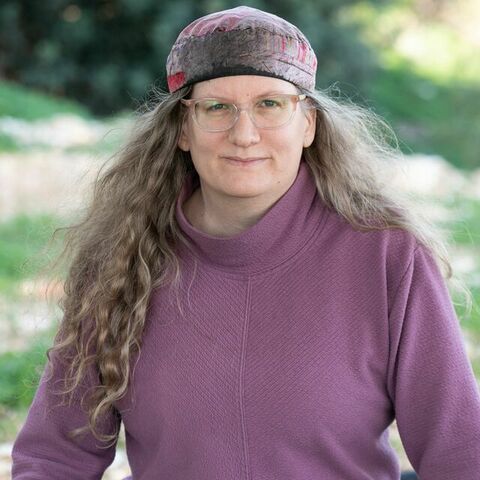
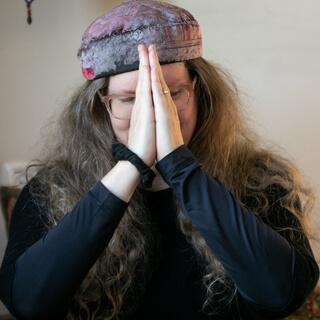
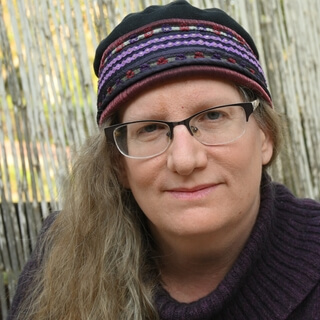
I am Rabbi Hasio Oyeh Steinbauer,
The founding director of the Institute for Holiness Kehillat Musar in Israel and the Galil.
And we offer this freewill offering for the whole 40 days Elul practice from the beginning of the new moon of Elul,
The Hebrew Jewish month,
Until Yom Kippur,
Sitting daily in a short teaching and guided meditation and definitely in silence,
Which is part of our ancestors tradition in order to be able to bring ourselves to calmness,
Which we need before we can move to mindfulness and work on that introspection,
That self-examination that we need to be doing before we enter the new year.
Rosh Hashanah and Yom Kippur,
The day of atonement.
Delighted to have you.
Thank you for joining us.
We are live streaming on Facebook and LinkedIn and YouTube and of course here on Zoom.
And as always,
Before we begin,
We move with our intention,
Our kavana,
Which I will share briefly with you on the screen.
Okay.
Am I on the trusted support team?
Let me know if you see it.
Thank you.
Okay.
Let's go off a little bit.
So as Jewish practice among many spiritual disciplines to have an intention,
A kavana,
We say in Hebrew,
Before we either move forward with our day or in particular before we do a certain mitzvah,
Commandments or a deed so that we have the intentionality behind it.
And it's shown in actually most mindfulness research,
But that when you have that kavana,
That intention behind your behavior,
Where your words,
Thoughts,
And deeds,
You do it much more mindfully.
And it really does affect all parties involved.
So today we say together,
Before doing this act of self-care,
Which we are doing right now,
Dedicating this half hour practice,
This is something I'm doing to strengthen my own soul in order to be of benefit to others in the future.
And then we say before doing acts for others,
Because we also are doing this on behalf of others,
This is something I'm doing to strengthen my relationship to others so I can be a better conduit of God's good to others when they need me.
And overall,
During this days of Elul,
We're doing these acts to strengthen our relationship with God,
With Hashem,
With the Divine.
This is something I'm doing to strengthen my relationship with Creator,
So I can be a better conduit of God's good to others when they need me.
And with that,
We will hold on to our kavanaut,
Our intentions for today's practice.
I'm going to share briefly just two verses,
Two more verses from our Psalm 27,
Which is tradition to recite daily in the Jewish tradition during the month of Elul.
If I can just find the text for us.
Give me one second.
Thank you for your patience.
Okay,
Here we go.
And what we want to have in mind while we're looking at this is,
As you recall,
We're in the fourth week of this practice together where we are focusing on a relationship which is challenging for us,
Meaning we're triggered by the person and they may be triggered by us.
There's some tension,
Maybe longing or clinging or wishing things were different.
And so we look at this relationship and we look at where we might have caused suffering or where they caused us suffering this past year,
So that we can work on forgiveness and letting go and seeking forgiveness when we need to.
So you have before you the Pesuchim number eight and nine,
The verses eight and nine.
And I don't like the English translation as much here,
So I'll give you my interpretation.
So it says,
L'cha Amar Libi,
So to you says my heart.
B'kashu fanai,
Seek out you all,
Meaning like seek out my face.
Ve et pannecha Adonai avakish,
And your face,
God Adonai,
I will seek,
I seek.
And so you sense in this verse,
As much as there's this longing,
Obviously for unification with the God to be at equanimity,
To be at peace.
And we notice this in our practice too,
We notice a clinging sometimes,
A wanting.
And when we can get stuck in that,
It's not healthy for us or our relationship.
So even here,
You feel that as much as it's a beautiful line,
You feel that.
And so you then have this part here,
Where it says,
Do not hide your face from me.
Do not thrust aside your servant in anger.
You have ever been my help.
Do not forsake me.
Do not abandon me.
Oh God,
My deliverer,
My savior,
Essentially,
So,
So here,
We want to think and really respect with compassion,
The longing and even somewhat of the suffering of not getting what fully what this person needs or wants in the relationship here with the divine.
And think about that reflection,
Even in our own personal relationships,
If not also with the divine.
And in particular,
In this troubled relationship,
The one that would find it most challenging,
Not traumatic per se,
But just trying that we feel these emotions inside and can and we can get caught up in them and identifying with them.
And in particular today,
We're going to be looking at mindfulness of thoughts,
And where we are holding on to certain thoughts about this person,
About whatever has happened with us between them,
That has caused the suffering or the need for forgiveness.
And we're going to really also be able to feel that we can turn to the divine and ask for help to come to that place of being able to recognize that these are just thoughts and emotions,
That we don't have to jump on board with them and identify with them.
And that frees us to be able to live moment to moment,
Instead of holding on to a story that keeps us locked in a certain idea of the relationship.
So we really do feel this,
This,
This,
You know,
In this prayer,
Forsake me,
Don't abandon me,
Even to ourselves,
We say,
We're not going to forsake ourselves our practice,
We're not going to abandon that we can over time,
Sit and practice and it does get better.
So may may Hashem help us and be we take refuge in this community and our practice together that we do grow and change over time.
So with that,
We're going to move into our sitting meditation.
If you are able to please do so,
You may stand and have a chair near you,
We may lie down,
But just keep your eyes open so that you don't fall asleep.
And if you're seated,
Bring yourself to a comfortable upright position,
You were created in the image of God and you sit with dignity.
That is how the practice is.
Your spine is erect,
Head gently sitting upon your spine,
Not stiff,
As one of my teachers like to say,
Not West Point stiff,
Jon Kabat-Zinn loves to say that,
But upright and you can rest your hands and your lap or on your heart.
Then begin with three deep cleansing breaths,
Allowing whatever tension is in the body or the mind to be at ease with each letting go of the breath.
Allowing yourself to gently arrive fully in the present moment in my voice and in your breath,
Coming to stillness.
There are five classic hindrances,
Challenges that come up for us when we're holding on to certain thoughts about whatever has happened in our past between this person or even about them and our relationship.
And the first is a sense of grasping,
Wanting,
Clinging,
Wanting more something different than what is present right now.
The other classic hindrance is aversion,
A fear of hate or anger,
A sense of pushing away,
Maybe not wanting to deal with this person,
How they hurt you,
Or even today to focus your practice with intention on how you hurt them.
Often we can come up with a defensiveness stories we begin to tell ourselves of either that they deserved it,
You didn't mean it,
Whatever we tell ourselves.
The third hindrance,
The third challenge is restlessness and a sense of just being agitated,
Which we may notice in our practice from time to time.
This is often a form of restlessness too,
When we're having difficult emotions or thoughts,
Noting whatever comes up for you.
The fourth hindrance is a kind of sloth,
A sinking state of the mind and body,
Almost a sleepiness,
Which also is a form of not dealing,
Kind of checking out.
Notice if you ever nod off during today's practice.
If you do gently,
When you do notice it,
Bring yourself back to your breath,
To my voice.
And the fifth hindrance is a sense of doubt.
It's the mind state that says to you,
It's of no use,
No use asking for forgiveness.
This will never work.
I can't.
Maybe there's an easier way.
Take a moment to hear if there are any such thoughts for you.
Just as it's possible to direct our attention to the breath or body sensations or sounds,
Today we are mindful with a loving awareness to observe our thoughts.
Note that these hindrances that I mentioned are a universal body-mind energy experienced by all humans.
When we get caught in them,
They make it difficult for us to see with clarity and wisdom.
It's important to recognize,
Especially in Musa practice,
That these are not a problem.
They're actually curriculum sent by God for us to work on and grow.
The energy has only become hindrances,
Obstacles,
When we have a conditioned habit of identifying with them or ignoring or resisting them,
Trying to control them.
It is in our practice today and every day when really working with mindfulness of thoughts to meet them with care.
These same energies can be used in our practice to gain increased spiritual awakening over time.
If you encounter any of these challenging energy energies,
It is useful in the practice to name them silently to yourself,
Such as grasping,
Grasping,
Or fear,
Fear.
Ask yourself,
What are you believing right now?
When you imagine yourself asking for forgiveness from this person for any suffering you caused the past year,
What comes up for you?
What story do you tell yourself to avoid doing it if you do do this?
Allow your attention to be with whatever is arising.
Feel sensations in your body,
Either getting lost in the experience or pushing it away.
Notice in our practice that whatever thought arises for you,
It also dissipates.
It is possible,
Especially over time if you're new to the practice of mindfulness meditation,
To step outside any flow of stream of thoughts and witness them with a mindful loving awareness.
Notice that it may be after three breaths or six breaths or even 10,
A thought will arise and carry the attention away.
The practice is when we do wake up and notice it,
We bring ourselves back to our breath,
Back to my voice in the present moment.
As soon as you notice a thought,
Name it gently to yourself whatever predominant quality it has.
You can use simple notes like planning,
Remembering,
Judging,
Worrying,
Imagining,
Fearful thought,
Happy thoughts,
Interesting thoughts,
Painful thoughts,
Whatever it is for you.
Attempt to meet it with a beginner's mind with curiosity,
Asking yourself,
Can I be with this?
What is going on with me right now in this moment?
Simply naming and acknowledging a thought is supportive in the practice of witnessing quality of mindful loving awareness.
You will notice that once you give a thought gentle attention,
You will notice that it dissolves.
They really are ephemeral thoughts,
Empty.
They only have substance when we invest in them.
Simply return again.
One of my teachers,
Joseph Goldstein,
Always reminds us to simply begin again if your thought carries you off,
Pulls your attention away from your breath.
Stepping out of whatever story that you have held this past year about this person,
About the relationship,
About whatever has occurred between you two,
That you can now see common patterns without being caught in them.
You can begin to rest in the field of this loving awareness,
Being kind to yourself and eventually turning that kindness to the other rather than being repeatedly carried away by a thought.
Here are some ways during our next five minutes of silence together for you to investigate.
Notice how it feels every moment you shift from being absorbed or lost in a thought to simply name it without being swept into it.
Notice what types of thoughts really have an effect on your body.
What thoughts trigger you most and what is their effect on your body?
Where is it embodied?
Where do you feel the sensations and how are they like?
Notice finally how some thoughts bring strong emotions and how some emotions bring up certain thoughts attempt to witness this interplay between thought and emotion.
We will move to silence together and I will ring the bells when we are to join again.
I will go on mute now.
You you you you you you you allow yourself to bring your attention back to the present moment if you went off with a thought or sensation in the body or the emotions you are ready,
You can gently slowly open your eyes.
If you're here with us now live,
You can join in the virtual room together.
Thank you.
Thank you for your practice.
Thank you for joining this community.
Thank you to God for bringing us together in this moment,
This Shifian moment.
We're grateful.
As always,
We move into our practice of asking for really for help,
Letting go of our anger and forgiveness before bed and for the bedtime Shama.
You will see it before you thumbs up.
Thank you.
Whether we recite,
I hereby forgive anyone who has angered or provoked me or sinned against me,
Physically or financially,
By failing to give me due respect,
Or in any other rather relating to me,
Involuntarily or willingly,
Inadvertently or deliberately,
Whether in word or deed.
Let no one incur punishment because of me.
May I forgive.
May they forgive me.
May we not go and not remain stuck or clinging.
Whatever arises,
Whatever is there.
So delightful to have you in the practice.
Thank you.
Thank you for your generous donations and sponsorships are very grateful.
And if anything comes up for you during your practice that you need support during this time of the 40 days a little practice and most are mindfulness please reach out.
There's no need to suffer by yourself,
You can reach out by phone or even email.
We will meet again at this time tomorrow this vato sham God willing,
Which I will say 1.
30pm Eastern Standard Time it's 30pm here in a time,
Closer to the high field and you wish you're lying.
And may you continue with your strength and your courage in this time available as we're getting closer and closer we are on day 24 available.
It's just unbelievable.
Time flies.
So yes,
Thank you again.
Wherever you are,
Whether it's night for you or the daytime or morning.
Have a wonderful day a wonderful night,
And I'll see you tomorrow.
Thank you.