Shalom,
Shalom,
Shalom.
Baruchim Habaim.
Welcome to Awakening Torah,
Musa,
Mindfulness.
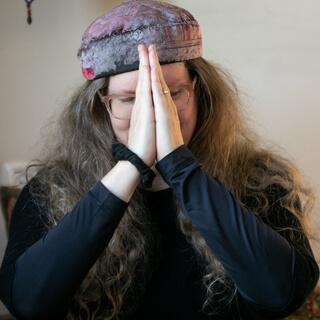
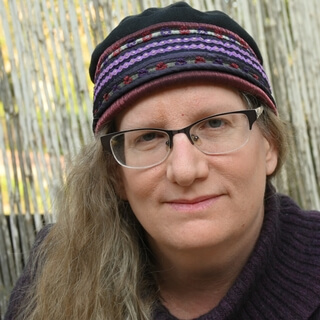
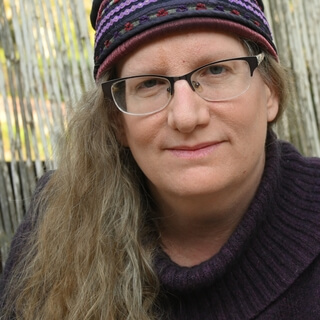
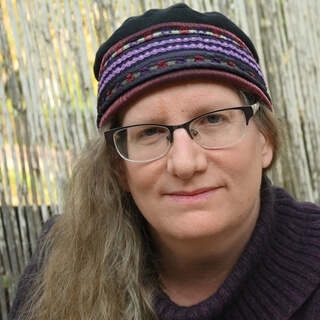
I am Rabbi Chassio Uriel Steinbauer,
The founder and director of the Institute for Holiness.
I'm delighted that you are either joining us live-streaming on our YouTube channel,
Please subscribe,
Follow me on Zoom,
Or any other medium of social media,
Including joining us on Insight Timer.
Today is Thursday,
September 21st,
Here in Israel,
Over on the east coast and west coast of the United States,
Where many of you join us,
It is still Wednesday,
September 20th.
And that was the fifth of Tishrei,
The fifth day.
Today,
Here now,
We are in the sixth day of Tishrei,
The Hebrew month of Tishrei.
And normally we sponsor our public offering of Awakening Torah,
Musa,
Mindfulness together on Sundays at 7.
30 p.
M.
Israeli time.
We're shifting that time around for the new year.
Right now,
Everything is in flux because we have so many of the chaging,
The festivals,
The observances happening on Sundays.
So today I join you,
It was something special,
For the past Rosh Hashanah,
Happy and sweet new year to you all.
And as a way of moving towards,
We are in the 10 days of tefillah,
Prayer,
Tzedakah,
Giving charity and righteousness,
And teshuva,
Returning to Hashem,
To God,
Repentance.
So we're going to jump in with some important material to help us during this time.
And then we'll meet again,
The Zerat Hashem,
On Saturday,
This coming Saturday,
The 8th of Tishrei.
We will meet after Shabbat here in Israel.
And we will cover the Torah portion of Ha'azinu.
So take your time to study that Torah portion,
Learn some of the classic commentators around it.
And we'll come back and learn together and practice,
Of course.
So before we jump in,
What do we always do together?
We cover our intentions,
Our kavanot for today's session.
So for those of you with vision and who are watching by video,
You will see me share screen with you.
And for those of you listening by audio on our podcast,
You will hear me discuss our three intentions for today's session,
Which are the same kavanot,
The same three that we do every week,
To really build this intention,
This practice,
This path,
This way of being over time.
So we say this is an act of radical self-care that we are doing right now by spending this like 45 minutes together.
We say this is something I'm doing to strengthen my own soul in order to be of benefit to others in the future.
We also say that we're doing this act on behalf of others.
We're doing this to strengthen our relationship to others so that we can be a better conduit of God's good to others when they need us.
And the final intention for today's session and this practice is that we're doing this to strengthen our relationship with the divine.
This is something we're doing to strengthen that relationship with the creator so we can be a better conduit of God's good to others when they need us.
So may we merit that today.
Very much so.
And even may we merit that we can be a better conduit of bringing God's good to ourselves also.
So many of us are suffering from a lack of self-compassion,
From self-honor,
From a way of befriending ourselves to be the pillar that we need to be.
So it's very important that we also bring God's good to ourselves.
So this is part of it by being here together to practice.
Okay.
Let's jump in with what I want to share with you today,
Which I think is quite important.
And we will engage in our mindfulness meditation together afterwards.
So let me pull this up.
Okay.
The first thing I want to share.
So three things really hit me this holiday season.
Preparing for Rosh Hashanah and then now during the 10 days.
The first was from a colleague,
And who I consider a teacher,
Tali Adler.
She currently teaches for Yeshivat Hadar and located in New York in the United States.
And she shared a story where she had her own three-year-old who at the time when the baby was newly born and the infant was in the Niku.
And she had this pattern where she would stay up all night watching videos of gorillas cuddling their babies.
I don't know if you have that habit of doing that too.
I love and I do this too,
But not for the reasons that she did.
She did because watching these videos over and over again.
And,
You know,
It was a really a time of some kind of anguish for her,
A bit of suffering.
There were tears among the other thing,
But she watched it because she felt like they're also mothers.
And that she understood that that mother as a gorilla would love and miss her baby gorilla as much as she's missing her baby in the Niku.
And what she really learned through the process is that there is a love that is prior to and independent of any of the things we usually think is important.
And that we might even call it a primordial love,
Right?
It's that love that we often experience for the first time in the attachment between mother and baby.
But not everyone has a mother as the first parent or caretaker.
So it could be father and baby or whoever ends up caring for and raising a baby.
But we tend to think of it that experiencing love like this,
That it's linked to every sentient being,
To every creature,
Right?
And so she goes on to tie that to the anguish and the cry of the shofar blast that Jews do during the whole Hebrew month of Elul.
And then on Rosh Hashanah,
If it's not on Shabbat,
And then on Yom Kippur.
And that anguish cry of the shofar reminded her of even the anguish cry,
For instance,
Of Caesarea's mother,
Right?
He was a cruel,
Bloodthirsty general,
Right?
And she,
In a story,
Realizes that he's not coming home and she's waiting by the window side.
And even though she is just as callous and cruel in the story,
And the way how she talks about his victims,
There's something really,
What Tali's doing here,
She's realizing that this mother,
Despite her own cruelty,
And her son is having that primordial love,
This really intense love and compassion and connection.
And she's realizing that maybe she needed to watch those videos of the nights of the baby,
When her baby was in Niku,
In order to remind herself,
Right,
That so much of the language of Yom Kippur,
Of Rosh Hashanah,
Of even in Judaism,
Is about good and evil,
Sin and merit,
Right?
And that what she learned through this process is that we love our children,
No matter what,
No matter if there's good,
Evil,
Sin or merit.
And that all children,
Even those that we consider evil adults later on,
Have this primordial love and this connection,
Right?
Where there's someone in their lives,
There's someone who loves them.
Of course,
There are examples out there in real life where there are children who aren't loved and who are abandoned.
But generally,
Like as a cloud,
We can understand this concept.
So she goes on to say that for her,
This past Rosh Hashanah,
She began to see the entire world.
You know,
What Rosh Hashanah asks for us is to see the world through judgment,
Right?
Through this concept of deen,
Right?
And,
You know,
Even as we call God as king and God as judge,
Right?
But what she's realizing in that blast and the cry of the shofar,
This wordless cry,
That it's bringing us all back to a love that we knew before any of this judgment,
Before any of this kingship,
Before any of this good and bad,
Evil and purity,
Impurity,
Sin and merit.
And for her,
It really went through the center of the heart.
And when I read this,
I very much identified with this and wanted to bring it with you,
Because I thought it was such beautiful Torah,
Something that is so needed for us today,
To hear that maybe the shofar blast,
The crying,
Right?
This wordless cry,
That it's to remind us all that before we are good,
Before we are bad or wicked,
We are loved.
We are actually loved.
We are loved as a verb.
And that it's not just human mothers,
And it's not just guerrilla mothers,
Right?
No matter what we do in this life,
No matter what the reward and the punishment we may deserve,
And that will come as karma,
Will come as consequence for our behavior,
Which is part of this whole season,
Right?
That even on the day of judgment,
And even by God,
By God's self,
There is love and is that primordial love.
So I want to start with this teaching,
One,
Because I think it is so profound,
But that there's also something very important to keep in mind,
That a lot of people can get caught up in fear,
Judgment,
Looking at only what they've done wrong during the past year.
And there's something larger going on.
I mean,
We even say it's the birthday of the year.
Well,
Who births the birthday of,
Sorry,
It's the birthday of the planets,
Of Earth.
Well,
We say that God birthed the Earth,
Right?
God as mother,
God as love.
And we need to harken back to that and remember.
And that ties very deeply to another teaching that I will share with you.
That is just so beautiful that a colleague,
I'm going to try to share screen with you,
Shared,
His name is Rav Benjamin Hotzman.
He was inspired by how Rav Kook,
That he created a positive vidui,
Positive confession that we say on Rosh Hashanah and even on Yom Kippur.
And that it's not meant to replace the vidui of the Ashamnus of where we do look at where we're guilty or responsible,
Where there has been sin.
But I thought that this was very,
Very important in alignment with Tali's teaching about love.
So let's take a look at this together.
I'm going to go ahead and share screen.
So this is called Havidu HaMashlim,
Right?
And this goes back to these kind of gift freewill offerings,
Those of joy that were given as animal offerings to God.
And then later in the temple.
And this is similar to that in a sense.
This is what we're offering,
Which he's calling Ahavnu We Have Loved.
Okay,
So it says Ahavnu We Have Loved.
Bachinu We Have Cried.
Gamalnu We Have Given Back.
Dibarnu Eofri.
We Have Spoken Beautifully.
Great Things.
Hemannu We Have Believed.
V'chish Tadalnu.
And We Have Tried To Give Our Best Effort.
Zacharnu We Have Remembered.
Hebaknu We Have Embraced.
We Have Hugged.
Tamnu Sefer.
We Have Chanted Your Book.
We've done the Tamin.
Yetzarnu We Have Created.
Chabma Channu We Have Yearned.
Lachamnu Avor Chassidic.
We Have Fought For Justice.
Mitsinu Etchato.
And We Have Exhausted All The Good That We Could Do.
These are so beautiful.
Just have to pause sometimes and take these in.
Mitsinu We Have Tried.
Sarnu L'Rot.
We Have Turned Aside To See.
Asinu Asher Sivitanu.
We Have Done As You Have Commanded Us.
Terashnu We Have Expounded Torah.
As We Are Doing Right Now.
As We Do Every Week Together.
Tzedaknu Lifamim.
We Have Been Righteous Sometimes.
Teranu Beshimcha.
We Have Called Out In Your Name.
Ratzinu We Have Been Steadfast In Our Will.
Tzemachnu We Have Been Happy.
We Have Been Joyful.
We Have Rejoiced.
We Have Supported One Another.
So just taking that in.
If you are someone who has done L'Yashamus,
You know that we say this great communal prayer of admitting how as a community,
As a group,
As a people,
We have sinned.
Even if we haven't done a particular sin that's listed,
We are taking in that collective guilt together in order to purify all of us,
In order to gain the forgiveness of everyone.
And so obviously there's great value to repair in our practice of our soul and the confession of sins.
There's also great value in the confession of mitzvot and gimilut chasidim,
Good positive deeds,
In order to gladden the heart and strengthen the path of life and the way of God.
And this is beautiful.
This is coming from Rav Kook,
An ayah commentary that he has on the tractate of Maasir Shani,
Chapter 7,
Mishnah 10.
So I wanted to share this with you.
You can find this online.
You can also write us and we'd be happy to send it to you.
I'm going to stop sharing just for a bit.
So this is very important as a practice,
As part of the path.
Because as I said,
We can get so one-sided,
Thinking that we only need to find what's wrong with us and what we did wrong.
And it's very important where we actually also in our Cheshbon Hanafesh,
In our counting of the soul,
That we also inquire and investigate where we are quite balanced,
Where we've done well,
And to be a witness to ourselves to that.
So the last thing I'll share with you in this season that I hope strengthens you on this path and this practice,
Is something deeply profound.
In the story that we read on Rosh Hashanah,
The binding of Yitzhak,
Of Isaac,
By his father Abraham.
Most of us today are shocked by the moral and emotional questions that the story raises.
And a colleague and dear friend of mine,
Raphael Magarik,
Raises another shocking element of the story,
Is that when Abraham has been told to send away Ishmael,
It's because God has told him that it's through Yitzhak that the offspring shall be named after Abraham.
Meaning the covenant will continue through Yitzhak.
And so when Abraham is told to sacrifice Yitzhak,
Obviously there's lots of commentary and understanding that it was a test,
That God never intended for this to happen or follow through,
That maybe even Abraham knew it all along,
Or maybe that was his test of faith.
But what he's trying to point out here is,
When Abraham is told to sacrifice Yitzhak,
He's actually being told to kill the covenant.
So even if God were to perform another miracle,
Produce another child,
It wouldn't help,
Right?
It's been stipulated that the name goes through Yitzhak.
And so this point originally comes from the source,
I believe is Hebrews,
Who first point this out,
And then Luther,
I think,
Goes on with it.
It's a reading of the text.
What's really behind this reading,
Which is really important to look at the Akedah here,
And I love the dialogue that goes on here with Raphael's feed,
Is that he wants us to really consider and examine that sometimes God commands you to destroy the covenant.
Now,
What does that mean?
What does that mean for us as individuals on a daily basis on this path?
He goes on to say,
One of the trials of life is that we have numerous preconceived ideas,
Right?
We have the story running,
The movie in our head about what is the deal,
What is how things are supposed to be,
What kind of future and world we are building.
What is the framework of meaning of how we are to live?
And these are all good and necessary.
These are part of life,
But occasionally,
And this is in some ways what we are to do in this path from the beginning of Rosh Chodesh,
The month of Elul,
All the way through Yom Kippur,
Is this sense that the voice of God comes along in our practice,
That we are to be awake to and says,
No,
The vision of the future you've been clinging to so deeply,
So dearly,
Is actually not what you need.
You must give it up in service of an alternative that is not yet known to you.
That's very profound.
It's actually earth shattering to be open to that,
That voice,
To be able to pivot,
To resource,
To practice that for some of us,
These days in between Rosh Hashanah and Yom Kippur and then approaching through Yom Kippur,
That we will have that earth shattering moment,
Right,
Where we will realize that God's voice is coming to say that we can't continue with the same narrative that's going on in our head about how things are supposed to be.
This can be very shattering.
It can be very disconcerting to one's hopes and expectations.
In a way,
It's a practice in re-narrating who we are in our path.
And so he goes on to say,
Raphael,
To teach us to retell the story of rupture as one of continuity.
It doesn't have to be either or.
He goes on to say,
The belief in an absolute,
And here he capitalizes absolute,
Which is my understanding of God,
Always conditions and has the potential to unmake the very channels with which we approach the absolute.
So obviously it's best to be cautious about divine voices or things that are so radical of a practice.
Because for some of us,
It can lead to frightening and terrible places.
So as part of our path and practice,
We have a cautious skepticism,
Which is so part of Jewish practice,
Right?
But I want to invite you to,
Obviously we've gone through Rosh Hashanah,
The new year.
I want to invite you in your reading and re-reading of Genesis 22,
That of the Akedah,
That essentially is that as painfully and as uncomfortable is that narrative and what's been passed down to us to know that story with which to struggle,
That we be open to a constant renewal or renewal of the story,
Of the narrative in our head with our relationship with God,
Right?
In a sense,
It's fairly disruptive to what we thought was most important,
What we needed to know.
And so may we all have the courage together,
Taking refuge in community here at the Institute for Holiness,
That we open ourselves to change.
Because change is the only thing in some ways that we can count on besides God.
That is one of the inarguables.
Everything is impermanent.
And so it is upon us to learn anew and obviously determining what is indispensable that we cannot be without,
But also being open to new goals,
New frameworks,
To even things that we once held as so dear,
That everything can and will change,
Including us and including our path and including Judaism.
So we are a part of this ongoing story.
It's actually quite profound.
And I want to close with one more comment,
Which is essentially,
Oh yes,
The text that I had referred to earlier is when Luther cited Hebrews 11,
Verse 19.
I'm looking at my notes to see what else I want to share with you.
I'm going to let us sit with that for right now.
Just take a moment to sit with it as I bruise my notes before we move into our meditation practice together.
Okay.
The final thing in my notes that I want to share with you is that here at the Institute and one of the Mussar Valdin that I teach,
We have been working on cultivating the middah of emunah,
Of faith.
And faith in Mussar practice is not something you either have or you don't,
Not like an object or even a noun.
It is a verb.
It is dynamic.
It is something that we cultivate.
It is something that we're challenged by that shifts and changes.
The bringing of the Akedah and this being given to us by God and by our ancestors is a very important narrative that we are to wrestle with is a story about faith and the faith of total nonsensical,
Right?
The God commanding Abraham to sacrifice the very son that the covenant was going to be sustained through.
It makes no sense,
Right?
So that we may question,
How can I have faith during that time?
And it's not something that you have.
Look at that even in that language,
Even in English.
Instead,
We say to ourselves,
How do I cultivate?
How do I continue to practice and be on this path of cultivating faith in the midst of the absurd,
In the midst of,
I can't even believe this makes no sense.
And we're facing that daily in our lives with climate change,
With so much political upheaval,
Refugees,
Everyone having to shift and move,
The global warming.
So much is going to be more and more nonsensical,
Right?
And it's a faith in the sense of trusting that even though in this story that's been passed down to us,
Even though God's command makes no sense,
Whatever,
It's trusting that God knows what God's doing because God is God.
And this fits in with Raphael's discussion of the Absolute with a capital A,
That Avraham's faith in God is such that he puts God above even God's own promises.
And in a sense,
Maybe even it's a sense of,
You know,
You've heard it in our practices and on the path,
A sense of trusting that whatever is going to turn out will be as the way it's meant to be,
That we will live and get through it.
It's very profound and in some ways only makes sense by going through the ring of fire.
It's not something that we can even sit and have a discussion with intellectually.
This is meant to be embodied and experienced.
So this unfathomable story,
Morally unfathomable,
Right?
I invite us to move into Yom Kippur,
Into this potential of this moment,
Even today as you're sitting with me,
Of what can you surrender to?
What have you been clinging to or having aversion with denial and pushing away?
What have you been trying to control and manipulate?
What can you let go of in order to be that vessel that will be willing and able and have the resources and skills to be able to pivot for the unfathomable?
So I'm going to hold that for us.
These are the teachings I wanted to bring with you that really spoke to me this season.
I consider very,
Very important.
And we're going to move into our meditation practice now.
Please assume one of the four mindfulness meditation postures,
Classically standing in a strong mountain pose,
Walking back and forth,
Nowhere in particular.
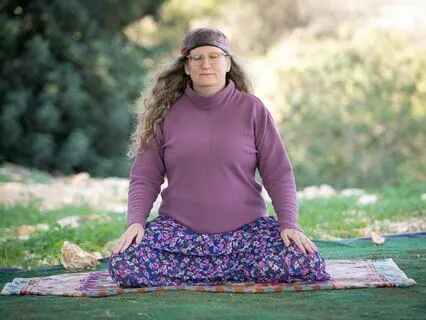
Seated like I am right now on the edge of the seat so that I remain awake and alert,
Upright.
Feet planted on the ground and you're also welcome to lie down,
I would keep your eyes open if you have vision to remain awake.
And if you're seated like me,
Allow yourself to yawn and take a deep breath,
Maybe even stretch.
Let's invite our full presence here.
Let's invite ourselves to come to quiet and stillness.
Inhalation and exhalation.
Letting the shoulders drop even more.
Inhalation and exhalation.
And one more time really inviting that you be fully here.
Inhalation.
Exhalation.
Like you are your own best friend right now really inviting your best friend to,
To be here in this radical self care that you can be that vessel of bringing God's good to others.
Really taking this moment to care for yourself and to be here with my voice as your anchor.
The full body breathing.
No need to control the breath just allow it to fall on its own natural rhythm.
So good to breathe.
The things that we take for granted.
Allow yourself to wake up to this right here and right now.
Every day in our practice awaken to the good and give thanks.
Settling in even more so to your posture that's supportive of your practice during this time.
Really bringing a beginner's mind,
Someone who is curious.
Someone who is able to be a vessel to receive that's open that's not constricted right that's expansive.
Really that beginners mind to the posture and the felt sense of the body in this unique moment.
Letting the sensations of the body be met with fresh awareness and sensitivity.
So we can support real sensitivity responsiveness of heart.
The very grounding that we need to be able to be fully present in this unbelievable world to be able to pivot to be able to respond with wisdom,
With an appropriate response with wholesomeness.
With a response that is in alignment with our values,
Taking time to linger with sensations of contact,
Either with the floor with whatever you're sitting on patiently trusting the heaviness of the limbs,
Patiently trusting the body's weight and the feeling the body's uprightness and alignment a sense of verticality.
And then it's this moment.
Notice how this orientation is grounding and supports a spacious sensitivity to the sensations that we call body.
We can move through what are known as the Brahma Viharas.
How they really shape our experience and our path.
Inviting the full presence of meta of tested of loving kindness of friendliness of goodwill.
We are encouraged to face the world.
Meet the world was balanced,
Loving kindness.
Let the awareness be tuned to the sense of loving kindness and friendliness.
Say to yourself,
The word friendly,
Loving,
Kind,
A sense of warmth,
A sense of basic goodwill.
Arising experience moments the sensations of the body sounds,
Thoughts,
Images and moods,
Practicing meeting all with just a basic friendly goodwill.
This orientation towards our experience in life allows all to rise and pass as everything does.
And when you experience difficulty in the body or the mind,
Or even outside of this practice.
Invite your practice of these words friendly in the midst of this kind in the midst of this feeling what friendliness and kindness.
Being able to recognize where it's located.
What is it felt sense being fully present with whatever is.
As we move into Simcha,
What is known as appreciative joy,
Gentle joy,
Really this dimension of the heart's potential.
Showing yourself a sense of appreciation of enoughness of simplicity of he stopped quietly saying to yourself appreciating this moment.
The sense of openness of receptivity fully hosting and receiving whatever is enjoyable right here and right now.
The movements of the breath.
The okayness wellness that is present in all the different places of your body.
Wellness.
Enoughness.
The sense of this opportunity.
The joy to be practicing this right here and right now that you are alive,
And you've been given by God,
The privilege to experience this to practice and cultivate it to bring God's good to others.
As we move into Rahman compassion,
The sense of caring of tenderness towards any sense of suffering or difficulty that is present at this time.
Maybe you sense in the body qualities of discomfort or fatigue.
Maybe you sense in the heart or in the body.
Those feeling tones those emotions associated with difficulty and inclining your orientation towards self compassion,
So that you may have compassion for others you quietly whisper to yourself.
I care about this difficulty.
I care about the suffering.
May I need the suffering with kindness,
With compassion,
With tenderness,
Bringing this practice into your life even off of this practice off of the cushion we say a sense of tender compassionate care.
May you sense the presence of difficulty or suffering in the moment.
In this life.
As we move into mental content fish of equanimity,
Renewing a sense of connection and appreciation of the sense of the ground of whatever is supporting your seat bones,
Your body with your dignified posture,
Really feeling that you are one of God's pillars,
Allowing equanimity is really a posture,
A gesture of allowing to be able to be present with whatever is right here right now.
In this moment,
Encouraging quietly to yourself saying changing,
Changing,
Allowing,
Allowing the deep internalization and reflection that this too shall pass quietly whispering to yourself may I accept the arising and passing of this moment.
You may notice today in our practice or even during these 10 days before young people are that our hearts is feeling open and available.
We may feel a sense of capacity for meeting the difficulties we encounter the pain within or without,
Or we may notice ourselves feeling overwhelmed depleted activated contracted.
Then we know we can lean into the practice the grounding.
We can lean into the sense of resourcing.
We can lean into taking refuge in this practice together and in our community,
Knowing what nourishes and soothes us and eases our heart with appreciation and joy.
It brings us more into balance,
More into a sense of having grounds under our feet.
Really sensing how we cultivate and practice on this path,
These four midot,
These Brahma Viharas as a way of responding appropriately to the conditions that we encounter.
As we move through life.
Sensing that these midot are not separate.
They really are mutually dependent interdependent dimensions of our hearts of our interior world of the potential.
As we move towards the end of this meditation today grounding friendliness,
Loving kindness,
Appreciative joy of Simcha,
Rahim and compassion and care.
We will bring these embodied intentions into the next moments of our day and practice,
Allowing yourself this last minute of silence.
As you have your eyes closed,
You may gently and slowly open them,
Bowing to God,
Bowing,
Taking refuge in community,
Bowing for taking refuge in the Torah and in the Dharma.
May you be healed from Musar and mindfulness and the sacred path toward holiness.
What a gift,
What a blessing to be here together today.
I really do wish all of you what we say is Gamar Chatima Tova.
May you be sealed,
A good sealing,
Good in the sense of what we call the book of life.
For me really means may you be fully present for the life that is yours right here right now in the present moment.
And again,
And again,
Right here and right now because there is no other moment.
The past is gone.
Future is not here yet.
There's no other place to be.
Thank you for spending this time with me.
It is a blessing and an honor and a great privilege.
I look forward to connecting Motzei Shabbat after Shabbat here in Israel to learn and practice on HaAzinu.
Take care.
Thank you.