Shalom,
Shalom,
Shalom,
Baruchim habaim.
Welcome,
Peace to you.
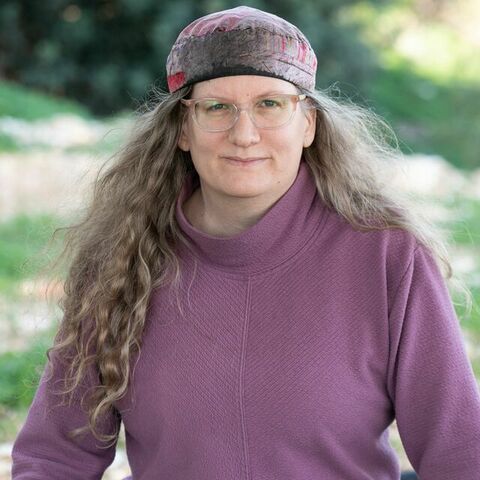
I am Rabbi Chassia Uriel Steinbauer,
Founder and director of the Institute for Holiness,
Hamachon Leh Kedusha,
Kehillat Musar Mindfulness.
Really we're offering this synergy of the wisdom of the dharma and musar to learn from our ancestors and from God,
From our ancient texts of the Torah,
Of what is known as the Hebrew Bible in academia,
In universities,
For us to study the weekly Torah portion together and then to engage in mindfulness meditation and to practice and apply this to what we call our musar work,
The day-to-day,
Full catastrophe living that we attempt to practice around and learn from.
So I'm delighted that you've joined us today on Sunday,
July 16th,
2023,
At 7.
30pm here in Israel.
And it's on the 27th of Tammuz,
The Hebrew month of Tammuz.
We're heading towards the new moon of Av,
Coming up on Yom Revi'i on Wednesday.
So we cover the Torah portions.
I say it plural because there were two yesterday.
On the Sabbath,
On Shabbat,
We covered Matot and Mas'eh.
And that was on,
Obviously,
The 26th of the month of Tammuz on the 15th of July,
2023.
So hopefully you've had a chance to read it and look at it,
At them,
Learn from our parashanim,
From our commentators,
What anyone in your communities might have offered insight into this parasha for us to jump in and delve in together.
And so as always,
Before we begin,
I share with us our kavanot,
Our intentions for today's practice that we share every week.
If you are watching by video live streaming,
Either on one of the social media platforms or the website,
Then you will see this visually as video.
For those of you listening by podcasts or audio,
Then you will hear me share these and read them as I do every week.
So before doing acts of caring for the self,
So we see this 45 minutes together as an act of radical self-care.
And talk about full catastrophe living,
You'll have to excuse me.
I have to put a towel down because I think my air conditioning here in the office is beginning to drip.
So excuse me for one minute while I care for that.
Okay.
That's never happened before.
So here you go.
Whenever Hashem,
God hands us,
We are going to choose to respond with as much mindfulness and the space between the match and the fuse and without reactivity.
That which is fulsome,
That is an appropriate response.
So thank you for your patience.
So we see this as an act of radical self-care.
We say this is something I'm doing to strengthen my own soul in order to be of benefit to others in the future.
And then we see before doing acts for others,
We say,
Because we see this is also doing this,
It's that threefold,
Right?
The triangle.
We're caring for the self,
We're able to care for others.
And also we're doing this to strengthen our relationship with the divine.
So here we're doing this for others.
We say this is something I'm doing to strengthen my relationship to others.
So I can be a better conduit of God's good to others when they need me.
And finally,
We do this to strengthen our relationship to God.
This is something we're doing to strengthen our relationship with the creator so we can be a better conduit of God's good to others when they need us.
May we merit fulfilling these Kavanot,
These intentions today.
And so we'll jump in with our summary of this parasha as usual.
Parashiot,
Actually,
Coming from Koflav Tamuz of Tafshin Peigimel,
5783.
So as I said,
It's a double parasha this week,
And we combine matot and maseh.
And it begins to cover what are called nedarim,
Vowels,
Right?
These are obligations that we accept upon ourselves.
And they are taken very seriously.
Sometimes they can be canceled,
But it's not to be taken lightly.
There's lots of laws and discussion around that.
Then also in the parasha this week,
B'nai Israel,
Our ancestors,
The children of Israel,
Fight against the people known as Midian,
Right?
The Midianites.
And if you recall what happened last week's parasha in Pinchas and even before in Chukat Balak,
Another double parasha,
We had real issues with Midian because they sent some of their women,
Including their princess,
Cosby,
To seduce the Israelite men and bring them to worship Baalpe,
Or an idol,
A god of theirs that they worship.
So b'nai Israel fight against Midian as commanded by God in this Torah portion.
They win,
They capture the spoils of war and divide it all up.
And a portion was given to the mishkan.
It's not only given to the mishkan.
Half of it was given to the people who didn't fight in the war.
There are all sorts of laws that we gathered out of this of learning,
Bringing home spoils of war from somebody else's objects.
How are you going to ritualize and make them your objects?
How are you going to purify them?
How are you going to bring an element of holiness from them,
From such great acts of harm and suffering and violence?
How is there a shift,
A tikkun?
And so that's discussed in the Torah portion.
Then the tribes of Reuven and Gad,
And actually half Menashe,
But that's discussed a little bit later.
They decide that they want to stay outside of the land that God has promised to our ancestors,
Outside of what will be known as Eretz Israel,
Just to the east of the Yarden,
The Jordan River,
Where there's lots of room for what do they want it for?
Cattle.
They make a deal with Moshe after negotiation back and forth,
First privately with him.
That's going to matter.
We'll discuss that,
To then publicly with those that need to hear.
First they'll join the children of Israel,
Bnei Israel,
In fighting for Eretz Israel as they're supposed to enter and colonize the land.
And then they can return to live outside of it.
That is what is agreed upon.
The Torah then lists 42 stops that Bnei Israel made while wandering in the wilderness.
So you can kind of see this as a little bit heading towards summary.
It's preparing us for entering the next of the five books of Moshe,
The five books of the Torah,
Which is the Devarim,
Which is Deuteronomy in English,
Which will be a big,
I don't know if you want to call a summary as it is someone's recapturing or retelling their storytelling of what they think happened in the past,
Which is of course,
Moshe,
Moshe Rabbeinu.
And now that they are at the edge of Eretz Israel,
They are commanded to conquer the land and settle there.
And they learn how to divide the land among their families and establish cities for the Levites.
And these include six areh miklat,
Which are cities of refuge.
It actually ends up being more than six in the end.
I believe maybe it's nine when three more are established on the other side of the Yarden to accommodate God,
Reuven,
And Haf Menashe.
And these cities are created as cities of refuge for a person who commits what we know today as second degree manslaughter.
It's someone who accidentally kills someone.
They have to flee,
Move to one of these cities.
So that is a general summary of these two parashiot.
I'm going to hone in on today on what goes on with Reuven and God,
Because I feel that that's very important to our practice,
Our practice of mindfulness,
Of wise speech,
Of greed,
A little bit of delusion,
Responsibility,
Acharayut,
Which is going to come up,
Loyalty,
Expectations of two parties,
And how these things can come into conflict,
Which they often do in tribes and in a people.
And how are we going to be able to communicate when we have different needs and wants,
Still respect each other,
Still remain in communication,
And come to some compromise that is not ideal for necessarily for either party,
But there's always a compromise or something,
A little bit of loss on both ends.
And we're going to delve into that.
So why I think this is so important,
If you're following what is happening,
Following along what's happening in our ancestral land of Medina,
Of Israel,
Of the country,
The state of Israel,
Having deep,
Deep conflict among Jew to Jew,
Obviously in addition to the already established conflict of the occupation and trying to live in shared society,
Particularly with Arab Muslims who may or may not identify as Palestinians,
Where that's always a sense of tension and conflict.
It's now between Jew and Jew,
And usually between secular and religious Jew.
And we're seeing that sometimes both sides are not able to come to the table and communicate.
And I feel like this discussion that happens between God and Reuven and Moshe Rabbeinu,
Our ancestor,
Our beloved teacher and leader,
This can prove as a model of how we can continue to communicate.
So let's jump in.
All right.
I want to see what we can practice and learn from here.
Okay.
So I have to always take my glasses off to read.
I'm getting older,
You know.
So we're going to spend some time on this,
As I said,
Because if you look very closely and do a very close reading of this whole section on the speech between Moshe and the Gadites and the Reubenites,
As they are known in English,
For those of you following,
We're looking in chapter 32 of the Book of Numbers.
So that's Lamed Bet in the Parsha of Matot.
And interestingly enough,
What it opens with is they own cattle.
Okay.
They own cattle in great numbers.
Right.
This is the key thing that our ancestors want us to know and remember about God and Reuven.
They own cattle.
And they,
Their lingers,
They approach Moshe.
And you have to be very careful if you look at their language.
They say very clearly here that they say here.
Let me pull up the Pasuk.
Okay.
So they notice that the land east of the Yarden is a region suitable for cattle.
So we're kind of given some insight into their thinking.
And then they come to Moshe and they say that the land that the Lord has conquered for the community,
Right,
Of Israel is cattle country.
Okay.
I'm at Pasuk number four,
Verse number four in chapter 32.
And your servants have cattle.
Two times.
It would be a favor to us if this land were given to your servants as a holding and do not move us across the Yarden,
Across the Jordan.
Okay.
So first we just need to be aware of as a practice us on this path towards holiness,
What we spend time thinking about the storytelling,
The narrative is what we become is who we are.
And so God and Ruven have decided that cattle is the center of their life,
A possession,
That which is a monetary value,
That is who they are,
How they're going to live out their lives,
How they're going to arrange their wellbeing and lives is centered around this.
You can already begin to imagine,
Right,
The spiritual chasm that our wonderful teacher and the humble level with in her.
It's not really hers as her students created this book,
But they created the studies in Bami Bar and numbers.
And she's very keen to point out here,
This spiritual chasm between what Moshe will expect of God and Ruven and what God and Ruven are actually spending time and energy doing narrative and storytelling and embodying.
Okay.
So Moshe,
Of course,
Expects responsibility to and dependence upon God for which land they will occupy and who they are to serve.
They are to spend their time and energy,
According to Moshe,
Focusing on their children and their care for their families,
Not on cattle.
And in particular also is their responsibility to their people that they have this huge project that they've been building for 40 years,
Right?
From generation to generation that they are to enter this land together and share it as 12 tribes supporting one another,
Building and living in this land.
And so you can imagine on the spiritual chasm that's now come before us where the outlook and values are so different and in conflict.
Here we have God and Ruven almost having a quid pro quo.
They'll come to a solution,
Which I'll address in a minute,
That they feel like if they address conquering the land with their other tribes,
Then they've fulfilled their responsibility and they don't owe anymore.
Okay.
So I want to say just to summarize for those of you who don't know the rest of this story is this conversation kind of goes on.
Moshe immediately doesn't really give the benefit of the doubt at the beginning.
And in some ways,
Why should he?
Because when they come and say cattle,
Cattle,
Right?
But he immediately assumes that they are too fearful to enter that they're going to cause and want to cause conflict that to not enter the land and conquer it.
And so he compares them to the spies.
If you may recall,
When some of the spies,
Majority of the spies were too fearful to trust in God,
That they would be able to enter the land and conquer it.
They compared themselves to grasshoppers.
So this is what he Moshe based on his past experience is assuming is happening now.
He's thinking,
What are you kidding me?
Like your brethren are going to go to war and you're going to stay here.
So that's the first assumption he makes.
Obviously,
He shouldn't be making assumptions.
He should probably have asked for clarification first.
Why are they coming with cattle and cattle?
But he immediately goes at them,
Right?
He's like,
You're going to turn the minds and the hearts and the bravery and the courage of the other Israelites from crossing the land because you in your selfishness and your fear,
He's assuming fears here that you are not taking responsibility and crossing over.
And you could imagine that there's going to be planting.
If you could think about what is my behavior planting?
What am I cultivating at any moment?
And so God and Ruvane here,
What are they cultivating and planting their own concern for their own possessions,
Regardless of what the other 10 tribes are doing.
And that's planting the seeds for future jealousy.
But you can imagine that if,
OK,
They think the land so great on the other side of the yard and maybe the land is so great on the other side.
I'm not going to answer.
I'm going to stay here with my cattle or my future cattle,
Even if I don't have as much cattle as God and Ruvane.
You could imagine this is planting the seeds for conflict and future conflict.
And he goes on to Moshe goes on to kind of yell at them and to say to them,
You I can't even believe that you're going down this path.
You know what happened with God last time.
None of the men from age 20 and up who came out of Egypt saw are going to enter the land,
Saw the land because of this behavior,
Because of this lack of trust and responsibility.
And really puts it in terms of loyalty,
Loyalty to God,
Which you don't see any of this coming up in the language of God and Ruvane,
The tribes.
The Lord was incensed at Israel,
Made them go on that journey,
Essentially,
As a punishment,
Almost like a prison sentence for 40 years in the wilderness so that they would pass away in the wilderness.
And now he really feels like these men are sinful,
The leaders of God and Ruvane and they've they still are going to incur God's wrath.
They're going to bring this out.
This is what they're actually cultivating and bringing.
And and he's like,
He just can't even believe that this is what's going on.
Right.
So he suspects them like the scouts that they're really afraid of the Canaanites.
And if the 10 individuals could demoralize the people back with the scouts,
All the more so with two entire tribes.
So if they're not cultivating the seeds of demoralizing the rest of our ancestors,
Right,
They're definitely planted the seeds for jealousy or some type of strife.
And so what ends up happening here,
Right,
Is they respond.
And they really but we have to keep in mind that the seeds,
What God and Ruvane and what their concern,
The concern for cattle is a really selfish disregard for the unity of Israel,
Of our arm.
And this will be a real issue.
And we talk about in our practice of the Dharma and Musa that there are in arguables that there are cause and effect,
What we call karma,
That if you behave a certain way,
You can expect there's going to be consequences for your behavior,
Both maybe pleasant,
Unpleasant,
Neutral of the feeling tones if you want to word it that way.
And in here,
What our answers are,
Ancestors always remember and bring about God and Ruvane and this half tribe of Menashe is,
You know,
They were more concerned with being wealthy and maintaining their possessions,
You know,
Possessing large amount of cattle.
They had a love for that.
That's what they served.
And what was the consequence of that?
Well,
One of the consequences is they were obviously distant from the rest of their nine and a half tribes.
Couldn't be as supported as easily.
They're less unity.
But more than that,
They were actually they separated themselves from the rest of our brethren because of their possessions.
And they are actually the first tribes to go into exile later on,
Because when the foreign armies come,
Who are they going to hit first?
Those outside of the land of Israel,
Those not supported and surrounded by nine and a half other tribes.
And so this is an important thing to consider in the sense that I could even hear voices now saying,
Well,
You can't say exactly that that was the cause of it.
But there was cause there was definitely cause and effect of their behavior.
And was a coincidence.
We can't say,
Right,
We have to trust in God.
But I think it's very clear to us that when we decide to value money and possessions over people and over unity and over responsibility to the cloud,
To the whole nation,
That we can be pretty sure there's going to be consequences for that behavior.
And it's not going to necessarily be one that is pleasant and joyful.
It's going to affect everyone and probably have an effect of harm and suffering.
So I want to bring that.
Then here's their response.
Right.
So this is what the communication continues.
You might think in that moment that God and Reuven just shut down.
Oh,
God,
We're being accused of there's two ways they could have responded.
They could have shut down,
Kind of did the freeze or flight and basically just said,
Oh,
My God,
You know,
Moshe's accusing us of selling out and being too fearful.
And,
You know,
Either we are that or we're not.
And so we're just going to go over to the other land,
Despite the cattle,
Despite wanting this land.
Okay.
That's one one potential response.
The other potential response and more in alignment with what we've experienced this past 40 years is that they could have said.
In all kind,
Uncertain,
You know,
Certain terms to Moshe too bad.
We're going to fight.
We're meaning we're going to stay here with our cattle and the nine and a half and you can go.
And they don't do that.
They actually pivot.
They respond wisely to their own selfish needs and the communication continues.
They actually after hearing this kind of yelling berate at them,
Right?
He he upgrades them.
And they the language actually here is really kind of amazing because it speaks to our practice.
Right.
That they I want to pull up the exact language here.
Where's Pesach 16?
I want to look at it for you.
She's just saying.
Right.
Right.
You got shoe.
But you're my rule.
Okay.
We've talked about this verb before,
But you got shoe,
Right?
Which is very,
Very important.
They then step up.
They reveal their true intentions,
Right?
Which is still about cattle.
But the value got shoe.
They mostly basically having interrupted their petition that they were beginning to speak,
Which could have had a lot of reactivity.
Obviously,
Mostly made assumptions about them.
They now besiege in a very personal,
Intimate way.
And that is the meaning of that verb by you got shoe when it occurs in the middle of the conversation,
For instance,
In Genesis back in chapter 44 18.
And what's happening here is they then respond to Moshe's charge that they intend to remain here,
And they'll build what's needed for their sheep and cattle and then for their families and their children.
And besides building all that,
They will hasten as shock troops,
Right?
Of those that we know of.
They will be picked out.
They'll be the vanguard in this conquering of the land,
And they will cross over once they've established their homes and they'll leave their children and families behind and fortified towns,
And they won't return home until every one of the Israelites,
Every one of their brethren is in possession of their portion.
Okay?
And then they go on to confirm.
We won't have a share with them in the territory beyond the Ardenne,
Beyond the Jordan.
That they have received their share on the other side,
Which is actually quite chutzpah deck in a negative way in the sense,
Especially if you think that it's God and God alone who will determine where we're to reside and care for until for the land.
Yeah,
This is this is a bit much,
But Moshe then responses.
If you do this,
There's a real pivot of dance here.
If you do,
As you say,
You go to battle of shock troops,
Every single one of you that is obviously able until everyone that the land's been dispossessed from the enemies,
Everything subdued,
And then you will be returned.
You'll be cleared.
He's very careful with his language.
You'll be clear before the Lord and Israel.
He's not saying what you're choosing is the right path.
This is a great thing you're doing.
Thank you.
No,
He's saying you'll be cleared of sin.
I'm not saying that you're doing the right thing,
But you'll be cleared of sin.
And,
OK,
He then goes on to threaten them again in the sense,
If you don't do what you're doing,
The sin is going to overtake you.
And then he reminds them because they first say,
We're going to build.
We're going to build for our flock and our sheep and our cattle.
And then they say their children and he then corrects them and says,
Go build your town for your children and for your sheepfolds and flocks.
And make sure you do what you promised or you're going to face the wrath.
You're going to face consequences you're going to face.
So they go ahead and they say,
We will do as you command,
Meaning Moshe.
Right.
And they they really this whole time,
Which is shocking about this and Moshe keeps trying to correct is he keeps trying to emphasize responsibility to an independence upon God for this path and for conquering the land and not their own will,
Not their own desire,
Not their own ability.
OK,
And this shouldn't surprise us,
Really,
Because I think we can say generally across the board and the 40 year experience,
I don't think there was a healthy cultivation of the decline of trust in God,
Of that building that relationship.
I think both on all sides,
I don't think God did well with our children of Israel,
Our ancestors.
I don't think the children of Israel practice.
While we've addressed all these in previous teachings,
You're welcome to go back to those talks.
I think this is the fruit of in some ways the best that you can maybe expect and see.
This is reconciliation.
This is an idealization.
This is a people who have come not to rely upon or completely trust God.
And in some ways,
They're saying we're going to take matters into our own hands.
And this is the spiritual chasm where Moshe is just a little bit besides himself,
Because here are two and a half tribes who are going to separate themselves because of their possessions.
And for them,
It's a quick pro quo.
They're going to fulfill their obligation and then they get to get to want it.
So what's so key about this for our own?
OK,
So first I want to say just in general and society,
How we can learn from this,
As I pointed out earlier,
That this is a model.
OK,
Then I'll just conclude saying God and Reuven after agreeing to these terms and Moshe doing that back and forth kind of Middle Eastern negotiation dance that happens among how we negotiate in the ancient in both ancient Near East and actually today.
They go ahead and repeat publicly before Elazar,
Yeshua,
The clan heads,
Presumably under oath,
Although we don't know.
But this would make sense that all the talk about Nidarim,
About oaths,
About vows are here and the stipulation of the consequences for non-fulfillment.
Right.
OK,
So that all happens.
And this really turns out to be a model for,
I would say,
In some ways,
The future communication between tribes and the children of Israel,
Our nation,
Our am.
Because there's going to be a spiritual chasm before between different tribes,
Between how we see things and what we think the purpose and vitality of the land is and our relationship to God and how we're going to be serving God.
We've witnessed this throughout the.
Four thousand two thousand five hundred years in exile and then returning of how we live as Jews together and then even among non-Jews in the land.
And so what what's significant is despite the spiritual chasm,
Despite the lack of the ideal and living in the real.
Living in what I would almost call a bit of it space,
Like not the ideal,
Right?
The Lachat Hila is the ideal.
What Moshe wants them to be responsible,
Have spiritual unity,
All 12 go over on the other side of the Yarden and they're just not going to live that way.
Can't you lead a horse to water?
You can't make a drink.
And this is where we find ourselves today in Israel.
We find that we're not having God and move in,
Actually coming and speaking to Moshe and working that out despite not seeing eye to eye and then coming forth and fulfilling obligation of sorts.
And it's really hurting and affecting our society.
And I see this across the board in other countries,
Too.
We have forgotten that we live in a bitty of a world.
We live in a not ideal world.
We have to learn to be able to sit and communicate and accept that we're going to have completely different needs and wants and to come to some reconciliation,
Come to some way that we can have shared society as the term is used.
So that's part of our practice.
May we practice it now as we enter our mindfulness meditation.
Today,
We're going to be working on grounding,
Our grounding meditation.
It's so important.
So I want you to assume a posture that is both alert and upright,
One that you feel dignified,
Created in the image and likeness of the divine.
Close your eyes if you have vision,
You feel safe.
Otherwise,
Just lower your gaze to kind of exclude any visual stimulation.
Bring your attention to the body.
Feel your feet if you're sitting like me on a chair,
Really ground your feet feel it's a it is a traditional practice to ground the feet to feel held,
Being part of the earth,
And really feeling the heaviness of the sit bones,
Really an embodied presence of where we are right here and right now in this present moment.
And allow yourself to do full body breathing inhalation.
And exhalation.
Inhalation.
Exhalation.
And again,
Finally,
Bringing full ease with kindness with curiosity,
Inhalation.
And exhalation.
And again,
Really arriving,
Shaping our experience,
Building this internal world.
One sit at a time together really inviting our sitting posture feet planted on the floor,
A sense of sitting comfortably,
Becoming sensitive to the landscape of sensations of the body sitting and breathing.
Really giving attention to the sensations of grounding.
Sensations of the body in contact for whatever you're sitting on.
This Dharma practice of touching the earth really means that we're lingering with the sensations of contact with the floor and seat.
It is there as a support foundation of our practice,
Whether we're engaged in meditation or engaged in meditation or in the midst of daily life.
So we can imagine Moshe standing there really grounding his feet.
And even though he's having reactivity at the beginning and actually makes assumptions and even acts out based on those assumptions,
He's able to pivot and hear them.
He's able to pause and take a deep breath.
And that was not the Moshe even previously.
Previously,
He would have lost himself in reactivity.
And soon there would have been no God and Wu then.
And so same with us when we're in the midst of daily life,
Really tapping into the grounding sensation of the feet.
We're having to be sitting down really in the sit bones,
Allowing that grounding,
That really touching the earth to realize that we can pause,
Take a deep breath,
Create that space between the match and the fuse to know that we can choose to respond and not react.
We can respond wisely.
We can even ask gentle,
Loving,
Kind questions of what is needed right now.
What's an appropriate response?
And think about it.
Moshe did it.
They came back.
They actually,
They got you,
Right?
They approached,
They got close.
They actually were not afraid.
They had courage.
And they approached and they said quietly,
We'll do all these things.
We'll act as shock troops.
We'll take care.
We will be a part of the arm just on the other side.
And he's able to pause and take a deep breath,
Moshe,
And have an appropriate response.
He's able to compromise and accept that they're not going to see things the way he does eye to eye,
But there's still a way to be in this shared society.
So once we receive these sensations of contact,
We begin to appreciate them.
We notice how did this sense of grounding the spine can arise.
So much is emphasized in the practice of this upright posture.
Knowing the potential of this upright posture.
It's really embodying a sense of wakefulness and connection to the present moment experience.
Moshe must have been there.
The first time he must have been really grounded and been able to be like,
Oh,
I'm awake to this present moment.
They just came back at me with something I can work with.
Grounded,
Upright,
Restful and wakeful.
Both of these can support spacious sensitivity to the sensations that are arising,
Holding the body and spacious and friendly awareness.
Allow now the climate of your mind to be one of kindness.
Kindness that breathes however things are.
Reflecting on whatever arises.
Breathing with the experience of the moment.
It's almost as if we could take on a practice of when we inhale,
We're inhaling that moment of Moshe where he came to the present moment where he was able to pivot.
Setting an intention now for the rest of your day,
For the rest of this week as practice.
Can there be a sense of engaging together as an act of kindness?
Can this practice right here and right now together be a commitment to embodying kindness and appreciation,
Or a chameem,
Compassion and minuchat ha-nefesh,
Equanimity in the midst of it all,
In this full catastrophe living.
And whatever the circumstances and conditions of your life of this time.
Seeking to bring more of these medod,
Well balanced,
What are known as the Brahma Viharas in the Dharma practice more fully into the world.
Dedicating our practice as a gift of kindness to ourselves to all living beings to whom we share our lives,
And even those we don't share our lives with yet.
Allowing this next minute of silence in our practice before I ring the bells.
Allowing yourself a deep inner bow to your practice,
To taking refuge in the community of the Institute for Holiness.
Taking refuge in the teachings of Nusar and Dharma.
And thanking our teachers and our ancestors and God most of all for this beauty for this practice,
For us being on this path that's so kindly cultivated and handed to us.
It's like a lotus flower as a gift among the mud.
Thank you for today.
We say chazak,
Chazak,
Nit hazeik at the end of this book of Bami Bar,
Of numbers,
As we have finished all the parashiot in it.
What a glorious day on this 39th talk and teaching together today.
I believe it's 39.
What a gift.
What a gift.
We enter with God's help,
B'srat Hashem,
To Devarim,
To Deuteronomy.
So please read Devarim.
Engage with it,
Struggle with it,
Reach out to it,
Ask what it's trying to teach you,
What gift is there,
And we'll come together.
God willing,
Next Sunday.
Wishing you all a chodesh tov,
Entering the Hebrew month of Av on Wednesday.
You're welcome to join us,
Particularly if you join the Institute for Holiness for our member meditation sitting together and then the one we offer to the public in general.
Be on the lookout for that through social media or through our newsletter.
Please subscribe at our website to the newsletter to gain this information at least once a month and subscribe to our YouTube channel to learn more.
Thank you again.
God bless.
Take care.