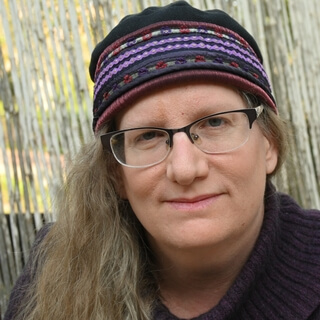
Founder and Director of the Institute for Holiness,
HaMachon LeKedusha,
Kehilat Musar Mindfulness.
Today is Sunday,
August 13th,
2023.
It is the 26th of the Hebrew month of Av,
And we are going to be looking at the Torah portion from yesterday on the Jewish Sabbath,
On Shabbat of the 25th of the Hebrew month of Av.
We are looking at the Torah portion of Re'eh.
In the book of Devarim,
Deuteronomy.
It's quite an honor to be here together to to engage in this and before we begin in the practice as usual.
We always approach our covenant,
Our intentions for today's practice,
So that we can merit offering this to the world to bring less harm and suffering and to bring God's good to others.
So I'm going to go ahead and share a screen with you.
And if you have vision,
And let me turn on one more light for you.
If we have the vision,
And we're able to watch by video and see this recording right now,
Or on live stream,
If you're joining us,
Anything of the mediums there.
You will see that these intentions in front of you.
So I'm going to read them in case you're listening by audio.
And so that you can hear or if you do not have sight.
So we see this act of coming together for awakening Torah,
Musa mindfulness,
Every Sunday,
But rather sham God willing,
At 730pm.
It's really time as an act of radical self care.
Because when we care for ourselves,
When we practice self-honor,
We are able to care for others and serve God very much in a wise way,
In an appropriate manner,
That which is wholehearted.
So we see this act of coming together for these 45 minutes of practice as an act of radical self-care.
We say this is something I'm doing to strengthen my own soul in order to be of benefit to to others in the future.
We also see this time of practice together and learning as on behalf of others.
We say,
This is something I'm doing to strengthen my relationship to others so I can be a better conduit of God's good to others when they need me.
And finally,
We are doing this practice to strengthen our relationship with the divine.
We say this is something I'm doing to strengthen my relationship with God,
With Hashem,
With the Creator,
So I can be a better conduit of God's good to others when they need me.
This is our orientation.
This is our foundation for our practice.
So that's something that we on this path that we are on towards holiness,
That we internalize these values to embody them to live them to emulate them.
So I'm going to go ahead and stop sharing right now.
And then we'll move forward with what we're going to cover today.
As I said,
We are in the Hebrew year of Tafshin Pei Gimel,
5783,
Covering the Torah portion Re'eh,
Which was yesterday on August 12th.
If you had a chance to listen to it being lain,
Read out loud in a minyan or in a synagogue,
And hopefully you've had a chance to look at the text and maybe even see what some other Parsha meme commentators have said.
I'm going to give a brief summary as I usually do and then we're going to hone in on something specific for what I want to pay attention to this week,
Which is important to our Musa mindfulness practice.
So what happens in this week's Torah portion?
B'nai Yisrael,
Our ancestors,
Are instructed to go to two mountains once they finally enter the land of Eretz Yisrael,
The land of Canaan.
They go to Har Gerizim and Har Eval to announce brachot and kakalot,
Blessings and curses from God.
And.
And then there's also a theme of our parasha that God will choose eventually a central place of worship,
And that will end up being what we known as the Beit HaMikdash in Rosh HaLayim.
Korbanot,
Sacrifices,
Must be offered only there eventually,
And the korbanot of Pesach,
Shavuot,
Sukkot,
And Shabbat must be brought there,
Coming together to do that would be joyous.
And farmers,
We learned in this Torah portion,
Which is basically a central form of many people's lives of our ancestors.
Farmers would bring and eat a tenth of all their produce there,
Known as maaser.
This is key because it's 10% of what they would bring to eat,
But they also give 10% to the Leviim.
They also give 10% to the poor.
So they're essentially giving up to 25% of their crops,
Of their livelihood,
Of who they are,
To support those who have no land,
Which is the Leviim,
To support their own celebration at the Beit HaMikdash and of course to support the poor.
This is very key and a beautiful model,
I actually believe,
For how we could emulate in our own lives whatever our careers may be.
Of how we service the land and God and this earth and caring for one another,
That we could be aware of those who are landless,
We could be aware of the caring for our our families and our community and our celebrations at our own synagogues and communities,
Wherever that might be,
And also the poor to always have that those in mind.
And then Moshe tells B'nai Israel that they are God's children,
Which is a very important concept to internalize and have as your foundation,
As your practice,
And that we should follow the mitzvot.
Finally,
What is covered in this Torah portion,
Which animals can be slaughtered for food and which fish that are acceptable to eat and which birds are acceptable to eat.
And then finally,
That we cannot eat and consume blood.
We have to be careful.
False prophets and others who may attempt us to worship idols.
There is the discussion of the Shemitah year,
The year of release of the land that happens every seven years,
Where loans are also forgiven at this time.
And a key part of this Torah portion where we get in Jewish law,
Known as halacha,
Where we get most of our laws of tzedakah,
Of how we are to give that which is obligated to us to give to support the needy and the poor and those who are vulnerable,
Is actually learned in this Torah portion.
So we are taught to look out for people in need and to be generous with tzedakah,
With righteousness,
And charity.
And that's a general summary.
Of what goes on here.
You may recall in last week's floor portion,
And in a cave that I had noticed that there was kind of this in breath of expansion of kind of larger concepts of how we're to be and.
To be in relationship with God and the land.
And then there's what we're going to notice here in Re'eh is the exhalation where there's actually getting into perhaps more detail slowly of what does that look like to live,
For instance,
That you shall be holy,
Kedushim tehiu,
Right?
And even more so next week in Shoftim,
Right?
So I just want to say briefly before I get into what exactly I want to pay attention here is that Moshe in this Torah portion really sums up the preamble to the laws from chapter 5 verse 1 to chapter 11,
Pesuch verse 28.
And all that he has said in the preceding chapters comes down to this general accumulates in this choice between two futures.
There are two ways of the two paths,
Essentially of our lives,
A blessed one is our ancestors and we obey the terms of the covenant with God,
And a cursed one,
If they and we do not.
That is it comes down to kind of the what what what is this life.
How are we living it?
What are the consequences for our behaviors?
What we might even term as karma,
Right?
In the sense of everything has consequences.
And if we live our life for a blessing,
To care for others,
Then we embody that blessing,
Right?
And in some sense,
Life is a blessing.
That is the path.
That's the potential of the path.
If we're someone who's causing harm and suffering to others,
Which is essentially not obeying the laws,
The consequence of that long-term behavior is a life of suffering,
Of harm,
Of curses,
In a sense.
So I'll finally say that the prologue and preamble of chapters 5 through 11 is that Moshe finally turns to the laws themselves.
This is chapter 11,
Pesuch 31,
Verse 31,
All the way to chapter 20,
This is a very long Torah portion,
Right?
So we start off with this larger idea of this is how we shall live,
And it comes down to these two future,
These two paths of blessing and curse.
To what are these laws themselves and that constitutes the core of the varim of deuteronomy and its lengthiest section.
And it will continue on in Chapter 26.
That.
The last thing I'll say is that Moshe does not present the laws in the style of the legal code.
This is very important.
It's very important,
Particularly for our non-Jewish followers,
Because how Jews in Rabbinic Judaism read and understand and live the Torah is that it's a living document that constantly needs to be interpreted and lived.
And that's why it's so important that we have the courts and the judges to flesh that out.
And work through that.
So this is what we see here is that Moshe Rabbeinu,
Our beloved teacher,
Devotes more attention to the basic provisions than to their actual practical details.
So the latter the practical details must be provided by oral law interpretive tradition developed by the courts and later times by administrative agencies,
And this is the key concept and how we practice and live out rabbinic Judaism.
So the most distinctive feature of Moshe's presentation of the laws is the way that he frequently devotes so much attention,
Right,
To that we and our ancestors,
Right,
That we obey the laws,
Even more than presenting the laws themselves.
It's almost as if he recognizes that our ancestors had to be persuaded to,
To obey the laws.
And so I'm going to end with that kind of summary and then focus in on what I want us to pay attention to.
So let me.
Let me get my notes all together for you here.
And I'm a little all over the map today.
I don't know if you're aware here in Israel.
It's just I'm seeing a real heat wave dangerous.
Actually in Fahrenheit at 100 degrees or higher.
Very difficult times.
And so we if anything,
I want to honor today's session,
Both for everyone under living under these extremes,
Climate change conditions,
And even my heart goes out to all those in Maui and in Hawaii,
Who are struggling with the forest fires and care for each other.
And moving forward with that.
And excuse me one minute,
Please.
Thank you for your patience and good luck.
I have an air conditioning unit that is dripping,
And so I can't have it damage the wood floor.
So thank you for your patience.
So what are we gonna focus on together today?
Very important.
Um We learn immediately in a Pesuk in chapter 15,
Verses 7,
8,
Which are Zion State.
We learn about if there is a needy person.
And someone who is poor,
And even considered one of your family,
The term is right,
Like your brother,
Your brethren.
Anyone in your settlements in the land.
That Hashem is giving you.
It says right here.
Lo teameitz et levavcha.
Do not Pardon.
Ometz sometimes has a positive connotation.
Ometz Lev means courageous,
Right?
But in order to be courageous,
Sometimes we have to kind of puff up and harden ourselves right to have that.
That's the kind of motion of the hearts.
We're told here not to do that to that part in our hearts,
If there is a needy person.
So yeah,
It's the fact that you're even have awareness and mindfulness that there's a needy person,
One of your family in your settlement,
And you are not to harden your heart,
You might think immediately,
Why would I harden my heart if there's a needy person among my family,
My settlement,
This is what it's warning us,
This is what it's bringing to our attention.
Some really strong nuance here.
Do not harden your heart.
And do not jump your hand,
Meaning don't close your hand.
Don't pull it away.
Against your poor needy family member,
Your poor brethren.
Okay,
And it says,
And this is always very strong here,
And this is very key in the varim in Deuteronomy,
You're going to see a lot of this language,
This double entendre of Ki batoch tiftach.
You shall surely open your hand.
Et yadcha lo.
You shall surely open your hand to him.
Lynn M.
Enough for whatever he needs in that moment,
Or them,
Right?
Anyone who comes,
Okay?
There's two things here that you shall lend them enough and you shall lend them for whatever they need.
This has so much information just in two pasukim.
It's so key here.
What we're learning here,
If we pay very close attention,
Is how we're not to behave.
We're not to harden our hearts.
And we're not to shut our hands.
Okay,
So that means we are to do the opposite.
Were to soften our hearts.
As we learned from,
I believe it's last week's Torah portion in Ekev,
What do we do?
We are to circumcise our heart and what is circumcision other than exposing the flesh of that which is tender vulnerable raw.
Fleshy,
Soft,
Compassionate,
Gentle heart,
Right?
That's what we are to do with the heart.
And we are to open the hand,
We are not to cause the hand to jump,
It is to be stable,
It is to be present,
It is to be open.
And that is how we are to be so the minute we hear.
Right,
That there is a needy person among our brethren in our settlement in our neighborhood,
In wherever in our apartment building,
Wherever we may live.
And we are to circumcise the heart,
Which is ongoing.
It's not like you just do it once.
It's an ongoing path and practice of Musa mindfulness,
We have to circumcise our heart daily.
Especially for those of us who.
In our reactivity,
In our being activated.
In our being triggered that we close our hearts,
Right,
We harden our hearts,
Then the practice has to be constant circumcision of our hearts daily as a practice.
So the minute we hear this,
Okay,
Is my heart open and soft and available.
Right,
To this person,
To be able to turn to them,
See them as created in the image and likeness of the divine.
See them as we would want to be seen if we were poor and in need.
And then we open.
We open our hands,
Our arms,
We open,
Right?
Lend them whatever they need.
What is it,
Right?
That's the practice.
Quite beautiful.
So Chazal,
Our ancestors,
Rabbinic ancestors in leadership over 2000 plus years,
Really say that So much of what we learn,
As I said about Sadaqah,
The laws of giving to the poor from this Torah portion,
And they also say Sadaqah is so important.
That it is equal to all the Mitzvot combined.
They say this in the Babylonian Talmud and Bava Batra 9a.
This is key.
Because you essentially have a religious tradition and obligation to center your life and practice on that which gives to those in need,
Those who are vulnerable.
And to in that process,
You must circumcise your heart and open your hand on a daily basis.
So for those of you who already over-circumcised your part.
Or over open your hand,
Then the practice is that you have to actually learn more discernment and boundaries,
Right,
When you're actually maybe hurting yourself by giving too much.
We have limits on how much we are to give.
We're not to give more than 20%.
Of our income,
Of our wealth.
Because it could lead to us getting poor.
I'll complicate that by saying we learn actually.
From those to pursue team that we are to not harden our heart and open and not close our hand that even in the end if we've given 20% and somebody comes to us to me that we are supposed to give in that moment so that just shows you how strong.
And powerful this practices and path and life.
So,
A lot of our halachot,
Our Jewish law about tzedakah,
As I said,
Comes from this Torah portion.
And we learn that we give sadaqa to people who are most in need first.
We absolutely give it to one who is considered our family,
Our brethren,
Our people.
So we give to relatives and close friends before others.
Essentially if they are all in the same amount of need.
And finally,
We learn about giving and our own settlements and our own gates right so we support people in our community.
Where we live before we send sadaqa far away.
And these are our priorities in addressing how we're going to care for the other.
It's so key is this practice that it's about a focus on dignity,
Which comes down to kavod that heaviness,
That valid right conveyed heaviness covered.
And that are it's so much about dignity and making sure to give to their needs what they need,
That may be what we want for them.
So it's about seeing them fully in their picture of who they are,
And tying our practice of sadhaka giving those two needs to an established practice already so that it will will strengthen.
So for instance,
In our tradition,
We often,
And are encouraged to give sadaqa,
To give money and charity in our prayers.
For instance,
In our morning prayers,
There's an opportunity to put money in the sadaqa box.
And so every morning,
And when we are praying,
We have the opportunity to tie it to our morning tefillah or shacharit to engage.
It tines the act of tzedakah as this wholehearted devotion to God with our prayer and they become one as an act and they strengthen each other.
So if you don't have the practice of praying in the morning,
Then tie it to some other act that you habitually do that is life affirming.
So it could be as simple as I'm getting up,
I do my moday,
My modani,
Or I do my morning affirmation and my musar mindfulness practice.
And I give and I put money into tzedakah.
I'm tying my morning affirmation to giving tzedakah.
It could be I'm going to engage in my seshbon hanafesh journaling practice,
My accounting of the soul journaling practice.
And before I start journaling,
I put some money in to Sadaka to give to those in need.
So this is important.
This strengthens our practice.
To be able to do this.
So.
I will close this before we move into.
Our Moosa mindfulness meditation practice today,
That we are taught and chapter 14,
Pesuk Aleph,
Number one,
That says,
You are children of the Lord your God.
We all are children of the Lord of God.
We're all created in the likeness like this in the image of the divine.
We all have that divine spark within.
Or children of God.
And so when you really internalize as a path as a practice that you are a child of the divine,
And that we all are right.
Then there's something really profound that goes on.
You realize how much dignity you're worth and that you're never an orphan,
You are never alone.
You're always part of that greater shared humanity.
So important.
And that's why right now in this horrible heat today I feel such a kinship for those in Hawaii,
Who are burning and losing that which they,
They have.
Right.
So we care.
And even though they're very far away,
They're in our hearts.
So,
Damn.
And that helps us turn to those that are nearby and seeing who's in need who we can give to who can we help right now in a such a hot horrible day,
Who's in need of help.
So reaching out to like the elderly in your community who cannot go out in this weather,
Calling them up can I run an errand for you today.
How are you?
Do you have any pets or animals that are outside that need to be brought in,
Or can I add a water bowl outside to make sure they're getting enough water?
Things of that sort.
It's always having the consideration of others close,
Close to you and nearby in mind as a practice with mindfulness with a covenant with intention.
So I will close with that.
We're going to move into our mindfulness meditation practice together.
So I invite you to assume One of the four postures that we usually do in mindfulness meditation so that for those of you who are new to this,
It could be standing as in like kind of a strong mountain pose that you don't feel a lack of balance.
For others it could be just be walking back and forth while you listen to my instruction.
And that's really walking nowhere.
It's just walking mindfully.
For others,
It's lying down,
Especially if you live with any chronic pain in the low back and sitting is deeply uncomfortable.
Go ahead and lie down with your eyes open if you have vision.
And if you're like me,
You're going to be in a seated chair or on a zafu,
On a meditation cushion,
Entering your seated posture.
I'm grounding my feet.
Making sure I really feel held by the earth.
This is a grounding practice.
And I feel the weight,
The kavod here,
Right?
This kavod,
This weightedness in my sit bones.
I feel upright,
Dignified,
Child of God,
Right?
This is quite beautiful.
Really practicing that self honor so that I can honor others.
You may join me in inhalation.
And an exhalation.
This time on the inhalation,
I invite you to raise your shoulders.
And exhalation.
Really releasing them,
Letting them fall.
There might be a real sense of wow,
Of release and letting go,
Of ease,
Which may bring a smile to your face,
Some great joy.
And comforts.
What a gift.
Awakening to the good and giving thanks.
And our last inhalation inviting us fully present here together inhalation.
An exhalation.
Allowing yourself to settle.
Fully arrived.
Allowing that stillness to emerge.
So you can hear that quiet,
Still voice of the divine within.
If you are new to meditation,
You'll follow my instruction and every now and then you'll hear me go silent.
That is just simply an opportunity for you to stay in the present moment.
Notice your thoughts if you're having any,
Bring them back to the present moment.
Maybe you're having strong sensations in the body or emotions.
It's about becoming awake to what's going on for us and realizing we don't have to get caught up in the story of it.
We don't have to react.
We can choose to respond,
To honor it,
To recognize that it's there,
To accept it,
To even approach whatever is going on with us with curiosity,
As a best friend to sit and watch.
Really bringing that nurturing,
That non-identification to what's going on with us.
So when I say to you right now,
You are a child of God.
That you deserve dignity like everyone else.
Where do you feel that in the body?
Gently describe to yourself privately what that feels like.
For some of you,
It may be tension in the chest,
A ball on the stomach.
For others,
You may have noticed your spine even move that much more erect.
Perhaps a smile on your face.
Perhaps a deep warmth.
You belong.
This is your authentic self.
Whatever is the response.
Ask yourself,
Can I be with this?
Can I hold myself no matter what my responses today in this moment,
Which will change day to day over the lifetime of practice?
So if you are feeling constricted and tight,
That ball in the stomach that is telling you maybe you're not worthy.
Maybe you're not.
Know that that is a narrative,
That is a story.
One that you don't have to buy.
But you just notice it.
Developing that inner distance.
You can even softly label it with what's called mental noting,
Judgment,
Self judgment.
Being with whatever is.
Seeing if you can care for yourself in this present moment.
And then we're going to stretch our practice of loving kindness into these kind of concentric circles of obligation.
So we're told to Open our hearts,
Soften them.
Open our hands.
So we imagine now those that we love most to we live under the roof with who are close to us and community and family.
They stand before you.
And you quietly and gently whisper,
You are a child of God.
You are worthy of dignity.
Where does that sit in the body right now?
Are you able to soften and open your hand and heart to the dignity of the other before you?
Being with whatever arises.
Knowing that it is not you.
Whatever it is,
Comes to the moment,
Has a certain shelf life,
And then passes.
One of the inarguables is that all is ephemeral.
This too shall pass.
For those of you who smile on to imagining those closest to you as children of God.
And open,
Heart soft.
Allow yourself to dwell in the feeling of that joy,
That presence,
Of that balance.
It's really the combination of the Practice the Brahma Viharas,
That gift of loving kindness.
Of joy,
Compassion and equanimity all merging in your practice of code of honor for the other.
Softening the heart,
Opening the hands.
Now I invite you to extend your concentric circles of obligation of caring for those in need.
In your family and your brethren and your people in your settlements to those on the outskirts of your settlements,
The outskirts of your neighborhood,
The outskirts of your city.
Can you see them?
Search them out.
Who are they?
Can you see and whisper kindly to them that they are children of God?
That they are worthy.
Of dignity.
Can you soften your heart and open your hand?
How can you give to them this week,
This day,
This hour?
Every day.
Driving to work to camp we pass by some Druze and young Arab children who are either homeless or having to work the streets in this awful heat.
So today with mindfulness we packed into our car with a soft heart and open hand,
Large bottles of water to hand out to as many as possible at every street light.
Doing our little part of dignity.
Of caring for those in need.
What do they need in that moment?
What can I provide myself?
I'm extending your circle of obligation to those outside of your settlements to those outside of your brethren.
Can you see them?
Invite them in.
Whisper to them that you are children of God.
Worthy and deserving of dignity.
Softening your heart.
Circumcising your heart and opening your hand.
May you continue with this practice.
Well beyond today's sitting,
Inviting yourself to sit with this daily this week.
As we leave the Hebrew month of of and enter the month of a low,
Where we enter the 40 days before Yom Kippur of where is our work,
Where can we strengthen our practice on this path.
Circumcise the heart,
Soften the heart,
Open the hand.
Small manageable acts daily couple though that we can be successful at.
That is the path that is the potential of the path.
Allowing for a minute of silence now before I ring the bells to conclude our practice today.
Your eyes are closed.
Gently and slowly open them to allow the light to filter in meeting us back in the sacred zoom room,
Sacred sangha invite or wherever you're meeting us live streaming on our YouTube channel or on any of the social media outlets.
Thank you to God for today for bringing us together to practice.
Thank you for your practice.
Thank you.
To our ancestors for passing on these teachings of Muslim mindfulness from the Jewish tradition and from the Dharma of Theravada Buddhism.
Thank you for bringing this wisdom to us that we may.
Get as much as we can from the weekly Torah portion of the Hebrew Bible to learn and practice together to be on this path.
Thank you for taking refuge in the path and the community.
Again,
Honor those,
Hold in your hearts and prayers those in Hawaii and other places.
Give,
Circumcise your heart and open your hand.
Give those in your community and finally to those in need such as at Hawaii and other places.
Thank you.
I look forward to seeing you.
God willing in one week.
Do subscribe to our YouTube channel and to our newsletter.
Off of the websites,
Becoming a member of our community.
So may we learn and practice together.
Thank you again.