Welcome to the mindfulness meditation podcast.
I'm your host,
Dawn Eshelman.
Every Wednesday at the Rubin Museum of Art in Chelsea,
We present a meditation session led by a prominent meditation teacher from the New York area.
This podcast is a recording of our weekly practice.
If you would like to join us in person,
Please visit our website at rubinmuseum.
Org slash meditation.
We are proud to be partnering with Sharon Salzberg and teachers from the New York Insight Meditation Center.
In the description for each episode,
You will find information about the theme for that week's session,
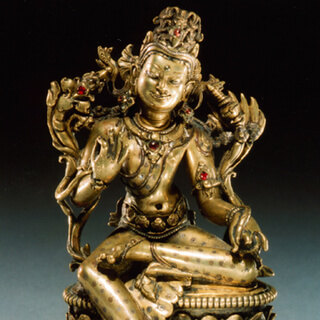
Including an image of a related artwork chosen from the Rubin Museum's permanent collection.
And now,
Please enjoy your practice.
My name is Tashi Chodron.
I lead a selected meditation called awakening practice in the shrine room on the fourth floor.
It's three Saturdays in a row,
And so soon,
February 16th,
We are starting another session.
So if any of you are interested,
Please,
I'll be happy to have you all.
And I also lead or host a program called Himalayan Heritage here at the Rubin Museum.
It's first Wednesday of each month,
Always connecting to most recent exhibit,
Symbolic lunar calendar.
So today being the first Wednesday,
We are partnering with the Yindain School from Queens,
Founded by Rinchen and Chimidoma,
Who is the co-founder.
They are both born in Tibet,
So they will bring their students from Queens and will share how New Year is celebrated in Tibet.
So if you are interested,
It starts at 6.
30 here in the theater.
And as I said,
Symbolic lunar calendar tying.
So February is the Lunar New Year,
Right?
And it's also Tibetan New Year.
It's a very beautiful symbol that all the Asian,
The Chinese,
Mongolian,
Everyone,
Including the Tibetans,
Are celebrating the New Year,
And it fell on the same day this year.
Normally,
There is a week difference or sometimes a month difference,
But this year it falls on the same day,
Which is very beautiful and very special.
So as I mentioned,
The Himalayan heritage connection to sharing how New Year is celebrated in Tibet.
I'm born in the refugee camps in India.
As a Tibetan,
I've never seen Tibet,
But in India,
The refugee camps,
The New Year is celebrated 15 days.
The first three days is really auspicious and a lot of spiritual thing.
So on the first day growing up,
I remember going with my parents to the monastery,
Which is what we all do.
And first thing,
We go to visit our root teacher or the Lama of the monastery to receive blessing and to wish Happy New Year,
Right?
And so yesterday,
Here in America,
Fortunately,
There's a local Dharma center,
And there are many other Dharma centers.
And as I was talking to our guest teacher,
Lama Aryadharma,
Also mentioned about so many Himalayan communities coming to the Dharma center up in Woodstock as well.
So Queens was fully painted in the Himalayas with all these beautiful traditional clothes yesterday was so beautiful.
And today is the second day and it goes on for many days.
So traditionally we say,
Losar Tashi Delek.
And that is wishing well-being and auspicious to all sentient beings.
And so today's theme is power.
I think last month we had intention.
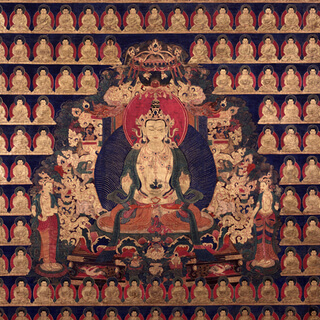
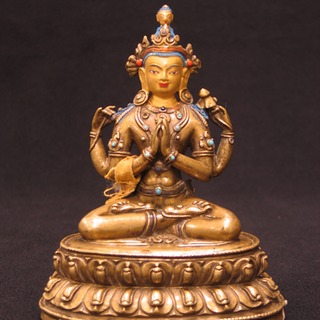
And you see this beautiful golden painting.
It's the Bodhisattva Avalokitesvara in a very traditional emperor,
Songtsen Gampo,
13th century.
It's part of the faith and empire,
The most recent exhibit that just opened up on the sixth floor.
And Bodhisattva is the role,
Often it is described as the compassionate one who aspired to achieve enlightenment to help all beings reach that goal.
And so Bodhisattvas are the compassionate one.
For us Tibetan,
Dalai Lama is a perfect example of Bodhisattva.
And in fact,
Dalai Lama is believed to be the emanation of Avalokitesvara.
So I won't go into much details of this particular art connection because my colleague Jeremy will give you an up-close explanation on that.
And Bodhisattva Avalokitesvara is the patron deity of Tibet and appears in many different forms in peaceful and wrathful.
And so we are very,
Very honored to have Lama Aryadharma on this auspicious Lhasar day to lead us the meditation.
Lama Aryadharma has been studying and practicing Tibetan Buddhism for over 10 years,
Trained in the Dharma path program of progressive stages of meditation and contemplation for serious practitioners offered by Kajuktuthin Choling Monastery.
Lama Aryadharma is a graduate of a traditional Tibetan Buddhist retreat spanning three years and three months.
Lama attended Mumbai University in India and graduated with a BA in sociology and is trained in computer programming from NIIT India,
Which is National Institute of Information Technology.
Lama is also actively volunteers as a fundraiser for breast cancer research and supports several nonprofit organizations.
Please help me in welcoming Lama Aryadharma.
Hello and welcome everyone and thank you all for coming in today.
It's a beautiful day outside.
So thank you so much for coming in and gracing your presence here today.
Thank you,
Tashi,
For the lovely introduction.
I'm so happy to be here today.
For today's image,
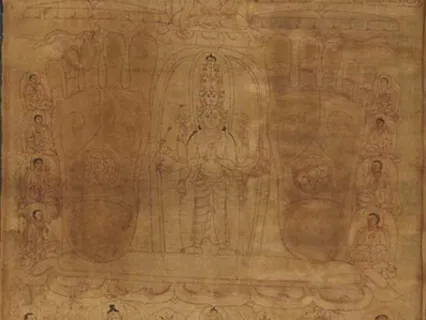
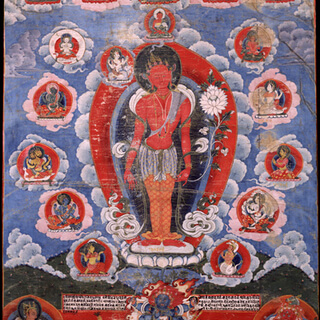
We have Bodhisattva,
Our Lokiteshwara,
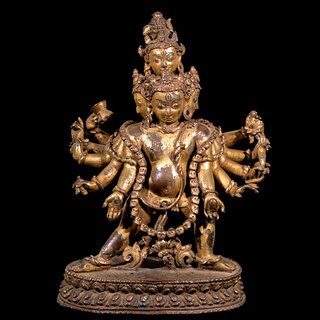
Also known as Chandrase with eleven faces.
And these eleven faces are symbolic representation of the complete accomplishment and realization of the complete Buddhahood.
On top of the eleven faces is Amitabha Buddha.
And this symbolizes that our Lokiteshwara belongs to the Amitabha Buddha family or the Lotus family.
All the faces are symbolic.
It's also a representation of our Lokiteshwara blessings to sentient beings through his body,
Speech and mind.
So this is what it symbolizes,
All these eleven faces.
So yesterday we celebrated a Tibetan New Year and Chinese New Year.
So Losa Tashi Delek and Kunghe Facho.
And so we had a huge New Year celebration in a monastery.
This is a very,
Very auspicious time for us.
So this is in upstate New York.
And so prior to the New Year celebration,
We had three days of Mahakala Puja,
Who was the Dharma protector.
And it starts at 9 a.
M.
Till and ends only at 6 a.
M.
So we are chanting the whole day.
And so if this was a multicolored image,
You would see on the very top is Amitabha Buddha and the head is red color.
And below that,
It's normally black.
And that's the Mahakala protector who protects all the Dharma teachings.
He's the protector.
And when you come into the Rubin Museum,
In the entrance,
There's a lovely neon light by an artist.
I forgot his name.
But that's also a representation of Mahakala.
He's the protector of all the Dharma.
And so we chanted prayers to clear away all the obstacles for the coming year and for world peace and for all the sentient beings.
So imagine all around the world,
All the monasteries,
Because now you have Tibetan monasteries all over the world,
They are all chanting prior to the New Year.
They're chanting more than some monasteries for seven days,
Some even more.
At least for three days,
We're chanting this Mahakala prayers,
Which is very,
Very powerful.
So at this moment,
It's a very powerful,
Positive energy.
So which fits into the theme of power,
Powerful prayers with intention for all sentient beings,
Blessings for sentient beings.
So before I start the session today,
Is anyone new here today to meditation?
Oh,
I see a few hands up.
Wonderful.
Welcome.
Thank you for coming in.
Thank you for being a part of the Rubin family.
I assure you,
It's going to be very simple and very easy to follow.
And after the meditation,
We'll have Q&A.
And if anyone has questions,
You're welcome to ask whatever questions you have.
So today,
I will be teaching you calm abiding meditation,
Which is always the foundation.
So when you practice calm abiding meditation,
We need an anchor,
The mind needs an anchor or support.
The mind's attention needs an anchor.
And today we will use the breath as an anchor or the mind's attention to focus the mind's attention,
Combined with a mantra.
And which is Om Ah Hong.
It's very simple and I will explain as I continue.
So what is a mantra?
A mantra or a sound and phrase that can help us concentrate on mind.
So a mantra is a phrase or a sound that can help us concentrate our mind.
It's a very simple version of what mantra is.
So when we actually start the meditation session,
There are two essential points for the formal practice we follow.
And the first one is your posture.
So the first one is your body.
And it's your posture,
Which is very important.
So for now,
Today we can sit comfortably,
But try and sit up straight.
And the most important thing to remember is your spine is straight.
If you can,
Better not to lean behind because it's easy to fall asleep and meditation is all about being awake because we are sleepwalking anyways.
And so,
You know,
And importantly,
Everybody has a different body type.
So it's important to be comfortable,
But sit up straight.
And then your feet,
You can keep it parallel on the ground.
It's not a good idea to cross them,
But if you feel comfortable,
Whatever pleases you.
So there are seven postures in the traditional meditation practice,
But I'll just go through it roughly.
And then you can just pick what you're comfortable with.
So first is sit up straight,
Your spine should be straight.
And the second is if you're at home and if you're comfortable to sit on the floor,
Then you can sit cross-legged as you would see the Buddha statue.
So then secondly,
The shoulders,
They're not slumped because,
You know,
It's such a nice day to,
You know,
Slump and be comfortable.
It's best to be squared.
So then your spine is straight and your hands,
You can just put your hands out like this and put it on your knees,
Palms facing down.
That's one way.
Another way is put your hands out like this,
Take your right hand or your left,
And then you can just touch your palm like this and put it on your lap wherever it falls.
So there are two different ways of keeping your hands.
The neck should be slightly bent like this and the chin tilted just a little bit.
If anything hurts or aches,
You can just keep it as comfortable as you are.
And the lips are resting naturally,
The tongue should be touching the upper palate and resting naturally.
And your eyes are slightly open in this meditation because when your eyes are closed,
It's very easy for you to fall asleep.
So the idea of meditation is to be awake.
So if you feel comfortable,
Just from the tip of your nose,
Just put your gaze downward.
And if you feel comfortable to keep your eyes closed,
That's fine as well.
So the reason we keep eyes slightly open in this meditation is we do not want to close any of our senses or our eyesight,
Hearing,
Sense of touch,
Tactile,
Taste,
Smell,
All our sense organs are open.
Yet it's unengaged and it's at peace and it's at rest.
And that's the essence of the meditation.
So now from the body,
The second essential point is your mind.
We now turn attention from a body to a mind because it's the mind that actually does the meditation.
Your mind should be relaxed and in the present moment of awareness.
What does it mean,
Present moment of awareness?
Because you can be sitting here and your mind may be in the office,
You know,
A to-do list or somewhere else your mind may be in your apartments.
So you're bringing your mind back to where you're sitting and your mind and your body is in the present moment of awareness.
So when we start the meditation session,
The important thing is that the mind needs a focus.
You know,
If it doesn't have a focus or if it doesn't have an attention,
The mind is going all over,
It's jumping from one thought to another,
It's jumping from many different thoughts.
And it's also important to understand when you're meditation,
Meditating,
It doesn't mean meditation is having no thoughts,
Stopping your thoughts.
That's not what meditation is.
In fact,
The nature of your mind is to have so many thoughts,
But you're training your mind to be in the present moment of awareness where,
You know,
When you meditate,
You're an observer,
You're letting your thoughts come and go,
But you're not engaging in it while you're doing your formal practice.
So why do you need to do this?
Because once you are not meditating,
You're in your day-to-day work,
Day-to-day life,
When you have a lot of conflicting thoughts,
As you train now,
Then it will be more easy for you to observe your thoughts and not engage in it.
You know,
When anger arises,
You don't have to follow it and get angry,
You can come back to being in the center.
So this is another good thought when you're out and about doing things,
When there are a lot of mental conflicts,
You can say,
Let me center myself.
And this meditation technique with breath and om a hung,
The mantra,
I really find it very beneficial because when I wake up,
I immediately start using these three syllables,
Om a hung,
Because there are so many thoughts that's going on,
I have to rush to work,
I have to do this,
I have to do that,
And then the day starts,
You already have so many mental conflicts.
So for me to really have peace of mind,
I do this and the first moment when I do om a hung,
I immediately feel at peace.
So this is a very,
Very powerful technique.
So I will explain how it's done so with your breath.
To start,
Let's put our mind's attention on breath,
Letting the breath be just as it is without trying to change or regulate it in any way,
Allowing it to flow easily and naturally with its own rhythm and pace,
Breathing naturally.
And now we can combine the mantra om a hung with your breath and I'll tell you how.
When we breathe in,
Mentally recite om and when your breath is inside your body,
Mentally recite a.
In fact,
When you breathe in and there's a small gap and that's where you'll recite mentally a and then when you breathe out,
You mentally recite hong.
And then there's a fourth step.
The fourth step is when you breathe out,
Let your breath pervade the entire space in front of you and then rest in that present moment of awareness.
So four steps would be om when you breathe in,
A.
There's a little gap when your breath is inside and then hong when you breathe out and as you breathe out,
Imagine your breath pervading the entire space and just rest in that present moment of awareness.
And I will guide you to the meditation.
We'll start now for a few moments.
Sit in the straight posture and as you breathe in,
Mentally recite om and when the air is inside the body,
Mentally recite a and as you breathe out,
Mentally recite hong and as your breath comes out,
Let it fill the entire space in front of you and just rest in that present moment of awareness.
It's like om,
A,
Hong,
But you're mentally saying that.
It's a very easy cycle,
It's not om,
A,
Hong,
But it's a gentle cycle with your breath.
Om,
A,
Hong,
And as you breathe out,
Let your entire breath fill the space in front of you and just rest in that present moment of awareness.
Om,
A,
Hong,
And as you breathe out,
Let your breath fill the entire space in front of you and just rest in that present moment of awareness.
Any time you start thinking any thoughts,
Just say thinking,
Let it go,
Don't follow it,
Don't engage in it and return to your breath.
It doesn't matter how many times your mind wanders,
All that matters is when you notice it,
You gently bring your focus back to your breath and mentally reciting om,
A,
Hong.
If you catch yourself thinking of the past,
Just say the past is finished.
If you catch yourself thinking of the future,
Just say the future is here,
Future hasn't arrived yet and come back to that present moment of awareness,
Putting your mind's attention on your breath,
Your attention as you inhale,
Mentally saying om and again mental attention from om to a and again mental attention from a to hong.
And as you exhale,
Let your breath fill the entire space in front of you and just rest in that present moment of awareness.
Om,
A,
Hong.
Breathe naturally,
Breathe normally using the technique of om,
A,
Hong.
Meditation allows you to look inward.
So when you meditate,
You will see a lot of thoughts,
List of things you want to complete and so on.
Thoughts are going to come and go.
Depending on the thoughts,
Emotion is going to rise.
But as soon as you realise your thoughts,
Just say thinking and gently let them go and tell yourself it's your time to meditate.
Little by little with practice,
You will enjoy meditating and looking inward,
It feels peaceful,
I feel spacious.
Om,
A,
Hong.
Okay,
Now just relax for a few moments so that you can stretch a little bit.
It's always nice when you start to meditate for short minutes,
Come back again to meditation.
But if you're doing it at home,
It's good not to go and get a cup of coffee,
You just sit in that place or tea.
So this technique of om,
A,
Hong,
It's really wonderful because it's very hard when you're doing things and when you're going about in your day to day life to sit and breathe,
The breathing meditation.
So when you get up,
Immediately you watch your mind,
Watch your thoughts.
They're all the thoughts that,
Oh,
I got to pay my bills today,
I have to do this,
I have to go to work,
My boss,
My colleagues,
All these thoughts.
And there's a lot of anxiety and stress.
But as soon as you wake up,
Just do this again.
Om,
A,
Hong,
Because you have a choice.
You have a choice to have pleasant thoughts or you have a choice to have negative thoughts.
And so this is a very,
Very beneficial technique.
Right now,
You're in such a peaceful state in a beautiful,
In this beautiful museum,
As you step out,
The world is going to be there.
The world is happening.
And then you want to still carry this beautiful meditative,
Peaceful state of mind.
And that's when you can do om,
A,
Hong.
You can observe everything around you.
You're not going to knock anybody,
You're not sleepwalking,
But you can do this technique,
Om,
A,
Hong,
With your breath.
You're on the subway station.
Wherever you are,
You're in the cab instead of freaking out and wanting to be on time somewhere.
This is the practice you can do.
And this is such a peaceful practice,
Om,
A,
Hong.
And so the word,
First word is om,
Which is O-M.
And the second word is a,
H,
And the third word is hong,
Which is H-U-N-G.
And some people also say hong,
But hong is also what we say in the monastery.
So again,
Back to a few more minutes.
Let's sit up straight and this time put all your attention and focus,
Your straight and your hand posture,
You know,
Palms facing down or your hands,
Right hand over your left with your thumbs and placed in your lap.
And your gaze,
You can look downward or close your eyes and we'll start a few minutes more of meditation.
As you breathe in,
Mentally recite om.
And as the air is in the body,
Mentally recite aa.
And as you exhale,
Mentally recite hong.
And as you breathe out,
Let your breath fill the entire space in front of you.
And just rest in that present moment of awareness.
Om aa hong.
As you breathe in,
Mentally recite om.
As the breath is inside you,
Mentally recite aa.
And as you breathe out,
Mentally recite om.
And as you breathe out,
Let the air fill the entire space in front of you.
Just relax.
Let go of all your stress and worries.
And keep your breath in a good cycle,
Breathing normally and naturally.
Om aa hong.
When a thought or an emotion or a sensation arise,
As soon as you recognise it,
Think simply.
That's a thought.
That's an emotion.
Do not follow after the content or engage in it.
Just let go and bring your mind's attention back to your breath.
Mentally recite om aa hong.
The idea is not to block your thoughts.
When you push them away or block the thoughts,
More thoughts come.
We are not stopping thoughts or blocking them.
We are just not paying attention or following the thought or engaging in it.
We are putting our mind's attention on our breath as well as mentally reciting om aa hong.
We are not stopping thoughts or engaging in it.
Om aa hong.
And as you breathe out,
Let your breath fill the entire universe and just rest in that present moment of awareness.
When you breathe in,
Mentally recite om.
When your breath is inside,
Mentally recite aa.
And as you breathe out,
Mentally recite om.
And just rest in that present moment of awareness.
If we can train ourselves during meditation to simply observe the arising of each thought and emotion,
Without grasping at it,
Without engaging in it,
Without clinging to it as being anything other than the temporary play of mind,
Like waves emerging and dissolving back into the ocean,
Then this habit will make its way into our ordinary activities in our daily life.
Through the practice of this meditation,
Your mind becomes more relaxed and comfortable,
Naturally joyous and content.
Ultimately,
The point of formal meditation is to familiarize ourselves with the peaceful state of our mind,
Which is naturally inherent in all of us.
And this is the Buddha nature that we all possess.
Om aa om As you breathe in,
Mentally recite om.
As your breath is inside,
Mentally recite aa.
As you breathe out,
Mentally recite om.
Om aa om om aa om Okay,
Everyone,
Relax,
Stretch a little.
Have a wonderful day.
Thank you.
That concludes this week's practice.
If you'd like to attend in person,
Please check out our website,
Rubinmuseum.
Org slash meditation to learn more.
Sessions are free to Rubin Museum members,
Just one of the many benefits of membership.
Thank you for listening.
Have a mindful day.