Welcome to the Mindfulness Meditation Podcast.
I'm your host,
Dawn Eshelman.
Every Wednesday at the Rubin Museum of Art in Chelsea,
We present a meditation session led by a prominent meditation teacher from the New York area.
This podcast is a recording of our weekly practice.
If you would like to join us in person,
Please visit our website at rubinmuseum.
Org slash meditation.
We are proud to be partnering with Sharon Salzberg and teachers from the New York Insight Meditation Center.
The series is supported in part by the Hamera Foundation.
In the description for each episode,
You will find information about the theme for that week's session,
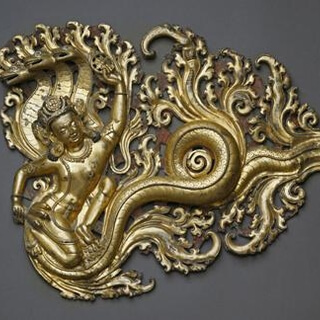
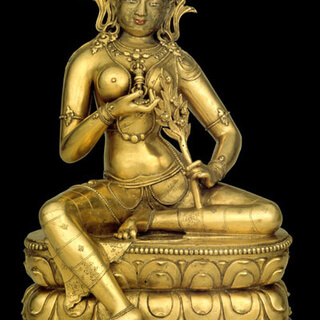
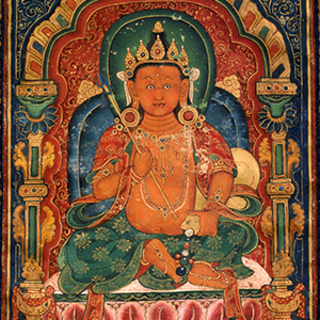
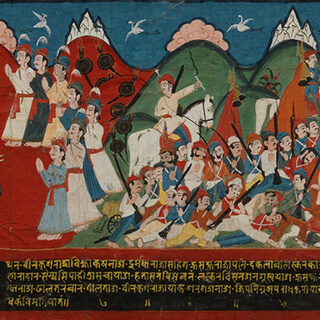
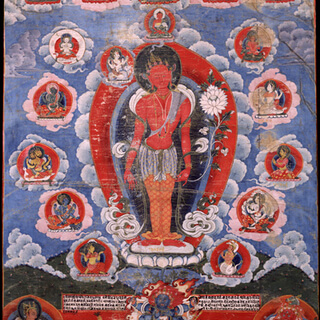
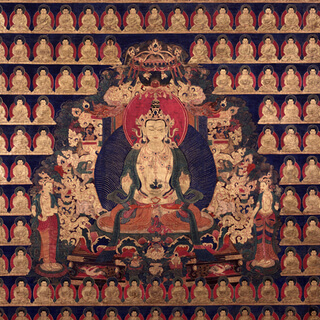
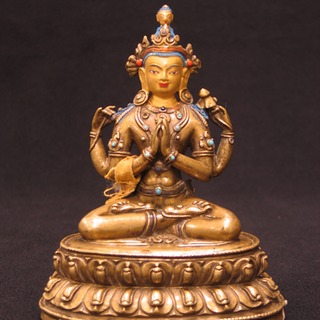
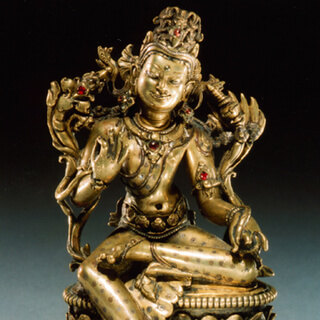
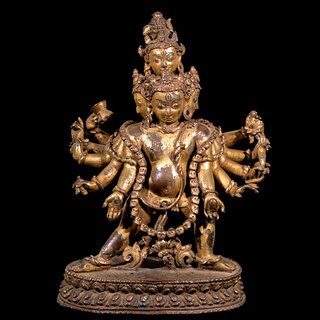
Including an image of a related artwork chosen from the Rubin Museum's permanent collection.
And now,
Please enjoy your practice.
So wonderful to see so many of us gathering here at this beautiful space in the heart of New York City.
Welcome to our weekly program,
Mindful Meditation,
In partnership with the Hamera Foundation,
Presenting partners Sharon Salzberg,
The Interdependence Project,
And Parabola Magazine.
My name is Tashi Chodron.
I'm the assistant manager to Himalayan Cultural Programs and Partnerships.
I host a monthly program called Himalayan Heritage Media and selected Saturday awakening practice in the Shrine Room.
So this month's theme is emptiness.
Since we are talking about emptiness,
In the Tibetan Buddhism,
Emptiness is not the voidness or empty or a blank.
I actually picked two sayings from two of the great teachers.
Thich Nhat Hanh seems to say,
Emptiness is the ground of everything.
Thanks to emptiness,
Everything is possible.
That's very,
It's a declaration by this great master Nagarjuna.
And then Dalai Lama seems to say,
Simply the true nature of things and events.
That's what emptiness is.
This includes the mind,
Whether the mind of the meditator is full of thoughts or empty of them,
The true nature holds.
And I'm sure we will hear from our great teacher for today,
Sharon Salzberg,
More about the emptiness.
And without further ado,
Sharon is the co-founder of Insight Meditation Society at Berry,
Massachusetts.
Being a teacher,
It says a student and teaching student is very humble to say a student,
But being a great teacher and been working in this field for 45 years.
And her book,
Which is one of the best seller,
Real Love,
You can find it in the gift shop,
Those of you who are first time here.
So please help me welcome Sharon Salzberg.
So thank you so much.
You did that beautifully.
I felt like just sitting down there listening to you speak for the rest of the time.
Hello.
I'm so happy that so many people come in the middle of the day on a Wednesday when we were first discussing the possibility of this program.
Of course,
The question is always,
Will anybody show up?
And you do.
All kinds of weather.
It's fabulous.
It's really,
Really great.
So I was here once before this month talking about emptiness.
So I'm feeling challenged by saying something else,
Which is why not?
And if I repeat myself,
Then that's good Asian pedagogy because they tend to.
That's how you learn.
And Tashu is totally right in the conceptualization of emptiness in Buddhism.
It's not blank.
We tend to think of it as blank.
And we also tend to think of it as something kind of unfortunate.
Like if you were a college student and you went to a counselor and you said,
I feel empty inside,
They would not think that was a good thing.
You know,
It feels to us like bleak and hollow and meaninglessness,
Kind of an nihilism,
Like nothing seems to count.
It's all kind of empty,
Which is really not what it is meant to convey at all.
The idea is really much more around what Thich Nhat Hanh said about possibility,
Not being imprisoned in certain conceptual frameworks that are really a little bit off.
It's like they deviate from how things actually are.
And anytime we're at some variance to the truth of how things actually are,
We suffer,
Which makes sense.
It's a little bit like the proverbial banging your head against the wall.
You know,
I don't want this wall to be here well too bad.
You know,
Or,
You know,
If you think about some of the dictates of society,
Like if you accumulate enough,
You'll have a sense of security in that you will be able to defy change,
Maybe even death.
That'd be good.
But really,
What's the reality?
What's the actuality of the situation?
It's something else.
You know,
Life is about change.
It's fluidity.
It's movement.
The sense of being stuck or being blocked of something that is not changing is a construct.
It's something we superimpose on top of our actual situation.
And so that sounds like it would be painful.
And in fact,
It is painful.
So what is emptiness,
If not meaning kind of hollow and bleak and deprived and so on?
What does it actually mean?
It has,
First of all,
A sense of experience arising due to conditions coming together in a certain way,
Which means that we don't have like absolute control.
We're not ineffectual.
We don't have to feel victimized,
You know,
By the circumstances of our life.
But it's not the case that we have domination either,
You know,
That we can successfully say,
Well,
I thought about it really carefully and I've decided I'm never going to be afraid again.
Or I've grieved long enough.
That's done now.
Or I'll never fall asleep meditating again,
You know.
Because when conditions come together for something to arise,
It will arise.
We can work with those conditions,
But we can't control them,
Right?
Something happens.
The air conditioning breaks.
Not here,
But somewhere,
You know.
We're hot.
We're meditating.
We fall asleep.
It's just life.
So there is this sense of,
You know,
We like to be in control and we're taught that it's good to be in control.
We want to seize it.
We want to seize something,
Keep something from changing,
Have permanence,
Have a thing we can cling to,
Anything that will not move.
And it's just not so.
It's never so.
And we ourselves are moving and changing.
It's just everywhere in the country,
It feels like.
And now I won't be.
I'm not getting on another airplane for 10 weeks.
It's like a miracle.
But at one point I was back home in Barry,
Massachusetts,
Where there is the Insight Meditation Society,
Which I co-founded in 1976.
And we were having days and days and days of meetings.
And it's,
You know,
When we started IMS,
I was 23.
And my colleagues were just a little bit older,
Older enough so that now they're looking at their lives and the word like retirement is coming up,
You know.
So somebody said to me,
Are you going to retire?
And I said,
No,
I think I have one of those disorders where I don't really connect to how old I am.
You know,
It's like I don't recognize how old I am.
I think I'm like 35,
You know,
Or you said 45 and practicing for 45.
I said,
That's a good age.
I'm 45.
You know,
I started when I was zero.
It's like,
You know,
So I said,
I have one of those disorders,
You know,
Where like I just don't recognize how old I am.
They laughed and they said,
Everyone has that,
You know.
You know,
We're in a state of constant flux and change and movement,
As is every element of life.
So emptiness kind of points to that.
Not that nothing's happening,
But it's not happening in a way where we can seize it,
We can hold it,
We can stop change from happening.
And in fact,
You know,
For all the effort we put into trying,
The truth is,
When you repeatedly try something that doesn't work,
It's not that fruitful,
You know,
And it's not that fulfilling.
There are ways we can connect fully to life and be with our experience and work with those conditions and certainly work with how we respond to the experiences that come our way.
So it's like a really different life.
And it's pretty great.
So not being in control is one of the elements of emptiness,
Being connected,
Which I talked about last time here,
When I talked about emptiness is very much,
You know,
We also,
We feel like we exist in isolation and experiences exist just as they are,
But really everything is born out of conditions coming together.
And so there's a sorrow in that or kind of poignancy in that,
In that we're not in control.
And there's a profound recognition that we're not so alone.
That's also in that.
So the example,
You know,
A very kind of simple example would be,
You don't get dinner or supper because you just say poof,
Here it is.
You have to bring all those conditions together.
Maybe you need money to buy some food and you need a job in order to have the money and maybe you need a car,
Not here,
Of course,
But maybe you need a car to get to work in order to get the money to buy the food and you have to have access to a place to buy the food and someone has to have provided it not broken down on the way to the grocery store and then you buy it and then your microwave needs to be working,
Which it's not.
And,
You know,
You have to figure out another way that you're going to prepare the food,
You know,
Because it's New York,
It's like,
You know,
Cook,
You know,
But all these conditions have to come together and then there's dinner.
So that's a very innocuous example,
Of course,
But the poignancy is that,
You know,
That same truth holds.
Maybe we have a friend who's really in trouble and their life is just spiraling down and we don't have that kind of ability to look at them and say,
Poof,
You're all better as much as we want to.
And perhaps,
You know,
We have tremendous insight.
It's not like fanciful or control for control's sake.
It's like we have a pretty good idea of what they need to do to be happier and we cannot make it so.
That's the poignancy and understanding the contingent nature of everything.
And there's also the fact that we're not alone.
We feel so alone often.
And yet,
If we look at our lives,
Always we're part of this interdependent world.
You know,
As I've said before,
If I'm going into an organization or a company to teach,
One of the things I often say is,
Or I ask people to reflect on,
How many people need to be doing their job well for you to be able to do your job well?
Because everything is really this part of interdependence.
How many systems had to work for you to get here today?
Sometimes,
If I'm in a car,
You know,
In like a toll booth place,
And the person who's driving does whatever they need to do with getting us through,
You know,
And then that arm,
That mechanical arm goes up,
And I just feel this huge relief.
Like,
Yeah.
I think,
Oh,
It worked.
What if it doesn't work?
You know,
Like,
All those people and all those cars behind us,
And then,
You know,
What are we going to do?
And then we can't back up.
So we back up,
And then just like,
We're always relying on this kind of interconnected universe to get us to the next place,
To allow our activity to come forth.
And so we can feel,
And often do,
So lonely and so cut off and so on our own,
But the reality always is that this is the truth,
That we live in connection to one another.
Nothing happens without our recognition that we're part of a network.
And that's just how things are.
So emptiness is also about that.
It's looking for the networking nature of reality,
Instead of feeling this individual on my own,
Accomplished all these things,
But I'm still on my own.
And that's a pretty sad place to be.
The reality is much more that we,
Each doing our part or whatever,
Helped create this moment for good or ill,
And that each one of us is connected to this vast picture of life.
So why don't we sit together?
The most ready place,
It said,
To come to a state of insight,
To see more clearly into anything,
Like change or emptiness or the power of letting go,
Whatever it is,
Is a state of balance,
Because we're not holding on to anything and we're not pushing anything away.
So they say right away,
There's some balance we can experience in our posture.
You can just feel the energy in your body,
Like have your back be straight,
But not like so much energy that you're stiff and uptight.
You also want to be relaxed and at ease.
You can start,
You can close your eyes or not,
However you feel most comfortable,
And start just by listening to sound,
Sound of my voice or other sounds.
It's a way of relaxing deep inside,
Allowing your experience to come and go.
Bring your attention to the feeling of your body sitting,
Whatever sensations you discover,
And bring your attention to the feeling of your breath.
In this system,
It's just a normal,
Natural breath,
Wherever you feel it most distinctly.
So the nostrils,
The chest or the abdomen,
Find that place,
Bring your attention there and just rest.
See if you can feel one breath.
If you like,
You can use a quiet mental notation like in,
Out,
Or rising,
Falling to help support the awareness of the breath,
But very quiet.
So your attention is really going just to feeling the breath,
One breath at a time.
It's just one breath.
As you find your attention has wandered off,
You get lost in thought,
Spun out in a fantasy,
Or you fall asleep,
Truly don't worry about it.
We say the most important moment is the next moment after you've been gone.
You practice letting go and you practice beginning again.
Just let go and begin again.
If you have to do that over and over again,
That's fine.
Good luck.
Thank you.
Thank you.
Thank you.
Thank you.
Thank you.
Thank you.
Thank you.
Thank you.
Thank you.
Thank you.
Thank you.
Thank you.
Thank you.
Thank you.
Thank you.
We will be happy.
Thank you.