Welcome to the mindfulness meditation podcast.
I'm your host,
Dawn Eshelman.
Every Wednesday at the Rubin Museum of Art in Chelsea,
We present a meditation session led by a prominent meditation teacher from the New York area.
This podcast is a recording of our weekly practice.
If you would like to join us in person,
Please visit our website at rubinmuseum.
Org slash meditation.
We are proud to be partnering with Sharon Salzberg and teachers from the New York Insight Meditation Center.
In the description for each episode,
You will find information about the theme for that week's session,
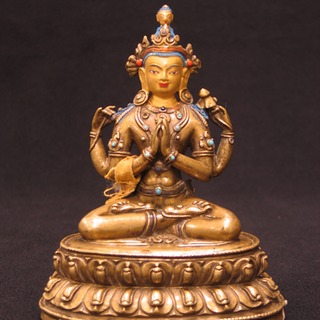
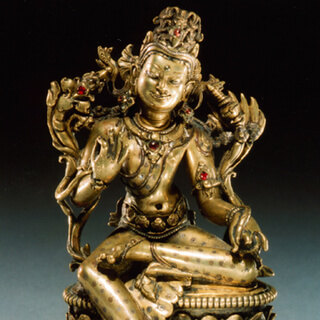
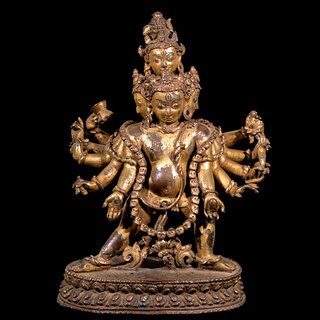
Including an image of a related artwork chosen from the Rubin Museum's permanent meditation collection.
And now,
Please enjoy your practice.
Hello,
Good afternoon.
Such a nice buzz in this room.
Welcome to the Rubin Museum of Art and to our weekly mindfulness meditation practice.
My name is Dawn Eshelman.
Great to see you all here.
Welcome,
Welcome.
So nice to have all of you here after our summer break.
And really excited to be talking about the subject of hope this month.
And also an important topic,
I think today,
Because today is the 18th anniversary of 9-11.
And it feels to me wonderful to gather here with all of you and put our attention on this idea,
This concept and experience of hope.
We are engaged in a year-long conversation all about power,
The power within us,
The power between us.
And we recently took a look at the subject of fear,
Right?
If you have been here kind of coming regularly,
You'll remember that.
And we talked about that within this context of power as something that could make us feel powerless,
When in fact hope is often something that can help us buoy our power and our feeling of being powerful in a way that is really connected to ourselves and others as well.
So we're talking about hope today.
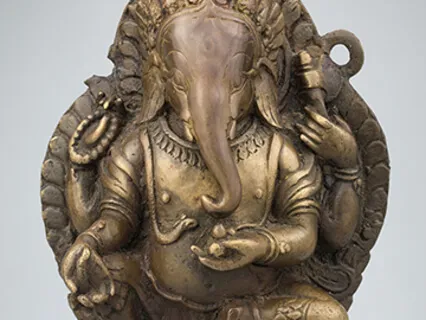
And we have a very beloved member of our collection right here behind me on the wall.
It's there,
Right?
Yes.
And this is Ganesh.
And Ganesh is a figure that might be familiar to many of you who have spent some time here.
And you can learn all kinds of things about Ganesh.
If you want to go on the gallery tour that is free with your ticket,
Right after this program you can meet Jeremy right outside.
He will take you upstairs and tell you all about this very kind of benevolent figure.
What I will tell you about Ganesh today is that he's known as the remover of obstacles.
He's a very playful creature.
And he can also put obstacles in your way if there's something that you need to grapple with.
So it's interesting to consider this kind of very playful character who can both kind of give and take away.
And Ganesh is this body of a boy and head of an elephant who is known for his big feet with which he can stomp,
Stomp,
Stomp obstacles away and clear a path for you.
So many practitioners make offerings to Ganesh and want to please Ganesh in the hopes that Ganesh will help remove their obstacles for the day.
So let's practice with hope and Ganesh in mind and the sense that obstacles can be cleared from our path.
So great to have Sharon Salzberg back here with us.
And as many of you know,
Sharon is the co-founder of the Insight Meditation Society in Barre,
Massachusetts,
And the author of amazing,
Beautiful books that are really so practical and helpful,
I think,
And are available in our shop.
And her most recent is Real Love,
The Art of Mindful Connection.
She's a regular contributor to On Being and The Huffington Post.
Please welcome her back,
Sharon Salzberg.
Hello.
We're packed.
I love Ganesh.
Ganesh is one of my figures.
In Hinduism,
They have a concept called an ishtadev,
Which is like your personal inspiring archetype.
And usually I say,
As is true,
My ishtadev is the Statue of Liberty.
It's true,
But Ganesh is very close.
And Ganesh is my kind of standard housewarming present for people,
Even if they have no idea why I'm giving them a little elephant,
You know,
Because I just love him.
So it is the anniversary of 9-11.
Don and I were just saying 18 years,
Like,
Wow.
And for a while,
For myself,
It was a day that I chose just to practice.
And I went through some kind of transition some years ago,
And I thought,
No,
This is a good thing just to gather with people and be thinking about and speaking about and one's values and to actually practice together.
So here we are.
And hope.
One of the characteristics of Buddhist teaching,
As many of you,
I'm sure,
Know is that words are very exacting.
It's like these are the people who looked at their minds forever,
You know,
And painted fine differentiation between intention and desire and craving between,
You know,
Love and compassion who really have very precise use of words.
And so the word hope in many classical Buddhist contexts is not considered a hugely powerful positive word.
It's likened to attachment,
Clinging,
This kind of diluted certainty,
Like,
I know it's going to work out exactly the way I want it to work out.
I just know that.
But the opposite of hope,
The state they're trying to engender or help us cultivate is not hopelessness or despair or despondency at all.
It's a state of gratefulness.
I wrote a book called Faith,
Trying to make that distinction between hope and faith because faith in the Buddhist psychology is not considered a belief.
It's a process of offering your heart.
And so the first step is knowing you have a heart and it is of worth,
You don't just offer your heart over to anybody or anything.
And it's that kind of coming close.
It's that willingness to take a risk.
It's not dismissing out of hand something when we haven't tried it for ourselves.
So you know,
We might use the word hope in just those ways.
I can remember when I wrote the book Faith,
I put in there a story about a conversation I'd had in a friend's living room with a psychiatrist.
And looking back,
It was kind of a funny conversation.
It was a little bit reductionistic.
What we were talking about is what's the single most healing element in the psychotherapeutic relationship as though there were just one.
And you know,
We talked about methodologies or this or that.
And then he said,
It's love.
If you put any good therapist up against the wall,
They'd have to say that it's the love in the room that's the single most healing element.
And then I had one of those experiences,
You know,
Where you just hear these words come out of your mouth.
And what I heard come out of my mouth was,
Well,
For all we know,
The single most healing element in the psychotherapeutic relationship is the fact that someone showed up for their appointment.
You know,
Someone got out of bed,
Took a risk,
Imagined things might be different,
Right,
Showed up not knowing exactly what would transpire.
So in conventional terms,
We would probably call that hope.
In that sort of picky and Buddhist way,
We'd call it faith.
Not faith that we know something will happen just like we wanted to,
But we can arrive.
We can take that risk.
We can be present.
So that was in my book.
And then the book came out on one of my birthdays.
And I did a reading.
And because the psychiatrist was in the room,
I read that passage.
And he came up to me afterwards to get his book signed.
And he said,
I think you're wrong.
He said,
I thought about it a lot,
And it's love.
So I wrote,
It's love,
And big exclamation point.
And then a friend,
Because it was my birthday,
Gave me a wonderful birthday party afterwards.
And he came to the birthday party.
And at the end of the evening,
He came up to me and he said,
You know,
I've been thinking about it all night.
And I think you're right.
I'm wrong.
It's actually that showing up.
So I said,
Give me back the book,
And I'll re-sign it.
But there's something extraordinary in that ability to get out of bed,
See what happens,
Arrive really fully,
Whatever you want to call it,
Given especially some of the things that happen in life,
Which would very likely make us want to just stay in bed.
It can be overwhelming.
It's devastating.
So many things that are unexpected or challenging in some way.
And yet,
It's said we have a capacity within,
Not just to survive,
But to flourish,
To actually thrive.
It's usually,
And that capacity as a capacity,
It's said,
Is never,
Ever destroyed.
It certainly might be covered over.
And hidden in something we don't trust,
But it's actually there.
And so the various practices that we do,
Which include community and certainly inner practices like meditation,
Have the ability,
They're generative.
They return us to some sense of possibility where maybe that sense of possibility was more lost.
And they have the ability to kind of nurture and help grow that sense of possibility so that we do honor the power of our own hearts and the gift of our energy and our time and coming close to something,
Some endeavor,
Some group,
Some idea,
Whatever it is.
And we realize that's not nothing.
That's a very significant gift.
It's a significant offering.
And it's also the way to be actually alive rather than just be in some kind of state where we're half awake or waiting for something better to happen so that we can wake up or clinging,
That kind of ferocity like it's got to work out this way.
And maybe we have energy and we put it out in some path or process,
But there's so much clinging.
There's so much neediness that we're rarely allowing something to unfold to actually allow it to work in that way.
And that's why I like that Ganesh is kind of mischievous also.
He's sort of playful.
And I think for me,
He represents that capacity.
That's why they call him the god of good luck.
You know,
That all is not lost or we don't have to be frozen.
That the ways we identify with what's going on,
Especially if it's really painful or difficult,
Can be quite rigid.
And yet within that state,
There is something alive,
Right?
There's something generative.
And we want to keep coming back to it and nourishing that in a way that's not so hugely project oriented.
Like I've got to love myself completely within two weeks,
Which is what people say to me in doing loving kindness practice.
People say,
I mean,
More than that,
They say,
Well,
I've decided to only offer loving kindness to myself until I get it right.
And I say,
Don't do that.
Then it's like a project and it's pass fail and you're monitoring,
You're evaluating your progress.
First of all,
I don't think it's that smart to only send loving kindness to ourselves because it does become,
How do you know when it's time to move on?
At least try someone else as well.
And also,
We don't want that sort of watching the clock and,
Did I get it done yet?
And I've got to get more.
I've got to get a better experience.
We don't really want that kind of energy in our practice.
We want to be able to offer our hearts and show up like that person showing up to the appointment because we don't know.
And yet it's in that fullness of our being and willing to make the experiment.
That's where the healing and the transformation happen.
So let's sit together.
Whatever you want.
They want to know whether to dim the lights.
And so part of my mind says everyone will fall asleep.
Part of my mind says it's okay.
Whatever you want.
We can start just by listening to sound.
You can have your eyes open or closed,
However you feel most at ease.
And just let the sounds,
The sound of my voice or other sounds wash through you.
We like certain sounds and we don't like others.
But we don't have to chase after them to hold on or push away.
Just let them come,
Let them go.
And bring your attention to the feeling of your body sitting,
Whatever sensations you discover.
Bring your attention to your hands.
And see if you can feel them on the level of sensations.
Not conceptualizing so much like the shape or the idea of fingers,
But feeling warmth,
Coolness,
Pulsing,
Whatever those sensations might be.
You don't have to name them,
But feel them.
And then bring your attention to the feeling of your breath,
Just the normal,
Natural breath,
Wherever you feel it most distinctly.
At the nostrils,
At the chest or at the abdomen.
In that place,
Bring your attention there and rest.
See if you can feel one breath.
And if you like,
You can use a quiet mental notation like in,
Out,
Or rising,
Falling to help support the awareness of the breath,
But very quiet.
See really paying attention to feeling the breath,
One breath at a time.
Look around,
See the constant.
.
Just bring your attention back to the feeling of the breath.
.
.
.
.
.
.
.
.
.
.
.
.
.