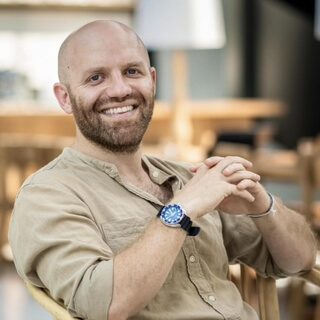
So I got into parkour recently.
It's something I've wanted to try for a very long time.
I got introduced to it about a month ago by Ivan Zorich,
Who's been on the podcast before.
I appreciate his philosophy on the body.
In trying parkour,
A lot of it was what I was hoping for,
Learning how to use the body more fluidly,
The running,
The jumping,
The vaulting,
Climbing,
All that cool stuff.
It's a cool culture,
Group of guys who train in this warehouse.
And all of that was fun.
But there's something that I got from it that I didn't expect.
Because after the more physical part of the workout,
Some of the more experienced guys led the rest of us through something called mind training.
Because we've been training in this abandoned – it actually used to be a gym,
But now it's just like an abandoned building with exposed beams and whatnot.
And the mind training consisted of going up to the second floor and walking on this structural beam that's a little bit less than 20 feet off the ground.
So enough that it's a scary height to fall from.
I mean,
Certainly,
Unless you're really skillful,
Most people would probably break something,
Definitely would get hurt.
But the beam itself was interesting.
It wasn't that narrow.
It's not like you had to be a tightrope walker or have impactful balance.
For me,
It was just wide enough that I could put my two feet side by side.
So fairly wide.
In fact,
If I painted a stripe this wide on the ground,
Me or anybody could walk on this line without falling.
But doing this 20 feet off the ground is very different.
It brings up all of these emotions and feelings and sensations that I was not expecting at all.
So actually,
A week before I successfully did the mind training exercise,
I actually got on and my body – I mean,
I locked up so much.
Like the fear,
I didn't even realize I had a fear of heights,
But maybe it's just an instinctual thing.
Like once I looked down at the 20-foot drop,
My legs would not move.
I actually felt a trembling in my femur bones that caused me to tense.
And the irony was the fact that I was having such a hard time controlling the tremors in my body,
That in itself might have caused me to fall.
It's not the beam itself.
But it was interesting because the next week,
I did complete it.
I went through this exercise where we would walk across the beam far away from any handrail that you can catch yourself on.
And actually,
Ivan led some of us newer guys through some basic exercises where we would sit down on the beam,
Stand back up,
Put our hands above our heads,
Move our head around,
Which of course,
Standing on the ground,
You could do easily.
But that added fear that just knowing that you're 20 feet off the ground and you could fall makes everything tight.
And like there's just such a heightened level of sensation.
It was just a lot of feeling to ground,
Essentially.
But this time I did it.
And I walked across the beam,
I walked back to the safety of the railing.
And as soon as I got back to safety,
I had the sensation that I hadn't felt in a very long time,
If ever,
Where just everything,
Like all of my nerves were fired.
I could feel this buzzing throughout my body.
I've been calling it a primal high.
It's just like my senses were on.
Because I hadn't exposed myself to that level of real physical fear,
Maybe ever,
Certainly not in a long time.
Kind of made me realize how my other hobbies,
Even something like combat sports,
Which I talk about on the podcast,
Is just something,
Aside from me enjoying it,
Something I think is very beneficial for men,
For male psychology,
Just that simulation of death.
I realized that it doesn't really come as close,
Not as much as actually standing at heights.
Because if I do jiu-jitsu with someone,
Even with someone who can kill me,
I know he's not going to kill me.
I don't actually confront death.
But standing 20 feet off the ground,
Which of course is not even that high,
It's not like I would die from that unless I landed on my head.
But just confronting that experience and what it did to my body and what it did to my nerves,
Essentially,
Was such a unique experience.
And I've been calling it a primal high because our hunter-gatherer ancestors probably had that experience all the time,
Right?
Just living out in nature,
Dealing with the elements,
Just traveling from one place to the next.
On rocky terrain,
They essentially were doing parkour just to commute.
And it felt so rewarding because it feels like this is something that I think men especially could be experiencing on a regular basis.
And it offered me a reframe on this idea of this internal narrative,
This feeling of,
Oh,
Shit,
I'm going to die.
Because when I'm,
Say,
Coaching a guy through anxiety or some sort of negative self-talk where someone has a stress response where they feel like they're going to die due to something that isn't actually dangerous,
Like social anxiety or fear of failure,
Fear of rejection,
Where we could say there's a contraction on the first circuit,
Their survival circuit is being triggered even though there's not actually something dangerous.
One of the terms often used in pop psychology and men's coaching in response to this type of internal experience,
This anxiety experience,
Is self-soothing.
Dr.
Robert Glover,
Whose work I very much appreciate,
I appreciate it when he was on the podcast as well.
He often uses this term self-soothing,
Like a guy with nice guy syndrome needs to learn how to self-soothe.
And that's just an idea that many of us accept.
Then I realized in the face of actual danger,
Like really confronting one's mortality,
Really confronting the reality,
I mean,
Just the dangerous reality of existing.
This idea of self-soothing is almost,
I mean,
It is an infantilizing term in itself.
It's kind of a,
I think just like a not useful perspective on our abilities to deal with real reality.
I actually have been thinking that a better way to,
A better framing of that idea would be instead of self-soothing,
Battle readiness.
Like can you deal with the stresses?
Can you ground really high sensation in the face of real consequences?
Can you switch from prey mode or infant mode where you need to be soothed to being someone who can take on what life throws at them,
Whether it's a natural battle or some sort of challenge,
But also maybe something as simple.
I mean,
In my case,
It was a pretty simple activity of walking in a straight line,
Very high off the ground where it was unlikely that I would fall,
But I could fall.
Like there were no guard rails.
There was no safety net.
It was me and my own body and my own decisions putting myself in that situation,
But also giving myself an opportunity to confront my mortality,
Confront real danger,
The real possibility of death.
And I think one of the reasons why it was so rewarding on this like instinctive level is that again,
This is how people are supposed to be,
Especially,
You know,
We could say are the masculine part of our psyche,
Our androgen driven circuitry is meant for dealing with real consequences.
And you know,
When people speak about the crisis with men or with boys,
A lot of it seems to be tied to the fact that if you live in the 21st century,
First world situation,
You're not directly interfacing with nature most of the time.
You're not actually dealing directly with real consequences.
There are safety nets,
There are societal structures,
There are bumpers,
There are things to basically protect you from the consequences of your own actions.
And this simple activity of being on the beam gave me kind of just a glimpse of the opposite where on that beam,
There was nothing saving me except for myself.
I recently have been attracted to this symbolism of raw versus cookedness.
I first became aware of this idea from a great book recommendation I got called The Art of Not Being Governed,
Which is about the history of anarchist peoples,
Basically peoples in hilly areas who have not been absorbed by nation states like self-governing groups.
And in this book,
James C.
Scott uses this idea of the raw people who have not been assimilated into what we call civilization and the cooked people.
And it's the same idea of the raw people directly interface with reality and cookedness,
It's kind of like pre-digested for you,
Right?
Like when you live in certainly a 21st century,
First world society,
A lot of the consequences of reality are kind of pre-digested for you.
So you don't actually have to deal with the stakes yourself.
Raw peoples live off of the land,
Cooked peoples depend on a supply chain.
This is something that people talk about a lot in the pandemic era,
The dependence on the supply chain.
We're all so woven into this great system.
In the fulfillment episode I did a few months ago,
I mentioned this is very in line with Kaczynski's idea of people being overly dependent on systems and if the systems break,
People are screwed as opposed to living more raw where you're directly interfacing nature and you have a lot more autonomy and control over your situation.
But this of course comes with risks.
There's a reason why people have chosen a cooked life where they don't have to directly confront consequences and death and danger.
In a cooked life,
Civilization,
Society puts filters between you and reality.
You have safety mechanisms,
You defer security to police forces and military,
You just defer decision making to the legislative groups of your country or municipality.
And something is lost in that though.
And I think this is one of the reasons why people and men especially are drawn to outlaw fictions and organized crime movies,
Especially if you're in your adolescent phase,
Something I talked about in the stages of the male psyche episode.
But there's or even like the zombie apocalypse thing they talk about.
There's something so appealing to us about that because in a Walking Dead like situation,
We would all have full autonomy.
We would have full control of our reality,
Even though it would be more dangerous,
But we would be directly interfacing with the reality rather than through a filter given to us by some sort of governing mechanism.
And men or masculine people or people who have a masculine side have so much to gain from confronting danger,
To confront like real nature without the filters,
Without relying on something else.
Now this is not to say of course that women don't also deal with this.
In fact,
This is bringing us to our announcement section.
The big announcement for me on a personal level is my baby girl was born last Friday.
If you're on my email list,
You got the notification closer to real time.
And on this note,
If there's any experience that is like archetypally feminine moment where a woman confronts real nature,
It is childbirth.
We of course opted for a more raw form of childbirth.
Maybe we had the birth at home,
Natural birth.
And I'll probably do another episode where I speak about this more directly.
But what's relevant to this episode that I do want to share is that in the process of home birth,
We had to confront real consequences,
Right?
We had a somewhat difficult birth.
It was particularly challenging on my wife who did succeed in the natural home birth,
But it took a long time.
Like there was some tension in her hips and there were moments where there was a fear we'd have to go to the hospital.
We didn't do it unassisted.
We had a midwife in doula who had all these tips and tricks for getting the baby to move through the womb.
But it was interesting because if we were in the hospital,
They certainly would have said,
Okay,
You need to do a C-section.
Because that's.
.
.
And I don't have any judgment of anybody who chooses to go to the hospital for their birth who is our own personal choice.
Because there is a reason why people choose the cooked version or the safer version of things,
Right?
There was these touch and go periods during our birth where we weren't sure if things were going to be safe because we weren't relying on a hospital authority to ensure to us,
To take away the risks for us or to narrow the outcomes for us where basically,
Say if you have a plan C-section,
Which is perhaps the most cooked version of a birth,
Which is finding that you're greatly limiting dangers and risks and things like that,
Right?
So I totally understand why someone would opt for that because there were some scary moments.
But there were benefits,
Of course,
To taking the more natural,
More risky route.
While it was incredibly challenging on Nalaiah,
She went through a lot of pain.
It took a long time.
But she did open up her hips.
It was kind of funny in retrospect because the remedy from our midwife and doula on how to get the baby to move was essentially twerking.
So there was kind of like this surreal scene where like 4 a.
M.
In our living room,
We had this midwife and doula helping Nalaiah twerk with the music blasting at like 4 a.
M.
It was just very bizarre scene that if it wasn't my baby's well-being in question,
I probably would have laughed at it,
Right?
Because it was just this funny,
Unusual thing.
It's like,
Man,
Even in the moment,
I was like,
I can't believe this is a thing,
Right?
For most people,
It's not a thing,
Right?
At a hospital birth,
I doubt they would have the mother twerk in a hospital room.
But everything was successful.
Baby is healthy.
It was an incredible moment.
And I could see and feel in her and Nalaiah by really confronting and doing this on her own essentially and winning.
There's this succeeding.
There's this huge benefit,
Right?
We did this thing,
The most probably the most difficult thing and actually made me realize that childbirth is obviously from an outsider's male perspective,
Something I'm never going to know what a uterine contraction feels like.
But it gave me a sense that childbirth is kind of like the woman's version of war.
Obviously women go to actual war,
Too,
But it's like this archetypally feminine thing that's incredibly painful and incredibly challenging.
And while I was there to support and be supportive and I hope I was,
There's certain support that really only women can give to each other,
Right?
Like I don't know what it's like to have those body parts.
I can only help from the outside.
So there's something incredibly extra beautiful about that.
And actually on top of all of these things in Thailand,
Home birth is actually illegal.
I mean,
As I've mentioned,
They kind of have this like collectivist culture where doing things in accordance with the group and that's just the culture here.
So it's not like illegal as in we would go to jail or get fined for having a home birth,
But it's kind of frowned upon or we wouldn't be given certain help necessarily because we didn't register with the government in the correct way.
So something outlawish about that,
Which meant against,
Again,
Greater risk,
But also opportunity to interface with nature.
So I'm glad we opted for that.
Everything is great.
So that's that.
The other announcement I have is that the History of Man podcast is going to actually premiere this month.
If you've been following the podcast,
You know,
I first had the idea for this over a year ago.
Things got sidetracked.
And honestly,
The one thing I'll say here is that through my dark night of the soul experience from last year,
If you caught that episode from,
I think it was in October,
I realized I was kind of out of scarcity delaying this project because I felt like it had to have some productive,
You know,
I had to have some way to monetize this thing,
Whereas really this inspiration came because I just wanted to express these ideas.
So the History of Man podcast I decided to finally just release as a regular podcast,
Even though it'll probably be slow to grow in this form.
I just want to get these ideas out in the podcast.
We're looking at the history of warfare from the Stone Age all the way to modern times and showing how that has shaped cultural masculinity.
So if you want to check that out,
It will eventually be on all the podcasting apps probably at the end of the month.
But if you want the early release and connect to the community around it,
You can go to historyofman.
Substack.
Com.
Everything is free,
But I'm going to release everything first on sub stack and you'll get notifications and you can interact with me and all that fun stuff.
Might have some things for early supporters.
I haven't thought about that yet though,
But you can check that out at historyofman.
Substack.
Com.
Right now you're listening to episode 145,
Danger and Steel on Living Raw and Unfiltered.
So first I want to talk about this raw versus cooked dichotomy because I really love this imagery and it first was exposed to me from a book on anarchy that was recommended to me.
Not anarchy in the way that we typically think of in the West,
But anarchy from tribal people's cultures.
It's from a book,
The book I'm reading at least is titled The Art of Not Being Governed and it follows different,
They're called hill tribes in Asia,
But different groups of people that essentially have preserved their pre-civilization cultures despite all these nations,
States and different dynasties over thousands of years trying to essentially claim them and put them into the nation.
And rawness of course is living off of the land,
Not being governed by a nation state that in itself is governed by the abstraction of mythology.
And actually they live in small tribes where they're still bonded through kinship and direct connection rather than bonded by an abstraction like we are Americans or we belong to this nation,
They're still living more naturally.
And perhaps because I was reading that book on my Kindle and I've also,
Of course I have many books on masculine psychology on my Kindle,
I started getting these other kind of recommendations.
One was this book on raw egg nationalism,
Which also uses the raw versus cooked dichotomy.
It's kind of like this subsection of the manosphere that I was totally unaware of where it's basically this philosophy of nationalism.
And funny enough,
They also use the raw versus cooked analogy.
Like in according to raw egg nationalism,
They are against the taming that happens from globalism.
So they believe in the nation state and they drink raw eggs kind of as a symbolic thing of like not consuming processed food that makes you weak,
Which is funny.
It's actually interesting.
I want to speak to this guy.
I had Christina reach out to him to be on the podcast because it's interesting that he uses the nation as raw and looks at globalism as cooked,
Which makes sense when we compare those two things.
But if you take the perspective of,
Say,
An indigenous tribe,
They would see the nation as cooked.
His nation is like the civilization that protects people from nature,
Whereas anarchy or self-governance is actually the raw version,
Really living off of the land versus dependence on supply chain,
Right?
Like actually hunting and growing your food rather than going to the supermarket,
Confronting real death and danger,
Which is the psychological piece I want to explore here,
As opposed to relying on societal things to keep you safe.
You know,
Obviously,
Like police that provide you your security,
You know,
The various things that civilization begets us that makes our lives easy,
But also essentially adds a filter between us and nature,
Where like we don't have to confront the actual consequences of things.
There's something,
Some authority that deals with it for us.
Like I said,
I think men or masculine people,
This appeals to men typically more,
Which I think is one of the reasons why organized crime fictions and zombie apocalypse stories are kind of thrilling in a way,
Or they give us something interesting.
I mean,
I know a lot of men,
Especially who are like,
Man,
If there was a zombie apocalypse,
I think a part of me would be happier,
Right?
And you know,
This is along the lines of fulfillment,
As you spoke about in the welcoming death episode of like,
When you have full autonomy,
There's something I think especially for men that activates,
Right?
There's this appeal of like,
Oh,
Here I am using my full potential in life or death,
You know,
Fail or not,
Right?
And I would imagine that our Paleolithic ancestors for whom this was their everyday reality,
Did not have a lot of the issues that we create for ourselves these days.
They did not have the anxiety or thinking too much or worrying about themselves because as I briefly experienced standing on that beam,
When you're directly confronting the possibility of death,
All of those other fears become so meaningless,
Like so ridiculous.
Like I still have those types of things of like,
If regretting something stupid I said,
Or even looking back on my own podcast,
Like,
Ah,
You know,
This was kind of dumb or blah,
Blah,
Blah.
Like when you're on the beam,
You don't think about that stuff,
Right?
Like it's just you and reality.
Another book that pops up on my Kindle recommendations that relates this idea is this book called Sun and Steel by a very interesting guy named Yukio Mishima,
Who is a Japanese nationalist who is popular towards the end of or through the end of World War One.
And he had a very interesting life.
And I actually might talk about him and his ideas in another episode.
But in his book,
You know,
This guy was a writer.
He became famous as a writer.
He was kind of like,
Kind of reminds me of Nietzsche.
Like he had these like kind of masterful,
You know,
Tough,
Honorable ideas he talked about.
But in his actual life,
He was kind of a weak guy.
And actually in the book Sun and Steel,
He speaks about how I think it was in his 40s,
He recognized how words and abstractions are not real reality.
I don't know if he read Korzybski,
But he touches on similar ideas of how he lived his whole life behind words,
Which were just labels for real things.
And for him to reconnect with real reality and the reason why the book is called Sun and Steel,
It was like his whole process of actually being out in nature and getting dark and using his muscles.
And,
You know,
He learned how to box and sword fight and stuff.
And like that is what connected him to real reality.
So he had this kind of similar realization.
Because the masculine archetype in all people activates and thrives when there is real problem solving and real danger.
And when living in a coddled,
Filtered,
Lower stakes,
You know,
Cooked life,
It causes this part,
It causes these instincts to not only atrophy,
But then come out in weird ways,
Right?
Like,
You know,
As I just mentioned,
Things like anxiety and over self consciousness and worrying about things that don't matter so much is a first world thing,
Right?
Like,
If you're actually worried about starving,
You don't think so much about whether someone liked your Facebook post or whatever.
Right.
And it's like,
If we don't have real problems to solve,
Our mind can create problems to solve,
Right?
It can look for things.
It can,
You know,
Because we have this function.
It's actually,
You know,
As stated in the,
As we discussed in the fulfillment episode,
It's actually a key to fulfillment,
To having a challenge that you need to solve and requires your wits and,
You know,
It challenges you.
And if you don't have that,
Your subconscious creates something to worry about.
Because as Kaczynski said,
As we discussed in that episode,
Whereas the,
You know,
Advances of technology and industry have been great in that they've given us so many conveniences and made our lives easier and things have become more efficient,
Right?
Like that's,
That's kind of the,
That's one of the greatest values in an industrial society of making things more efficient,
Getting more output per input.
There's a cost to that,
Right?
Like things are not actually supposed to be efficient because when they're too efficient,
We have too much free time and we have too much spare energy.
And you know,
That excess becomes people getting fat or people getting anxious or people having addictions or worried.
You know,
On a small level,
I've noticed this with my dogs because,
You know,
As in terms of raw versus cooked,
From when the first half of their lives,
I cooked all their food for them,
Right?
We didn't want to feed them kibble,
Which is not so good for them.
Actually one of our dogs has joint problems,
Had joint problems when we switched to real meat,
His joint problems went away.
But I was cooking,
I was,
You know,
Buying ground chicken and boiling it for them and it was taking a lot of time.
And when we were on the road,
You know,
Searching for our home base,
It became very annoying to do this.
I realized that,
Oh,
Dogs can actually eat raw chicken.
So now I get them like a big chicken leg with the bones in and just give it to them.
And they didn't like it at first because it takes more effort to not only chew raw meat,
But chew through the bones.
But dogs are equipped for that,
Right?
Like they,
You know,
There's no one cooking for wolves in nature.
Like that's what their jaw muscles are for and their teeth are for.
And I noticed they have a new level of calmness because now it takes them a lot longer to eat,
But they're supposed to have all that energy to spend all that time chewing through bones.
And there's something,
You know,
They actually,
I realized one of the reasons why puppies tear up things and rugs and stuff is because they have this instinct to tear up stuff that they weren't getting from,
Certainly not from eating kibble or cooked meat.
Anyways,
Humans are the same way,
Right?
We have these functions for taking down challenges that have to be used in some form.
And again,
As we discussed in the fulfillment episode,
One of the keys that really leads to one feeling great when confronting real challenges is autonomy or agency,
Right?
And we just spoke about this in the taming episode or how to resist taming episode last week of when you feel totally out of control,
When your decisions and actions don't make a difference for the outcome,
It just spikes your feeling of helplessness and fear.
It actually raises your cortisol levels.
Whereas when you have a sense of control,
As you spoke about last week with that,
The individual Bishop Barker,
Who basically,
You know,
Figured out a way to game his brain washers,
Just having some sort of control,
Recognizing that your actions make a difference,
Control your fear.
So reduce your fear,
I should say.
So again,
When I was on the beam and I recognize,
Okay,
The only real danger is if I get so scared and I lose control of my legs and I misstep and then I fall.
That's the only way I'm actually going to fall and get hurt,
Right?
Whereas in every moment I realized,
It was the greatest meditation,
If you will,
Even that's kind of a cliche thing to say,
Because in every moment I had a choice to either feel the feelings and ground myself the way that I know how to do.
We all know how to do,
You don't have to learn a special grounding technique.
It's all,
You know,
Even though I offer different ones and say my archetype program,
My archetype class,
All grounding techniques are the same thing,
Right?
It's a choice to feel the sensation rather than resist it,
Right?
Because when I resisted it,
That's what was causing my legs to lock up and tremble as opposed to feeling it,
Which is a lot of sensation and continue,
Right?
If I felt everything,
Even though it was uncomfortable,
I could walk,
I could walk fine,
Right?
Even though it was a bit challenging.
And,
You know,
And looking from the outside again with a recent birth,
I could see this with Nilaya as well,
Right?
Like the moments that the birth was challenging,
She was not accepting,
Like she was resisting and the moments that she was succeeding.
And obviously,
Of course,
When it got to the point where she successfully gave birth to her child,
She was allowing,
She was feeling everything.
In fact,
The midwife said at a few points,
Like you have to choose to feel the pain.
Like that's the only way to have this incredibly difficult and rewarding experience of natural birth.
And I felt I got so much from this danger experience,
Right?
These few minutes,
Of course,
Here I am thinking about it for weeks and talking about it for an hour to you because it's like it helps me recognize my agency as opposed to victimhood and access my will,
Right?
Like my will to live and will to survive.
Because there's another thing that happened that I would not have expected.
But when I was further down on the beam where it was like really scary and it was too far for me to like grab a safety rail.
And I was going through the things that Ivan was leading us through of like sitting down,
Standing up,
Putting our hands up,
You know,
Which all just added to the sensation of being 20 feet off the ground.
Especially when he had us look down and I saw the actual height.
I noticed a funny feeling,
A funny impulse,
Which was essentially a temptation to bail.
It was almost like this,
Like,
I don't know if death wish is the right feeling,
But like the way I'm interpreting it is the tension,
The sensation of this high stakes moment was so uncomfortable that a part of me kind of just wanted to jump.
Like I actually I had this thought that I had to like erase in the moment where I looked down and I was like,
Well,
This is very high.
But if I jump,
I'll probably only,
You know,
I could probably jump.
I mean,
I certainly couldn't choose to jump and not die.
Right.
Like as long as I don't land on my head,
Like I could I could probably relieve myself of the discomfort of this high stakes moment by choosing to jump,
Which is a ridiculous idea.
Right.
Like,
Like why would I choose?
I mean,
One,
I would get hurt.
And two,
Even if I,
You know,
Was able to,
You know,
Land and roll perfectly,
Why would I choose to do this thing?
Right.
Because it was kind of like it was kind of like I think it's the root of self-sabotage,
This feeling of like the tension of whether or not I will pass or fail or succeed or fail is so uncomfortable that why don't I just bring myself to a clear conclusion?
Why don't I just make myself fail?
And I think when people,
When people self-sabotage,
When people do something against their goal,
Very often it's this feeling of like,
I don't want to deal with the uncertainty sensation.
Let me just force myself to a conclusion.
Let me just force myself back down to to failure because it just feels more stable.
So part of the work for me when I was on the on the beam was to fight off of that,
That impulse to bail and choose to feel instead.
Right.
Because that's the only way to overcome the resistance,
The discomfort is to actively choose,
OK,
I'm going to feel everything.
I'm going to feel the feeling that I just don't want to be on this beam anymore.
I'm going to feel the sensation of the mild trembling in my femur bones.
I'm going to feel everything.
And what is cool,
Of course,
Is that when you choose to feel the thing,
When I was choosing to feel the things with the discomfort,
It's like it switched from pain to kind of a euphoria.
You know,
Still discomfort,
Right,
Still high level of sensation.
But when I'm resisting it,
It is very uncomfortable,
Whereas when I chose to feel it,
It was so exhilarating because there's so much raw material there,
There's so much opportunity to feel.
I mean,
The only comparable sensation I've had to this,
Which was one of my more abstract fears,
That was also debilitating in earlier stage of my life,
Which was the fear of public speaking.
You know,
A lot of people have that fear because it's like all fears,
Again,
Kind of a proxy for the fear of death,
Your fear of being judged or ostracized,
At least that's most people's interpretation as to why public speaking is such a great fear.
But you know,
When I,
You know,
I've spoken about this in different anxiety episodes,
But one way I overcame the fear of public speaking is that I got a lot of reps in.
Like I kept,
I kept forcing myself up on stages,
Whether it's Toastmasters or speaking to groups in college or whatever.
And I made a point to feel everything that felt bad,
Right?
Because I actually would tremble a lot when,
Especially in college,
My legs would always shake.
I think that's just my response to fear.
But I would choose to feel that.
And eventually that trembling inside of me led into enthusiasm.
It was like when I could allow it to go from contraction into a smile,
It kind of added into,
You know,
More energy and what we might call charisma and became something I enjoyed.
And I know it's the same experience on like this two minutes maybe that I was on the beam.
It led to this primal high,
This feeling of like,
Oh,
I'm actually doing this thing that is good for me,
Right?
Like the reason why these things feel so good,
I think especially for men,
Is that a huge part of our nervous system evolved specifically for this,
Right?
Like we get this huge reward when we confront danger because it's beneficial to ourselves and our genes and our families and humanity,
Our tribe.
And then that's where things started to get what we might call spiritual because in feeling this high and feeling this heightened sensation,
One,
I started noticing,
You know,
Of course,
As is the goal of grounding,
I really started to feel my body,
Right?
Especially when I was walking back towards the safety beam and the realization that I accomplished the thing,
Right,
Because I had gone out,
It's like almost like a mini two minutes hero's journey where I went out into the unknown and then came back a couple minutes later.
And as I was walking back,
As I still felt the trembling,
But now because I wasn't resisting,
I could really,
I mean,
You know,
The level of feeling in my feet contacting the concrete because I was barefoot,
You know,
The air,
The sun,
Everything became very,
It's like the volume turned up on everything.
But then it started to feel like,
Well,
Then I started recognizing,
You know,
Or feeling beyond my body.
And,
You know,
And I mean this on a,
You know,
Not so airy fairy level.
I mean,
Actually feeling the structure of the building,
Right?
Because we were walking on this concrete beam,
It was solid,
Right?
There's no way I was going to break.
And I realized,
And I,
Because I stopped resisting the experience,
I started to actually feel like how solid this beam was.
It was like,
Man,
It's a really solid beam,
Right?
I could totally walk on this.
And actually in the archetype challenge,
We have an exercise like this where you,
You know,
Except progressively introduce different grounding techniques,
You know,
Starting with the body and then moving beyond,
You know,
You know,
There's one that correlates to this of like,
You know,
When you're driving your car,
For instance,
Can you try to feel the sensation of the rubber tires on the road,
Right?
It changes the driving experience.
It also takes you out of your mind.
And if you can feel the car,
For instance,
Around you,
You can really feel your body,
Right?
You're feeling beyond your extremities.
And I started to,
You know,
In the 30 seconds of me,
Say,
Walking back to the railing,
I became really aware of the beam that was under my feet.
I became really aware of the entire building.
It's like,
It's like almost,
It's not,
I don't want to say that I could feel the entire building,
But in a sense I could feel the entire building.
I became aware of the entire building and the structure of the building and how solid it was.
And this,
You know,
We can take to the next level of,
It was like,
It was giving me kind of a trust in things beyond me because,
Right,
Like if it was possible that the building would give out,
Right?
Very unlikely.
I could feel that that was,
You know,
Almost impossible,
But,
You know,
All these things are possible,
You know,
Within the realm of possibility.
And when someone's feeling anxious or fearful about things,
It's natural to go into like this fear of things that you shouldn't be afraid of as opposed to trust.
And it's not,
You know,
The ethic of trust in the universe or like full surrender to what is,
You know,
I believe in these things I have and I've found them useful,
Although they're very abstract.
This experience of confronting death,
You know,
Doing this very short exercise made it,
Made this idea,
This ethic feel a lot more real.
It's like,
I'm really,
I'm trusting things beyond me.
And it came down to this idea that Steven Pressfield speaks about in the War of Art.
And,
You know,
I think applies to a lot of things,
Applies to just living a peaceful,
Centered,
Strong life of I will do my part and the rest is up to it.
You know,
It can be,
You can fill in the word God or the muse or nature or the building you're in,
The environment,
Like I'm going to do everything within my power and the rest I'm going to trust.
It's kind of like,
It's kind of like the serenity prayer that they say in 12 Step.
Grant me the power to change the things I can,
The serenity to accept the things I can't and the wisdom to know the difference,
Right?
Like when you really live by that,
It takes away all the worry of this or that.
It's just like,
Oh,
I'm going to do my best and see what happens.
And that in a sense is playing the inner game,
Right?
Like,
You know,
If I'm in a situation like that,
I'm doing everything within my power,
Which is putting one foot in front of the other.
You know,
If something causes me to not make it to the safety railing,
Well,
It's really not on me,
Right?
I mean,
Of course,
The building can go out or even something like,
You know,
My legs tremble so bad that I just fall,
Right?
Or a gust of wind comes by.
Like,
It's really those types of unlikely but possible external events that really cause the fear because the stakes,
You know,
The consequence of failure is so high when you're 20 feet off the ground.
But to worry about those things,
To worry about those things you can't control really does you no good.
So you might as well just put all of your attention on what you can control.
And this is,
You know,
And this is where it became kind of a spiritual thing for me of like,
Oh,
Yeah,
You know,
If I really focus on that,
I feel amazing,
You know,
And I feel this trust in things beyond me that is kind of hard to access when you're just sitting and thinking about it.
It's,
You know,
For me,
It's hard to access,
You know,
Even though I think meditation is great,
It's hard for me to like,
Really get into that by just sitting and meditating,
You know,
Whereas confronting danger like,
Yeah,
You don't really have a choice other than to experience that.
And I think this is,
You know,
It's kind of the root of the,
We could call it a masculine ethic or masculine virtue of glory,
You know,
And it's something actually I go into very deeply like understanding glory and honor and why it exists,
Why it evolved in the human psyche.
It's something I discuss or go I'm going to go into pretty deeply in the History of Man podcast.
But essentially,
It's the same idea of like,
Glory means positive outcome,
Regardless of whether or not your army is in victory or defeat,
Right?
Like throughout throughout history,
It's been like a warrior's ethic to cherish dying in battle,
Right?
And that's something,
You know,
The Vikings had this,
I mean,
Basically,
Every warrior culture has had this ethic of like,
There's something noble or even desirable about dying in battle,
Which doesn't really make sense from a survival perspective,
For someone who maybe doesn't have androgen receptors,
And I look at that,
I'm like,
That's ridiculous.
That's toxic masculinity,
Why would you want to die in battle?
And you know,
You could argue that,
You know,
This is irrational or not not useful in certain situations.
But on a purely internal,
Purely psychological level,
The reason why I think this is so rewarding is that it puts you into the state of there are things beyond my control,
Right?
Like the other army might might outnumber us two to one or,
You know,
Regardless of that,
You know,
I could get hit by an arrow or someone could club me in the back of the head and I can't really control that,
Right?
Like I'm throwing myself into a situation where the possibility of of me dying is high.
And there are many things be like far beyond my control.
But what I can control are my choices.
You know,
What I can control is whether I act courageously or cowardly,
Where I whether I confront the tension or not,
Which is why,
Which is why I think warrior cultures have had to glorify death in battle,
Because of course,
You know,
You know,
Winning the battle that that's easy to feel good about.
But to be so sure about that,
To be so committed to acting courageously,
Requires you to no longer fear the negative consequence,
Which is always possible,
Which is that you could be killed in battle,
Which is why Spartan culture,
All of these cultures,
They cherish,
You know,
Acting courageously,
Regardless of the circumstances,
You know,
Coming back with your shield or on it like that type of thing.
And you know,
That that that type of those phrases tend to,
You know,
I think for most guys for for most masculine people that they tend to fire you up right with their shield,
You're on it,
Right?
And I spoke about that in other episodes,
Like,
You know,
Deontay Wilder in the second fight with Tyson Fury,
You know,
This is boxing,
If you don't know what we're talking about.
He said that,
You know,
He was upset that the ref stopped the fight,
Like he wanted to go out on his shield.
Right.
And we all can respect that,
Right?
There's there's no one who no one who looks down on someone who has that kind of courage.
Now,
Bringing this back to you and your life and everyday life,
Because I'm certainly not recommending people go out and do things dangerously just for the sake of it.
I actually think,
You know,
People with a death wish,
It's because they haven't an opportunity to deal with real things.
And I'll just say say for myself,
Like when I was when I was in high school,
And I was like in the worst,
Like in my worst mental health period when I was suicidal and whatnot,
I had these like kind of random manic moments where I would I was basically trying to get back into real reality or like break into something that was more real than my day to day anxieties and depressions.
And I would do these,
You know,
Kind of silly things where I grew up in Brooklyn,
Not in a particularly bad neighborhood,
But you know,
Brooklyn's a mixed area.
And,
You know,
You can find danger or places you wouldn't want to be if you look for it.
And,
You know,
It's around the time I was like in my worst,
You know,
Most depressed suicidal periods.
Sometimes I would have these moments where at 3 a.
M.
,
Because I couldn't sleep because I was so stressed and anxious,
I had insomnia,
I would sneak out of my house.
You know,
My parents would be asleep.
I'd sneak out of the house at three or four in the morning.
And I would,
You know,
Sometimes I would still be most time I still be in my pajamas and I would just walk.
I would walk and walk and walk until I got into a bad part of town.
And I remember there's a couple of times I'd walk into places where,
You know,
I'd find like,
You know,
Passed out junkies on the street or things like,
You know,
Things that I wouldn't normally see during the day.
And for some reason that made me feel good.
Right.
Something about like being in this place I shouldn't be,
You know,
Being in the underworld.
It gave me like this good feeling.
And those nights after I came back,
I would sleep great.
Right.
It was almost like,
You know,
I finally,
You know,
Got out of the filters that were causing me harm.
It was actually one time where I what actually I did this maybe four or five times.
What made me stop doing this is that one time one time I was walking around and actually this was like very close to my house.
Like maybe maybe like a block away.
I ran into these two guys and maybe in their 20s,
You know,
4 a.
M.
I don't know what they're doing,
But they're on the street.
I was in my pajamas.
Right.
Because especially at least in my neighborhood,
I wouldn't run into anybody I knew.
I'm obviously not at 4 a.
M.
The streets were mostly empty.
So residential area.
I ran to these two guys.
I was in my pajamas,
You know,
Probably looking ridiculous.
And they just turned to me,
Like kind of confused.
And then they looked at each other.
It's like,
Oh,
Let's fuck up this nigga.
And then they start running at me.
And then I bolted all the way home.
And I remember it was another time where I felt so alive that I,
You know,
Yeah,
Could have gotten beaten up.
It was like but that night I was like,
OK,
Maybe maybe maybe I should stop doing that.
But anyway,
Random story.
Oh,
Anyway,
Back to back to real life.
Because I'm not suggesting anybody do crazy things.
I certainly wouldn't want to promote a death wish in anybody.
There's no reason for that.
But what there is a benefit for is to find ways to confront real reality,
Put yourself into stakes.
And if you're in a situation where you don't have opportunities in and I don't think it has to happen with a real flirt with death.
But something where you can give yourself an opportunity to ground an uncomfortable sensation.
You know,
And this this could be done with any fear.
But the closer you get to realness and like away from protection of societal or social norms or authority or some situation,
Right,
Like give yourself an opportunity to be an outlaw for a change or to to deal with nature for real.
It can only benefit you because I think so many of our first world psychological problems,
Especially for men,
Come from the fact that we don't get to interface with reality directly.
Because ultimately,
All fears are a proxy for the fear of death.
And you could trace back any fear,
Right,
Any phobia,
Whether a fear of a thing or fear,
You know,
An agoraphobe,
Someone who's afraid of going outside,
You know,
While it looks totally irrational,
They might know it's irrational.
It's related to the fear of death somehow,
Right,
Like somewhere in their subconscious,
There's some maybe cross wire that believes that if they're outside of their home,
There's a possibility of them getting harmed and killed,
Right,
Even even if they're not literally consciously thinking that like that's the root,
Right?
Same thing with fear of public speaking or fear of talking to women or any sort of social fear,
Fear of failure,
Somehow is rooted to Oh,
If I fail,
It means I'm going to die.
Confronting actual death and accepting that and recognizing playing the inner game again,
And recognizing that at any moment you have the choice you have the choice to,
To feel attention,
Which is the choice of courage versus resisting against it,
The choice of cowardice,
And you always have that ability,
Regardless of the circumstances.
That in itself allows one to achieve the peace and what I call the archetypal potential within all of us that we evolved to have to take on to take on real challenges.
So go out and confront,
Confront that thing that's that's that's scary,
You know,
That thing that would kill you with quotes around it.
Right,
Because as long as you you choose to feel you choose courage over cowardice,
You know,
If you're willing to die gloriously,
You'll still get the rewards internally.
And of course,
Just again,
Caveat,
I'm not suggesting anybody do anything particularly dangerous.
Maybe there's a parkour group in your area and you can do what I just did.
But there's many opportunities for that,
Right?
Anything that triggers your survival fear.
And that gives you an opportunity to ground the sensation will give you this benefit.
So that was our episode on living raw.
Thanks for listening.
If you enjoyed this episode,
You think someone else might please share it with them.
I love you.
Bye bye.