The following practice has been brought to you by the School of Kamma.
Empowering students through mindfulness meditation.
Before you begin find a safe and comfortable space where you won't be disturbed.
For safety do not listen to this recording whilst driving or operating machinery.
Hi,
I'm Matt and I'll be your guide for this following period of meditation.
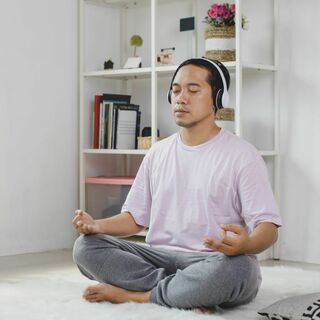
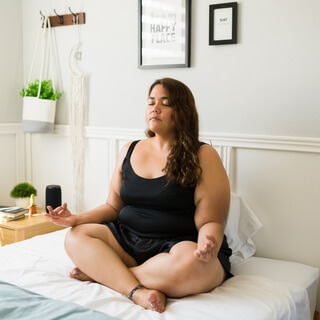
Take a moment to make yourself comfortable.
You may want to sit upright with the back straight or if you are new to the practice or slightly low on energy feel free to lie down.
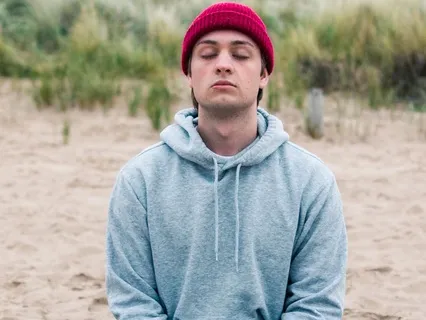
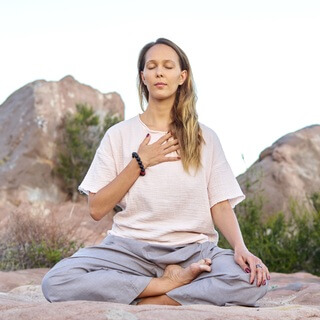
And when you're ready just bring the eyes to a gentle close.
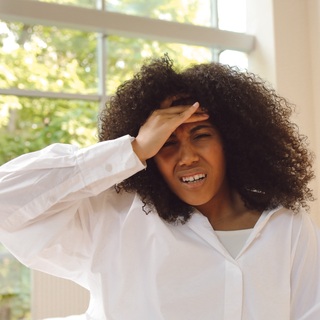
The experience of stress is an unavoidable part of university life.
Doesn't matter whether we are an undergrad,
Postgraduate or research student.
Stress is something that we'll experience throughout our lives in both our professional and personal endeavors.
And so it can be useful to have a technique that allows us to relax,
Recenter and recharge when such periods do occur.
And so I invite you to start by bringing your focus to the breath.
And we're going to just breathe gently in and out through the nose.
Feeling the cool breath kiss the inside of the nostrils on the inhale.
And feeling it slightly warmer on the exhale as we remove this heat and tension from the body ever so gradually and gently.
And just noticing without trying to influence anything where the breath goes.
Are we breathing high in the chest?
Are the breaths shallow?
Or do we feel the breath dive deep down into the abdomen,
Filling the core and striking the area at the base of the spine?
Just notice without evaluation and without trying to change the flow of the breath in any way.
If the breath is short,
Allow it to be short.
And if the breath is long,
Then just follow it in and deep into the core and all the way up and out through the nose as you feel the abdomen contract towards the spine.
And the purpose of this is just to really check in with how we feel.
If the breath feels a little labored,
Then it might be the case that our stress levels are a little bit higher than usual as this shallower breathing is almost like the body's being in a state akin to fight or flight.
Which of course doesn't mean that we want to jump up from our seat.
Although as the mind settles we can feel like we want to get up and do something else.
It's perfectly fine,
Perfectly normal.
All we're doing here is simply using the breath as a kind of signal which can tell us where we are in the moment without having to confuse anything with words or apply any narratives from the past or the future.
As can often happen when the mind is in a state of heightened activity,
Thoughts drifting to events that have taken place and potentialities that don't yet exist and may never exist.
Now as we have taken some time to familiarize ourselves with the quality of our experience,
We can now begin to bring ourselves intentionally into a state of balance.
And so we can begin to scan and relax the body,
Moving from simple sensations to the complexities which may be occurring in the mind.
And this is why the mindfulness of the body is a fantastic way to ground the practice.
And so we feel into the soles of the feet.
Very briefly just scan over the tops of the feet,
Around the ankles,
Into the calves and over the shins.
Not looking for anything in particular,
But just giving our attention to the most important aspect of our lives.
And that's our subjective experience.
Turning our attention not to the systems and frameworks that influence how we feel on the outside,
But just connecting with who we are and where we're at.
Feeling the knees,
Maybe even a little bit of tightness there.
If you are in an upright position or sat with your legs crossed,
Feeling the weight of the body on the backs of the thighs and the glutes.
Noticing the contact and temperature of this area.
Moving over the tops of the thighs and coming into the area of the waist.
Checking in at the base of the spine.
Again no labeling or judging,
Just watching and being.
Allowing the awareness to gradually climb up through the lower back to the middle of the back.
And just running the mind's eye up through the spine.
Feeling a sense of gratitude for the fact that no matter what we experience and how tough life can be,
This area of the body works tirelessly to bring stability to our lives in every moment.
Feeling into the upper back and the shoulders.
An area where we can hold stress and we might experience it as some tightness in the neck or a heavy feeling in the tops of the shoulders.
And we can just drop the mind's eye down the arms,
Around the elbows and over the forearms,
Into the wrists and hands.
Maybe feeling some perspiration in the palms,
Tingling in the fingers perhaps.
And using this sharpened and more concentrated mind to return to the area of the abdomen.
Where we may notice that without even realizing,
The breath has decided to land here more frequently without our doing anything at all.
And we can just acknowledge the organs in the cavity of the torso as we scan over the chest.
Just feel that refreshing,
Revitalizing breath fill the core.
Acknowledging the neck and the throat.
As we rise up slowly into the face and I invite you just to focus on any area of the face which catches your attention.
Sometimes can feel a little tickling sensation around the area of the nose.
We may even feel some stiffness in the forehead around the top of the face.
And gently arriving at the top of the head,
I invite you just to check in once again with the equality of the breath.
And again without trying to label or influence anything.
We don't want to control the breath.
We just want to invite the breath in whichever way is natural for us in this moment.
Coming close to the end of the meditation period now.
Take a moment to reflect on how your experience has changed within such a short space of time.
There's no need to label anything.
You can just feel and know.
Remember you can work with and develop this practice as many times as you need to.
You'll now hear the bell ring three times.
And on the third ringing of the bell,
Gently open the eyes and return to the room.