You are listening to The Adventures of Saraputa and Mogulana.
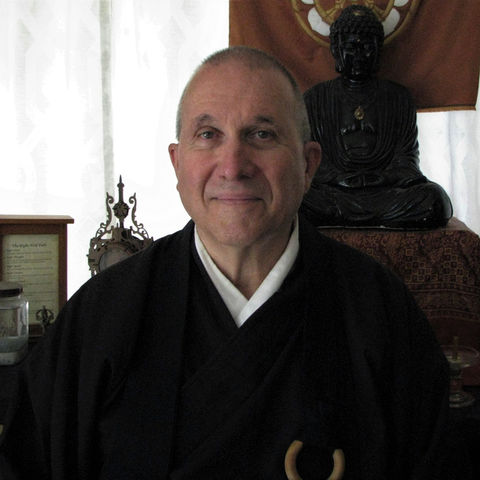
I'm your host,
Morris Sullivan.
As I've mentioned in the past,
Mogulana was known for his ability to see things that others couldn't.
At one time,
He was staying at the monastery on Vulture's Peak in Rajagaha,
Which today is called Rajgir.
He was staying with Venerable Lakkhana,
Who was among the thousand ascetics who had become Buddhist monks after hearing the Buddha give a discourse we call the Fire Sermon.
This discourse was delivered not long after the Buddha's enlightenment,
So Lakkhana had been a monk for some time.
One morning Mogulana and Lakkhana came down from Vulture's Peak to go into the city for alms,
And as they passed a certain point in the road,
Mogulana smiled to himself.
Lakkhana saw this and asked what was on his mind.
What was that about?
And Mogulana said he'd explain it later.
Later that day Mogulana and Lakkhana were sitting with the Buddha,
And Lakkhana brought the incident up.
Mogulana explained that as they passed that spot,
He had seen many miserable ghosts in the air being chased through the air by afflictions and sufferings.
The Buddha listened to his story and confirmed that he also had seen these ghosts,
But he added that he rarely spoke about such things because the average person couldn't see them and wouldn't believe him.
The Buddha went on to explain what kind of characteristics and harmful behaviors might result in rebirth as one of these miserable entities.
Well,
I'm not going to tell you to believe in ghosts,
But resentments and angers over past wrongs can keep bringing us back to re-experience suffering and affliction.
I spoke about this not long ago and about the importance of forgiveness.
So this has come up a couple of times recently,
This particular topic,
A couple of times here and then actually several times elsewhere.
And so I thought,
Well,
If it keeps coming up,
I should talk about it.
And this topic is forgiveness.
So at one time or another,
We all experience some kind of physical or emotional harm,
Either by the hand or the word of another person.
And most of the physical wounds we get,
We recover from fairly quickly.
But emotional wounds can stay sore and fester for a long time after any physical harm has healed.
And so healing a deep emotional wound starts with forgiveness.
And that can be a difficult process that can take some time.
And I got to tell you,
Sometimes when people talk to me about things that they've suffered,
When I hear how some people have been treated and they ask,
How do I forgive that?
It's honestly,
It's a challenge.
It can be very difficult in some situations.
So I've been thinking about this for a while.
And I thought about that,
There's an old quote from Alexander Pope that most of you have heard probably,
To err as human,
To forgive is divine.
And that really is not a bad maxim to keep in mind.
All human beings make mistakes.
It's pretty much what defines us,
Is the fact that we can make mistakes.
But not all human beings find it easy to forgive.
That takes putting yourself in a little bit higher state of mind,
I think.
But every one of the major religions recognizes the importance of forgiveness.
And Buddhism is no exception.
The Buddha saw forgiveness as an essential ingredient in a harmonious and peaceful society.
And somebody gave me a copy of this relatively recent book,
I think it's probably the latest book by the Dalai Lama,
With Archbishop Desmond Tutu.
And they talk about the pillars of joy,
The eight,
I think it's the eight pillars of joy.
And one of the pillars of joy,
One of the things you have to have to keep joy sustained is the ability to forgive.
Tannasaro Bhikkhu,
Who was the abbot of Metaphorist Monastery in California,
Talked once about the importance of forgiveness.
And he kind of summed up the Buddhist view of this fairly well.
So I'm going to share with you what he wrote about it.
He said the Pali word for forgiveness,
Kama,
Not to be confused with karma,
But kama also means the earth.
So he says it's kind of like a mind like the earth.
The earth is non-reactive and unperturbed when you walk on it.
When you forgive me for harming you,
You decide not to retaliate to seek no revenge.
You don't have to like me.
You simply unburden yourself of the weight of resentment and cut the cycle of retribution that would otherwise keep us ensnarled in an ugly samsaric wrestling match.
I like that.
I like wrestling matches.
This is a gift that you can give us both totally on your own without my having to know or even understand what you've done.
So a mind like the earth,
Unreactive,
Unperturbed,
And that's a pretty high ideal.
But I think that we can kind of set that as sort of the target for our practice of forgiveness,
To be unperturbed.
And you can use that as kind of a reason and a method of letting go of the weight of resentment.
It probably wouldn't surprise you to learn that modern psychology studies the idea of forgiveness quite a bit and its effect on us potentially to do that.
There's a professor at the University of Wisconsin named Robert Enright.
And he is maybe the world's foremost researcher on forgiveness.
And I came across some of his research and some of the methodology he uses a few years ago.
And it kind of jived with my experience and with what Tanisarabhikkhu said.
He said,
You can choose to forgive rather than to hold on to debilitating anger and resentment.
And in doing so,
An amazing transformation begins.
The black clouds of anxiety and depression give way to enhance self-esteem and genuine feelings of hopelessness.
I'm sorry,
Hopefulness.
There's an important difference there.
When you forgive,
You may benefit the person that you forgive,
But you benefit yourself far more.
And by liberating yourself from the pain and sorrow,
You can reclaim your life and find the peace that your anger had stolen.
So what he's really talking about is letting go of anger and resentment.
So sometimes people say,
Well,
What does it mean to forgive?
What do I do when I forgive?
That's kind of the number one thing,
Is to let go of anger and resentment,
Which is something that we do.
Other people can do things that are harmful to us,
But they can't make us angry.
We do that.
That's on our side.
That's our doing.
And so when we stop doing that,
That's kind of the first step toward healing from the injury that's been done,
Is to stop continuing to injure yourself.
The Buddha gave a discord talk once.
Somebody came to him and was talking about some injurious thing that someone had done to him.
And they were just going kind of on and on and on about the story,
About this thing that had been done to them.
And the Buddha said,
Stop.
He said,
If you got shot with an arrow,
Would it hurt?
And the person said,
Well,
Of course it would hurt.
He said,
What if you got shot with two arrows?
Would it hurt twice as bad?
And the person said,
Well,
Yeah.
He said,
So you got shot with an arrow,
And now you keep sticking yourself over and over and over again with arrows.
Because every time you relive this harm that's been done and you tell the story to yourself and all of that,
You're creating a mental harm to yourself.
So the first step in forgiveness is to recognize that it's worth the effort,
To let go of it,
To forgive someone.
So if you want to practice this,
And you know,
Buddhism is about practice.
It's not about,
Oh,
I heard a Dharma talk and now my life has changed.
I heard a Dharma talk and let me see how that applies to me and now how can I work with that so I develop a new way of dealing with what happens.
And so the first thing,
If you want to practice it,
Is maybe start with something easy and work your way up.
Whenever we're starting a process like this,
We want to see the situation clearly.
The first factor in the Noble Eightfold Path is Right View.
And this means seeing clearly the cause of suffering.
And so to start,
Accept,
I have this animosity towards someone because of something that they did.
And then look clearly at that.
You know,
What kind of pain am I feeling?
How much pain am I experiencing because of what they did?
Don't focus on how bad they are as people.
So I'm going to deviate from what Enright said for a minute here and say a big part of forgiving is to stop judging.
You know,
That's the thing we get caught up in a lot.
It's okay,
This person did this bad thing so they must be a bad person and let me come up with all the other reasons to continue to justify this idea that they're a bad person.
If you stop judging,
If you go,
Okay,
I don't have to judge this,
Then that takes a big load off your shoulders right there.
So don't focus on how bad they are as people.
Just look,
What am I experiencing as a result of this?
And if you look clearly and it's really not much,
That might be all you have to do,
End of process.
It's often that our ruminating about something is far more injurious than the thing that we're ruminating about.
So in a case like that,
All right,
Let it go.
But if you decide that there's enough stress that you want to work on this,
Then ask yourself,
How did this incident negatively impact my life?
And consider the physical and psychological harm that was done.
Because we can't do something about it if we don't see it clearly.
So how might my views of other people and things like trust have been impacted by any event?
You know,
People will tell me that their first spouse treated them badly in some way and now they're afraid of commitment and that kind of stuff.
So it's important to look at that and go,
This one person did this one thing and that has affected the way I deal with other people.
So acknowledge that the incident wasn't okay.
Accept that you have negative feelings that have arisen because of it.
And then make a choice to accept and coexist with the unpleasant feelings associated with the harm done.
So in other words,
Don't compound the pain by denying it or refusing to experience it.
This happens a lot with people who start to practice meditation and stuff like that.
Anger arises and then you get mad at yourself for getting mad.
Or anxiety arises and you get anxious about the anxiety.
Don't do that.
And don't get mad at yourself for getting mad at yourself about getting mad.
You know,
It's enough to get mad once,
Right?
So accept this feeling has arisen and leave it at that.
This factor of the eightfold path is right resolve.
And so that means setting our intention toward changing the way that we,
Ourselves with our minds create suffering.
And so you have to make a decision,
A commitment to forgiving.
And that includes understanding for yourself what it means to forgive.
What are you going to do in this act of forgiveness?
So basically we're giving a gift to the person that abused us.
Even if they're nowhere around,
Even if they passed away,
You know,
I hear from people who are carrying around anger toward their parents who died 20 years ago and things like that.
It's a very common thing.
So but even if they passed away,
We can still give them this gift of freedom from our anger,
Freedom from our animosity.
We're giving mercy.
We're deliberately letting go of resentments and ill will.
And instead then we can offer kindness,
Respect,
And in some cases even love.
Here's what's not involved in that process.
We're not excusing someone's actions.
We're not forgetting what has been done.
I mean,
You might do kind of depends on what it is,
But you know,
The idea of forgive and forget that works in some contexts.
In other contexts,
You know,
There might be a need for justice or accountability or just to not let somebody enter back into your life if you know that they're problematic people.
But to keep yourself safe and to sustain anger are two different things.
So you can keep yourself safe from associating with someone that you know is going to probably do something stupid and evil again versus keeping yourself angry at them.
So forgiveness also doesn't really have to mean reconciliation.
Reclamation requires trust and forgiving someone doesn't necessarily mean that they become trustworthy.
So I've talked to here in the past about my father who was a violent person and abused alcohol and abused other people and stuff like that.
And it took some serious effort,
But I forgave him for the abuse that I experienced.
But I didn't forget it.
He didn't,
You know,
Turn into Henry Fonda just because I stopped resenting him for things that had happened when I grew up.
But I could be friendly.
I could be kind to him while keeping our relationship at arm's length.
So once you make the decision to forgive,
Then you can begin the process of doing it.
And this requires compassion,
Which in turn requires understanding.
So you can think,
Well,
What was this person's life like growing up?
What kind of wounds might they have suffered that could have made them more likely to hurt you in some way?
What kinds of pressures or stresses were in their life at the time that they did this harmful thing?
And the answers to those questions don't excuse them of anything or absolve them of responsibility,
But it can help us see them as human.
It might even help us prevent destructive acts in the future.
I was talking to someone earlier about this today,
And I didn't tell them I was going to talk about them,
So I'm not going to say who it was.
But they were talking about how they kind of were working through some stuff,
And at one point they forgave themselves.
And that when they forgave themselves,
They realized that they also forgave everyone else.
Because once you recognize,
Hey,
I'm imperfect too.
I've done harmful things too.
Maybe some really bad things,
And I can let go of anger at myself and hatred and self-judgment from toward myself.
Then why would I visit that on anyone else?
Right?
So my father was raised by parents who were emotionally disengaged.
And his own father's idea of having a relationship with his kids was to discipline them with a razor strop,
Which was a wide thing of rough leather that you used to sharpen razors with back in the old days.
And he was bullied by his older brothers,
And he idealized his older sister,
Who was kind and caring,
One of the few decent people in his life.
And then she died when he was a child,
And he was left feeling abandoned.
And it would be difficult to make it through a life like that without suffering from deep wounds.
And so he carried that karmic baggage with him into parenthood.
Now that doesn't excuse the bad things that he did,
But understanding his history makes it easier not to hate him for it.
So as you work on developing understanding and clarity,
Acknowledge the arising of compassion for the person who harmed you.
And this is an interesting one.
A lot of times people will come to me and go,
How can I have compassion for this person who did this bad thing?
Well,
Recognize lots of people do bad things and they do it because they have also been harmed.
They have also suffered in some way.
At the root of their actions is confusion and mistaken views and misunderstanding.
And we all suffer from those things.
Clinging and aversion and misunderstanding are universal phenomena.
It's why we have to have Buddhist temples.
So as you develop understanding,
Notice if your heart softens toward them.
And then think of some kind of gift that you can offer to the person that you're trying to forgive.
So like I said earlier,
To forgive is itself a gift.
It's the gift of mercy.
And maybe to someone who's been unmerciful toward you.
But when we give,
It actually makes us feel better.
And it makes us more likely to give again.
So if you can extend a kindness toward that person,
Even just a smile or a kind word,
That can make your forgiveness more tangible.
Again,
It doesn't mean you have to put yourself in harm's way.
You don't go into a situation where,
You know,
If you're forgiving a con artist,
You let them con you again or something like that.
If it's not safe to interact with them,
Maybe pray for them when you come in here.
Or send them wishes for happiness in your meditations,
Things like that.
And finally,
Look for a way to derive meaning and purpose from this practice.
You can use this as a way to become more empathetic toward other people,
Or to be more mindful of how your actions affect others.
If you've experienced a deep emotional wound,
Then when we accept what's happened and accept how we feel and make a deliberate effort to forgive,
Then we can turn our attention to how we feel to what needs to be done.
And so you might work toward helping others who have experienced a similar victimization.
You might help other people avoid harming someone else.
I did something like that probably 10,
15 years ago.
I spent a few years working with a domestic abuse resource organization in the Orlando area.
And we went into schools and talked about dating violence to teenagers.
And the idea was to help teens recognize the signs that a relationship was becoming abusive so that they would understand the risks of being in a relationship like that.
And we taught them how to get help and that sort of thing.
In the process,
We also talked with young people who were witness to parents in these kinds of relationships,
And we were able to help them.
And we had some guys come to us who recognized that they might be developing abusive tendencies themselves.
And so we helped them get help also.
So having experienced these things firsthand,
It was much more meaningful to me to be able to help these people,
These young people.
There was a famous exchange between a struggling meditation student and his teacher,
So and Roshi.
And the student said,
Master,
I'm so discouraged.
What can I do?
And So and Roshi said,
Encourage others.
And so if we can encourage people who are struggling with their own forgiveness,
Then that can give greater meaning to our efforts to forgive.
And it's worth the effort.
So thank you for your attention.
Thank you for joining me for Episode 29 of the Adventures of Saraputa and Mogulana.
Don't forget,
If there's a topic you'd like me to discuss or question that you'd like me to answer,
You can leave me a message at anchor.
Fm slash Morris dash Sullivan,
Or visit my website at stone dash sun dot org.
If you'd like to help me continue doing this,
You can also donate via Anchor or Spotify.
I don't accept ads or sponsorships for this podcast,
And your donations help me cover the expenses associated with it.
I hope today's discussion of forgiveness will help you let go of some stress and affliction.
Now go save the world.