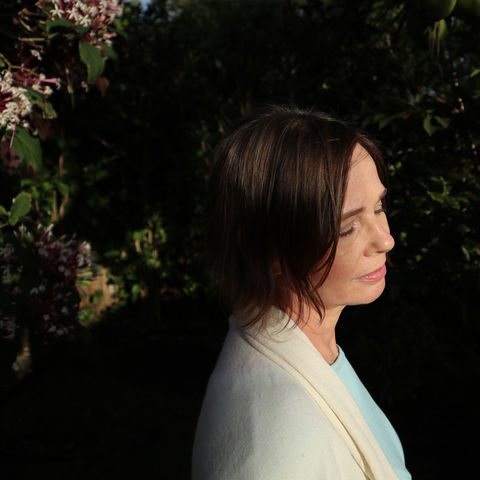
Hi and welcome to this talk about setting up your own meditation practice.
I'm Charlotte Brady.
If you've been thinking about starting to meditate but felt unsure how to begin or if you tried but never got into it,
Then this talk is for you.
I've been practicing meditation for many years.
It's an exciting journey that continues to develop and fascinate.
The benefits and the discoveries you can make about yourself and the world around you are amazing.
It can be difficult to know how to start if you've never meditated before or if you tried and failed.
But if you follow these three simple steps,
You'll be fine.
The rest is just practice.
The first thing to do is to think of the time of day you want to meditate.
It's best to choose a time when you're at least likely to be interrupted.
In the beginning,
It's important to make sure that there will be as little avoidable disturbance as possible from your environment.
You need all the help you can get to stay present in your meditation.
Plan on meditating regularly at the same time of day.
That will naturally help you establish your new habit.
Also remember that it's better to meditate for a short time,
Several times a week,
Than for a long time,
Just once a week.
This helps both body and mind to get used to meditation a little bit faster.
The second thing to decide is how and where you're going to sit.
It is best to sit in a comfortable position with back support.
Different traditions emphasize different things,
But the way I see it is that your position doesn't really matter as long as you can comfortably stay in it for the time you plan to meditate.
You could even lie down.
The only time I advise against that is for people who are prone to falling asleep.
Nothing wrong if you need sleep,
But it won't be meditation anymore.
Some traditions,
Like the Zen tradition,
Really emphasize posture,
That you sit in the lotus position with a straight back.
This is fine,
But if it's painful to you or your legs get numb,
It isn't worth it.
Pain in my opinion doesn't add anything to meditation and should be avoided when possible.
More advanced meditators can learn to work with pain,
But I only ever recommend that if the pain is unavoidable,
Like chronic pain.
In general,
I think it's good practice to never add any type of pain to your life if you can avoid it.
Most people prefer to have their eyes closed when meditating because it limits outside stimulation.
But if you for some reason don't like it,
You can have your eyes open with a lowered gaze.
The third thing I recommend is to use a timer.
That way you help the mind to not worry about how long you've been sitting.
Instead you can relax and know that the timer will go off when it's time to stop.
For someone who is just starting out,
A five minute meditation is a good place to begin.
That way you minimize the risk for you getting bored or overwhelmed and abandoning your practice.
When you can easily sit for five minutes,
Then add another five minutes and so on until you can sit for 20 to 30 minutes.
There is really no need to meditate for longer than that,
Unless you want to,
Of course.
And so when you've found a time that works for you,
A comfortable sitting position and set your timer,
Then simply sit with the intention of spending time with yourself.
Be interested in what's going on inside.
Don't judge anything that happens.
Simply observe.
Become aware of your body,
Your breath and your sense of presence.
If your meditation is unexpectedly disturbed by anything like loud noises or some discomfort,
It doesn't matter.
You can still practice.
Life is constantly changing and disturbance will surely arise from time to time,
Even in our meditation practice.
We deal with it by allowing it to be without judgment.
And sometimes we might even have to get up and make adjustments or even to stop meditating for the day.
That is no problem whatsoever.
It means that your practice is alive and compassionate,
Not rigid and restrained.
By responding appropriately to the situation,
You actually continue your practice in real life,
Even if you have to stop meditating for the day.
A common obstacle to meditation is our thinking process.
There may be more thoughts popping up than you'd like.
That's normal when the mind isn't used to meditation.
It doesn't know what to do with all the stillness.
Try to see thoughts as suggestions that you don't need to engage with.
And if your thoughts disturb you too much,
Then try to direct your attention to a place in the body or to follow your breath.
And if your mind is unusually busy,
You can even count your breaths.
Count to five breaths and then start over again.
If you lose count,
Start over from one.
This is a practice in concentration and a good preparation for meditation.
Another concentration practice is saying a mantra.
A mantra can be any word or combination of words that feel good to you.
It helps your mind to have only one focused thought instead of countless uncontrolled thoughts popping in and out.
There are many traditional mantras in Sanskrit,
But it works just as well to create your own.
In general,
Concentration practices are good for a mind that has a hard time with stillness.
But remember your mind isn't set in stone,
So don't feel discouraged if you have a busy mind.
It can and will change with practice.
Don't feel helpless if your mind rebels.
Simply observe it without judgment.
Meditation is about being rather than doing.
You simply are while sitting.
You sit with your deepest awareness of being present.
And that's all.
That's how simple it is.
But as we all know,
Sometimes the most simple is the most challenging.
Take it one day at a time.
Be patient and compassionate with yourself.
Eventually,
You will find your innate strength,
Peace and love.
You will find deep gratitude and joy.
A nurturing place you can return to when you want a rest and a reset.
With practice,
It will be right there whenever you turn to it.
If you want some extra help in setting up your practice,
You can try my 5 or 10 minute body scans.
It will help you focus and get in touch with your body.
After the body scan,
You can set your timer and meditate for 5 more minutes on your own.
Good luck and enjoy the journey.