Welcome.
Bloom Your Life,
Episode four.
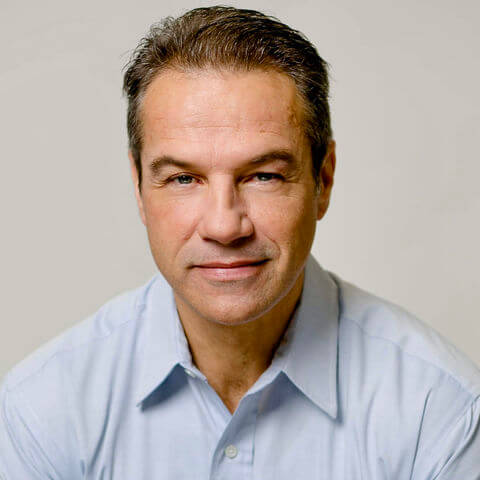
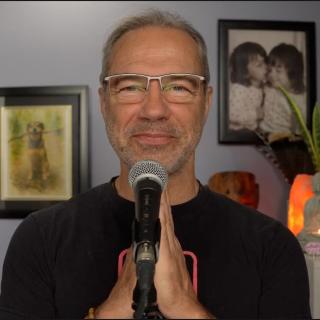
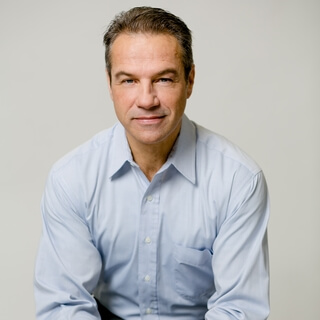
I'm your host,
Thomas the Shooter.
It's great to be here as always.
It's been a while.
And listen,
Before we dive into this,
I,
You know,
Intuitively you might think,
Um,
This doesn't,
Uh,
This doesn't really,
Uh,
Affect me or,
Uh,
This isn't something that I'm interested in because what we're talking about today is human action and the spirit of economics.
And I gotta say,
Yeah,
That doesn't sound like,
Wow,
Can't wait to listen to that.
However,
If,
If I'm on point today,
Here's the thing is,
Is I'm gonna,
I'm gonna connect some dots here between,
You know,
Uh,
Economic thinking,
Uh,
Along the lines of the,
Of Austrian economics and,
Uh,
Potentially some scripture as well as unity principles that,
Uh,
Really are a platform,
A stand that we can take in our lives.
And so I'm going to introduce,
Uh,
Some,
Um,
Quotes from Ludwig von Mises,
Uh,
In his,
In his book,
Uh,
Human action.
And he,
He was sort of viewed as the father of Austrian economics and,
Uh,
And,
And Austrian economics is really,
Um,
Is really bit built on the idea of praxeology with which rests on the fundamental axiom that individual human beings act that is on the primordial fact that individuals engage in conscious actions toward chosen goals.
And,
And that's the idea of this.
And so as we dive into this,
I just invite you to,
To open up and,
Uh,
And just see what's here for you,
Just see what's possible in the world of,
Uh,
Understanding a little more about,
Uh,
Economics from a human action point of view.
So one of the things that,
Uh,
Ludwig von Mises says in his book is human action is purposeful behavior.
It's purposeful behavior.
Uh,
He who only wishes and,
Oh,
You know,
Let me just pause for a moment.
So this is written in like 1949.
So it's,
It's a patriarchal language and I,
And I do want to keep,
Um,
The language,
Uh,
In tune with,
Uh,
With how it was written and,
Um,
And actually I'll,
I'll just go back a moment here.
So,
Uh,
Let's look at,
Uh,
A quote I put in my book,
All rational action is in the first place,
Individual action,
Only the individual thinks only the individual reasons,
Only the individual acts.
Right.
And human action is purposeful behavior.
In other words that,
Um,
You know,
If I were to bring this to unity principles,
The,
You know,
Unity has five,
Five principles.
And if I shorten them down,
It's God is I am,
I think I affirm,
I act.
Right.
So there's a process there.
There's a process for understanding,
Um,
In a metaphysical sense,
Uh,
Our existence,
Our being,
Our beingness.
And so what I think is fascinates me is that the other day I was,
I was,
Uh,
I had rediscovered Dr.
Robert Murphy,
Who does a lot of teaching on Austrian economics and,
And in listening to that,
Uh,
Lecture he was giving or that,
Sorry,
That podcast,
It reminded me of when I had read a great deal of,
Um,
Human action,
The book.
And,
And I started to go through my quotes that I had highlighted in there or areas of the book that I highlighted.
And at that point,
I wasn't actually involved with unity.
I wasn't on this path to,
Um,
Study ministerial,
To be in,
In seminary school.
And so it was all of a sudden like,
Whoa,
What's going on here?
There's this correlation between somebody who is,
You know,
A scholar in the world of economics and this idea of spirituality.
And I'm seeing,
I'm seeing,
Uh,
An intertangling web of the both that there's this mesh going on where one thing is supporting the other.
And,
And so that's what I'm hoping to bring to you today.
So getting back to some of the quotes here,
He who only wishes and hopes does not interfere actively with the course of events and with the shaping of his own destiny.
So if we take out that language and just put,
You know,
Anybody,
Those who only wish and hope do not interfere actively with the course of events and with the shaping of their own destiny.
You know,
Again,
Action is required.
It's one thing for me to sit around and affirm and think of great ideas and want something more for my life.
Want,
You know,
Call something greater for myself.
And if I don't do anything about it,
It's likely not going to unfold.
And,
You know,
I'd go so far as to say,
It's not going to happen.
The road to the performance of great things must always lead through the performance of partial tasks.
And so here's what I love about that is when I think back to,
Um,
The,
The,
The,
The,
The habits,
Atomic habits,
Some of the books I've read around building habits in our lives.
You know,
Let's just take a new year's resolution,
For example.
So maybe decide that,
Uh,
You know,
I'm going to set this new year's resolution.
I'm going to go to the gym four times a week for two hours at a time,
Or three times a week for two hours at a time.
And I'm going to change,
You know,
My,
My body and my eating and all of this stuff.
And January 1st comes in and you do that.
And it only lasts for a short window in most cases.
And the reason is,
Is because it's too big of a jump.
The leap is too great.
You've gone from doing nothing to all of a sudden adding all of this time and energy into,
Into a new way of being.
And in most cases we can't handle it.
So it's,
It's actually the little incremental shifts.
You know,
For example,
Starting to meditate,
Let's say you just started to meditate and you just planned it for,
You know,
Two times a week for three minutes and you stuck to that.
And then you increased it to maybe three times a week for three minutes.
And you started to work on building that into your being,
Building into that,
Building that into your schedule.
You started to work out maybe twice a week for 15 minutes.
You know a great example I can give you is I decided many,
Many days ago,
Almost six years ago now that when I got to 85,
I wanted to be able to do 40 pushups.
And this was after I read Habits.
And,
And I thought,
Well,
How could I,
How could I make sure that that happens?
And the first thing that came up for me was,
Well,
I could just start doing 40 pushups today and just do them every day till I get there.
And then I'll just get to 85,
Having the ability to do 40 pushups because I'm doing them every day.
So that was six,
Almost six years ago,
I've done 40 pushups every day since then.
And what it kicked off though,
Was it kicked off other ways that I started to look at my life and go,
Well,
You know,
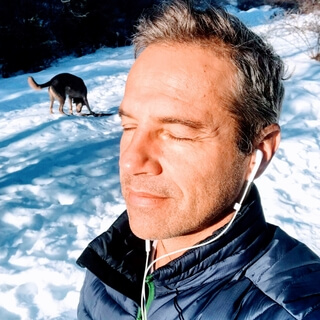
I could probably make better eating choices and I could probably make sure I get out into the trails every day and do some walking and just do some walking or hiking or being with my dog.
You know,
It,
It shifted my thinking and it wasn't a massive task that I undertook.
It wasn't,
You know,
I'm going to go to the gym three times or four times a week for two hours at a time when I haven't,
Hadn't been doing it at all before.
So it's those little openings.
It's the,
Uh,
It's the interfering,
Uh,
Interfering with our ways of being with little activities that move us in the direction that we want to go.
That's,
That's the,
That's the way to get there.
So the road to the performance of great things must always lead to the performance of partial tasks.
And you can take that to every area of your life,
Whatever it is,
Whatever area you want to improve,
Clean them,
You know,
Cleaning up your room,
Cleaning up the kitchen,
Whatever,
Like reorganizing the garage,
Doing little things at a time will move you in that direction.
Putting order into your life is a great,
Great thing to do.
Here's another quote.
Acting man is easy,
Is eager to substitute a more satisfactory state of affairs for a less satisfactory.
His mind imagines conditions which suit him better and his action aims at bringing about this desired state.
The incentive that impels a man to act is always some uneasiness.
Okay.
So the acting person is eager to substitute a more satisfactory state of affairs for a less satisfactory.
Their mind imagines conditions which suit them better and their action aims at bringing about this desired state.
The incentive that impels a person to act is always some uneasiness.
Right.
When we're comfortable,
The chances are we're not really going to do anything about disturbing that comfort.
It's a state of uneasiness that has us,
Uh,
Want to move,
Want to act.
And maybe it takes a while,
Maybe it needs to reach a breaking point,
Right?
But it is that you see a higher calling for yourself,
Something different.
And you know what,
As I thought about this,
I thought this works two ways as well,
Because there,
Um,
There's also the idea that sometimes,
You know,
When I think back to my dark days,
My,
My days where I wasn't,
I was not on my ministerial path when I hadn't really discovered,
Uh,
Discovered wrong.
When I had pushed down my natural spiritual state that I have,
When I pushed that down,
When I was avoiding it,
When I was not wanting to look at it,
Uh,
I did things that were short-term fixes on the pain I was having.
And they were not supportive of me in the long run.
They were ways of being that took advantage of other people.
They were ways of being that,
Uh,
Were,
Uh,
Poor for my health.
They were addictive qualities that were going to lead to a series of poor choices and greater poor choices in my life.
And so I was substituting what seemed like a more satisfactory state.
In other words,
Numbing the stuff I was going through instead of dealing with the stuff I was going through.
And,
Uh,
It turns out that that was probably a bad idea.
And I say probably because it was a bad idea.
Uh,
And it wasn't until I started to see that there was something better.
So my mind imagined conditions,
Which would suit me better and,
And my actions began to bring about that desired state.
And,
And I have to say that there's,
You know,
I can see the moments in my life where those openings began and,
And it's been a journey.
It's,
It's actually been,
You know,
20 plus years to get here,
To get to this moment of,
Of,
You know,
Speaking with you now.
That's,
That's what it's taken.
And before that were many years of unhappiness,
Unease,
A lack of joy,
A lack consciousness,
And,
And not thinking very highly of myself,
But putting on a show as if I was right.
There's,
You know,
Let's not lose sight of the fact that for a long period of time,
There was a pumped up chest and a,
Hey,
I think I'm great attitude when inside that's not what was going on.
Right.
That's,
There was a show,
There was a show happening.
I found this along the path here with doing a little bit more research on,
On Ludwig.
And it's from Charles Koch who writes his thesis a little bit,
You know,
He,
He kind of takes what his takeaways from this.
He put this in the Good Prophet in 2015.
And,
And again,
You know,
This is from an economics point of view,
But I think from an economics point of view,
So he uses monetary,
Monetary rewards are powerful incentives,
But many other factors are critical to creating incentives that improve social wellbeing.
Ludwig von Mises believe there are three requirements for humans to act.
One,
Dissatisfaction with the present state of affairs.
Two,
A vision of a better state.
And three,
Belief that we can reach that better state when just one of these three requirements is missing,
People will not act.
So let's think about,
Let's,
Let's think about that for a moment.
When one of those three states,
Dissatisfaction with present state of affairs,
A vision for a better state and a belief that it can be achieved if one of those is missing,
We're likely,
Well,
He says,
We won't act.
We will not do anything about it.
So,
You know,
Have a look,
Have a look here.
When have those three things been in place?
And is there anything now in your life that you can see where those three things are evident?
Where there is a dissatisfaction with the current state of affairs,
You have a vision for something better and you believe,
You believe that it is possible.
And if one of those is missing,
How,
How can,
How can you put it in place?
What will it take for you to see that actually,
You know,
I am dissatisfied,
But maybe I don't have a better vision.
So maybe this is an area you can work on.
Going into meditation,
Going into the silence,
Asking that of yourself,
Asking what is there for me here?
How can this,
How can I shift this?
What is something that I'm being called to do?
Because one of my deep,
Deep beliefs is everything we want for ourselves and for our lives is within us.
We have the answer.
We know deep down what is truly singing to us,
What we are truly desiring.
And on top of that,
There's many,
Many reasons why we can't.
I get it.
I am a master of the,
I can't right now because.
That won't work right now because.
So this is the work that we get to do.
The fact that you might be noticing that there's something that is not working for you,
That's a blessing.
That's like a,
Oh my gosh.
You know,
That's like an opening.
That's the beginning of something.
Then there's the,
You know,
What's the vision?
And maybe,
Maybe in those moments we need to forgive something.
Maybe there's something we need to let go of.
Maybe there's something we need to forgive ourselves or others for to let that go.
But then that's where the opening,
That's the possibility.
Now what can I imagine?
What can I imagine there?
And then,
You know,
What's the belief?
I have a strong sense that everything is taken care of.
I haven't always been this way.
It's the,
I've developed it.
You know,
You could,
If you wanted to be pessimistic about it,
You could say,
I've sold it to myself.
I have convinced myself that that's the way the universe works.
You know,
I look at the stories in scripture,
In Genesis and creation stories,
And I believe they're stories that are there for us to interpret in me.
You know,
If you wanted to do basic metaphysical interpretation,
Any of the stories,
Places,
People that are in scripture,
You just add in me and you can begin to see that this was actually designed for us to consider.
It's really a quest for why are we here and how,
How can I find my greatest state of being?
That's how,
That's how I view it.
And you are completely entitled to see it an entirely different way.
That's what's so great about living is we get to,
We actually get to experience life in how we want to experience it or how we perceive it.
You know,
My perception is not your perception and vice versa,
But we do have a lot of things from the past and a lot of things that have happened through science as well that can be guideposts.
And we do have things that we know about ourselves that we could call truth,
The truth of who we are.
And,
You know,
I love that just in the last week,
I've stumbled upon my memory of my,
You know,
My reading of Austrian economics and Ludwig von Mises and seeing how in those truths about economics that,
That Ludwig is talking about are actually,
They,
They correlate with some of the truths I have about spiritual living and a way of being.
And,
You know,
It's just more for me,
It's just more example.
It's,
I can't find the word that I,
I have a,
You know,
It's just not there for me right now,
But it,
It solidifies for me what I have been suspecting for a long time in my life.
And it,
You know,
When I think of Think and Grow Rich and the subconscious and how that works,
When I think of,
You know,
From John,
The book of John,
In the beginning was the word and the word was with God and the word was God,
You know,
What we speak and,
And put out and what we speak internally,
You know,
That's the basis of creation.
And then we get to act on it.
And sometimes the speaking that we're saying is not lifting us to a higher place and we're acting at that level.
And so language is part of this,
You know,
So human action is purposeful behavior.
And if we want to live our best life and we want to truly experience our spiritual truth,
Our essence,
Then we need to be purposeful about it.
So I invite you to join me and just take a few moments to breathe in this space to center.
You know,
Obviously if you're doing something right now while listening to this,
That doesn't allow you to pause and take some time,
Then,
You know,
Do it.
I invite you to,
To take this later,
To,
To do this later when you've got some time,
But right now I just feel called to be with you in this moment and to experience my breath moving in and out,
Knowing that everything that was just said is whatever I needed to,
To hear from myself and whatever your takeaways are,
Were,
Are perfect.
There's nothing,
There's nothing else to,
To think about it or to do about it other than to,
Other than to just acknowledge and breathe it in and be in this space.
And if there's something that you're feeling,
You know,
I want to have an aha moment or I want to have a holy moment,
I want,
You know,
What is there for me in my life,
Then this is a good time for you to as well,
To just ask that question.
You know,
What is mine to do?
What is something excellent I could do right now?
And let's just hold that space for a couple of moments.
Okay.
Bring a gentle smile to your face.
Breathing in,
Letting it out.
And as we begin to close off,
I invite you to bring hands to your heart space,
Breathing in through our nose,
First into our bellies and then filling up our heart space.
Holding that for a moment,
Letting it go.
I say,
Thank you for joining me today.
Thank you for being here on Bloom Your Life.
My name is Thomas DeShooter,
And I look forward to seeing you here again.
Namaste.