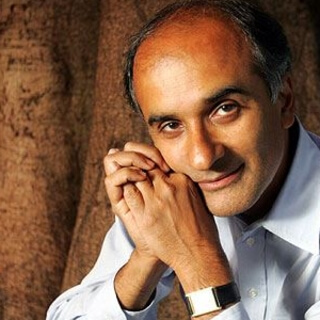
Hello and welcome to Tricycle Talks.
I'm James Shaheen,
Editor-in-Chief of Tricycle The Buddhist Review.
A few days before the eminent scholar Lance Cousins passed away in 2015,
He revealed to one of his students,
Sarah Shah,
That he had been working on a book on Buddhist meditation.
After his death,
With the permission of his family,
Shah found the manuscript on his desktop and prepared it for publication.
The book Meditations of the Pali Tradition is the first comprehensive exploration of meditation systems in Theravada Buddhism and it offers an in-depth analysis of the ritual,
Somatic and devotional aspects of Theravada practice that are often overlooked.
In today's episode of Tricycle Talks,
I sit down with Sarah to discuss a system of Buddhist meditation known as the Jhanas,
A strain of Buddhist mysticism known as Tantric Theravada,
And the underappreciated role of joy in meditative practice.
So I'm here with Sarah Shah,
A lecturer at the University of Oxford.
Hi Sarah,
Thanks for joining.
Very nice to see you James and thank you for inviting me.
Well,
It's a pleasure to have you.
So Sarah,
You recently served as editor for a posthumous collection by Lance Cousins.
It's called Meditations of the Pali Tradition,
Illuminating Buddhist Doctrine,
History and Practice.
So for those of us who aren't familiar with Cousins,
Could you share a little bit about his background as a scholar and Buddhist practitioner?
The two are very different with Lance.
He was one of the old-fashioned school.
He always signed himself LS Cousins,
Which was an old form for scholars,
Which in a way diminished the personal.
That was the hallmark of his understanding of what scholarship was.
He wanted to do something that stood independently of his practice background.
In fact,
He was a very deep practitioner.
He came across Buddhist practice in the early 60s at the Buddhist Society in London and tried a number of practices and didn't really settle with them.
And then he met a man called Bhuvan Punyatiro,
Who had arrived in London from Thailand,
Who taught him a basic samatha breathing mindfulness.
At that time,
It was completely standard in Thailand.
There was nothing particularly unusual or adventurous about it because it was so widespread.
But at that time also,
There was a strong movement against such forms of practice and it has all but died down in Thailand itself,
But continues to thrive in the West.
So that was his practice background,
But he always kept it very distinct from his academic background.
And he did not introduce personal or emic experience of his own into his academic work at all.
So I think one could argue that there is a sense of that there.
And I think it's rather if you read something by a practicing musician when writing about the theory of music or the history of music,
They cannot help but inform some of the work with their own experience.
So how did you come to know Cousins?
How did you come to edit the volume?
When I was a student at Manchester University,
He was taking a meditation class and I went to it and I just got hooked really on the whole Buddhist system and meditation.
And I have been involved with that form of meditation ever since.
I was just very lucky that my first proper meditation class was a tradition where I felt completely at home and where I've always stayed.
There's an interesting story about how you came to discover the book.
It was quite funny because Lawrence could be quite critical as a scholar and he was criticizing a number of books that he'd read on related aspects to Buddhist meditation.
And I got a bit annoyed with him and I said,
Well,
How can you expect these people to know any better if you haven't written a book yourself?
And he just kind of was very quiet for a moment and didn't say anything.
And then about a year later,
He just mentioned something about,
Oh,
The book's going quite well and I thought,
Oh,
I didn't know about that.
And then he never mentioned it again until a few days before his death.
And I had coffee with him and I asked him.
One is always very wary of asking people about books they're writing,
But I decided,
I just said,
Are you getting anywhere with the book?
And he just said,
Oh,
It's in a folder somewhere on my desktop.
And then he died a few days later.
So I knew what to look for.
And his children,
Haller and Randall,
Very kindly gave me free range on the desktop and I found it in a folder.
Lucky for all of us.
So the book focuses on systems of meditation detailed in the Pali Canon and commentaries.
Yet you write that those who practice meditation learn mostly from other living people.
Can you share some of the difficulties of writing about meditation?
There is the ineffability problem,
Of course,
That people often express.
I just can't describe it.
But actually when people try,
It's interesting and often very helpful.
And you can read emic accounts of very deep meditative experiences in the forest tradition,
For instance,
In Thailand and the autobiographies of the forest monks.
And just first person accounts from people that are rare in Southeast Asia,
But you do find them.
And of course,
Amongst Westerners.
Clearly,
We are working with texts that were compiled 2000 years ago.
And it seems there has been a living practice tradition since.
And we hope that the living practice tradition reflects its original impulse.
And the texts and commentaries are used as a way of making sure the practices are being taught in a certain way.
In Southeast Asia,
Texts are cited a lot and the commentaries as well.
So we hope that we have something like the kind of body of knowledge which would have been available to people 2000 years ago through the texts and commentaries.
We can never recapture that.
But we hope we have something that gives us enough to go on if you're a practitioner now.
And of course,
There have been practices and lived traditions.
So there are many great teachers.
And in a way,
I think we tend to learn in practice from a person rather than a book.
This book is certainly a great start.
I mean,
He spoke with so many of the great meditation masters of our time.
He came to meditation at a time when there really were some great teachers around.
There was Achancha and his pupils,
Venerable Samedo and Viridharma and the whole of the forest tradition.
Achanchanda Siri,
A nun,
Comes from the 70s.
But he also had a lot of contact with the Asian teachers as well as Achancha,
Venerable Anandamaitreya,
Venerable Sadatissa,
Walpa Luruhula.
A lot of the great figures of the 20th century he knew and conversed with and learned meditation.
So you say that he kept his practice and his scholarship separate in a very traditional way.
Richard Gombrich referred to his as a dual Buddhist career.
But how did his meditation practice inform his scholarship and vice versa?
Because behind the scenes,
There must have been a conversation between the two that you can discern in his work.
There was and obviously amongst friends who were practitioners and scholars,
He would really explore very widely all the implications of what he was doing in an academic environment and in a practice environment.
I would say when he taught meditation,
He was always careful to introduce the correct terms and to explain them well philologically to people who didn't want to be scholars but wanted to know what a word meant.
What does vitakka mean?
What does vitara mean?
And he would explain it philologically.
And his academic background of course was wonderful though because he could explain to people beginning meditation what a term meant or what Buddha goes and says about something.
And it was a very rich beginner's background for anybody who learned with him.
The other side of that is from the academic point of view,
He attempted not to impose the practice perspective on his work because he wanted the academic ground to be neutral for anybody.
I think it affects his choice of subject matter and his way of explaining things in this book that he wrote before his death.
And I'll give an example of that which is in his discussion of vitakka and vichara.
Vitakka is to apply the mind in all directions.
You actually put it on an object and place it,
The attention.
So if I think of something,
I place my attention there.
Vitakka is from the root to do with wandering.
So it's how the mind wanders over things.
Now the very early texts,
Some people argue there's no distinction between the terms,
But certainly very soon there does appear to be a distinction and Lance felt there always was.
That vichara is how your mind wanders over something.
So if I think,
Right,
I'm going to the shops,
That's vitakka.
But if I wander over it with my mind and think,
And then I'll pop into the general store and I'll get some broccoli,
I need some of this,
That's vichara,
That aspect of the mind.
And in meditation,
They're crucial because you apply the mind to the breath.
You need to avert the attention there,
But you also need to explore the breath.
And the two get subsumed into the breath so that the jhana factors of joy and happiness can arise.
He knew perfectly well how this was taught by the Southeast Asian teachers he went to,
That these two,
That's averting the mind and exploring.
He knew they used it in a very light way with regard to the breath,
That it was used as a kind of gentle attention to the breath and then an exploration of it.
Now clearly that informs his understanding of the early texts because he knows a bit like a musician knows how you play a certain note.
He knew how the practice tradition understood something and would say so as well.
He wouldn't say it from his own personal experience,
But he would quote the practice tradition to support this understanding,
These terms.
He would probably be shocked to hear me saying that because he did try to be neutral and he was neutral,
But he clearly couldn't help knowing some things.
Do you also say something about the lightness of the attention and why that would be a divergent view or a view that countered what people typically understand?
I think it's an antidote to an assumption often made by some scholars and practitioners in the more insight-based traditions where the takka is a much more active application of the mind and an analytic in many cases.
So it's really just a shift in emphasis,
Really.
Yeah,
In other words,
Relax a little bit.
This book focuses on South Asian and Southeast Asian traditions,
The Theravada traditions,
And you write that understandings of Theravada Buddhism have undergone radical shifts in perception over the last few decades.
Can you say more about these shifts and the role that Cousins played in them?
He was rather a behind the scenes sort of man,
So he tended to have a lot of conversations with people and his influence was often not even sort of consciously recognized or acknowledged.
But he really did put the study of meditation as an academic subject on the map.
And for the late 20th century,
This was important because otherwise we would still be looking at Buddhism as a series of theories about no-self from books and the notion that praxis was important,
That ritual,
Charm,
Background,
The Bhavana,
The whole area of practice which is so important for so many Southeast Asians was just as much Buddhism as the theory.
He was very instrumental in communicating that to the academic world and then to the world at large because I think from the late 20th century,
Academia did sort of,
People who were interested in Buddhism would tend to read an academic book and then broaden their knowledge through that.
So he was very influential indeed.
One of the ways in which he was influential and showed up in other people's work,
You mentioned the relationship between the heaven realms and the meditation states.
That for instance is something that he focused on at some point,
Is that right?
Yes,
He did it right from the sort of late 60s,
Early 70s.
I can remember him giving a talk in Manchester saying how the Brahma realms could be understood as the Jhana in the meditative heavens and he pointed out the way they are described so precisely in terms which match meditation states and how the hells of course.
And while this was happening in other traditions,
In the Tibetan tradition,
I think these parallels were being made.
He did make it explicit from a very early stage and that filtered throughout Western understandings of Buddhism.
The heaven realms are metaphors for meditative states,
Is that right?
They also have an ontological existence within the Southeast Asia.
I mean they are all there,
But they do correspond to levels of our mind.
And that distinction is not really one perhaps most Buddhists historically would have made anyway,
That sense of is it really there?
They would have just felt it there.
For a Western psychologically oriented practitioner,
It seems to make eminent sense in any event.
So for Cousins,
The history of Buddhism could be seen as a series of explorations,
Is the phrase used.
Can you speak to the role of creativity and exploration in Buddhism's development?
I think he thought it was like the cake mix where you needed the egg and the cook to make something work.
He felt that Buddhism had always required creativity that came in from local environments,
From movement because it traveled from so early on.
And I think there's a wrong conception that Buddhism was somehow a missionary tradition,
Which it wasn't.
It's been made very clear that by analysis of the early texts that the Buddha was quite careful.
He asked the monks and nuns to travel and to make the teaching available if they were asked.
And also he gave provisions for the Vinaya to be adapted by people as they traveled.
He said that the minor rules could be changed.
What is a minor rule?
I don't know,
But certainly there was a sense that things should adapt and be flexible.
I found it interesting that you wrote that no one else could have written this book.
What do you mean by that?
And what made Cousins's approach so unique?
There are many great scholars in Buddhism,
People who know the Chinese,
Tibetan,
And really magnificent scholars.
And he didn't have that breadth of linguistic capability in reading.
He enjoyed the other traditions,
But he didn't have that breadth.
But what he did have was great depth and understanding of the Pali commentarial traditions and the Sanskrit related ones.
And he had actually been really the first person who was interested in how these affected each other historically and how it worked in practice.
I think the other reason he was the only person who could write the book was that he was probably the only person who had all that knowledge of the Pali canon,
But also had some practice understanding himself of sufficient depth as to recognize the importance of certain discussions and arguments,
Like the whole issue of both ways liberated and wisdom liberated.
He understood the depth of the issues involved.
Again,
He would never say that.
One feels when one reads his work that he's really looking at what was meant in terms of depth of meditation practice.
So there again,
His own practice definitely informed his scholarship.
You say that not only did he have this depth,
But he also provided an aerial view of Pali meditative traditions.
Can you say something about that?
Yes,
It was an image I used in the introduction.
I'd been watching a lot of archaeology programs where they'd found in Egypt,
For instance,
All these ancient sites,
Which nobody knew about through aerial photography,
Because you see patterns on the ground that you can't see at our level.
And I thought,
Well,
In a way,
Lance and our generation of scholars are in that sort of position because we've just got so much access to historical information,
Texts,
Manuscripts.
And say a Japanese Buddhist wouldn't have even had any contact with Indian Buddhism for maybe a thousand years,
You know,
There could have been no contact between those regions.
Whereas we're in a position where we can actually look and see patterns in rather like the aerial photographer.
And I felt that's what Lance does sometimes,
Particularly when he looks at the early Silk Road meditations and sees affinities with the Theravada or Teriyā practices from the early days.
And he draws some conclusions and hypotheses about these practices too.
You describe some of Cousin's concerns with Western academia,
Especially its tendency to dismiss the ritual,
Somatic and devotional aspects of Buddhist study and practice.
How did he work to incorporate these sometimes overlooked components of Buddhist practice into a scholarship?
I think inevitably,
We're quite philosophical in the West,
And we tend to think in terms of orthodox rather than praxis.
And it's understandable that in philosophy and theology departments,
It's the ideas that interest people,
You know,
Not the practice and the meditation is an academic subject.
Really,
What he did is sit in terms of the eightfold path that you need all eight path factors and that they were all important and supported one another.
And he did feel that and he felt that ethics were important,
The sealer aspect,
He felt the meditation was crucial.
He also really valued the chanting traditions and took them very seriously and spoke to charters from the East and asked them about technique and usage of different chants,
Their different purposes and effects in a way that nobody did at the time he started to express an interest.
Now people are becoming interested,
But at that time,
Nobody in the 70s,
Nobody was.
I think you're one of those people who's become interested because it seems to be a theme in your work as well,
Especially your focus on listening to suttas in the form of meditation and sometimes devotion in your own recent book.
Do you want to say something about your book?
Yes,
I wrote this book because I realized that I was reading a lot about the Digha Nikaya,
The long text.
It was very critical and wonderful scholars would often dismiss the whole text in the Digha Nikaya and say,
Oh,
It's got lots of myths that are added on extra.
It's got quite a lot of literary embellishments in it.
I could understand why you'd think that if you were just reading it as a book,
But having spent so long in the East listening to the chants and having heard the suttas read,
And also in my case,
Having studied myths and oral literature as my first degree,
It seemed to me it's just like there was a really rich treasury there in the Digha Nikaya that just needed opening up.
And I think that's why the book has attracted a lot of interest because in a way there's no need to criticize other forms of scholarship or other scholars.
It's rather just showing a whole area of Buddhist texts,
Which it doesn't resonate with our age obviously,
Though it does at a popular level.
People love myths at a popular level,
But I think in academic circles,
Buddhist circles,
The idea that myths could be expressive or could express things that normal words could not express can feel quite new.
So I found people have been very interested in the book and I hope that has an effect on how the suttas are understood because I think there can be a tendency to say,
Right,
This is the important bit,
But that's all the padding put on later.
And I don't see it like that at all.
Those texts are wonderful to listen to.
Yeah,
It's funny because in literature we have no problem at all suspending disbelief and embracing those myths and likewise then in the canon.
People do with the canon though,
They want it to be literally true sometimes and the myth sort of lies halfway between a literal truth and a fiction.
It's something we recognize as true,
You know,
Like Oedipus or Persephone.
We see truth there.
Just for our listeners,
Why don't you say the name of your book?
It's called The Art of Listening and it was published by Shambhala and I was very grateful to Nico Odysseus,
Who's head of Shambhala,
Because he actually heard me just give a couple of talks on this and said,
Sarah,
Would you write a book about this?
So I was very grateful to him because it had really just been something I'd observed and not thought about writing really.
And then when he suggested it,
I just really wanted to write about it and I love thinking about the takes in that way.
That's great.
It's a great book.
Let's take a quick break and we'll be right back.
For the past 30 years,
Tricycle The Buddhist Review has been the leading source of Buddhist news,
Culture and conversation in the West.
Now you can enjoy even more of your favorite tricycle offerings with our new subscription tier,
Tricycle Premium.
For just $99 annually,
Tricycle Premium includes the perks of a standard print and digital subscription plus access to monthly virtual events,
35% off our online courses,
The special premium-only newsletter delivered to your inbox,
And a free digital gift subscription.
Upgrade now at tricycle.
Org slash subscribe.
Let's get back to our conversation with Sarah Shaw.
So let's talk about the jhanas because many of the essays focus on the jhanas.
And to start,
Could you walk us through the jhanas or just tell us generally what they're about?
Well,
The genre is really a way of the mind finding peace within itself and unity.
And the Buddha is said to have recollected stumbling on this state as a child through commentary say,
Just watching the breath.
And when I spoke about vitakka and vichara before,
We usually apply those parts of our minds to things we need to do or things we're working on or the housework,
And I'm going to sweep that corner.
But what we don't do very easily is release these factors from the preoccupations around us and just let them settle on the breath.
And when they do,
A great joy and happiness can arise through the breath.
And this will take the mind eventually to this state known as jhana,
This great unification,
Which has wisdom,
Confidence,
And the mind is unified and freed from searching out for other objects,
Just settles.
The Buddha found this by chance in that lovely story of him finding the jhanas under the rose apple tree as a child.
And his system of breathing mindfulness is a way of training to find that too.
Cousins focuses on the third jhana factor,
Pithi or joy.
Can you share more about the role of joy in meditative practice,
Particularly the different kinds of joy that can arise?
It's very interesting.
Arjuna said years and years ago,
Buddhism always gets such a reputation for going on about suffering,
He said,
But what people forget is that the central factor for awakening,
The fourth out of the seventh is joy.
It's the most important thing you can have in Buddhist practice.
And he said it was the hallmark of the Buddhist path at every stage.
Lance talks about it quite a bit in his book,
Because he felt that it was a very crucial aspect of how Buddhist meditation actually worked,
That without joy,
We just can't do things.
It's like cooking.
You can cook without joy,
But somehow something doesn't happen really.
And he just felt that joy was absolutely essential as part of the Buddhist path.
And it is actually described at great length and taken as very important by the boring kamutan,
The ancient system of meditation,
They call it in Thailand,
From which the practice he derived,
Where you actually need to start off with some joy in your meditation.
It's one of the starting points.
And it's something that changes people.
He actually thought that the best translation,
And he said it was a debate,
I think he says it's something like it's a difficult word to use in the West.
He thought the best translation of joy was love,
Actually.
I was just about to ask about that because he thought love because of how it's been sort of debased in English was not exactly the best,
But otherwise,
It could have been a good contender for a translation of PT,
But also refers to satisfaction of the heart.
I can't remember if he uses the word debased,
But it's something like that.
It's used so often,
He felt that it wouldn't really work as a translation.
Yeah,
Maybe debased is too harsh,
But made too common in usage anyway.
I seem to remember the word debased,
But that is kind of harsh.
Yes,
I can't remember how he puts it,
But he was nervous about using it as a translation of joy,
But he felt it was the nearest.
You know,
He also writes that the jhanas are not seen as an ordinary state of quiet thinking,
But rather a,
Quote,
State of contained ecstasy.
And often this ecstasy is described in bodily terms.
Can you share more about the jhanas as bodily experiences of joy and ecstasy?
Well,
It's quite clear in the Samanya Palasutta that when each jhana is described,
There are about three lines describing the contents of the mind then.
And in the Pali Texas Art Edition,
You then get a long paragraph saying how each one is felt within the body.
So it is very somatic,
Right from the earliest days,
And it's kind of knowing with the body.
And they are lovely images of the bathman making the soap ball from bits of soap that he puts water on and makes it all froth into it.
I think that must be an ancient Indian way of having a bath.
And that you have this wonderful unified cohesive bath ball at the end from lots of little elements so that our mind is scattering all over the place.
But jhana can be felt,
And it's described as being felt in the body.
And for each one of the images,
This is the case,
The pool of water with the springs feeding in,
Says in the body it's felt like that.
The lettuce is blossoming underwater.
They're completely immersed in the experience of the happiness of the third jhana.
And then the fourth jhana is somebody just with a white cloth,
Again,
All over their body,
Just feeling a sense of that kind of serenity of equanimity.
So they're very physical images and very direct and earthy in a way.
But it is quite clear that they are referring to the body.
You mentioned this progression.
Can you share more about the movement from joy to happiness or sukkah to mental clarity?
Well,
The joy goes through five stages.
You can get quite violent,
But it then settles and deepens.
And there's an image in one of the sutras that joy is a bit like somebody parched in a desert who sees a wonderful freshwater lake and just feels this great joy.
And sukkah is what they feel when they've drunk from that.
So I think that gives a nice analogy of the second to the third jhana,
That in the second jhana there is said to be so much joy that it is the overriding experience.
But then in the third jhana,
That's stilled and the mind is very refreshed and they say there's an increase in mindfulness then.
In Western practice the jhanas are often dismissed or less frequently discussed,
But Cousins defends the jhanas as part of a rich tradition crucial to the Buddha's own life story.
Can you speak to the role of the jhanas played in the Buddhist biography and also just mention what jhana itself actually means?
I don't know if we got there.
It might be from Tibetan,
Jayati,
And it has some puns.
You can never tell with the ancients,
But some puns with the word knowledge,
But it's usually associated with the verb to burp things up.
Is it fair to refer to it as concentrative absorption because so often I hear it described in that way?
It can be,
But the problem is that jhana is sometimes understood and sometimes in Asia actually has been a slightly lesser state than the Buddhist jhana in terms of an absorption without mindfulness and wisdom.
And in the Buddhist tradition it is with alertness and wisdom.
In what the Buddha told us about his life,
He clearly wanted jhana to occupy an important role.
He describes the instant under the rose apple tree when he attains the first jhana.
He then describes various meditations he pursued before he got awakened or enlightened.
And then after the enlightenment,
A lot of the arahats and the Buddha enter jhana even when they're enlightened.
They want to.
That's where they refresh their mind.
And at the moment of his parinibbana,
His entrance into nibbana,
He goes up through all four jhanas,
All the formless states,
Then back down again,
And then leaves his human body on the fourth jhana.
So they occupy an important role in his life.
And it's almost like that's where he wanted to be as he made his departure from the human body,
A kind of meditation for those around him,
If you like.
He wanted to demonstrate that the jhanas were just really important.
It's very interesting.
You often get this thing where people say,
Ah,
But you need wisdom.
Jhana won't get you there.
But the interesting thing is that it's rarely looked at the other way around.
The Dhammapada says you don't get wisdom without jhana.
The two are very closely linked.
And people who practice jhana defend it as being a way of just being able to go deeper into the mind with peace and thereby get more insight because there is more peacefulness there.
No,
He also,
Lance Cousins,
Also examines the development of insight meditation.
And today we tend to see insight as opposed to the jhanas,
Or at least succeeding and separate from the jhanas,
Or based on the jhanas.
But the relationship between vipassana and samatha is more complex than that,
I think.
Can you share more about how this relationship is described in the Pali Canon in the commentaries?
Samatha is calm meditation,
And it's always been seen as in tandem or more usually a preliminary to what is known as vipassana or insight meditation.
I mean,
They're often considered as being like the two wings of a bird.
They're both needed.
And if you take up a practice in Buddhist traditions,
There will tend to be an emphasis on one or the other.
But most Buddhist practices that people take up in the West have elements of both.
And samatha breathing mindfulness,
Which Lance taught and practiced and wrote about,
Inevitably has elements of calm,
Samatha,
But also it has elements of insight too,
Because you are aware of the rise and fall of the breath and its impermanence,
And its unsatisfactoriness.
So they're in tandem really in a samatha breathing mindfulness,
But the emphasis is on the pursuit of calm.
Well,
They're described as yoke together,
And the Buddha says that some people practice samatha first,
Then insight.
Some people do insight first,
Then samatha.
And I think there are some forest traditions that have done that at Chumwin.
I think taught a method like that.
And then some teach yoke together,
Where they're actually joined.
And the fourth way to awakening,
Buddha said,
Was through Dhamma investigation,
Which doesn't obviously mention jhana.
So it sounds as if it is possible to attain awakening without jhana,
But it's by a hair's breadth it's there,
If you see what I mean.
The normative way is jhana first and then wisdom.
They're not really oppositions,
You know,
It's a bit like how you feel and what you see.
If you go to a beautiful view,
You know,
I'm by the seaside here,
And I've got some wonderful sea view.
The viewing part,
The diti,
Is the tasana,
The sea,
The clear view.
Whereas how I feel is the samatha.
That's the state of my being.
The two aren't in contradiction.
They're just two slightly different functions that can be going on at the same time.
Our producer,
Sarah Fleming,
And I were really taken with the metaphor of the corkscrew to describe the role of samatha and vipassana on the path to awakening.
Can you walk us through this analogy?
It's wonderful,
Isn't it?
He says that the path is to be compared to a corkscrew really going like that,
That you kind of go an imbalance,
Perhaps one way and then you come around and you get to some calm,
Then you get to some insight,
Which to me sounds like most people's daily experience.
I mean,
I think that happens to me a lot.
I'll get the last moment of calm and I need it,
You know,
My mind needs to be refreshed.
And then you get a jolt of some sort of insight about something,
So then you need to get back to calm again.
It's an analogy that works on the scale of the whole Buddhist path,
But to me it works rather well just on one day.
I can just see that movement going on in one day.
At a certain point,
He says you need to turn the corkscrew upside down.
He calls it a kind of Zen Theravada,
Which I thought was funny.
He also describes a meditation practice that he calls the Purana tradition,
Which has also been described as Tantric Theravada,
Which is something people will probably be surprised to hear.
So can you say more about the Purana tradition as he understood it and the specific practices of devotion and confession that are laid out in it?
The Boran Kamatan is the Thai tradition of Samatha and Vipassana.
And in a way,
The word Tantric is difficult because it presupposes that you're trying to do a checklist of whether it is tantric.
In fact,
It fits the checklist very well.
It tells a lot of the elements you find in Tantra and you do find as you do in the Kavila and in the West,
There is a sense of very strong emotional engagement,
Imagery which appeals to the heart,
A kind of symbolic language,
Often the use of number,
Magical ways.
There is a sense involved in a long,
Almost alchemical process.
And alchemical images are very frequent of transforming base into gold or to the sphere of Nirvana.
And it has this immediacy and emotional precision that you find in Tantra and Kavila,
Whereby you respond at some level to something and see something that is very precise.
But it isn't quite the same as how you would describe it in the rational mind.
But in fact,
It is embedded in Abhidhamma and ancient Buddhist texts,
That tradition,
The symbolism,
The number symbolism,
The use of magical symbolism is all derived from things like the Pali alphabet and from the texts themselves.
It is very closely related to the textual,
Commentarial and canonical tradition as well.
Whether it grew that way or I don't suppose people thought,
Shall we make it a bit commentary based?
They would have just drawn together all the threads in their practice which were available to them.
But it's a very rich tradition and a lot of people find it much more accessible than some of the attempts to bring Buddhism to the West,
Which make Buddhism very scientific in our terms.
It is scientific,
But in ancient terms,
Different kind of scientific approach.
He describes a type of mysticism that he calls Tantra Kavilistic.
And it's not something I would have expected to read in a book on Theravada,
Which is really wonderful.
Can you speak to some of the features of Buddhist mysticism,
Particularly the course of the correspondences with the body and cosmos?
Well,
The underlying assumption of that sort of thinking is that as above,
So below,
The body is a cosmos and that we explore our own through the breath,
As you say,
As a meditation object you explore your body and you are exploring a whole world.
And it's rather the same sort of almost magical sense that Tantra works through and the Kavila.
Your body is the whole temple,
If you like.
It's what you explore.
And there's incredible respect in those texts for the body as well.
I was reading one recently,
It said,
I now pay homage to the majesty of the breath.
And it's like the breath is treated with immense respect.
And if you treat your own breath as something to pay homage to,
It gives a very different experience of it.
It is very devotional and very somatic and very grounded as a tradition.
There is nothing contradictory to the canon.
It is just expressed with a slightly different language.
Even then the terms used are the same as those found in the canon.
And there's no reason to suppose their meanings changed in any way.
And so much of what you're describing runs counter to what we tend to associate with the Theravada in the West or how it is that we're introduced to it.
So what can we learn from this practice about ritual and somatic dimensions of other Theravada traditions?
That is,
How can it expand our understanding of other Buddhist traditions?
I think it stops them feeling so different.
I think that if you know that you are practicing in a tradition which feels like this,
You kind of might read something from a Tibetan Buddhist and it doesn't feel so strange or a Zen practitioner.
There are different kinds of Buddhisms and they have quite radically different sort of approaches or flavors,
But it does give you much more empathy to the other traditions.
You can recognize something in them,
Even though you'll never fully understand it unless you're within that tradition,
But you can get a sense of it.
You know,
I'm thinking of something you said just a few minutes ago,
The sort of rationalization of the tradition,
Stripping it of its myth and maybe even its mysticism.
Is that something that Cousins in many ways is responsible for recovering by working with the tradition as it's actually practiced,
Aside from the text?
Yes,
And I think that would be where his own practice would inform his scholarship,
Purely in the matter of what he's interested in,
Because he knew from the meditation teachers that this was going on,
But there was no evidence for it in any Western books on Theravada meditation.
It was really only Francois Bizot in the 70s that uncovered a whole Cambodian textual tradition and made it available to the West,
That the West really discovered that this had really been going on all the time in Southeast Asia.
The Insight schools had been very skilled in bringing their own methods to the West,
Partly through charts and also through real dedication.
And of course an Insight school will still have many of these elements,
But they might be less emphasized.
You know,
I could keep asking you questions,
And as we've been talking,
We've been deleting questions because we're running out of time,
So maybe for another time,
But I was wondering if you could read a short passage you quote from an earlier book by Cousins.
It was something he wrote for a little book called The Abidama Papers,
Which was a little explanatory book on Abidama,
Which a group did,
And Lance wrote the preface.
So shall I read it out?
Yes,
Please.
I would like to say that I feel great happiness at having been able to take part in this book.
This is his academic work and his work on Abidama.
These deeper aspects of Dhamma are profound,
And work on them is both profound and worthwhile for its own sake.
Perhaps one could compare it to the building over many generations of the great medieval cathedrals of the West and the great monuments and temples of Asia.
Even to take part in the clearing of the site might appropriately give rise to gladness and awe.
So just one last question.
How can studying Buddhist texts together give rise to awe?
They're just wonderful.
If you like them.
If you don't.
That's a good answer.
And it's an important thing to say.
If you don't relate to them,
Then don't worry.
A lot of people open a sutra and think,
I can't relate to this.
It may not be the time.
Maybe they need to hear it from a particular time.
I bet if they bought your book,
They'd change their mind if they are indifferent.
Well,
Thank you.
So Sarah Shaw was wonderful.
It's been a pleasure.
For our listeners,
Please be sure to pick up a copy of Meditations of the Pali Tradition,
Illuminating Buddhist Doctrine,
History and Practice,
Out in September and available for pre-order now.
Thanks so much,
Sarah.
Thank you very much,
James.
I really enjoyed meeting you again.
You've been listening to Tricycle Talks with Sarah Shaw.
We'd love to hear your thoughts about the podcast,
So write us at feedbackattricycle.
Org to let us know what you think.
Tricycle Talks is produced by As It Should Be Productions and Sarah Fleming.
I'm James Shaheen,
Editor-in-Chief of Tricycle The Buddhist Review.
Thanks for listening.