Hello.
Welcome to Sleep Stories with Steph,
Your go-to romantic podcast that guarantees you a calm and entertaining transition into a great night's sleep.
Come with me as we immerse ourselves in a romantic journey to a time long since forgotten.
This series follows the trials and tribulations of Elizabeth Bennet as she struggles to come to terms with Mr Darcy and all he means to her.
But before we begin,
Let's take a moment to focus on where we are now.
Take a deep breath in through your nose and let it out with a long sigh.
That's it.
Now close your eyes and feel yourself sink deeper into the support beneath you.
It is time to relax and fully let go.
There is nothing you need to be doing now and nowhere you need to go.
Happy listening.
This is S.
D.
Hudson-Magic.
Jane Eyre.
Chapter 17 continued.
The next day was as fine as its predecessor.
It was devoted by the party to an excursion to some site in the neighbourhood.
They set out early in the forenoon,
Some on horseback,
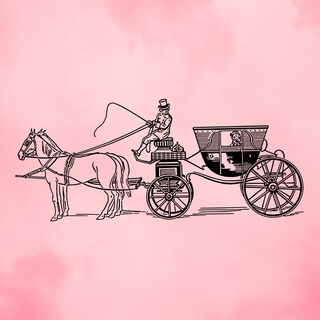
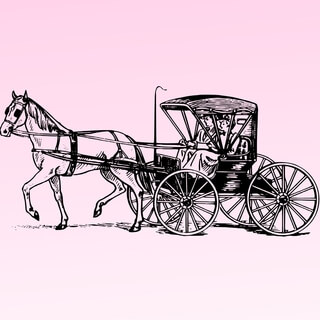
The rest in carriages.
I witnessed both the departure and the return.
Miss Ingram,
As before,
Was the only lady equestrian and was the only one to be seen.
And the return.
Miss Ingram,
As before,
Was the only lady equestrian and,
As before,
Mr.
Rochester galloped at her side.
The two rode a little apart from the rest.
I pointed out this circumstance to Mrs.
Fairfax,
Who was standing at the window with me.
You said it was not likely they should think of being married,
Said I.
But you see,
Mr.
Rochester evidently prefers her to any of the other ladies.
Yes,
I dare say.
No doubt he admires her.
And she him,
I added.
Look how she leans her head towards him as if she were conversing confidentially.
I wish I could see her face.
I've never had a glimpse of it yet.
You will see her this evening,
Answered Mrs.
Fairfax.
I happened to remark to Mr.
Rochester how much Adele wished to be introduced to the ladies.
And he said,
Oh,
Let her come to the drawing room after dinner and request Miss Eyre to accompany her.
Yes,
He said that from mere politeness.
I need not go,
Though,
I'm sure,
I answered.
Well,
I observed to him as you were unused to company.
I didn't think you'd be appearing before so gay a party.
All strangers.
And he replied in his quick way,
Nonsense.
If she objects,
Tell her it is my particular wish.
And if she resists,
Say I shall come and fetch her.
I will not give him that trouble,
I answered.
I will go if no better may be,
But I don't like it.
Shall you be there,
Mrs.
Fairfax?
No,
I pleaded off and he admitted my plea.
I'll tell you how to manage so as to avoid the embarrassment of making a formal entrance,
Which is the most disagreeable part of the business.
You must go into the drawing room while it's empty before the ladies leave the dinner table.
Choose your seat in any quiet nook you like,
And you need not stay long after the gentlemen come in,
Unless you please.
Let Mr.
Rochester see you are there,
Then slip away.
Nobody will notice you.
Will these people remain long,
Do you think?
Perhaps two or three weeks,
Certainly not more.
After the Easter recess,
Sir George Lynn,
Who was lately elected member for Millcote,
Will have to go up to town and take his seat.
I dare say Mr.
Rochester will accompany him.
It surprises me he's already made so protracted a stay at Thornfield.
It was with some trepidation that I perceived the hour approach when I was to repair with my charge to the drawing room.
Adele had been in a state of ecstasy all day after hearing she was to be presented to the ladies,
And it was not till Sophie commenced the operation of dressing her that she sobered down.
Then the importance of the process quickly steadied her,
And by the time she had her curls arranged in well-smoothed,
Drooping clusters,
Her pink satin frock put on,
Her long sash tied,
And her lace mittens adjusted,
She looked as grave as any judge.
No need to warn her not to disarrange her attire.
When she was dressed,
She sat demurely down in her little chair,
Taking care previously to lift up the satin skirt,
And to put on her dress.
To lift up the satin skirt,
For fear she should crease it,
And assured me she would not stir thence until I was ready.
This I quickly was.
My best dress,
The silver grey one purchased for Miss Temple's wedding,
And never worn since,
Was soon put on.
My hair was soon smoothed.
My sole ornament,
The pearl brooch,
Soon assumed.
We descended.
Fortunately,
There was another entrance to the drawing room than that through the saloon where they were all seated at dinner.
We found the apartment vacant,
A large fire burning silently on the marble heath,
And wax candles shining in bright solitude amidst the exquisite flowers with which the tables were adorned.
The crimson curtain hung before the arch.
Slight as was the separation,
This drapery formed from the party in the adjoining saloon.
They spoke in so low a key that nothing of their conversation could be distinguished beyond a soothing murmur.
Adele sat down without a word on the footstool I pointed out to her.
I retired to a window seat,
And taking a book from a table near,
Endeavoured to read.
Adele brought her stool to my feet,
Ere long she touched my knee.
What is it,
Adele?
Est-ce que je ne puis pas prendre un seul de ce fleur magnifique,
Mademoiselle,
Seulement pour compléter ma toilette?
You think too much of your toilet,
Adele.
But you may have a flower.
And I took a rose from her vase and fastened it in her sash.
She sighed a sigh of ineffable satisfaction,
As if her cup of happiness were now full.
A soft sound of rising now became audible.
The curtain was swept back from the arch.
Through it appeared a light.
Through it appeared the dining room with its lit luster,
Pouring light on the silver and glass of a magnificent dessert service covering a long table.
A band of ladies stood in the opening.
They entered and the curtain fell behind them.
There were but eight,
Yet somehow as they flocked in they gave the impression of being a much larger number.
Some of them were very tall,
Many were dressed in white,
And all had a sweeping amplitude of a ray that seemed to magnify their persons as a mist magnifies the moon.
I rose and curtsied to them.
One or two bent their heads in return.
The others only stared.
They dispersed about the room,
Reminding me by the lightness and buoyancy of their movements of a flock of white,
Plumy birds.
Some of them threw themselves in half-reclining positions on the sofas and ottomans.
Some bent over the tables and examined the flowers and books,
And the rest gathered in a group round the fire.
First there was Mrs Eshton and two of her daughters.
She had evidently been a handsome woman and was well preserved still.
Of her daughters,
The eldest,
Amy,
Was rather little.
Naive and childlike,
Face in manner.
The second,
Louisa,
Was taller and more elegant in figure,
With a very pretty face.
Both sisters were as fair as lilies.
Lady Lynn was a large and stout personage of about forty.
Very erect,
Haughty looking,
And richly dressed in a satin robe of changeful sheen.
Her dark hair shone glossily under the shade of an azure plume.
Mrs Colonel Dent was less showy,
But,
I thought,
More ladylike.
She had a slight figure,
A pale,
Gentle face,
And fair hair.
Her black satin dress,
Her scarf of foreign lace,
And her pearl ornaments pleased me better than the rainbow radiance of the titled dame.
But the most distinguished were the dowager,
Lady Ingram,
And her daughters,
Blanche and Mary.
They were all three of the loftiest stature of women.
The dowager might have been forty and fifty.
Her shape was still fine.
Her hair,
Candlelight at least,
Was still black.
Her teeth were apparently perfect.
Most people would have termed her a splendid woman,
And so she was,
No doubt,
Physically speaking,
But then there was an expression of almost insupportable haughtiness in her bearing and countenance.
She had Roman features and a double chin,
Disappearing into a throat like a pillar.
These features appeared to me not only inflated and darkened,
But even fuller.
They darkened,
But even furrowed with pride.
And the chin was sustained by the same principle,
In a position of most preternatural erectness.
She had likewise a fierce and hard eye.
It reminded me of Mrs.
Reed's.
She meld her words in speaking,
Her voice steep,
Its inflections pompous and dogmatical.
Her daughters,
Blanche and Mary,
Were of equal stature.
But Mary was too slim for her height,
And Blanche was moulded like a diamond.
I regarded her,
Of course,
With special interest.
First,
I wished to see whether her appearance accorded with Mrs.
Fairfax's description.
Secondly,
Whether it at all resembled the fancy miniature I'd painted of her.
As far as the person went,
She answered point for point.
The noble bust,
The sloping shoulders and graceful neck,
Dark eyes and black ringlets were all there.
But her face,
Her face was like her mother's.
A youthful,
Unfurrowed likeness,
With the same pride.
Genius is said to be self-conscious.
I cannot tell whether Miss Ingram was a genius,
But she was self-conscious,
Remarkably self-conscious.
She ended into a discourse on botany with a gentle Mrs.
Dent.
And I thought,
Was now Miss Ingram such a choice as Mr.
Rochester would be likely to make?
I could not tell.
Was now Miss Ingram such a choice as Mr.
Rochester would be likely to make?
I could not tell.
I did not know his taste in female beauty.
If he liked the majestic,
She was the very type of majesty.
She was accomplished and sprightly.
Most gentlemen would admire her,
I thought.
At last,
Coffee was brought in and the gentleman was summoned.
I sat in the shade,
Any shade there was in this particularly brilliant lit apartment.
And where is Mr.
Rochester?
He came in at last.
I didn't look at the arch,
Yet I saw him enter.
I tried to concentrate my attention on those nesting needles,
The meshes of the purse.
I wish to think only of the work I have in my hands,
To see only the silver threads that lie in my lap.
But I distinctly behold his figure and I inevitably recall the moment when I last saw it,
Just after I'd rendered him what he deemed an essential service.
And he,
Holding my hand and looking down on my face,
Surveyed me with eyes that revealed a heart full and eager to overflow.
What had occurred since,
Calculated to change his and my relative positions.
Now we were so far estranged,
I did not expect him to come and speak to me.
I did not wonder when,
Without looking at me,
He took a seat at the other side of the room and began conversing with some of the ladies.
No sooner did I see his attention was riveted on them,
And that I might gaze without being observed,
That my eyes were drawn involuntarily to his face.
I had an acute pleasure in looking,
A precious yet poignant pleasure,
Pure gold with a steely point of agony.
A pleasure like what the first perishing man might feel,
Who knows the well to which he has crept is poisoned,
Yet stoops and drinks divine draughts nevertheless.
Most true it is that beauty is in the eye of the gazer.
My master's colourless olive face,
Square massive brow,
Broad and jetty eyebrows,
Deep eyes,
Strong features,
Firm grim mouth,
All energy.
They were not beautiful according to rule,
But they were more beautiful to me.
They were full of an interest,
An influence that quite mastered me,
That took my feeling for my own power and fettered them in his.
I had not intended to love him.
The reader knows I had walked hard to extirpate from my soul.
Germs of love there detected,
And now at the first renewed view of him they spontaneously revived,
Green and strong.
He made me love him without looking at me.
I compared him with his guests.
What was the gallant grace of the limbs,
The languid elegance of Lord Ingram,
Even the military distinction of Colonel Dent,
Contrasted with his look of native pith and genuine power.
I had no sympathy in their appearance,
Their expression,
Yet I could imagine that most observers would call them attractive,
Handsome,
Imposing,
While they would pronounce Mr.
Rochester at once harsh-featured and melancholy-looking.
I watched them smile,
Laugh,
It was nothing.
The light of the candles had as much soul in it as their smile.
The tinkle of the bell as much significance as their laugh.
I saw Mr.
Rochester smile.
His stern feature softened,
His eye grew both brilliant and gentle,
Its ray both searching and sweet.
He was talking at the moment to Louisa and Amy Eshton.
I wanted to see them receive with calm that look which seemed to me so penetrating.
I expected their eyes to fall,
Their colour to rise under it,
Yet I was glad when I found they were in no sense moved.
He is not to them what he is to me,
I thought.
He is not of their kind,
I believe he is of mine,
I am sure he is.
I feel akin to him.
I understand the language of his countenance and movements,
Though rank and wealth sever us widely.
Did I say a few days since I had nothing to do with him but to receive my salary at his hands?
Did I forbid myself to think of him in any other light than as a paymaster?
Blasphemy against nature.
Every good,
True,
Vigorous feeling I have gathers impulsively around him.
I know I must conceal my sentiments,
I must smother hope,
I must remember he cannot care for me.
For when I say I am of his kind,
I do not mean that I have his force to influence and his spell to attract.
I mean only I have certain tastes and feelings in common with him.
I must then repeat continually we are forever sundered,
And yet,
While I breathe and think,
I must love him.
Coffee is handed out.
The ladies,
Since the gentlemen entered,
Have become lively as larks.
Conversation waxes brisk and merry.
Colonel Dent and Mr.
Eshton argue on politics.
Their wives listen.
The two proud dowagers,
Lady Lynn and Lady Ingram,
Confabulate together.
Sir George,
Who,
By the by,
I have forgotten to describe,
A very big and fresh-looking country gentleman,
Stands before their sofa,
Coffee cup in hand,
And occasionally puts in a word.
Mr.
Frederick Lynn has taken a seat beside Mary Ingram and is showing her the engravings of a splendid volume.
She looks,
Smiles now and then,
But apparently says little.
The tall and phlegmatic Lord Ingram,
The tall and phlegmatic Lord Ingram,
Leans with folded arms on the chair back of the little and lively Amy Eshton.
Mr.
Rochester.
Henry Lynn has taken possession of an ottoman at the feet of Louisa.
Adele shares it with him.
He is trying to talk French with her and Louisa laughs at his blunders.
With whom will Blanche Ingram pair?
She is standing alone at the table,
Bending gracefully over an album.
She seems waiting to be sought,
But she will not wait too long.
She herself selects the mate.
Mr.
Rochester,
Having quitted the Eshtons,
Stands on the hearth as solitary as she stands by the table.
She confronts him,
Taking her station on the opposite side of the mantelpiece.
Mr.
Rochester,
I thought you were not fond of children.
Nor am I.
Then what induced you to take charge of such a little doll as that?
She pointed to Adele.
Where did you pick her up?
I did not pick her up,
She was left on my hands.
You should have sent her to school.
I could not afford it,
Schools are so dear.
Why,
I suppose you have a governess for her.
I saw a person with her just now.
Is she gone?
Oh no,
There she is,
Behind the window curtain.
You pay her,
Of course.
I should think it quite expensive.
More so,
For you have them both to keep.
More so,
For you have them both to keep in addition.
I feared,
Or should I say hoped,
The illusion to me would make Mr.
Rochester glance my way,
And I involuntarily shrank further into the shade.
But he never turned his eyes.
I have not considered the subject,
Said he indifferently,
Looking straight before him.
No,
You men never do consider economy and common sense.
You should hear Mama on the chapter of governesses.
Mary and I have had,
I should think,
A dozen at least in our day.
Half of them detestable,
And the rest ridiculous.
Then,
After some conversation,
Singram said,
Mr.
Rochester,
Mr.
Rochester,
Sing and I will play for you.
I am all obedience,
Was the response.
Here,
Then,
Is a corsair song.
Know that I dote on corsairs,
And for that reason,
Sing it conspirator.
Commands from Miss Ingram's lips would put spirit into a mug of milk and water,
He said.
Take care,
Then,
Said she.
If you don't please me,
I will shame you by showing you how such things should be done.
That is offering a premium on incapacity,
Said he.
I shall now endeavour to fail.
Gardez-vous en bien,
Said she.
If you err willfully,
I shall devise a proportionate punishment.
Miss Ingram ought to be clement,
He replied,
For she has it in her power to inflict a chastisement beyond mortal endurance.
Ah,
Explain,
She commanded.
Pardon me,
Madame,
No need of explanation.
Your own fine sense must inform you one of your frowns would be a sufficient substitute for capital punishment.
Sing,
Said she again,
And touching the piano,
She commenced an accompaniment in spirited style.
Now is my time to slip away,
Thought I,
But the tones that then severed the air had rested me.
Mrs Fairfax had said Mr Rochester possessed a fine voice,
And he did.
A mellow,
Powerful bass.
Into which he threw his own feeling,
His own force,
Finding a way through the ear to the heart,
And there waking sensation strangely.
I waited till the last deep notes,
Then quitted my sheltered corner and made my exit by the side door,
Which was fortunately near.
A narrow passage led into the hall.
I crossed it and perceived my sandal was loose.
I stopped to tie it,
Kneeling down for that purpose on the mat at the foot of the staircase.
Then I heard the dining room door unclose,
And a gentleman come out.
Rising hastily,
I stood to face him.
It was Mr Rochester.
How do you do?
He asked.
I am very well,
Sir,
Said I.
I am very well,
Sir,
Said I.
Why did you not come and speak to me in the room?
I thought I might have retorted the question on him who put it,
But I would not take that freedom.
So I answered.
I did not wish to disturb you as you seemed engaged,
Sir.
What have you been doing during my absence?
Nothing particular,
Teaching Adele as usual,
And getting a good deal paler than you were,
As I saw at first sight.
What is the matter?
You have drowned me.
Not the least.
Return to the drawing room,
You are deserting too early.
I am tired,
Sir.
He looked at me for a minute,
And a little depressed.
Depressed?
He said.
What about?
Tell me.
Nothing,
Nothing,
Sir.
I am not depressed.
But I affirm that you are.
So much depressed a few more words will bring tears to your eyes.
Indeed they are now,
Shining and swimming,
And a bead has slipped from the lash and fallen onto the flag.
If I had time,
And was not in the mortal dread of some prating prig of a servant passing,
I would know what all this means.
Well,
Tonight I excuse you,
But I understand that so long as my visitors stay,
I expect you to appear in the drawing room every evening.
It is my wish.
Don't neglect it.
Now go,
And send Sophie for Adele.
Good night,
My.
.
.
He stopped,
Bit his lip,
And abruptly left.