Welcome to Sleep Stories with Steph,
Your go-to podcast that offers you a calm and relaxing transition into a great night's sleep.
It is time to relax and fully let go.
There is nothing you need to be doing now and nowhere you need to go.
Close your eyes and feel yourself sink into the support beneath you and let all the worries of the day drift away.
This is your time and your space.
Take a deep breath in through your nose and let it out with a long sigh.
There is nothing you need to be doing now and nowhere you need to go.
Happy listening.
Chapter One Continued Dorothea Brooke was inwardly debating whether it would be good for Celia to consider Sir James Chetham.
That he should be regarded as a suitor to herself would have seen to her a ridiculous irrelevance.
Dorothea,
With all her eagerness to know the truth of life,
Retained very childlike ideas about marriage.
She felt sure she would have accepted the judicious hooker if she had been born in time to save him from that wretched mistake he'd made in matrimony.
Or John Milton when his blindness had come on.
Or any of the other great men whose odd habits it would have been glorious piety to endure.
But an amiable,
Handsome baronet who said exactly to her remarks,
Even when she expressed uncertainty,
How could he affect her as a lover?
The really delightful marriage must be that where your husband was a sort of father and could teach you even Hebrew if you wished it.
These peculiarities of Dorothea's character caused Mr.
Brooke to be all the more blamed in neighbouring families for not securing some middle-aged lady as guide and companion to his nieces.
But he himself dreaded so much the sort of superior woman likely to be available for such a position that he allowed himself to be dissuaded by Dorothea's objections and was in this case brave enough to defy the world.
That is to say,
Mrs.
Cadwallader,
The rector's wife,
And the small group of gentry with whom he visited in the north-east corner of Loneshare.
So Miss Brooke presided in her uncle's household and did not at all dislike her new authority with the homage that belonged to it.
Sir James Chetham was going to dine at the Grange today with another gentleman whom the girls had never seen,
And about whom Dorothea felt some venerating expectation.
This was the Reverend Edward Cassebon,
Noted in the county as a man of profound learning,
Understood for many years to be engaged on a great work concerning religious history.
Also as a man of wealth enough to give luster to his piety,
And having views of his own which were to be more clearly ascertained on the publication of his book.
His very name carried an impressiveness hardly to be measured without a precise chronology of scholarship.
Early in the day,
Dorothea had returned from the infant school which she had set going in the village,
And was taking her usual place in the pretty sitting-room which divided the bedrooms of the sisters,
Bent on finishing a plan for some buildings.
Just the kind of work she delighted in.
When Celia,
Who'd been watching her with a hesitating desire to propose something,
Said,
Dorothea dear,
If you don't mind,
If you're not very busy,
Suppose we looked at my ma's jewels today and divided them.
It's exactly six months today since uncle gave them to you and you've not looked at them yet.
Celia's face had the shadow of a pouting expression in it,
The full presence of the pout being kept back by a habitual awe of Dorothea and Principal,
Two associated facts which might show a mysterious electricity if you touch them incautiously.
To her relief,
Dorothea's eyes were full of laughter as she looked up.
What a wonderful little almanac you are,
Celia.
Is it six calendar or six lunar months?
It is the last day of September now and it was the first of April when uncle gave them to you.
You know he said he'd forgotten them till then.
I believe you've never thought of them since you locked them up in the cabinet here.
Well dear,
We should never wear them,
You know.
Dorothea spoke in a full cordial tone,
Half caressing,
Half explanatory.
She had her pencil in her hand and was making tiny side plans on a margin.
Celia coloured and looked very grave.
I think dear,
We're wanting in respect to my ma's memory to put them by and take no notice of them and she added after hesitating a little with a rising sob of mortification.
Necklaces are quite usual now and Madame Poinchon,
Who was stricter in some things even than you are,
Used to wear ornaments and Christians generally.
Surely there were women in heaven now who wore jewels.
Celia was conscious of some mental strength when she really applied herself to argument.
You would like to wear them,
Exclaimed Dorothea,
An air of astonished discovery animating her whole person with a dramatic action which she'd caught from that very Madame Poinchon who wore the ornaments.
Of course then,
Let us have them out.
Why did you not tell me before,
Celia?
But the keys,
The keys!
She pressed her hands against the sides of her head and seemed to despair of her memory.
They're here,
Said Celia,
With whom this explanation had been long meditated and prearranged.
Pray open the large drawer of the cabinet and get out the jewel box.
The casket was soon upon them and the various jewels spread out,
Making a bright pateur on the table.
It was no great collection but a few of the ornaments were really of remarkable beauty.
The finest that was obvious at first,
Being a necklace of purple amethysts set in exquisite gold work and a pearl cross with five brilliants in it.
Dorothea immediately took up the necklace and fastened it round her sister's neck where it fitted almost as closely as a bracelet.
But the circle suited the Henrietta Maria style of Celia's head and neck and she could see that it did in the pier glass opposite.
There,
Celia,
You can wear that with your Indian muslin,
But this cross you must wear with your dark dresses.
Celia was trying not to smile with pleasure.
Oh,
Dodo,
You must keep the cross yourself.
No,
Dear,
No,
Said Dorothea,
Putting up her hand with careless deprecation.
Yes,
Indeed,
You must.
It would suit you in your black dress now,
Said Celia insistently.
You might wear that.
Not for the world,
Said Dorothea,
Not for the world.
A cross is the last thing I would wear as a trinket.
Then you would think it wicked for me to wear it,
Said Celia uneasily.
No,
Dear,
No,
Said Dorothea,
Stroking her sister's cheek.
Souls have complexions too.
What will suit one will not suit another.
But you might like to keep it for Mama's sake.
No,
I have other things at Mama's.
Her sandalwood box,
Which I'm so fond of.
Plenty of things.
In fact,
They're all yours,
Dear.
We need discuss them no longer.
There,
Take away your property.
Celia felt a little hurt.
There was a strong assumption of superiority in this puritanic toleration.
Hardly less trying to the blonde flesh of an unenthusiastic sister than a puritanic persecution.
But how can I wear ornaments if you,
Who are the elder sister,
Will never wear them yourself?
Nay,
Celia,
That's too much to ask that I should wear trinkets to keep you in countenance.
If I were to put on such a necklace as that,
I should feel as if I'd been pirouetting.
The world would go round with me and I should not know how to walk.
Celia had unclasped the necklace and drawn it off.
It would be a little tight for your neck.
Something to lie down and hang with would suit you better,
She said,
With some satisfaction.
The complete unfitness of the necklace from all points of view for Dorothea made Celia happier in taking it.
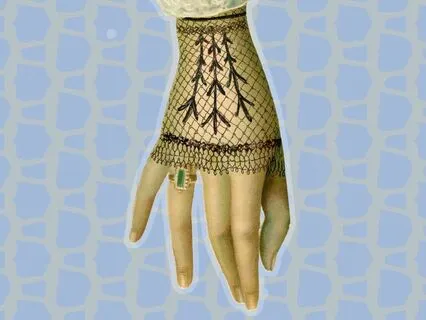
She was opening some ring boxes,
Which disclosed a fine emerald with diamonds.
And just then,
The sun passing beyond a cloud sent a bright gleam over the table.
How very beautiful these gems are,
Said Dorothea,
Under a new current of feeling,
A sudden calm.
It is strange how deeply the colours seem to penetrate one,
Like scent.
I suppose that's the reason why gems are used as spiritual emblems in the revelation of St John.
They look like fragments of heaven.
I think emerald is more beautiful than any of them.
And there's a bracelet to match it,
Said Celia.
We didn't notice this at first.
They are lovely,
Said Dorothea,
Slipping the ring and bracelet on her finely turned finger and wrist,
And holding them towards the window on a level with her eyes.
All the while,
Her thought was trying to justify her delight in the colours by merging them in her mystic religious joy.
You would like those,
Dorothea,
Said Celia,
Rather falteringly,
Beginning to think with wonder that her sister showed some weakness and also that emeralds would suit her own complexion even better than purple amethysts.
You must keep that ring and bracelet,
If nothing else.
But see,
These agates are very pretty and quiet.
Yes,
I will keep these,
This ring and bracelet,
Said Dorothea.
Then letting her hand fall on the table,
She said in another tone,
Yet what miserable men find such things and work at them and sell them?
She paused again and Celia thought that her sister was going to renounce the ornaments as inconsistency she ought to do.
Yes,
Dear,
I will keep these,
Said Dorothea decidedly,
But take all the rest away and the casket.
Then she took up her pencil without removing the jewels and still looking at them,
She thought of often having them by her to feed her eye at these little fountains of pure colour.
Shall you wear them in company,
Said Celia,
Who was watching her with real curiosity as to what she would do.
Dorothea glanced quickly at her sister.
Across all her imaginative adornment of those whom she loved,
There darted now and then a keen discernment,
Which was not without a scorching quality.
If Miss Brooke ever attained perfect meekness,
It would not be for lack of inward fire.
Perhaps,
She said rather haughtily,
I cannot tell to what level I may sink.
Celia Blashton was unhappy.
She saw that she had offended her sister and dared not say even anything pretty about the gift of the ornaments,
Which she put back into the box and carried away.
Dorothea too was unhappy as she went on with her plan drawing,
Questioning the purity of her own feeling and speech in the scene which had ended with that little explosion.
Celia's consciousness told her she had not been at all in the wrong.
It was quite natural and justifiable she should have asked that question,
And she repeated to herself that Dorothea was inconsistent.
Either she should have taken her full share of the jewels,
Or,
After what she said,
She should have renounced them altogether.
I am sure,
At least I trust,
Thought Celia,
That the wearing of a necklace will not interfere with my prayers,
And I do not see that I should be bound by Dorothea's opinions now we are going into society,
Though of course she herself ought to be bound by them.
But Dorothea is not always consistent.
Thus,
Celia mutely bending over her tapestry until she heard her sister calling her.
Here,
Kitty,
Come and have a look at my plan.
I think I'm a great architect.
If I've not got incompatible stairs and fireplaces.
As Celia bent over the paper,
Dorothea put her cheek against her sister's arm caressingly.
Celia understood the action.
Dorothea saw she'd been in the wrong,
And Celia pardoned her.
Since they could remember,
There'd been a mixture of criticism and awe in the attitude of Celia's mind towards her elder sister.
The younger had always worn a yoke.
But is there any yoked creature without its private opinions?