Hi,
And welcome to the Yoga South Africa podcast.
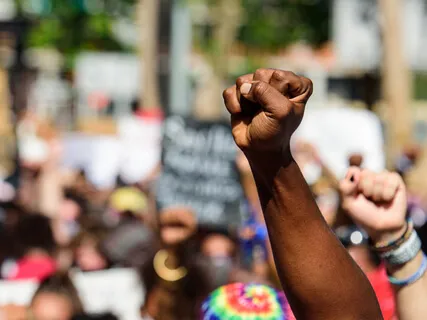
Today we find ourselves on the podcast to open up a conversation about a pressing issue which continues to affect and destroy the lives of many all over the world.
Living in a country that's history is so deeply rooted with injustice and racism,
We find ourselves in a position where our yoga community and country is an uproar.
The world is an uproar.
Understanding the recent and continuous events of the loss of lives of people of color has triggered us all.
There's anger,
Pain,
Suffering,
And trauma everywhere we turn.
It feels as though not so long ago we were here on the podcast discussing upsetting topics of gender-based violence,
Which still continues to occur.
Today we talk openly,
Listen receptively,
And find ways in which we can not only educate ourselves but strongly consider how we can all take action.
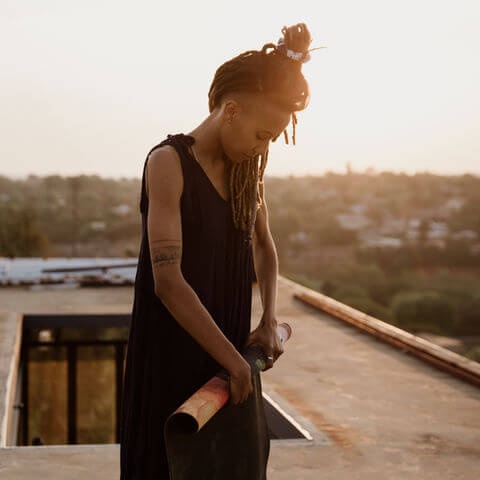
Today I'm with Aneesu Mbijo.
Aneesu is an experienced 500-hour yoga teacher,
Meditation teacher,
Medical doctor,
And the proud founder and co-owner of the pioneering inclusive yoga studio and wellness center,
The Nairspace.
Thanks so much for joining me,
Aneesu.
Thanks so much for having me,
Taryn,
It's so lovely to be able to join you on this podcast,
Especially on discussing this important issue.
Thanks so much.
I have always found that I really enjoy using the podcast for conversations like this because sometimes writing something down or sharing something on social media is simply not enough,
And so it's really amazing to have you here to continue talking about this.
But I'm going to ask before we get into the topic if you would so kindly maybe just open up a safe and grounding space for us and all the listeners.
Perfect.
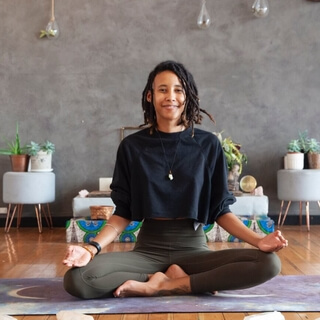
So let's all come to a comfortable seated position,
Whether you're sitting on the ground,
On your bed,
Or a chair,
Maybe on a cushion,
Resting our hands on our knees or on our laps,
Relaxing the shoulders down the spine,
And when you're ready,
Closing your eyes.
Once you've closed your eyes,
Just take a moment to take stock of where you are in this moment.
Begin to notice your breath moving in and out of your body.
And as you breathe,
Just take some time to take stock of your current state.
Notice how your body is feeling in the present moment.
Notice what it feels like to breathe with awareness.
Move your awareness to your mind and observe if there are any thoughts,
And if there are any notice if these thoughts are stuck in the past or fast-forwarding to the future.
Lastly,
Take some time to move your awareness to your heart space,
To observe your emotions and your mood.
And in this moment,
After observing yourself,
Take some time to give yourself permission to feel exactly as you are feeling in the present moment.
Knowing that there is no wrong or right way to feel right now.
And feeling yourself relax down into your seat,
Relaxing your weight down into the earth,
Extending into this present moment,
Trusting that everything is unfolding as it should.
Let's take three deep breaths together.
When you're ready,
Taking a deep breath in through the nose and opening the mouth,
Sighing the breath out.
Two more deep breaths in through the nose.
Opening the mouth,
Sigh the breath out,
Releasing anything that may feel heavy that's dragging you down or pulling you back.
And our final one,
A deep,
Deep breath in through the nose,
Filling up the lungs.
And a long sigh out as you exhale,
Completely letting go.
Gently bring your hands together in prayer by your heart and slowly start to rub the hands together.
Taking yourself back to your body,
Creating energy in the hands,
And then slowly bringing your hands to rest over your closed eyes.
Gently fluttering the eyes open,
Widening the space between the fingers,
Allowing the light shapes and colors of the present moment to come in,
And eventually releasing your hands down towards your knees.
Thank you so much.
I find that so valuable in really just cultivating a bit of your centering as we move into this topic today.
And in the last few days leading up to this podcast,
I found it quite hard to know where to even begin on such an extensive and longstanding issue that we continue to face on a daily basis.
And so I'd like to start with opening up about the work that you do specifically with regards to inclusivity and diversity,
How you experienced these two issues and how that led to the work that you do and what you've created at the NEST space.
Totally.
Yeah,
Ati.
So I think my journey with yoga has been very much interconnected to me understanding my identity as a woman of color and trying to figure out what I want my voice to be when it comes to the world in general.
I started yoga very young with my mom in Zim,
But I think my own practice developed when I was in medical school when things were quite stressful with exams and stuff,
And I was really looking for an escape.
And I was in Cape Town at the time,
And I went back to yoga and kind of did a trial at a number of yoga studios in Cape Town.
And while I began to love yoga and my practice definitely deepened,
There was always this underlying feeling of me not quite belonging in the spaces that I was practicing in.
Most of the time I was the only person of color in the class.
I think in most instances I was the only person of color in the community of the studio.
There were often no yoga teachers of color at that time in Cape Town.
And it was a strange experience because I was working as a medical student,
And I'd be working in government hospitals in Cape Town and basically be surrounded by my colleagues who were people of color.
My patients were people of color.
And so I was starting to learn Xhosa and all of that stuff to be able to navigate that space as a doctor.
But when it came to my yoga practice,
While it was an escape from the stress,
It also seemed to be a space that you could escape blackness and escape what it meant to be a person of color.
And that didn't really sit too well with me.
And so I think it was when I started to feel that way that I had this dream of being able to practice in a space where everybody,
Regardless of their sexual orientation,
Regardless of their race or of their age even,
Felt like they belonged in that space.
And a space where yoga wasn't just about the asana or about the breath,
But instead it was what I think it should be,
Which is a practice for life and a practice which incorporates all of the many struggles or discomforts that you as an individual experience in life.
And for people of color,
Racial issues especially are something that I think a yoga practice can provide so much healing and evolution with when it comes to the ability to link your practice to what is happening in your own life.
And so that dream was born.
And fast forward a couple of years later where I was working at a doctor and just not really happy and feeling like my patients needed more than just pills or surgeries to help them to heal.
And me and my partner Vanessa have now managed to create this beautiful space which really I think holds true to the ethos of inclusivity all the way from who we employ,
The music that we use,
The way that we advertise our classes or our offerings,
The various charities that we support through our business,
All of that is with this ethos of inclusivity in mind.
But it definitely started off as a personal journey and a personal desire to have a space like that for myself.
You know?
And I'm curious,
How long ago was it when you were in Cape Town and have you felt that there's been a shift or a change?
I think for me personally in yoga South Africa,
I think there's a lot of teachers of color who are standing up and putting the whole yoga community in a situation where we strongly consider the yoga that we are practicing and what our studios or our classes are actually advocating for and how we can actually become really internally aware of the message we are putting out there.
Are you also feeling that in Joburg,
Do you feel as though there's been some kind of shift over the last few years?
I think,
You know,
I was in Cape Town.
When did I?
I started in 2015.
So that was around the time,
Before then was around the time when I was experienced in yoga in Cape Town.
Yeah,
I think coming to Joburg,
I've definitely seen a difference.
I think Joburg in general is a bit more,
It's less homogenous I would say than Cape Town in the sense that,
You know,
I think we all need to be very honest about the fact that yoga is still a practice for the privileged.
You know,
You need to be able to afford yoga classes to be able to practice most of the time.
There are community programs like Earth Child and a lot of teachers who are teaching in areas like the townships or places where people have no access to yoga.
But for the majority of,
You know,
The majority of people that we're speaking about who have been exposed to yoga,
It's generally people that can afford.
And I think in Joburg,
That group of people looks a bit less homogenous.
You know,
You've got quite a significant black middle class here in Joburg,
Whereas in Cape Town,
That's essentially made up by the students who study there.
I think majority of the people who could afford to go to a yoga studio in Cape Town is very much still a white privileged demographic.
So I think that's one thing to consider is like the class issues and the affordability of yoga.
But one of the things that I've seen that I think we still have a long way to go is if we look at the number of yoga studios and the ownership of those yoga studios,
If we look at the teachers who are teaching classes in main studios or reputable studios,
I think there's definitely still a disconnect.
I mean,
I think if you were to compare what you see in the average yoga studio to what our population looks like,
It doesn't really make sense.
You know what I mean?
Like I think I can probably count on a hand or two hands maybe the yoga teachers of color that I know are able to make an income from yoga where yoga teaching is just what they're able to do.
Whereas I think that that's a reality that's more accessible definitely for white people in South Africa.
But I do think it's changing.
And I think conversations like this are part of the change.
I know Cape Town now has,
The only one that I know of is Holding Space,
Which is a studio which is run by a friend of mine who's a woman of color.
And that's the only black-owned yoga studio that I know of in Cape Town to be honest.
And there's another black-owned yoga studio that I know in Durban called The Toolbox.
And I know the owner's there.
And then we've got The Nest Space in Joburg.
So I mean,
If you were to compare that to the number of studios in general that we have over the country,
It's still clear that there's a little bit of a,
There's still a way to go when it comes to that.
Definitely.
There's so many factors that you brought up there.
And so I'd really like to explore each of them a bit more fully because what you mentioned is,
As soon as we're looking about inclusivity and accessibility,
We also look at affordability and,
Running something like yoga in South Africa becomes quite a pricey thing.
Renting spaces,
I'm sure you understand as a studio owner,
Trying to make classes more accessible and trying to find that balance is something that we very much struggle with.
And so in essence,
Our yoga practice at a studio becomes quite a luxury.
Totally,
Totally.
I totally agree with you on that.
And we,
I mean,
It's so simple where we were very quick to say,
Yoga practice is simple.
You just need yourself and your mat.
I mean,
It takes a while to get to the point where you can just hop on your mat and do yoga.
You know,
We do need to,
You know,
There's the,
That's the importance of having a studio and a teacher to guide you through it.
And so it does become quite a luxury in our country and is very much a white luxury kind of practice.
So it's very interesting what you brought up them with.
And I'll make reference to a previous podcast that I did with Indivud Zanyi,
Who is also a yoga teacher in here,
Who's doing a lot of work with regards to yoga,
Race and action.
And in her podcast,
The,
One of the things we spoke about is recognizing what kind of privilege we do have.
And I think that that's a big thing that we need to all take a moment to think about the privilege that we hold and,
You know,
Specifically white privilege and become more aware of that as a first step to,
To working within this specific topic.
And so when I saw that,
That video that you released that I shared on Instagram,
That was something that strongly facilitated my thinking process in the way that we bring these issues into our yoga practice.
Cause it's not a disconnect.
It's not yoga and injustice.
I mean,
Everything is,
Everything is so interconnected.
So you know,
What was going through your mind when you were,
When you're recording this video and in your thought processes of bringing these components into your yoga and meditation practice,
If I can say it like that?
Yeah.
I think,
You know,
With,
With,
There's been so much which is going on in the world,
You know,
In terms of movements,
There's been the climate change movement,
There's been the black lives matter movement,
There's been the gender based violence movement and me too.
And I think,
What I've found solace in at these times,
You know,
It's so often where we start to feel helpless and we start to feel like we can't affect change as individuals.
But when you start by recognizing that the change begins with you and that doesn't have to do with what you post or,
Or things like that,
It more has to do with you shining the magnifying glass on all of your individual actions and asking yourselves how those actions relate to whatever movement it is you're trying to affect change in.
So for example,
You know,
With the black lives matter movement,
You know,
I don't think a lot of us feel like there's much that we can do when,
You know,
When you immediately are confronted with these things.
But when you take a moment to step back and to think about it,
You start to think about,
You know,
How do you relate to other people of color that you have contact with in your life?
You know,
Whether it's the people who help you maintain your home,
Whether it's your employees,
Whether it's the people on the street,
Or just whether it's your friends as well,
Maybe you have friends of color,
Just,
You know,
Shining the magnifying glass on those actions.
And then trying to see how you can change those actions to bring about change.
So for example,
You know,
I'm running a business and we,
Part of our business is our store and our store is a zero waste store.
And so the immediate reaction or the easy thing to do is to look up suppliers of zero waste goods and to just look at the most,
You know,
The supplier with the most clout or the most advertising who's got the biggest brand and to have that person supply your shop.
But if you're,
If you are trying to act in a way that's supporting a movement,
The question there is,
Can I find suppliers of color who can,
Who I can support?
Can I find businesses that are run by women of color who generally are not given opportunities to sell their products and stores because their businesses are too small?
And am I able to use whatever privilege I have to be able to empower them?
And I think yoga is the perfect way to start to live in this way because it encourages us to perform every action mindfully.
You know,
When you're on your mat,
All the way down to where you place your finger in a mudra or where you,
Where your drishti is,
Where you decide to focus your gaze,
We are trained to be mindful of every single aspect of the present moment during our yoga practice.
And if you are able to take that philosophy off the mat and to reflect on all of your actions off the mat and what they mean,
I think that's when true sustainable change comes from.
And I think that's what I was trying to say in that video.
I like everything that you,
You mentioned there because it's something that has also come up in our talk shops previously in the last month that we ran was speaking about the ways in which we,
You know,
Firstly becoming aware of the privilege that we have and becoming aware of the way in which we naturally do things or the business that we ran or the products that we buy.
And we just do it almost on impulse or maybe it's just a form of a habit.
We don't actually consider,
You know,
Who am I supporting?
What are my intentions behind purchasing what I have or,
You know,
The teachers that I practice with?
And so inviting,
I mean,
Everyone who's listening to today to take a step further and ask yourself,
You know,
Who am I supporting and who do I want to support and how can I change my habitual behaviors and things that I do on a daily basis to rather make an impact rather than to just be the regular mundane things that we don't even think about.
I think that's what you're referring to with regards to the mindfulness component.
Totally T.
I think with self-growth,
It's almost like an onion to a certain extent.
There's so many different layers.
So there'll be some people whose work when it comes to this movement is dismantling their racist attitudes and their racist,
You know,
Their racist beliefs.
And for other people,
Perhaps they've already spent time doing that work and their work is now how to bring their activism into their consumerism,
How to link your beliefs and what you're fighting for into what you purchase and what you consume.
And so I think a lot of,
There's a spectrum of the amount of work that we need to do and all of it is important.
And I think in that way,
When you start to see activism in that way,
You realize that there's essentially nobody who can sit back and say,
Oh yeah,
You know,
I'm not affected in this movement.
I've kind of done everything because there's always a layer deeper than you can go.
I think it's something that it's,
I mean,
I agree with everything you're saying,
And it's something we can,
You know,
I'm always just thinking back to our yoga practice simply because I think that people who are drawn to this practice are already finding themselves on a,
On a certain path,
Whether it be for spiritual growth,
Personal growth,
Any form of transformation,
We're already in a position where we are hyper aware of our actions and behaviors and if not immediately,
Then definitely on that path.
I think,
You know,
One of the things that I've,
That I've noticed,
And I think,
I think as with everything,
You know,
The world is not black and white,
Excuse the pun,
But yoga,
Yoga has the ability to really unite people and to get people to change on an individual basis.
But I've also found that in some,
Some instances,
Spirituality has,
Has almost been used as an excuse not to deal with these issues.
I don't know if you know what I mean,
But I remember being in,
In a,
In a yoga class and I don't know what it was.
I think it was youth day and the teacher who is teaching the class basically made a reference to say that,
You know,
We're all here on our mats,
We're all here being present.
And so,
You know,
It's important not to distract ourselves with the problems of the ego or the problems of the mind.
And by that he was referring to,
You know,
I guess that issue,
The issue of,
Of,
Of youth month and things like that.
And I find that that is also something that's important to discuss is,
Is this view sometimes that we as yogis are better than people who don't practice.
And so essentially there is less work to do if you are a yogi or even a yoga teacher,
Or even a yoga studio owner,
Because of this belief that you're somehow closer to that all knowing or that enlightenment or whatever it may be.
And I find that that can sometimes just be an added thing that you need to,
To work through as a spiritual practitioner to realize that there's,
There's other work that needs to be done that's also part of your,
Your spiritual evolution.
And a lot of that has to do with facing the current issues in the world as opposed to just turning a blind eye.
For sure.
It was actually,
I mean,
What you mentioned,
There was something that I've,
I've written here on my notes is I think over the last few days,
I've probably spent too much time on social media than I should have,
But definitely watching a lot of videos of,
You know,
Things that have naturally come up on my feed and what other people are sharing and specifically looking at the fact that,
You know,
Our,
When we come onto our mats and we will hear for a spirit,
Spiritual practice in whatever form that may be for you is that we sometimes have this perception is that it should be happiness and joy and enlightenment and all of these,
You know,
Positive traits and somehow oblivious about the things that are uncomfortable and difficult for us to face.
And so,
You know,
When we find ourselves in our yoga practice,
You know,
Like I said,
There's no disconnect between the two.
It's everything in one.
And so I'm thinking of ways in which,
You know,
These kinds of questions and thought provoking conversations is something that we need to almost address in our own practice,
You know,
Within yourself,
But also make available through the classes that we teach because we went to our practices to be,
I mean,
Authentic and also true to what's actually happening in the world around us.
Totally,
Totally.
I loved what you said about yoga,
Yoga being seen as like,
Sometimes it's the happy clappy,
The happy clappy club,
You know,
Where everybody is like singing Kumbaya together.
But the ironic thing is,
Is we get taught in our yoga practice to sit with discomfort.
Discomfort is such a huge part of strengthening and deepening your yoga practice.
And we get taught that when we are in certain postures that make us feel uncomfortable,
That our role there is to sit within the discomfort,
To breathe and to be with it.
And I think it's about drawing the parallels between,
You know,
What we teach on the mat and explaining how that serves as practice for real life.
Practice of,
You know,
Instead of dealing with an issue like Black Lives Matter on the surface level and basically flying through this pose,
Take some time to sit here and to be here,
To notice your discomfort and the thoughts and the emotions that come up with it.
Because it's only when you sit with the discomfort that you can actually work through it and overcome it.
No,
Definitely.
I agree with that.
And I think the two parts that we're looking at in this podcast was,
You know,
Firstly the awareness and being able to educate ourselves.
And I think that when we look at education,
We look at are we actively going out there and seeking information?
And then are we also sitting with that kind of information?
And I think those constant conversations and questions that we ask ourselves should in a way invite us to keep on looking for more,
More ways we can do better.
And so the second part exploring but now was,
You know,
Ways in which we can be more proactive and take action.
And I know we mentioned the one about who we support and being considerate about the businesses we run.
But are there any other ways that you can think of that we can be active in this issue?
I think speaking about these issues in spaces where these conversations usually wouldn't be had is super important.
So I mean,
I know my friendship group is one where we speak about things like this all the time.
Whereas my family group with which has,
You know,
My aunts,
My uncles,
My grandpa and their kind of,
You know,
It's brought up as an interesting topic,
But it's not really discussed on a deeper level.
So I think having discussions in personal spaces where,
You know,
Conversations like this are uncomfortable is super important.
And it's difficult.
I mean,
It's,
It can sometimes be a bit intimidating to be,
You know,
That one person in your family or in your friendship group,
Or even in your workplace,
Who is constantly bringing up difficult topics.
But if you have a sense that speaking about something like Black Lives Matter is going to be uncomfortable around a certain group of people,
Those are the very people who need to be having this type of conversation.
And I think,
I think,
Sustaining,
Sustaining a movement,
Sustaining a movement is super important.
And I think we've seen this with,
With every single movement that we have is not just thinking about this issue when it's trending or when everybody else is thinking about it and speaking about it too,
But taking the time to be somebody who's,
Who's voicing these issues and who is constantly aware of these issues,
Even when the interest has kind of died down.
Because what we've seen is we've seen how,
I don't know how many movements like this we've seen where there's a huge,
You know,
Upset around the world about what's happening.
And that lasts a couple of weeks,
Sometimes a couple of months,
And then it dies down.
And then a couple of years later,
It surges up again,
Because nothing has really happened.
And so I think sustaining,
If we really want change to take place,
It's about keeping these conversations in mind throughout.
Yeah,
That was something I was actually thinking about last night,
Especially with regards to,
I mean,
We see things in the news all the time,
And I'll relate specifically to gender based violence,
Which was,
You know,
At the end of last year was that big uproar.
And now,
You know,
That it's almost as if the movement's still there,
And I can still see it on social media.
But naturally,
There's a spike and a drop and a spike and a drop.
And so,
You know,
Thinking of ways that to,
Like you said,
To keep it sustainable and to keep it consistent,
And to not necessarily just back down when other things come up.
I mean,
When you were recording that video,
And you and I had spoken previously,
When we were putting together the talk shops is that,
You know,
There's so many things happening at the world,
Because we had so many big climate issues in the beginning of the year,
And then it was coronavirus.
And now it's this,
And you know,
Everyone's just feeling,
I mean,
I can speak for myself and say extremely triggered across all fronts,
That are the point.
Now,
I don't know what to do.
I think that's where you said the helplessness comes in.
But knowing,
You know,
How can I give my attention to all of these different issues,
Because there's so many things happening in the world right now.
Yeah,
Yeah,
To me,
To me,
The only the only sustainable way to do it is to bring it into your daily living.
So and once you begin to do that,
And in a mindful way,
You know,
I don't think that it's not healthy to sometimes believe that your whole way of living is going to change within the matter of a day,
Just because these things are being highlighted.
But I think when you start to believe that the way that you live is your protest,
Then then it becomes a bit more manageable,
You know,
Because then you do it step by step,
Maybe with something as simple as as saying,
You know,
I eat out four times,
Four times in the month,
How many of how many of those times that I eat out are supporting black businesses,
You know,
And then changing that and saying to at least half of the meals that I eat out are in black owned establishments supporting supporting black entrepreneurs.
And that's a lot more manageable,
I think,
You know,
Because it's a habit that you are enforcing that you can sustain.
And it's also a habit,
I think a lot of people believe that change has to be uncomfortable for it to be effective.
And while I feel like,
You know,
Comfort and privilege are definitely interwoven and interconnected.
For us to make a sustainable difference,
You can't feel like your life is a chore every every day.
And so it's about finding a way to create an impact in a way where you are still feeling like you're living your life and you're you're able to prosper and things like that,
While also affording the people who are disempowered or who are at a disadvantage to also succeed by by through your actions.
I like what you what you've said there.
And something that I've in a way just just realized while listening to you is that,
You know,
That moment of helplessness of not being able to do something because that we almost have this expectation that we must do so much right now with an immediate effect.
And I think what you said true change comes from the habits and the daily rituals that you have.
And so just anything that you're trying to change,
Trying to start a yoga practice,
You know,
We have to anything that you're doing,
You need to just be aware from the get go of what is important to you and what is something that is just it's not going to budge.
This is something that's going to be consistent.
And,
You know,
Starting off with the small things and they'll grow as you continue to be more proactive in your daily occurrences or daily situations.
Totally.
I love believing that like every single every time I spend something or every time I support somebody,
That's kind of like me,
Me holding up a card and like making a statement,
You know.
And so when I when I'm going grocery shopping and I decide to buy from a small organic farmer in Alex,
As opposed to buying from Willy's and buying something that's covered in plastic,
That's a big statement and and it seems small,
But if a lot of people are doing that,
Then we start to change the rhetoric and you begin to see how all of these things,
All of these issues that we're talking about are so interconnected.
Because when we talk about Black Lives Matter and giving people equal opportunity,
Most black businesses are small businesses.
And so that can also link sometimes to the waste movement and climate change and sustainability because it's a lot easier to tell a small business that you would prefer them to have their stuff in glass packaging or in biodegradable packaging than it is to tell Willy's that you don't want your veggies and plastic.
And so you start to realize that every time you have an interaction with someone,
If you see that as as your activism,
You can start to steer the way that you live in a way that's mindful and that is empowering the people that you are trying to support and whatever movement.
And if more people start living that way,
More people start seeing their friends living that way.
You know,
More people will start to see their siblings tell,
You know,
The teller at a fruit and veg market that they don't want a receipt,
For example,
Or whatever it may be.
And so they might start doing that themselves.
And then that way it snowballs on and on.
And I think that's the real way for change to take place.
I kind of,
You know,
In UCT during the Fesma's fall movement and things like that,
You know,
I started off feeling quite optimistic about the ability to sway big players through organized protest and things like that.
And I think that that is super important.
But there are sometimes times where that isn't possible.
And I don't think there's it's one or the other way.
You know,
A lot of people feel like it's either you're protesting on the street or you're doing nothing.
Instead,
We should have a holistic view of how we want to affect change.
And one part of that is collecting as a group and using disruption or whatever it may be to make big players listen.
But just as big and important a part of that is your own individual actions and what you do in day to day life.
Thank you for all of that.
I think,
You know,
All of us,
You've given me so much to think about.
And as I'm listening to you,
My mind's rolling about,
You know,
What can I do better on Yoga South Africa to support small businesses owned by people of color to to make it a way to the yoga community who who might not see,
You know,
Not see the page come up on Facebook or might not walk past the store and just to shed some light on the incredible businesses and companies that we have here and just to shed light and say,
Guys,
Let's let's support one another,
But also in a way that,
You know,
Brings awareness to to the different companies.
So thank you so much for,
You know,
Giving those different recommendations.
I find them very valuable.
I want to end off with maybe just one one final message or a thought or a quote or something to to leave us with just to round up our conversation today.
Yeah,
My favorite quote that I keep going back to throughout this crazy time that we're living in with it literally feels like every day there's a new headline that's going to shock you in 2020.
But is that quote where it says we are the ones we've been waiting for,
You know,
And I think that it's so easy to slip into that trap of believing that someone is going to be the hero,
That someone else is going to say what you've been wanting to say,
That someone else is going to do what you've been wanting to do.
And I think it's so important to realize that whatever change any of us are looking to happen or wishing for,
We you are as the person who is desiring that change or we are the people who who need to enact it and we have the power to do it.
And and yeah,
There's there's there's no need anymore for one person to tell us what's the right thing to do or what's the wrong thing to do.
We live in a society where everybody at this point has the ability to be educated about these issues.
And it's up to each and every one of us in everyday life to to bring about the change that we've been wanting.
Thank you so much for that message.
I hope that we can continue not only using the podcast,
But using various other means to keep this conversation going.
And what I'll do is post a link to some of the other resources we have on both our platform and other platforms into the show notes,
As well as your contact details.
So for anyone who is wanting to reach out or connect or,
You know,
Even as something to say or something that they want to share,
I hope that they feel welcome and invited to do so.
Yes.
Thank you,
T.
It's been so wonderful to witness Yoga South Africa evolving into what it is today.
And I think it's wonderful to see that you take ownership of the importance of that platform and that you are willing to have conversations like this,
You know,
Because I think I think a lot of people will will look at what Yoga South Africa is doing and see that almost as as an example of what they should be doing themselves.
So.
Hey.
Hey.
Hey.
Hey.
Hey.
Hey.
You