Hi,
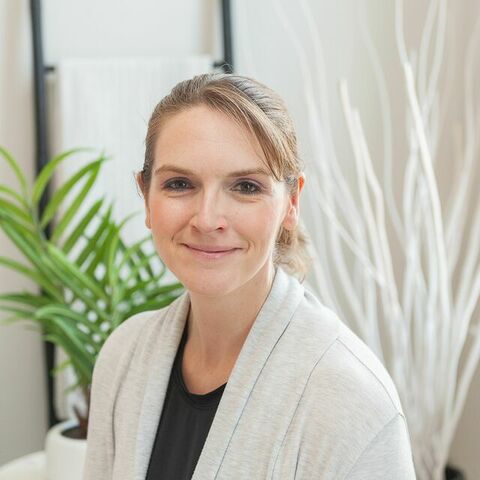
This is Claire Parsons,
Lawyer,
Mindfulness teacher,
Author,
And founder of the Brilliant Legal Mind blog.
This is a brief noting practice.
If you haven't done a noting practice before,
It's not too different from a normal breath-focus meditation.
The only difference is that I'll cue you to categorize the distractions that arise by identifying them as a thought,
Sensation,
Sound,
Or emotion.
This is a simple strategy to help you note the distraction without getting sucked into the story surrounding it.
This will be as simple as saying hello to someone as you pass them in the hall,
But then moving on to your final destination.
This simple practice can help you become aware when an experience is starting to take hold and give you some freedom in responding rather than reacting to it.
So let's get started.
Find a comfortable seat,
Root into your chair,
Let your feet rest firmly on the floor.
Let your hands rest on your lap or the table in front of you.
Start to notice sounds around you and come into your physical experience.
Take a nice,
Full breath in and hold it for a moment,
Just enough so that you can feel the fullness and slight pressure in your lungs.
As you release it,
Let your shoulders fall back and away from your ears and close or lower your eyes.
Keep breathing and just notice what is there for you right now.
If there are images in your mind or words ringing in your ears,
There's no need to fight them.
Just let them be.
Notice what they are.
With kindness toward yourself,
Remember your intention to practice right now.
Is it to rest?
Is it to build some skills?
Is it to learn a new way of dealing with life?
Or is it to just rest?
No answer is wrong.
After you've considered your intention for practice,
Come back to your breath.
If you aren't sure what coming back to your breath means,
You can take a moment to get clear on that right now.
You could focus on the sensations of the breath coming into and exiting your body.
That might be in your nose and sinuses,
Throat,
Chest,
Or belly.
Pause here for just a moment and see which of those areas is the strongest sensation for you.
You could also notice the four parts of the breath.
The inhale,
The pause at the top of the inhale,
The exhale,
And the pause at the bottom of the exhale.
Take a moment here and notice if you like this style of practicing,
Breath focus,
A little bit better.
Finally,
You can also notice the sounds or other qualities of the breath.
Do you hear a sound as you breathe in and as you breathe out?
Do you notice if your breath is deep or shallow,
Long or short,
Quiet or loud?
Take a moment and consider if this style of noting the breath is a little easier for your mind to rest on.
It doesn't matter which style of focus you choose,
Or if you choose another focal point entirely.
The ideal thing is for you to select the one that is easiest for you to find and to rest your attention there.
Take a moment now to sit with the focal point you have selected and rest.
If you lose track of your focal point,
Just return back to it when you become aware again.
Now that you've had a moment to settle,
Take stock of your awareness.
How does your mind feel right now?
Is it focused or scattered?
Is it able to settle without much effort,
Or is it going from object to object?
Do you feel a sense of calm and stability,
Or do you feel tension?
All of these mind states are part of the human condition.
None of them are wrong or right.
Just notice what is there right now.
If any aspect of your mind state presents some added difficulty,
Whether it is excess energy,
Judgment,
Or frustration,
See if you can notice how that is manifesting and offer yourself kindness.
Having taken a moment to check in with yourself,
We can now begin the practice.
With awareness of how your mind is today,
Gently bring your awareness back to the breath.
If you know your mind is scattered today,
Give your mind a moment to settle and collect itself.
If you feel calm and steady,
Lean into that feeling as you rest your attention on the breath or other focal point.
Allow yourself to be absorbed in it.
Distractions will always arise.
That's not a problem.
It's life.
When they do,
Just note them by quickly identifying them categorically as a thought,
Sensation,
Mental image,
Sound,
Or emotion.
You don't need to analyze what arises.
It's not necessary to judge yourself for it.
Just note what happens and go back to the breath.
Now it is possible that you may have reactions to your distractions.
This is also not a problem.
It's actually a golden opportunity.
It allows you to practice noting and watching the quality of your mind.
A reaction to a life experience is just something new to note.
Without judgment,
Note if it is a thought,
Sensation,
Mental image,
Sound,
Or emotion.
Then gently return your attention back to the breath or your other focal point.
The practice here isn't to stop distractions.
The practice is to make peace with what arises.
We make peace by practicing it,
And we practice it by returning to the breath or other focal point whenever a distraction arises.
So here right now,
Once again,
Let your attention rest on the breath,
And if a distraction arises,
Simply note it and come back to the breath or your other focal point.
Sometimes you may notice that an experience arises that seems to have multiple components all at once.
It may include thoughts,
Sensations,
Emotions,
And sounds all together.
Again,
This is normal.
When you practice enough,
You may start to see that these experiences are actually a rapid sequence of experiences.
So as you note,
Select the thing that is most prominent for you in each case.
Then,
As always,
Gently return your attention back to the breath.
As you practice,
You may notice your mind start to slow down.
You may start to notice longer periods where your attention rests on the breath.
If that's true,
Just note this as a thought and return back to the breath or your other focal point.
If this is not true for you,
That's okay.
Our minds can change from day to day.
The practice here isn't one of controlling the mind,
But relaxing with it.
So the answer is the same.
Note your reaction as a thought or emotion and gently return your attention back to the breath.
You've done so well so far.
For one last time,
Notice where your attention is.
Is it resting on the breath?
Is it with some other experience?
Neither answer is good or bad.
If it is resting on the breath,
Stay there for a few moments longer.
If it is with another experience,
Notice what that experience is and gently guide your attention back to the breath one final time.
Now you can allow your attention to release from the breath.
Take a moment to notice the effects of your practice.
Scan through your body.
How does your body feel?
Check in with your mind.
What is the quality of your mind?
Is it relaxed or tense?
Is it settled or agitated?
Without judging yourself,
Notice how the practice was for you.
Did you enjoy the practice?
Did it feel good?
Was it difficult in some way?
If so,
What was the struggle?
Regardless of your answers,
Know that meditation is a practice and it is one best done in community.
If you experienced challenges today,
Consider whether you have options to get support for your practice.
Congratulate yourself for doing something good for you,
Which will help you greet the world with more steadiness and peace.
Take one final deep breath in and as you exhale,
You can slowly open your eyes.