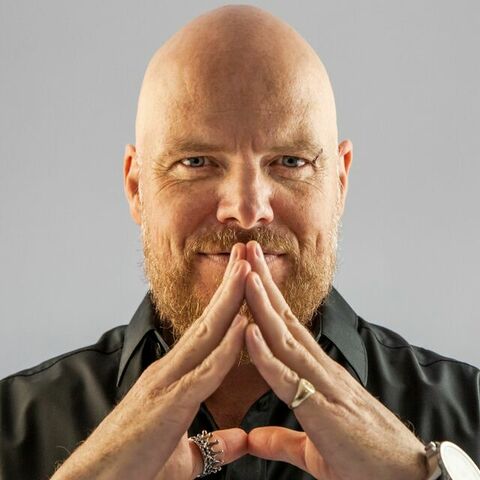
Welcome everybody to Brian and Bryn.
Thank you for joining us on our first live session together.
Brian and I are pretty much the exact same characters living on different sides of the world.
And this is a series we're quite excited about called Brian and Bryn on life stress and all things that matter.
Because it doesn't matter where you are in the world,
We are all experiencing some sort of form of the exact same thing.
And that's why it gets quite exciting.
We have two life mentors in different sides of the world.
We're gonna come at things from different perspectives,
But you'll actually find they're all the same.
And Brian and I are very connected,
Even though we're miles away,
We've never met each other before,
Except for a previous phone call.
And we really connected on that as well.
Anything from your side,
Brian?
Just excited to do this with you.
As you mentioned,
We did speak briefly before and it was one of those conversations that just kept building and building and building and so much similarities and values and approach and really with our mission as well.
So yeah,
So grateful to be here with you and to hopefully share some of that energy and insight with some others as well.
Let's do it,
Let's do it.
So I think before we begin,
For your crowd who don't know me,
My crowd who don't know you,
Who are you,
Brian,
And what do you do?
Right,
Well,
I think father first.
I'm a father,
Which is a great honor to be.
I think in terms of my professional life and I'm an entrepreneur that in recent years has really kind of moved more towards helping people manage stress.
So I'm a stress mindfulness meditation coach.
I do workshops,
I do retreats,
I work with corporations in terms of working with the culture,
Trying to develop what I call emotional fitness,
Which is really how fast you bounce back from whatever and emotional intelligence as well.
So really just trying to help people better connect with themselves,
Better connect with the people around them,
Which is really the secret to mental health and better leadership and all those things.
And really in that process,
To rock this life,
Man,
And that is it.
And for me,
Dharma or purpose or whatever it is for you that lights your heart up,
That's really your path and your mission.
For me,
This work is that for me and through this work of helping others,
I've learned so much more for myself.
I've just gone so much deeper in my own healing,
My own evolution,
Exciting and learn from you as well.
Yeah,
So I love it,
Brian,
I love it.
I love your words.
Yeah,
Man,
I love your words.
I'll nod the ball back to you about your words.
Exactly.
So I mean,
I help people understand that this is a 3D world and we all,
I help them to tackle their limiting beliefs by understanding that it's a 3D world and we are making up the meaning inside of us,
That the actual meaning isn't happening externally from us and that we don't understand enough about these avatars and how to use them.
We're wandering around this planet,
Not even knowing how to drive this vehicle,
Right?
But we're making such a mess of it.
And ultimately,
We've got all this old programming that has been handed to us through years and years of evolution because that's what the evolutionary process is all about,
Is about helping our species survive.
It's a survival game,
Right?
So evolution passes down all the information through cellular memory to the next generation and then the next generation doesn't start off their life as a caveman because otherwise they just wouldn't survive.
And so we pass on all this information so that our kids can pick it up from where we left off.
And then the only problem is that we're losing information because we're so bombarded with so much information that we are just losing the actual mechanisms of what makes us work and what makes us tick.
And so my beauty in my life that I've been blessed with is my beautiful child and I also too am father first to a beautiful princess who changed my life and who showed me the way to helping others and really by doing that and serving others,
You change your perspective,
You work on yourself and you really find out what this journey,
Your journey,
Everybody else's journey is in their life because you are only seeing life from within.
Obviously you're expecting it to happen without but life is actually only happening within.
And so my journey is to help people connect between their mind and body,
To get coherence between the two and help them on their way to self-mastery and that's where I'm at.
Right,
Okay,
Cool.
So this series,
Okay,
So we've got this exciting series,
Life,
Stress and all the things that matter.
Are you ready for the first question?
I'm ready,
Let's go.
I'll give you a drum roll for it too,
There we go.
Okay,
So Brian,
Here we go.
How do you continue to move forward when you feel stuck,
Have no job perhaps,
No money,
You're scared,
Alone,
Worried,
How do you get yourself out of a mess when you have a mess?
It doesn't have to be any of those particular items,
I'm just saying,
How does it work for you when you're in a mess?
Yeah,
Well,
That's a great one because falling off the path is part of life.
So getting off the path,
Going inside,
Whatever that might be to get you into that stuff place is part of the journey.
And I think really first off,
Just accepting that that is part of the journey,
But it's how quickly do you actually notice that you're off that path and you become stuck somewhere?
Because sometimes we just think that is our reality,
That we've lost the path so far.
And for some people,
We can go so far off the path and get so stuck in such a dark place that it can be a very detrimental place to be for long periods of time.
So just first noticing.
Both have been there,
Right?
Absolutely,
Man.
Yeah,
Absolutely.
No,
I mean,
It's like getting stuck is one thing,
Falling off the path is normal.
Like it's gonna happen day to day,
Week to week,
Always,
It's ongoing.
But really for those people who are really stuck,
It's one of those things where having the awareness to know that you are,
But I think action is one of the most important things.
And it might just mean doing one thing today to change my paradigm,
To change my mental state.
And through action,
We start to create some change.
We start to create a little bit of movement.
Things start to shift a little bit.
There's a whole gamut of practices and things that I help people with when they realize they're stuck.
But for those who are really stuck,
I just really think taking some kind of action forward.
And that just might be just trying something new,
Whether that means moving your body,
Moving towards some other kind of goal or little steps,
But it really is a step-by-step-by-step thing.
So typically when people are really stuck,
It's not like poof,
It just disappears.
And then you're back on the path again.
But I think action really does cure anything in that regard.
It really helps us move past those places and into some kind of state where we can start to pick things up again,
Start to actually build a little bit of confidence back and really start to move forward again.
Dude,
I'm so with you on that,
Because ultimately how I always explain it to people is that we spend so much time looking at this long game of,
Oh,
How it's gonna be in the future and all those kinds of things,
When the future's only a concept.
And so we put all this anxiety onto us because of how we're meant to be,
And we consume so much thoughts of what it's gonna look like in five years or 10 years time.
Hell,
Who knows what the world's gonna be like in five years,
10 years time.
So for me,
It's exactly that.
It's about waking up in the morning and just doing something small as an action,
Like you said,
For today,
Because tomorrow doesn't matter.
Or it's not even there.
Sorry,
Tomorrow's a concept,
And yesterday is gone past.
It doesn't exist anymore.
And so,
Dude,
I'm so with you there,
Because ultimately it's very much about just doing something today.
And a little bit of something every single day is exactly like,
I like the analogy that if you fly from London to New York,
And if you're one degree off,
You'll be in a totally different place.
So if you can be one degree off every single day,
Just focus on one thing,
That action.
Like you said,
You said it beautifully.
Yeah,
Yeah.
And it's,
For me,
Procrastination is something I get stuck in,
And it's usually when it's up against something like writing,
For example.
I need to write something every week.
And I'll open up that page,
And suddenly I'll see myself reaching for my phone or wanting to,
And it's just like,
And that for me is being stuck.
But the action,
Then,
Just like you said,
It's just to start,
Write something,
Just kind of open it up because then once you get into that flow and you start moving,
It starts to move.
But I love the analogy as well.
Like,
It's also like hitting the golf ball just a little bit differently on a different angle,
It lands in such a different place.
And so it's those little actions every single day that create a big change down the road.
Exactly,
I mean,
You don't have to eat the whole,
Excuse this analogy,
But it's the elephant,
Right?
How do you eat an elephant?
One small bite at a time.
And if you can just do one thing in your life every single morning,
That's wake up and prepare your mind,
Prepare your day,
Because obviously we're preparing our day through our perceptions,
Which are created by our thoughts.
If we can wake up in our day,
Prepare our thoughts,
And start our day,
Just that's the start of the day.
Prepare yourself for the rest of the day before you brush your teeth or brush your hair and all the other program stuff.
Make it the program to create the thought and to create the thoughts that you want to think so that you manage those and just assign yourself one action for the day,
Because if you can complete the one action,
It's the one degree of course,
And every one degree of course is a compounding effect,
You know what I mean?
Yeah,
Absolutely,
Man,
Yeah.
Well,
One day we'll have to actually like protect the full hour just to go into thoughts alone,
Because that's a massive topic.
A lot of things are buzzing off me,
But one question I wanted to ask you,
And we never really got into this when we chatted before,
Was mindfulness as a parent,
Mindfulness for children,
Teaching your kids how to meditate,
Building that into the routine.
I just love and respect that so much about you that you do that with your daughter,
And during COVID,
I started to kind of get into that a little bit more.
We had created some Instagram channels for kids through a couple of different programs,
And my kids were involved with that as well,
And I've been kind of teaching them,
And through this process,
They got to actually to learn a little bit more about it,
But I'm just curious,
How do you approach that?
I mean,
Mindfulness for kids,
Especially these days with all the noise and distraction and our ability to focus has diminished,
Like the studies of how long we can actually stay on one task is frighteningly,
Like it's really dropped,
Like even since 2014,
And then when we go off task,
It takes something like 25 minutes to come back to do any kind of deep work,
And for kids,
They're growing up in this busy world,
There's so much going on in the world right now,
So I'm just curious,
How do you,
I guess,
First approach that as a parent with your daughter to introduce her to these practices and sort of make those part of a day-to-day routine?
Yeah,
I mean,
It's a beautiful question.
I decided at the age of,
Not my age,
Of nine months,
When she was nine months old,
To full-time single parent,
And she was my awakening into pivoting myself away from what I thought was what I wanted to be to what I am now today,
As a life transformational mentor,
And she is my greatest teacher,
And during that process,
I realized how much we have been programmed with so much rubbish,
And that we can change the entire conversation,
The dialogue that happens within us as well as what we want to see in this life by changing our thoughts.
Again,
We'll chat on thoughts another time.
And so,
I at that stage was learning about meditation myself and breathing exercises and what all these things were,
And so as I was going through this process,
It was one day when,
I think she was about six,
It kinda just dropped in for me,
And I sort of started introducing it to her,
And the reason being is very simply that we have an automatic program that we do currently,
All of us.
We brush our teeth in the morning,
We brush our hair,
We put on our suits,
We pack our lunches,
We do all those things,
And we teach all of those things to our kids as kind of life skill,
If we can call it that.
But yet,
The one thing that creates our entire perception for the entire day is our thinking.
And so,
It got me thinking,
Saying,
Well,
I don't want my daughter to have this old programming that I have,
And I wanna change the dialogue for her,
And the only way to do that is to let her work on meditation.
And so,
From the age of pretty much three,
I started with smell the flower and blow out the candle.
And that's,
For those who are watching,
It's very simply,
Because obviously a three-year-old doesn't understand the use of breathing,
And for those who are also unaware,
Breathing is used to regulate the atomic nervous system,
And that's why there's such an emphasis on breath work,
And the atomic nervous system is linked to your fight,
Flight,
Or freeze mechanism,
Which is linked to the amygdalas,
Your emotional structures within the brain,
The brainstem.
It's our primal mechanism that deals with survival,
And so breathing is why we use it as a regulation tool to regulate our autonomic nervous system.
And so,
It's really good to teach your kids how to consciously take hold of their breath,
Because we don't think about breathing.
It happens automatically.
That's why it's called the autonomic nervous system.
But if you are conscious about it,
You can actually check in and self-regulate,
And this is the importance to teach your kids how to self-regulate.
And so,
I started then with the,
Okay,
So anyway,
So back to the point,
Right?
And so,
Very simply,
Smell the flower and blow out the candle is a way to get kids to start exercising their breathing techniques.
And how it works is you breathe in,
And you smell them,
You say to your little three-year-old,
Okay,
Smell the flower,
And they breathe in.
Okay,
One,
Two,
Three,
Okay,
And then breathe out for five.
Blow the candle out,
Come on.
One,
Two,
Three,
Four,
Five.
And obviously,
The shorter breath in and the longer breath out activates the parasympathetic nervous system.
And so,
You start doing these kind of exercises from the age of three,
And you can really build it into their practice.
And then,
The more you do that,
The more you then start teaching them,
And this is where I started going,
About creating thoughts that you want,
Because otherwise,
We are allowing life to happen by chance instead of you creating the direction of what you want.
And so,
I started implementing all these types of things,
And as per her age,
I would then increase her time that she would just sit with herself,
Kick in with her breath,
And watch the breath.
And by doing so,
She then obviously was kicking against it because it's like,
Oh,
I don't really wanna be sitting here.
And even as an adult,
We're always wanting to be unseated by our monkey mind that's playing and going,
Oh,
Do it tomorrow.
You know,
You don't feel well today.
You broke a nail or whatever it might be.
There's always a dialogue,
An inner dialogue that's happening.
And so,
It's really about teaching our kids to do this,
And this is what I've done with my daughter.
Sure,
Like she,
And I'm not even free from it myself.
You know,
When I wake up every morning and meditate,
I also have the dialogue going,
Oh,
I'm tired today,
Or,
You know,
Do it tomorrow,
You know,
Give yourself a day off,
Those kind of things.
And she has the same thing,
But for me,
It's essential.
It's a life skill.
It's a toolkit.
It's non-negotiable.
And I make it fun for her,
And there are times that it's not fun,
But that's okay too,
Because brushing your teeth isn't fun when you're a kid.
And there's noise,
Combing your hair,
Or doing any of the other chores.
But I know that it will be in that program,
Just like all those things are in my program in terms of my daily routine that I was handed down as a parent.
Yeah,
That's amazing.
And you know,
There's always,
Yeah,
As you mentioned,
There's resistance when practicing for adults for any level initially,
But I'm sure she's been doing it since she's three years old.
How old is she now?
She's turning nine this year.
Turning nine.
So with that many years of,
You know,
Of practice,
I'm sure she realizes how she feels on the other side of that and now it's become something that's part of her,
Right?
No,
Not yet.
No?
No.
No?
No.
No?
No?
But she still does it every single morning and there's always some fun tools and stuff.
Like for example,
There's one,
You can buy these headbands and they give you audio feedback.
I won't mention the brand names and things like that,
But they give you audio feedback and,
You know,
One's got these little birds that when you get into coherence with your breath,
It has all these little birds.
And so there's a gamification that happens,
You know,
Of how many birds you can get.
Yes,
I know the one,
Yeah.
And that's always good because it makes it easy to say,
Oh,
How many birds did you get?
And,
You know,
I know you've got two,
So you can kind of get to play them off each other,
You know?
Yes,
That works actually,
Yeah.
Yeah,
Which kind of works in your favor.
Yeah,
There's a little friendly competition that happens sometimes where,
You know,
Somebody's going a little deeper than others and if I make that comment.
Just kind of subtle make that comment,
And they're like,
Oh,
Maybe I better pay attention.
Who's the quickest of the divine,
Right?
I don't think there's a competition.
Yeah,
Good one.
Okay,
So my question to you,
Nick,
Is,
Dun-dun-dun,
Drum roll,
Here we go.
What do you do when self-doubt creeps in?
That's a good one because,
Yeah,
Well,
That kind of goes back to what we were kind of talking about with thoughts as well.
So,
Once again,
Having awareness of that self-doubt,
Hearing that little inner critic from a higher perspective is something that we actually are able to develop,
A skill we can develop over time with practices like meditation and breathwork and different things of creating that self-awareness because if we don't,
It is a skill,
And if we don't have that awareness,
That self-doubt will automatically just take over,
And we believe that thought to be true,
And thoughts are not facts.
You know,
They might lead to facts,
But it's like it's the menu,
Not the meal,
And you're getting that menu,
And it's sending you on that path to self-doubt.
So,
For me personally,
Because self-doubt is,
Honestly,
I don't care what level you're at.
Some of the most,
Okay,
Some of the most advanced,
Most successful people that you'll meet,
You know,
I'll give you an example,
A writer who has had,
Like,
You know,
Dozens of New York Times bestsellers.
Every time to sit down to write a new book,
You know,
I've heard the stories of,
You know,
Self-doubt creeps in.
I've told all the stories I can tell.
Who wants to hear this?
You know,
It's that nonstop chatter.
So,
For me,
You know,
I just embrace the fact that it's there,
And I know it's not true.
It's just,
You know,
It's just that sort of,
Again,
That inner critic that happens.
So,
For me personally,
I embrace that feeling.
I almost use that as motivation,
But I've been able to,
Over the years,
Be able to go a little bit deeper where in my practices,
And this is why having a practice is called a practice,
To develop skill.
It's something you do every single day.
Every single day,
I'm able to go beneath those thoughts.
You know,
In the ocean,
We've got all the turbulence on the surface,
But the deeper you go,
The calmer and stiller it is.
And when you get to that part of yourself,
Your true self,
The essence of yourself,
Not the small self that's up there chirping away,
Telling you that you're not good at this,
And you can't do it,
But when I'm connected to that space,
Who you truly are never doubts.
And so,
You really feel back connected to that space,
To that truth,
To that feeling where it's almost like a recalibration,
You know,
Just like any state,
You know,
That we get stuck in,
Or,
You know,
We feel that we're,
You know,
Back to being stuck.
It's just creating a different state where you can go beneath that doubt,
And then just sit with that for a moment.
But I think that's why it's so important,
You know,
Again,
To have the practices,
To be aware of your mindset,
To be aware of your thoughts.
And again,
This doesn't happen overnight,
But self-doubt affects everybody.
I think people should realize that,
Like you're never going to get to the point.
It is a skill.
It's a skill that you can help overcome,
But it just doesn't go away.
So it's important to recognize it and to.
.
.
I've gone and checked all of these spiritual guys,
And all the gurus,
And all those guys,
Thinking that they didn't have it.
But it's not true.
They all have the exact same thing.
We are all built and designed the same way.
And so until recently,
I thought that the gurus were able to completely knock out the thoughts.
And it's not true.
They have the exact same process.
It doesn't matter where you come from.
They got the exact same thing.
And like you said,
It's a skill that you have to develop and things like that.
So,
And I love the analogy of the waves,
Dude.
Yeah,
It's,
You know what,
It's the human condition.
As long as we're occupying this vessel,
We're all going to have the same type of thing.
But really having the mindset that you need,
That's something to be aware of,
Not something to be ashamed of,
Not something to pull you down,
Not certainly not something to listen to,
But we got to slay that dragon every day.
And that's why we do this work that we do to really help people,
To help ourselves,
Create those tools,
Create that resilience,
And be able to create that space where you can look at things from a little higher perspective while that monkey mind is shooting the shit about all the bull stuff,
The bullshit that's,
You know,
Pulling us back from really having our best life.
Yes,
Brother.
Okay,
So a question for you.
Kind of similar to that one,
But I'm just curious.
I mean,
You know,
So self-doubt,
Being overwhelmed is something that a lot of people can relate to,
Stress effects.
And it's like three quarters of people at least have one episode a week of being overwhelmed.
Obviously people who are chronically stressed,
You know,
Can create all kinds of havoc on our mental and physical health.
But for you personally,
When you're overwhelmed,
I mean,
You were really stuck in a state,
Let's say that a neighbor was chirping away and you're maybe in a fight or flight or even just like overwhelmed by thoughts and emotions.
How do you break yourself out of that?
The beauty is actually understanding what it is in terms of how the brain works.
Now,
We use the prefrontal cortex for all of our cognitive thinking,
Reasoning decisions,
Executive decisions,
You know,
This is the structure in the brain that we use to make all these decisions.
And it has a limited capacity like a battery.
And so what happens is when we are actually overwhelmed,
What happens is the capacity of that battery is completely flat,
It's gone.
And what is the next choice of functions that our brain can switch us onto?
Well,
It's one of survival,
Because the main driver of our species or any species is to survive.
So the backup mode or backup function is survival.
So when you aren't able to be cognitively aware of what you're doing,
Your decisions,
And these kinds of things,
Your brain automatically switches you over onto survival.
And that's why we've always got to be aware of our capacity.
And this is where self-regulation comes into play and self-mastery is knowing where is our kind of the end of where our capacity is about to be reached.
And this is an ongoing day-to-day process.
There's no like,
Okay,
Well,
I've got it so sussed that I can always know where my capacity is,
I can see it coming.
And before it happens,
I'm going to be able to back out and go do my thing.
It's not like that.
It's about being,
And you said it beautifully in the previous statement that you made,
Was about understanding where you're going to sort of fall short or where you,
You know,
Your awareness,
Your awareness of self in every single moment is the best way to understand it.
And to understand that you have a limited capacity,
Being aware of that on its own is a very powerful thing.
Saying,
You know,
Saying to yourself that,
Sheesh,
I'm actually,
I'm flat,
I have no capacity,
Instead of rather trying to respond and engage with people when you have no capacity,
Which is only going to lead to more,
You know,
More frustration for both or parties because everybody's then coming from a place of lack.
You get to rather identify the fact,
Your awareness of self,
Your self mastery,
If we can call it that,
In every single moment,
Is saying,
Well,
I don't have capacity.
And so therefore,
From this moment,
I don't actually want to engage until I go and recharge my battery.
And that's where,
You know,
Coming back to your question,
Is that when I realize that my capacity is,
And my limit is reached,
And this is often happening because of the fact that I'm a full-time single parent,
Raising a beautiful,
Highly intelligent child who I've brought up with so many questions,
And my capacity is being reached all the time.
And especially as she's going through these wonderful phases.
And really what I have to do when I get to those moments is I catch myself,
I am then aware of what's happening so that I can then choose not to engage because there's nothing good going to happen from me engaging from a place where I have no capacity.
And then I will look for the option to remove myself from the situation for five,
Ten minutes,
Whatever it might be.
And sometimes I'm able to go and sit and do a meditation and just close my eyes.
And the reason why we close our eyes is because we are looking for survival or looking out for threats,
Possible threats,
Using our eyes.
And by closing that,
We remove that information so that the brain has the opportunity then to not look for survival cues.
And then it switches to our ears then because now we're listening for survival cues,
You know what I mean,
Or possible threats.
And that's why we then put in meditation music or go sit in a very quiet,
Calm place is just to allow the system,
The autonomic nervous system to calm down and to self-regulate.
By getting it to calm down when it says,
Hey,
I'm not in danger here.
And by doing that,
You can then build your capacity up.
It's like going to the,
You know,
Grabbing a cable and charging your phone or something like that.
It's the body's reset,
The body's recharged.
So wherever I can do that,
I will use that mechanism in order to reconnect with myself and recharge if I have no capacity in any particular moment.
Yeah,
That's great,
Man.
And that,
You know,
Again,
That's the big importance with awareness because knowing that you're overwhelmed rather than trying to plow forward with your foot on the gas and the brake at the same time because you've reached your capacity.
But I mean,
You know,
Like that's the biggest part again is that awareness to know.
And then being able,
Like you say,
Just to kind of step back,
Recharge,
And whatever that means for you too.
I mean,
I think at times when you're in that red zone,
Self-care,
Whatever that might be,
But just changing your environment,
Changing your state.
So as you said,
You can slowly come back out of survival and back down to baseline and reset.
I mean,
You said it,
It's a skill.
You have to practice it.
Yeah.
And if you don't practice it,
Well then how do you know to action that when you need it?
Right,
Yeah.
Yeah,
Yeah.
And if you haven't done that work and if you haven't developed that skill,
And the wonderful thing is for anybody listening,
It is a skill,
It is something that you can develop,
But,
You know,
It's just like practicing a musical instrument.
It does take time,
It takes patience.
It doesn't just show up overnight.
But for a lot of people that don't,
Eventually that sort of that red zone or that capacity is even something,
A feeling that we just think is part of who we are.
And in some cases,
We even become addicted to those hormones of stress.
And for some people,
Like,
Just pour another coffee on it and,
You know,
Let's go.
But that's going to eventually lead to a burnout.
So that's great advice,
Man.
And you're so right.
The effect of stress actually becomes addictive after a while.
And that's the funniest thing that we don't realize,
How addictive it becomes,
And how much it keeps clocking us back into that same program as well.
So I've got another one for you as well.
Overcoming fear,
What you will go to when you have fear.
Yeah,
So that's a good one.
I mean,
You know,
It's funny.
It's kind of a moving target for me personally.
You know,
In the last couple of years,
You know,
They always say,
Well,
The truth is that love is basically the opposite of fear.
And so for me,
It's been,
In my own journey,
It's been a little bit more about trying to kind of come back into the heart a little bit.
And,
You know,
I know for a lot of men,
That's a foreign thing,
You know,
For a lot of people in general,
It's a foreign thing to really kind of get into the heart.
But that really just means coming kind of back into myself and really sort of feeling that love for myself.
And that's really kind of one of my personal missions in my own journey.
It's something that does not come naturally to me.
And so I've been working on developing that kind of relationship.
But when I get back into that heart space,
I really start to feel like it's,
That fear is really that I'm separate from everything and everybody else.
And when I look out there,
I see,
You know,
I see,
You know,
In that survival state,
As you mentioned,
I see,
You know,
Risks and dangers.
I see people who are,
You know,
I'm comparing myself to people who seem to be,
Have it all figured out.
I'm,
You know,
But I feel like I'm separate from everything and I'm not feeling that love.
I'm feeling closed off.
So it really,
For me,
It's a kind of a practice of opening myself up a little bit more,
Getting back into that depth again,
That spaciousness that I mentioned earlier,
And then feeling that I'm connected more to others.
And then really when I start to develop that feeling,
I'm able to look around at all of these threats or these things and,
You know,
See myself in them and see them in me.
And,
You know,
So,
I mean,
That's kind of a kind of a washy answer.
I think just in general,
You know,
Fear as a trigger or baseline,
It really kind of,
It's almost the same advice just in general is action to kind of create that state change from fear.
So,
I mean,
Here's an example,
Right?
So today you wake up and I mean,
People can relate to this.
This is what I'm going to ask in this one.
They wake up and all of a sudden they think,
Oh,
Jeez,
You know,
Am I going to be able to afford to,
You know,
Retire one day or am I going to be able to do this?
And so this fear kicks in or you go to a party or not a party or an event or a party,
Whatever kind of story.
And there's that person,
You know,
The one that was really horrible to you.
Those feelings that kick in,
What,
You know,
You have your own triggers and stuff.
What do you go to when it comes to overriding that,
To making sure that it's not happening?
Yeah,
Well,
You know,
In those cases,
That's,
You know,
That would create some anxiety for me.
And that means I'm just not in the moment and I'm not just kind of feeling grateful for where I am and what I have now.
And,
You know,
Again,
That's something,
You know,
That is trainable.
But I mean,
It's so funny,
Bryn,
Because I wake up,
You know,
Some mornings and,
You know,
After a beautiful sleep and,
You know,
I've got my whole morning of practices coming up,
But then boom,
Suddenly something just hits me where it's like,
Ah,
This thing in the future and there's this concern,
Right?
So,
But it really,
Really comes down to,
You know,
Again,
Recognizing that.
But I'm always trying to be more mindful in the present moment,
Because when you're in the present moment and you're more in tune with what's happening with you,
You're not judging yourself,
You're not judging anybody else.
You're just kind of fearing now in the moment and grateful for what you do have and grateful for all of these things.
It really quickly diminishes that fear.
It really quickly diminishes the anxiety and the worry about something that hasn't happened yet,
Because I've brought myself back to the moment I've anchored myself in.
And I will just say as well,
I mentioned self-love and gratitude initially,
But,
Or self-love,
But gratitude is a big one as well.
And that is another practice.
And interestingly,
There's been a lot of science around gratitude.
It seems like kind of a buzzword or a trending hashtag gratitude,
You know,
But,
Or hashtag grateful on all my pictures,
Right?
But really,
It is amenable to neuroplasticity,
As I'm sure you're aware.
So no matter where you are in your baseline,
You know,
We all know that one person who is like,
Fuck,
That guy's so chipper all the time.
He's like,
So,
Like,
How is he so happy,
You know?
But so we don't all have the same baseline and that's okay.
But no matter where you are,
You can increase your level of joy and gratitude just by being aware of what is good today.
The fact that you,
That you're a miracle,
That you're even here,
That you're alive in this moment.
And really just starting to connect to that feeling every day through a practice really,
Really helps overcome fear as well.
Yeah,
That's beautifully said.
I mean,
That's kind of,
That's me in a nutshell too.
And so here you have two different people in different sides of the world experiencing the same rubbish,
Right?
It's because we all made this in the same way.
And that's why this whole journey for the awakening,
If we can call it that,
Is to realize that we haven't been using our tools properly,
This avatar.
We're not using or understanding this avatar and how to hack it.
I mean,
I wake up and I've recently relocated to Lisbon,
To Portugal.
And I've gone from being an entrepreneur and owning properties and all sorts of things to living in a five bedroom house,
Beautiful in South Africa,
And coming here living in a small apartment where the exchange rate is just chewing everything,
You know what I mean?
Because the conversion rate is so bad.
And so when you wake up in the morning,
The first thing is you're going,
Oh gosh,
You know,
Can I,
You know,
The financial stress,
The worries of those kind of things are creeping in.
But they're not true.
And they're not true because on that particular moment when you're waking up,
You're just waking up.
There's nothing around you.
There's nobody there.
There's only you,
Yourself,
Your breath,
And potentially the people that you love around you,
Right?
So therefore on that particular moment,
Because we only can live moment to moment,
The dialogue isn't true.
And so it's really about learning to overcome that.
And as you said,
It's a skill that you realize that,
Okay,
Come on now,
Let's just take some big breaths.
Let's get ourselves onto our meditation mat.
Come on,
You can do it.
Off you go.
And then you're getting onto the meditation mat.
And then the mind is wanting to drift the whole time back to the program of the worry.
But that's the neuroplasticity of it is bringing back the mind to a central center place,
A point of reference where you're catching yourself.
And funny enough,
The more you can catch yourself or your mind from drifting,
The better the neuroplasticity involved in it.
So you're actually doing more effect by catching yourself than you are just being able to drop into the zone.
You're actually getting more benefits of changing your neuropathways.
And it's exactly like you said with the gratitude is,
You are creating neuropathways to frame your program in a way that you're seeing everything with a different viewpoint.
And the more you do it,
The more you do it,
The more you do it,
The more that actual program gets run over and over again,
It becomes your default program.
And then you start seeing your life in this program that you've created for yourself,
Which is beautiful because why?
You've made it beautiful.
Yeah,
Yeah,
Exactly.
You've got to be very aware of those thoughts.
Thoughts are not facts,
But they're things.
There is a frequency,
There is energy there.
And so if you are trapped in that mode of,
You know,
Fear and worry and shame and guilt,
Which are really the lower vibrational thoughts and emotions on the emotional intelligence scale,
You will be attracting more of that into your life as well.
So just catching those.
But as you said,
Bringing it back,
Bringing it back.
I call it bicep curls for the brain and really bring it back.
Each time you bring it back,
You're building that muscle,
You know,
Maybe not as a technical way you described it.
But on that note,
I did,
I would,
I'd have to ask you a question about the brain because I'm fascinated with your perspective and knowledge on that area.
But I think brain health,
You know,
It's very important.
I'm involved with a group called Longevity League and,
You know,
They've talked about brain health in terms of longevity and how important it is to not only keep a healthy brain for longevity,
But how do we,
What can we do for brain health on a day-to-day basis?
Maybe is there training or supplementation or like what would be the protocol to help create a stronger brain,
You know,
In terms of resilience,
Longevity,
And then also focus too,
Because as I mentioned,
Our focus is diminishing very quickly.
It's hard to focus on one thing at a time.
So do you have a recommended protocol for brain health?
Firstly,
I'm not a neuroscientist or a doctor or any of those.
While I am studying in terms of my ongoing learning and things like that,
I can only come from the perspective of everything that I've researched to this moment so that we can make it clear for everybody.
But the best way for me to describe it is that if we take everything in this entire cosmos,
Everything is energy and you actually hit it on,
And that's why I was smiling because everything is energy because energy is either in slow vibrational format or high vibrational form.
Meaning slow vibration,
It's energy moving in slow vibration,
Which is something that's physical that you can touch or feel.
A high vibrational is something that is like air,
For example.
So we are connected absolutely with everything.
And when I first started the journey,
You know,
The yogis and people like that always talk about we are connected with everything.
I was like,
That doesn't make sense.
How are we connected with everything?
Please explain this to me because,
You know,
It just doesn't make sense,
You know.
And if we think about everything being energy and that we are in a bubble of,
Like a contained bubble of energy,
We are connected because of the fact that everything is either slow or fast vibrational energy.
And so between you and me,
You're in Toronto,
If I'm correct,
You're in Canada,
Yeah?
Yeah.
So there's a lot of,
In theory,
Space between us,
But there's air and there's molecules and there's energy.
And those are fast vibrational frequency,
Or it's energy and fast vibrational frequency,
Which means that we're totally connected.
And that's why the yogis always talk about everything being connected because we are just energy.
That's our rawest form.
So if we look at energy being the rawest form,
It's about,
This is our avatar and all the ancient scripts and stuff always talk about it being a temple.
So if you take it as a temple,
We are taking everything that's energy and we're putting it into our bodies because when you're seeing it,
Hearing it,
Touching it,
Smelling it,
Eating it,
Drinking it,
Your environment that you're in is all going into your body and being consumed by your body,
What you call your life in some sort of way or form.
It's all information and data in energy format that we put into our body and that creates the life force that we are,
As well as it also then navigates the thoughts that we create for ourselves.
And the thoughts that we create for ourselves are the ones that signal proteins within our bodies to heal things or to keep ourselves healthy.
And so we have the actual ability to keep ourselves healthy from within because this is only an avatar.
It's like a car.
I'm using it as an analogy just to explain it.
So we have a vehicle and everybody takes it to the wash to get the car nice and polished on the outside because they want it to look pimped,
Right?
But it doesn't get you to A to B from the outside.
It's the engine that gets you from A to B.
And so the avatar or the vehicle or the body of the vehicle is always getting a couple of bumps and bruises here or there.
It's very much like this avatar.
It's wearing and tearing because of age,
But the important part is to keep the internal mechanisms,
The ones that are protected by the body because the body is a sealed unit to protect your organs inside.
And therefore,
By protecting the organs inside,
You can keep your body healthy from within.
So I do like biohacking,
For example.
I'm turning 45 this year and my internal age is around 35.
And what it means is that through thinking,
Living,
Breathing,
What I see,
What I hear,
Everything that I put into my body as energy keeps me younger inside because I'm managing the chemistry that I'm putting on inside because chemistry is happening inside and we are the alchemists of our own life internally.
And so therefore,
Everything that we're putting into our body,
That's why,
You know,
If you're going to watch movies that are about killing the whole time,
Well,
You're going to create thoughts about killing the whole time.
If you're creating thoughts that are killing the whole time,
You're going to constantly be looking in that reference,
Which means that you're going to then treat your fight,
Flight,
Or freeze.
And when you treat your fight,
Flight,
Or freeze,
You're increasing your cortisol and your other chemicals that you're putting into your body and you're poisoning yourself.
So all those things,
Even with the food,
The relationship you have with food,
And this is something I've been recently doing with my daughters,
We actually don't talk over dinner anymore,
Or over our meals,
And it's such an odd feeling for me because of the fact that I'm so used to having a conversation over mealtime,
But that food becomes a part of us.
And we are so mindless when we eat and talk because we can't technically do two things at once.
We're having a conversation that's meant to be like a dialogue,
Like,
Hey,
How was your day and all those kind of things.
But then what happens is we are not mindful of the flavors and the food that we put into our mouths and the relationship that we have with the food,
Which becomes us.
That food literally becomes us.
And so I am,
On my journey,
I'm changing my whole relationship with a whole lot of things,
And it's an ongoing process through my own self-mastery as well.
And therefore,
All of those concepts are about us looking after the internal organs that we have within our body.
And I hope that kind of answers my viewpoint on that.
Yeah,
So I think,
You know,
Just to kind of summarize what I took from that,
It's really kind of all the things,
But what you're consuming,
How you're thinking,
How you're treating the environment in your body is how you approach brain health.
I call it a diet because it's not just what you eat and what you drink.
Everything that you put into your body is energy,
And that energy is either good or bad energy,
Depending on what it is,
And those will have a reaction within your body.
Yeah.
Yeah,
And I love the point too,
Because everything is energy and information flow.
And,
You know,
That's universally not something that can be debated.
And so it's when you're really aware of that,
You realize the connectivity of everything,
You realize how important it is to be putting out the energy that you want and to be surrounding yourself with the people,
The places,
The things,
The sounds,
All of the other energies that you want to create a higher vibration for yourself.
Exactly.
Brian,
What an awesome session with you today as well.
Thank you so much.
And I look forward to our next session.
So that's exciting.
And then that's it from my side.
And anything else from your side,
Brian?
No,
No,
Man.
It's been a pleasure.
It's been a pleasure connecting with you once again.
And I just want to thank everybody.
Where are we going?
Oh,
There it is.
Oh,
Okay.
And thanks to everybody who's tuned in and listening.
And just feel free if you have any questions on anything.
There's so many little tips and things that you can do every day.
And I know Brent has lots of great content on his site as well.
Awesome.
Thank you very much.
Namaste.
Okay.
All the best.
Everybody,
Have a beautiful day.