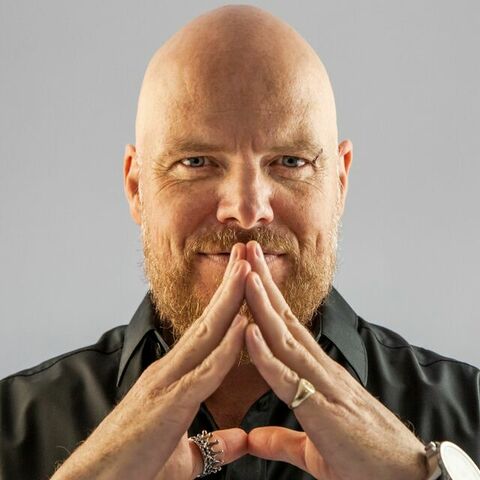
Hi Bryn.
Hi Caroline.
Good to have you here.
Yeah,
Great to connect with you as always.
Thank you very much.
Yes.
And I'm looking forward to our new series.
Yes,
Indeed.
So for those who are joining us,
Perhaps just a few words about our concept,
If you haven't heard about it yet.
But we are called Life Questions Answered.
And so what we will do,
The both of us,
We work in the area of coaching and we answer life questions.
Or more specifically,
We help our coaches to find the answer that they carry inside of them.
I do this together with my good friend,
My good colleague Bryn Tomes.
And the question that we are looking at today is a very exciting one.
But before I go into this question,
Bryn,
Just a few words about yourself.
And especially you are a life transformation mentor.
What does it mean?
What do you do?
It's quite a mouthful,
Isn't it?
It is.
Ultimately,
We all have a feeling of mismatch,
A place of non-congruence in our lives,
Where what we say and what we do aren't always connected.
And where this becomes a problem is because we're not then living our authentic self or our truthful self by making sure that whatever it is that we wish for ourselves in our life,
We're not really getting to that place.
And so it's really,
Life transformation is about identifying that you're not in the place that you want to be in your life and saying,
Right,
How do I change it?
And it's about when we work through a coaching process of doing it,
We take everything that is in your life and realize what it is in this present moment.
And we bring together the thoughts,
Body,
And we bring them together in a way that is your truth,
But your truth in this present moment.
And through that,
We then will work forward in terms of creating a system that is developed for you in a way that you can live every single moment in your life the way you want to live it.
And that's what life transformation is.
Yeah,
Which is absolutely a beautiful process.
I mean,
I've been through coaching myself several times,
And it's immensely helped me making certain decisions or making particular changes.
And talking about decision making,
Brindis is also the topic of today.
For those people joining us and listening to us,
We receive questions from our listeners about whatever goes on into their life and where they would like to get more information.
And the question of today is a very important one.
We received a message from a lady asking about how she can make decisions or what could help her to make the decision that is the best for her.
The type of decision,
We can just leave it on the side for a moment,
But I think decision making is something that keeps us busy on a daily basis,
Conscious decisions,
Unconscious decisions,
So I didn't drink the extra coffee or not.
But here we're talking about life changing decisions,
Such as should I change my job?
Should I change my relationship,
Private ones or business ones?
So here today,
Brindis,
We're talking about what can help us to make better decisions.
And I know that this is your area of expertise.
So I'm looking forward to the chat with you to get a better understanding of what helps us in decision making.
Awesome.
Thank you,
Caroline.
This is always an exciting one for me because,
You know,
We're running our lives on a program.
And unfortunately,
I'm going to use the analogy of the computer program because it gives us a visual aspect that we can look at how programs work and how we run our lives and things like that.
But to start,
I'm going to tell you a beautiful Native American fable.
And it goes like this.
Okay,
So there's the grandpa and the grandpa is sitting there with his grandson.
And the grandson says to the grandfather,
So grandpa,
How do I know about which decisions or what is the right way for me in my life?
And the grandfather says,
Well,
In life there is a battle going on inside constantly of a good wolf and a bad wolf.
And the good wolf represents love,
Peace,
And all the beautiful things that go with the good wolf side.
And bad wolf represents anger,
Hate,
Lust,
Desire,
And gives you a certain feeling as well.
And so the grandson then asks,
Well,
Grandpa,
Which wolf wins?
And the grandfather says,
It's the one that you feed.
And so ultimately life is about a moment-to-moment feeding of your wolf because there is no such thing as wrong or right decision.
It's only the decision that's best for you in a particular moment of time because every single moment in time is only now.
Anything that was is gone.
It's past already.
You can't change it and there's no point in living in that moment or dwelling about it because it's gone.
And when you are occupied by that type of thinking the whole time,
You're constantly missing out on the now.
Why?
Because another moment of now has come and gone and is coming and going and coming and going.
It's the same as if we're looking at it in the future.
The future is only a concept.
I mean,
We spend so much time in our minds thinking about and creating,
Oh,
If I move,
What to do,
What to do,
Where to go,
What to do.
And if I move this like a chess game,
You know,
We're trying to work up this ongoing chess game in life.
But how many times have we created this whole picture in our minds of how it should be or how it should look?
And it never ends up that way.
It completely changes the other way.
I recognize myself in that a lot if I prepare for really difficult talks.
And in my mind,
Worst case scenarios happen.
I suppose I'm feeding the bad wolf at that moment.
Right.
But eventually it never happens the way that I have it in my mind.
Right.
Because I'm trying to live in the future.
The only moment that I can influence is the now.
And going back to the two wolves,
You did not mention anxiety.
Anxiety,
I think,
Is a very powerful emotion.
Would you call the anxiety more part of the bad wolf if it comes to your story?
Definitely part of the bad wolf.
Because my concept or idea that I'm trying to get across is very simply that we can feel everything that is best for us in our moment and every moment by being connected to yourself,
By being in coherence with your thinking and your body,
You can actually feel what is important for you in every single moment and what is the best decision for you at that moment.
And too often I find that we get to another moment and we look back and we go,
Oh,
I made the wrong decision.
And that's not entirely correct because sometimes in that moment,
If you feel that it was the wrong decision,
It's an opportunity to learn.
Because in that moment,
If you were truthful to yourself in that moment and you knew you were connected to yourself and you were listening to your intuition,
Your inner intuition,
Which is your guide,
It will have you making the decisions that are best for you.
And if you get to a place where you've made the incorrect decision or what you perceive as an incorrect decision on that particular moment,
It's a way to look back and go,
Well,
This is a learning opportunity for me.
It's a way for me to look at how could I have changed or felt or connected to myself more in that moment.
Did I rush my decision?
Did I go and let it sit with me for a bit so that I could check in with my body?
Because here's an example of checking in with your body.
And when you,
I mean,
We can all share this,
But you and I are the only two having a conversation here.
So when you are walking around and something doesn't feel right,
You feel it in your body.
We all do,
Right?
So we all feel something in our body when something isn't right.
And that's our body going,
Hey,
Over here,
Listen to me.
I'm not feeling comfortable about this.
Yet we override it.
I mean,
I don't know how many times I've,
Oh,
I've come from you being silly about this.
Forget it.
You know,
What does your body know kind of vibe,
Right?
Yeah,
Indeed.
But it's a good point that you bring,
And it's perhaps also worth stressing that once more,
Because indeed the entire emotion of the emotions that we have,
They are bodily happening.
And if you look at the way emotions work,
Also from a biological point of view or a neuroscientific point of view,
How do you know you feel stressed?
It's because perhaps your heart is beating faster or perhaps because you are sweating or perhaps you have a stomach ache or some ache in your shoulders.
These are like the typical bodily symptoms of stress or anxiety.
And this is the emotion.
And eventually you telling me I feel anxious,
This is just like the final part of the emotion.
But as you say,
And I really like that the way you described it,
The entire wisdom and your intuition,
It's in your body.
And this is also,
If we are in tune with our own body,
We will also find more easily the answers to questions that we might have in life or decisions we have to make.
No,
100%.
I mean,
From the question that we were,
The person,
The lady who sent it in to us to answer,
I mean,
We intuitively know that.
And I mean,
You've got a lot of experience in your field,
And it would be obviously interesting to hear some of the fields from your side.
How do we manage stress?
What is our go-to if you are to unpack it a little bit for us?
Even whether it's in your personal perspective or in professional,
What is your kind of input there?
Yeah.
No,
I think if it comes to stress,
Because stress is such a,
It is an important emotion.
I think every emotion gives us a message.
It gives us a message about what's important.
I like that.
And what's not important to us.
So if you look at the question of the lady,
How do you make decisions?
I mean,
It is really just also observing the emotions that you have,
And stress is just one of them.
Now,
I think it's important to always try to dig into it and have a look at where is this stress coming from.
And back to the analogy that you have with the bad wolf and the good wolf,
I mean,
Stress or anxiety would be part of the bad wolf.
And it's important to understand where is this anxiety come from?
And do I want to feed it?
Because naturally anxiety is like this emotion that is so present in our body that is yelling out,
And it's so difficult not to feel it,
Not to see it.
And what do we do?
We start thinking about it a lot.
We start,
With our thoughts,
We kind of feed that emotion even more.
And it's good then to recognize that this is also an emotion that will pass.
And eventually anxiety is always something that we should let sit for a moment,
Not feed it,
For it to go away,
Because eventually anxiety,
I believe,
Really disconnects us from our intuition and what's really important to us.
Yeah,
I mean,
Beautiful.
And,
I mean,
If we look at the actual cycle of making a good or bad decision,
The body is the feedback system,
Right?
Yeah.
It gives us the experience.
It gives us the actual feeling,
Whereas the brain is creating the thoughts.
We create the thoughts.
Whether we're confronted with something we like or dislike,
We create a thought,
And from the thought we signal the body.
And that feeling in the body will tell us whether the thoughts and the feeling are a match,
Because if they are a match with our values and what we believe in and those kind of things,
The feeling will be good.
Or the feeling will be bad if it's not matching with us.
And,
I mean,
Your experience in this is actually,
I would love to hear some more for our users who would love to obviously understand a little bit of the concept behind that,
Because in the principle world,
What I've just said now,
It's nice and simple,
But come on,
Give us a little bit of science in,
Right?
Yeah.
If it comes to stress,
I could shed some light on the neuroscience of stress and anxiety,
Because it is such an important emotion.
Why not have a look at it from a neuroscientific perspective and then also have a look at how we can decrease it so we can connect much better to our intuition and our inner wisdom?
And if you look at anxiety,
It is related to a part of the brain that is called our amygdala.
The amygdala,
This is the lesson word for ailment.
It looks a bit like an ailment.
It's like super small but super powerful.
I'm sure,
Bryn,
That you have experienced your amygdala before.
Plenty of time.
You've experienced the amygdala.
And the amygdala plays a very important role in general for emotions,
In general for survival.
It allows us to fight a certain danger.
But at the same time,
In certain situations,
The amygdala will be triggered when there's no real danger.
And then this could lead to feelings of anxiety,
Of stress,
Of nervousness.
And that's the moment that the amygdala is going to disconnect it from our intuition.
And perhaps we can also make that concrete with an example.
Let's say,
For example,
That you're very unhappy in your job.
And you're just wondering,
Do I want to change my job or not?
What is going to happen,
Of course,
Is that if you think about changing your job,
You actually might start worrying about financial insecurity.
And what happens then is that the amygdala will be triggered.
You will feel feelings of anxiety and stress.
And in fact,
It might even blind you so much that you don't even have the mental room anymore to actually connect to what really is important to you,
Why you want to change a job.
You even block yourself in even further reflecting on changing the job simply because anxiety is like,
Boom,
It's so present.
And this is something that in coaching you as well,
I'm sure,
We observed that a lot in people,
That anxiety can be so powerful that it makes people immobile.
It makes it difficult for them to reflect on what's really important to them and make a decision that is actually good for them.
And this is why I know that you also do that in your work,
Bryn,
That we work a lot with techniques to recognize this fear and also to regulate,
Then regulate this fear so you get a much better connection to what really is important to you.
Yeah.
No,
Beautiful.
I often use an example.
For anybody who's there and has a pen and paper next to them,
You can draw a square.
And the square is everything around you.
And take your pen and then draw a tiny circle anywhere you want in the square.
And if you have a look at it from a visual perspective,
It's sometimes easier to understand.
But if you are the circle inside of the square and you have a look around you,
What are you seeing?
You're only seeing the four walls of the square.
But which means that everything that you're seeing in your perception of life is just within those parameters.
But if you take the same circle and you now put it on the outside of the square,
You'll be able to still see the square but you'll be able to see everything else's opportunity around you because you're not stuck within the same walls.
And when you,
Funny enough,
It's a little light that goes on when you actually draw it because,
You know,
Intellectually I find that we can understand these concepts but we can't really,
We like some people,
You know,
Like the visual effect or the auditorial effect of it.
And that kind of just like,
Well,
Difficult to argue this one.
It's a very nice image that I have in my mind.
And I also started to think of is this really not something that we do in coaching?
Like naturally,
Like we are in our box and this is like what we see.
We see the four walls.
Do you believe that it's exactly with coaching or talking with a good friend or somebody who might even think different compared to yourself,
That this is the moment that all of a sudden you might be placed outside the box and have just a much wider view what actually really does matter to you?
Exactly.
I mean,
You said it on,
You hit the nail on the head.
Ultimately,
Through coaching,
Through talking to a friend definitely can give you perspective.
But sometimes people are a little bit too close to you.
What's great to work with coaches is that they are,
They have the skill set in order to,
And the tools in order to provoke change.
And ultimately,
I mean,
With my workshops and the stuff that we do,
We are provoking change the whole time by really getting people to hold a mirror up and look at their reflection and decide if their reflection is what they want to see.
Yeah.
Indeed.
It's a hard truth a lot of the time because essentially we are truth seekers.
But the beauty is by really digging in deep and searching for one's truth,
Do you really get to discover what it is that you want for yourself in every single moment?
And that's what this journey is about.
Yeah.
Because we're forever changing,
Aren't we?
Yeah.
Indeed.
It's funny how you mention it because,
I mean,
I had many situations where I couldn't make a decision and I was so much in my box.
And I called you and you placed a mirror in front of me.
And you really,
Within a few seconds,
You placed me out of the box.
I tell you honestly,
Bryn,
It felt uncomfortable at the start to be outside the box.
It's not always nice to get this mirror.
But eventually,
This is what we need if we really want to change.
Sometimes it even goes on so long that we would even like to stay in a situation where we're unhappy,
But just because we know it.
We know it,
We're unhappy,
But just because it's in our box,
We're like,
Okay,
Let's just,
Let's sit in it.
Right?
And it's then when you start thinking bold or when somebody holds the mirror,
I think this is the first step to allow yourself to think of other ways that are outside your box.
I understand,
Yeah.
Yeah.
I often like to think of it like the bird,
Right?
The bird in the cage.
One of my favorites as well,
Sadhguru,
Always talks about the bird in the cage.
And the bird in the cage always screams freedom.
I want freedom.
I want freedom.
And so eventually what you do is you go and open the door for the bird in the cage and you say,
Well,
Have your freedom.
But the bird doesn't want to leave because it only understands its cage.
And therefore everything outside of that cage is scary and daunting and full of opportunity.
And that's always a challenge too.
And the great thing is,
You know,
Through all my teachers,
Including yourself,
And I appreciate for all of your contribution and myself is helping me understand the brain and the thoughts and how they were all working together.
And,
You know,
When we did all of our,
Our sessions together to understand and unpack all of my way of thinking in a way that was according to the latest version.
And that's what,
I mean,
One of my favorites is your course,
Hack Your Brain.
And that was my,
The key that helped me unlock a lot of my,
My understanding of,
Of how the brain works and how to put it together in terms of,
You know,
I had this always this deep intuition,
But I didn't couldn't make sense of it.
And so Hack Your Brain,
For those of you who aren't familiar with it,
Go and Google it.
Otherwise you can go to Danology.
Com and there's Hack Your Brain on there.
And Caroline,
Your other site,
Human Brain Design,
Has Hack Your Brain on there.
Indeed.
Hack Your Brain is a simple,
Easy to understand course that you can go and listen to.
It's done by Dr.
Caroline Noterbath and she unpacks how to really,
It's how to hack your brain.
I mean,
I can't say more than that.
And go and really,
It's really worth the investment.
I know it's on your humanbraindesign.
Com.
Yeah,
Indeed.
Or on danology.
Com and today brintones.
Com will be live.
I'm owing fingers and it's on there.
Otherwise there's obviously your book,
Your book has got lots of those concepts within it.
Do you want to just share with the users some more about your book there,
Caroline?
Sure,
Yeah.
The latest book that I've written is called The Pilgrim Who Trains From Monkey.
And with monkey I refer to the thoughts that are constantly popping up,
That are trying to drive us,
That are trying to make a certain decisions or behavioral patterns.
And in that book I talk about the neuroscience of where our thoughts are coming from,
And also how we can regulate them so that actually we can positively influence our own life quality,
Which eventually also is led by the fact that we make different decisions,
Decisions that are more natural to us,
That are more closer to our intuition that we have.
And now we're talking about the decision,
You know,
The topic of today,
Like how do I make decisions?
If you look back at what we've talked to already about BRIN,
I think the first point that you made,
Like a very important one,
Is emotional wisdom is a part of our body,
Which means listen to what your body says.
If you go into situations,
If you're making decisions,
Really tune in with what is your body telling you and trust that,
Because this is where emotion rises.
It's all biological facts,
You know,
This is not like hocus pocus,
It's biological facts.
And this was the first part.
I think the second tip also that you raised,
A very important one,
Is talk with other people about it and allow you to change your perspective on the options that you have if you make decisions,
On the feelings that are associated with making certain decisions.
This is something that you can do with a good friend,
A friend who is not afraid of holding a truthful mirror to you,
Or even with a coach or whoever might be helpful in that respect.
And perhaps a third point that also crossed my mind,
And I'd like to see what your view is on that,
One of the exercises that I personally do a lot,
Just for myself,
If I make decisions or with my coaches,
Is when we make decisions,
We're kind of like making internally a list why I should do something or why I shouldn't do something.
For example,
I'll just apply it to an example out of my life,
Is I used to work as a scientist,
I did a lot of research,
But somehow I felt unhappy.
This was my stomach feeling.
I still feel it in my stomach now when I'm talking about it.
So I kind of felt unhappy.
I really tuned in with myself and my emotional wisdom.
And then what I did as an exercise,
Which I really enjoyed,
Is I kind of listed the voices in my mind that were trying to drive my decisions.
And when I was listing those voices,
I just came up with the insight that many of these voices were triggered by the people around me.
Like,
For example,
My partner at the time was telling me,
Yes,
Stay in science,
You're so good at it,
Just do it,
Keep on.
Or somehow my parents were telling me,
You're a smart woman,
You should stay in science.
If you're not a scientist,
Who's going to be a scientist?
But if I look at those voices,
They were constantly driving me,
But they were not my own.
They were voices that were triggered by past experiences or by expectations of others.
And it's important,
I believe,
To become aware of them and to at some point decide I'm not going to listen to that voice because it's simply not mine.
I know that this is also part of your work.
What is your view on that?
I mean,
It's a beautiful example to connect with.
So I,
For one,
Wasn't connected with myself.
I only started learning how to connect with myself when I had my pivot in life and my awakening.
And that was when I held my daughter in my arms for the first time and fell madly in love with my child and decided to solo parent because the life I was living wasn't the one that I wanted to bring up.
And I needed to then dig deep into myself.
And that took me along the line of meditation.
And I know you've got lots to share with us on meditation.
And ultimately,
From connecting with myself and learning to connect with myself,
I then started to be more in tune with what was a yes or a no for me,
Meaning that my answers were given to me already by my body about what was good for me.
And if we look at the fact that life is happening within us,
It's not happening externally from us.
And so what we do is if I,
For example,
Hold up an object,
I'll take an object.
This is a coin,
But it takes you approximately three nanoseconds to perceive that.
And that means that we're not living life.
Even when we're hearing things,
We're going to go through certain structures in the brain,
And then we've got to process that information in some sort of way or form,
Which means that there's a delay.
And so ultimately,
We are not actually living life as a one-to-one experience,
Which means that there is a delay.
There's what I call the opportunity to choose what it is and have us think about what we want in our life.
And this delay allows us that space to do it and allows us to connect with ourselves.
And even because it's not a one-to-one experience,
It means that we don't have to always make decisions for ourselves in the exact same moment.
It means that we can take a step back.
We don't have to react because we know that there's an actual delay.
If it was a one-to-one experience,
We're really experiencing life as a one-to-one and we're expected to give an answer every single moment on every single time,
We would not have this small opportunity,
This small window,
This small delay.
And within that delay,
There's space for us to check in with our body and feel what it is that we want for ourselves in every single moment.
And that's ultimately where life is at.
And so one has to say,
Well,
I don't know how to check in with my body.
And the checking in with your body is a process of reconnecting,
Realigning with everything that is about you.
And that's where it becomes important.
And I know you can give us a whole bunch of wealth there in terms of meditation and things like that.
Do you want to share of that?
I just need to push record again on my camera.
Yeah,
Okay.
Let me then pick up on the topic of the meditation.
So the meditation that I really much enjoy and also what I researched when I was still a scientist is mindfulness meditation.
And this is exactly about the embodiment of our intuition or our emotional wisdom.
And the typical practice of mindfulness meditation is that you connect with your senses,
That in this very moment,
You just become aware of,
For example,
Your bodily state,
Of,
For example,
The breathing.
This is a classical.
And just by simply connecting with your senses right here and right now,
Without any form of judgment,
This is what we do in our practice of the mindfulness meditation.
Of course,
Being right here and right now in a nonjudgmental way,
This is extremely difficult because our brain is judging everything it sees,
It hears,
It feels.
And so whenever we are in the process of a mindfulness meditation and we connect with our senses right here and right now,
There's going to be many moments that we feel distracted or moments where we are producing thoughts in our mind,
That the monkey mind starts to chat.
And this is the moment that we don't fight with the monkey mind,
But that's the moment that we bring our awareness back to our senses right here and right now.
And in fact,
This is based on the biological fact that our brain is not capable of thinking and feeling at the same time.
And we are so much in our thinking mode.
I mean,
99.
9% of the time we're in our thinking mode,
But where is our emotional wisdom?
It's not only in our thinking mode,
It actually is in our entire body because pure biologically,
This is where our emotions happen and not just with thinking.
May I ask a question in between that?
Of course.
Just so that people can understand on the concept.
Is being in our thinking mind a good thing or perceived as a bad thing?
What is the concept around it?
What is your feeling in terms of that?
Yeah,
It depends a bit on the targets that we have.
So if we look,
For example,
At being mindful,
So if we're talking about mindfulness meditation or tuning in with yourself,
Then it's important.
It's not a good thing or a bad thing being in the thinking mode,
But it's especially becoming aware of the fact that you're going back into your thinking mode.
And it's the awareness of being in your thinking mode or being triggered by your thoughts,
That is the first step that will allow you then to tune in with yourself and to actually let go of the thinking mode.
And you cannot go off the thinking mode by actually bringing your awareness again to right here and right now and just tuning in with your body.
And this is the core of mindfulness meditation.
And when we regularly practice it,
And perhaps this is also interesting because we can connect with what we said at the start when you were talking about the bad wolf and the good wolf,
When we make decisions,
When you regularly practice mindfulness meditation,
What science has shown is that the structure that triggers your feelings of anxiety and stress and uncertainty,
But this structure in your brain actually lowers its activation level.
Or differently put,
This bad wolf is actually becoming less present.
And eventually this is what we want.
If you think about the story,
And I really like this story,
The grandfather told his grandson,
If you don't know how to decide,
Well,
You know,
It's the wolf you're going to feed that eventually is going to win the battle,
The internal battle.
And mindfulness is a very,
Very effective way to just take away the power of that bad wolf.
And this is what I like so much because it fits also well the story that you mentioned at the start.
Yes,
Exactly.
And for those who've only just joined us now,
Welcome.
If you want to see the story of the good wolf,
The bad wolf,
Either you can Google it or you can click on my link in the bio,
In my bio,
And you can see my link tree.
And on there,
You scroll down,
You'll see the story of the good wolf,
Bad wolf,
Which you'll be able to understand where we're coming to from this.
So from a personal practice,
You know,
What is your personal practice when it comes to connecting with yourself and how do you embody that in terms of your daily movement on decisions?
How do you quiet your monkey mind?
And for those who don't know the story of the monkey mind,
The monkey mind,
As far as I understand it,
And please correct me if it's a different story,
But as I understand it,
It's the mind is like a monkey swinging from branch to branch,
A monkey at play.
And the Eastern culture called it the monkey.
And that's why a monkey mind.
And that's how the whole dialogue of monkey mind came along because of this monkey swinging from branch to branch,
Swapping ideas the whole time.
Yeah.
Yeah,
Indeed.
Indeed,
I would say this is also how my monkey operates or how my monkey mind operates.
But yeah,
Going to the part of decision making and how mindfulness actually fits with the topic of decision making and how I do it for me personally is I do my mindfulness meditation every night before I go to bed.
So this is just my regular practice where I connect.
I tune in with myself.
I just allow myself to be fully present,
To connect to my senses.
Usually it's my breathing very deep into the tummy.
I just place my hands on my tummy and I just really connect with my own body.
This is how I do it in the evening time.
How I also do it during the day and if it comes to decision making,
How it helped me a lot is especially in situations where I feel that the bad wolf is very powerful and very active and kind of pushes me to say something that I might regret or perhaps make a decision out of anger or out of fear.
Mindfulness really helped me to become very much aware of these impulses and it allowed me actually not to act upon it.
And especially the knowledge that when it's really important to you,
Bryn,
It's going to be there now,
It's going to be there tomorrow.
And this is why sometimes if you really feel that you're struggling with strong impulses or really strong feelings of fear or perhaps even aggression,
Just don't act upon it.
Don't act at all.
Just allow it for a second just to let the feeling sit there.
Don't fight but just let it sit there.
Don't act upon it.
And eventually this bad wolf is not interested in staying with you.
In fact,
Your scientific point of view,
It's the amygdala activation,
It has no interest in staying with you,
Absolutely not.
So therefore just allow some time to pass away.
The bad wolf will lose its interest because the bad wolf is like very impatient,
Wants to react straight away.
But if you don't feed it,
Actually it loses interest.
It absolutely loses interest very quickly.
But the good wolf will always be with you.
It's going to be there today,
It's going to be there tomorrow.
So when the bad wolf is disturbing you,
Just don't feed it,
Allow it to be there.
It will go away itself.
And the good wolf will always be there.
And this is going to be your answer to the decision that you're making.
Exactly.
And I think quite an interesting concept on that is the fact of responsibility and whose responsibility is our decisions in life.
And,
Again,
I want to use a lovely story again,
Is that,
For example,
If I give you poison,
What happens to you?
I will die.
You will die possibly.
And if I take poison,
I will die.
But I can't take poison and expect you to die.
And the concept with that is very simply is that when you are making decisions,
You can't make decisions based on everybody's idea of what is best for you.
You've got to make the decision based on what is best for you.
And we have the same example when we go onto an airplane plane.
Well,
Not an airplane plane,
An airplane.
And when we go onto an airplane and they always tell you if the oxygen mask drops down,
Put it over your own face first before you put it over somebody else's.
And the reason being is because if you put it over somebody else's face first and then you lose consciousness and die,
They can't help you because they couldn't help themselves.
But if you put it over your face first and you make sure that you are responsible for yourself,
You can then help as many people as you want.
And even if we look into things like religious texts,
I'm just going to use a quote from the Bible,
For example.
They say take the thorn out of your own eye or the splinter out of your own eye before you take the plank out of somebody else's eye.
And then where it comes from is very simply is that when it comes to decision making is that we are responsible for ourselves.
We can't control external energy and other people's things.
And therefore only a decision that keeps your chemistry because we are only responsible for our own internal chemistry,
For our own happiness.
And our own happiness is created from our own perception.
And our own perception is like,
For example,
We talk about our highest attainment in life.
So if I say,
Well,
What's your highest attainment?
Well,
If I have this house,
I'll be happy.
If I have that car,
I'll be happy.
If I have this,
I'll be happy.
So happiness is really the highest attainment in life.
But yet what we all do is we suffer.
And the reason why we suffer is because,
Oh,
I don't have that yet.
And,
Oh,
I don't have this yet.
And so we create suffering.
And all that suffering is actually doing is creating an internal chemistry that has us not feeling great.
And so,
Therefore,
That feeling,
Again,
Going back to what you said about feeling emotions,
The body,
The feedback is all happening in the body.
The body is telling you what is or isn't good for you.
And that's where the beauty of life is lying,
Is this connection of your internal chemistry.
And when you connect with yourself internally,
You can see and feel your way around life.
And it will be your guide always,
Is just checking in with your body.
And if you don't know how to check in with your body,
Simple,
Like Caroline was sharing now,
Is meditation allows you just to sit with those thoughts and those feelings.
And even if it's for three minutes at a time,
If you're going to start with meditation,
Is that your viewpoint is always drifting.
And it's about bringing it back,
Catching yourself or realizing that you're drifting.
That's all that needs to be done.
Because as soon as you realize that you're drifting,
You've already found the fundamentals of meditation,
Is by catching yourself.
And it's the same in everyday life situation,
Is when you catch yourself thinking,
Oh,
I'm going to poison that person.
I'm going to take them to the bathroom.
I'm going to grab them.
I'm going to get them in a cubicle.
I'm going to poison the person or whatever it might be.
And you catch yourself and you go,
Oh,
Why am I thinking that?
That's odd.
And by catching yourself thinking that,
Not carrying on with the daydream or the play and ongoing and letting it continue,
That is the point of connecting with yourself.
And when you realize you've caught yourself in that scenario and creating this whole dialogue in your mind,
Then you start to go,
Well,
Okay,
Well,
This is not who I want to be.
I don't want to be poisoning a person and stuff.
And then you realize,
But who's actually getting poisoned here?
Me or them?
I'm poisoning myself because I created this whole dialogue and this whole story inside of my mind for what?
And why am I allowing that person to trigger me or to make me feel like that?
Oh,
Sheesh.
Okay,
Well,
I'm allowing myself to be triggered.
Why do I want that for myself?
That's crazy.
And then slowly,
But surely when you start taking responsibility and what I call knowing your truth,
Because you've got to seek your truth.
What is it that you want?
Do you want that situation to be happening to you?
No.
What can you do about it then?
How do you change it so that you don't have that,
That situation and you look at them.
A lot of people go throughout the arms and go,
Well,
I can't change it.
That's not true.
Because you are the one who is experiencing that inside of you.
That other person hasn't got their hands inside of you,
Pulling the strings and creating the chemicals inside of you that has you feeling in that way.
You create your own chemicals inside of you that has you feeling in that way.
Yeah.
Indeed.
Indeed.
It's nice to sum it up.
Perhaps with an eye on the timeframe,
Why don't we just bring a few of the things together?
And just end with a few concrete tips for the ladies.
And a question.
And if anybody wants to reach out,
How do they do so with their question?
Do you want to recap with all of that?
You're great at summarizing.
Okay,
Good.
Let me then just try to recap what it is that I remembered.
Obviously there are certain things that I will forget,
But let me try to do it in a very short way.
We received a question from a lady asking us,
How can I actually know what a good decision for me is?
How do I decide better?
So this is the topic that we looked at today.
First of all,
The things that we said is that your intuition,
Your emotional wisdom is something that resides in your body.
We are a lot busy with our thoughts,
But eventually how does an emotion express itself?
It expresses itself in our full body.
So whenever you make a decision or you go into a situation,
Really just trust your body and trust how it reacts to it.
And this is an answer to what is important to you.
What's not important to you.
What's good for you.
What's not good for you.
So it's the emotional wisdom that is residing in the body.
That's the first thing.
Tune in with yourself.
The second tip that we looked at was try to think out of the box,
Which is of course quite a difficult thing.
If you try to do this on your own,
Because we are seeing everything from our own perspective.
But if you talk with somebody else about it and ask the other person to challenge you to come up with ideas or options,
Or perhaps states of mind that are totally unexpected,
That are totally out of the box,
This might really help you to gain a completely different perspective on that particular decision problem.
This you can do with a good friend,
A friend who you trust.
You can do it with your coach.
If you have one,
This is really something that's going to give you a new perspective.
We also had to look at mindfulness meditation as one way to especially deal with our feelings of fear and feelings of anxiety.
Mindfulness meditation,
When you practice it regularly,
It will then regulate your feelings of insecurity and anxiety.
And this is good because eventually what anxiety and stress does,
It will actually deconnect you from your intuition.
You will actually get a tunnel view.
You will especially look at the situation completely fed by anxiety and insecurity,
But this very seldom is the answer to your decision.
So therefore with mindfulness meditation,
You will be able to down regulate this anxiety.
Not only that,
But regular mindfulness practice is also going to give you a much better connection to your emotional wisdom because you become much more aware of your thinking patterns and also the emotional patterns that are part of your brain of your body.
I think one thing that we also looked at just very briefly is that when we make decisions,
You might notice that some of the motivations that try to push you into one direction might be motivations that are connected to expectations that society or other people might have for you.
And sometimes those people might mean the best,
And perhaps it's the best decision for us,
But eventually the only person that is going to know what's really important to you,
This is you.
The answer lies inside of you.
And if you're in an unhappy situation because everybody tells you,
You should do it because you're so good at it and you fit there,
But you feel unhappy,
Then I'm sorry to tell you,
But this is not the right situation to be in.
Otherwise you wouldn't feel that stress.
You wouldn't feel unhappiness.
And I think these are just a few of the tips that I just caught from our conversation here today,
Bryn.
But is there anything that you would like to add if it comes to the question of the lady about decision-making?
Trust your intuition.
Connect with yourself,
Do it every single day.
I think the importance is that we brush our teeth,
We comb our hair,
We do everything else,
But connect with our mind and control our thoughts and have control of our thoughts where we are the ones choosing our perspective.
And I think that's the most important thing from my side.
Perfect.
This is a great chance for you to have a look into your situation.
So if there's anything that you want to ask us,
We have a few questions lined up that will be part of our next live sessions.
But if you have any questions that you would like to discuss in this live session,
Just send us a message,
And we're very happy to include it into our lives.
Awesome.
Great.
Thank you very much for an awesome session.
High five there.
Give me a high five.
There we go.
Perfect.
All right.
Wonderful.
Thank you very much.
And thanks everyone for joining us and we look forward to the next one.
Yeah.
Good.
Thanks a lot for your time and your insights.
Bye.
Bye.