Food For Awakening | Jewish Meditation, Parshat Bo & ת TAV
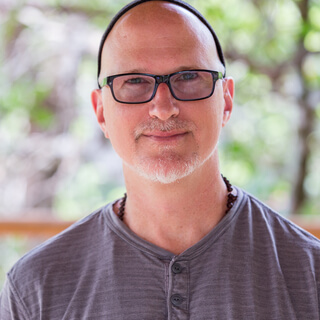
It is only through our struggling with our desires and other powerful unconscious impulses that our consciousness can expand beyond the ordinary limits of ego into an indescribable vastness and inner freedom. In this episode of the Torah of Awakening Jewish Meditation Podcast featuring the parsha of the week, you’ll get a taste of this freedom through an exploration of Parshat Bo, followed a guided meditation based on the Hebrew letter tav, with Rabbi Brian Yosef Schachter-Brooks. Opening song Hashkiveinu and piano improvisation also by Brian Yosef Schachter-Brooks.

Transcript
When we bring our awareness deeply into our unconscious impulses,
Not only do we transform the unconscious into the conscious,
But also our awareness itself is deeply nourished by this process.
In fact,
It is only through our struggling with desire and powerful unconscious forces that our consciousness can expand beyond the ordinary limits of ego into an indescribable vastness and inner freedom.
In this episode of the Torah of Awakening Jewish Meditation podcast,
You'll get a taste of this freedom through an exploration of Parshat Bo,
Followed by a guided meditation based on the Hebrew letter Tav.
I'm Rabbi Brian Yosef Schachter-Brooks.
Enjoy.
So the verse we're looking at here,
Va-Ya-Al-Ha-Ar-Be-Al-Kol Eretz Mitzrayim,
And the locusts came upon all the land of Egypt.
So nowadays there are two popular horror images,
Zombies and killer robots.
Both cultural motifs,
The undead as well as the dangerous rogue machines,
Are so powerful not only because we are automating more and more of our external world with AI,
But also because they point to a particular reality of our world as well,
The world of unconscious impulses,
Desires,
And passions.
Like most of our external automations,
Our desires are mostly useful.
When we feel the impulse to breathe,
For example,
We can generally trust that impulse.
We don't have to pay much attention to it.
We can let it take over and dictate our next breath.
However,
When we swim underwater,
The impulse to breathe can be deadly.
In that case,
We've got to be aware of the impulse and not succumb to it until we come up for air.
Similarly,
The impulse to eat is crucial for our survival,
But if you work in a bakery and you're surrounded by cake all day long,
You might have to watch your impulse to eat.
The same goes for many other impulses that we have.
The problem is not desire.
Desire serves our survival.
The problem is unconsciousness of desire,
Of letting the desire take control,
Of becoming the victim of our desires so that we become,
In the spiritual sense,
The undead,
Aimlessly controlled by our impulses.
How do we avoid this?
By becoming watchful,
Attentive,
Conscious,
Awake.
All of this is true for anyone in ordinary situations,
But for the aspirant who wants to become more conscious,
Attentiveness has a whole other dimension.
It's not merely for the sake of averting danger,
It's also for its own sake.
Ordinarily,
It's important to be aware of our breathing only if we're underwater,
But spiritually it is beneficial to be aware of our breathing constantly,
Because it is through the deliberate cultivation of awareness that we come to know ourselves as awareness,
And thus become free in the spiritual sense,
Which really means free from feeling trapped by any experience.
So we can try that right now as we're talking about becoming aware of the flow of our breathing,
Letting awareness touch that sensory sensation,
The flow of the air.
And as we bring awareness more deeply into our breathing,
We can come to see that awareness of this impulse to breathe is itself a kind of breathing.
Awareness of the impulse to eat is itself a kind of eating,
And that it's through the awareness of our desires that awareness itself is deeply nourished.
We need something to be aware of in order to nourish the awareness.
There is a hint in the Parsha,
Va-ya-al ha-ar-be al kol eretz mitzrayim,
And the locusts came upon all the land of Egypt.
And it says that they ate all the greenery of the land and all the fruits of the trees which the hail had left,
So that nothing green was left of tree or grass of the field in all the land of Egypt.
So these locusts are the embodiment of desire,
Consuming everything in their path.
They're also insects,
And we generally don't consider insects to be very appetizing.
As it says,
Kol sheretz ha-of ha-holech al arba,
Sheketz hu lachem,
All winged swarming things that walk on all fours shall be an abomination for you.
In other words,
Insects are not kosher.
And yet,
When it comes to locusts,
The taboo against eating insects no longer applies.
As it says,
Ach et zeh tokhlu mikol sheretz ha-of ha-holech al arba,
But this you shall eat from all winged swarming things that walk on all fours,
Et ha-arbe,
The locusts.
The locust,
The symbol of desire and consumption,
Is itself good to consume.
And the hidden message here is that we must eat our eating.
We must feed our consciousness by being present with our impulses and desires.
How do we do that?
Vayomer Adonai ha-mosheh,
The divine said to Moses,
Bo el paro,
Come to Pharaoh,
Ki ani hichbadti et libo ve'et lev avadav,
For I have hardened his heart and the conscience of his servants,
Le'ma anshiti ototai ele bikir bo,
So that I may place my signs among them.
So what does this mean?
Bo el paro,
Come to Pharaoh.
It's a very strange construction.
It should say,
Go to Pharaoh,
Right?
God is telling Moses,
Go to Pharaoh,
But instead it says,
Come to Pharaoh,
Hinting that the divine is within Pharaoh.
Of course,
If the divine is isness,
Is beingness,
Then the divine is everywhere,
Including within Pharaoh.
And so the divine within Pharaoh is beckoning us to come,
Meaning bring awareness into the feeling of the impulse in order to reclaim the consciousness trapped within it.
Hichbadti et libo,
I have hardened his heart.
The hardness of our impulses is not merely for keeping us alive,
Although it's certainly necessary for that.
But it's deeper purposes to give our consciousness something to wrestle with,
So that it may be strengthened,
And thus awaken to its full potential.
Le'ma anshiti ototai ele bikir bo,
So that I may place my signs within them.
Could be translated within them,
Or among them,
Or him.
So what are these signs?
In the plain meaning,
They are the 10 plagues that will show everyone that God is in charge.
But the word for sign is ot,
Which is also the word for letter.
And each of the Hebrew letters represents a certain quality of consciousness.
For example,
Aleph is openness to feeling fully,
Bet is hospitality,
And so on.
When a person embodies these qualities in their actions,
Their actions become outward signs for these inner spiritual realities.
Now the last letter of the aleph bet,
Tav,
Also means sign.
Tav is connected with the quality of emet,
Which is truth,
Hinting that this final letter tav is the sign or testimony of all the preceding letters.
In other words,
Tav represents our ability to embody the spiritual qualities in the way that we live,
Moment to moment.
This culmination of all our learning and practice,
All our Torah and meditation,
Is the quality of our actions.
How do we grow in the quality of our actions?
There's one essential ingredient.
Sincerity.
We have to sincerely want it.
We can't just be doing it because of an idea we learned about.
There has to be that sincere longing to embody these qualities.
And if we want to be sincere,
Then we should practice sincerity moment by moment,
Being in touch with the truth of our experience,
Not resisting or being in denial about what is actually happening.
This practice of authentic sincerity is the key to learning and practicing in an effective way,
So that we can become aware of our weaknesses and continue to grow on the path.
So,
Let's begin to invoke this meaning,
Energy,
Of the letter tav,
Of sincerity and truth,
With the kavanah.
I am speaking from my heart.
I am sincere.
I am truth.
Letting the sounds,
Vibrations of the words,
Sink in deeply,
Feeling them deeply,
Relaxing open into the words.
Resting in the truth of your experience of this moment,
Releasing any resistance or tendency to avoid or to distort.
One more time.
Let one be in constant awe of heaven.
Awe of that which is beyond comprehension,
That is,
Awe of existence,
Of being.
Honoring truth.
Speaking truth from the heart,
Speaking truth in the heart.
Singing together.
To come into meditation,
Letting your body be in a comfortable,
But also alert pose.
Aligning the best you can,
Your spine,
The top of your head,
So that there's a lift,
A bit of a lift.
And bringing your right hand to your heart,
Attitude of generously,
Lovingly offering your attention,
Giving your attention with sincerity,
Being that sincere presence with lecha on the long out breath,
Deep breath in,
Lecha,
Bringing your left hand down to your belly,
Feeling awareness,
Filling your belly with consciousness,
Permeating your organs,
Awareness flowing down through your legs,
Feeling out down through your feet into the ground.
Rising up,
Chest,
Upper back,
Shoulders and neck,
Releasing any excess tension in the shoulders,
In the neck muscles.
Attention through your arms,
Hands and fingers,
Connecting back to your heart and belly.
Returning again to that sensation of the flow of breathing,
Resting awareness on the feeling of that movement.
Rising up,
Face,
Facial muscles,
Brain and nervous system,
Bringing a little smile to your lips.
Being a loving,
Benevolent,
Indwelling presence,
Life in the body,
Na'ase,
Deep breath in,
And bringing right hand up from your heart,
Lightly touching forehead,
Aware of the space around you,
Hinting to you about the space of awareness,
That vast openness within which all is perceived,
Within which all experience arises and falls.
This essence that you are of sentience,
Of consciousness,
Affirming v'nishma,
Kissing your fingers,
Relaxing your hands,
Give a blessing on our practice today,
Help us to meditate deeply and powerfully.
Help us to relax into our essence as spacious awareness as we rest the mind in the tefila,
Honoring you,
Knowing you in all forms.
The roots of being atahu,
Resting in the silent repetition,
Being the clear open space,
Noticing thoughts,
Noticing feelings,
Letting them come,
Letting them go,
Returning the mind again and again to simply dwell in the palace of atahu.
Coming back from the stillness,
Bringing some movement to the body,
Taking a stretch.
As we finish up this practice today,
May this quality of the letter tav,
Of sincerity,
If not speaking truth from the heart,
At least speaking truth in the heart,
Meaning let us not be hiding from ourselves.
Let us acknowledge within ourselves the truth and be able to speak it when appropriate.
Shalom.
I hope you've enjoyed this Torah of Awakening.
I'm Rabbi Brian Yosef Schachter-Brooks.
Until next time,
All blessings.