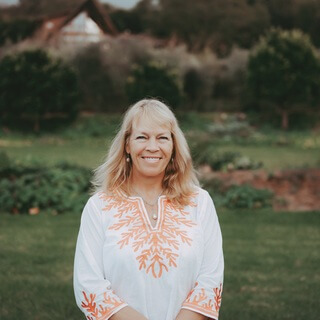
Aloha.
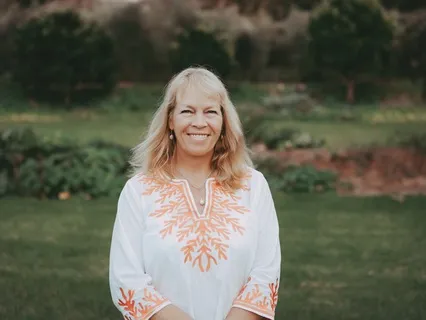
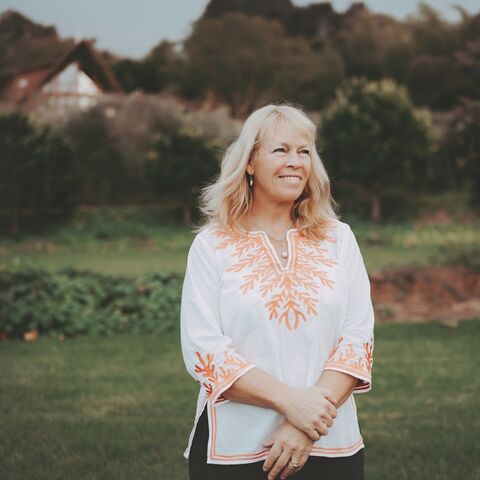
My name is Kate Belafiore.
Welcome to week one of Introduction to Mindfulness.
For this first week of meditations,
We will focus on the basics of mindfulness meditation,
Body and breath.
We will start with a very simple movement practice to bring your awareness out of your head and into your body.
Sitting comfortably,
Take a couple of deep breaths and arrive here in this moment.
Okay.
Raise your arms straight in front of you in a relaxed way so that you're looking at your fingertips.
Now,
Moving so slowly that someone looking at you would not realize you are moving,
Lower the arms to your lap.
Notice how it feels to pay attention to this slow,
Controlled movement and continue to breathe in a natural way.
Inhaling and exhaling,
Relaxed.
However far down your arms are is fine.
Allow them to rest in your lap.
Find a comfortable position where you can be relaxed and alert for this sitting meditation.
If sitting,
It will help to have your hips higher than your knees because this allows you to sit up naturally without much effort.
Tuck your chin slightly to elongate your spine and bring your shoulders back,
Pinching your shoulder blades together a little.
It's fine to stand or lie down.
Just be sure not to fall asleep.
Let's set an intention to arrive in a relaxed presence.
Bring your attention to the breath wherever it is easiest to feel it.
This might be at the nostrils,
The back of the throat,
Your belly rising and falling,
Or your whole body.
Inhale and exhale and just relax.
Inhaling and exhaling at your own natural pace allows your brain to move activity out of the area that is involved in planning and judging and into a more receptive state.
For the next few minutes,
Allow the body to remain still and pay attention to what is happening inside the body.
Notice the pressure where the body meets the floor or chair,
The texture of your clothing on your skin,
The feeling of the belly rising and falling,
Warmth or coolness.
Feeling your breath,
Inhaling and exhaling.
It might help to keep focus on the breath by adding a gentle whisper just inside you,
In on the inhale and out on the exhale.
I'll guide you,
But if you are breathing faster or slower than my guidance,
Please continue at your own rate.
Okay,
Let's try that for the next three breaths.
In Out In Out In Out We want to train ourselves to be calm and at ease both during meditation and afterward,
And we can plant those seeds using the breath.
So this next part will whisper internally calm on the inhale and ease on the exhale.
Let's try that for the next three breaths.
Calm Ease Calm Ease Calm Ease Great.
The last way we'll try this first week is to count the breaths.
We don't want to make a project or a competition out of this,
So we'll only count to five.
And if you only get two or three,
That's fine.
Remember to talk to yourself without judgment,
With interest,
Acceptance,
Compassion,
And warmth.
It helps to remain at ease if you count the exhales.
Let's try that for the next three.
In One In Two In Three Great.
So now choose one of these ways.
In Out Calm Ease Counting the exhales,
Or just pay attention with no further mental direction.
If your mind wanders,
Be kind to yourself.
Recognize that you are now paying attention,
And just begin again.
Bringing your attention to the breath.
Calm and at ease.
The best place to practice pausing and allowing for a wise response,
Rather than habitual reactivity,
Is now,
While sitting for meditation.
If you notice discomfort,
Like an itch,
Or a tense muscle,
Or your posture coming out of alignment,
Continue to sit still,
Let go of attention to the breath for a moment,
And pay attention to the sensations of your body instead.
Notice if it changes.
If it's an itch,
It may go away on its own,
Or it might move to a different place.
Practice stillness.
Practice not scratching the itch.
If you notice tension in your neck,
Back,
Hips,
Knees,
Ankles,
Resist the temptation to automatically move to fix the situation,
And just notice the sensations.
Be curious about how it feels.
Instead of a blanket statement like,
It hurts,
Investigate a little bit.
Look for the subtleties.
Burning,
Tight,
Hot,
Tingling,
Upper left corner of the collarbone,
Where the foot touches the floor,
Etc.
And after sitting with it,
If it still feels like it would be appropriate to move,
Then move with mindfulness,
Noticing how it feels before you move,
Moving in a small,
Controlled way,
And noticing how it feels after you move.
Then gently bring your attention back to the breath.
Inhaling and exhaling at your own natural pace.
Okay,
So bring yourself back to the room,
And I encourage you to take this feeling of calm and ease and relaxation and mindfulness into your day,
Whatever you're going to do next.
Namaste.