Welcome to In the Deep.
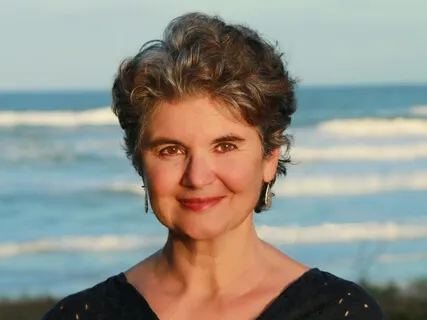
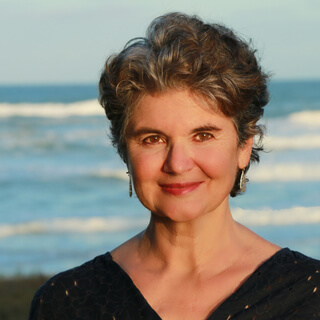
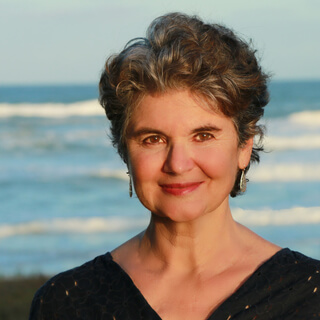
I'm your host,
Katherine Ingram.
The following is excerpted from a session of Dharma Dialogues held in Lenox Head,
Australia in July of 2018.
It's called the fluidity of the self.
One of the things that becomes more and more apparent is the which you might call the fluidity of the self.
And that is when we see how changing the nature of what we call our self turns out to be.
All the different phases of life,
I mean certainly childhood for me is just almost unrecognizable.
There's very little that I can relate to as something that has been consistent.
But even in my adulthood,
I see that there have been just different whole swaths of time where my interest and my desires and my passions and even my friendships.
I was just the other day recently remembering this friend of mine when I lived in Cambridge,
Massachusetts with whom I was quite close.
He was a theater critic and I used to be able to go to all the great shows because he had free tickets.
And he taught me how to play Go and we were really good friends.
He got involved with one of my friends as a relationship and so on.
I was remembering him.
I hadn't thought about him in ages.
I looked him up and discovered he had died quite some years ago.
I call so many things like that literally hundreds or thousands of times in my life where there was a whole like almost a condensed life in and of itself in a particular place or with a particular group or a particular study.
My long study of Buddhism and now so long ago.
The fluidity of self.
Right?
Another aspect of that that has been interesting to me to observe is it used to feel more solid to me.
Like when I think about all those years of living that I used to feel more of a sense of the contour of myself.
I used to feel a lot more real than it does now.
It used to feel much more like my sense of who I was and somebody,
Not somebody important but just somebody,
Anybody.
It felt much more solid.
I could tell you what I was about.
I could tell you what my history was,
What my passions were,
What I thought about things or all of those kinds of ways that we relate to our own self.
Whereas now,
I don't know if it's just my mind is fading or what but it's much less certainly it's less self-referencing but it also just feels more just light.
The sense of self is very light.
And I think that's probably a good thing.
It's a lot freer than it used to feel.
And I noticed that my attention is sort of,
You could say adrift in the now.
That's the phrase that's coming.
It just sort of hangs around and drifts around in the now.
It's like it hears the birds or it's eating some food or just having this conversation.
It's very kind of a light sense.
And I suppose there are moments where it feels the passion arises for some particular thing,
Something I'm enjoying in particular.
That always brings to fore the sense of aliveness.
But I guess the point I'm making is that this transition from being much more self-referential and much more a sense of myself as a self to this sort of very light experience of awareness that is just hanging around.
Now obviously sometimes when there's a threat to the system,
Whatever that threat may be,
The sense of self comes to the fore more strongly.
Whether it's a physical threat,
You know,
You have a near miss in the car or something like that.
Or a perceived sense of some sort of harm,
Either psychologically or whatever.
One of my close friends is dealing with something like that and I could feel it on her behalf.
I could feel she's having people doing a cyber attack on her online.
And I could feel a certain movement of wanting to protect her in a certain way that my sense of self became strong in that.
So there are moments,
Of course.
But for the most part,
It's yeah,
A drift in the now.
Very kind of a lot lighter than it used to be.
This is not by way of saying there's been any kind of attainment whatsoever.
It's not.
I don't consider it that.
I suspect all the usual neurosis is underneath there or there for sure.
I see it now and again.
But even the relationship to that is light.
Like I don't really care.
I'm not trying to make it better or anything like that.
So there's just this kind of much more freedom in the experience of the so-called self.
We've talked,
All of us I know have understood this concept of not buying into the story of your biography so strongly.
But it's something even more delicate than that.
You express it so beautifully because that gift of words and descriptive words of the experience.
And yeah,
You were just speaking for me because that's what this experience is.
That's what you're experiencing too.
Yeah.
It's very light and very beautiful and forever changing.
Yes,
Indeed.
The change is nothing.
It's just like ripples really.
Yes,
Like ripples on a surface of water.
Yeah.
Sometimes it's a little bit rougher and then other times it's completely still.
This subject arose for me because Marianne walked in here today.
We haven't seen each other in six weeks or more.
And she had just recently come from Canada.
And she just said to me the words,
Have you been there?
And I answered,
I lived there for a year once.
I lived in British Columbia in Canada.
And when I sat down,
I was remembering,
Yeah,
I did.
I lived there once.
I had a whole life there.
I ran a whole big growth center called Hollyhock.
And it's just,
You know,
Poof,
You know,
Just these bubbles in the stream of life.
Yes,
I lived there once.
And it's kind of like that about a lot,
Well,
All of it pretty much,
You know,
I lived there once.
We have so many experiences in this life,
Don't we?
It's just constantly changing.
Yeah.
Yeah,
It just becomes more like air,
Doesn't it?
Yes,
Very good.
Yes,
Right.
About that amount of substantiality.
Yes,
And I related to what you said when,
You know,
That it did feel more kind of solid and kind of grounded or something and real.
Like I used to be a person.
Yeah.
Yeah.
Right.
Yeah.
And the fact that certain things do condense in a way when there's more action and,
You know,
You need the motivation to solve a problem,
To move into solutions and things like that.
Yes.
That's when I notice.
Me too.
Yeah.
All of a sudden there's something to be dealt with and some solution to be found and then it kind of,
You know,
Condenses for a while and then it just,
As that happens,
It kind of expands again.
Exactly.
Or softens and yeah.
Yeah.
Exactly that.
Yeah.
Yeah,
I feel so lucky.
Yes.
Yes.
Right.
I wonder if it comes with age.
I wonder if it often.
Well,
I don't.
I think a certain amount can,
But I still,
From my observation,
What I notice is that it appears like that for some people and then for others it's.
Maybe not.
It seems to accentuate everything else that they've built up through their life.
That's true.
And it can be really terrible.
That's very true.
And very dense.
Yeah.
Very dense.
Yeah,
I think that's true.
So I don't think,
You know.
It's not just everyone's experience.
It's not age.
I'm sure it's not just age.
Yeah.
Yeah.
Yeah.
Yeah.
That's a very good point.
Yeah,
We can certainly quickly think of examples of people who are older and yet have even perhaps stronger solidity or a stronger sense of wanting to hold on to that sense of self.
Yeah.
Yeah,
I have a friend at the moment who's had to go into a clinic,
You know,
And she's in a terrible way,
You know.
And,
You know,
I've known her for years and she's a satsang person and,
You know,
She's been on the path or whatever you'd like to call it for many,
Many years.
And she had a few strong life circumstances and it just knocked the socks off her.
And she's just totally crumpled and gone back into,
You know,
Terrible states of negativity and thinking and catastrophizing and all sorts of bodily symptoms.
And it's just really shocking for me to see because it's,
You know,
It's just so,
You know,
Where does that,
You know,
None of us would choose that and I'm sure she wouldn't have chosen that but she's just in the thick of it and she's just.
.
.
Well,
One of the things I've observed in my own case and in knowing so many people over the years is that information soaks in at different levels with each of us.
So sometimes it soaks in initially just purely intellectually,
Which is fair enough.
That's probably the first door it has to enter where it makes sense,
Right?
It makes rational sense.
Then you could say it starts to soak in more emotionally,
Like almost like a drenching starts to happen of the knowing.
It starts to soak in a bit more emotionally.
But eventually it soaks in so much that it's just second nature.
There's no.
.
.
You don't even have to think about it.
It's fully saturated.
So I've often,
Because so many times you watch someone and you wonder,
I thought you would have known that,
You know?
And you think of that even in your own case.
And you realise,
Well,
They did know it but only on a certain level,
Not fully saturated,
Right?
And what I notice is that,
You know,
Where I have a very deep trust,
You know,
So it's like when I get ruffled in any way,
That deep trust is so strong that it,
You know,
It settles very quickly.
And,
You know,
What I'm noticing in her that I don't think that foundation has ever been there to experience that incredible trust.
Yeah,
That is certainly a very lucky thing to have that kind of confidence that somehow at some point the awareness will reset itself to the deeper channel and not just be splashing around in the fear and the paranoia and the solidification of the sense of self,
Which is only going to intensify the problem.
Yeah.
That's why I so love the use of basically understanding that you can direct your attention and that the more you direct your attention,
The more habituated that becomes,
That it's such that it does saturate it and it becomes second nature.
And that's a little bit what I'm alluding to here today is that after hearing,
You know,
The teachings in various ways,
Great teachings over the so many years,
How it has sort of become very much second nature,
This sort of lightness of being,
You know,
It's kind of finally moved to that.
With,
Of course,
I really want to be clear because I never want to propose I'm in a steady state of any kind.
I'm seriously not.
But so there's moments that are,
That the,
You know,
The ego material comes to the fore in a kind of shocking way or fear arises or anxiety arises or any number of the,
You know,
The sort of dark states will flash through for usually with some provocation.
But like you said,
There's a kind of confidence that knows that this will only be tolerated a certain amount of time before the attention is going to redirect itself.
And yeah.
Yeah,
Thank you.
You're welcome.
Thank you.
I'm always really astonished every time I come that it's so on topic to how I've been feeling and I've also been sitting with this thing the last week feeling that I don't really care any more about a lot of things and things that I was attached to are drifting away.
And also that I was thinking about,
I've been thinking quite a lot about death recently and just wondering whether I can come to terms with my own death.
It's like a big,
A huge thing.
And I'm terrified of flying.
So I recently did a trip to Japan and that was a really big thing.
So I did the wheel and all that sort of stuff before I went because I was certain I was going to be dying on that trip.
It's kind of like a really interesting idea actually because I was reading also somewhere that people that have a real sense of entitlement often have a fear of death by flying.
It's actually very rare that you would die on a plane.
And so that got me thinking about entitlement,
My own sense of,
I mean,
How dare you I think that I should be so lucky to die in a plane crash.
There's a few that gets to.
I know,
It's quite hilarious really thinking about that.
There was a moment when I was on the plane and thinking,
If I die now,
It could be really good because I wouldn't be suffering,
There would be a couple of minutes of terror and all the other things that might go through,
But I wouldn't be suffering for long.
No,
And it would just be all over and I've done my will so it's okay.
It's almost like giving myself permission to just die.
And it's a new kind of exploration that I'm on at the moment and it makes I feel quite fragile within it.
And also lighter in a way.
I know that there was a moment on the plane when I looked out the window and saw the real beauty in the sky and almost like letting myself die or relief about dying gave me a new appreciation about living,
Which I guess makes really makes a lot of sense.
And there's a relief in there.
There's a lot of fear around that too.
Yeah,
Fear around the living part.
The daily things that come to make the atmosphere dense,
Like you were speaking of before,
So I can feel when it's suddenly the mind is very busy,
There are things that are going on over and over and then there can be just stillness and nothingness and relaxation,
Mostly when I'm just in nature,
Quite quiet and I appreciate,
You know,
And I haven't got all those thoughts so busy.
So it's very interesting to hear you talk about it.
One thing that came to say as you were speaking about the fear of death,
Something that Poonjaji said,
Which was something like,
Who's ever afraid to go to sleep?
Right?
You think about it that way.
Of course,
Now dying in a plane crash is a bit different.
I think for me,
What would be hard about that,
And I also have a fear of flying,
I still do it,
But I don't like being up there,
Is just those last moments just would be probably very unpleasant,
Maybe,
Seemingly.
But a lot of other ways of dying,
It may be more like drifting off to sleep.
I think that's sort of the ultimate that many people wish for.
And actually a friend of a friend of mine recently did die at a young age.
He didn't feel well and he went to bed and he did.
He was dead.
But I mean,
Not only dying in one's sleep,
Which certainly would be the ultimate,
But even people who've been ill and then at some point the illness takes them and then there's just this drifting off from this consciousness.
And I just loved the gentleness of that.
And also many,
Many years ago,
I interviewed a woman named Helen Nearing.
She and her husband Scott Nearing were these famous communists and original back to the landers in America.
And they had,
In their marriage and their adult lives together,
They had fasted one day a week.
They were vegetarians back,
You know,
A hundred years ago,
More literally.
But they'd also fasted one day a week.
And when Scott turned a hundred and could no longer chop wood for their winter,
Because they lived up in Maine,
He said to his wife,
I'm going to go on a long fast,
Which of course she understood what that meant.
And so he stopped eating.
And it took,
I think he was still having some water anyway,
Had some water and no food.
It took about 30 days.
And then I interviewed her for an article about that and about her life with him.
And there was a line that she said,
Which I never forgot.
She said,
His death was like a leaf falling from a tree.
It was just,
You know,
Like that.
And so some of those kinds of reflections have always taken the kind of the sting of the fear out.
I think there's a biological fear that arises naturally.
But in terms of how it might be or could be and how we've seen it be with some people.
And I think as we get older,
There are lots of little deaths.
Just as we're saying here,
Whole ways that you used to be,
The whole things you used to be interested in.
Like you said,
Things are falling away.
Me too.
A lot of the cares of the world that I feel like I used to kind of carry around and feel like I had to be on top of or at least bear witness to and all those things,
Which has its point and its place.
But yeah,
All of that is getting lighter and lighter as well.
I've been noticing the world's been carrying along just fine without my involvement.
It's amazing really.
It's astonishing.
All those things that I used to get so controlling about and so whatever.
Yes.
It's like,
It's such a relief just to go,
Actually it's really fine if I don't do that or be that or try to change something.
I can actually really,
Yeah,
It makes life so much more pleasurable.
Yes,
Indeed.
Yes.
And it's not in apathy.
It's not apathy.
It's something else.
It's some other way in which one sees clearly what one can affect and what one cannot affect and starts to put one's energy into that which one actually can affect.
And that might be a very,
Very sort of contained and localised circumstance.
Yeah.
Thank you.
You're welcome.
But one of the things that helps me to stop getting too caught up in our external things is if I start obsessing about something,
I remember to ask myself,
Will this matter at the time of death?
Ninety-nine percent of whatever I'm stressing about won't matter.
Yes.
And that just brings me up.
Absolutely.
Even if you even ask the question,
Will it matter in a year from now?
Yes.
That'll also eliminate another 50 percent anyway.
Because I work with death and dying,
It's always there.
Yes,
Exactly right.
That keeps you on track with what the priorities are.
Not always appreciated when I offer that to other people.
Yeah.
Thank you.
You're welcome.
I guess everything feels less substantial than it used to.
Yes.
And in a way,
It feels like I don't even care as much.
Yeah,
Well,
That's part of the insubstantiality is that you don't care as much.
You know that great line in Bob Dylan's song,
People are crazy and times are strange.
I'm locked in tight.
I'm out of range.
I used to care,
But things have changed.
That's a perfect description.
Just going back for a moment on the how are you thing.
Recently I've started saying I'm fabulous.
I'm excellent.
Or not this good,
I'm good.
And then I'll say,
And how are you?
Or the person might say,
Oh my goodness,
I'll be shocked that I'm not just saying I'm good.
Because good is just such a nebulous nothing thing,
Which seems to be this all-pervading goodness that we're all expected to do.
I think it's part of this thing of not caring about what people and being prepared to say what it is.
Because it is every moment it could be a different thing.
So I really try to take a moment and say,
Well,
Actually I'm feeling very excited.
And it's kind of an invitation,
I feel,
For the other person to search inside themselves instead of being this nebulous good thing.
Yeah.
It gives permission to just sort of say it like you mean it.
Yeah.
And that's exciting because people can come alive and see that there's another possibility.
I sometimes,
Though,
Am aware if I'm speaking to someone who I feel their light is a little dim,
Then I don't necessarily flash mine out.
I'm just great.
Too bad you're not.
You know,
I mean,
That would be the only time that I would maybe mitigate it.
But yes,
Of course.
Yeah.
That's really good to notice.
I feel it may be.
I think that when people,
When certainly for myself,
When I feel like that,
I don't even,
It doesn't really even occur to me to ask the other person,
You know,
Even though it might be a normality of things,
I might be so deep in feeling sad and sorry for myself.
Yeah.
But it is really good to be aware.
Yeah.
Like that.
Yeah.
Thanks for the reminder.
Yeah.
I mean,
I just know it from the other side in terms of when I've been down,
You know,
In times,
You know,
I went through a phase many,
Many years ago of depression.
And,
You know,
I didn't really want to hear about how fabulous everyone else's time was.
You know.
In that space,
I've just wanted people to crawl into the same hole with me or something.
You know,
It's very difficult to hear how sparkly somebody else is.
Right.
Yeah.
Well,
I've often,
I'm extremely sensitive,
I guess,
To the experience of empathy,
Whether I'm experiencing it with somebody else on their behalf or they're experiencing it on my behalf.
It's a quality that I very much appreciate,
You know,
Because it's a feeling into,
It's an interbeing.
It is,
And it's such an important quality that I don't think,
You know,
We haven't really worked,
Our conditioning hasn't taught us much empathy,
You know,
Because we are supposed to be all good and fine and operating at a level where we're functioning and producing product or income or whatever it is for,
To keep the government's pockets,
Whatever it is,
We're supposed to be like a bit drone-like,
Really,
You know.
There's not much room for people who have,
You know,
Are feeling depressed and sad and hence the whole thing about mental illness and et cetera.
You know,
It's not a good look to be admitting that you're not doing that well.
That's why I think we're all saying,
Yeah,
I'm good.
Of course,
Yes,
That's right.
And I think,
Too,
To your point of the cultural overlay of there's so much competition,
You know,
In our Western societies in particular,
But it's spreading the world over,
Of course.
There's so much competition.
And it's exalted.
It's a value that is in the corporate culture and in all of the sort of cultures that are the predominant ethos now.
And from that vantage point,
Empathy gets short shrift,
Right?
And yet,
As one wakes up,
As one's own being becomes more and more subtly experienced,
Empathy arises on its own.
It arises without you being able to even control it.
And such that you have to be pretty brave hearted to bear it,
Right?
Because you start to feel a lot of empathy for a lot of people.
Yeah.
I think for me,
The last couple of years,
I've been feeling a lot more empathy for myself.
And as the self-empathy really grows,
Then it's like it's filling up my own cup and then it's now spilling out to other people.
Yeah,
I think it does work that way.
Yeah.
Yeah.
And it's also a kind of a knowing of your own being,
Right?
And knowing how sensitive that whole system is.
Right.
As you all have been speaking,
I mean,
I am with it all.
I find it really curious even,
As you said,
I've been away,
Been on holiday for six weeks,
Almost six weeks.
And it kind of was split up in two parts.
And the first part was split up in three or four parts.
And as I moved into the next phase of the holiday,
The previous one was already so unreal.
And even now,
I've been home a week and it's so far in the past.
Yeah.
Yeah.
I know the past really is very past,
Very quickly.
Yeah.
And when I see the photos,
I've got one of the photos of my holidays,
My screen on my desktop now,
And it's like,
Oh,
When was that?
Right.
Yes.
Yeah.
Because it was so stunning and so beautiful and we were so in it in the moment.
But when you're not,
It's gone.
Right.
Who was that in it?
Yeah.
Yes.
Right.
I know.
Yeah.
Yeah.
And the same as you,
All these past lives that I've had.
We went to a musical,
A school musical last night of high school in Scanner's Head just because we could and a neighbor's child is in it.
And remembering the days,
Which is just over 10 years ago that I went to high school musicals for.
.
.
Your sons.
.
.
.
My sons.
Not that they were in it,
But yeah,
We went to and it's a completely different era.
Oh my gosh.
Yes.
Right.
Yeah.
Yeah.
Now they're grown men in their own jobs.
Yes.
Yeah.
Yeah.
It's like,
Who was I then?
Who were they then?
Yeah.
Yeah.
And life was so different then.
Yeah.
Yeah.
Yeah.
It's so great to kind of just step back and take the meta view on the whole production,
You know?
Because we sweat the stuff so intensely.
Yes.
You know?
Every little thing is a big drama,
You know?
Yeah.
All the impulses of self-importance and productivity and what's my purpose and what is my legacy and all that kind of.
.
.
It just fades away.
It's gone when you finally see clearly.
It's like completely irrelevant.
Yeah.
Really just a drop on a hot plate.
Yeah.
Yeah.
A drop of water on a hot plate.
Yeah.
Yeah.
Yeah.
And so liberating.
I don't mean that in any fancy spiritual sense.
I mean it in the real direct experience of being that you don't feel burdened with a bunch of concepts that are just driving you crazy.
This has been In The Deep.
You can find the entire list of In The Deep podcasts at katherineingram.
Com where you can also book a private session by phone or Skype and see our schedule of upcoming events.
If you're a regular listener,
Please consider making either a one-time or a recurring tax deductible donation in any amount that is comfortable for you or give us a review wherever you're getting your podcast.
Until next time.