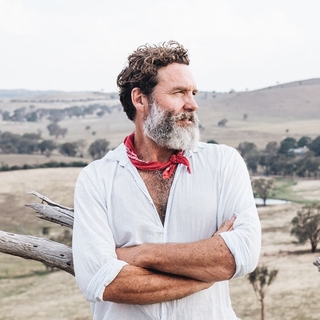
If there's one value that any farmer can have,
It's curiosity.
Is making sure that whatever,
Whether someone comes in and challenges your paradigm,
If it's too challenging,
Don't ever shut it down.
Just be curious.
What's in this?
Is there something that I don't know here?
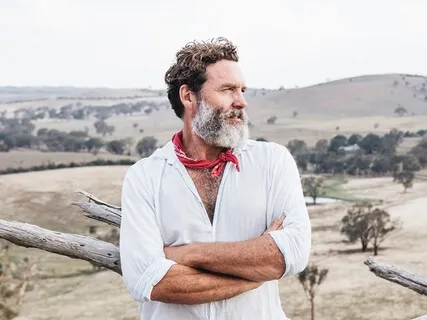
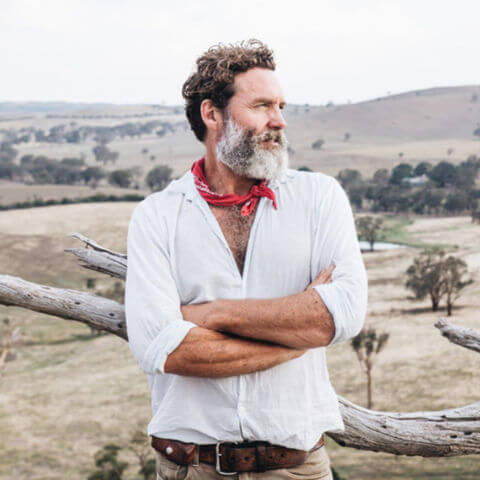
That was Dave Westbrook and you're listening to The Regenerative Journey.
We acknowledge the traditional custodians of country throughout Australia and internationally,
And their continuing connection to country,
Culture,
Community,
Land,
Sea and sky.
And we pay our respects to elders past,
Present and emerging.
G'day,
I'm your host Charlie Arnott,
An eighth-generational Australian regenerative farmer.
And in this podcast series,
I'll be diving deep and exploring my guests' unique perspectives on the world,
So you can apply their experience and knowledge to cultivate your own transition to a more regenerative way of life.
Welcome to The Regenerative Journey with your host Charlie Arnott.
G'day,
This week's episode is with Dave Westbrook.
I love this interview with Dave.
We caught him for a couple of hours when he was staying with us at Hanamino there a little while ago with his family,
Which is wonderful to have them on deck.
And knowing a little bit about Dave's story and having done some work with Dave,
I knew his story would be fascinating.
And it is,
You know,
His sort of family succession trials and tribulations,
The way he managed that.
His,
You know,
Changing from cropping to livestock farming and honeymoon period,
Some epiphanies and challenges and catalysts of change.
His work with Farm Owners Academy,
It's a fascinating story.
He's not old at all.
He's a young fella.
He's crammed a heap in.
He's got a big future ahead of him.
And just before we slip into the show,
I just want to tell you about the latest raft of biodynamic workshops that we have released.
We've got four dates for you.
The first one is on June 15th and 16th in the central west,
New South Wales at Cape Attee Valley.
A wonderful host there,
Terry and Stuart.
And they're from the paddock.
Check them out on Instagram.
They're fantastic in Glenallis.
And also a couple of days later on the 17th and 18th,
We'll be in the Hunter Valley at the wonderful Crinklewood Biodynamic Vineyard there with Oscar and his team.
So we're very keen to get as many of their wine club members there as well.
So maybe sign up and get yourself there.
Two other dates then in July.
So those ones are in June.
These next dates are in July.
We're the 19th and 20th in the Western Downs in Queensland.
And Phil and Philip Hughes have been fantastic supporters of regenerative agriculture there for some time now and also through the Lachlan Hughes Foundation,
Which we'll be talking about in due course.
We met them at,
I met them at Albury and they're just fantastic.
Lovely,
Lovely couple.
And also then on the 22nd and 23rd at the Sunshine Coast with our good buddies,
Mitch and Nina Bray.
Bray Farms there.
They'll be wrapping up our sort of winter series for two days,
The 22nd and 23rd.
All those tickets are available on our website.
So go to the bio,
Go to the website,
Do whatever you can to get onto our tribe booking site.
Early bird tickets will,
They're not going to be around for very long,
So jump on board.
But I hope you enjoy this episode of the regenerative journey.
Speaking with Dave Westbrook as much as I did.
G'day Dave,
Dave Westbrook,
Welcome to the guest room,
Guest bedroom of Hanami Na here.
Welcome.
Thank you,
Charlie.
This is an elite club,
The regenerative journey podcast.
So absolute privilege to be here and thank you for having me.
Mate,
It was very fortuitous.
You've been on my list for some time and I thought I'd already pounced on you and hit you up for one.
Clearly I hadn't.
But you've been on my list.
And you,
Fortuitously,
You're in the area and you joined us here at Hanami Na a couple days ago with your family and that worked really well.
So you're taking off later today.
So yeah,
Thanks for,
Thanks for spending the time.
What I usually do is I interview people in,
At their farms,
In their homes or in their place of work.
And I start with a question which relates to why we're here and what we're looking at and what I mean to them.
But this isn't your home.
Well it kind of is at the moment.
Australia is my home at the moment.
Well tell us about that then.
Let's start,
Before we get into your regenerative journey,
Let's talk about what you're looking at there.
What does it mean to you to be in the Australian landscape?
Great question.
There's either strong pull towards and always has as a farmer growing up in a big cropping family on the York Peninsula of South Australia.
And there's always been that big pull of being out in,
I think most farmers have it to be honest,
Being out in nature.
And definitely there was something inside of me that had more of that connection.
I was quite connected to even just the soil and the plants and the animals and the trees.
Yeah.
So for us to be out traveling Australia this year is very,
Very exciting.
Meeting a lot of people and just inviting ourselves to people's places like here.
Made a,
We're worked at trade.
And I mean you're absolutely right.
I think there's not many,
I guess farmers,
They farm outside,
They're in nature.
That there's a connection,
But not all farmers have necessarily a connection with nature do they?
No.
They're in that space,
They're using those resources and they're growing crops or they're raising cattle or whatever they're doing.
But what are your thoughts on,
I guess,
The connectedness of farmers generally?
I mean,
You work for Farm Owners Academy and you've got many clients.
What's the sense of connectedness of farmers you know,
Maybe not necessarily even your clients to nature and how does that play out in their lives?
How's that reflected in their behaviors?
Yeah,
It's a really good question.
I think- Mate,
I'm full.
We could talk about that one question for hours.
Look at this question.
There's nothing on the page.
That's how it should be.
So yeah,
I was one,
So my journey was- You'll start the journey.
Yeah,
Well I might as well walk through it and that will help the listeners understand a little bit.
But so really I grew up on mum and dad's farm and that was my future.
I saw the rest of my life there,
Sort of got married,
Come back on the farm and that didn't really,
I didn't connect with it.
And this is in South Australia,
This is your peninsula.
Correct,
Yeah.
So I decided to,
I was going to go and I didn't realize this at the time,
But I had deep values.
So come back to your question before,
Is that a lot of,
I find a lot of farmers don't know what their values are.
And for myself personally,
I'll just say that's unconscious farming.
So I sort of went on that journey to find what my values were without even knowing that's what I was doing.
Moved to Adelaide,
Was going to get some of my wife,
Becky's from Kangaroo Island.
Spent a bit of time over there,
Absolutely loved it,
Decided that's where I was going to go.
So I had that conversation with dad,
Which wasn't that easy to say,
Hey,
I was the only son home on the farm at that stage,
I'm going to go do something else.
There were other siblings?
So yeah,
Older sister and a younger brother that weren't on the farm while younger brother was still at school.
And so I spent a year in Adelaide getting my builder's license,
I was actually going to go and be a landscaper on Kangaroo Island.
When dad rang me and actually said,
Hey,
What if I put a deposit,
Or helped you put a deposit on a farm?
And I went guarantor for you and you bought a farm on KI.
That's our coffee.
So that's how,
That's how more.
That would have sounded pretty good.
Yeah,
That was a dream come true for me.
So really I spent the first,
So from 2010 to 2015,
Farming in the first two years of that were probably the honeymoon phase where I didn't know anything about livestock.
Didn't even know what a heifer was.
So purely cropping in the York?
Purely cropping on mum and dad's farm and then purely livestock,
Cattle and sheep on Kangaroo Island.
So I was really driving stock in the road.
I knew what my KPIs were slowly after a couple of years,
Worked out what benchmarks I needed to hit to be a profitable farmer.
So I was chasing profit,
Chasing profit.
And then that moved into probably an understanding of,
Hey,
Things don't feel right,
Things don't look right.
Soil's blowing away.
Yeah,
The pastures are going backwards.
Profit was looking good.
And then that's when I,
A couple of things,
Two things lined up for me at the same time.
I met Farm Owners Academy as a client and also our daughter who was two,
I think at the time had eczema.
And that was a massive blessing for us.
Just on the KPIs,
That's an interesting place to finish your daughter getting eczema.
That is.
It was a blessing.
We better go back there.
But I just want to know,
You mentioned KPIs there,
That you had them.
How did you as a farmer even have KPIs?
What was in you?
Was that something you'd learned or you'd read about or you'd been through a course?
Were you already doing Farm Owners Academy at that point to set KPIs?
Yeah.
So the KPIs were pretty basic before I met Farm Owners Academy.
And I was working with Greg Johnson.
So Greg Johnson is a co-founder of Farm Owners Academy.
He's from Kangaroo Island.
So he was driving a,
What do you call it,
A sheep production group on Kangaroo Island.
So phenomenal,
Phenomenal guy.
And his knowledge is a lot around KPIs and how,
Or key performance indicators and how to use them,
How to identify them and how to use them.
So stocking rate,
What else was there?
Dress weight per hectare and all those rainfall labour,
All those sort of things.
And I just want to drill into this because,
And that was relevant to Kangaroo Island.
So that felt pretty good.
I was a bloke here,
He knows what he's doing.
I'm a new farmer.
I want to do what he's doing.
That's the reference point you had.
Yeah.
I was actually told by a friend that had a farm on Kangaroo Island,
Which is the whole reason we're going over there actually.
He was selling and that's the farm that we were going to go and look at.
We didn't buy that one in the end,
But he said,
If you move to Kaoi,
Go and hook up with Greg Johnson.
Oh,
Cool.
So good reference point for you at that time.
Yeah,
Absolutely.
So what he was teaching on the island was elite and there's some of the world's best farmers on Kaoi.
It's an amazing place to go and visit.
Yeah,
Cool.
Eczema?
Yeah.
Yeah.
So why was Indy's eczema a blessing?
So just to paint a bit of a picture,
It's not super pretty.
It wasn't bad eczema,
But like she would scratch her feet when she was sleeping and there'd be a bit of blood on her bedroom wall from rubbing her feet on her wall because she was uncomfortable.
So two or three years old,
Let's go get this sorted out.
Went to the doctor and the doctor said,
Or diagnosed her with eczema because she was wearing gum boots.
Right.
So she was wearing rubber boots at the time.
Walked in there,
Hey,
She's got eczema because she's wearing rubber boots,
Go get some steroid cream.
That didn't feel right at all.
So that's where regenerative Janie started,
To be honest,
Right there.
With her feet?
With her eczema.
So what was it,
What didn't resonate for you,
The gum boots?
Bloody prognosis.
I don't really know,
To be honest.
There was,
What is it?
I think it was just the fact that our deeper values were just bubbling and they were just starting to come through without really us knowing or having any other awareness of that more conscious,
Aware,
Healthy,
Healthy life.
Were you more,
Were you thinking,
Using more of your intuition at that point?
Were you sort of thinking,
Hang on,
This,
I'm just trying to sort of piece together the values and how you got to that point to go,
Mate,
You're a quack.
Yeah.
You know,
That's maybe not quite right.
Yeah.
I don't know why we had that intuition to challenge a GP,
Why they're obviously quite educated.
It's a really good question.
I can't remember.
That's how old she is.
She's eight,
So that's six years ago.
But what it led us into is.
.
.
Anyway,
It happened.
It happened.
And it led us into,
Okay,
Let's do some research.
So we spoke to a few people.
Becky actually went up to Cairns and did a retreat with Joe Whitten and Fayed Qasab from,
What's their book called?
Do you know?
I don't know.
The Quirky Cooking.
Oh,
Really?
Yeah.
So Joe and Fayed.
.
.
It'll be in the book,
But they'll put it in the book,
Show notes.
Yeah,
Yeah.
They helped Becky.
So Becky went and did the research.
I was still busy on the farm.
What they put it down to was leaky gut syndrome.
So bad food,
Gluten,
Dairy,
Going through,
And processed,
A lot of processed foods,
Going through her digestive system,
Leaking out her gut,
Coming out in her blood,
And then has to get through the skin.
So that's,
I've done a lot of work on it,
I'm not a doctor,
But that's sort of our take on it.
So the way to fix that was GAPs,
The GAPs diet,
Which is basically eating unprocessed foods,
Sauerkraut,
Looking after the gut health.
This really sounds like it's going down the wrong track,
But I'll get to the point.
No,
No,
No,
No,
Mate.
This is where it needs to go.
This is all connected.
This is totally,
This is great.
Yeah,
So we all,
When we're like,
Okay,
If she's in,
It's not fair if a two or three year old goes on the GAPs diet and we don't.
So we all went in and it completely changed all of our lives in two weeks,
Just by changing the food that we eat.
And tell me just on that one,
So you took out processed food.
I took out processed foods and introduced broths,
Sauerkraut,
Yeah,
A lot of fermented foods.
What about dairy?
We took out gluten,
Gluten.
What else was that we took out?
Just processed foods.
So all of a sudden Becky was full time in the kitchen cooking and researching.
So there's a lot of work.
It's easy to live that harder life,
If that makes sense.
It's easy to live the,
Go down the unhealthy life of processed foods because it's convenient.
So when your kids are suffering,
It's a bit of a no brainer.
It just gave us a big why.
And we were lucky enough to see in a really short period of time,
The change,
The impact that had on our family.
So that's how that happened.
And then I was driving the tractor one day.
I can clearly remember where I was driving the tractor down the road between my farms.
And I just thought,
If there's the GAPs or the better way of human health and gut health,
What's the better way of farming?
We've got to get rid of chemicals and fertilizers.
There's got to be,
We've gotten rid of poisonous toothpaste and toxins out of food and gluten and all that sort of stuff.
So there's got to be a way of farming similar.
And that's when I invented regenerative agriculture,
Charlie.
It was you.
I did it.
Dave,
I've been searching for 27 episodes now.
That's it.
Or more even,
Interviews I've done and I've found the man who put.
That's it.
But that's interesting because I've talked to some farmers and everyone's journey is different obviously.
But I was talking to Cindy O'Meara the other day and she was saying she had one of her,
I can't be actually,
I might bugger this up now.
Talking to a man about his health and I think he himself,
And he was an older man.
He was a horticulturist down at Batlow,
I think it was.
Or no,
Down in Victoria I think,
Apple grower or something,
Pear grower.
And he had not a dissimilar thing where he saw after some period of time the connection between the health of himself and the health of his farm.
And I think,
Just trying to cast my mind back to the actual interview,
He went to her,
To Cindy for his own health.
Because his daughter said,
You've got to see this lady.
And he was just blown away.
And he looked at her,
He came back a second or third time and he said,
You know what?
What I've done for my body,
I should have done for my farm.
So not a dissimilar sort of.
.
.
Yeah,
Absolutely.
Which is fast.
Again,
This is the whole point of this podcast is trying to identify the links.
It's the same stuff.
It's just where do you apply it?
How do you execute it?
I'm executing it in my body,
I'm executing it on the land,
In nature,
For my family,
For my business.
So you're driving along,
Regenerative agriculture.
I don't know what it was,
But I jumped on Google and just started typing into Google what better ways of farming and healthier farming and etc.
And regen come up.
Probably your name come up.
And the daughter said,
Whoop,
Whoop,
Stay away.
Alert.
Yeah,
Alert.
And this is how long after the epiphany,
The health,
Your own health,
Family,
You know,
Absolute health.
Yeah,
Good question.
So that would have been probably a year after,
I reckon.
Yeah.
So around 2015.
Yep.
Yep.
Yeah.
So then from then on,
Bang,
What do I need to do?
So I was very conscious of going in slowly.
So I still fertilized for a couple of years and just back the stocking right off,
Started to plant the trees and just being curious.
And if there's one value that any farmer can have,
It's curiosity,
Is making sure that whatever,
Whether someone comes in and challenges your paradigm,
Don't shut it.
If it's too challenging,
Don't ever shut it down.
Just be curious.
What's in this?
Is there something that I don't know here?
And that's where I was at just for those couple of years,
Just curiosity.
How do I find out?
How can I turn my farm,
My vision for my farm,
Which is pretty much central Kangaroo Island,
Is how can I create an oasis in the middle of KI when all the other farms are blowing away in summer?
You mentioned before,
When you started farming in the first two years was honeymoon period.
I mean,
What you were saying,
It was blowing away,
Dust blowing away.
What was it that,
Because you were following Greg's sort of advice,
I guess.
What was it that made you think the honeymoon's over?
This doesn't feel right.
Yeah.
So Greg,
One misconception I had,
And I missed it,
Was the sustainable part of this.
I was pushing for profit and missed that.
Greg is very smart.
He wants farmers to be profitable,
But at the same time he wants them to manage their landscape.
He wouldn't be full regen,
But he wants them to manage their landscape.
He was big on that,
But I missed that point.
Just to explain the honeymoon period for me was,
I moved to a new farm,
Knew nothing,
Had a bucket load of time,
Didn't have much money,
But I had a big smile on my face because it was exciting for the first two years,
Just walking around cattle and sheep and making plans for the future.
Then probably two years in,
I started to get a bit educated,
Learnt what a heifer was,
Learnt how long to put the rams out for.
I can clearly remember doing,
Someone said,
Oh,
You've got to do a worm egg count on your sheep.
So collect the sheep poo,
Take it to the vets,
They'll do a worm egg count,
Tell you what trench to use.
I was like,
That just seems crazy.
Why would I do that?
I've never been doing that.
Then a year later,
That was just standard practice.
The honeymoon period finished when I was learning more because then I had to implement more.
I just got busier and busier and busier,
Spent more money on inputs,
More money on inputs.
The outputs were definitely there.
But as I got educated,
I was going down that rabbit wire of more opportunities,
So more things to do,
Put teasers out with the ewes to try and get them all to get in land in the first cycle.
So all of a sudden,
There's another week's worth of jobs just doing that.
More jobs,
More jobs,
More jobs coming.
Until pretty much 2015,
When I was,
Here's another little snippet of what my life was like.
I was planting trees in the rain at midnight on a Saturday night,
And all my mates were driving past,
Coming home from the footy club.
I just thought,
What the hell am I doing?
What am I doing this for?
I was just working myself into it.
Is it,
Yeah,
I guess is that.
Could you consider that dedication or just stupid?
I don't know.
That's kind of cool.
If you're so dedicated to planting trees,
You'll do that.
That's kind of wonderful.
But if it's at the expense of a few beers with the boys.
It was passion gone wrong,
If that makes sense.
Very,
Very passionate about it,
But I just had my blankets on.
That's where the next Arjumma farming career started when I joined Farmlanders Academy.
And that was how many years ago now?
So that was middle of 2015.
Six years.
Pretty much.
Yeah.
And why did you do that?
You thought.
Well,
I didn't know anything about it,
But I worked with Greg,
Obviously.
And then Greg was running a two day event in Adelaide.
And I thought,
Bloody hell,
If Greg's got two days in Adelaide running this event,
It's going to be good.
So I paid my $600 and went along.
Not really knowing what it was all about,
But blew my socks off.
So one of the first questions they asked was who here can go on a holiday for six weeks or three months,
I can't remember exactly.
And their farm will run itself.
And I was just like,
I can't even go away for a week and I'm struggling to be here for two days.
I've got to be planting trees at midnight on a Saturday night.
Exactly.
Let alone go up to six weeks.
Yeah,
You've got to be crazy.
Yeah.
Yeah.
So that's when I started to have all those epiphanies of,
Okay,
What am I actually,
What am I chasing here?
What's this all about?
I've had that breakthrough around the family health and the curiosity now into the regen side and how I can go down that path a little bit.
And what Farm Owners Academy really taught me,
It brought out my values.
And we actually,
It's part of our program is that we actually really dive into values.
There's values and then there's values.
If you can get your values and you understand your values,
They are one of the true powers to life.
So let's talk about that.
We're just going to park your journey there for a minute at that 2015,
2016.
Let's talk about values because you're dead right.
And my experience was I didn't know what values were.
Value to me was a monetary sort of a thing.
What's the value of that car or that sheep?
And so how do you and how can others identify their values?
Good question.
Takes time.
And that's why it's so important to get the right people around you.
So making sure that you're spending time with the right people and being curious and asking others what their values are.
But the way that we teach values is we've got training,
Specific template that we,
Like a strategy document that we use.
So passion is one of mine.
So off the top of my head,
Family,
Gratitude,
Adventure,
Fun,
Courage and passion.
So for example,
Courage,
If you write that on a piece of paper and you show someone what it doesn't really mean much,
But if you can then explain in a sentence what that actually means to you,
All of a sudden it helps you identify the power in that value.
So courage for me is speak your truth.
So be yourself.
Don't get caught up in everyone else's journey.
Worry about your own journey.
And that takes a bloody lot of courage,
Especially in the farming industry where we can get caught up with what the neighbors are doing,
What the community is doing,
People judging you,
Especially in the regen space.
People will judge you and it takes a shitload of courage to back yourself in and not doubt yourself.
I find absolutely right.
And I think the word in itself is meaningless unless we attach a meaning to it.
Like,
Who am I being when I'm being courageous?
I am speaking my truth.
I am ignoring the naysayers.
And again,
I remember when years ago,
Literally there's like 50 babies on cards and sorting through and feeling what's comfortable.
We all have our own individual values and we have family values that we might,
As a group of people,
Our family have,
And then there might be business values.
And my understanding,
And I guess what we try and emulate is that the business is an expression of those values,
Our behaviors,
Our attitudes.
And again,
It's not until you have to go to Farmers Academy to be knocked on the head and say,
You've got actually values,
We just need to dig them out.
And the same for me.
And I think that's,
If anyone listening who's farming,
Or even you don't have to be a farmer to understand your values,
It is the most valuable exercise that one can do because it then creates guideposts on the road of life,
Doesn't it?
I'm off track here.
I've lost my guiding pose to keep me on the track,
Whatever track that happens to be.
We've all got a different road to walk down.
And your values evolve as well.
So my values in the early days were work hard,
Because I thought that was a measurement of success,
But then it completely flipped that on its head when I had that regen or that healthy lifestyle epiphany.
Can people,
We will get back to your journey too Dave.
Just where's he going with this?
Is there such thing as work-life balance?
Yes,
100%.
So that work-life balance is almost my story to a T.
I was working way too hard and then in the end,
We found that balance.
And it's what we teach at Farm How do you balance,
So the two things that we want in life is,
To a degree,
Is time and money.
But if you put on a seesaw,
Time on one end and money on the other,
They've got to be balanced.
Most of the time we have one or the other.
So if we strive for money,
It's generally ego based at the cost of our time.
So for family is one of my values.
So if I'm chasing money,
I'm probably going to not live up to my value of family.
And what was the other one?
So time,
Generally it's at the sacrifice of money.
So how do we balance that?
And in the middle of the four cream is purpose or passion.
So what's your purpose?
Okay,
Now let's find a way to make that profitable and let's find a way to leverage that.
So you've got time to spend with your family,
To travel,
To work on the farm.
We help farmers realise their dreams.
So some farmers' dreams are to walk around through their cattle nice and slowly and kick around like every day is a Sunday.
Some people's dreams are to work eight or 10 hours a day or more and really strive for success.
Some people's dreams are to set their farm up so they can walk away from it and have the manager on and go pursue other passions.
So really identifying what your purpose is and what your goals are and then finding that balance between the time and creating that time and money to make that all come to fruition.
So what was your dream Dave when you popped out the Endo Farmers Academy?
Did you have a dream at that point?
Just that first two days or 30 year or whatever?
Yeah,
Jesus.
Yeah,
So for me it was about travelling.
One of our biggest passions was to travel as much as we could with the kids.
So Australia,
Not the world.
We actually said we were making some good money on the farm,
Sort of in 2016-17 and we told all our kids they could choose anywhere in the world for their 10th birthday.
Jed's 10 now,
So he chose Cape York luckily.
COVID hasn't upset those plans.
Indy's chosen polar bears.
So that'll.
.
.
That too,
Taronga Zoo.
Yeah,
Taronga Zoo.
She didn't say where.
The closest ones.
Yeah,
So to travel for us.
So it was really exciting two years into the three year journey with Farmlands,
The Platinum programs at three year journey.
So two years in,
Which was 2018,
We were able to go away for nine weeks,
Which was awesome.
And that was just a huge realisation of what we've achieved on the farm,
To be able to set systems up in our farm,
To make it profitable and then to be able to leverage enough to be able to go away through one of the busiest times of the year,
Which was really,
Really exciting.
So that was a reward,
Yeah,
Of sorts.
Big reward,
Yeah.
They say,
I can't think,
Gordon Livingston,
I think he wrote in a book,
I think I'm wrong in saying that,
He identified three things in life to be happy,
Something to love,
Someone to love,
Something to do and something to look forward to.
When you had your family,
You were loving farming and having something like that,
A holiday to look forward to is one of those critical things.
Because if there's not something to look forward to,
Then we're really going circles,
Aren't we?
Yeah,
Yeah,
Absolutely.
I think without getting too sidetracked,
What Farmlands Academy- No,
We love sidetracks.
You're good at sidetracks.
Sidetracks are doors,
They're doors of opportunity.
Absolutely.
I was thinking about this the other day,
About my journey and the way that I've evolved,
Is that we're always trying to climb a ladder in life.
Just going to sneak a little bit closer,
You're all right,
Mate?
I feel there's two ladders.
There's the ladder of ego,
Which is the big shiny ladder that everyone wants to climb,
And then there's the ladder of purpose or soul.
I've probably gone on that real ego unconscious path,
And then fell off of that,
And then found myself going down that more spiritual soulful path.
How can I fulfill my soul rather than fulfilling my ego?
That's what I love about Regen Farmers,
Is that they're fulfilling their soul by giving back to the landscape or to human health or whatever it might be.
I think that's the connection that Regen Farmers have,
Is that deep value.
Unconsciously we climb that ego ladder looking for fear of missing out.
The neighbor's got three big shiny headers.
What do I need to do to get three big shiny headers?
The bank account's big.
We're all placed or born onto that ladder in a different place.
Some farmers that are born towards the top of the ladder because they're just born onto a big farm that's got all the big shiny stuff already.
Some are born down the bottom.
I was probably born in the middle somewhere and then went to KI.
I felt like I had to prove myself.
I'd always put my best sheep on the road so the neighbors could always see my best sheep,
Not my worst sheep.
Is that where you sprayed more on the road to get the weeds out of pasture and stuff?
Yeah,
A lot of fertiliser.
Double the rate of nitrogen to get the grass nice and green.
I tell you what,
We've all done it.
It was really interesting to go on that journey,
That journey of trying to prove myself to Dad,
Trying to prove myself to the community,
And trying to prove myself to myself that I was worthy and that I could be successful.
That was very much an egotistical ladder for me.
The fear of missing out.
When we're on the ego ladder,
We're trying to jump rungs.
We're not taking one step at a time.
We're trying to jump,
Jump,
Jump,
Jump,
Get to the top as quick as we can.
It's an unhappy place to be.
We think that,
Okay,
When I buy that new header,
I'll use the header,
Or that new farm,
Or whatever it might be,
That will be fulfilled.
You never,
Ever fulfil.
Some of the biggest and best farmers that don't have a soulful meaning,
This is me speaking from my point of view,
But it's hard to be fulfilled when you're chasing ego.
Through Farm Owners Academy and Tracy,
Who was my coach,
She was amazing at pleasing the soul rather than trying to please your ego and pleasing other people.
That was a huge breakthrough for me when I said,
I'm going to actually climb the soul ladder or the purpose ladder.
Then just being able to take one step at a time and really what you said before,
It's enjoying,
You've got something to look forward to because you're looking forward to the next step on the ladder,
But you're really,
Really enjoying the step that you're on.
The classic example for me to share there is that I'd bought a second farm and the sheep yards were awful,
Falling down and sheep would get mixed up and gates weren't swinging.
I was quite frustrated because I was on this fast paced ego ladder of,
I need new sheep yards,
Need new sheep yards,
Blah,
Blah,
Blah.
For two years,
I had this two year plan,
I can afford them in two years.
For two years,
I was on this path of not going to enjoy any sheep work that I did because of those yards.
Because you knew the shiny ones were two years away.
Yeah.
It was so frustrating working in these objects.
It was amazing.
It was overnight that I had that basically changed,
For example,
Changed the ladders.
Every time a gate fell off in that set of sheep bales,
I'd smile.
I just felt,
You know what,
I just enjoy,
No matter where I was on that ladder or in my journey,
I could enjoy every single moment,
Whether it was a dog pushing sheep into a scrub or cutting them off from a gate or a flat tyre on your tractor when you're in a hurry or whatever it might have been.
Everything was just soulful and enjoyable.
Why overnight?
How did that happen?
Did you hit your head or something?
I might have.
That's interesting,
That epiphany.
Yeah.
The foundation of Farm Mater's Academy is mindset because we need to work at our mindset before we can open up any other doors,
Be open to curiosity,
I suppose.
So we're probably a year or so into that and had it drilled into me a little bit.
So I was sitting there,
It was simmering.
But then Tracy,
Who was my one-on-one coach,
Really opened me up to the law of attraction and what you focus on becomes reality.
So your thoughts is your reality,
Really.
Create your reality.
Yeah.
Tell me,
Tracy's obviously a lady.
Do you think the two ladders that as men,
As a gender,
If I can even go there,
Can no one have a go at me about using the word gender and saying men?
I just don't know about all that stuff.
I'm just going to stick to old school,
The male of the species.
That we tend to climb that ego ladder and the ladies and the females,
As it were,
Climbing solo.
That's a bit more comfortable for them.
Is that something?
Yeah,
I would say.
I would say that as men,
We probably are more egotistical.
And especially in the farming space,
It's a lot more open now.
That's for sure.
The last couple of years,
It's really opening up.
And I encourage all men to find that deeper,
Soulful level because it's far out.
It's a better place to be.
So we've all got it in us,
But we all push it down.
Because we don't want to express it.
We're in fear of expressing that side of it in case we get judged and we get that slapped out of us.
How do you,
As a coach,
Help farmers identify that?
What are the steps?
Everyone has their own way of getting to that point.
How do you suggest or how do you coach people to get to that point where they're even looking at that as being a positive thing to do?
Great question.
I'm heart tired.
I'm full on.
Slap them.
Is it pain?
Do they have to experience pain?
Great question.
Great comment.
You've nailed it.
It generally takes time.
Next question.
Well,
Just on pain,
I look at the classic example or metaphor is a bow and arrow.
So for an arrow to project forward has to go backwards.
So that pain is the pullback.
And the further you pull back,
The deeper the pain,
The further the arrow goes forward.
And I'll come to why that's so relevant to me shortly in the next three hours when we get to the end of my journey.
So I actually,
As a coach,
I find it a little bit tricky when I'm coaching someone.
I had a guy yesterday who broke down on Zoom.
I was on Zoom with him.
He broke down because a few issues with his family business and where he sees the direction of it going.
I was excited.
He was in tears and I was excited because it's the arrow getting pulled back.
It's a breakdown and a breakthrough follows a breakdown.
We can't have a good breakthrough without a breakdown.
So like I said,
A lot of the time it takes,
That's what's a three-year journey,
This program,
Is because it takes a lot of time,
A lot of getting to meet different people,
Challenging webinars,
Coaching,
Just identifying values,
Goals,
Et cetera.
And then the obstacles bubble up to the surface and then we deal with them.
A lot of them can be pretty hard to break through.
A lot of tears and a lot of excitement when we break through them.
So your comment on pain is pain is good.
Pain can be good.
And as a coach,
If I see pain,
I see an opportunity.
As they say,
There's no growth stimulant like pain.
That's it.
And having done the Stuart Andrews,
Peter Andrews,
Towan Park Natural Seekers Farming course last week here,
One thing that was identified pretty clearly was the cycles of drought and fire and flood.
They are very real cycles in the Australian landscape,
At least.
And what was highlighted was the drought being,
I mean,
Fires are pretty devastating,
But droughts tend to last longer,
I guess,
And potentially more far reaching.
That is the pain point at which when the rain falls,
When the drought does break,
Is the renewal of that landscape having been pushed to that point,
Often through grazing or lack of water.
And that is the opportunity for the weeds,
Our repair plants to emerge in that landscape to do a job.
That's the change of pattern.
It's the inflection of the succession in that landscape that many farmers will go,
I've just gone back two steps.
And maybe you have,
Because you're grazing a bit heavy and all your grass is gone or some of it's gone and you're going,
Wow,
That's bloody,
What's that Patterson's curse doing here?
So Thistle's doing here,
Well,
Thank God they're there.
Thank God there was something ready to jump in.
And I guess,
In some ways,
In what you're doing,
Dave,
And what many other businesses are doing in coaching farmers,
Thank God they're there to,
When the drought is on in the heads of some farmers,
Not just in the paddock,
But in their minds between the ears,
In that paddock,
That there are people like you out there who are helping plant those seeds.
What's the opportunity?
Totally.
Yeah.
What's the opportunity out of this drought or flood or family breakdown or whatever it might be?
There's always an opportunity.
There is.
And just referencing drought one more time,
We're always,
As farmers,
In the middle of it,
Recovering from it or preparing for the next one.
Yeah,
Absolutely.
And each one of those stages is,
As you say,
An opportunity to look at what can be done,
What can I look forward to.
So the first two years in my coaching career was New South Wales and Queensland and some of Victoria were in drought.
So a lot of my coaching sessions,
One-on-one sessions,
Were trying to keep people motivated and see something,
See a horizon somewhere.
But the opportunity in that was get your finances right.
When you're in a drought,
You have to understand your budget to the final dollar,
Really.
So there's great opportunities.
The drought caused a lot of people that I was working with to really nail their scorecard,
Their understanding of all their financials.
And I sort of,
It was a bit of an epiphany,
I don't know if you call it an epiphany,
But certainly something that I sort of thought very much about there,
Not only last year,
But in terms of putting it into words,
Was as farmers,
There's lots of things we can do if we're in our own regenerative journey,
But one is to release that need,
Get off that ego ladder of controlling nature.
We often,
And I certainly did,
Spend a lot of time controlling that,
Whether that be with an implement in the paddock,
It's a spray,
It's an intervention in a landscape or with animal health that generally short term and can be very destructive and creates a cycle of things that aren't necessarily good for ourselves or nature.
And releasing the need to control landscape and nature in the way we used to,
And focusing that energy on the control of our finances.
And just doing a 180,
Going,
I'm not going to worry about that thistle out there,
It's doing the job,
Thank God it's there.
I'm not going to spend the money or the time spraying that,
I'm going to spend the money potentially,
And the time in the office,
Just drilling down on my finances and understanding that because that is in my control,
100%,
To some degree,
Bank interest rates,
Market,
Commodities,
Whatever,
But focusing on what you can control is a really powerful mindset.
Yep,
Absolutely.
And I think another huge part of the mindset is having the awareness that you don't know,
But it's okay not to know as well.
So that's where it comes back to curiosity.
If you want to go down that region,
There'll be a lot of listeners here now that want to go down that region path,
But it's a big path to go down and there's no blueprint for it.
So there's a lot of self-doubt and a lot of,
I don't know what I'm talking about,
But that doesn't matter.
If you can just say,
You know what,
I'm happy with where I am today.
If I have to go put a little bit of spray or fur out today,
Because that's where I'm at,
That's my current reality.
Be okay with that.
But understanding that you're on a journey,
You're on a path to somewhere better,
But you don't need to know what that is just now.
And if that's the steps you're taking with a better future in mind,
Whatever better looks like for you and how far down the track you determine,
That's absolutely okay.
We say,
We're Hamish McKynight,
Our biodynamics course,
Or just chatting to farmers in any forum.
I went cold turkey and that was fine.
And fine in terms of that was what I decided to do and I wouldn't recommend that to anyone.
We advocate as an example,
If you're spending 500 bucks a hectare on your cropping or something,
Whatever it might happen to be,
And you carve off 10% of that,
Don't change your budget.
You're just reallocating what's actually in the budget.
So 450 bucks is for your normal stuff and put 50 bucks a hectare into a biological addition,
Additive,
Whatever it happens to be.
So your bank manager is not having a heart attack.
Your wife's not going,
Well,
Hang on,
What's this blow out here?
And actually just on that one,
I mean,
It's probably the wives of the farmers,
The males to do this,
Have a look at it this different way anyway,
Which is another thing we can go down,
Which I'd like to.
And step into it lightly.
The first 12 months,
Just see what happens.
And if you don't like it,
Doesn't feel good and you don't get good results,
That's fine.
You didn't spend any more money.
And I doubt very much you'll have a worse yield.
You might be the same,
But you might see other different types of yield.
There might be a better yield in your head.
There might be different ecological KPIs you can start creating and identifying that actually help you go,
You know what,
Didn't actually make any more money out of that.
But I think my money,
Where I did gain,
Is actually in the ground.
It's in the soil.
It's in my ecological bank account,
Which is a whole other conversation about what is and what's actually not in our balance sheets.
Before we go down there though,
Dave,
Let's get back to your story.
So a couple of years in there as a client of Farm Owners Academy.
Yes,
That three year journey,
So 15,
16 and 17,
Was able to turn,
Basically turn our farm on Kangaroo Island from busy and okay to great and very leveraged,
Very time rich and the income of the sun come in.
And then there's a little hiccup,
Well actually,
So 2018 Farm Owners Academy,
When I graduated,
Asked me to become one of their part-time coaches.
So that's sort of how I got into this role.
So I was coaching six businesses every month,
One-on-one every month.
And then that sort of over 2019,
That sort of,
It just evolved as more people come in to the program.
I sort of got up to about,
I think it was 24 or something,
Or 32 businesses that I was coaching one-on-one.
What does that look like once a week?
Once a fortnight?
So,
Well back then it was,
Yeah,
Just a week,
A week's work for me,
Really.
Just once a month,
Chatting with them for 45 minutes on Zoom or over the phone,
Helping them set goals,
Making sure they're,
Bit of accountability,
Making sure that they're keeping up with the program,
Answer any questions they might have.
A lot of it is support.
It's the beauty about coaching is one phone call might be trying to help someone identify what color tractor to buy.
The next phone call might be trying to help someone save their marriage and finding out,
Okay,
What's the next step?
Okay,
That's your relationship.
What do we need to do from here?
And just trying to identify people's BS a little bit,
Call them on their excuses.
And that's,
People are very grateful for that.
It's a skill,
It's hard to do,
But really helping them identify what they need next and holding them accountable for that.
So that was a week,
A month really.
So what happened there,
So 2015,
We don't need to go into it too much,
But basically my dad come to me one day sometime in 2015 or 16 and said,
Hey,
Your sister's coming home from Melbourne back to the farm.
I'm going to take your farm back off you out of your name and put it in my name.
So I essentially spent that five or six years as a business owner,
Farm owner to an employee of dad's again.
So when you say your farm,
You meant not the one,
The KI,
You mean the family farm?
So yeah,
So my,
So mum and dad and my brother were back on the family farm on North of Adelaide.
And I was,
Myself and Becky were running my farm,
Our farm on KI.
So that farm on KI had a big vision for that.
And then that sort of got taken away from me.
So that was my big breakdown,
If that makes sense.
That was the pain for me.
That took a lot to work through.
All it was really in the end is different values.
It was,
Dad had a value of work hard.
That theory of working hard is success.
And my values were,
I want to do whatever I can to make sure that my family live a good life and that I have a good life.
And I spent time,
Like I was at,
As well as planting trees at midnight,
I was leaving kids' birthday parties on a Sunday to go fencing early.
I didn't value that.
So I had to make a decision.
I had a lot of conversations with dad around this.
And there's no right or wrong.
Like,
I'm not saying that is wrong.
Who knows who's right,
Who's wrong.
But there was no future in that for me.
So yeah,
I went probably two years,
What was it,
End of 2018,
Decided that it wasn't going to work.
And that wasn't my future.
So I decided to.
.
.
Because you were working,
Essentially working for your father at that time.
Yeah.
So I still made all the decisions.
But I wasn't really making any money.
The communication wasn't there.
It got a little bit not super pretty,
If that makes sense.
We were very humble about it.
We kept it above board,
If that makes sense.
But it's just a different alignment of values.
So I decided to walk away,
Basically,
Which was the hardest thing I've ever done in my life,
To walk away from your own farm,
Your own home.
It wasn't really a farm,
It was more of a home.
The landscape,
The trees,
The animal,
That was my home.
So that was bloody tough,
But a bloody good opportunity.
So that's when Andrew Roberts,
The other co-founder,
And Greg come to me and said,
Hey,
If this doesn't work out on your farm,
We'd love to have you full time in Farm Owners Academy as one of our coaches.
That's where my journey went from.
So we just sort of moved to KI,
Farm ownership,
Lost that farm ownership,
Lost a fair bit of control of my own direction of life,
And then moved into the coaching role with Farm Owners Academy.
Moved off the farm?
Moved off the farm.
Because we were living out of the overdraft of the farm when it was in my name,
When we got that taken away from us,
We had zero dollars.
We're back to zero.
We couldn't even send the kids to the dentist a week later.
Couldn't even really afford to put food on the table.
That lasted probably a year or two.
Our budgets were not looking good.
Skinny.
Very,
Very skinny.
It was meant to be for us.
It was an exciting opportunity for us to learn,
Okay,
What do we need to do to live like this?
What do we need to put in place?
What opportunities are in this?
Are you looking for more information to assist you on your regenerative journey?
We've created an online community of supporters with exclusive access to interview transcripts,
Live online Q&A sessions with Charlie and his interviewees,
As well as the opportunity to be interviewed on the show yourself.
If you would like to be part of this community or would simply like to contribute to the development of the podcast series,
Please make your way to patreon.
Com forward slash the regenerative journey podcast.
We look forward to you becoming a member of the regenerative journey community.
Let's get back to this week's episode.
If you hadn't done your training,
Your three years Farmhouse Academy,
Your personal development and business development,
I don't know whether the chain of events your farm been taken away with you would have still happened.
Who knows?
I would have went to,
I had some pretty hard times,
Some pretty challenging times when you've built what you see as a successful farm,
And I probably built some worthiness in being able to support my family in that and have all that taken away.
You doubt yourself.
You're like,
Who am I as a father and as a husband to have essentially failed?
You can go down that path,
But luckily enough for the mindset training and having the right people around me,
I was able to say,
This is an opportunity.
I've got a bigger life to live than being a farmer.
Let's go get it.
What do I need to do to go and get it?
That sort of led me to where I am at the moment.
Thank goodness.
I'm glad that you had the foresight as it were to have done that training.
Absolutely.
Our story,
I suspect,
Is not uncommon in terms of family succession,
Relationships,
Communication,
And a lot of farmers,
They traverse that pretty shaky ground without much support and without much training.
Especially if that family is where that's frowned upon.
Yeah,
Absolutely.
A lot of it,
If you can take the blame out of it,
I've got every reason to probably blame and find excuses and be in denial,
But to actually take ownership of it can completely take you down a different or take you up a better journey of life.
That's my 100%.
There's so many farms that I work with now that are in a similar position.
Our team has different values.
That's why it's so critical.
You talked about business values earlier,
That we have clear business values because that sets the rules in the business.
There are a lot of people out there that just can't,
There's unreasonable discussions.
If my value is A,
Dad or brother or sister or whoever might say that value is completely unreasonable.
My value of family and adventure was completely unreasonable to dad's values of hard work.
Dad's value of hard work is unreasonable to me.
If you can't communicate and connect with them,
There's no point in living a life that isn't your soulful purpose.
That was a big breakthrough,
I guess,
An opportunity given to you.
You'd obviously done the work to get to the point where the boys thought,
No,
This bloke's pretty handy on the team.
So it wasn't as though you'd done the work to get to that point.
You had prepared,
As they say,
Success.
I bang on about it a heap because I love it.
Success is the confluence or luck,
Whatever you want to put up front,
Is the confluence of preparation and opportunity.
You prepared yourself for those years and you'd been through some ups and downs and then they gave you the opportunity,
Didn't they?
In some ways,
Your father gave you the opportunity.
Well,
Dad gave it to me and that's how I got myself through that journey,
Is that I thanked dad for pushing me down this path.
And if it wasn't for that,
I wouldn't have went down this path.
It's a path that I'm very passionate about helping others.
It's not just about me now.
I could be a successful farmer for myself,
But now I get to help other farmers be successful.
It's a lot more fulfilling.
Dave,
Where do we want to go now?
Let's finish your journey to this point.
You're coaching for a couple of years.
You're now travelling around Australia.
Comes back to values again,
Charlie,
Which is passion.
So one of my values is passion.
Farm Owners Academy actually helped me build a house.
They supported me and lent me some money because we obviously didn't have much of a budget there,
So they helped me move off of the farm because we couldn't afford to rent.
We did have a block of land down by the coast that we bought a couple of years earlier.
So that was sort of sitting there.
I had a lot of money on it,
So that was a bit daunting.
So they helped me get there.
I spent the last two years or last year living there,
Working from there.
It was amazing,
But really,
Really missed the farm.
So I was coming back to,
Okay,
What am I passionate about?
I love helping farmers.
I love coaching.
I love talking to farmers,
But I'm not passionate about sitting in my office five days a week.
So what do I need to do to get the best of both worlds?
So I rang Greg and Jeremy.
Jeremy's our CEO,
And Greg's the co-founder and said,
Hey,
What if I bought a caravan?
Would you mind if my office had wheels on it?
So then also knock and travel,
Which I'm passionate about,
Family's passionate about,
And I can coach,
Which I'm passionate about.
So that's nailing the passion value.
Greg's response to that was,
Hey,
If you want to be out on the road,
We would love to have someone out on the road.
We'll put together a Farm Owners Academy caravan and four-wheel drive.
So we didn't have to pay for it.
The Farm Owners Academy put that together,
And we ran all the figures on it and it stacked up.
So that's how we found our way to Hanamino today.
So 25th of January 2021 this year,
We headed off.
So we're on the road for 12 months doing the lap while working from the road.
So a lot of our members are up the East Coast.
So sort of next,
Between January and June is visiting a lot of our members and then the rest is opportunity and coaching from an office with wheels.
So pretty important,
I guess,
Opportunity for you to spend time with your family and execute,
Not execute,
Let's turn it right 180 degrees,
Live your values.
Yeah,
Yeah,
Absolutely.
So we,
I wake up every morning and go to bed every night just feeling so fulfilled that we are living all of our values,
Adventure,
Fun,
Family,
Passion,
Courage.
And the kids get to choose where to go.
So giving them any sort of direction or asking them for where to go.
They're just getting wrapped up,
They're getting wrapped along.
No,
It's pretty busy.
The East Coast is a little bit busy.
You're still doing work.
Yeah,
I'm working five days a week.
That work,
A lot of that is having barbecues and socialising with farmers,
Which isn't really work to be honest.
And doing some,
What we call an alignment session.
So get on farm,
Do a farm tour,
Understand where they're at,
Get really,
Really clear,
Help me understand what they're trying to improve and pursue,
And then capture their vision and their strategy and their goals in a document.
I think it's really important,
And I know Hamish,
Mackay and I talk about I haven't really got the time to do it as much as I love getting on farm and just yarning and looking and discussing is exactly that.
Going to graduates of our course,
And Hamish is hopefully going to do more of that,
Is travel and go to the graduates,
Have the half day,
The full day,
Help them get answer questions and some of the physical stuff,
Some of the practical stuff of,
Let's get a flow form,
A Boromite flow form,
As an example of a bit of gear most farmers don't have,
And get it out there.
And I think that makes it a reality for so many people,
Because otherwise it's stuff in a book,
It's stuff online,
It's conversations,
And it's that execution or the assistance and executing that is,
In our case,
Often physical,
Out in the paddock,
And in your case you're representing what they've learned and you're in their home.
They can't escape you.
No,
I've got them pinned.
Which I think is really important,
Because it's a follow up,
It's a momentum and it's accountability.
It is,
It is.
It's very unleveraged for the business,
Because there's someone on the road,
So our coach is generally in the second year of the program,
The member's coach will come and visit them.
So we've got out in the sticks everywhere,
We've got member sites.
It's inefficient for us to get out there and travel,
But it's very,
Very important.
It makes a huge difference for me to be able to get out there,
Sit around their dining table,
Be in their home,
Be in their energy,
And then have some breakthroughs.
Every farm visit would just be exceptional.
That must be quite fulfilling for you and,
Not empowering is probably the wrong word,
But that's I guess fulfilling,
Yeah?
Very.
It's like knowing you're helping a farmer,
For them to be fulfilled.
Yeah,
So my goal,
Or my intention when I go on farm,
Is to leave that farm,
Having that farmer feeling inspired.
Most farmers probably hit the ceiling a little bit,
So don't know where to go next.
Maybe they've got a big vision,
But there's some hurdles in it.
Breaking down the processes to get through those hurdles,
Or even opening up opportunities where people might be,
They might be smaller farms.
How do we get bigger in today's world?
It's near impossible in some parts.
Helping them identify where they're at and what their next opportunity is,
And getting that written down in an exciting step-by-step process.
Actionable steps.
Tell me Dave,
We'll spear off topic.
Hang on,
I'm going to write some notes down there because I just remembered.
What are you irate about?
I'm not irate about anything.
I can't,
No.
You don't have to be.
Not when you're on the soulful ladder.
Can I give you an example of this?
No.
Okay.
No,
You absolutely have to.
Next question.
No,
Go,
Shoot.
This is good.
This is just an opinion of ours.
On Kangaroo Island National Park,
Not a conservation park,
It's a national park set up for conservation.
No one can touch it.
The government have allowed a private company to build,
And don't quote me on this,
I don't know the ins and outs of this,
But pretty much,
If you've got over a million dollar project,
You can open up,
National park's yours.
You can go and put up a resort or do whatever you want.
There's a resort that was going to go in the national park on Kangaroo Island.
This is after the fires?
This is before the fires.
Before the fires.
Yeah.
It was going to,
It goes against,
It was an off-island company.
A big company that was going to take away from what the national park is.
Kangaroo Island,
It's a small community.
People are very passionate about it.
People have grown up in that area forever,
And this would have been a big scar on their landscape.
It's natural to come from an all right point of view or a negative point of view to fight that.
There's a lot of fighting,
A lot of protesting,
Et cetera.
Because of the journey that we've gone on,
Becky came up with the idea of,
Let's not fight this.
We don't agree with it.
How can we not fight the decision of the government,
But actually prove how much we love this land?
So it comes from,
So any protesting comes from a negative point of view.
This comes from a loving point of view.
That makes sense.
So,
Hey,
Don't ruin this because we all love it and this is why.
So she actually did a video that went a little bit viral,
Just expressing and sharing why we love that land so much and why that will ruin it.
So that makes sense.
It's something that could upset a lot of people,
But now we can approach it from more of a loving and a positive point of view rather than a negative and fighting.
I think as probably regen farmers that are passionate about something and anyone that's climate change,
All that sort of stuff,
It's easy to be passionate in an angry way.
I think we need to be passionate in a loving way.
I think that's the difference between how we can be seen as a pain and in the way versus someone that's going to make change.
I think,
As you said,
The passion and the get out angry,
That negative way,
It's based in fear,
Isn't it?
It's fear of the outcome,
Fear of the consequences,
Fear of the unknown.
It is.
Everything is fear-based.
This comes back to living that positive journey and understanding,
Having the awareness of everything that comes up.
Generally,
Everything is fear.
If you're angry,
If anger comes up for you,
It's a fear of something.
Could be fear of missing out.
It could be fear of failure.
It could be fear of success.
Could be fear of being wrong.
An argument with someone,
Generally,
With your wife or with a friend or with your dad,
It's generally a fear of you being proven wrong or that you are wrong and you're trying to justify yourself.
There's a fear in everything,
Just about.
I can't remember where I got this from,
It might have been Tony Robbins,
Is that gratitude is the antidote to fear.
You're going from a place of fearfulness and anger.
Anger is a result of fear,
As you say,
Dave.
But if one is grateful in this case,
Instead of being fearful of that activity,
That event happening,
The consequence of that,
Is looking at it differently.
Same situation,
Different pair of eyes and go,
I'm grateful for this opportunity to express the love we have for this island to make our point.
That's the way we're going to challenge or support this island campaign,
As it were.
So being grateful for that.
Finish the podcast there.
I think you've nailed it.
No,
We didn't even need to do this podcast because we just said that one sentence and we covered it well.
I thank Tony Robbins for that.
I think,
100%,
Journaling affirmation is a really big part of my life and what we teach in Farm professing that I do is it's called the Five Minute Journal and it's good.
I'll put it in the show notes,
Fiveminutejournal.
Com and it's similar questions.
I think you sort of mentioned there.
People can dig into that and it's basically,
If I'm going to get this right,
Is three things you're grateful for,
Three things you're looking forward to today or what would make today great and then what your affirmations are.
That's the morning session.
I might have mentioned this in other podcasts,
Actually.
In the evening,
It's what was amazing about today,
Three things that were amazing.
You get to reflect on and create reference points for amazement.
The trick here is with your,
What would make today great,
And this is again a Tony Robbins-ism,
Is don't make sure that those things that make today great that you state are in your control.
If one of your things was,
Oh,
What would make today great is it would rain.
You're probably going to be disappointed.
Setting yourself up for failure.
That's right.
You won't have a great day.
It's out of control.
Make sure those things are in control.
They're fairly simple.
Making my daughter smile today.
That's exactly what I was going to say.
That's one of the keys.
If you can set an intention for today just to make one person smile.
A stranger.
A stranger.
Just get a stranger to smile.
If you walk down the street,
I love this sort of concept.
If you walk down the street and smile at one person,
They're going to say,
Oh,
That felt nice.
Subconsciously,
Not even realizing.
They smile at the next person.
All of a sudden,
You've compounded 100 smiles within about 10 minutes.
It's contagious.
Amplification.
In the evening,
You do the three,
What was amazing about today.
Again,
Sometimes you sit there going,
Oh,
What was bloody amazing?
What's your definition of amazing?
Amazing could be just a conversation.
It was amazing I got that person to smile.
The chop I had for dinner was amazing.
Anyone can write whatever they want.
I'm not telling what to do.
In terms of just it redefines your reference point for what's amazing and your appreciation and your gratitude for life.
Then the last bit is a bit of a learning,
A bit of a reflection is what would have made today better?
What did I learn today?
Turning a,
Oh,
Well,
I forgot to do this or I didn't do that into,
Yeah,
Next time I'll make sure I do do that or I'll approach that in a different way.
So journaling,
Let's get back to habits,
Dave.
What are some of your habits?
What are some of your own personal habits or maybe not all your personal habits?
Yeah,
I think I do.
Okay,
Let me reframe that.
What are some of the habits you teach your clients or suggest?
Yeah,
Good.
Just to finish off on the journaling too,
Because it is tricky.
It takes a while to get.
A,
Go and buy yourself a sexy journal.
That's going to work better than just buying a $3 notepad.
It just does.
I like the phrase,
Look good,
Feel good,
Play good.
So if you look good,
You're going to feel good and you're going to play good.
You've got to be careful of that because it can be going up the ego ladder,
That looking good thing,
But it's about looking good.
It's an affirmation,
Looking good.
Write your journal as if,
Never ever read it.
Don't read it back.
Because if you write from a judgment,
If you're judging yourself from what you write,
It's going to be very hard to say,
Hey,
I'm grateful for something a little bit fluffy.
If you're writing some fluffy stuff in there,
It's going to be hard to write that.
If you need to,
Just write it and throw it in the bin straight away so you don't have that fear of someone else reading it or yourself judging yourself on,
Did I really write that?
Just let it go.
Just write,
Open up.
What other habits do we teach?
The morning routine is critical.
So when you're morning,
Elevate your life is Robin Sharma's little phrase.
Something that we're doing with 100 odd farms at the moment in Farm Mater's Academy is the 20,
20,
20 rule.
So get up at 5 a.
M.
Is the ideal,
But I'm living out of a caravan at the moment as we travel Australia.
How do you sneak out at 5 a.
M.
?
Well,
I don't.
I'm 6.
30 for me.
So our kids,
Honestly,
Our kids wake up at 8 o'clock.
It's the 6.
30 club.
It's the 6.
30 club.
It's the new club we're starting.
So it does it.
We,
5 a.
M.
Is ideal because it's solitude.
There's an hour of bliss from 5 a.
M.
To 6.
And if you can get it,
It's amazing,
But it's not realistic for everyone.
So an hour,
So 20 minutes of workout,
Exercise,
Get the blood going.
20 minutes of sort of reflection,
So journaling or affirmations or meditation.
So meditation is another big one that we really push and a hard one and paradigm to break a little bit as well for a lot of people.
But amazing if you,
Again,
Curious to that,
What the benefits are.
And then the third 20 minutes is education.
So read a book,
Listen to a podcast.
Maybe that's what you're doing right now.
And.
.
.
At 5.
40.
5.
40 to 6 a.
M.
You're listening to this.
This might take you 12 days to get through.
Yeah.
So fitness and health is vital.
I read a stat the other day that science now proves that serotonin,
Pretty sure it's serotonin,
Which is the happy chemical that gets to our brain.
They thought it come from our brain.
Actually,
80% of it now,
They've proven 80% of that is released from your gut.
Just proves how important gut health is for the happiness of your life.
The gut brain.
The gut brain.
So yeah,
Physical health,
External and internal.
Internal health,
It's easy to be fit on the outside.
A lot of people think they can out train a bad dog,
But they can't.
So you're going to be fit inside and outside.
Your mind's got to be fit.
So Robin Sharma talks about heart set,
Health set,
Mindset,
And soul set.
And if you can get those four and align those four through routine and rituals and discipline,
That's for me,
That's going to set you up for very,
Very successful life.
Yeah,
So what was it?
Heart set,
Health set,
Soul set.
And soul set.
Mindset.
And mindset.
I had a quick question there for you,
Dave.
Oh,
Yes.
So those four 20 minute sessions in that first hour.
Three.
Sorry,
Three,
Three from five to six.
Essentially looking at the first 20 minutes of the day,
Looking at the first 20 is soul,
I think.
Oh no,
Sorry.
Your first one is your physical.
So is your physical.
Your second is your soul because you're giving yourself that space and you are really focusing on yourself,
Your individuality.
And then your third one is your mind,
Isn't it?
So it's mind,
Body,
Spirit in a way,
Isn't it?
Yep.
Yep.
Spirit,
Soul.
So that's cool.
So you do that from 6.
30 to 7.
30.
Yep.
Yep.
And then I plan from 7.
30 to 8.
Plan as in your day.
Plan my day.
Every day is a little bit different.
I'm very flexible with it on the road.
And allowing yourself to be okay with,
Like if you put too much pressure on yourself,
You're setting yourself up for failure.
If you say,
If you set a goal that's unrealistic,
So it's unrealistic for me to get up at five,
Because I can't get back into the caravan until eight o'clock when the kids have sort of woken up.
That's just,
That's normally camping,
You wake up at six,
But for some reason they're waking up at eight.
So just mindful of that.
So not setting yourself up for failure.
If you set a goal that you can't obtain,
All you're doing is digging into your self-esteem.
So if you set your alarm at five and you press snooze,
You're taking away,
Like you're blowing your self-esteem,
Which is,
Then you start to judge yourself as a failure.
So set realistic goals.
Set ridiculous goals 10 years from now.
Like ridiculous.
If you know how to obtain your 10 year goal,
It's nowhere near big enough.
But today's goal,
Set it really,
Really realistic.
And,
Oh God,
Keep my tummy rumbling.
Do you eat breakfast?
No,
I don't eat breakfast.
I sort of work on the 16-8 intermittent fasting rule.
So not crucial,
But just sort of a general rule that was a habit that I'd dove into,
A discipline that I'd dove into for probably two months.
And now it's just natural.
So that's this program that this 2020 that we're doing is a 66 day challenge.
So we're trying to break that.
Most people will do,
Try to create a habit over six weeks or at that six week phase,
They'll nearly break through.
They'll be going through what we call perturbation,
Which is like this,
The squeeze of the hourglass.
And then they,
It's too uncomfortable.
So they pop back up into comfort zone.
They sleep in,
They turn their alarm off.
So six week cycle.
So if you can break,
Crack that six week cycle,
Come out the other end.
That's why we set that 66 days.
There's a bit of science around that apparently.
Then form as a habit.
So any,
Any,
Don't try and create five habits over the next 66 days,
Create one or two.
Nail that and then just keep layering it.
That's a Robin Sharman exercise,
That 66 day.
It is.
Yeah.
So it's all based on the,
On Robin Sharman's book,
The 5am Club.
Yeah,
Cool.
Dave,
What are you excited about?
I'm excited about a change in the world.
I think.
Really feel,
I've a strong pull to Indigenous people.
I haven't really gone too far into it.
But for some reason,
I've ever since I was a kid,
I have had that connection there somewhere deep inside.
So just so many opportunities.
I'm just excited about the opportunities that lie ahead in this regen space,
Not only for me,
But for everyone.
Just excited to be able to be part of,
Part of change.
Just watching farmers come into the Farm Owners Academy Platinum program.
That's where I've seen most farmers and watching their transition and just seeing the opportunities that they just break through and just a lifetime of opportunities ahead of them.
So it's helping others fulfil their dreams.
Helping others,
Helping others realise their dreams first.
Yeah.
Because most people don't know what their dreams are.
So helping them realise their dreams and then helping them fulfil their dreams.
Let's talk about women in agriculture.
Yep.
What do you think?
I think women are the key to agriculture.
Are there too many of them in there?
You said that.
No,
No.
I speak to a lot of women.
So part of my role in Farm Owners Academy,
100%.
So part of my role is speaking to farmers that are interested in the program.
And honestly,
80% of those people are women because they can see that something needs to change on the farm.
The husband is too busy or not making enough money.
They've bought a brand new tractor,
But the kitchen hadn't been renovated yet,
Maybe,
Just to feel those little tricks.
So they're open to reaching out.
They're probably,
Our reach is,
A lot of it's through social media and our podcasts.
So they're more exposed to it.
They reach out and say,
Hey,
I think I'm finally,
Or we need this,
Or I think my husband might be,
Or my husband needs this.
How do I get him involved?
So we've got a few different programs that we run to try and wean people into it a little bit,
But the women are definitely more proactive in change.
And I think that's exciting.
I think we need more of them.
We need our blokes to,
Feminine up a bit or whatever it's called.
Express their feminine side,
Which is I think our left side.
I know I went to a massage person years ago and I must've had a very tight left buttock.
Where's this going?
The lady masters,
She said,
Are you not expressing your feminine side?
Because it was tight as a thing.
So I think that's,
There's something in that drawers.
So why is it that you think that they're just more open to that?
What is it apart from,
I guess,
Is it a gender thing?
Is it,
Which I guess has to be in a way,
Because that's the definition we're using,
Male and female,
But why are they higher up on the soil ladder than men?
Are they,
The men aren't even on the soil ladder?
I think just gender wise and the science behind it,
Definitely.
But also the pressure and the expectations that we put on ourselves as men.
I'm probably more of a feminine,
I could easily walk into a bar and not drink a beer when all my mates are saying,
Hey,
Have a beer.
They're challenging,
But that's,
So I've always sort of been leaning more that side of backing my true self in and not feeling like,
I haven't had that judgment of,
You know what,
I don't have to be a blokey bloke.
But I think there is a lot of that judgment on ourselves to be a blokey bloke.
And if we open ourselves up and dive into that feminine side,
That can be a bit of a,
I don't know,
We could probably judge ourselves.
But the beauty I get to see with farmers now is that they,
We've got farmers doing some,
They go off on a spiritual journey and they're the happiest they've ever been.
Their life flows,
Everything happens from more money,
More time,
More happiness,
The family's happy.
A lot of that comes back to watching their own words as well.
So I had a farmer on Zoom yesterday who said,
We had a family meeting and it tended to be a shit fight.
I just said,
Mate,
You change your words,
Change the words that you're,
It wasn't a shit fight.
It was just,
Your values didn't align in that meeting.
So he said that was a shit fight or something like that.
So he put that on the table as that was a disaster.
Yeah.
So you can see how he's blown that up.
If he changes his words,
He can calm that whole situation down and take action and responsibility for the next steps to resolve it.
And I think as men,
That was one of my biggest breakthroughs was actually watching the wording that I use because a lot of it is you're just accentuating the situation more.
And I think as guys,
We do that and women don't.
And we accentuate it because there's a particular outcome or a particular perspective we have,
We are looking at it,
Those words,
Those potentially inappropriate words,
Or not necessarily most helpful words,
Are supporting that paradigm or that thing we're looking for.
There's a great book,
And I can't remember the name,
But Aaron McKenzie,
Who I interviewed the other day,
He said it was one of his significant,
I guess,
Moments or reads in his life.
I think it was early 20s.
I can't remember.
It was exactly that.
It was about the sense of the power of words.
And that's,
Again,
A very Tony Robbins thing.
It's about our physical presence and how we,
What the words were saying,
How we frame them up.
We can say the same thing in a positive way or a negative way.
It's a bit like when we're looking at a situation and he,
Tony Robbins,
Mentions example of there were twins.
And they,
I'm just trying to get it right now,
They were twins of very similar people.
And I think a mutual friend died in a war,
Was killed.
And one of the twins,
So in some ways genetically they're the same,
These twins.
But a mutual friend of the twins died in a war.
And then one of the twins,
It changed his life.
He was just devoed.
He was saying war was horrible and life's no good and we're going to die.
And that was his view.
And his twin,
Genetically the same theory,
Used that as a learning went,
My God,
Life is so precious.
And it was a really,
And sort of the associated words and the associated attitude and perspective.
And same situation through a different lens,
Using different words,
Created a very different outcome for those two people.
And that was all in their control.
It was just the lens through which they saw it,
A bit like the natural circumstance farming the other day.
My lens has changed and I'm looking through a different one at the landscape now and looking at that as an amazing positive thing,
Because we now understand now the opportunity.
We have to capture water as an example.
Wayne Dyer said,
When you change the way that you look at things,
The things that you look at change.
If we can get that,
Everything is easy.
Totally.
Again,
It is absolutely in our control.
Let's talk about learnings,
Dave.
Now how are we going for time?
Because I'm just conscious you've got to sort of,
But you were good.
Learnings.
What are some of the key learnings you've had in your regenerative journey?
So many,
So many.
I think the big one for me is personal health.
And just a quote that I stuck up by my,
If I can recommend to anyone listening,
If they want to take the next steps is dive into your values,
Work out what they are,
Print them out,
Put them everywhere,
Affirmations everywhere,
Quotes everywhere.
So one of the strong quotes that I had when I was challenging myself for my morning routine was we all must suffer from one of two things,
The pain of regret or the pain of discipline.
So just to put that into context is if I set my alarm for 5 a.
M.
And I don't get up,
That's regret.
There's pain of regret there.
And if I do get up,
It hurts.
It's not easy getting up and when it's regret,
It's not easy getting up and when it's raining and going outside and going for a jog,
That's the pain of discipline.
So we must all suffer from one or two things.
We must all take the discipline one and get growth rather than go down the negative spiral.
So that's one of my biggest learnings as far as the regen space goes is that we just don't know,
I think we know nothing,
To be honest,
About what can be,
What is,
What is the potential that this landscape has got,
That our farming capacity has got.
We don't need to know,
But I think it's exciting and that's probably a huge learning for me is that,
Yeah,
It's just exciting to know that there's so much to learn.
There's thousands of years worth of stuff to learn.
We had the birds,
I'm not a scientist,
But the fact that birds can rock up at a lake that's been dry for 20 years and they rock up a few days after it's got water in it.
It's crazy.
There's so much not,
What do they know that we don't know?
A lot.
Yeah.
And I think there's so many lessons like that,
That we can implement over time on our farms and the way that everything,
The symbiosis of the landscape and the ecosystem.
And what about some learnings from,
I guess,
Whether they're,
Learnings from your challenges,
You know,
That we,
I guess we have touched on in the last hour or so,
You know,
Like I guess some,
Some,
As part of those,
These discussions,
But were there any sort of attitudinal changes that you made?
Yeah.
And again,
You have discussed some of them,
But any sort of way to express that,
You know,
The learnings,
You know?
Yeah.
My stomach is going,
But no,
I don't know how well,
Reece,
I'm not sure if you can,
Reece is our wonderful,
What are you Reece?
You're a production,
You're a production,
You're editing a man about town.
Very clever bloke on the tech.
And I'm not sure if he can remove my tumbling.
Is that,
Is there a button?
Oh,
It's going again.
Is there a button there you can,
It's like Tumble Rumble remover.
I raise that Reece.
Dave,
Any learnings?
Yeah.
In the early days,
The paradigm,
The learning is,
Is the curiosity one.
Like it's,
It's the biggest one for me.
So paradigm shifts,
Being curious about any other paradigms that I can shift in.
So yeah,
Thinking that you've got to work hard to be successful is a false paradigm.
That's one that,
That's definitely one of my biggest learnings.
When I slowed down,
Everything sped up,
That makes sense.
So finances,
Business growth,
All that sort of stuff,
Personal growth,
All sped up when I slowed down.
And that's a,
That's a really hard paradigm to break.
What else is there?
Just definitely the,
The understanding of a negative is an opportunity.
So breakthrough follows a breakdown.
And seeing,
Seeing the positive in everything.
And what we call living above the line.
So below,
Above the line is things like taking ownership,
Taking responsibility,
Setting goals,
All that,
All that sort of stuff.
What,
What can I do in this situation in a positive way?
How do I,
How do I,
How can I own this versus blame,
Denial,
Victim?
If you're a victim in anything that you just,
You're going to fail.
You never ever played victim in anything,
Whatever,
Conversation in the house or whatever.
It's always live,
Always live above the line.
That victim thing is interesting,
Isn't it?
Because it's a default for a lot of people.
You know,
It's a,
It's a way of stepping away from responsibility.
And,
You know,
I'm a victim,
I'm out of,
You know,
It,
These things are out of my control and I'm just copying it.
And I don't,
You know,
And then the sort of next step from that is,
Is to blame someone else,
You know,
That's totally steps away from the humanity of,
And humility of just accepting that responsibility.
And we are,
Again,
It's about focusing on what you're in control of and that we,
Every day,
As Viktor Frankl said in his book,
You know,
Man's Search for Meaning,
We have the only thing that can never be taken away from us,
Whilst we're mentally sound and have a brain in our head that works,
Is our ability to choose every day.
Yep,
Absolutely.
Yep.
Let's talk about kids for a minute.
Just got me thinking about kids.
Is there any,
Any advice you can give for parenting?
What have you done?
What have you done wrong,
Charlie?
Grab,
Buy a caravan and go around Australia is probably one thing.
It sounds great.
Is there any,
Any,
Any,
Talking about learning,
You know,
Learnings from kids,
You know,
About kids and,
You know,
What have you learned from your kids?
Listen,
So same again,
Be curious,
How can I be a better parent?
Go and read the,
Go and read books.
So at the moment,
A 10 year old is,
Could be seen as,
Excuse me,
A bit of a pain in the butt.
Trying to wrestle me,
Trying to take me down when I'm not looking and trying to,
Hey dad,
Look at me,
Look at me.
You could see that as a pain.
And so might just grow up a little bit,
But when you understand why he's doing that,
So what's,
What's the cause behind that?
It's because he,
I'm his idol.
I'm his hero at the moment as a 10 year old.
So when he is potentially being a pain,
That's when I've got to challenge my paradigm and say,
You know,
I've got to put my computer down here.
I've got to go outside.
I've got to kick the footy,
Wrestle him when I don't feel like wrestling him.
Ride the motorbike,
Ride the bike,
Do things that I don't feel like doing because that's all his world is.
My world is huge at the moment.
There's,
You've got so many different things going on,
But as a 10 year old,
His world is,
Is you.
That,
That family life at the moment.
So we've got to remember how important that is.
So I think it's just listening to them,
Understanding that what they're really saying,
Not what they're sort of physically saying,
But what they're really saying on their inside.
Spending the time with them,
Having fun,
Creating craziness,
I suppose,
Just being crazy.
Like if,
If you do something that they don't expect you to do.
If,
If you,
If your kids are always asking you,
Hey,
Can I have this?
Can I have that?
And they,
They've sort of,
You've set boundaries.
Go and break those boundaries every now and then.
Go and buy them something ridiculous that you wouldn't normally do or,
Or go and do something ridiculous that they wouldn't normally do.
And then I say,
Hey,
Mum,
Mum and dad are pretty cool because you true,
You've broken some boundaries.
Tony Robbins says,
You know,
He talks about reframing your job description as it were,
And that can be,
You know,
Business and family,
You know,
And,
And,
You know,
Calling yourself and he,
He's very,
Obviously,
You know,
Not familiar with his work,
But he's very into documenting those things and making it sort of like,
Almost like a family charter and stuff,
Which I guess it absolutely has its merit.
You know,
Calling yourself the crazy fun time dad,
Or,
You know,
The officer in charge of crazy stunts and stuff,
You know,
And the kids going,
That's cool,
Dad.
You know,
You're not like the grumpy old disciplinarian.
You're actually,
You know and you're right.
I mean,
Kids are playful.
Lilla's name is playful in Sanskrit.
Now that is 10 and a half and she is absolutely that,
You know,
And there's there,
There,
And I did 10 years of boarding school,
Very disciplined sort of upbringing and so on.
So I'm grateful for,
And at the same time,
Having that as a reference to what is good,
But also knowing when,
As you say,
And I totally agree,
Dave,
You know,
Stepping over those boundaries,
Not playing by all the rules.
And,
You know,
Having the kids feel comfortable about owning their own behaviors and,
And,
And,
And finding those boundaries,
You know,
Yes,
There's boundaries you can step over momentarily and that's,
That's playful and that's healthy.
And then there's obviously times when dad has to put his serious pants on and go,
You know what,
That wasn't cool.
And that's really healthy for kids to understand that.
And the,
And the other thing I think about often is,
Is choice.
You know,
My view,
View of a lot of child psychologists just happens is that we give our children sometimes too many choices because life's not necessarily about getting everything you want and,
And having every choice you on the table,
You might like to be on the table,
You know,
It's,
It's this or that it's black or white,
It's yes or no.
And cause that is,
It's not just cause that's life.
It's just,
It's,
It's a,
It's a,
In my view,
It's a good way for kids to work stuff out,
You know,
Not having to like,
The life is just going to be full of the choices I need.
And it's always,
And I'm always going to get what I want.
Cause sometimes the choices of black or white,
Yes or no,
One or two is,
They may not want either.
It's,
It's gratitude versus entitlement.
Yep.
Yep.
I reckon so we bought Jed a new mountain bike the other day,
Went to Brighton,
Big mountain biking area.
His old bike wasn't up for it,
He's way too big for it.
I'd challenge my paradigm cause dad would have said,
Hey,
You just can't get what you want.
So I went and bought him a brand new bike.
Would have,
Another little tip.
It would have been easy for me to say,
Hey mate,
I've just bought you a brand new bike.
You're washing the dishes for three weeks straight and putting,
Putting a negative on a positive,
If that makes sense.
So shutting him off,
Here's this,
But,
So we don't ever want to give that,
Like that was something that I got as a kid.
Hey,
Here's a brand new pair of sneakers.
But I felt like I was a hundred percent.
So never put that on your kids.
But teach them to be grateful,
Give them life experiences and never let them,
Never let them be entitled.
My favorite quote,
Everyone's going to go,
Oh,
Here he goes again.
He's our job as parents is to prepare our children to leave us.
Yep.
We don't own our kids.
That's it.
No.
And if they're not ready,
Whatever ready looks like to you as a parent and the world,
Then that's our fault.
That is something we can blame ourselves for and we should take,
Take full responsibility for.
I also often reference this,
That,
You know,
Children need two things in life to be happy.
Unconditional love.
Yep.
And chores.
Yep.
And they,
They learn so much from the chores.
Love is,
That's pretty clear what that,
Why that's important.
But the chores,
You know,
Budgeting,
Responsibility,
Accountability,
Boundaries,
All those things.
And Lilla is saving money doing chores for a horse float,
You know,
And that's a,
That's a transaction I'm happy,
Happy about enabling because there's a,
There's a reward for her work and she understands the value of that.
Value of her time,
Value of the effort and then monetary value as well,
You know,
In terms of,
Now she's not going to buy the whole thing because she hasn't been working for the last 30 years.
Such a paper.
But she understands her,
Her contribution,
Which I think is really cool.
Dave,
I'm just conscious of the time,
Mate.
Well,
I've got one more,
Probably one or two more.
Profital Farmer.
Let's talk about that.
Your,
The podcast that yourself and Jeremy are spearheading.
Tell us about that.
Yeah.
So the Profital Farmer podcast is the podcast of Farm Owners Academy.
So Andrew Roberts,
Who was the co-founder of Farm Owners Academy,
Started that and then handed that on to Jeremy Hutchings,
The CEO of Farm Owners Academy now.
So yeah,
It's,
It's,
It's been so well received.
It's,
It's very business focused.
So Farm Owners Academy is definitely not operational.
Like we don't teach,
There's a little bit in there,
But we don't set out to teach people how to farm operationally.
It's how to run a successful business,
How to run a successful life.
So there's so many great takeaways.
In there,
There's a huge pool of,
Of great people that,
That they've interviewed over time.
Yeah,
It's,
It covers everything.
It covers,
There's a bit of spiritual stuff in there.
Mental health stuff,
Business growth,
Personal growth,
Fears,
Leverage,
All the aspects that,
That we're teaching Farm Owners Academy.
And I guess the message there potentially is that,
You know,
A farmer needs to be,
To be profitable is one thing.
And I guess what you saw there down in Kinga Island those years ago was you're profitable,
But it potentially was at the expense of other things,
You know.
And to be profitable,
One has to have more,
More,
More KPIs than just that dollar KPI,
You know.
Talking about KPI's,
What are some of yours?
What are you,
What are some of your life KPIs?
It's a great question.
Do you know,
I probably can't,
I probably don't have KPI's.
I feel like I've been able to,
I feel like KPIs potentially are a measurement to help us get somewhere.
And then once we've got somewhere,
Life happens to you and for you.
So instead of having,
Instead of creating,
Trying to manufacture life ahead of you,
It just,
It just opens up.
And that's what Regen Farming is to a degree.
You just allow it to just,
Just be.
So I probably don't have any KPIs that I judge myself on.
I think KPIs are probably a judgement.
It just,
Life just is.
With a big smile on my face.
That's a KPI.
Just there.
It is.
Or it's a measure of,
Not a measure of success,
But I guess it is a measure of,
If we can use that word,
Of fulfilment,
Isn't it?
You know,
If you're smiling.
Yep.
One last one,
Mo.
Billboard.
You're driving down Hume Highway today,
There's a big billboard on the side of the road.
And you have the opportunity to put a quote,
Phrase,
A question up there for all those holiday makers up and down the road to see.
What would you put on there?
Great question.
Probably put a picture.
I'm full of them.
I'll probably put a picture of you up there.
What people would have an accident on the way past?
I reckon the free range egg business would go through the roof.
They'd have to have people purchasing eggs to ditch it.
Tomatoes.
No,
I think it would just be,
I wrote an article called F'n Smile.
Just because it just come to me,
It wasn't,
F'n,
The word is,
Can be negative.
No,
No,
It's a bit brutal,
That word.
So I'll just keep it to a minimum.
But the reason,
So smile.
Yeah,
There it is.
It's a long window,
That's a bit F'n Smile because it just gives it context.
Like just enjoy,
Bloody enjoy life.
Don't get caught up in all the bullshit and all the judgment and all the expectation you have on life.
Just go out and bloody enjoy it.
I do have one last question.
Becky very kindly presented me with a book last night after dinner.
Tell us about that because it's pretty special publication.
Yeah.
And this comes back to values.
So Becky was told as a kid that she wanted to be an author and she was told there's no money in being an author,
Go to uni and study something that she didn't give a shit about.
So she sort of failed uni a little bit because I didn't have a passion there.
Farm Mater's Academy gave her the confidence to go and follow her values and her passion.
So she wrote a book,
Self-published a book called Children of the Wild,
Which is about wild children on Kangaroo Island teaching their city child friend about animals and living in the wild.
Really cool book.
So she self-published that and then a publisher approached her after the Kala bushfires to write a book on hope after fire.
So it's called Evie and the Bushfire,
Which comes out,
It's launched nationally on the 12th of April.
And it's really,
It's a cool concept around everyone loses hope after fire.
And Evie is a spirit girl.
So she represents hope.
She,
Everyone can see her before the fires.
She warns everyone about the fires.
And then after the fires,
No one can see her because everyone's lost hope.
And then essentially she helps,
She slowly,
People can slowly come back in.
They see the shoot to come back on the trees and things start to come back together.
Farmers are putting fences back up and then they can see Evie again because they're slowly seeing hope.
It's a really emotional book.
Highly recommend it.
Even if you haven't been through a bushfire,
It's got some really,
Really good stories in it around why to be positive in a negative situation.
Well,
I guess it's a children's book,
But there's obviously messaging there for adults as well.
Whereas most children's books.
Where can people get it when it's launched 12th of April?
Is it online?
Is it,
We can put a link in the show notes.
Yeah.
You can pre-order it on Booktopia at the moment.
So it'll be live on Booktopia from the 12th of April.
But yeah,
You can jump on,
It's on there now if anyone wants to pre-order.
Cool.
Can I give myself a plug too,
Charlie?
I thought you'd just done that for like 40 months.
And the only reason it comes back to that parenting,
The parenting side of things is that on Instagram,
Anyone that's on Instagram at adventure farmer is my page.
And you'll see that a lot of what I post is,
Is just having fun with the kids and having fun with farmers.
And that's,
That's what I use that page for.
It just is just sharing what I value in life.
Dave,
Mate,
It's been a pleasure and honour to sit here with you.
Next time,
If we do it again,
We might be at your farm,
Your house,
Your world.
I trust we cross paths again soon.
I'm sure we will in some way,
Shape or form.
And you have a lovely,
Wonderful year ahead of you in that caravan,
Weren't you?
I will do.
Thank you very much for having me.
It's been a pleasure being here and doing this podcast with this beautiful view overlooking this lake and been a great couple of days.
It's good fun.
Right.
Thanks,
Dave.
Thanks Charlie.
Appreciate it.
Cheers.
Wonderful chat there with Dave.
As I said in the intro,
Such a big future ahead of him,
I think.
And he's,
He's already had,
Already had a lot of challenges that he's got through and plenty of lessons learned that I hope you were able to take and,
And potentially utilise yourself.
Talking about utilisation,
It was wonderful.
Recently,
I was able to spend a couple of days at the Regionality Farm to Plate Exchange Conference at Beaudesert.
And I was able to grab a number of the speakers and presenters up there for quick chats,
Similar to the one I did at Albury for the Farming Matters Conference.
Fantastic chats.
I love this style of interviewing,
Actually just a quick,
Sharp,
Short sessions with as many people as I can jam in.
So look,
I hope you enjoy next week's episode of Your Attentive Journey.
This podcast is produced by Rhys Jones at Jager Media.
If you enjoyed this episode,
Please feel free to subscribe,
Share,
Rate and review.
For more episode information,
Please head over to www.
Charlianet.
Com.
Au.
Thank you.