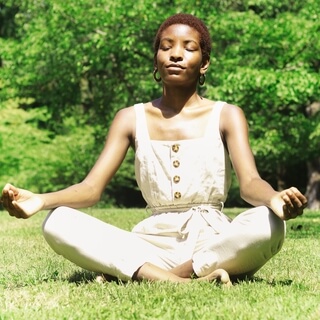
Welcome to the four stages of meditation.
I'm Dr.
Dautzen of Playfully Psyched.
Thank you for joining.
This meditation is perfect for beginning meditators.
As we begin today,
I want you to sit comfortably in a quiet,
Safe place.
Be mindful of the position that you choose because you will be in it for a while.
You want to be gentle with your body.
Balance a tall,
Upright posture with the sense of relaxation.
Let your shoulders release and your belly soften.
Breathe in quietly in through your nose and out through your nose.
And let yourself quietly rejoice in the fact that you are here.
Seated,
Present,
You've begun this special process of watching and being one with your breath.
Rejoice in the fact that all the things you could be doing,
You have chosen to prioritize this moment of quiet,
This moment of stillness,
This moment of peace.
Overcoming laziness is the first stage of meditation.
Recognize the strength of your resolve to stay the path of mindfulness,
To practice daily.
And then set an intention to remain present with breath.
Watch the breath as it moves in and out through your nose.
Feel the breath as it moves down past your shoulders into your chest.
Feel how the movement of the body is intricately tied to the breath.
And remain present here,
Present with breath,
Present in body.
Of course,
The mind will wander.
As soon as you notice the mind has wandered,
Remember the instructions.
Remember your intention to remain present with breath.
Again and again,
As many times as you need to notice the wandering mind and come back to the breath.
Bring yourself back to the breath.
Remembering the instructions is the second stage of the meditation.
And in noticing,
Notice the quality of your attention.
If the mind has become dull or heavy or sleepy,
Apply the antidote.
Sit up taller,
Lift the gaze or focus on the breath in,
But stay balanced and aware.
Consciously refine the quality of your intention.
And if you notice the mind has become restless,
Impatient,
Anxious,
Apply the antidote.
Lower your gaze.
Spend a little longer with each out breath.
Tighten your attention to the breath.
Stay balanced,
Continuously aware of the quality of your attention.
Applying the antidote is the third stage of meditation.
Again and again and again,
As many times as you need to,
Come back to the breath.
Come back to the breath with the balanced quality of attention.
Not too tight,
Not too loose,
Just right back to the breath.
Aware of the breath and aware too of awareness,
Correcting as needed.
Aware of the breath and aware too,
Sometime no correction is needed.
Be willing to let go of correcting when things feel just right.
Not too tight,
Not too loose.
Aware of the breath,
Aware that it's okay to stop adjusting when the practice feels just right.
Resting in practiced ease is the fourth stage of meditation.
Stay with the breath.
Stay with this ease that you're feeling.
And enjoy the results of your efforts.
This has been a guide to the four stages of meditation.