Welcome everyone.
This is Dr.
Tia Ho with Finding Mindful Now,
Guiding you out of your head and into your life with applied mindfulness.
Finding Mindful Now is about starting with a mindfulness practice and seeing the capacity to tune in and be present with life more of the time,
Whatever we're up to.
Today we're going to talk about rest and how rest is necessary and how we might take it for granted,
How important it is for just about any activity or project we're working on.
So I like to start these talks with an applied arrival practice.
So just going to invite you for the next couple minutes to find a comfortable position for your listening.
And it could be seated or standing or in repose.
And I call it an arrival practice because we're letting attention arrive here in the presence in the shared space between us.
So I'm just going to invite you to bring attention into the body.
Bringing it back from whatever planning,
Analysis,
Judging,
Remembering that the mind is busy with.
We can pick that back up later.
I invite you to feel into a spot on the body that feels consistent.
Maybe it is the beating of your heart,
Whether it is fast or slow or a mixture of the two,
It is consistently beating.
Maybe it is the rising and falling of your breath might touch your belly or just notice where you can feel the breath most vibrantly and focus in on that steady motion.
It might be that you feel the ground beneath your feet or the consistent space behind your back.
I'm just going to invite you to take three of the longest and deepest inhalations and exhalations that you've taken today,
Breathing in to that stability.
I'm going to invite you to feel your body.
And the aliveness within it.
That electrical impulse that's supporting the muscle of your heart to pump blood.
The electricity that's warming your body.
The electricity that's supporting the cells as they divide and carry nutrients around the system.
Notice where the body feels okay right now.
Just let yourself breathe in to that okayness,
Resting attention in whatever spot feels the most okay.
I'm just going to invite you to let attention come in to the sound of my voice out of that spot as we start thinking about rest.
So in another one of these talks,
I talked about how all people are innately creative.
There's this creative force.
I like to think of it as life intelligence.
This vast intelligence that is really unimaginably creative like the mind.
I don't know if we can really understand it,
But it's that life force,
That electrical impulse that's dividing our cells and making the body breathe some 20,
000 times on average a day.
It's blinking your eyelids some 14,
000 times a day.
It's what makes an acorn grow into a tree and the life force that lets all the network of roots send chemical and electrical signals so that trees can talk to each other.
So we've been in the society that I grew up in here in the northern American continent.
I learned and was taught that that creative force is separate from humans.
And I'm just going to invite you to question that.
I'm going to invite you to consider if that creative intelligence is us and have you ever wondered where the ideas come from that show up in your mind.
We can choose which ideas we act on,
But there's no controlling what ideas come into this space of awareness that we are.
And I also invite you to notice that we create all day every day with the thoughts,
The actions,
And even silence can be a type of creation.
Creativity takes all forms and,
You know,
People often talk about creativity as though it's only part of quote unquote art,
Things like writing and painting and sculpture,
Sewing.
And I'm just going to invite you to consider broadening if that's been your definition.
Just try on the idea of any idea that comes into your mind or anyone's mind and then is acted on and create something in this world,
This material world,
This world of tangible form,
Whether that's washing the dishes,
Cleaning the house,
Planning some form of work project,
Even putting a bandaid on.
What if all of that is a different type of creativity?
It's the same creation energy,
Same aliveness,
Creating an idea and then showing up as action or tangible products or silence.
And your life goal projects are also creative.
So when we are,
You know,
Projecting or working on projects,
We don't always remember that it's still creative.
The entire process,
The outward part that we can see and the inward generative part that we can't see is all forms of a cycle of creativity.
And resting is really important for that creative process.
You know,
When we exert ourselves,
We know intuitively to rest.
In fact,
Sleep is not something,
I don't really think that's something that the inner narrator controls,
The inner narrator we think of as ourself.
I think that's biological.
I think that's life,
Determining the sleep.
And sometimes there can be biological challenges where you need different types of supports to help that process unfold.
But that's not something I control.
And in a similar way,
You know,
It can be really hard to see that rest is really supportive and helpful for the creative process.
So just like when you sleep at night and the body or whatever time you sleep,
If you work,
If you work a night shift,
You might sleep in the daytime.
The body ends up kind of doing a bunch of resets on a lot of different systems,
Whether that's your immune system or your digestive system and the brain also.
I can't remember how exactly it was explained,
But I think of it as the brain getting a cooling down process.
If you think of our brain as a kind of biological processing system of information and activity,
And it just kind of gets to chill out a bit.
And that chilling out of the brain is a form of incubation.
And in our waking hours,
Just like we can have nightmares,
We can also have what I call thought mirrors.
And that's when the mind is kicking up a lot of dust.
And it can generate in a very well-intentioned way from what the brain has learned.
It can generate a lot of judgments.
It can generate ideas like something's wrong with me.
I'm not moving fast enough.
So-and-so's out to get me.
I'm letting everybody down.
I'm not going to succeed.
Everyone's mad at me.
All of these kinds of thoughts are very attractive to-they're very compelling to attention.
And our brain really wants us to do well.
It wants us to keep friends.
It wants us to be liked.
It wants to finish the goal.
And it's a survival mechanism that the brain is going to look for anything that's wrong or limited or not working.
Just in case the brain can come up with ways to strategize how to address whatever those limited challenges might be.
And so that's good news in the sense that we know that our brain is looking out for us.
But it can also lead to the mistake of thinking there's a lot of challenges when there aren't any.
It can be really hard to see progress on a project or a goal when that internal chatter,
It's almost like a hamster wheel is going and going and going.
And resting is really helpful and important.
It's taking a break.
And resting can happen in a lot of different ways.
When you engage in mindfulness or meditation,
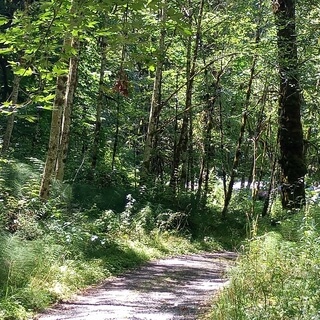
That can be a way that when you're directing attention into something like your breath or you're gazing at trees moving in the distance or letting attention notice sound changes or the sensation of support below you.
That directing of attention into these sensory supports takes attention out of those thought loops,
Those chattering mental storms or thought mirrors.
And there are lots of ways to give that mind rest.
It can be rest like very literally plopping down on the floor,
Taking a nap or watching clouds,
Watching the rain fall,
Listening to music.
It can also look like going out for a walk or a roll if you use a wheeled mobility device and you're just noticing the landscape wherever you are.
And when that mind gets some time to have attention go in other directions other than that thought about what are they thinking or what's wrong with me or all of the judgments that the mind is creating in this effort to try to protect.
It actually helps the mind come up with new ideas.
It's a type of regeneration time where it's almost like those thought loops become like this cloud and anything that wants to come through from this mysterious life force that we don't quite understand but is where that those new ideas originate from.
At least I think that's where they come from.
This vast life intelligence moving through these bodies of ours.
That stuff's always coming through but when attention is focused on the chatty mind,
These thought storms,
It can be really hard to hear those new ideas.
It can be difficult to support taking meaningful action on those ideas if we can't hear them.
This week I'm going to invite you to get some rest.
Put your head down,
Watch a video of water if you're not near a body of water.
You could try taking some measured breaths.
I'll do one really quickly.
I'm going to inhale for the count of four and exhale for the count of five.
You can play music but playing music just to rest.
Sometimes I write not to not as if it's a creative outlet although it is one but I just dump whatever the thoughts are in the mind out onto the pen,
The page through the pen and then I shred the paper afterwards.
I don't read it.
I just let it all out.
I'm just going to invite you to notice how it feels to support this brain-body system by taking rest breaks throughout your day,
Throughout your week,
Throughout your life.
As always,
I love to hear what you notice.