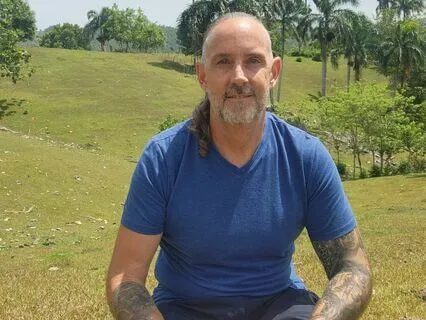
Welcome to Life Lessons and Laughter with your host,
Glenn Ambrose.
Hey,
Everybody.
Welcome.
Welcome.
Welcome.
So today,
Today,
I'm just kind of recording.
I had some time and I sat down.
I said,
Let's do it.
So I have zero preparation for this one.
You know,
Usually I don't have much,
But this one I have a little bit less than usual.
A friend of mine,
Pam,
Messaged me,
I think it was last week or something,
And sent me this quote by Young Pueblo,
Which if you haven't heard of Young Pueblo,
He's got some good stuff out there.
He's got some good quotes.
I don't know too much about him,
But he's got some stuff out,
Some good stuff.
So the quote is,
Make deep connections,
Not deep attachments.
And my friend Pam said,
You know,
That'd be a cool podcast idea.
And I said,
You're right.
So so I sat down,
I'm looking through some ideas.
And I was like,
Yeah,
Let's do that one.
So really zero thought beforehand,
Or maybe 30 seconds worth.
So we'll see where this goes.
We'll see what information comes through.
That's why I don't mind doing this.
Because I mean,
You know,
I know I've mentioned this before.
To me,
This isn't really my opinion.
This isn't me talking.
I just I mean,
My opinion and me talking is mixed in there to some degree.
But mainly the information,
Especially the good information,
The quality information,
Especially the aha moments,
Or when you see me get kind of jacked up and excited,
It's because I'm really in the flow.
And the way the information is coming out is very clear to me.
So I'm like,
It feels it feels wonderful.
That's why I kind of get all jacked up when that when that real clear,
Well phrased information starts pouring through.
So hey,
Hopefully that'll happen.
I'm not in control of it.
So we'll see.
So make deep connections,
Not deep attachments.
So think about that for a moment.
Make deep connections.
What's a connection?
A connection is,
You know,
Like the word deep kind of goes with connection when you really look at the meaning of that.
It's a deep connection with somebody else.
So,
You know,
Just for clarity sake,
Compare it to attachments.
What is an attachment?
An attachment is an expectation,
A dependency upon.
Okay,
So you can kind of see the difference already.
A connection is just kind of a connection with somebody.
A lot of times when see,
Like sometimes when I'm talking about this stuff,
Right,
It kind of sounds ethereal.
It kind of sounds out there because you it's sometimes it's difficult to put words to spiritual things.
You know,
What's he saying?
What's he saying?
But if you if you slow down for a moment and think about when have you ever said or felt that when have you ever said,
Oh,
I feel a deep connection or the the moments you said that it's probably because,
You know,
Of course,
You it can be confused with attachment sometimes.
So we're going to put that on hold for a second.
Oftentimes,
When there's just kind of the best way to explain something that's spiritual verbally,
Most people have said it in the past.
Why?
Because it's basically the best words and all the other words don't seem like they quite nail it like this phrase does.
OK,
So so if you think back and be like,
Wow,
I really feel this deep connection,
You probably did as long as you weren't confusing it with a deep attachment.
Right.
So so why did you choose?
So that's how you can kind of connect to what I'm saying.
If you go back and you're like,
Oh,
I remember.
Yeah,
I remember that person I met like once on vacation or or out of the blue two years ago,
And then we were just instant friends or something like that.
And you you probably use those words a deep connection.
Why?
Because it's the best way to explain it.
So you can oftentimes with things like this terminology like this,
If you slow down and you use your memory to go back and you kind of tune into that moment in time or that person,
You can kind of be like,
Oh,
Yeah,
I really do know what he means now.
You know,
Your own experience is your biggest asset.
So and all this stuff that I talk about,
I mean,
I've done over 300 podcasts,
I think all this stuff,
Everybody's experienced it.
I mean,
This is nothing new.
This isn't you know,
I mean,
You might have experienced it,
But you were unaware of experiencing it.
Sure.
But if but if you tune into the words and try to attach it to maybe or compare it to some memory and bring yourself back and you're like,
Oh,
My God,
I did feel that once or I did feel that a few times.
That helps because when you tune,
You're actually aligning your energy with what I'm talking about.
From your past experience,
Like a lot of people aren't aware that they do it.
They just think they understand it better or something,
I guess.
But really,
What you're doing is you're aligning your energy with a moment in time in the past when you were experiencing that energy.
So you kind of you can like get the feeling back up of that.
And you know,
Even the way that I just explained that sounded a little weird,
Like,
Oh,
I can't do that.
Yeah,
You can.
You can do that with anything.
I mean,
You know,
Like,
Think,
Close your eyes and think about going to the amusement park,
You know,
And then think about walking in and all the people.
Like you can almost feel the excitement building or perhaps the anxiety building,
Whatever you are experiencing,
You can kind of re-experience that,
You know,
And then you might take it one step further and just go,
You know,
Picture yourself on a roller coaster or something.
And you know,
That anticipation going up and then when it cuts loose and the fear and then all of a sudden you let go of the fear and the excitement.
Like if you do that,
You can actually experience the sensations in your body.
Because I mean,
They've proven this scientifically,
Like our body doesn't know the difference between whether we're experiencing something or whether we're thinking about it.
It's because we're aligning with the energy of it.
So it's our body will often react in a very similar way.
So that's a good way to tap into your energy to get a deep understanding about some of the things that I'm talking about.
You know,
Like if there's a specific phrase like this one,
When did I feel a deep connection where I actually use the term deep connection or or who did I ever feel a deep connection with?
Oh,
Oh,
Yeah.
You know,
There was that one person I dated.
Or you know,
It was a friend,
You know,
Whatever.
So you can really align and when you get the feeling of it,
That's it.
Okay,
That's it.
Words are just pointers towards it.
Like I can say,
Hey,
Have you ever felt a deep connection?
And if you're in your head,
You're like,
Yeah,
Yeah,
I'm sure I have,
You know,
Why?
Because your brain remembers you thinking that you had deep connection at some point and it filed that into your brain into your database.
So but that's that's not good enough.
Like that's you know,
We have to go deeper than that.
This is we have to practice going deeper with everything.
Slow down and go deeper.
So just because you're like,
Oh,
Yeah,
I think I remember having a deep connection with somebody.
And you might even remember who it was.
Oh,
Yeah,
It was that person.
Okay,
I know what he's talking about.
No,
You don't know what I'm talking about.
You think what I'm talking about.
Okay,
So just take an extra go one step deeper.
And feel what you were feeling.
What it ask yourself a follow up.
What did that deep connection feel like?
What how do I know it was a deep connection?
Why would I say that that was a deep connection?
When I met all these other people or spent more time with them,
And I didn't experience that what's the difference between the two?
Like you can ask yourself follow up questions like that to tune into the vibration of it.
So then you're like,
Oh,
Yeah,
It was just I don't know,
I just I,
I could feel it.
A lot of times that's all you can say.
Because there are no perfect words.
It's just signpost pointing towards it.
I can feel it.
Yeah,
Yeah,
You could feel it.
Right.
So,
So feel that what does that feel like?
And you don't have to explain it.
I mean,
If you can come up with words,
Cool,
That helps you attach to it a little bit better.
So you can remember it and call on it and stuff like that.
But if you can't come up with words,
It's okay.
It's the vibration,
The knowingness that of the feeling that is more powerful.
That's when you get it on a deeper conceptual level.
Okay.
So yeah,
I didn't know we're going to talk about that.
But this was a good it was a good moment,
I think,
To teach that.
So so try to feel into it,
Feel how you felt when you had a deep connection with somebody or feel like,
Why was that feeling different than all the other feelings when you met somebody or when you spent time with somebody,
Depending on the scenario,
You know,
And and again,
It's just connecting to the feeling of it,
The vibration of it.
So when you make a deep connection,
It's what you'll notice if you kind of dissect it,
Which I'm doing right now,
Like when you really look into it.
A connection,
A deep connection is non judgmental.
Okay,
It's not like you don't get a deep connection by going,
Well,
They have the same opinion on this subject as I did.
Like.
So that doesn't create a deep connection.
We like a lot of the same things.
No,
That's not a deep connection,
Because you can think the same and like the same way and and like the same things as lots of people.
But you don't feel that deep connection,
So there must be something extra.
Sometimes that can be a part of it,
But there must be something extra that this connection has that the other ones don't have,
Because not every one of them was deep.
So so but notice it has that non judgmental aspect.
It's just kind of like and it's hard to put words to.
I just.
I just feel comfortable around them.
I feel like I can be myself around them.
Oh,
OK.
You know,
So.
That is I feel like I can be more of myself.
I feel like they're not judging me.
And I have no judgment towards them.
Sometimes we don't even know them that well,
So we're like,
I don't know.
You know,
They could have done real weird,
Stupid stuff two days before.
Two days before I met him,
I don't think so because I don't think that that type of person,
But they could have,
I don't know,
But we still feel this connection.
OK,
So it's very non judgmental and non judgment is an eternal spiritual.
Energy.
You know,
It's it's a version of unconditional love.
Which is eternal.
So this is what happens when you make a deep connection.
Now,
Compare that to deep attachments,
Deep attachments happen like really the most obvious example is in unhealthy romantic relationships.
You know,
And not just I guess I should let me rephrase that unhealthy relationships,
Because you see all the time in parent child relationships.
You see all the time in friendships.
You see it all the time in romantic relationships.
It happens.
It's pretty regularly.
That happens.
I think I said it's pretty regularly.
It happens pretty regular regularly.
So,
You know,
It's funny,
I just like a little while ago.
I was I was scrolling on social media and I saw this post that said,
Why is the divorce rate so high or not?
I said,
What's the main cause of divorce?
And a lot of people were put in marriage,
Which was good.
But,
You know,
A lot of people put in communication,
Finances,
Not forgiving,
All kinds of stuff.
And the way I see it,
I think it's pretty regular.
And the way I see it,
The the the biggest cause for divorce is that we are developing deep attachments,
Not deep connections.
We're attaching to the other person.
And why do we do that in romantic relationships and others?
It's often for for a source of happiness.
Like what happens when you when you start feeling a it could even start as a deep connection,
But turn into a deep attachment.
You start feeling this connection with somebody and then all of a sudden you're like,
Wow,
Like I really feel good around this person.
And then we start thinking that that person is the source of our happiness because we feel happy around them.
Right.
I mean,
Like if you don't if you don't slow down,
Like I think this is really this is the biggest crux of the problem,
Because I truly believe that people are very,
Very intelligent,
Way more intelligent than we act.
And people think other people are stupid because they see them doing stupid things.
So they think that makes them stupid.
And all it is is that they're not thinking deep enough.
And most people don't.
So like what happens is.
You know,
Like I don't always think deep enough.
So if I'm not let's say I'm in a judgmental mode and I'm not thinking deep enough or I am thinking deep enough and I look at somebody and they're not thinking deep enough,
Then I'm just like,
Oh,
Look at this guy.
Why would you do that?
He's being an idiot.
Yeah,
That's because it doesn't make sense what he's doing on a logical way because he didn't think about it deep enough.
He just reacted.
He just did something without thinking it through,
Without being fully conscious of the why of what he's doing.
Now,
If I'm in a deep mode and I can see that clearly,
Then.
I mean,
I like to think that I don't I don't do this.
I don't think people are stupid,
But most people do when they're in that scenario.
They're like,
Oh,
That person must be dumb.
Like,
Well,
No,
They're not dumb.
They just didn't slow down and think through their actions in that particular scenario.
And and oftentimes when our emotions or when are running us or when we're unconscious,
Just moving around fast in society.
We don't.
Right.
And you just but you're not you don't have any emotion to what that person is doing.
And you're not acting reactionary because you're not in their situation reacting to it.
So therefore,
You're more clear minded,
You're a little bit slower than that,
So you can see that that what they're doing isn't.
Isn't well thought out or doesn't really make logical sense,
That's because you're not in that situation,
And then 15 minutes later,
Something can happen and you can react in a stupid way because now all of a sudden you're caught up in the emotion or you're just reacting instead of acting consciously.
Right,
So but but if we're not acting consciously,
Then we don't oftentimes we don't catch that we're doing something foolish,
14 other people watching us see it.
Why?
Same scenario,
Because they're they're not caught up in what we're caught up in.
They're not reacting or they're not caught up in the emotion.
So 14 people are looking at me going,
Boy,
Glenn's he's an idiot.
You know,
I thought he was conscious.
He just reacted in a foolish way.
What was that all about?
Oh,
My God.
You know,
I thought I thought more of him.
But like,
We're you know,
They were just I was just watching somebody else do it.
And then I did it.
And then somebody else did it.
And we're all running around judging everybody like and so of course,
The conclusion is that everybody's an idiot because everybody does this.
So it's slowing down and going deeper.
You know,
Paying attention to why we're doing things,
Why we feel things,
What you know,
Follow up questions to this stuff.
So a deep connection and a romantic it can start off as you feel this connection,
And it feels good.
So then all of a sudden you think that they're the source of your happiness.
Right.
Like why?
Well,
It's if you don't think deep enough.
Then it's kind of a logical conclusion,
I feel like crap when I'm not with them,
Or at least not as good.
And then when I am with them,
I feel happy.
Right.
Oh,
OK,
So I should and and then we separate and I don't feel as good anymore.
Then we get together and I feel happy.
So,
Of course,
Like if you don't slow down and think about this and understand it,
You're going to unconsciously draw a line between your happiness and being with them.
Why?
Because on the surface,
That's what it looks like,
Right?
So this is what happens,
Though,
Is that often becomes an attachment.
That's how the attachment is formed.
Is we start depending on them for our happiness because we think that they're the source of it.
Now,
All of a sudden,
Six months goes by,
Seven months.
Whatever,
And then all of a sudden the honeymoon period starts wearing off.
And all of a sudden you're in a bad mood and this person you show up and this person's in a bad mood and you're like,
What are you doing?
Like,
You're supposed to make me happy.
And this is all on a conscious level because we don't go deep enough.
So it's completely unconscious.
We don't really know we're doing it.
And we're like.
Like this,
I used to feel good when I'm around them like that,
They.
They didn't make me feel better.
Like they were all focused on themselves and how they were feeling,
What about me?
You know,
And that's the beginning.
Now,
Of course,
We have this strong desire,
Innate desire to connect with other people,
To procreate.
There's lots of reasons why we're hardwired for relationships.
So there's this drive to be in a relationship.
And most people,
When they're alone,
They don't do the inside work.
So they think that they need somebody to complete them.
Right,
So so when people are sitting around lonely and alone and they haven't learned to be at peace by themselves yet,
Well,
The logical conclusion is that when I'm with somebody,
I'm happier.
That's very hard to work through.
Like,
I'm like that.
Like,
I love being in a relationship.
And quite honestly,
I I haven't been in relationships that often throughout my life.
As as a general rule,
I was like in one for six years.
I think my marriage actually being in it was probably only like a year and a half or something,
Maybe two years that I was actually in it.
And then we separated and then I was in another one that was.
I mean,
Even that,
You know,
It was maybe a year and then it was off and on for like maybe another five years,
But or four years.
But but like that was off and on even,
You know,
So like really those are my longest relationships.
Yeah,
Did I say the first one?
Yeah,
I think so.
It's like six years.
That was my longest.
But I really found out that I really enjoyed being in a relationship,
But I can't settle either.
Like,
I just I can't.
I'm not good at that.
I never have been.
That's why I have my own business.
It's like I tried working for other people for years and I just can't do it.
It's just not who I am.
So if it's not who I am at some point,
Like.
I have to trash it like I have to get out and and I would rather have nothing.
And be in alignment with myself than something and be out of alignment with myself,
I just can't I can't do it.
So with with relationships,
It's like we start thinking that there are source of happiness and we start attaching to that and attaching to that.
And we want to be in a relationship.
So in the beginning,
When the honeymoon period starts fading off and we start seeing like and experiencing different things with them,
Letting us down,
Maybe which how can somebody let you down if you don't have an expectation of them?
That's judgment and,
You know,
Us not wanting to be alone,
So not wanting to feel that sense of loneliness,
Which we don't have to when we're alone.
No,
We there's other ways.
But we start rationalizing stuff away.
And to elongate how we can stay in it.
And who knows,
You might even get some counseling,
Get some surface stuff to play with and be like,
Hey,
Just practice gratitude for one another.
Make sure you go on a date night every week.
Like and all that stuff is good.
Don't get me wrong,
But it's surface.
It's not dealing with the problem underneath.
Problem underneath is you think they're your source of happiness.
So I don't give a crap how much gratitude you you practice with somebody at some point.
Now,
If that gratitude you're practicing.
Towards your life,
Yourself,
The other person,
Stuff like that,
If that's that's changing you inside and you start getting more grounded and connected to your own peace and your own happiness.
Then it can fix a relationship,
But it doesn't it's not fixing the relationship the way you think it is or the way a lot of people think it is by by like,
Oh,
I showed gratitude for them.
So now we get along well.
Now,
That's just surface,
You got to go deeper if it actually works long term,
You got to go deeper to understand why it worked long term,
Because the problem isn't up here.
The problem is deeper.
It's it's attachment.
It's expecting them to be your source.
All right,
So oftentimes this happens with kids and nowadays,
You know,
Especially like we want my generation want to get away from our parents.
We have this drive to push out and make do things our own way and be independent.
Now,
The generation now with kids and I mean,
I love this generation of kids.
I guess the two generations under me,
I think they're great in so many ways,
But it doesn't mean that they're void of learning curves.
Every generation has their own learning curves.
So one aspect of the the the two generations kind of younger than me.
Is that they're they can be complacent more,
Which is a good thing in most ways,
But there's a learning curve to it and they can develop dependencies on their parents,
You know,
And then if their parents don't help them.
They're like,
Oh,
You're not helping me,
You're not helping me.
It's like and to be fair,
My generation did this,
Too,
Because we're like massive victims of everything.
So it's not my fault.
So it must be my parents fault.
I mean,
Everybody needs help.
Why won't you help me?
Like so so it's.
That that is an example of of an unhealthy attachment to somebody else,
You're expecting them to do something for you,
You're handing your well well-being and your happiness over,
You know,
And of course,
I'm talking.
When I'm talking about the the younger generations here,
I'm talking about like the millennials are probably like,
What,
35 now or something like that in 2023.
So,
I mean,
They've been adults for a while,
Like they've been out there.
So so if they're still being dependent on their parents for things.
And let's be fair,
I can use a hand up every once in a while,
But I mean,
You know,
As a lifestyle,
That's an unhealthy attachment because they're attached to the parents saying they're going to do things for me,
They're going to pay my bills,
They're going to let me stay in their house,
They're going to pay my car payment,
They're going to pay my cell phone payment.
That's an unhealthy attachment.
Because it has an expectation of them doing something.
That fuels the relationship.
You see,
That is the dynamic of a deep attachment,
It's like,
You know,
It's a give and take relationship instead of a just being relationship.
You you have to pay my bills or you have to tell me that life is unfair and I didn't do anything wrong,
So I feel better about myself or you have to make me feel better or anything.
And you can apply this to to,
Of course,
I use the parental child,
The romantic and also friendships.
You know,
There's these expectations and when we're so we're so surface thinking,
It's like you can be friends with somebody for 40 for 40 years,
Right?
And you have this deep connection with them,
Why?
Because you've known them for 40 years and,
You know,
Like,
You know,
I mean,
Don't get me wrong,
Some friends that you've had for 40 years,
There's no deep connection,
But a lot of them there actually are and it can be developed over time.
But then all of a sudden,
Like you're like,
Especially like one that's emotionally available for other people.
When it's their turn.
To get some emotional support and the other person can't do that,
People are so let down.
And and that that is a sign of a of an attachment.
Because it's judgmental,
It's not clear like,
Well,
If if I'm always there to help them out,
Then they should be there to help me out.
No,
I mean,
Yes,
In a perfect world,
Yes,
Anywhere other than planet Earth,
That's how things are.
But on planet Earth,
That's not how things are.
It sounds good on a Hallmark card,
But that's just not how things are.
As a matter of fact,
More often than not,
It's the opposite of that more often than not,
Like opposites attract to some degree.
Right.
This is an example of that more often than not,
Somebody who's emotionally unavailable.
Unconsciously,
They kind of know that they are,
So they'll be drawn to somebody who is emotionally available.
Why?
Because it fulfills that need.
So now you've got somebody emotional and I'm talking friendships as well as partnerships,
Romantic relationships.
So you have one that's emotionally available and one that's emotionally unavailable and they work well together because they fulfill each other's needs.
You know,
The emotional available one is always taking care of the other one.
And the other one's probably one.
They make the emotionally available person feel special.
Because they need the emotional availability,
They need somebody to kind of care for them emotionally and that emotionally available person fulfills that and then that emotionally available person who usually has a big heart feels feels love because they're giving love.
And it feels good and they feel like they're doing the right thing,
Helping somebody.
So therefore,
It's,
You know,
Makes them feel good about themselves.
So often that's the case,
And then all of a sudden the emotional available one goes through a difficult time and they get upset that the emotional unavailable person can't be there for them.
It's like,
Well,
They're emotionally unavailable,
That they're incapable of doing it.
That's why you guys are friends.
That's the dynamic,
You know,
And like you can see this even go one step further.
In addiction,
It's actually a well-known thing in addiction that's been written about and talked about in addiction that what happens is like,
You know,
Alcoholics or addicts.
I'll just say alcoholic for now,
But it can be any,
Any addiction at all.
Really,
What happens is the family,
The spouse,
Whatever,
Whoever the emotional mature one was,
They're so used to taking care of the other one and they say they're sick of it and they say they hate it.
And on some level they are sick of it and they do hate it.
Right.
But there's also they're also getting something out of taking care of that person.
They are,
Otherwise they wouldn't be doing it,
Especially for years and years and years and years.
So they're getting something out of that.
So then all of a sudden the addict starts getting healthy and they don't need that person to take care of them anymore.
Now,
All of a sudden,
They're not the little sick project that this person was going to take care of.
And it changes the dynamic of the relationship.
And often the emotionally available one will get very upset and kick that person out of their life because it throws off the dynamic so much.
They don't know how to.
They don't know how to to change the roles again,
Because we live so surfacely up here.
It's like this isn't my friend anymore.
And it sounds ridiculous,
But I mean,
I'm telling you,
It happens all the time.
It happens fairly regularly.
So it's it's it's just because we are we are running around being the own our own director and our own main actor in our own play.
So as we're going through life,
A lot of stuff is habitual and that's just so we depend on other people to behave and act certain ways.
And when they don't,
It throws our play off and it's our play.
So we're like,
What?
What?
I don't know what to expect anymore.
Like.
Now,
All of a sudden,
You know,
For years,
I you know,
You were a mess and I came in with my cape and took care of you.
And you said,
Oh,
I'm so sorry and thank you and all this stuff.
And that's our relationship.
Now I see you doing something that maybe I would do differently.
And I come in and I say,
Hey,
Maybe you should do that differently.
And they go,
No,
No,
I want to do this.
This is the way I am.
This is the way I think.
And I'm thinking clearly and I'm good.
I don't thank you,
But I don't need your help.
No,
I could.
Do you think you are?
It changes the dynamic so much that people start getting offended.
They're like,
Oh,
This person was,
You know,
They're a mess and I've taken care of them for the last 20 years.
And now all of a sudden they think they're God's gift to the world and they're running around like they're better than me.
Right.
And oftentimes it's not that they think they're better,
Although that happens to sometimes like sometimes people get sober and they get all caught up in their ego.
You know,
Of course that can happen.
But a lot of times what it is,
Is it's just a changing of the dynamic.
They just don't need that person's help anymore and it throws that person off dramatically.
OK,
So this is as we're talking through that,
You know,
I have no idea where this conversation is going to go.
So you can see what unhealthy attachments are when you're attached to somebody,
When you have an expectation of them,
When you have this unconscious belief about who they are and what they are and how they're supposed to act.
That is an attachment.
An attachment is basically like an expectation.
You fulfill this need.
Oh,
You're not fulfilling it properly.
Well,
Now there's a problem within the relationship.
So.
Well,
I think we'll probably wrap it up soon,
But we'll go back to the deep connections and try to explore that a little bit deeper.
Get it deeper,
Deep connection.
Well,
So a deep connection doesn't have the expectations and that's where you want to stay and and since society is so attached to attachments and expectations,
We need to consciously create relationships.
So what's kind of cool right now for me,
Especially concerning this topic,
Which I didn't realize until after I started doing the podcast,
Is what's cool is that like I started dating somebody recently.
And,
You know,
I'm in the Dominican Republic,
Their plan is to go to Haiti,
To go to the United States soon.
So that's the plan.
But they have to wait until the permissions come through and stuff and they can go to the United States,
So like that was supposed to happen with her.
I don't know,
Two months ago now,
Something like that.
And the permissions haven't come through yet.
Big,
Big surprise.
Government's behind on paperwork.
So so like the permissions haven't come through yet.
So like I feel a connection with her.
We felt a connection,
You know,
And I think she she said she feels it for me.
I believe it.
So so we felt comfortable with each other.
But it's so cool because we are forced even more by the circumstances to not create any attachments to one another,
Any dependencies on one another,
Any expectations of one another or the future,
Because we don't know what the future holds next week.
She might be gone to the United States.
I might never see her again.
Who knows?
We don't know.
And because of that,
You know,
We can't start projecting into the future,
Which is a wonderful way to make attachments.
That's really what attachments are.
Is there a projection into the future that if this happens or where this person's always going to be with me?
I don't know.
She could be gone next week.
So I,
You know,
I can't make that attachment.
I can't make my happiness dependent on her.
I can't make this relationship something that it's not.
Uh,
Even on an unconscious level,
Because it's it's more obvious.
That I can't have expectations for the future,
But it's really cool because it's an opportunity to build to not build,
But experience a relationship with somebody that I connect with on a deep level.
And just,
You know,
Just that's it,
It's just a connection,
No attachment.
You don't have to you.
She doesn't represent anything in my future that like she's going to fulfill me or I'm going to be happy if she's there or like,
You know,
So.
So it's cool because I can't it's it forces us even more to not have an attachment to an outcome in the future,
Right?
And attachment to an outcome.
So that is a universal law,
A spiritual law,
If you will,
Nonattachment to outcomes,
We cannot be attached to any outcomes ever,
Ever,
Ever.
If we are,
It leads to suffering.
It leads to anxiety because we're projecting something into the future that we can't control.
How do I know we can't control it because we can't control anything?
You know,
We think we can,
And that's the game that people play to create attachments.
What they do is they go,
Oh,
I feel this deep connection.
And I don't want to lose it.
So I'm going to you know,
I'm going to try to make them happy or I'm going to try to cultivate this and create something so they never leave.
And a lot of times they don't say that in their head.
But that's the motivation,
Again,
Because people don't go deep enough.
Like they just go,
Well,
No,
It's just it's it's good to want to spend the rest of your life with somebody.
No,
It's not.
It's not good to want to spend the rest of your life with somebody not on a deep level,
Like on a surface level.
You'd be like,
What?
Like,
Would I like to spend the rest of my life with one woman?
Yeah,
I would like that.
But I am not attached to that.
That doesn't have to happen for me to be happy.
I'm not attached to that vision.
I'm not sitting there going if that doesn't happen like and people don't usually ask this question,
That's why they can lie to themselves and believe on a surface level if that like if you ask most people if that doesn't happen.
Are you going to be OK?
A lot of people won't be OK.
Some people know they won't be OK and some people will say they'll be OK.
Why?
Because they know it's the right answer.
Not because they actually feel it.
Because they know up here,
That's the right answer.
They know that that's what's funny is like when I'm talking to to somebody or a client like it's you know,
When you practice,
You get better and better reading energy.
So like I read energy when somebody says if I if I'm talking to somebody about something like this and they go they go,
Well,
You know,
They're feeling attachment,
Right?
And they can feel it's unhealthy.
And we start talking about that.
And I go,
Well,
You know,
Are you are you would you be OK if they were no longer in your life,
They'd be like,
Oh,
Yeah,
Yeah,
I know.
I know you don't know you wouldn't because I can feel it,
Like even the way I said that my voice went up.
I responded quickly.
That's usually a sign that it's ego and surface or mind based.
No,
No,
No,
I'll be fine.
No,
You won't.
Oh,
You tell just by the energy in which you said that.
But if somebody if somebody like if you ask somebody,
Would you be fine if that person was in your life and they go?
Yeah.
No,
I know I'd be good,
I'd be I'd be OK.
Now,
That person would be OK.
You might want to continue the conversation with that person just so they gain clarity on why they'd be OK,
So they don't so they don't like lose that,
But they're basically in the right spot.
It just sometimes it's not completely grounded.
So you need to discuss it with them to ground it more.
But they actually are in the right place.
But when somebody says no,
I'd be fine.
No,
You want.
Completely ego,
Completely surface,
Complete attachment to the other person,
And you just know that I want to hear that you'd be fine.
You know that that's the politically correct answer in the conversation we're having.
Right.
So it is it's all about going deeper and making that deep connection.
This is how we don't lose ourselves.
You know,
I've lost myself in relationships before.
Because I love being in relationships and in my earlier you know,
Before my awakening life,
My first 20 adult years,
I was.
Completely unaware,
Like I hated myself and I was like there was so much going on underneath that,
Like,
Of course,
I was going to attach to somebody.
So,
You know,
I mean,
That doesn't mean that I didn't have deep connections.
I mean,
You can still have deep connections and be attached.
It's just if you have the attachments,
It will destroy whatever you have eventually.
Like if you have a deep connection and a stasis of the deep connection that can go forever,
If you have a deep connection and you turn it into deep attachments,
Which I do,
Like I could always connect deeply with people.
So that's always how it started.
I would have a deep connection and then because I was unhealthy,
I would develop attachments and I would let go of myself and I would be more concerned with them and their happiness than me.
And I would let my life slide because I didn't really love myself anyway.
Not really.
I didn't love myself anyway.
I thought I was horrible.
So it was much easier to focus on them,
Which therefore I created deep attachments.
OK,
So it's about staying anchored within yourself and knowing you're happy.
So this is this is how I usually explain romantic relationships.
Now,
I'll finish with this.
It's like.
Three circles,
See,
This is to me when like we're talking about deep connections and deep attachments,
And then now I'm going to use an example that I usually use for romantic relationships.
And it helps back this point up,
OK?
That's not an accident.
That's what happens when you're talking about universal truth is that they apply all the time,
Every time,
In every situation,
They do not fluctuate on a deep level.
If you go up to the surface,
They all look different.
And sometimes they even have different little characteristics on the surface.
And as long as you live up there,
You're going to be confused by life because life looks like has 350 billion things to learn.
Because they're all different on the surface.
But it's not it's on the when you go deep,
It's very simple.
And then it manifests in different ways and it looks differently when you get up to the surface,
But it's all the same.
So what I was saying with relationships,
I see that I see it as three circles,
One circle.
Um.
I'll just use the term spouse,
I guess,
Spouses on another circle,
Those are our energy fields,
And then the relationship is an organic energy field that we create when we come together and it overlaps both of them.
So you have a third energy field that's it's basically.
A separate energy field,
You know,
It really is now it's fed by my energy field and a spouse's energy field,
So it's fed by our energy because it needs energy,
Right,
That's because everything's energy.
So the relationship is actually an organic form of a ball of energy,
Circle of energy that is fed by the two people that are in that relationship.
Now,
If I keep.
Working on myself and I stay connected to myself.
With a deep connection with myself and I don't give away my power by having attachments,
By giving away my power,
I'm saying they're going to make me happy,
Not me make me happy.
They are my source of peace.
I'm not my source of peace.
That's giving away your power.
That's handing your life over to somebody else and saying,
You take care of me.
OK,
So if I don't do that and I'm responsible for my own peace,
Love and happiness,
Then,
Of course,
I need to keep feeding that.
So I'm going to keep working on myself.
If I have a problem,
I'm going to work through it.
If I need to do something for my spiritual expansion or my personal growth,
I'm going to do that.
Why?
Because I'm my main source of everything.
I have to.
Nobody else is doing it.
I'm not dependent on anybody else.
I can't they can't do it for me.
So I'm continuing being a better version of me.
Now,
My spouse is doing the same thing because they're not dependent on me for anything.
They're not that,
You know,
Even if you have some financial thing or something,
Then as long as it's not emotion,
Not emotionally,
Energetically attached,
Where they know that they're going to be OK,
They don't need you for anything.
OK,
See,
This is you starting to see it now.
Like that's neediness.
Whenever we say,
Well,
I need somebody in my life,
That means you're needy.
Well,
No,
That's not what I mean.
Yeah,
It is what you mean on a deep level.
So you need to go deeper to understand that.
If you don't understand that,
Just slow down and go deeper and you'll understand it.
That's exactly what it is.
That's where neediness comes from.
Neediness isn't walking around going,
You need to cook my meal and you didn't.
That's like that's what we have in our heads is needy,
Like this whiny little pissant that's bitching all the time.
That's not that's just the obvious,
Ridiculous form of neediness,
Like neediness.
Most people are needy.
They just don't realize it because they don't they just rationalize it away and they don't go deep enough to understand it.
So if you don't need something from the other person.
So my spouse is working on their energy field,
Becoming a better version of themselves.
So therefore,
The energy in their energy field is getting a higher quality energy because they're becoming more of themselves.
Same thing with me.
If my energy keeps getting better and her energy keeps getting better,
Then the better quality energy is going to feed the relationship.
And by proxy,
The energy inside the relationship energy bubble is going to be better,
It's going to be of higher quality,
Why?
Because mine is of higher quality and I'm feeding it.
Hers is of higher quality and she's feeding it.
So this is we don't have we don't grow together and become enmeshed and one,
That's not what we do.
We grow individually and keep in hand.
And then that bubble of relationship just keeps getting better and better and we feel more and more connected and close,
Connected,
Not dependent,
Not attached,
Connected.
As soon as we start thinking that this one's going to do for us instead of us,
And it's not that we can't help each other,
It's just that we can't lose ourselves and become dependent on one another.
For our own personal growth or peace or happiness.
So,
You know,
That that's what a deep connection and you can keep and it just gets deeper and deeper and deeper because you share experiences and when you think,
Oh,
My God,
Remember when we climbed that mountain together and we're just and we're exhausted and we just laid down in the tent.
Oh,
That was it was so peaceful and the birds were chirping and it was just like everything in the world was perfect.
Like that helps feed your connection,
You're not sitting there going,
Oh,
My God,
If I try to go camp,
If this person ever leaves me,
I can never go camping again.
That's an attachment.
Oh,
So,
Yeah,
Hopefully that explains it.
So cultivate the deep connections,
Not the deep attachments,
Go slow down,
Go deep,
Look,
Be honest with yourself and look at judgments,
Attachments,
Expectations,
You know,
Those types of things.
Dependency.
That's why codependency is such an issue,
You know,
It's because most people's relationships are codependent.
That's what we're talking about here.
Codependency is another word for deep attachments.
So,
You know,
So like if you're not quite getting this,
That's actually a good way,
Just Google dysfunctional codependent relationships or something and you'll probably find some good information.
There's actually a book I read years ago.
I.
It was either by Pia Maladi or Gay and Catherine.
Hendrickson.
Oh,
I had to I had to lock in to try to get those names out.
I think it was one of those two authors and they both have good books on relationships.
And one of one of them was about codependency.
And it was excellent,
Excellent book.
And as far as relationships,
I often recommend the Zimzum of Love by Robin Kristen Bell,
That's a that's a smaller,
Easier read.
Very good book.
So yeah,
And well,
While I'm doing books,
Don Miguel Ruiz,
The Power of Love,
I think is his.
That's also another good one.
So,
Yeah,
That's going to do it.
All right.
Cool.
That was fun.
I like that one.
So thank you.
Thank you.
Thank you for listening and watching.
Reach out if I can be of service,
If you have any questions and I will talk with you guys soon.
All right.
Peace.
Looking for more,
Check out over 200 episodes of Life Lessons and Laughter,
Or click the link in the description of this episode to connect with Glenn directly.
Hi.