So,
What I'd like to do is have us begin with an inquiry,
A reflection,
And I invite each of you to pause,
You can close your eyes for a moment if you like or keep them open,
And just ask yourself,
What is gratitude,
Really?
What is gratitude?
And you might put some words that come to mind in the comments or just jot things down,
Some of you bring a journal to these sessions.
So what is gratitude?
Nancy,
Thank you,
Grateful for live sessions with you and I.
So,
A lot of times people think about words like thankfulness come to mind or appreciation,
And those are indeed elements of gratitude.
One of the things I really appreciate is this original definition of gratitude coming from 1960,
Robert Evans,
One of the earliest gratitude researchers,
Defines gratitude as when we are aware that we are receiving benefit from sources outside of ourselves.
And I think that's pretty amazing because in everyday gratitude,
We can pause and be thankful but we don't always take it deeper.
And in our practice of mindfulness,
My teacher,
I've studied with Thich Nhat Hanh for 29 years,
And Thich Nhat Hanh,
One of the core teachings that he has is to look deeply.
So this morning in our session,
We're inviting each one of us to take gratitude and look a little more deeply.
And so we're going to it to a deeper level than maybe just looking around and saying I'm grateful for this and grateful for that,
Nothing is wrong with that.
But we want to go a little deeper and really look at this,
The truth of interconnection,
That when we pause and think about gratitude as receiving benefit,
Receiving blessings from sources outside of ourselves,
Then inherent in that is the truth of interbeing,
As Thich Nhat Hanh says.
Called Thich Nhat Hanh Thai,
That means teacher.
And he teaches us that we are in fact,
We inter-are,
He says.
So gratitude is inherently connected with the truth of interconnection.
And yeah,
As Roxanne mentions,
We think of gratitude as receiving blessings,
Receiving benefit.
And yes,
It's not something we often think about.
And I wanted to really begin this exploration of gratitude with that point.
And I'd like you all now to practice that with me.
So just thinking about something you're grateful for.
It might have come up in the meditation.
I know I'm thinking of my daughter.
I'm thinking of my relationship with Hugh.
I'm thinking of all of you showing up on Sundays to practice together.
And then if we take any one of those,
Pick choosing something that you that arose for you,
I want you to go deeper with it and look at all of the things that had to come into play to bring that into your life.
All of the people,
The resources,
Even here with Insight Timer,
The whole team in Australia,
And is allowing all of us to be together live today.
So I want you to think about what you're grateful for and then bring in that,
How has sources beyond me contributed to this quality of gratitude?
I know for many of us,
We believe in a higher power or a divine source or a deity or God or the universe providing blessings.
So that is exactly what Robert Emmons is talking about here.
And for those of you that that's not in alignment with kind of your orientation,
This whole way of thinking about gratitude also is completely applicable.
We can think about the people in our lives.
We can think about people that have made decisions that have brought benefits into our life.
All of these things are preparing the ground for this way of celebrating what we're grateful for.
I love that when I pause and practice gratitude,
It actually creates more spaciousness inside.
And this is really important.
I know Hugh and I both teach about this loving awareness that is already always present,
Always available.
But often we move through the day so quickly that we overlook those moments of gratitude.
So gratitude is always available and connected to that is that expansive,
Loving presence.
But we miss it because we're,
You know,
Last night I'm in the grocery store and coming home and fixing the internet and or not fixing the internet.
You know,
Just,
You know,
Doing all the things of daily life and we just miss those moments.
So what's really essential is that we make a commitment and we have a discipline to practice gratitude.
One of the things that I love that Thich Nhat Hanh teaches is that happiness is always available.
He teaches us to water the seeds of happiness.
In any moment I can water the seeds of what's not working,
What's not right,
What's not good enough.
But I also can deliberately direct attention,
That's mindfulness,
Paying attention on purpose in the present moment to what is beautiful,
What is joyful,
What is acts of generosity,
Acts of loving kindness.
All of these things that I can deliberately tune into will evoke gratitude to arise naturally.
And I want to plant those seeds right now,
That it is our responsibility to cultivate a grateful heart,
To seek out those things that we're grateful for and to do that with deliberate practice,
Which we'll do,
Both of us will guide practices today.
So we'll get that practice.
And I want to say here that,
And I loved when I first heard this teaching,
That we're practicing gratitude to access that spacious awareness.
And that's a beautiful feeling.
There's a softening,
There's a gentleness,
There's a love and a warmth that arises in the moment.
But we're bringing in the truth of the Buddha,
As well as modern neuroscience,
That says what we practice gets stronger.
What fires together,
Wires together.
When we create a discipline of practicing gratitude throughout the day,
Then it starts to become our way of being.
We start to have an orientation to life all day that is one of gratitude.
So we might start out practicing gratitude,
But over time we just become grateful as a way of being.
And that is an amazing invitation.
Because Thich Nhat Hanh said,
With all I have experienced in my own life,
The power of gratitude stands above everything else.
In your mindfulness practice,
Use gratitude until it becomes your way of life.
Before we practice,
Is there anything you'd like to deepen or add?
I think what you said is really beautiful,
Nori.
I think what you're just saying about the ancient wisdom teachings of the Buddha and the neuroscience coming together,
I think we're familiar with that.
I think it's quite inspiring.
It is to me.
You mentioned that famous statement that neurons that fire together,
Wire together.
And how close that is to what the Buddha said 2,
600 years ago,
That whatever you frequently think about and ponder on,
This becomes the inclination of your mind.
It's kind of exactly the same thing.
We keep doing it,
And that's the pattern we create.
So what are the patterns that we're wanting to create?
What are the habits of mind and heart that we're wanting to have be expressions of our life and what's meaningful to us and what we care about?
And what the Buddha taught about it is we always have a choice.
We can go down towards suffering or we can go towards happiness.
So how we meet the present moment will determine that.
That's kind of the real meaning of karma.
How I meet this moment will determine my future.
And where I am right now comes to a significant extent from choices I've made in the past.
We reap what we sow.
So again,
Just to reinforce what Laurie is saying,
That what are we going to choose?
What are we choosing to give our attention to?
And I believe that there's practically nothing more valuable to give one's attention to than gratitude.
And we can say a lot more about why that's the case.
Yeah,
Thank you.
I love that.
That idea of choice is a core part of our mindfulness journey,
Our daily practice.
What are you choosing to pay attention to?
What are you choosing to do with your mind and heart in this very short,
Wild,
And precious life?
So,
I'm first of all just pausing to just acknowledge our beautiful sangha,
The beautiful people,
Individuals,
And hearts that are showing up.
I'd like to offer a metaphor of a garden for practicing gratitude,
That you're thinking about all the people in your life as flowers.
I often do that.
I think about,
Am I watering and nourishing the flowers in my life?
How is my garden these days?
Or am I focused a little too much on work or too much on something else?
So,
I invite you to think about that,
Because one of the most powerful ways in the positive psychology research to practice gratitude is relationally.
It's to practice gratitude by bringing the attention of the mind on who we're grateful for and why.
We can think about,
I'm grateful for a roof over my head,
I'm grateful for nourishing food,
And those are all important,
But the most powerful thing is to think about the human beings in your life and who you are most grateful for.
In fact,
The research of Martin Seligman shows that when people write letters of gratitude for 21 days,
A different person each day,
You can write a letter,
You can do a journal entry,
You can create a post on social media,
You can however you want to do it,
Send a text,
But when you express gratitude to a different person every day for 21 days,
If we measure your subjective experience of your mood and well-being and your physical biomarkers of health and well-being,
That practice has the biggest impact three months to six months out.
Hugh and I were talking about this the other day,
And I adapt that practice when I'm teaching in companies and schools and here with you all,
And we're going to do that now.
And then I'm going to add a new practice based on the work I learned from the neuroscientist,
Andrew Huberman,
That says if we think about who is grateful for us,
That we also generate that same measurable impact or influence in the body and the brain on the well-being markers and biomarkers of health.
We look at our immune system going down.
We look at our blood pressure going down.
We look at,
We can measure the brain and the parts of the brain associated with affiliation and love light up.
So both of these ways of practicing gratitude have to do with our moving like a river together.
So let's practice now.
I invite you to close your eyes if you like.
And I brought my bell from Plum Village.
I'm going to invite the bell and invite you to just tune into the sound,
Letting it carry you inward.
So just bring attention to breathing.
Just bringing attention inward,
Coming home in the here and the now.
We think of that as an island within.
Just turning attention inward and feeling the body breathe.
Breathing in,
I am aware of the in-breath.
Breathing out,
I am aware of the out-breath.
With the in-breath,
I'm aware that this moment is something wonderful.
With the out-breath,
I'm aware that I am alive.
With the in-breath,
I'm aware that I am alive in this moment.
With the out-breath,
I am aware that you are alive in this moment.
With the in-breath and the out-breath,
I am aware that we are alive together in this moment.
And now I invite you to bring to mind someone that you're grateful for.
And turn attention with intention to the ways this person has influenced your life,
Has given you joy,
Has supported you or helped you.
See their face in your mind's eye.
You might even put a hand on your heart.
You can even imagine their hand is right on top of yours.
As they smile at you,
As you feel their smile,
You can imagine that they're smiling at you.
And you can imagine that they're smiling at you.
Imagine that their hand is right on top of yours.
As they smile at you,
As you feel the connection you have with this person.
How have they touched your life?
What might you say to them?
Right here,
Right now.
Offering a blessing.
Offering a prayer of thanks.
Thank you,
Dear one,
For touching my life,
For being there for me,
For caring.
Just feeling what's arising.
Gratitude is an expression,
A feeling.
It's synonymous with love.
We can feel generosity,
Loving kindness.
You might notice any physiological impact in the body when you,
When you offer expressions of thankfulness and gratitude to someone.
That's really touched your life.
So bringing attention back to breathing,
Feeling the in-breath and the out-breath.
I now invite you to think of someone who's grateful for you.
Just bring that person to mind.
I'm sure there's a number of people,
But there might be one person that just comes right to mind.
Who is grateful for you?
See that person in your mind's eye.
You might think of a group like all the patients,
If you're a health care provider,
All the students,
If you're a teacher.
But I invite you to really think of an individual person in this moment.
A life that you have touched,
Or that you touch on a regular basis.
Imagine them smiling at you.
And just think about your heart,
Your actions,
Your way of being,
How you have helped this person.
Allow yourself to feel that love between you,
That interconnection.
And now you might just allow a few more people to come to mind.
Other people you've touched and influenced.
A few more over the years,
Might have been five,
Ten years ago.
And just see them in a circle around you,
Smiling at you.
You,
Dear one,
Are like a pebble in a pond.
Your love,
Your being,
Your heart is sending out ripples,
Widened circles.
You're receiving love and benefit and blessings from outside of yourself.
And you are offering those.
To others in many ways.
And for this,
This interconnection,
This interbeing,
This beautiful sangha,
For this we can be deeply grateful.
I'll invite the bell.
Bell rings A cooling look in,
Kind of touch in.
So what's in your heart?
What you're sensing,
What's alive for you?
As you open your eyes.
Healing.
Thank you,
Nori.
That's beautiful.
Just appreciating while we were,
While we were meditating the birds.
I hope that they came through as clearly as our voices.
I don't know if it's the morning dove or the hooting.
That was really beautiful.
A chorus of gratitude.
Yes.
Bringing us back to the present moment.
I want to just share a few additional reflections about gratitude.
Some themes that,
You know,
Inspire me to practice gratitude.
You know,
These days I'm,
I tend to practice it more spontaneously because,
You know,
Conditions feel so,
You know,
There's so much to appreciate,
So much to be grateful for.
It's almost like I don't need to,
Or I really do need to,
We do need to continue to practice.
But it's like,
It feels like it naturally flows at this time.
And the part of that,
The poignancy of that really is recognizing that it's going to change,
That it's impermanent,
That,
You know,
We're going to lose loved ones.
I have some folks in my life who are going through very difficult illnesses and late stages of life.
And,
You know,
That really touches my heart.
And I know many of you have shared,
You know,
That,
You know,
Serious conditions that you have or that loved ones have.
And just,
So gratitude really helps us to remember and keep,
Hold that in our hearts and our minds too,
You know,
Not just,
You know,
What we have,
But just the truth of impermanence as well as the truth of interconnectedness.
One thing I love about gratitude is,
It's really,
For me,
It's a practice of radical honesty.
It's like,
I think of it as taking refuge in the truth because we're not saying,
Oh,
You know,
We're not being Pollyanna-ish.
We're not,
You know,
Doing wishful thinking.
Oh,
I wish this was like this,
I wish.
We're actually saying,
This is how things are.
These are the blessings that I have in my life.
And,
You know,
I'm appreciating it.
It's really taking refuge in the Dharma,
One of the three jewels in the Buddha's teachings,
Three refuges,
Bringing mindfulness to what we've been given and what we can be grateful for.
And what I love is that,
About gratitude,
Is that it's really infinite.
It's,
You know,
What the Tibetan Buddhists talk about loving kindness as boundless and immeasurable.
And gratitude is also boundless and immeasurable because there really is no end to the amount of gratitude we can have.
It's not like,
You know,
Our cup gets filled and there's no room for anything else.
It's like building a muscle.
And the more we expand,
The more capacity we have to expand.
And that's really the case,
I think,
With all of what we call the heart practices.
You know,
In the Buddha's teachings,
The Brahma,
The Haras,
Loving kindness,
Compassion,
Sympathetic joy,
Equanimity,
But also practices,
Other heart practices of generosity,
Gratitude,
Forgiveness.
And so gratitude is,
It really is immeasurable.
You know,
The only limitations are,
First,
Our own suffering.
Because when we're caught up in suffering,
We close down and it's really difficult for us to be grateful because we're caught up in that tunnel vision and we're like looking at what's wrong,
How do I deal with what's wrong?
And there's no space to come back and say,
Oh yeah,
This may be difficult right now,
But there's also all of this.
There's all of this,
You know,
Looking around us.
And so that can be a limitation,
But it's only a temporary limitation because all it requires is the awareness to say,
Okay,
Now can I come back again?
Can I come back out of this reactivity,
Of this anger,
Of this fear that I might be caught up in?
Can I come back and say,
Okay,
The fear is here.
I'm not denying it,
I'm not covering it up,
But I'm seeing it as part of that larger truth,
The larger reality.
So holding it in that larger space of gratitude.
So suffering can be,
You know,
When we get caught up in clinging or craving or aversion,
Then it can kind of shut things down,
But it's a temporary shutting down.
And then we can open back up again.
The other only limitation is our own imagination,
Our own practice,
You know,
Because if we can just keep shining the light and say,
Oh,
And this too,
And this too,
Then it keeps expanding and expanding.
It's like the Dalai Lama says about,
You know,
The practice of compassion and loving kindness,
That,
You know,
That every,
If we can go out more and more people and we've got 8 billion people in the world that we can feel loving kindness to,
Be grateful to,
You know,
Everybody is teaching us in some way or another.
One other thing I'd like to say generally about gratitude is that it's an extraordinarily powerful way of countering or stepping out of those afflicted states.
Just as it's hard to feel grateful when we're caught up in reactivity,
Gratitude is a way out of reactivity.
Think about it.
Think about being caught up in anger or fear,
Those very strong emotions that kind of seem to sweep us off at times.
But then while we're in that,
We have enough presence of mind,
Enough mindfulness to reflect,
Okay,
There's this,
But there's also all that I can be grateful for.
I'd be grateful for this beautiful day.
I can be grateful for the,
You know,
The place that I'm living and having the security to be able to,
You know,
To eat and,
You know,
To live comfortably.
And when so many people are living in really difficult conditions,
So to appreciate that and take that as grace,
You know,
And act in a way that we give back to,
We give back to others,
We give back to the world,
We give back to life.
And so when we step out of that,
We step into gratitude,
We step out of that afflictive,
That difficult state,
It's a way really of neutralizing those painful and afflictive states.
You know,
In general,
We can say that,
And this is Robert Emmons again,
You know,
His research shows that gratitude is strongly associated with happiness.
Grateful people tend to be happier people.
The more we incorporate gratitude into our lives,
The more benefits we'll experience.
And I just wanted to share a little bit,
You know,
Specifically for me,
And to invite you,
Just as we move in a minute into,
A few minutes into a meditation.
I'm,
You know,
Typically when I practice gratitude,
I do think about,
I think about,
You know,
I think about nature,
I think about loved ones,
I think about family.
And that's really,
Really central.
But,
And we can,
You know,
As the circle expands,
And part of this practice of kind of expanding this infinite quality of gratitude,
Is kind of bringing attention to what we might normally take for granted.
And so as we were,
As I was kind of thinking about our session,
This session with Laurie,
You know,
I started thinking of some areas of my life that,
You know,
I appreciate,
But I don't really give that much thought to.
And I,
You know,
I thought about,
I thought about music,
You know,
Music was one example,
You know,
That for me,
How important it's been in my life.
I'm not a musician,
I don't have any skills in music,
You know,
Or any special knowledge,
But I really can't imagine my formative years,
My growing up,
And all the decades since then,
Without music.
It's really been the soundtrack of my life.
You know what my favorite job was,
Besides of course teaching meditation?
My favorite job,
Hugh,
Was when I was a DJ.
Oh,
Wow.
Back in my late 20s,
I was a DJ.
I love music.
Yeah,
And we have a good friend and colleague that we meet together in the group with,
Who plays in a rock band.
Yeah.
I love that,
You know,
I've never played in a band,
But I love music,
You know,
And for me,
It's like,
You know,
The soundtrack of my life has been Bob Dylan,
It's been Leonard Cohen,
It's been Emmylou Harris.
Hallelujah.
It's been,
Hallelujah,
Smokey Robinson,
Otis Redding,
And for you it might be,
And for others it might be Bach,
It might be Mozart,
It might be Beethoven,
It could be John Coltrane or Billie Holiday,
It could be Taylor Swift,
You know,
Whoever it is,
And I just really appreciate all of the joy that musicians,
And for me a lot is singer-songwriters,
But it's,
You know,
People who create music.
Neil Diamond.
I admit it.
So I was thinking about music,
And then kind of expanding,
Obviously,
As many of you know,
I love poetry as well,
And I love the intersection of poetry and meditation,
You know,
Of just being able to kind of drop a poem in and help us drop out of our conceptual mind and kind of into the present moment,
And,
You know,
Thinking of the people who've given of themselves to express themselves through poetry and through literature and through art,
And I think of all that creativity and how much it enhances my life,
Our lives.
It brought more beauty,
More joy,
More meaningfulness to life,
And I was thinking,
What would life be like without music?
What would it be like without,
You know,
Literature,
Art,
All of that?
So that's just some appreciation.
I'll share a couple of other areas that have been very meaningful to me,
Particularly in the last few years.
One is I think of all of the,
I feel a lot of gratitude for those who've been kind of telling the truth and keeping us informed about what's going on in the country and in the world.
Truth-tellers.
With all its problems,
You know,
In the United States,
And we kind of,
You know,
Those of you who are outside,
You know about it,
And those who live here,
You know,
With the gun violence and the racism and all of the deep,
Deep suffering,
And also the,
I mean,
I've lived here 40 years,
And I've been inspired by,
You know,
Dr.
King,
Martin Luther King,
Rosa Parks,
And all those who've struggled for justice.
I was thinking about Willie Nelson had his 90th birthday,
And one of his songs is,
My heroes have always been cowboys.
And I think for me,
My heroes have always been those people who've been fighting for justice,
You know,
The people,
Whether it's in,
You know,
In struggling for rights for people of color,
African-Americans,
The LGBTQ community.
I think particularly right now of the attacks on trans people and how much support I think all of us need to bring to that community and,
You know,
All of the struggles.
I was an activist.
I've been an activist,
Or was for 25 years of my adult life.
And,
You know,
Those people living here in Washington,
Those people who give their lives to making the world a better place,
You know,
I feel a lot of gratitude,
Whether it's in the halls of Congress or Parliament or on the streets,
You know,
People working for justice,
For change,
For civil rights.
Those are just some things that come to my mind and to my heart.
And what I'd like to do is just like to invite you to let your imagination go and maybe look at,
Think about areas where you might not normally,
You might kind of take for granted of,
Oh,
Yeah,
Yeah,
It's just part of the background of life.
But people are putting their hearts and their souls and their lives into making the world.
All around us.
All around us,
Yeah.
And we're blessed by that.
And,
You know,
We're living through the pandemic.
There was a lot of celebration of health care workers and educators and people,
You know,
First responders and people that did the work where they couldn't get on their computers.
And,
You know,
They had to be there and had to be in dangerous situations.
Just the appreciation of that.
You know,
It was lovely the way the celebrations and I hope those continue.
So I've just been thinking about those areas and love to hear what you,
Oh,
Organic farmers,
That's beautiful.
Carol King.
A lot of musicians being mentioned.
Joan Baez and Bob Marley we saw.
Yeah,
I love to listen to music together.
So I love that you turned our attention here to many sources of gratitude that are not always apparent.
They're not always the first things we turn to.
And you just gave me a feeling of reminder and you deepened my appreciation for that sense of interconnection.
That there's so many people working in all these arenas for the greater good that I am personally benefiting from.
And the people that I love are benefiting from and people that I don't know are benefiting from.
And all this is happening as we speak around the world.
You just invited that in.
You brought that into our conscious awareness.
And that's quite,
You know,
Breathtaking.
Like I'm really kind of like,
Wow.
It becomes so big and my worries or sadnesses or struggles get smaller.
No,
It's up to that.
Yeah,
Exactly.
You know,
In Buddhism,
We have to understand that when we're suffering,
We get into this narrow vision of things,
Narrow view of things.
And we tend to think we're carrying the world on our own shoulders.
And then gratitude,
Along with the other practices,
But gratitude is a really key one.
As Laurie is saying,
It brings us back into connection with everything.
I mean,
We couldn't,
You couldn't imagine living without,
You know,
As just an isolated person.
Where would we get our food?
What would we do?
You know,
I mean,
It's unimaginable.
And yet,
It's so easy when we get caught up in suffering to forget all that.
You know,
Just to kind of get into that narrow,
Contracted,
Fearful view,
Really.
And it's quite understandable.
And we have the practices,
But we have to,
As Laurie was saying earlier,
We have to practice.
We have to keep coming back to the present moment,
To remembering gratitude.
And,
You know,
The one other thing I would say on this is to also remember that the difficulties and the difficult people in our lives,
We can also be grateful for.
You know,
We often think of the things that people are doing,
Inspiring things and doing things we like and appreciate.
But also the people who are,
The difficult,
You know,
The difficult people.
In the Tibetan Buddhist tradition,
The monks and nuns offer prayers of gratitude for the suffering they've been given.
They say,
Grant that I might have enough suffering to awaken in me the deepest possible compassion and wisdom.
May I have enough suffering.
You know,
Maybe not all of us are at that place right now,
But just to recognize that.
That's powerful.
And there's a lovely,
Lovely short poem from Mary Oliver,
Whom I love and many of you I know love too.
It was called The Uses of Sorrows.
She says,
Someone I loved once gave me a box full of darkness.
It took me years to understand that this too was a gift.
It's hard to open those gifts sometimes and have gratitude arise.
Right.
Sometimes it does take years.
It does take time to do that.
And this,
This,
Before we go into the meditation,
This wonderful quote from the ancient mystic Meister Eckhart.
He said,
If the only prayer you ever said in your whole life was thank you,
That would be enough.
That would be enough.
That would be enough.
I just want to mention to everyone,
I don't know if we said this in the beginning,
But we are going to go longer than an hour today.
So we're going to go to,
We're planning to 1015.
We might do a little bit of after party chat with you all,
But we're not going to sign off at the top of the hour.
So just,
Yeah,
That's,
I'm grateful for that.
Yeah,
I am too.
We knew that it was going to be a longer one today.
Yeah.
Because we could probably go on for about two or three hours.
Yeah.
But we said,
OK,
Let's do it an hour and a quarter.
It's Mother's Day and we'll go to do whatever we do today with our families or whatever it might be today.
And so.
I love your comments.
Yay.
Yeah.
Yeah.
So let's just do another,
You know,
A lot of sharing,
A lot of reflections we've been sharing together this morning.
So let's take a few moments to pause again.
Just take a few longer,
Deeper breaths.
It's such a powerful practice to bring us back into into the presence,
Kind of be present and kind of drop down out of our heads into into our bodies.
Feel your body where you are.
Some people like to to listen to the lives,
Taking life sessions,
Taking a walk.
Others sitting,
Lying down wherever you are and whatever your posture,
Just be comfortable.
Let your attention come into the body.
And invite the invite the body to to relax.
Shoulders.
Letting the breathing,
Your breathing help you settle.
Maybe inviting the smile.
Maybe connecting with anything that that's been shared this morning from us or in the comments of that that touched you.
Or maybe that's something that came up in your own mind or heart that that touched you today that you can be grateful for in this moment.
Just grateful for this gift of being with you.
We're about up close to 550 of us together.
So just lovely thinking of us all in our different places.
Normally,
You know,
There'd be people from at least 15 or 20 different countries.
And just thinking,
Thinking of yourself right now,
All of us here together,
You know,
In our places and our different,
In different places,
Even a few in Australia and New Zealand where it's midnight or 1am right now.
And in Asia,
Where it's close to close to the end of the day and,
You know,
The Middle East and and in Africa,
You know,
Late afternoon,
Early evening Europe.
And here in the Americas,
North,
Central,
South America.
Now here in the early in the day or middle of the morning.
Just feeling the presence of all of us here together.
I share some quotes from a lovely,
Lovely book that I kind of carry with me wherever I go and teach from.
It's Jack Cornfield's book on the art of forgiveness,
Loving kindness and peace.
A favorite.
Favorite.
Yeah.
And if I hold that up,
I'd like to sometimes hold up the book.
Yeah.
Isn't that a beauty?
Yeah.
It's nice and nice and beloved.
It's love.
Beloved and dog-eared.
Yeah.
My favorite book.
And Jack has has a lovely,
Lovely chapter on meditation on gratitude and joy.
And just want to share some of his reflections to begin this,
The meditation.
I'll take take a few minutes in meditation.
He says gratitude is a gracious acknowledgement of all that sustains us.
A bow to our blessings,
Great and small.
An appreciation of the moments of good fortune that sustain our life every day.
We have so much to be grateful for.
Gratitude is confidence in life itself.
In it,
We feel how the same force that pushes grass through cracks in the sidewalk invigorates our own life.
Gratitude gladdens the heart.
It's not sentimental,
Not jealous,
Not judgmental.
Gratitude does not envy or compare.
Gratitude receives in wonder the myriad offerings of the rain and the earth.
The care that supports every single life.
As gratitude grows,
It gives rise to joy.
We experience the courage to rejoice in our own good fortune and in the good fortune of others.
And he shares this,
This meditation and we'll let this begin as a kind of invitation to expand it outward.
Says with gratitude I remember the people,
Animals,
Plants,
Insects,
Creatures of the sea and air and sky and water,
Fire and earth.
All whose joyful exertion blesses my life every day.
And he.
With gratitude,
I remember the care and labor of a thousand generations of elders and ancestors who came before me.
Think of all of your ancestors going back through time.
How their lives allowed you to be here,
Allowed us to be here.
All of our spiritual ancestors,
All of those whose teachings have inspired us through the years and decades and centuries.
I offer my gratitude for the safety and well-being I've been given.
I offer my gratitude for the blessings of this earth I have been given.
I offer my gratitude for the measure of health I have been given.
I offer my gratitude for the family and friends I have been given.
I offer my gratitude for the community I have been given.
I offer my gratitude for the teachings and lessons I have been given.
I offer my gratitude for the life I have been given.
I offer my gratitude for the life I have been given.
And just letting your own gratitude go out,
Connecting with it.
Feeling the gratitude for all of us being together here.
Feel my gratitude for Insight Timer,
All of the individuals that help allow us to have these live sessions and the meditations and the talks and the courses and all of the other offerings.
And this community,
Just the way we can be together.
The gratitude for the technology that allows this that wouldn't have been possible even really 10 or 15 years ago.
You know that we can be together in this way.
You can see us here and we can be connected with you and all that you're sharing.
Just let your,
In these last minute or two of this meditation,
Let your feelings of gratitude go to wherever your heart,
Your mind,
Your imagination take you right now.
Feeling gratitude for all that you've been given.
And perhaps sending out loving kindness out to everyone here and to all beings everywhere.
May all beings appreciate life that we've been given.
May all beings everywhere live with ease and free of suffering.
Thank you,
Hugh,
For your reflections and sharing and widening our perception.
We started off talking about the invitation to look deeply and that gratitude is a way to look at the world.
Gratitude and mindfulness is a practice of looking deeply and you gave us so many dimensions.
Both in the teaching and then in the guidance with Jack Kornfield on all the things we can look at.
What arose for me as you were reading that was my ancestors and especially my mother and her spiritual practice and how she raised me.
My mom just came so strong to my mind and interesting on Mother's Day.
And then my grandmother and how I am,
As Thich Nhat Hanh says,
I'm a continuation of them.
I am my mother.
So much of me is my mother.
And because of how she raised me,
I was receptive to the spiritual teachers that came along in my life.
To Thich Nhat Hanh,
To Tara Brach,
And Pema Chodron,
And Jack Kornfield,
And all the people I've learned from.
I know I just,
I visually almost saw it like witnessing it in your meditation.
It was a combination of the ancestors and then the spiritual teachers walking around while I'm walking around.
And together,
They brought me here next to you,
Sitting right here with you and all of you that are pulled up alongside us in the trees and with the birds.
I'm just really,
Really beautifully overwhelmed with gratitude right now.
And I thought I would close our morning together,
The teaching and meditation part,
With a reading from my teacher in this book,
The Blooming of a Lotus,
From Thich Nhat Hanh.
And here he's bringing together gratitude with presence.
Just simply being present to life.
And he teaches,
This is called Fully Present for Myself and All the Wonders of Life.
Dear Buddha,
He writes,
This is very early morning for Thich Nhat Hanh,
It is still dark,
And I know that the cherry tree is out there in the courtyard in front of me.
Soon the sun will rise.
The birds will begin to sing.
We heard a lot of that today.
Butterflies will be fluttering and bees will be buzzing everywhere.
Dear Buddha,
The cherry tree,
The sun and the birds are there for me,
And I want to be there for them,
Full of freshness and beauty.
I am surrounded by brothers and sisters who are there for me as we sit in the meditation hall,
For us it is virtual global meditation hall.
And I want to be there for them with freshness and beauty.
So Thich is inviting us to not only tune into nature,
But to understand that when we practice gratitude,
When we gladden the heart,
It brings a freshness to our own way of being that we then offer out to everyone in our community.
And I think that's a wonderful invitation and way for us to pause for a moment and to think about what is it that you're committed to?
How can you take an insight from today,
A moment that touched you,
A practice that you did,
And take that moment and turn it into an intention and commitment to practice this week?
It might be that you are thinking about who you're grateful for and why.
It might be a moment when you were thinking of,
With gratitude,
All the different peoples and groups of people that you can touch.
It might have been the practice of going through the inventory and widening circles that Jack Kornfield brought in.
Or it might be simply for the birds singing,
The sun and the cherry tree in the garden.
So I invite you now to think in a very practical,
Tangible way,
What is your commitment to practice?
As I said in the beginning,
That Tai teaches that gratitude becomes a way of life.
And what I loved was that Hugh started this morning saying,
You know,
I don't even necessarily practice gratitude anymore.
It's almost just this constant way of being.
And I thought when he shared that,
He was illustrating exactly what Tai's taught us.
We start with a commitment to practice and then it slowly becomes our natural way of being.
So that's the opportunity and the blessing,
Because we know that gratitude and happiness,
They inter-are.
And that's what's on offer for us.
Thank you,
Laurie.
Thank you.
I'm really grateful to have had this opportunity to hear you speak to us.
And to have had this opportunity to teach together,
To do this new format.
You know,
There's still some things to work at,
But it was an adventure in it.
I think it worked well and we were blessed by a beautiful day here in Washington,
D.
C.
The birds were very much in harmony with our intentions today.
And we're really grateful for their presence and the trees all around us.
And,
You know,
Just being with you all today,
It's just,
You know,
I feel such gratitude every time we have a live session.
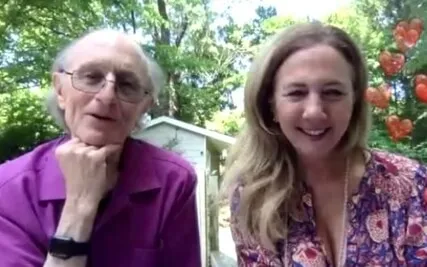
Just to be together in this way.