Oh,
Well hey there.
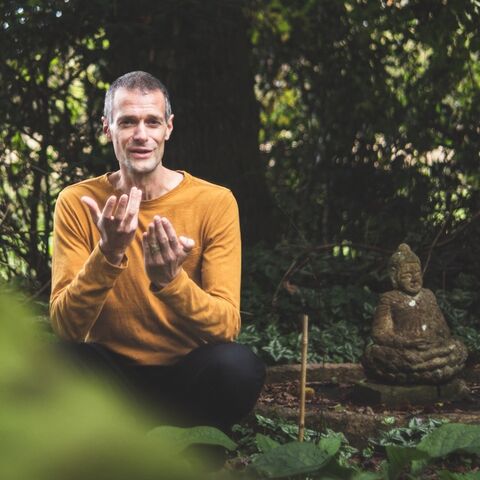
This is Josh,
Defaultintegratingpresidents.
Com and sitting by my door,
Why not?
Spontaneity,
Being spontaneous.
How is everybody this evening?
Of course,
This can't really be truly spontaneous because I planned this event,
Right?
I just did it like 48 hours with the minimal notice though.
Yeah,
Deliberately didn't meditate and it is something else to try not to plan for something like this,
Right?
Because the mind will just naturally try to come up with something for something like this.
So,
And what is spontaneous to you guys?
What does that mean?
When have you been spontaneous?
When have you not?
And a lot of times spontaneity means to me is kind of more playful and clownish.
Some people could be more spontaneous than others.
Some people could probably be less spontaneous,
Right?
There seem to be spontaneous all the time.
Some things that come to mind when I see squirrels out,
I see squirrels a lot.
It's just like,
They're just like every second they just like have no sense of like what will happen next,
No kind of predictability in what they're seeing or knowing.
They don't know what's probable or not.
For me,
It's just like every little moment they don't know what's going to happen.
Things are seemingly fun when they can be spontaneous.
Other times it can catch people off guard,
Right?
Like,
Oh,
I didn't really expect that.
It can really bring our expectations into balance.
What's the importance of that anyway?
What's the importance of spontaneity?
I don't think there's really much overarching reason that I can come up with.
It seems like in certain instances it's more called for than others.
Squirrels do know how to put away food in the winter,
Mary Ann says.
Yes,
They do.
And they're prepared.
I always wondered about too,
Do they remember where they put the nuts all the time?
Or maybe they just forget and then the tree might grow.
Or maybe they're deliberately planting seeds or something for trees to grow instead of just storing them for the wintertime food.
I'm not sure if I could only talk to squirrels.
Well,
I talk to squirrels sometimes,
But I don't know if I'm getting the right answers back,
Right?
Who knows?
I mean,
The intelligence of nature,
Why do we do things that we do as well?
Yeah,
It's wild,
Huh?
Another thing I thought about before with spontaneity is just being willing and able to just go up and be a train wreck.
Just sit in front of,
Or just do something that you wouldn't normally do out of the comfort zone and not really be bothered by how people perceive us or what their response will be or not to be.
It doesn't mean that the other end of this is to be like not respectful to ourselves or others or not caring about anything.
And then also in certain situations it's welcomed.
In certain situations maybe it's not.
So does anyone have anything to share about,
Be spontaneous and share in the chat,
Right?
I'm just going to sit here and be awkward for a second until I can figure out something else to say around spontaneity,
Which really isn't that spontaneous because I'm actually addressing the topic,
Right?
Out of the ordinary,
Perhaps.
I'm going to look up the definition here and we all kind of know what it is.
It's interesting how spin sanity shows up for six flags.
I guess it's a ride in six flags.
I obviously misspelled that.
So these happy accidents can happen as well where things we're not expecting either.
David Lynch,
I don't know if I've mentioned this before.
He mentioned that he used to take these extreme closeups of images and people really didn't know what it was because it looked really abstract.
And once he told them what,
I mean,
They thought they were beautiful.
Once he told them what it was,
So the perception changed because he told them,
Well,
That's a closeup of,
You know,
Blood or pus or something really what we would normally think of as disgusting.
Spontaneous human combustion came up.
That's an interesting,
Always makes for a good movie scene.
Spontaneous means performed or occurring as a result of sudden inner impulse or inclination without premeditation or external stimulus.
One thing that comes to mind with this is Zen masters,
Right here,
This classic thing in Zen where people do something out of the ordinary to disrupt habitual patterns and kind of give like an awakening.
The other end of this as well,
If too spontaneous all the time,
Then there's like a lack of self control,
Lack of training and awareness because a lot of times to be spontaneous,
Although we can be spontaneous and be aware to some people that are seemingly not as aware or self trained in restraint can seemingly maybe be more spontaneous.
So Laura says it adds spice to life.
That's right.
So if we,
I mean,
Just the standard drudgery of everyday life,
Especially for those folks that are in the kind of wake up,
Eat,
Go to work,
Come home,
Eat,
Sleep,
Repeat.
This is another reason I think we outsource a lot of our lives to other people in entertainment and stuff because it's like spontaneous in the sense that we really don't know what's going to happen and shows and entertainment,
The good ones,
Right?
From what I remember when I used to watch that stuff more,
It would get you leading towards a certain thing where you think something or you kind of felt something was going to happen,
But then it just didn't happen that way.
Or you're,
You're lining up,
Okay,
Well this could happen,
This could happen,
This can happen,
But then it actually turns out to be something entirely different or same way with humor,
Right?
So these kind of not necessarily non-sequiturs,
But unexpected how we would expect that to be.
Okay.
T Lending Net says lately when I'm off work,
I tried to be very spontaneous and not looking at my clock or doing too much planning,
Doing stuff on the fly.
Okay,
This is good.
I know that some people are locked into planning.
They like to plan everything.
Me,
I'm not that way so much.
I could actually benefit from more planning.
Usually when I travel,
I get the transportation in line and then the lodging and then I just kind of have some ideas of things I might like to do and just kind of figure it out for the most part when I get there.
Although I might have a few things lined up ahead of time,
That way I can easily go to plan B,
But have a backup for something to do.
So I'm not just sitting there wasting time like,
Okay,
What do I do now?
Kind of thing.
Recently Buddy and I went on a trip to Kansas and Colorado and he,
This was really cool that he planned like everything like day by day.
Okay,
Here's where we're staying.
This is what we're doing.
These are the options.
We got to spend a lot,
I mean,
Make the most out of our time.
So people that are really good at planning,
You know,
They can do this really quick,
But there's some people like me,
If I were to do that,
I would end up spending maybe like two or three days or something.
I mean,
Maybe not.
I'm exaggerating there.
Coming up with all this,
These detailed plans and things.
And I don't know,
I could have spent that time,
I don't know,
Other ways I think,
Just figuring things out when I go.
And another time is that if we're too locked into a rigid schedule,
Which could be good by the way,
Because if anybody's done formal Zen practice,
They don't have to worry about a lot of things,
You know,
Figuring things out and they're wondering what they should do next.
It's very rigid and strict and you know pretty much where you just kind of know what to expect and there's not a lot of distraction and the mind wandering off and worrying about other things,
What to do,
When to be where,
Whatever.
You can just focus on the practice.
A lot of times when I go to or when I'm traveling are just in everyday life.
Some of the things that I wished and hoped and planned for,
Dreamt and set goals for.
One thing that's great when they happen,
That's cool.
Sometimes something similar happens,
But a lot of times it's like life has in store so much more magical things than I could ever imagine or things turn out the way we could never imagine in our wildest dreams.
And it's even more magical than I could have ever kind of planned.
It's almost like life is being spontaneous instead of us being spontaneous.
And I wonder though too about spontaneity if it's just we're perceiving it that way,
But actually it's due to causes and conditions.
There is a method in the madness,
So to speak.
How about this?
What is the most kind of spontaneous thing you've ever done?
Oh,
That's another thing.
To kind of change things in life or to have things change,
We need to make changes,
Even if it's just slightly different.
So think about something as inane or remote as putting your toothbrush in a different location after you use it.
Even these tiny things,
Surprisingly I've found,
Can create maybe like a butterfly effect or a domino effect where they can build up and create other things that happen.
So just think about our routines in the day,
Which are great for a lot of people because they give structure.
That way there's a lot of time saving,
Right?
If there's a routine,
Kind of know where things are,
Know what to expect,
Got a schedule.
And so it can be efficient in time,
But then this can also get really dry.
So just think about the kind of things we do.
We wake up in the morning and go through our routine.
If anybody has routines and sticks to them regularly,
What can be just a slight difference?
And this can be like a mindfulness exercise too,
Where,
Okay,
With just without habitual patterns all the time,
Like I put my toothbrush the same way.
You know,
I go and I fluff my meditation cushion the same way when I get up from it,
Right?
I spin it counterclockwise,
Maybe a quarter turn.
So maybe I could just spin it an entire turn or spend,
You know,
A couple extra minutes or a couple extra seconds fluffing it more.
Or I could consciously,
Deliberately intend to not do anything,
Just leave it the way it is when I get up,
But be mindful that I've done this as a conscious choice.
Now what is the intent for doing this?
What is the intent for changing up our routine?
And I might just ask the counter question,
Well,
What is the intent behind the things we do the way we do?
When was the last time we thought about our intention behind just everything in our daily routine?
Why do I put my toothbrush,
And this is like three times now,
To the exact place that it was?
It is.
So what I do in the bedroom,
This is so silly to talk about stuff like this,
In a way,
Is I turn it upside down.
I don't have a toothbrush holder.
And that way it drips,
It can drip down if there's anything excess on it.
The head sticks out in the sink so the air can dry it quicker and it doesn't get bacteria on it or germs or whatever.
So there's the intent behind that.
But like,
I'm not really conscious of that.
Even when the first time I moved in my place,
I thought about that,
You know,
And ever since I just,
It's never changed.
What does that do?
When we're repeating the same thing over and over and over again,
What kind of effects does that have?
Well,
I think it could be,
Like I said earlier,
Stability and predictability.
But what if I were to change that slightly?
What if I were to change two or three things in my routine?
What would that do?
Would it have an effect in the mind and,
You know,
Have a certain outcome?
So actions have results,
Right?
But then again,
Where's the intention derived from for this?
And does that matter?
I would say,
Yes,
It does matter.
But in this case,
The intention would just be,
I want to do something different.
It's not much more conscious than that in this case,
I would say.
Now you can maybe put the intention behind,
I want to make changes in my life.
I want something different in my life.
And I'm going to start with this really simple choice of doing something different in my everyday life.
I'll have to do this myself again because from what I remember,
Other things in life did change just because I did something as simple as this that I'm talking about now.
But it would be a lot better story or thing to say if I could remember the kind of the exact timing.
And I'm not saying one deliberately caused,
But it was just an interesting,
I guess,
I don't know,
Either synchronicity or coincidence or occurrence,
However you want to say it.
So is that,
I guess that's kind of spontaneous.
I don't know.
Geraldine,
If I'm saying that right,
Changing small things in the routine is good for neuroplasticity and brain health.
Absolutely.
Just think about how those,
If I'm getting this right,
The neural networks,
They have the groove,
Right?
They fire together,
They wire together,
They fire together,
They wire together.
And it's just the same grooves or,
I mean,
Maybe those turn into like ruts for doing the same thing over and over again.
So this is why they often say for older people to do like puzzles and quizzes and things new that exercise their brain.
They're doing something new in their day that they've never done before in a way,
Or you can have like a container where,
Like a Sudoku puzzle,
Am I saying that right?
Where things change and it's,
In a way it's kind of the same.
So there's a familiarity,
But in another way,
There's variation and things like this.
Learning is obviously a new thing.
There was,
Oh,
Back in the day,
There was this thing on the internet called StumbleUpon.
I don't know if it's still around or not,
But this was the coolest thing.
We would install this toolbar called StumbleUpon and it would just take you to a random or seemingly random website.
And then I guess you could actually add whatever website you would come across to the StumbleUpon.
There's this little button and you can just click it and you just go to this random page on the internet,
Click it again,
Another one.
And it's interesting kind of what showed up.
I don't know what happened to that.
Yeah,
Brushing your teeth with the other hand.
That's really interesting.
Right,
Doing things with their other hands,
Unless you're ambidextrous,
Then you're probably doing that already.
Or writing.
Oh yeah,
That's interesting.
There was this drawing technique in high school way a long time ago,
In art class where we had to do something blindfolded.
We had to kind of,
Or no,
Not necessarily blindfolded.
It's like you look at a drawing and then you could not look at where you're drawing.
You could only look at what the copy was and then you just had to keep going until you're completely done.
You had to kind of force yourself to make mistakes and not look and have feedback.
And then at the very end you could look and see what it was like when you're finished.
And so that forces kind of a change or spontaneity without our habitual way of doing things.
Now some people I would think are just the opposite where they have no structure,
No really stability or constants in their lives.
Like everything is,
If it's not in the state of chaos and they're just completely distracted or just don't really know what's going next,
I don't think this is extreme for a lot of people,
But it's just like,
I don't know,
Maybe this spontaneity wouldn't be as good a thing for them.
I don't know.
But then again,
Maybe we can learn a lot from those folks that for those of us who like to plan and structure and things like this.
Okay.
I guess the question,
What is spontaneous or when was the last time you've been spontaneous or witnessed a spontaneous act?
And I'm not,
I can't even think of anything off the top of my head other than what I've done.
May you all find loveliness and all the best spontaneity in your life for all the best reasons.