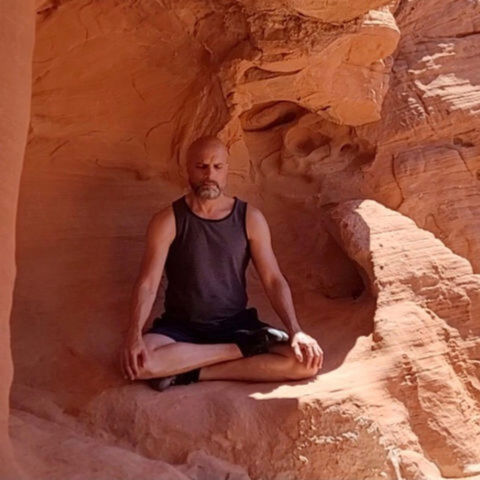
I've been teaching for over 30 years and meditating for 35.
I'm a STEM educator by profession.
That's science,
Technology,
Engineering,
Arts,
And mathematics.
This talk bridges those two worlds,
Scientific and contemplative.
My goal is to make the invisible visible without losing either scientific precision or contemplative depth.
Because to study nature is to study the intelligence behind matter,
The organizing principle that arranges atoms into molecules,
Molecules into cells,
Cells into organisms,
Organisms into ecosystems.
The same power that ignites stars and orchestrates the migration of birds,
That builds mountains and grows forests from seeds,
That governs the spiral of galaxies and the dance of subatomic particles,
That intelligence flows through you even as you sit and listen.
You're not separate from it.
You're an expression of it.
And when you sit quietly and feel your breath,
When you notice pressure translating into awareness,
When you watch thoughts arise from the electrical firing of neurons,
You're witnessing that intelligence observing itself.
So let's begin.
So here's the setup.
You're sitting still,
Eyes closed,
Lowered,
Breathing.
That's it.
The most ordinary thing in the world.
So ordinary that your mind might wander.
So ordinary you might think,
Okay,
Now what?
When will something interesting happen?
What's next?
And here's what I'd like for you to understand right from the start.
This moment contains more coordinated complexity than the conscious mind can track.
And I'm not exaggerating.
I'm not being poetic.
I mean this literally.
And the beautiful paradox is you don't need to understand any of what I'm about to tell you for this to work.
A three-year-old can sit.
A five-year-old can feel her breath.
A ten-year-old can relax his shoulders.
I know because I've taught kids as young as three and adults well into their 80s.
Now,
When you do understand what's actually unfolding beneath the surface of these simple acts,
Awe and wonder and curiosity awaken.
So starting where you are right now,
I want you to notice where you're holding tension.
Maybe it's your jaw.
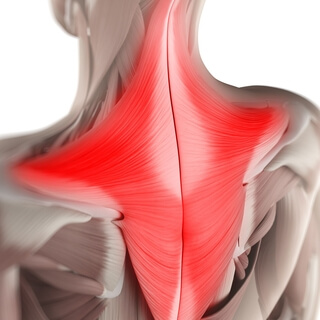
Maybe your shoulders are creeping toward your ears.
Maybe your forehead is furrowed.
Whatever it is,
I want you to relax it.
Just let go.
Did you feel that?
The softening?
The release?
Here's what just happened.
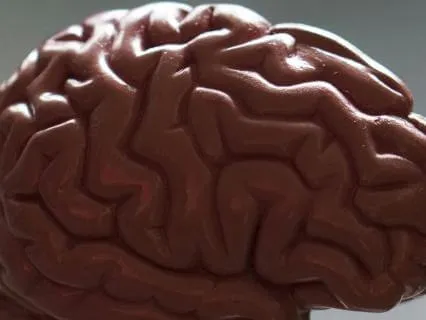
Your motor cortex,
A strip of tissue running across the top of your brain,
Made a decision.
It didn't activate anything.
It stopped activating something.
Muscles don't really get told to relax.
They relax when the contract signal stops arriving.
So the moment you decided to relax,
And you can keep doing that,
Motor neurons in your spinal cord stopped firing electrical spikes called action potentials.
Those electrical spikes stopped.
And when they stopped,
Something else stopped.
The release of a chemical called acetylcholine at the juncture between your nerve and muscle.
Acetylcholine is like a starter's pistol for muscle contraction.
No acetylcholine,
No contraction.
So see if you can feel tension or contraction somewhere else in the body and relax.
If your muscle was contracted,
If you were clenching,
There's still calcium floating around inside those muscle fibers.
And that calcium has to be cleared away before relaxation can fully happen.
So the moment the acetylcholine signal stopped,
Tiny molecular pumps inside your muscle cells called circa pumps started grabbing calcium ions and sucked them back into storage.
So scan your body for other pockets of tension,
Your jaw,
Your shoulders,
Hands,
And just let them soften.
You can't feel the motor neurons stopping their signal.
You can't sense the acetylcholine withdrawal.
You can't detect the circa pumps grabbing calcium ions.
You may never have heard of circa pumps before this talk.
But you can intend to soften,
And the muscle softens.
Within milliseconds to seconds,
The calcium levels drop.
And when the calcium disappears,
Regulatory proteins within the muscle fiber shift position and slide back into place,
Like safety covers sliding over binding sites.
Now the binding sites are blocked.
The motor proteins can't grab on anymore,
And there's a release.
You can keep doing this.
Keep relaxing.
Motor proteins called myosin can no longer grab onto the actin ropes.
The molecular velcro separates.
The ratcheting stops.
The pulling ceases,
And you relax.
So let's try visualization.
Meditators love visualizations,
And this one is scientifically accurate.
Imagine your body becoming transparent.
You can see the brain at the top,
The spinal cord descending like a thick cable,
And nerves branching out,
Thin white thread,
Threads extending to every muscle.
Now imagine those nerves carrying signals,
Little pulses of electricity,
To contract,
Contract,
Contract.
And now one by one,
You turn off those signals.
The pulses stop.
You're powering down,
Keeping just enough tone in your postural muscles to stay upright.
Everything else,
Jaw,
Shoulders,
Hands,
Face,
Abdomen,
Thighs,
Softens.
No signal,
No contraction,
Just release,
Letting go.
The softening spreading through your body as you withdraw the command for muscles to contract.
And with just a thought and a little imagination,
You just commanded an army of molecules to stand down,
And they obeyed.
You set the intention to relax,
And all of what I just described unfolded.
And you don't need a science degree to do this.
You think relax,
And the muscle drifts back to its resting length.
Meanwhile,
Sensors embedded in that muscle are reporting the change back to your spinal cord and brain.
There's less tension here,
Less tension there,
Less tension here.
The feedback loop updates,
Your brain's body map adjusts,
And you experience this entire molecular symphony as relaxation,
As that feeling,
That letting go.
So keep relaxing,
Keep letting go,
Keep signaling that all is well,
You're in control.
You don't need to know about circuit pumps to relax your shoulders,
There's no quiz at the end,
You won't be tested on molecular biology.
But when you do know,
When you realize that a simple act of softening your jaw involves billions of coordinated muscular events operating at scales and speeds beyond comprehension,
You open to wonder,
And your skill deepens.
And when life's real tests come,
When you're anxious before a difficult conversation,
When you're overwhelmed by circumstances,
When your body is tight with stress,
You can pause,
You can set the intention to relax.
And knowing there's a complexity beneath that simple command,
Something vast and intelligent,
Something too intricate for words,
That knowing opens the mind to gratitude and to humility,
The ordinary becomes extraordinary.
So that's relaxation,
The ability to release tension,
To command billions of molecular motors,
To stand down with just a thought.
Now I'd like to turn to what you might notice once you've softened the world,
Pressing back.
So feel whatever's beneath you,
A chair,
A floor,
The mat,
The bed,
The pressure of contact,
Your weight being held.
This is pure physics,
Force divided by area.
Molecules of surface pushing back on molecules of your skin with exactly the same force that gravity pulls you down.
This is Newton's third law,
For a reaction,
An equal and opposite reaction.
But you don't experience Newton's laws,
You experience,
I'm just sitting,
I'm laying down.
As you rest,
Physics pushes you back,
Becomes feeling,
The feeling of pressure.
And that translation from surface molecules pressing on skin molecules,
To ion channels opening,
To action potentials racing up your spinal cord,
To thalamic relay,
To cortical knowing takes about 150 milliseconds.
It's faster than you can blink.
The universe touches you,
You touch it back.
Pressure becomes presence.
So let's pause here for a quick review.
We've covered two things so far,
Contraction and pressure.
Scan your body.
Where there's tension,
Soften it.
Command those billions of myosin heads to stand down and watch them obey.
Feel where the world presses against you,
The surface holding you,
The boundary where you meet everything else.
Relax and notice.
That's the basic vocabulary of meditation.
Stay with this for a few breaths.
You have some basic scientific understanding operating in the background while you simply feel.
Now let's notice something else more subtle.
With your eyes closed,
You know which way is up.
You know where your hands are.
You know if you're tilted or swaying.
How?
You have two systems working together to create complete spatial awareness.
Your vestibular system,
Deep in your inner ear,
Is constantly solving for gravity and rotation.
It has fluid-filled canals that detect when you turn your head,
And tiny calcium crystals that shift with gravity,
Reporting whether the head is upright,
Is tilted forward,
Still.
And there's your proprioceptive system,
Embedded throughout your muscles,
Tendons,
And joints.
The proprioceptive system is continuously mapping your body's configuration.
Muscle spindles detect stretch.
Golgi tendon organs detect tension.
Joint receptors detect angles.
Together,
They report left knee is bent 90 degrees,
The right hand is on the right thigh,
The spine is curved forward.
These signals travel to your brainstem and cerebellum,
Then to your cortex,
Where they're integrated into the unified sense of where you are in space and how your body is configured.
This map is so precise,
So reliable,
That right now,
With your eyes closed,
You could reach for your nose and touch it on the first try.
So let's feel this.
Notice the angle of your knees,
The position of your hands,
The curve of your spine,
The way gravity is pulling on you.
You're not guessing,
You know.
And here's what we sometimes notice during meditation,
Especially during those longer sits,
Some swaying.
Even trying to sit still,
There's natural postural sway,
Tiny oscillations the body makes to stay balanced.
There's this feeling of floating,
Sometimes it feels like you're rising or sinking.
Ambiguous signals create uncertainty about position.
Sometimes we may even feel boundaries dissolving,
The sense of where I am in space becoming less defined,
Less solid.
All of this is your spatial awareness,
Your awareness system doing its job,
Or meditation relaxing its grips slightly.
Thousands of receptors always reporting,
Always updating,
Always integrating.
You're a body that knows itself in space.
Now we go deeper,
To your viscera,
Your internal organs,
Heart,
Lungs,
Stomach,
Intestines,
The sensations from within.
Feel your heartbeat.
That's your pulse in your wrist,
That's touch.
I mean the sensation of your heart contracting in your chest.
Or even anything that you may feel in that heart center.
Can you feel something?
Some people can,
Some people have to search for it.
This is interoception,
The sense of your internal body state.
Interoception is about your organs,
The interior landscape,
And it covers a lot of ground.
There's your heartbeat,
That cardiac sensation,
The rhythm of your heart contracting.
There's breathing,
The effort,
Your hunger when you need to breathe.
There's your digestive system,
Feelings of fullness or hunger or nausea,
The movement and churning of your gut.
Bladder fullness,
Thirst,
Your body's monitoring hydration,
Telling you it needs water or not.
Core body temperature,
The deep internal warmth,
Not just skin temperature.
It's your energy level,
Fatigue or vitality,
Your metabolic state.
Alertness,
Whether you're sleepy,
Drowsy,
Or wide awake.
And visceral pain,
Pain from your organs deep inside.
All of this is interoception,
The interior sense.
So just stay with that for a few breaths,
Just feel.
The main pathway for these interoceptive signals is the vagus nerve,
Or the 10th cranial nerve.
It's a massive nerve that wanders,
Through your chest and abdomen,
Sending sensory fibers to your heart,
Lungs,
Stomach,
Intestines,
Liver,
Kidneys.
About 80% of the vagal fibers are afferent,
Meaning they carry signals from the body to the brain.
And they go from the brainstem to the parabrachial nucleus,
Then to the thalamus,
And finally to the insula.
The insula,
Especially the posterior insula,
Is the primary interoceptive hub.
It's where visceral sensations are mapped and integrated.
And there's a fascinating gradient from posterior to anterior.
The posterior or back insula receives raw interoceptive signals.
It's just reporting.
Heart rate is elevated.
The stomach is tight.
Breathing is deep.
It's pure bodily data.
The mid insula integrates that with other senses and context.
OK,
Heart rate is up,
And I'm about to give a presentation.
These signals are connected.
The anterior insula creates subjective feeling.
It takes the raw data and context,
And generates your emotional experience.
So heart rate is up,
And I'm about to give a presentation.
I feel anxious.
Or heart rate is down,
And I'm relaxing,
Listening to a meditation,
And I feel calm.
The body signals become feelings.
The insula is how your body state becomes your emotional state.
So anxiety is not just a thought.
It's a pattern of interoceptive sensations,
A tight chest,
Rapid heart,
Shallow breathing,
That your insula interprets as threat.
By contrast,
Calm is not a mindset.
It's slow heartbeat,
Deep breathing,
Relaxed gut,
Interpreted as safe.
And right now,
Sitting here,
Your insula is reporting on your interior state.
Can you feel your heartbeat?
That's cardiac interoception,
Sensing your heart.
Can you sense whether you're slightly hungry or full?
That's gastric interoception.
Your digestive system reporting on your stomach.
What's your heart reporting in?
Do you feel energized or tired?
That's metabolic interoception,
Your body's energy state.
This is the landscape that most people are completely unaware of.
They live in their heads,
In their thoughts,
Barely noticing the body,
Except when it screams.
But meditators develop interoceptive accuracy.
They get better at detecting heartbeat,
At noticing subtle fatigue,
Contraction,
At sensing the early signs of emotional arousal before it becomes a full-blown state.
And the way you trained it is simple.
It's what you're doing now,
Paying attention to the interior.
Notice what you can notice.
And over time,
The signals get clearer.
The map gets more detailed.
You become fluent in the language of your own body.
Let's go deeper into touch itself.
Embedded in your skin,
Your body,
Your mind,
Your body,
Your mind,
Your body,
Your mind,
Your skin,
Right at the boundary where you meet the world,
Are specialized cells called mechanoreceptors.
There are little biological machines whose entire purpose is to detect deformation,
Which is the scientific term for getting squished.
And there are several types,
Each tuned to different features.
The first type of mechanoreceptor are called Merkel cells.
Merkel cells sit in your fingertips,
Your lips,
Anywhere you need fine detail.
They detect edges,
Textures,
Sustained pressure.
When the chair presses on your skin and creates a sharp edge,
For example,
Maybe at the rim of the seat,
It's called a Merkel cell.
Merkel cells fire steadily,
Reporting edge here,
Edge here,
Edge here,
At about 5 to 15 impulses per second.
So let's find this right now.
Bring your attention to where you're making contact with the surface beneath you.
Can you feel an edge somewhere?
If you're in a chair,
The rim where it meets your thigh or buttock,
If you're on the floor where your sitting bones press down or where your ankles or knees contact the surface,
If you're lying down,
The back of your head on the pillow,
Your shoulder blades on the mat,
The edge where your body meets the surface.
That sharp transition from pressure to no pressure,
That's Merkel cells firing.
Now shift your attention to your fingertips.
If they're resting on fabric,
Can you feel the weave,
The texture,
The grain of the material?
Merkel cells,
Reporting at 5 to 15 impulses per second.
You're not imagining this.
You're detecting real physical features through specialized biological sensors.
Ion channels opening,
Electricity flowing,
Physics becoming consciousness.
A second type of mechanoreceptors,
It's deeper in your skin.
They're called Ruffini endings,
And they detect stretch.
When you breathe and your skin stretches across your ribs,
Ruffini endings are reporting direction and magnitude of stretch.
They're telling your brain about the skin's changing shape.
So take a full breath right now,
A deep one.
Feel your ribcage expand.
Feel the skin stretch across your sides,
Your back,
Your abdomen.
That subtle pulling sensation,
Ruffini endings.
Your skin isn't just a wrapper.
It's a dynamic sensor array,
Constantly updating your brain about shape,
Stretch,
Movement.
You can feel it happening right now.
Bissinian corpuscles are a third type of mechanoreceptor.
Bissinian corpuscles are buried even deeper.
They only fire when things change rapidly,
Vibrations,
Sudden movements.
If the floor vibrates from footsteps,
If you tap your foot,
Bissinian corpuscles light up.
They're sensitive to frequencies from 40 to 400 hertz.
They're your vibration detectors.
Let's activate them.
Gently tap your fingertips on your thigh.
Feel that?
Bissinian corpuscles.
Now try this.
Place your fingertips slightly on your throat or chest and hum.
Feel the buzz?
That fine,
Rapid vibration,
40 to 400 hertz.
That's exactly what Bissinian corpuscles are tuned for.
Or just sitting still.
Is there any vibration in the building?
They come from the HVAC,
Distant traffic rumbling through the floor,
A washing machine running.
These receptors are detecting changes you'd never consciously notice otherwise.
Buried deep,
Always listening for the rapid flutter of the world in motion.
The fourth and final type of mechanoreceptor we can explore are called Meissner corpuscles.
Meissner corpuscles specialize in slip and flutter.
They're in your palms,
Your soles.
When your hand slides slightly on your knee with each breath,
Meissner corpuscles detect that micro-slip.
They're the reason you can feel texture when you run your finger across fabric.
Rest your hand on your knee or thigh and just breathe.
Don't move intentionally,
Just notice.
Can you feel the tiniest shift?
The micro-slip of skin on fabric with each breath cycle?
That subtle movement,
Meissner corpuscles.
Don't deliberately slide your fingertips slowly across the fabric.
Feel the texture emerge through movement.
Static touch versus moving touch.
Meissner corpuscles are what makes that difference.
So touch isn't one thing.
It's an orchestra of specialized sensors.
We covered four of them,
Each tuned to different features of contact.
And they're all playing right now.
Let's try another visualization,
The path from touch to knowing.
Imagine your body transparent again.
But this time,
When the chair presses on your skin,
A mechanoreceptor fires,
A tiny flash of light where surface meets skin.
An electrical spike,
A bright pulse begins racing up the nerve fiber,
Fast,
70 meters per second,
About 150 miles an hour,
Like a streak of light traveling up a fiber optic cable.
The first stop is your spinal cord.
The signal arrives,
Gets processed,
Sharpened.
The relevant information is amplified.
The noise is filtered out.
The second stop,
The signal travels up the spinal cord to the medulla at the base of your skull.
Here,
The signal crosses.
The left side of the body goes to the right side of the brain,
The right to the left.
Watch the streak across the midline.
The third stop is the thalamus.
Deep in the center of your brain,
It's the relay hub,
The gatekeeper.
It receives signals from everywhere and decides what gets through to consciousness.
Right now,
Because you're paying attention to pressure,
The gate is open.
And the final destination,
The signal arrives at your somatosensory cortex,
That strip of tissue running across the top of your brain.
And there,
The electrical spike,
This pulse of physics,
This racing bit of electricity becomes knowing.
You don't see a neuron firing.
You don't experience electricity.
You experience the chair is pressing here.
Physics becomes consciousness.
And it's happening right now,
Continuously,
At every point of contact.
Your somatosensory cortex is organizing,
Or it's organized as a map of your body,
The homunculus,
A distorted representation where sensitive areas,
Like the lips,
The fingertips and tongue,
Get enormous cortical territory,
While less sensitive areas,
Like your back,
Your calves,
The top of your head,
Get far less.
This is why you can feel a thread of yarn between your fingertips,
But barely notice clothing across your shoulders.
So let's explore this right now.
Bring your attention to areas you normally ignore,
The small of your back,
Your shoulder blades,
The top of your scalp,
Your calves,
The backs of your thighs.
These areas have fewer mechanoreceptors,
Less cortical representation,
But they're still sending signals,
Still reporting contact,
Pressure,
Temperature.
Can you feel them,
Even faintly?
Notice when you pay attention to these quiet areas,
They become louder.
Your thalamus turns up the volume.
What was background becomes foreground.
You're actively reshaping what your brain prioritizes.
So whether it's the sensitive territory of your fingertips or the quieter regions of your back,
Here's what's happening with every signal.
The pressure information lights up a location in your somatosensory map.
The right glute,
For example,
Sustained pressure,
Medium intensity.
Secondary somatosensory areas integrate.
That's the chair.
I'm sitting.
The insula adds emotional tone,
Comfortable,
Supportive,
Neutral.
So let's review again by noticing.
Notice edges and textures.
Marcle cells in your fingertips can distinguish between textures that differ by less than a millimeter.
They're reporting the weave of your fabric,
The seam of your pants,
The grain of the material.
Now notice skin stretch.
Every time you breathe,
Your abdomen expands.
Ruffini endings are tracking that stretch,
Reporting the direction and how much.
They're part of why you can feel the breath,
Not just as air,
But as movement.
Notice microslip.
If your clothing shifts slightly with each breath,
Myasthenia corpuscles are detecting that.
They're the ones that create the sensation of fabric gliding across skin.
Notice vibration.
If there's any subtle vibration from your heartbeat,
From the floor,
From your own voice,
If you're humming or mine,
Myasthenia corpuscles are picking it up.
Notice hair deflection.
If you have arm hair or body hair under clothing,
There are specialized nerve fibers wrapped around those hair follicles.
When air currents or fabric brush against them,
They fire.
You can feel the breeze on your arm,
Not just on bare skin,
But through the bending of tiny hairs.
And then there's a special class of touch that most people don't know about called C-tactile fibers.
These are found only in hairy skin,
Not your palms,
Not your soles,
But your forearms,
Your back,
Your cheeks.
They respond to gentle stroking at about 3 to 10 centimeters per second.
They don't go to the somatosensory cortex.
They go straight to the insides of your body.
They're part of the brain involved in emotion and body awareness.
C-tactile fibers are your pleasant touch system.
They're the neurological basis of comfort,
Of soothing,
Of affection.
They're why a slow stroke on your forearm feels qualitatively different than a poke.
And they're active right now.
If there's any gentle contact with your skin,
All these signals,
The textures,
The stretch,
The slip,
The vibration,
The temperature,
The pleasant touch,
Are traveling up different nerve fibers at different speeds.
A-beta fibers carry detailed touch information.
These signals travel at about 30 to 70 meters per second.
So right now,
Slowly drag your fingertip across your opposite palm.
Feel the texture of your palm,
Your skin,
The ridges,
The detail.
That's A-beta fibers,
Fast and precise.
A-delta fibers carry sharp sensations and cold.
They're slower and travel at 5 to 30 meters per second.
If you press your fingernail into the pad of your thumb,
Not hard enough to hurt,
Just enough to feel that sharp,
Distinct sensation,
Notice how it's different from the gliding touch you just felt.
That's A-delta,
Sharp,
Alert,
Protective.
If there's any cool air in the room,
Notice it on your face or hands,
Toes,
Fingertips.
That initial cool sensation,
Also A-delta.
C-fibers carry warmth,
Itch,
And pleasant touch.
These are slow,
Just a half to two meters per second.
So if you place your palm on your opposite forearm or thigh,
Feel the warmth pooling where skin meets skin.
That pleasant,
Soothing quality,
That's C-fibers.
Three fiber types,
Three speeds,
Three different qualities of sensation.
And beneath your awareness,
These signals all converge.
In your spinal cord,
Where some initial processing happens,
And they ascend through different pathways.
They reach your thalamus.
The thalamus acts like a volume knob.
It can turn up the gain on signals you're paying attention to,
And turn down everything else.
So right now,
Because we're paying attention to touch,
The thalamus is boosting those signals.
You're literally hearing sensations you'd normally filter out.
And when they reach your cortex,
The raw data gets interpreted.
Features are extracted.
The brain asks,
Where is this?
What is it?
How intense?
Is it pleasant or unpleasant?
What should I do about this?
And the brain isn't just passively receiving the information,
It's predicting it.
Your brain has a model of what your body should feel like right now.
And it's comparing incoming sensory signals against that prediction.
Where there's a mismatch,
And something unexpected happens,
That's what grabs your attention.
This is why when you sit perfectly still,
Sensations start to fade.
Your mechanoreceptors adapt.
So right now,
Just sitting,
Observing,
You're watching the predictive processing of your neuron system,
Of your nervous system,
In real time.
And all of this,
The receptors,
The ion channels,
The ascending pathways,
The thalamic relay,
The cortical mapping,
The predictive modeling,
All of this is running right now.
You're not just touching the world,
You're translating it.
From molecular deformation,
To electrical impulses,
To conscious knowing.
Physics becomes biology,
Becomes neurology,
Becomes experience.
And you call it,
My hands on my knees,
Just sitting.
For most people,
This is nothing.
Background noise,
Something to ignore while waiting for real life to happen.
But for anyone who's learned to see what's actually here,
These ordinary moments are precious.
Sacred,
Luminous.
Now notice temperature,
Not as a thing,
But as a landscape.
Like a weather map,
Regions of warmth,
Pockets of cool,
Gradients between them.
Feel the cool air on your face.
The warmth trapped between your hands and your legs.
The temperature difference at your nostrils.
Cool on the inhale,
Warm on the exhale.
Temperature perception is not about your core body temperature.
That's being tightly regulated by your hypothalamus at about 37 degrees Celsius,
Or 98.
6 degrees Fahrenheit.
What you feel is your skin temperature.
And skin temperature can range from 20 degrees Celsius,
To about 35 degrees Celsius,
Or 68 to 95 degrees Fahrenheit,
Depending on where you are,
How much blood's flowing to the surface,
Whether you're insulated by clothing,
Whether air is moving.
And during meditation,
You might notice temperature seems to fluctuate.
Your hands get warmer,
Or colder.
Your face flushes,
Or feels cool.
Heat rises in your chest.
Inside the mouth is warm,
But the tip of your nose is cold.
So first,
Blood flow is changing.
Your autonomic nervous system,
The part you don't consciously control,
Is constantly adjusting the diameter of blood vessels in your skin.
When vessels dilate,
Warm blood flows to the surface.
Your skin warms.
When vessels constrict,
Blood is shunted to your core.
Your skin cools.
Meditation shifts your autonomic balance.
If you're relaxing deeply,
Your parasympathetic nervous system activates.
You're relaxed.
Blood vessels in your hands and feet dilate.
You feel warmth spreading to your extremities.
Second,
Clothing creates microclimates.
Where fabric touches skin,
It traps a layer of air.
That air warms up.
But where there are gaps,
Like the collar,
Your sleeves,
Cooler air can reach your skin.
You can feel these temperature gradients now.
Third,
Evaporation is cooling you.
Even if you're not visibly sweating,
You're constantly losing water through your skin.
And when water evaporates,
It cools.
That's why a slight breeze on damp skin feels cool.
Fourth,
Stillness changes circulation.
When you're moving,
Your muscles act like pumps,
Pushing blood through your veins.
When you sit still,
Like you are now,
That pumping stops.
Circulation patterns shift.
Blood pools slightly.
Some areas cool.
And finally,
Attention amplifies everything.
You're detecting temperature gradients you normally filter out.
Differences of half a degree that would usually be noise become signal.
And how we detect temperature operates on the same principle as touch.
Ion channels that open in response to a stimulus.
But these are temperature-gated channels.
Part of the TRP family.
TRP stands for transient receptor potential channels.
Transient.
Notice that word,
Transient.
These channels detect change.
They fire when temperature crosses a threshold,
When it shifts from cool to warm or warm to hot.
They're designed to sense transitions,
Not steady states.
They quiet when things stabilize.
They're designed to sense impermanence.
And Buddhists have a word for this,
Anicca,
A fundamental instability of all experience.
Nothing holds still.
Everything flickers,
Shifts,
Arises,
And passes.
And your temperature sensors,
These TRP channels,
Are reporting exactly that.
Not it's warm as a static fact that doesn't change,
But warmth is rising.
Now it's fading.
Maybe it's intensifying again.
It's over here,
But it's cool over there.
Even temperature,
Which feels so steady,
So constant,
Your body knows better.
It's tracking the flux.
The continuous becoming and unbecoming of every sensation.
Transient receptor potential channels.
The nervous system's way of saying nothing lasts.
Even this moment's warmth is already changing into the next moment's coolness.
And you feel that now,
The thermal map of your skin.
Cool zones and warm zones.
Gradients shifting across your skin.
Notice it's not fixed.
It's breathing,
Pulsing,
Shifting with your attention,
With blood flow,
With the movement of air.
Impermanence,
Transience,
We're into the very channels that let you feel the world.
TRPM8 opens when it's cool,
Between 8 and 28 degrees Celsius,
Or 48 to 82 degrees Fahrenheit.
It also responds to menthol,
Which is why mint feels cool.
These channels are in nerve fibers in your skin,
And when they open,
You feel cold.
TRPA1 opens when it's painfully cold,
Below 17 degrees Celsius,
63 degrees Fahrenheit.
It also responds to wasabi and mustard oil,
Which is why those feel sharp.
TRPV3 and TRPV4 open when it's warm,
Between 27 and 39 degrees Celsius,
Or 81 to 102 degrees Fahrenheit.
And TRPV1 opens when it's hot,
Above 43 degrees Celsius,
Or above 109 degrees Fahrenheit.
It's painfully hot.
Chili peppers activate this channel,
Which is why spicy food feels hot.
When these channels open,
Ions flow.
The nerve endings depolarize.
An action potential fires,
And those signals travel up,
Some through A delta fibers if cold,
Some through C fibers if warm.
These travel to your spinal cord,
Then up to this spinothalamic tract,
To your thalamus,
Then to your insula.
Your insula is the main temperature-sensing area of your cortex.
It's constantly building a map of your thermal landscape.
But there are two systems running,
Two separate systems.
One system creates your conscious experience of temperature.
My hands are cool.
My face is warm.
My toes are cold.
That's going through the insula,
The anterior cingulate.
It's you knowing the temperature.
The other system is homeostatic control.
It's bypassing consciousness and going straight to your hypothalamus,
Specifically the preoptic area.
That's the thermostat.
It compares your actual temperature to the set point and triggers responses,
Like shivering,
Sweating,
Changing vessel diameter,
Altering metabolic rate.
You don't consciously control this,
But you can observe it.
So again,
Bring your attention to temperature.
Notice the cool air on your face,
The warmth where your hands rest,
The temperature of your breath.
Cool in,
Warm out.
And know you're detecting molecular gates opening and closing in free nerve endings in your skin.
You're watching your thermal map update in your insula.
You're observing your autonomic nervous system modulating blood flow.
You're not just feeling temperature.
You're experiencing the body solving the heat equation in real time,
Maintaining life's narrow thermal corridor while you sit still.
Body's a way of keeping you comfortable.
Now bring your attention to the breath.
Don't change it.
Don't control it.
Just notice.
In and out.
That's probably the most common meditation instruction.
Observe the breath.
Right now,
It's something being done for you by a control system more sophisticated than anything we humans have ever engineered.
So let's take a measurement.
In a moment,
You'll hear a bell.
When you hear it,
Start counting your breaths for exactly one minute.
Here's how.
With each complete cycle of inhalation and exhalation,
Or in and out,
That counts as one breath.
A breath in.
A breath out.
One.
Breath in.
Breath out.
Two.
And so on.
Don't change your breathing.
Just count the natural rhythm your body generates.
Ready?
Start counting for 60 seconds.
Good.
Whatever number you counted.
12,
18,
Maybe somewhere in between.
That's your baseline breathing rate.
The rhythm your pre-Botzinger complex chose without any conscious input from you.
These remarkable new neurons are not just simple metronomes clicking away at a fixed rate.
They're intelligent.
They're listening.
The pre-Botzinger complex is essentially a biological microprocessor running a control algorithm with feedback loops.
They're constantly listening to feedback,
Adjusting parameters,
Refining the output.
They're running subsystems,
Recursive loops,
Real-time optimization based on incoming data from your blood chemistry.
It's computational biology at its most beautiful,
At its most elegant.
And you're just breathing.
But embedded in your arteries,
In the arteries of the heart,
At the fork where your carotid artery splits and along your aortic arch,
Are tiny organs called chemoreceptors.
Glomus cells.
They're constantly sampling your blood,
Measuring oxygen,
Carbon dioxide,
And pH.
And the main thing they're tracking is carbon dioxide.
You don't breathe because you need oxygen.
Mostly you breathe because you need to get rid of carbon dioxide.
So when you hold your breath,
You can hold for a few seconds while you listen,
The desperate urge to breathe you feel.
That's not low oxygen.
That's rising CO2.
It's accumulating in your blood,
Reacting with water to form carbonic acid,
Dropping your pH.
Your chemoreceptors detect that drop in pH and they scream to your brain,
Breathe.
And your brainstem listens.
It's a closed loop control system,
A feedback circuit.
The brainstem sets the pattern,
The body executes,
The chemoreceptors measure the result,
And the brainstem adjusts.
It's all automatic,
All unconscious,
Unless you pay attention.
So let's pause here to experience this.
So much complexity in something so simple.
Take a comfortable breath in,
Not too deep,
Just normal,
And now hold.
Notice what's happening.
At first,
Maybe nothing,
Calm,
Stillness.
If you keep holding,
You start feeling a little tightness,
A little pressure,
The first whispers of urgency.
That's not oxygen depletion.
That's CO2 rising,
PH dropping,
Your chemoreceptors detecting the change,
The urge is building,
Getting stronger.
Your brainstem is signaling,
Time to breathe,
And now breathe.
Let it go.
Feel that relief?
That's your system restoring balance.
CO2 releasing,
PH normalizing,
The chemoreceptors quieting.
Your brainstem just saved your life automatically,
Without you having to think about chemistry,
Or pH,
Or carbonic acid.
Now do this every minute of every day for the rest of your life.
So when the signal comes to breathe in,
It travels down a nerve,
The phrenic nerve,
Which originates at vertebrae C3,
C4,
And C5 in your neck,
And descends to your diaphragm.
The diaphragm is a dome-shaped,
Flat,
Flat,
Flat,
Flat,
Flat,
Flat,
Flat,
Flat,
Flat,
Flat,
Muscle that separates your chest from your abdomen.
When it contracts,
It flattens and descends,
Sometimes by as much as seven centimeters in a deep breath.
Let's see if we can sense any of this.
Place one hand on your chest,
One on your belly.
Take a slow,
Full breath.
You probably can't feel the diaphragm itself.
It's too deep.
It's too internal.
But you can feel what it creates.
Notice your belly rising as the diaphragm pushes down on your organs.
Feel your lower ribs expanding outward to the sides.
Your hands can detect this widening.
Maybe there's a sense of opening in your chest,
Space being created,
Volume increasing.
Take another breath and feel for the movement,
Whatever you can detect,
Even if it's subtle.
You're sensing the mechanics of Boyle's Law in action,
Volume increasing,
Pressure dropping,
Physics pulling air into your lungs,
Not through effort,
Through geometry,
Through the elegant engineering of your respiratory system.
Now,
As you breathe in again,
As your diaphragm descends,
Your rib cage also lifts slightly,
Pulled by the external intercostal muscles.
This creates more space in your chest cavity.
And here's where physics takes over.
There's something called Boyle's Law.
You may have learned it in high school chemistry and forgotten it.
It states that pressure times volume is constant.
If volume increases,
Pressure must decrease.
So when your chest cavity expands,
The pressure inside your lungs drops just a little,
Maybe two or three millimeters of mercury below atmospheric pressure.
But that's all it takes.
Air flows from high pressure outside to low pressure inside,
Not because you're sucking it in,
Because physics demands equilibrium.
You may have failed physics,
But your lungs have mastered Boyle's Law.
They use it 20,
000 times a day.
Feel this for yourself.
Don't try to breathe or control it in any way.
Just let it happen.
Let your body solve the equation.
Notice the breath keeps coming,
Air flows in,
Air flows out,
Not because you're doing it,
But because pressure gradients demand it.
Because your diaphragm descends,
Volume increases,
Pressure drops,
And physics,
Simple,
Elegant physics,
Moves air.
You're not breathing.
You're being breathed.
And your only job is to witness.
And if you're like me,
To enjoy and to celebrate with deep gratitude and wonder and awe to feel the solution unfolding breath after breath,
Automatic,
Effortless,
Precise,
Priceless.
Air travels through your trachea,
Your windpipe.
Sometimes you can feel a little touch just right at the back.
It splits into two bronchi,
One for each lung.
They branch into smaller bronchioles,
Which branch again and again,
23 levels of branching until they end in tiny sacs called alveoli.
You have about 300 to 500 million alveoli.
Their total surface is roughly 70 to 100 square meters,
Or about the size of a tennis court.
So think about that as you breathe in and out right now.
A tennis court's worth of surface area somehow compressed and organized inside your ribcage.
And you can't feel the enormity of it.
No sense of crowding,
No awareness of complexity,
Just easy breathing.
Effortless exchange.
Each alveolus is surrounded by a web of capillaries.
And between the air and the alveolus and the blood in the capillary is a membrane,
One cell thick on each side.
The total thickness is half a micron,
Thinner than tissue paper,
Thinner than a red blood cell is wide.
And across that impossibly thin membrane,
Gas is diffuse.
Fick's law of diffusion governs this.
And you're just breathing,
And your body's performing all these calculations.
The rate of diffusion is proportional to the surface area,
The concentration difference,
And the solubility of the gas,
And inversely proportional to the thickness of the membrane.
And you don't even have to understand that.
Body's doing it for you.
Your lungs are optimized for every variable in that equation.
Maximum area,
Minimal thickness,
And the concentration gradients are steep.
Oxygen rushes in,
CO2 rushes out.
The whole exchange takes about a quarter of a second.
The blood spends about 0.
75 seconds in the capillary as it flows past the alveolus.
That's more than enough time.
And when oxygen crosses into your blood,
It binds to hemoglobin,
A protein in your red blood cells.
The iron in your hemoglobin,
The atom at the center of every oxygen-carrying molecule,
Was forged in the core of a dying star billions of years ago.
The calcium in your bones,
The carbon in your cells,
The oxygen you're breathing right now,
All of it was a nuclear furnace,
Supernova,
Stardust scattered across space.
The universe didn't just make you.
The universe is you,
Rearranged.
And the zygote,
That single fertilized cell you started as,
Didn't create any of this.
It didn't manufacture iron,
Or oxygen,
Or the proteins of gas exchange.
It organized them following instructions written in DNA.
Instructions refined over four billion years of evolution,
Tested across trillions of organisms,
Passed down through an unbroken chain of survival,
Stretching back to the first cell-replicating molecule.
That intelligence I mentioned at the beginning,
The organizing principle that arranges atoms into molecules,
Molecules into cells,
This is it.
This is what it looks like.
A zygote reading ancient code,
Gathering scattered stardust,
Building atom by atom,
Cell by cell,
A lung that can extract oxygen from air,
A heart that can pump blood,
A brain that can contemplate its own existence,
And here now you sit,
Breathing.
That four billion year project continuing in you right now.
Stardust,
Breathing stardust,
Back into the cosmos,
In and out.
About 95,
Or 98.
5% of your oxygen is carried by hemoglobin.
Carbon dioxide is carried three ways.
70% converts to bicarbonate in your red blood cells.
This is your body's main pH buffer.
23% binds to hemoglobin,
7% dissolves directly into plasma.
And the system is why your breathing affects your entire body chemistry.
Breathe too fast,
And you blow off CO2.
PH rises,
Alkalosis.
Hold your breath,
And CO2 accumulates.
PH drops,
Acidosis.
Your brainstem monitors this every second,
Adjusting your breath rate to keep pH at exactly 7.
4.
Which means when you deliberately change your breathing pattern,
You're hacking the system.
This is the science behind breathwork and pranayama and the Wim Hof method.
Slow,
Deep breathing,
Say five to six breaths per minute,
Optimizes heart rate variability and shifts you into parasympathetic dominance,
Which is calm and centered and coherent.
Extended exhales,
Making your out-breath longer than your in-breath,
Further activates the vagus nerve.
This is why practices like 4-7-8 breathing work for sleep and anxiety.
You breathe in for four seconds,
Hold for seven,
Breathe out long for eight.
Then there's breath retention,
Holding out for the exhale,
That trains CO2 tolerance.
Your chemoreceptors become less sensitive to rising CO2,
Which means you can stay calm in high-stress situations.
Navy SEALs use this.
Freedivers use this.
And there's rapid breathing,
Like the Wim Hof or DUMO,
Which temporarily creates alkalosis.
PH rises.
You feel energized,
Tingling,
Alert.
The breath hold that follows creates hypoxia,
Triggering adaptive stress response.
These aren't mystical techniques.
It's chemistry.
You're shifting pH,
Modulating autonomic tone,
Training receptor sensitivity,
Influencing neurotransmitter release.
Ancient yogis discovered these patterns through direct experimentation.
Now we understand the mechanics.
But right now,
No more manipulating.
We're just watching,
Observing the automatic intelligence at work.
In and out.
The body's solving equations on its own.
Now let's pay attention to the exhalation for a few breaths.
Pay special attention to the out-breath.
Don't force it.
Don't control it.
Just follow it with your awareness.
At rest,
Exhalation is passive.
You don't have to do anything.
Your diaphragm relaxes.
Feel this for yourself.
Directly.
And there's some meditation techniques that focus just on the out-breath.
Let's go deep.
The elastic tissue in your lungs recoils.
They want to collapse at work.
Your chest wall also recoils.
Surface tension in the alveoli pulls them closed.
And it would,
Except for surfactant,
A molecule secreted by type II pneumocytes in the alveoli.
Surfactant reduces surface tension by about 70%.
Without it,
Your alveoli would collapse,
And you couldn't reinflate them.
This is what's missing in premature babies with respiratory distress syndrome.
So when you exhale,
Your diaphragm rises back up like a dome.
Your ribs fall.
Your chest cavity shrinks.
Pressure inside increases slightly,
And air flows out.
All passive.
All automatic.
Energy efficient by design.
Unless,
Like me,
You're speaking,
Singing,
Or exercising.
In which case,
Your abdominal muscles and internal intercostals actively push air out.
But right now,
Just sitting,
Exhalation is the body letting go.
Elastic recoil.
Entropy during the work.
Now,
When you pay attention,
Where does that awareness live?
Your insula and anterior cingulate,
Deep brain structures,
Are continuously mapping the sensations of breathing.
The stretch of your lungs.
The movement of your diaphragm.
The air passing through your nostrils.
When you pay attention to your breath,
You strengthen the representation in your insula.
You improve what's called interoceptive accuracy.
Your ability to sense what's happening inside your body.
And here's the feedback.
The feedback loop.
Breathing doesn't just affect your brain state.
Your brain state affects your breathing.
It goes both ways.
Direction one.
Calm breathing creates a calm mind.
When you slow your breath,
Lengthen your exhale,
Activate your vagus nerve.
You shift your entire nervous system toward parasympathetic dominance.
The physiology changes fast,
And the mental state follows.
Direction two.
An anxious mind creates shallow breathing.
When you're stressed,
Worried,
Or afraid,
Your breathing automatically becomes rapid and shallow.
Your sympathetic nervous system takes over.
You're prepared for threat.
These two directions can either create vicious cycles or virtuous cycles.
The vicious cycle,
You feel anxious.
Your breath becomes shallow and rapid.
That shallow breathing signals your brain,
Danger,
Oh my god,
Something's wrong.
Your anxiety intensifies,
Which makes your breathing even more shallow,
And the loop reinforces itself.
Then there's the virtuous cycle.
You deliberately slow your breath.
Your nervous system receives the signal,
All is well,
No threat here.
Your mind begins to calm.
The calmer you feel,
The easier it is to breathe slowly.
And the loop reinforces itself in the other direction.
This is why breath is so powerful in meditation and stress management.
It's the one system that's both automatic and voluntary.
You can't directly control your heart rate or your blood pressure or your cortisol levels,
But you can control your breath.
And through breath,
You can influence everything else.
You can interrupt the vicious cycle and initiate a virtuous one.
So right now,
As you sit here,
Breathing,
Slow it down just a little bit on the exhale.
The pacemaker in your brain stem is firing.
Chemoreceptors are sampling your blood.
Your phrenic nerve is signaling.
Your diaphragm is descending.
Your chest is expanding.
Boyle's law is moving air.
300 million alveoli are blooming.
Oxygen is diffusing across membranes half a micron thick.
Hemoglobin is binding.
CO2 is converting to bicarbonate.
Your pH is being regulated.
Your heart rate is oscillating with your breath.
Your vagus nerve is modulating.
Your insula is mapping.
And you experience this entire symphony as one simple thing,
In and out.
The body knows how to breathe.
You don't have to figure it out.
You don't have to manage the chemistry,
The mechanics,
The control loops.
You're being breathed.
All you have to do is notice and appreciate the miracle in the gift.
Now I want to talk about something you might be feeling right now,
Discomfort.
Maybe your knee's starting to ache.
Maybe your lower back is tight.
Maybe there's a dull throb in your hip.
But pain is not what you think it is.
Pain is not simply a signal from your body to your brain saying,
Ouch.
Pain is a construction,
An experience.
Your brain is a construction.
Your brain creates to protect you.
So when you sit in a position that puts pressure on a joint,
Or stretches a muscle,
Or compresses a nerve,
Specialized nerve fibers called nociceptors activate.
There are two main types.
A-delta fibers,
They're myelinated.
They're fast.
They carry sharp,
Immediate pain.
Ouch.
And C fibers,
Unmyelinated,
Slow.
They carry dull,
Aching,
Lingering pain.
Ugh.
These fibers have receptors that respond to mechanical stress,
Extreme temperatures,
And chemical signals released by damaged tissue.
When nociceptors fire,
Signals travel up the spinal cord.
In the dorsal horn of your spinal cord,
There's a gate.
Pain signals from C fibers and A-delta fibers arrive at the dorsal horn,
But so do signals from other touch fibers,
A-beta fibers.
And one's carrying information about pressure,
Vibration,
And touch,
Which we mentioned before.
And the A-beta fibers can inhibit the pain fibers.
So when you touch or rub a painful area,
You activate A-beta fibers.
It's a very natural thing to do.
Those fibers activate inhibitory interneurons in the spinal cord,
Which release GABA,
An inhibitory neurotransmitter.
GABA blocks the pain signal from getting through,
And the gate closes.
This is why rubbing your shin after you bang it helps.
This is why massage reduces pain.
This is why parents instinctively rub a child's bump.
You're closing the pain gate.
But the gate isn't just controlled from the bottom up.
It's controlled from the top down.
Your brain can send signals down to the spinal cord that open or close the gate.
And there,
Neurotransmitters,
Especially serotonin,
Erypinephrine,
And endogenous opioids,
Can inhibit pain transmission.
Your brain can literally turn down the pain signal before it even reaches consciousness.
This is why distraction reduces pain.
Your brain is busy elsewhere,
So the gate closes.
This is why expectation affects pain.
If you think something will hurt a lot,
It does.
If you think it won't,
It doesn't.
Your brain is literally creating part of the experience.
This is why anxiety amplifies pain.
Anxiety opens the gate wider.
More signal gets through.
This is why relaxation reduces pain.
Relaxation closes the gate.
Less signal gets through.
And this is why meditation changes pain.
You're not just altering the sensory signal.
You're changing the suffering around it,
Because pain is not one thing.
It has dimensions,
Three dimensions.
First,
There's the sensory discriminative dimension.
Where is it?
How intense?
What quality?
Is it sharp,
Burning,
Aching,
Throbbing?
We could use the discomfort now to experience this.
There are many meditation techniques where we sit for really long periods just to invite in discomfort,
So that we can experience this,
These three dimensions.
So this is processed in your somatosensory cortex.
This is the raw sensation itself.
Then,
Second,
You have the motivational affective dimension.
How much does it bother you?
This is the emotional suffering.
The,
Oh my god,
This is awful.
I can't stand this.
This goes through the anterior cingulate cortex and insula.
This is suffering around the sensation.
Third,
There's the cognitive evaluative dimension.
What does it mean?
Is it dangerous?
Will it last forever?
Should I do something about it?
This involves your prefrontal cortex.
This is the story you tell about the pain.
And meditation affects all three dimensions.
In brain scans of experienced meditators,
The anterior cingulate,
The part generating emotional suffering,
Shows reduced activation.
So there's less suffering.
The somatosensory cortex,
Where the raw sensation is processed,
Shows maintained or even increased activation.
They still feel it.
The sensation is just as intense,
Maybe more so.
But the prefrontal cortex,
The part involved in cognitive control and reappraisal,
Shows increased activation.
There's more conscious regulation,
More ability to work with the experience.
So they're feeling the same sensation,
Maybe even more clearly.
But they're suffering less because they've decoupled the sensation from the suffering.
They're not adding the story.
Oh my god,
This is terrible.
I can't stand this.
Why me?
When will this end?
They're observing,
Aching,
Pressure,
Sharp,
Throbbing,
Whatever it is,
Just sensations.
A rising and passing way.
They feel the same intensity of sensation,
But they suffer less because they've decoupled the sensory component from the effective component,
Or the sensations from the emotions and the storyline.
They're watching the pain without adding the story.
There's no,
Oh my god,
I can't stand this.
They're observing,
Just sensations arising and passing away.
So if you're sitting here and your back hurts or your knee hurts,
You're not broken,
You're not doing it wrong.
You're experiencing nociceptors firing,
Signals traveling up C-fibers,
Gates in your spinal cord processing the information,
And your brain constructing the experience of discomfort to get you to pay attention and maybe adjust your position.
You can note it,
Pain,
Pressure,
Aching,
Dullness.
You can choose to shift the position if you need to,
Or you can watch it with curiosity.
What is this exactly?
Where are the edges?
How deep does it go?
Does it pulse?
Does it change?
And sometimes in the watching,
The suffering decreases.
The gate closes a little.
So far,
We've been exploring sensations from the body,
Touch,
Temperature,
Pressure,
Pain,
Signals coming from the periphery,
Traveling inward.
Now let's turn to something different.
What happens when you close off external input?
Close your eyes if they're not already closed.
And what do you see?
You might say nothing or darkness,
But look more closely.
Is it uniform black?
Where's their texture?
Shifting shades of gray,
Maybe colors,
Fleeting patterns.
You're seeing phosphenes and igungro.
Phosphenes are light sensations without light.
They come from three places.
First is mechanical pressure.
So if you press gently on your closed eyes,
You'll see stars,
Geometric patterns.
You're mechanically stimulating your retina.
The second is spontaneous retinal activity.
Even in complete darkness,
Your photoreceptors and retinal cells fire occasionally.
Random neural noise,
This creates those flickering lights and brief sparks.
The third is your visual cortex itself.
Your V1 is spontaneously active,
Even without input,
Creating geometric patterns,
Tunnels,
Spirals,
Honeycombs.
Form constants,
They're called.
The architecture of your brain generating vision from within.
Igungro is a specific shade of gray you see in total darkness.
It's not black.
It's a medium dark gray.
It's the intrinsic noise level of your visual system.
You might also see floaters,
Those little squiggles drifting across your vision.
They're collagen fibers in the vitreous humor of your eye,
Casting shadows on your retina.
You might see colors,
Blue,
Purple,
Orange,
Green.
These might be after images from earlier visual input,
Or they might be related to photopigment regeneration in your retina.
It might be flashes,
Brief sparks,
Spontaneous firing of neurons somewhere in your visual pathway.
So your visual system is never truly off.
There's always baseline activity,
Always spontaneous firing,
Always the brain generating predictions about what it expects to see.
And when there's no visual input to update those predictions,
The brain just makes stuff up.
So you'd be sitting in meditation and all scenes unfolding.
So it's your brain creating experience from within.
And even vision,
The sense we think of as most real,
Most directly connected to the external world,
Is mostly a construction,
A hallucination constrained by sensory input.
And when you close your eyes in meditation,
You get to watch the hallucination generator run free.
Now notice sound.
If you're in a quiet room,
You might think you're hearing silence.
But listen closely.
Is there a faint ringing,
High-pitched tone,
Hum?
You're hearing tinnitus,
Or more accurately,
Physiological tinnitus.
Almost everyone in a truly silent environment can hear a faint sound.
It's not coming from outside.
It's coming from inside your auditory system.
In the absence of external sound,
That spontaneous activity sometimes crosses the threshold for conscious perception.
You hear a tone that isn't there.
Or maybe you hear your pulse,
Blood flowing through vessels near your ear,
Creating faint sounds,
Especially the turbulent flow in the carotid artery or the jugular vein.
Or you hear the room,
The hum of electronics,
The HVAC,
The buildings settling,
Your own breathing.
Sounds so constant,
They're usually filtered out.
But when you pay attention,
They emerge.
Silence is not silent.
Your auditory system is alive,
Always listening,
Always generating experience from the baseline hum of neural activity.
There's one more sense I want to dive into before we move to the cognitive layer.
How long have you been sitting here?
What does your sense of time tell you?
It might be close.
It might be where off.
Time perception is strange.
It's not like vision or hearing,
Where there's a clear sensory organ.
There's no time receptor.
Instead,
Your brain constructs the experience of time from multiple sources working together.
The first source is neural oscillation.
Your brain has natural rhythms,
Theta waves,
Beta waves,
Gamma waves,
Oscillating at different frequencies.
These rhythms act like biological clocks.
When you're engaged in an alert,
High frequency gamma waves dominate and time flies.
When you're bored,
Slower frequencies take over and time drags.
Second,
The basal ganglia,
Especially a region called the dorsal striatum.
Seems to handle interval timing.
Neurons there act like coincidence detectors,
Firing when multiple brain rhythms align,
Helping you gauge direction.
Third,
The cerebellum handles very precise sub-second timing,
Millisecond accuracy,
Essential for motor control,
Catching a ball,
Playing an instrument.
Fourth,
The insula tracks the subjective passage of time,
Not how long something objectively lasted but how it felt.
And finally,
Your heartbeat may serve as an internal timestamp.
But time perception isn't stable.
It's wildly influenced by several factors.
Emotion.
When you're afraid or excited,
Time seems to slow down.
Your amygdala activates.
You encode memories more densely.
Each moment feels stretched.
Boredom makes time drag because you're barely encoding anything.
Attention affects it.
If you're watching the clock,
Time crawls.
If you're absorbed in something,
It vanishes.
Dopamine affects it.
More dopamine speeds up your internal clock.
Less dopamine slows it down.
Novelty affects it.
New experiences feel longer,
Both in the moment and in memory.
Routine collapses time.
That's why childhood summers felt endless.
Last month is a blur.
So during meditation,
You might experience several things.
Temporal dilation.
10 minutes feel like an hour.
The richness of present moment awareness fills time,
Expanding it.
Temporal contraction.
An hour feels like 10 minutes.
You are absorbed,
Lost in the practice,
And time vanished.
Temporal disorientation.
How long was that?
I have no idea.
The usual markers are gone.
And here's the paradox.
Only now exists.
The past is memory constructed now.
The future is anticipation constructed now.
There's no actual past or future you can point to.
Yet each moment is conditioned by the previous moment.
Neural activity right now is shaped by neural activity a moment ago.
The present carries the trace of the past and then leans into the future.
Neuroscientists call it path dependence.
Buddhists call it dependent origination.
It's the same idea.
The now is not isolated.
It's an accretion of moments,
A flow,
A process,
Both timeless and flowing.
And you could sit with that paradox.
Time seems to be moving,
But you are only ever in this moment and this one.
And this one.
And this one.
And this timeless now.
Now notice thoughts.
Where did they last come from?
You weren't trying to think.
It just happened.
And another and another.
This is the default mode network at work.
The default mode network is a set of brain regions that become active when you're not focused on an external task.
When you're daydreaming or mind-wandering or thinking about yourself,
Your past or your future,
The network has several hubs working together.
The medial prefrontal cortex handles self-referential thought.
It's always asking,
What does this mean for me?
How does this affect my life?
The posterior cingulate and precuneus pull up episodic memories.
They construct scenes from the past.
The angular gyrus makes semantic connections between concepts.
Oh,
It reminds me of this,
Which connects to that.
And the hippocampus retrieves memories and simulates features.
You can replay the past or imagine what might happen tomorrow.
And when these regions activate together,
They generate the story,
Your inner story,
The story of you.
They pull up memories,
They simulate features,
They worry,
They plan,
They rehash conversations,
They imagine what could have been or what might be.
This is where the thoughts come from.
Not some ethereal you,
But from a network of neurons firing in coordinated patterns,
Pulling fragments from memory,
Combining them in novel ways,
Generating the stream of consciousness.
And the default mode network doesn't just activate during rest.
It's always there,
Even when you're trying to focus.
That's why your mind wanders during meditation.
You're trying to focus on breath,
And the default mode says,
Oh,
Remember that thing from earlier?
Let's think about that.
And you're off.
It's not failure.
It's the default mode network doing what it evolved to do,
Generate self-referential,
Personally relevant thought.
The content is usually past-oriented,
Memories,
Regrets,
Future-oriented,
Plans,
Worries,
And fantasies,
Or self-oriented.
What do people think of me?
What should I do?
Who am I?
And it's emotionally charged,
Because the DMN works closely with the amygdala and the emotional system.
So when you sit down to meditate and think,
Why am I doing this?
This is boring.
I should be doing something productive.
What's for dinner?
Did I say the wrong thing earlier?
That's your DMN,
Default mode network.
Not you.
It's the brain network.
And the good news is meditation changes it.
Experienced meditators have reduced default mode network activity,
Better connectivity between the default mode network and other networks of altered attention and awareness,
Faster detection of mind-wandering,
And less self-referential processing.
So in meditation,
You're not eliminating this.
You're changing your relationship to it.
You're watching thoughts arise,
Seeing them as neural events,
And choosing not to be swept away.
So there's a cycle.
Here's how it works.
It's a loop.
Happens thousands of times in a single meditation session.
Phase one is mind-wandering.
You're sitting.
You're trying to focus on the breath.
And then a thought arises.
You're lost in thought.
You don't even realize it.
In phase two,
You become aware.
You notice,
Oh,
I was thinking.
This is the salience network detecting that your attention has drifted.
The salience network includes the anterior insula and the dorsal anterior cingulate cortex.
Its job is to detect what's important.
And in meditation,
What's important is,
Am I on task or off task?
When it notices the mismatch between your intention,
Like staying focused on the breath,
And your actual state,
Like being lost in thought,
It flags it.
You wandered.
Then in phase three,
We shift the tension.
You have to shift your attention back.
This recruits the central executive network,
Which includes the dorsal lateral prefrontal cortex and the posterior parietal cortex.
The central executive network is your control system,
The cognitive control system.
It disengages from the thought,
Inhibits mind-wandering,
And redirects attention to the breath.
So it says,
OK,
Let go of that.
Return to the breath.
In phase four,
You have sustained attention.
The central executive network is working to hold attention there,
Working memories engaged.
You're monitoring,
Focus,
Still here.
And the cycle repeats,
Mind-wandering again,
And we start again.
So meditation is training this loop.
You're strengthening the salience network's ability to detect mind-wandering.
You're strengthening the central executive network's ability to disengage and redirect smoothly.
You're changing the connectivity between these networks so the switching becomes faster,
More efficient,
Less effortful.
That's the neuroscience of returning to the breath.
Let's practice this in silence for the next few breaths.
Welcome back.
You're following your breath,
Noticing when your mind wandered,
Returning attention.
That's the practice.
But you probably also felt something during that practice,
Some emotional quality,
Maybe boredom,
Maybe curiosity,
Maybe frustration,
Maybe peace.
Let's talk about where those feelings come from.
You're sitting here,
Maybe bored,
Restless,
Impatient,
Frustrated,
Or maybe calm,
Or curious,
Or playful.
These aren't just abstract states.
They're constructed experiences.
So it starts with a body signal.
Something shifts in your body.
Maybe your dopamine dips.
Maybe your heart rate increases slightly.
Maybe your anterior mid-cingulate detects,
I have energy that I'm not using.
These are interoceptive shifts,
Small changes in your interior state.
Your insula and anterior cingulate pick up on the change.
Something's different.
The brain labels it.
Prefrontal cortex is searching memory.
What do we call this pattern?
Oh,
Yeah,
That's boredom.
Then the default mode network elaborates.
I'm bored because this is boring.
I'm wasting my time.
I should be doing something more productive.
And the body responds to the story.
The story triggers more physiological changes.
If you think this is pointless,
It's going to activate stress.
Cortisol,
Adrenaline,
Muscle tension,
Shallow breathing.
And then the loop reinforces itself.
The insula detects the new body signal.
And now you're not just bored.
You're frustrated.
The emotion has amplified itself through the feedback loop.
But you can interrupt this loop at any point.
At the body level,
You can relax the tension.
Breathing deeply,
Softening.
At the labeling level,
Just noting.
Noting boredom,
Noting frustration,
Noting calm,
Peacefulness,
Whatever.
Just a label.
Not a fact about the world.
At the narrative level,
Just aware that you're storytelling.
The mind is spinning a story.
At the belief level,
This is not pointless.
You're training your attention.
So meditation doesn't eliminate emotions.
It gives you clarity about how they're constructed.
And in that clarity,
There's choice.
One more layer we'll explore before closing.
Right now,
You're aware of sensations,
Of breath,
Of thought.
But can you be aware of being aware?
Can you notice the noticing?
The mind watching the mind.
This is meta-awareness.
Meta-awareness is what allows you to catch yourself mind-wandering.
Notice the quality of your attention,
Whether it's dull or sharp,
Scattered or focused.
It allows you to step back from an emotion and observe it rather than being consumed by it.
It allows you to ask,
What am I aware of right now?
It's the difference between being angry and noticing that anger is present.
Between being lost in thought and aware that thinking is happening.
And meta-awareness gets stronger with practice.
The more you meditate,
The more you develop this observing capacity.
So here we are,
Wrapping this up.
We've been sitting for a long time.
And the whole time,
You might have thought nothing was happening.
But there's a lot going on underneath the surface.
Your heart beat thousands of times.
Your lungs cycled air hundreds of times.
Calcium pumps cleared ions from billions of muscle cells.
Mechanoreceptors converted molecular deformation into electrical spikes.
And on and on.
Meta-awareness,
Witnessing it all.
You can't see any of this directly.
You can't watch the calcium pumps.
You can't observe the ion channels.
You can't sense the neural firing.
But you can know it's happening.
And when you know,
When you understand that beneath the simple surface of just sitting is this impossible complexity,
You realize you're participating in the most complex process we know of,
A self-aware nervous system observing itself.
And this entire universe of exploration is available anywhere,
Anytime.
You could be at a bus stop,
In a hospital waiting room,
In a jail cell.
The surface beneath you is still translating pressure into knowing.
Your breath is still solving equations.
Calcium pumps are still working.
The machinery of consciousness is still running.
You don't need anything external.
No special cushions,
No perfect environment,
No ideal circumstances.
The miracle is already here,
Built into the body you're sitting in.
This is what's kept me meditating for 35 years without tiring of it.
There's always more to discover,
Always deeper to go.
The well never runs dry.
So when you're ready,
You can open your eyes,
Carry this knowing with you.
The ordinary is extraordinary.
The simple is infinitely complex.
Thank you for sitting with me.